
Why should you Learn about Buddhist Culture?
The purpose of this page is to help you understand the terms and concepts that you will encounter when you visit Thailand or any other Hindu or Buddhist country. This will help you avoid the “templed out” syndrome. It will let you better appreciate what you are seeing.
Author & Photographer: George Mitchell

Our recommendations are not influenced by affiliate links – we have none. Our advice is derived from our personal experience and knowledge based on spending five months in Thailand as well as travelling three years around the world.
Terms & Symbolism
The terms are in alphabetical order.
Animism, the belief in spirits, is shared by all early humans, including the tribes of Southeast Asia.
Bodhisattva is Sanskrit for a person who is on the way to awakening or enlightenment (bodhi) to help all living things. In Theravada (Thai) Buddhism, this refers to the Buddha-to-be and his previous reincarnations.
Buddhist Symbolism represents key values of the Buddhist faith.
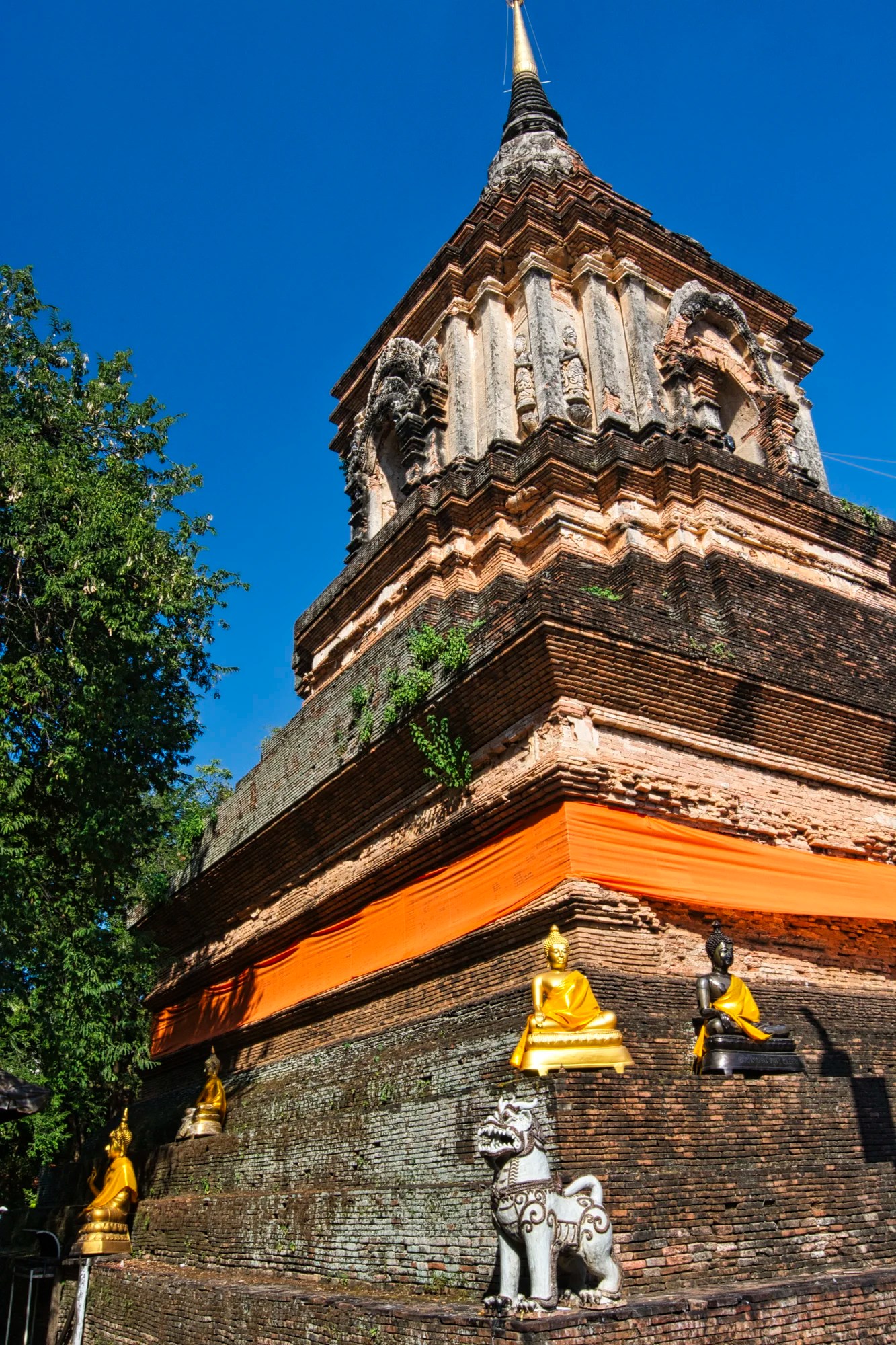
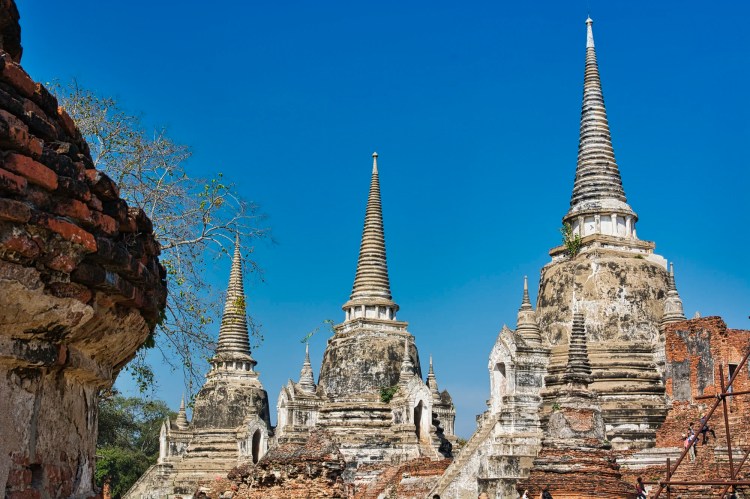
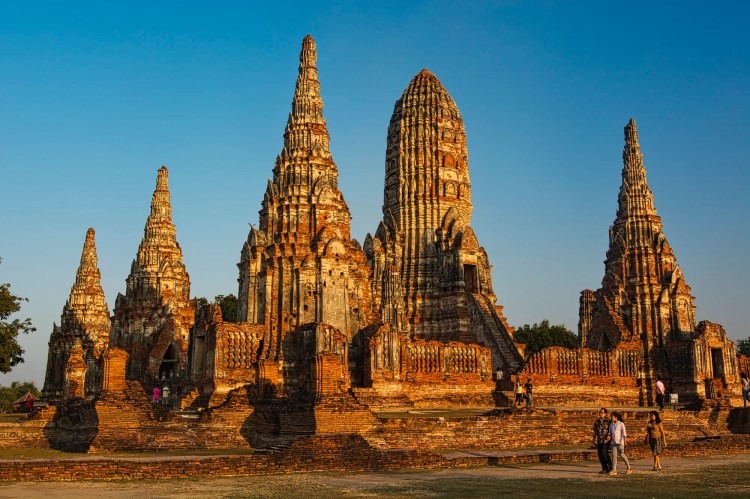
Chedi is the Thai word for Stupa (Sanskrit), which originated in India as a burial mound but is also used for storing relics. Emperor Ashoka (273—232 BC) played a big part in spreading the use of the stupa by erecting 84,000 stupas to distribute the relics of the Buddha across India. Circumambulation around this sacred site has been an important ritual since the earliest times.
Chofa is an artistic ornament that adorns the roof ends in SE Asia that originated from Angkor Wat, the Khmer Empire. It is generally believed to represent the garuda.
Dharma (Sanskrit) or Dhamma (Pali) means the universal truths taught by the Buddha.
Dharmachakra (Sanskrit) means the Wheel of Dharma, a symbol widely used throughout India and Southeast Asia. This solar symbol has been used as far back as the Indus Valley Civilisation around 2500 BC. The wheel is used as a main attribute of the Hindu god Vishnu.
Elephants symbolize strength, loyalty, wisdom, and royalty in Thai culture. In Hinduism, the Earth is supported and guarded by mythical World Elephants at each cardinal direction. The mount of the Hindu god Indra is the flying white elephant, called Erawan, usually shown with 3 heads. In Buddhism, elephants are guardians of Buddha and the Earth.
Elephants were used for agriculture, forestry, and warfare and so they are integral to Thai culture and history. White elephants are considered holy animals that descended from heaven. White elephants are especially revered as symbols of kingship and purity, and are considered the personal possessions of the kings of Thailand.
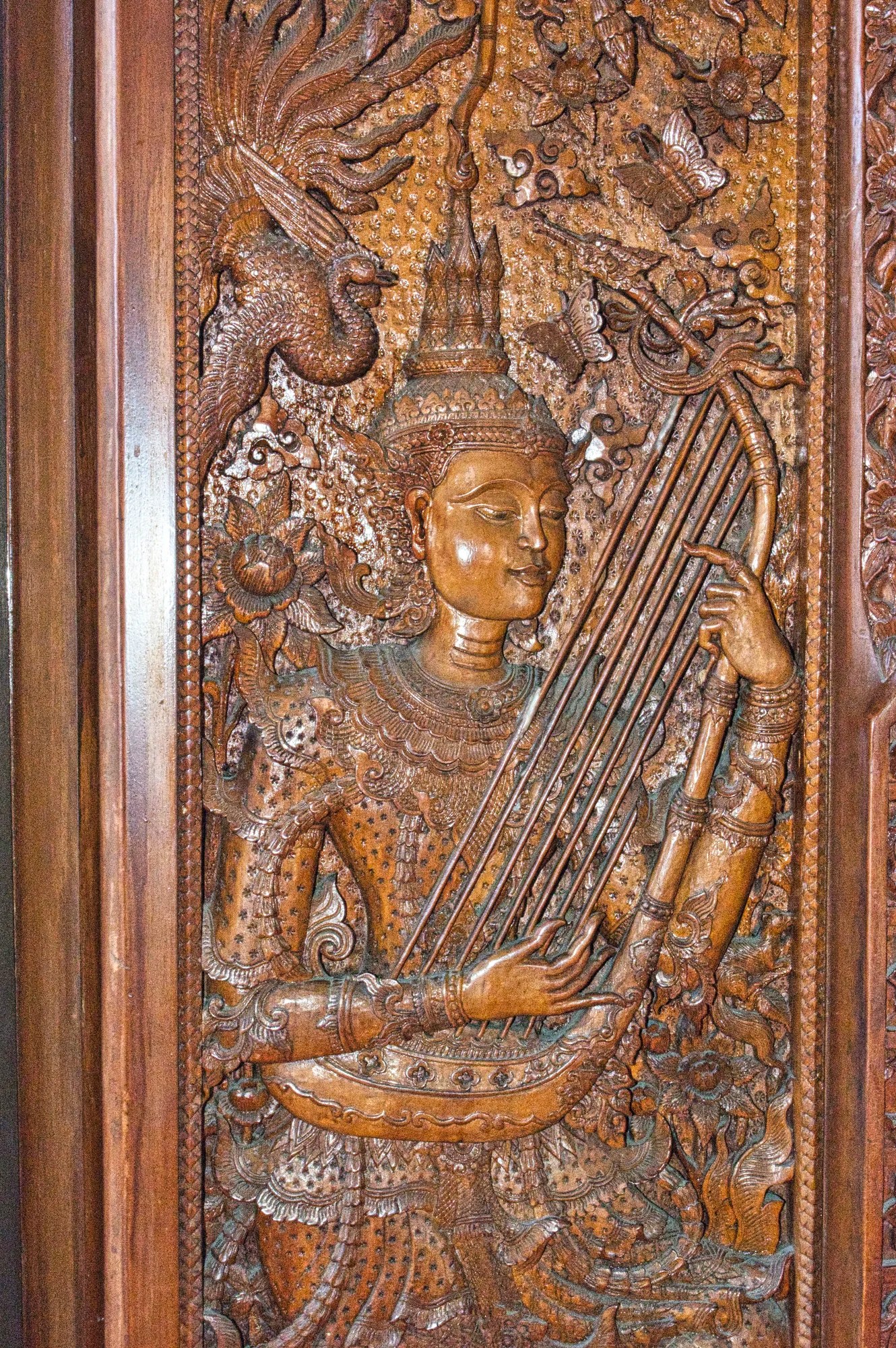
Gandharva (Sanskrit for musician) are celestial beings in Buddhism that originated from the Hindu Vedas. The males are divine musicians and singers, and the females are divine dancers. They symbolize fertility and virility. In Buddhism, they are associated with flowers and trees.
Garuda is the king of birds, but is often shown as a human with wings. Garuda is the protector and charioteer of Vishnu, one of the chief Hindu gods. Like Vishnu, the Garuda fights injustice and evil. The Garuda is a cultural and state symbol of India, Indonesia and Thailand. is the enemy of the Nāga (snake) and are sometimes depicted with a serpent held between their claws.
Hamsa (Sanskrit meaning aquatic bird) is usually interpreted as being a goose or swan – this is debated by scholars. It is a symbol of wisdom and the Supreme Spirit, because it is white, the colour of pure sunlight. The hamsa is also the mount of Brahma (god of creation) and his consort, Saraswati (goddess of knowledge and creative arts).
Hti is Burmese for umbrella, which represents social status in Burma. An umbrella is an auspicious symbol in Buddhism. Bells are attached to the hti to attract good spirits. Laotian and Thai chedis do not have hti.
Indianization Period: As part of the Silk Trade, Ancient Indian traders sailed to the Moluccas or Spice Islands (Indonesia), so-called because nutmeg, mace, and cloves were exclusively found there. The Indians were more advanced than the tribes of Southeast Asia, who were keen to learn from the Indians and adopt their civilization and religion. This is called the Indianization of Southeast Asia.
Indra is the king of the gods in Hinduism. He is associated with the sky and thunder and usually carries a vajra or thunderbolt. Indra is the same god as Thor, Zeus, and Jupiter, used by other Proto-Indo-European (PIE) tribes.
Jātaka (meaning “birth story”) are extensive Indian tales that describe the previous births and lives of Buddha in both human and animal form. They are the subject of many bas reliefs and murals in Buddhist temples.
Lanna or Lan Na (meaning “a million rice fields”) was an Indianized state of Northern Thailand from the 13th to the 18th centuries.
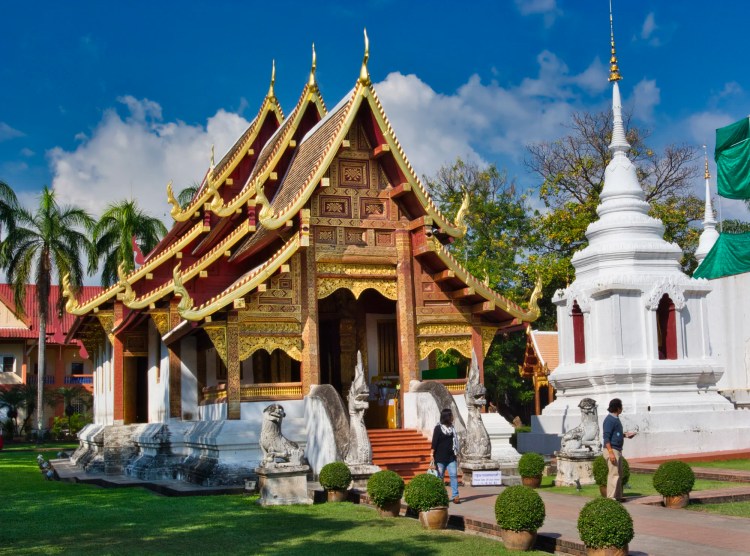
Lanna Thai Architecture Style is characterized by steeply pitched, multi-tiered roofs and stark white pavilions. This is contrasted to ornate decorations on pediments, doors and windows with gold leaf motifs on black lacquer.
Lotus represents the purity of the body, speech and mind, as a lotus floats above the murky waters of material attachment and physical desire.
Makara, which originated in Hindu mythology, is Sanskrit for sea animal, that was the vehicle of the god of the ocean, Varuna. Makaras represent knowledge, destiny and prosperity.
In Vedic times, it was depicted as half mammal and half fish. In modern times, it is depicted with the jaws of a crocodile. Makara are guardians of gateways and entryways as well as protectors of the gods. It is a very common symbol in Thailand.
Making Merit are good deeds that improve one’s karma, and affect one’s reincarnation. It is fundamental to Buddhist ethics.
Manjushri is a bodhisattva who is depicted as a youth representing purity and innocence. In one hand, he carries a vajra (thunderbolt) sword, which cuts through ignorance and discrimination. In the other hand, he holds a sutra scroll representing the perfection of wisdom. He may also be shown riding a lion, which represents princely nobility and fearlessness.
Mondop is a building with a pyramidal, multi-tiered roof topped with a tapered spire. It is probably derived from the Indian mandapa stone-based architecture. However, the mondop is far more ornate since it does not use stone.
Mudra is a symbolic gesture or pose used in an image to teach a story about the Buddha. Two common poses are:
- Bhumisparsha or Earth Witness Mudra: the Buddha is seated and the right hand reaches over his knee towards the earth. This mudra symbolizes the Buddha’s moment of enlightenment when he was attacked by Mara, the demon of desire, and his army. He asked the Earth Goddess to bear witness to his worthiness to reach enlightenment. She wrung water from her hair and the flood washed away Mara and his army.
- Dhyana Mudra: Buddha is shown in the lotus position with his hands resting on top of each other on his lap. This depicts Prince Siddhartha meditating under the pipal or bodhi tree (a fig) in Bodh Gaya, India, just before he achieved enlightenment.
- Abhaya Mudra: Buddha is shown with his right hand raised and palm facing outwards. This gesture is used to dispel fear or inspire courage.
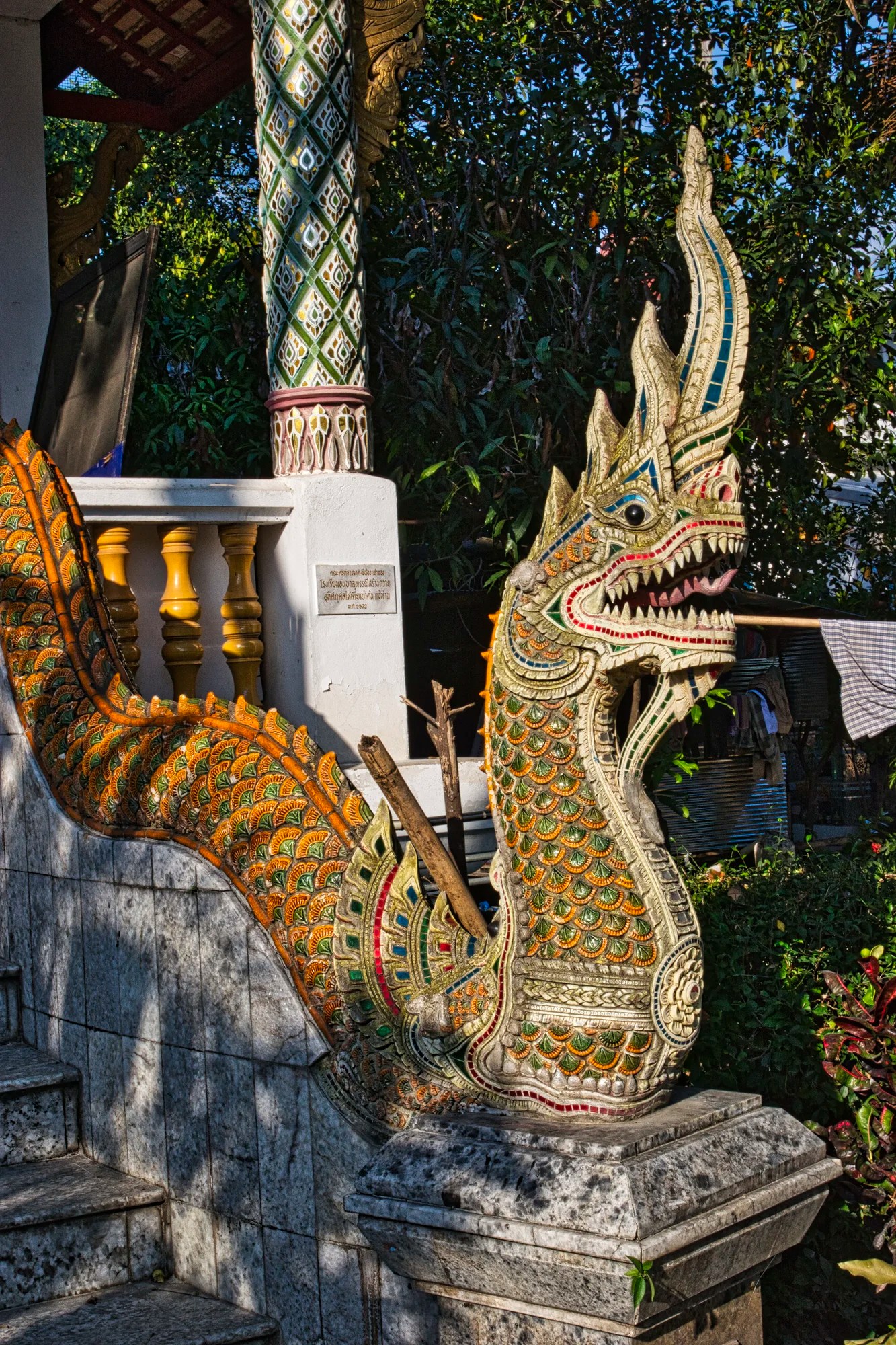
Nāga (Sanskrit for snake) are half-human, half-serpent deities that live in the underworld. The word nāga is derived from the Sanskrit naja, which means cobra.
Nāga symbolize power, wisdom and transformation. They are associated with water and bring either rain or drought — there is always a duality. Since rain is critical to agriculture they are also associated with abundance. Images of nāgas are everywhere in Thailand — especially along stairs and roofs of temples and palaces. This is because they are the protectors of the Buddha and guardian against evil spirits.
Phoenix is analogous to the Hindu deity Garuda. Both serve as the vehicle of the god Vishnu. Rising from the ashes of a fire, it symbolizes transformation and rebirth. It is much more common in Chinese and Japanese art and mythology.
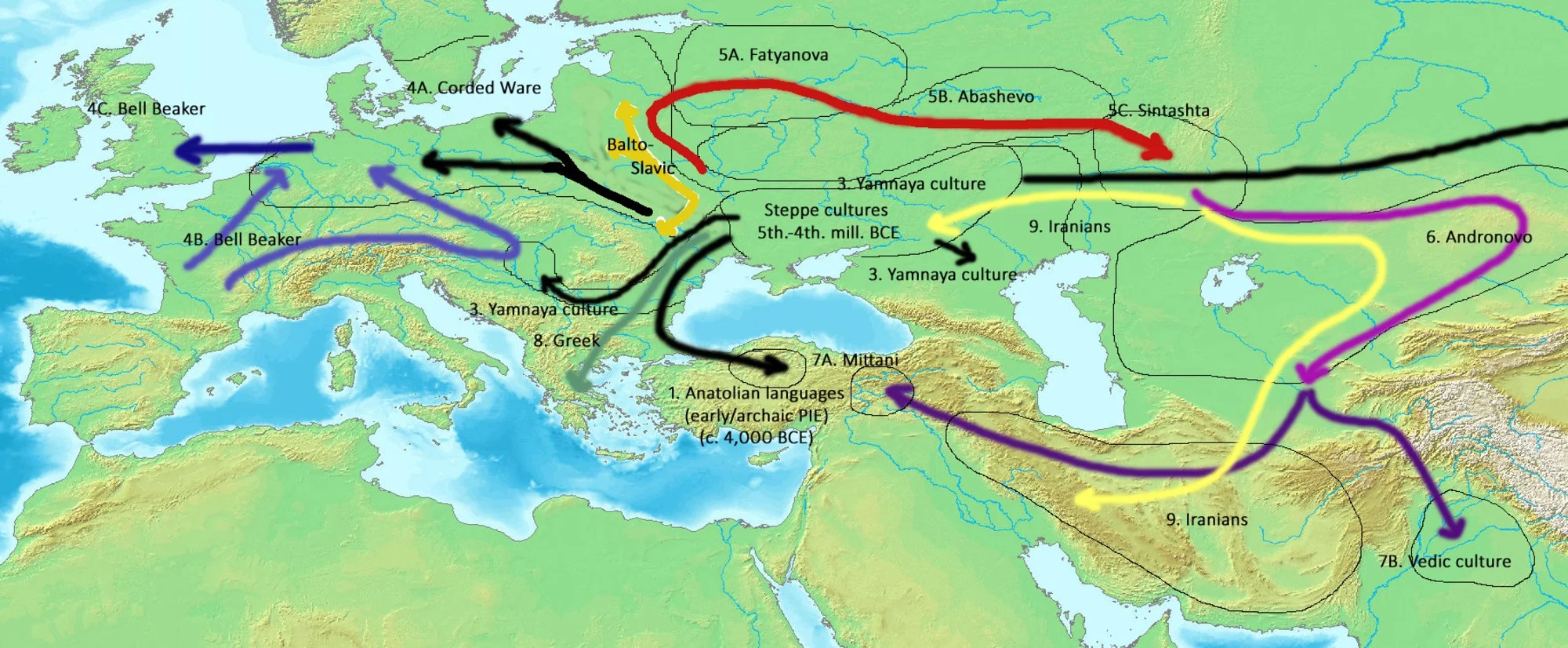
PIE or Proto-Indo-European people were tribes that emigrated from the Caucasus Mountains, hence the term Caucasian. They migrated east to Iran and India. They migrated west to Ancient Anatolia (Turkey), Greece, Italy, Scandinavia, and other locations. They created the Vedas.
Prasat is a Khmer-Thai architectural form reserved for a temple or palace. The arched gateway to these sacred places will also have a spire shape.
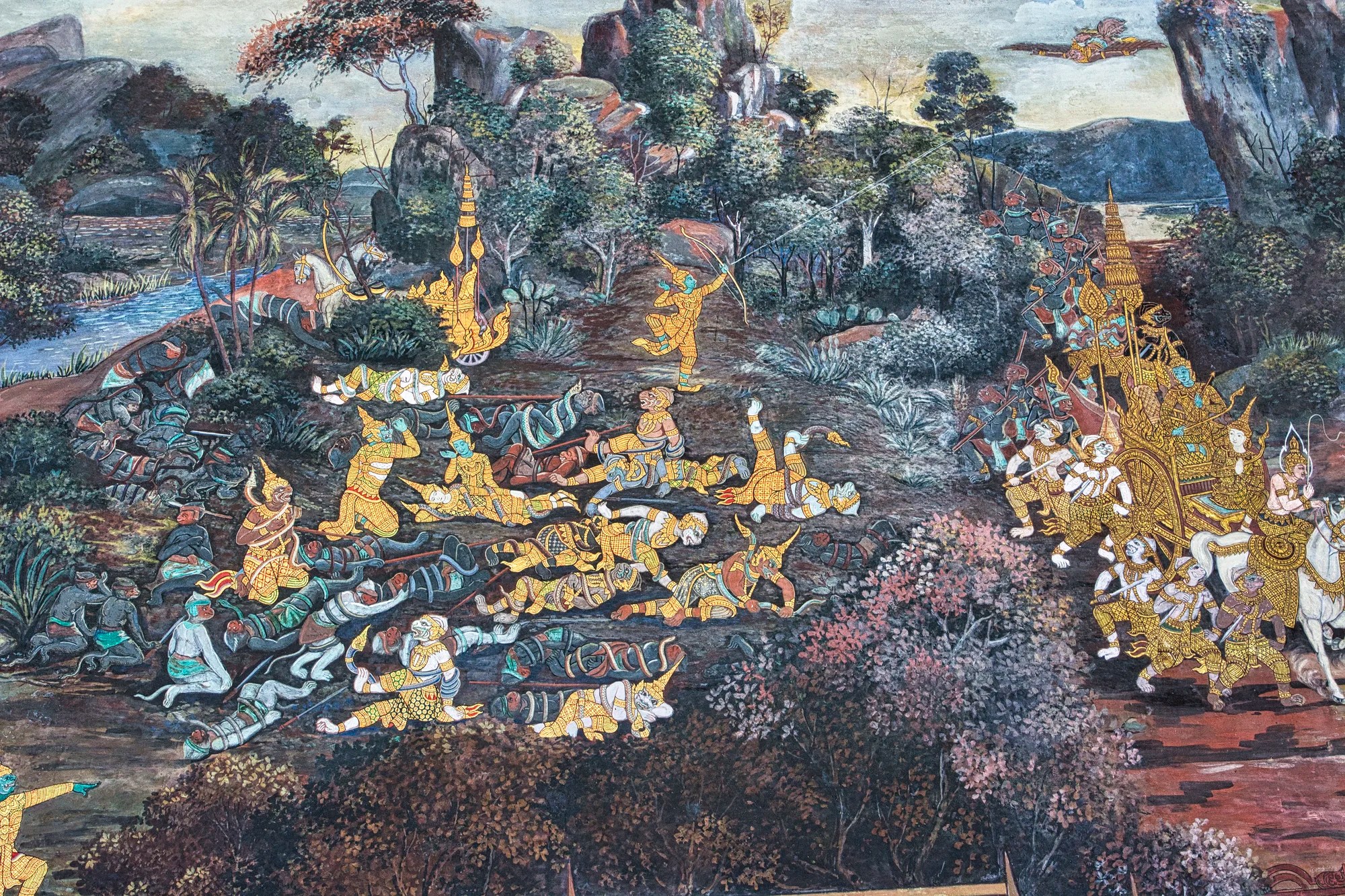
Ramakien is the national Thai epic literature. While the main story is identical to that of the Hindi/Vedic Ramayana, many aspects were transformed into a Thai context, such as Thai names, cities, temples, palaces, clothes, and weapons.
The simplified story of the Ramayana (Ramakien) is about Rama (Phra Ram), a prince of Ayodhya (Ayutthaya) who has been exiled with his wife Sita (Nang Sida). Sita is kidnapped by Ravana (Thotsakan), the demon king of Lanka, who hopes to win her over. Rama is helped by the garudas, the monkey army and Hanuman, the monkey king/general. After many battles, Rama and Sita return to Ayutthaya to be crowned king and queen.
But this is more than an action story. Rama is the avatar (incarnation) of the Hindu god Vishnu. Sita is the avatar of Vishnu’s consort, Lakshmi, known for her dedication, self-sacrifice, courage, and purity. The story is an allegory about honesty, faith, devotion, and duty. It illustrates the dharma through model characters.
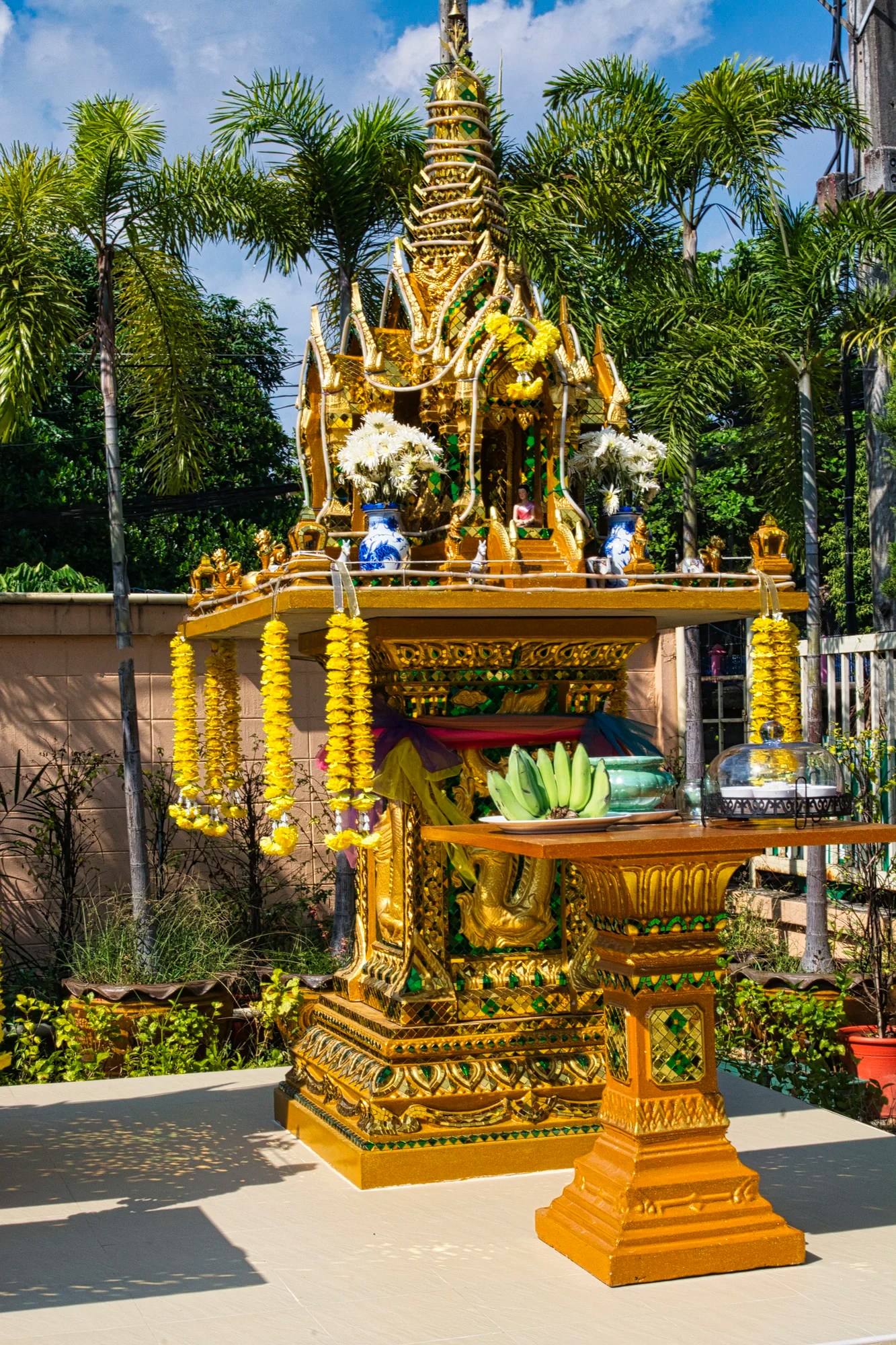
Spirit House is a shelter for spirits of the land that could cause problems for the people if not appeased. The most common offering is fruit. They are installed anytime a new building is constructed. They look like elaborate miniature temples on a pedestal and must be placed so that the building does not cast a shadow on the spirit house. They are common throughout Southeast Asia.
Stupika are little stupas that contain votive tablets.
Sutra is a general principle or truth. In Buddhism they are canonical scriptures. The earliest Vedas contain sutras.
Tipiṭaka (Pali) originates from Tripiṭaka (Sanskrit), meaning “Three Baskets”. It is the term used for a collection of Buddhist sacred scriptures.
Ubosot (Pali for hall used for rituals) is an ordination hall, where a sacramental ceremony is held to confer the monkhood (Sangha) to an individual.
Ushnisha is a conical bump on the top of the head of the Buddha. Originally, the bump was a topknot of hair. Later, the ushnisha symbolizes the supreme power of the Buddha’s enlightenment or his spiritual energy.
The Vajra (thunderbolt) is the most powerful weapon of the chief PIE god, Vishnu (Indra, Thor…). The Vajra sword combines the properties of diamond (indestructible) with a thunderbolt (irresistible force). In Buddhism, the vajra sword cuts through ignorance and discrimination.
Vedic Era (1500–500 BC) saw the migration of the PIE tribes and the development of the Vedas
Vedas (Vedic texts) are the direct basis of Hinduism and also influenced the cosmology of gods that are the basis of Ancient Greek, Roman and Viking religions.
Viharn (or wihan) is derived from Vihara (Sanskrit). It means a sermon or assembly hall, and usually displays an important Buddha image.
Vishnu or Narayana is one of the three main gods of Hinduism. Vishnu is the supreme being who creates, protects, and transforms the universe and known as the Preserver. In paintings he is shown having blue skin and four arms, holding a conch, a lotus flower, a gada (mace), and a chakra (war discus).
The mount of Vishnu is the Garuda, king of the birds. Vishnu descends to Earth as the avatars Rama or Krishna.
Vishnu’s consort is Lakshmi. Lakshmi is depicted as elegantly dressed and holding a lotus, which symbolizes good fortune. She is the goddess of probably the most important aspects of life to people: wealth, fortune, power, beauty, fertility and prosperity. She descends to Earth as the avatars Sita or Radha.
Other Posts You May Like
These itinerary posts also provide background information about Thailand temples and Buddhist Culture:

Thai Symbolism and Culture
Understanding symbolism is essential to maximizing your appreciation of Thai art and architecture and preventing the Templed Out syndrome. There is also a lot of terminology that will overwhelm you when you visit Thailand (or any Asian country).
 Terra Encounters