Why should you visit Ayutthaya & Sukhothai?
Ayutthaya and Sukhothai were the first capitals of what became known as Siam. Lopburi was a regional capital. Great works of ancient art and architecture cost money and need to be sponsored by religion or royalty. The most interesting tourist cities anywhere in the world were once economic or political capitals. These cities are significant historically.
A visit to Ayutthaya and Sukhothai will appeal to fans of art, architecture, culture and history. But another major plus is that these are much smaller cities and much easier to visit. We especially enjoyed the people we met, the food we ate, and the photographs we took. Plus, you will get to learn some interesting facts and clear up some misconceptions.
Author & Photographer: George Mitchell

Our recommendations are not influenced by affiliate links – we have none. Our content and advice is derived from our personal experience and knowledge based on spending five months in Thailand as well as travelling three years around the world.
All of our recommendations are top-rated by Google Maps Ratings, which is based on everyone, not just tourists. Each place recommended in our custom Bangkok Google map is appended with a Google Maps Rating (G0 to G5).
Is Siam the Real Name?
Actually, it is not the real name. The term Siam comes from the Sanskrit word Śyāma, which means “dark” or “brown”. It was used to describe the country’s people, who have a darker skin tone than other Asian countries. During the European colonialism period in the 16th century, it was the Portuguese who popularized the term Siam and all of Europe used that term.
According to the latest research, the Tai people — which also includes the Dai, Shan, Isaan and Lao ethnic groups — originated from Guangxi, China, rather than Kunming Province as previously thought. There was no unified country in early Thai history, which instead consisted of multiple regional kingdoms as well as occupation for centuries by the Burmese and Khmer (Cambodian) Empires.
The people of the Ayutthaya Kingdom called their country Krung Tai, meaning Tai Country. Even today, the people call their country Muang Thai, “Land of the Free”. So the word Tai or Thai means both the ethnic group and the word “free”. Ironically, Thailand was the only country in Southeast Asia that was not colonized by the Europeans.
Is Ayutthaya the Real Name?
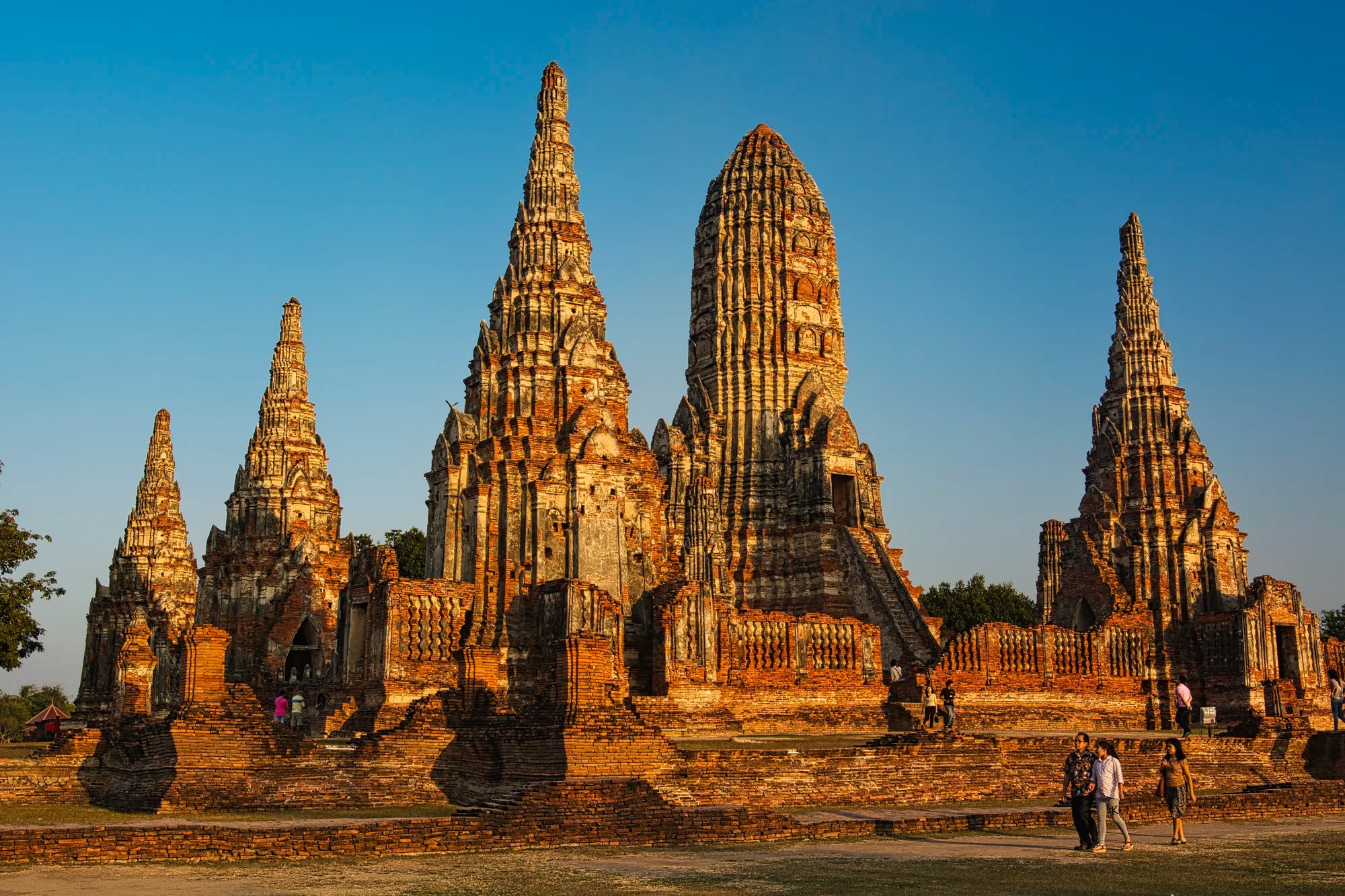
Actually, it is not the real name. Ayutthaya has a much longer name, Phra Nakhon Si Ayutthaya. That is the name even on a present-day Ayutthaya Google map. Phra is derived from Khmer for royal, Nakhon for capital, and Si is derived from Sanskrit Shri meaning venerable.
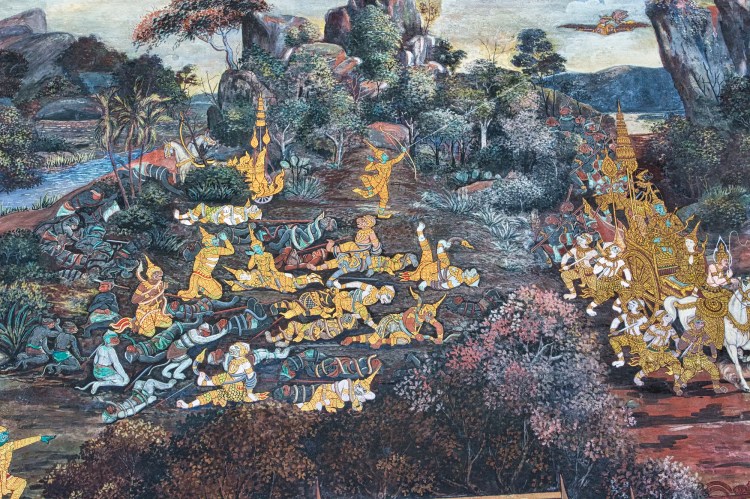
Ayutthaya is named after the city of Ayodhya in India, the birthplace of Rama, as in the famous Indian literary work Ramayana, revised by the Thais into their national epic, Ramakien. Rama is an avatar (incarnation) of the Hindu god Vishnu.
Guess what? Bangkok is also not the name used by Thais. It is officially Krung Thep Maha Nakhon. But the Thais just call it Krung Thep, which means City of Angels. Remember that when you are looking for the bus or train to Bangkok.
Is Ayutthaya just a bunch of ruins?
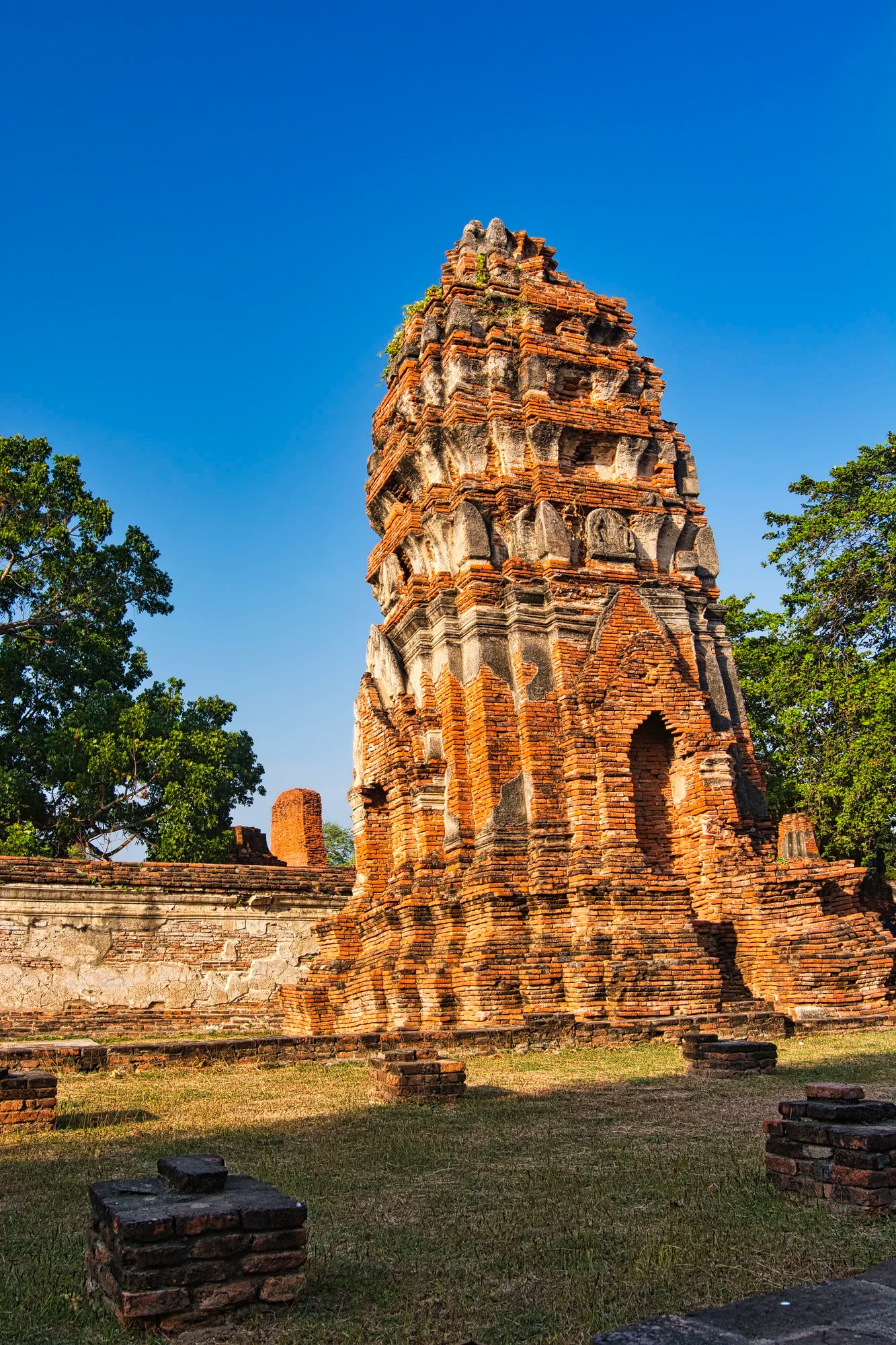
Do not come to Ayutthaya if all you want to do is take selfies or Instagram photos. This is not just a bunch of ancient ruins of wats and palaces. You need to appreciate just how significant a place this used to be. You also need to imagine what this city looked like in its prime.
King U Thong (meaning Golden Cradle) made three major impacts on the history of Thailand.
- He officially founded Ayutthaya in 1351.
- He proclaimed Ayutthaya the capital of the Ayutthaya Kingdom.
- He promoted Theravada Buddhism as the official religion to differentiate his kingdom from the neighbouring Hindu Khmer Empire (Angkor Wat).
Ayutthaya grew to a population of about 300,000 in ca. 1600 and 1,000,000 ca. 1700, making it one of the largest cities in the world. How did this happen?
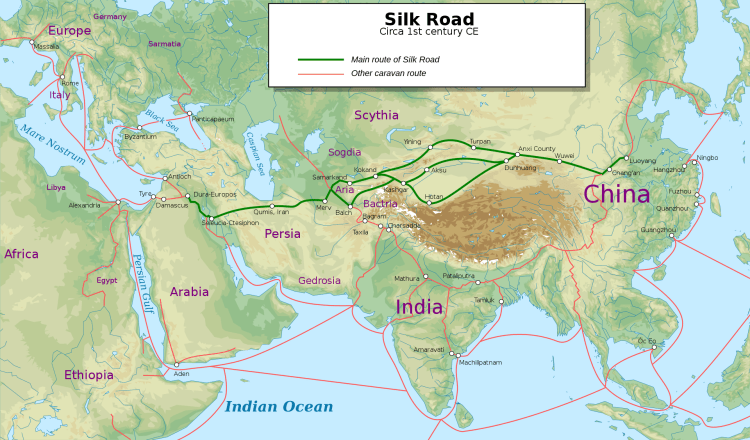
Ayutthaya became the lucrative middleman for trade between the Qing Empire of China, the Mughal Empire of India and the powers of Europe. The Chinese, Portuguese, Dutch, French, and English operated trading companies and established embassies here. Another interesting fact is that Ayutthaya used cowrie shells as currency.
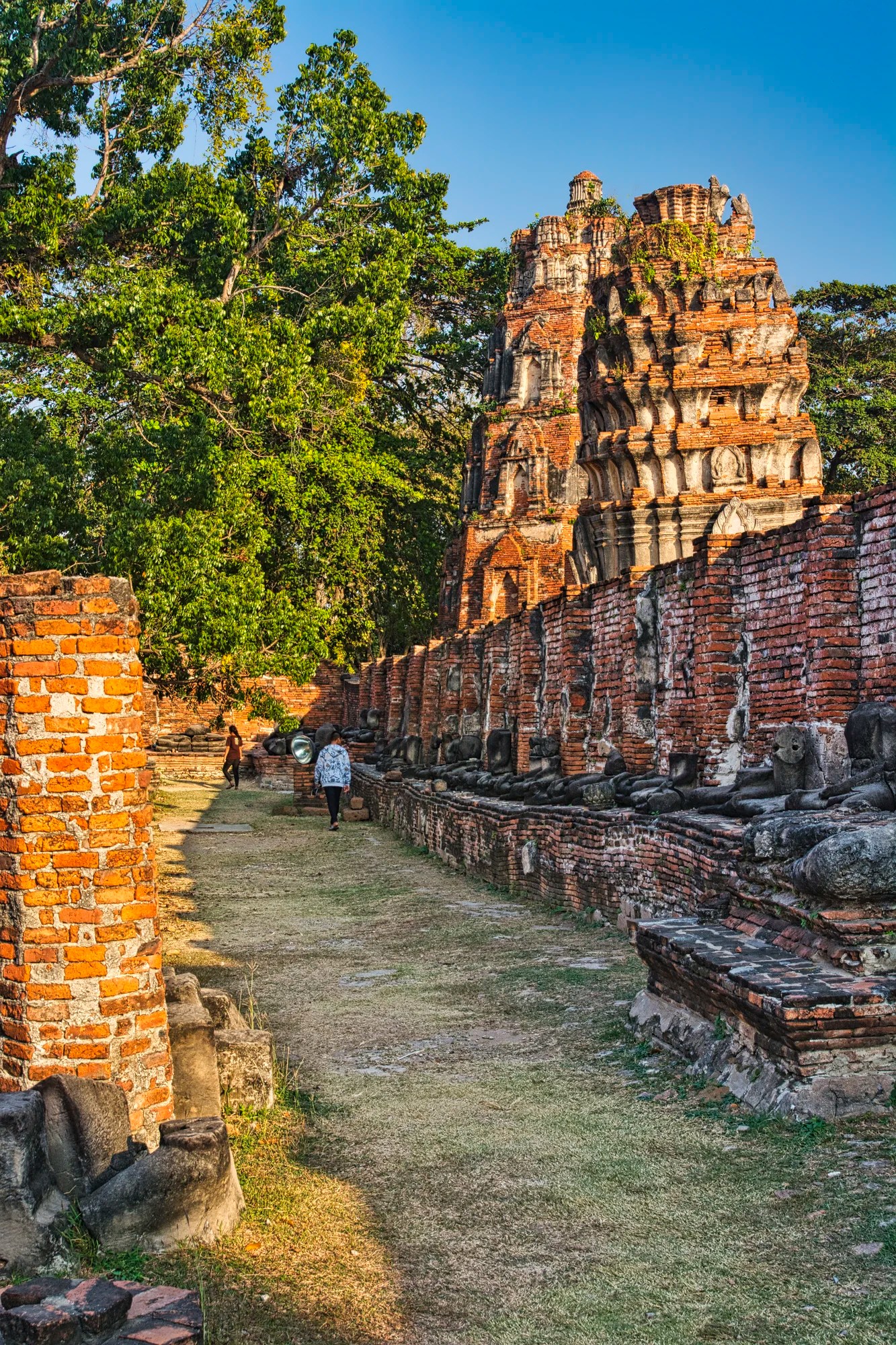
King U Thong set up his court and fortress on an island in the Chao Phraya River at the junction of three rivers. The island was strewn with water. Imagine that these earth paths were watery canals. You would have reached these wats by boat rather than walking.
Ayutthaya was described as the Venice of the East by the Portuguese. Actually, there were a lot of foreigners (farengi, I mean farang) that became involved in the government of Ayutthaya. Here is an interesting Star Trek connection. The Thai word farang is derived from the Farsi (Persian) word ferengi meaning foreigner.
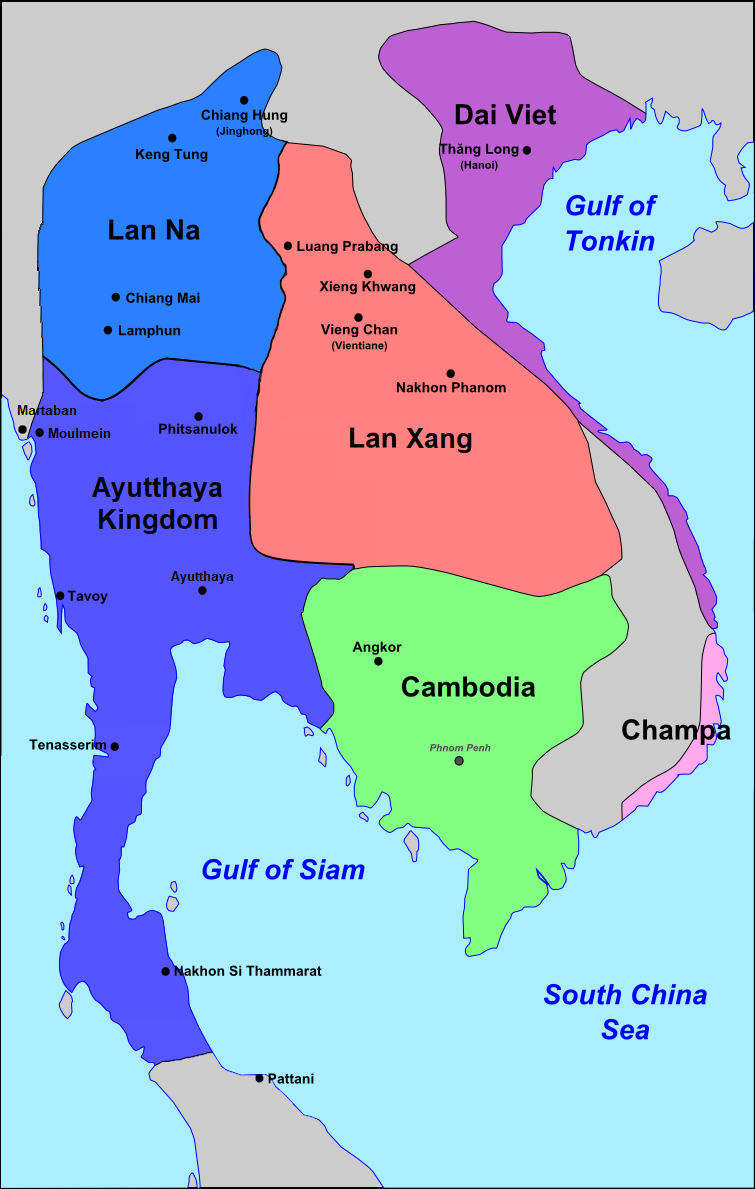
With economic wealth came military power. By 1550, Ayutthaya had 50,000 elephants in their military campaigns! Elephants were the tanks of Renaissance Asia. No, Ayutthaya was not the capital of Siam. It was the Rome of Southeast Asia! At its peak, it ruled Thailand, Cambodia, Laos, and parts of Myanmar (Burma) and Vietnam. Ayutthaya was considered one of the three Asian superpowers by the Europeans.
N.B.: Our mapping systems make the equatorial countries look smaller than they really are. Southeast Asia excluding Indonesia is about the same size as Western Europe excluding Scandinavia!
What were the Reasons for the Fall of Ayutthaya?
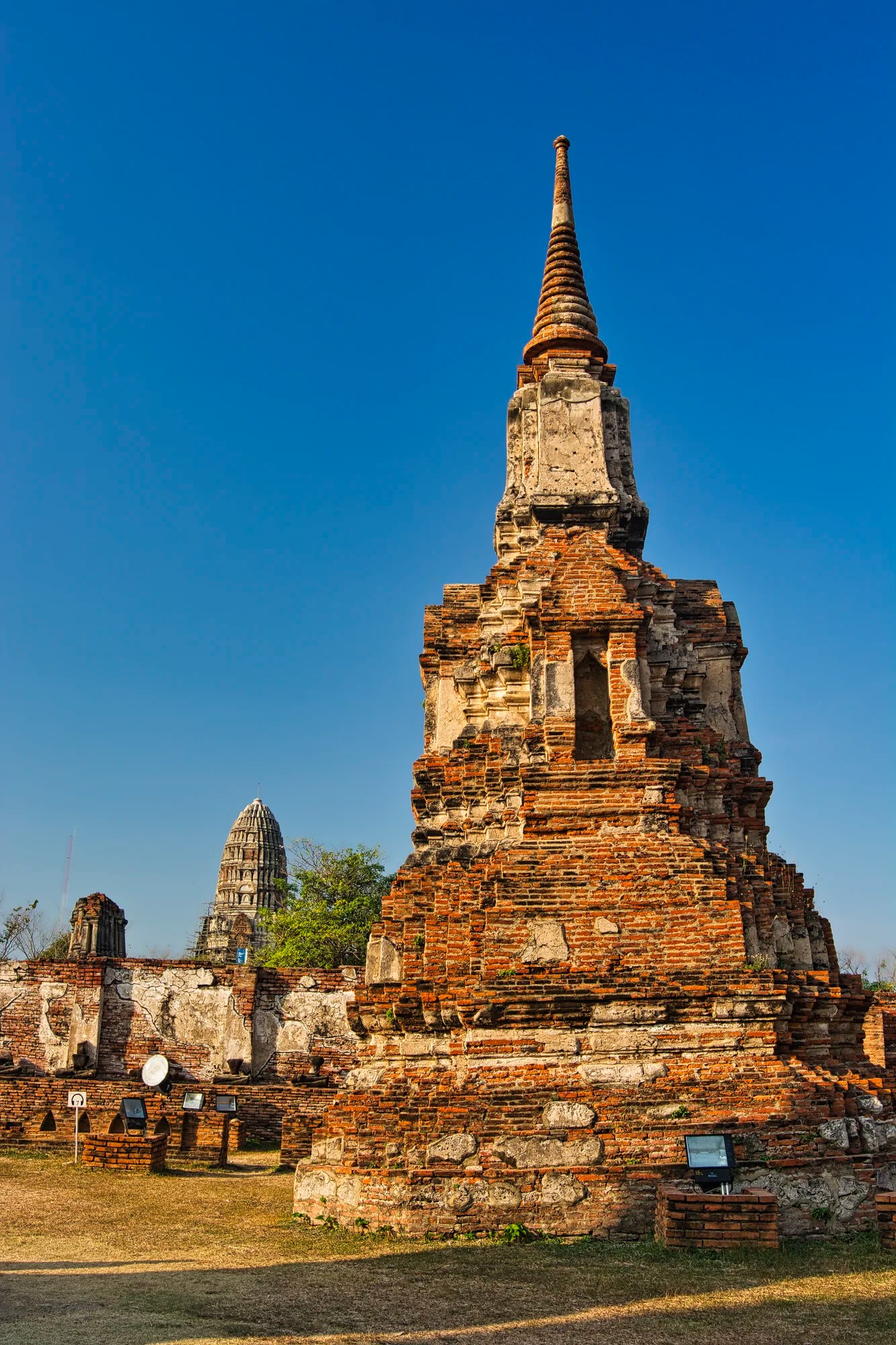
There was no peaceful succession to the throne. Regional nobility saw the throne as a way to tremendous wealth. There were a lot of actual conflicts between regional lords and even brothers for power.
Under the traditional (feudal) social order, freemen were obliged to work for six months each year for the local representatives of the king, to pay taxes, and to provide military service as required.
The introduction of capitalism undermined the traditional social order. Peripheral regions had increased wealth due to trade and were unwilling to provide conscripts to defend Ayutthaya.
The Burmese took advantage of this situation and invaded. After a 14-month siege of Ayutthaya in 1767, the city was destroyed by the Burmese army resulting in the collapse of the kingdom. The Burmese only fled Ayutthaya because the Chinese decided to take advantage and invade Burma! So Thailand survived and that is when the present capital was established in Krung Tep, aka Bangkok.
Ayutthaya Sights
The old city is a very compact and walkable area that is surrounded by water. The ruins of the old city are preserved in the Ayutthaya Historical Park, which is a UNESCO World Heritage Site.
In some ways, visiting Ayutthaya is like visiting Rome. You can see much better ruins here than in Rome but it is only a fraction of what was once here. Unfortunately, there is no picture book for tourists to show what each site used to look like. The best way to imagine what you would have seen here in 1700 would be to view the photos or actually visit the Royal Palace and Wat Phra Kaew in Bangkok. They were based on the design of Wat Si Sanphet in Ayutthaya.
We are describing the sites in geographic itinerary order, starting at this wat in the east outside of the ancient city. All points of interest in this post can be found on our custom Ayutthaya Google map and suffixed by their Google Rating.
Wat Yai Chai Mongkhon
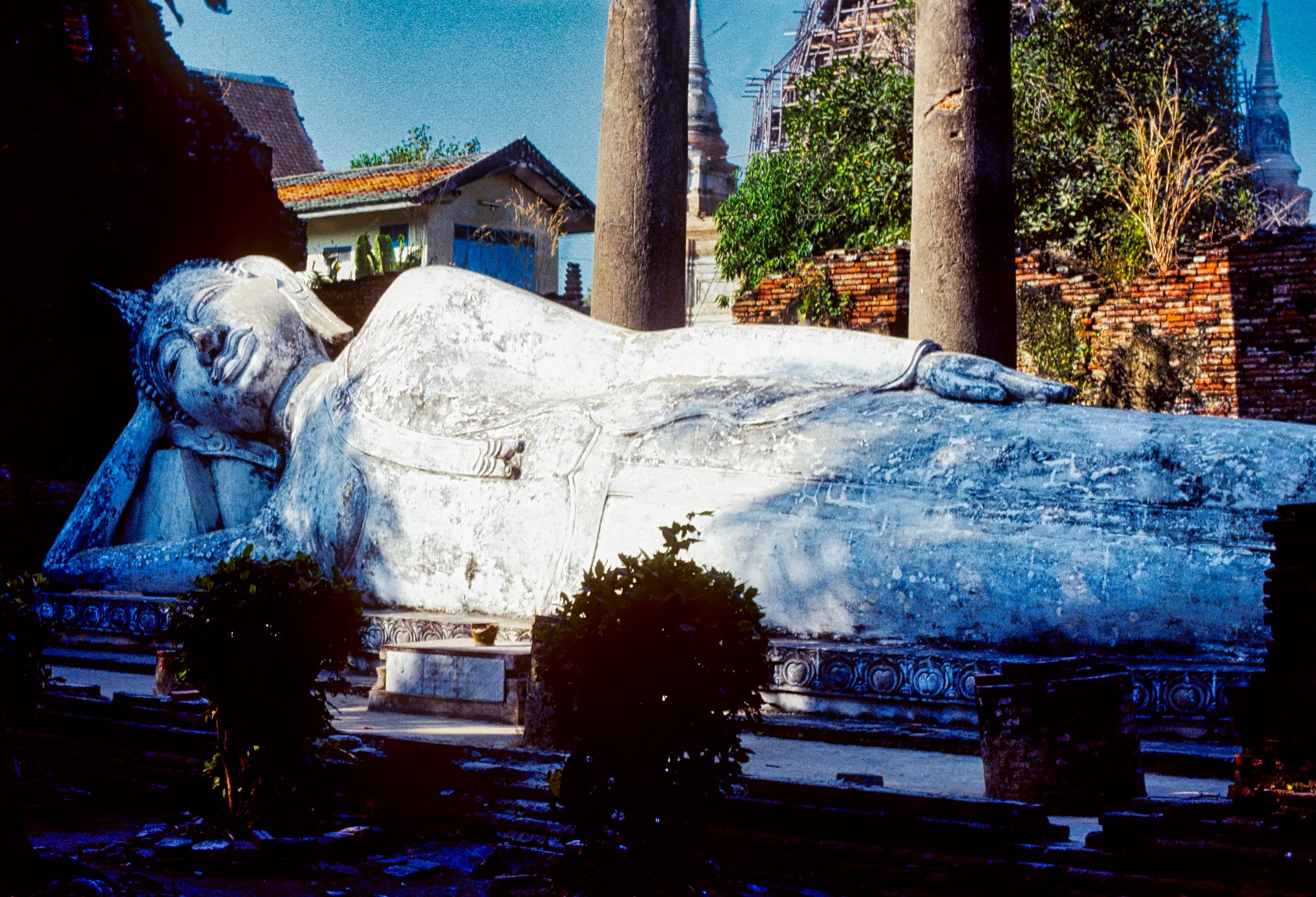
Wat Yai Chai Mongkhon (G4.7) means auspicious victory and is still in use. Walk through this park-like wat to the northeast corner. At Viharn Phra Phuttha Saiyat, we found this reclining Buddha image. Lying on his right side with his head supported by his right elbow symbolizes the moment Buddha is about to enter Nirvana.
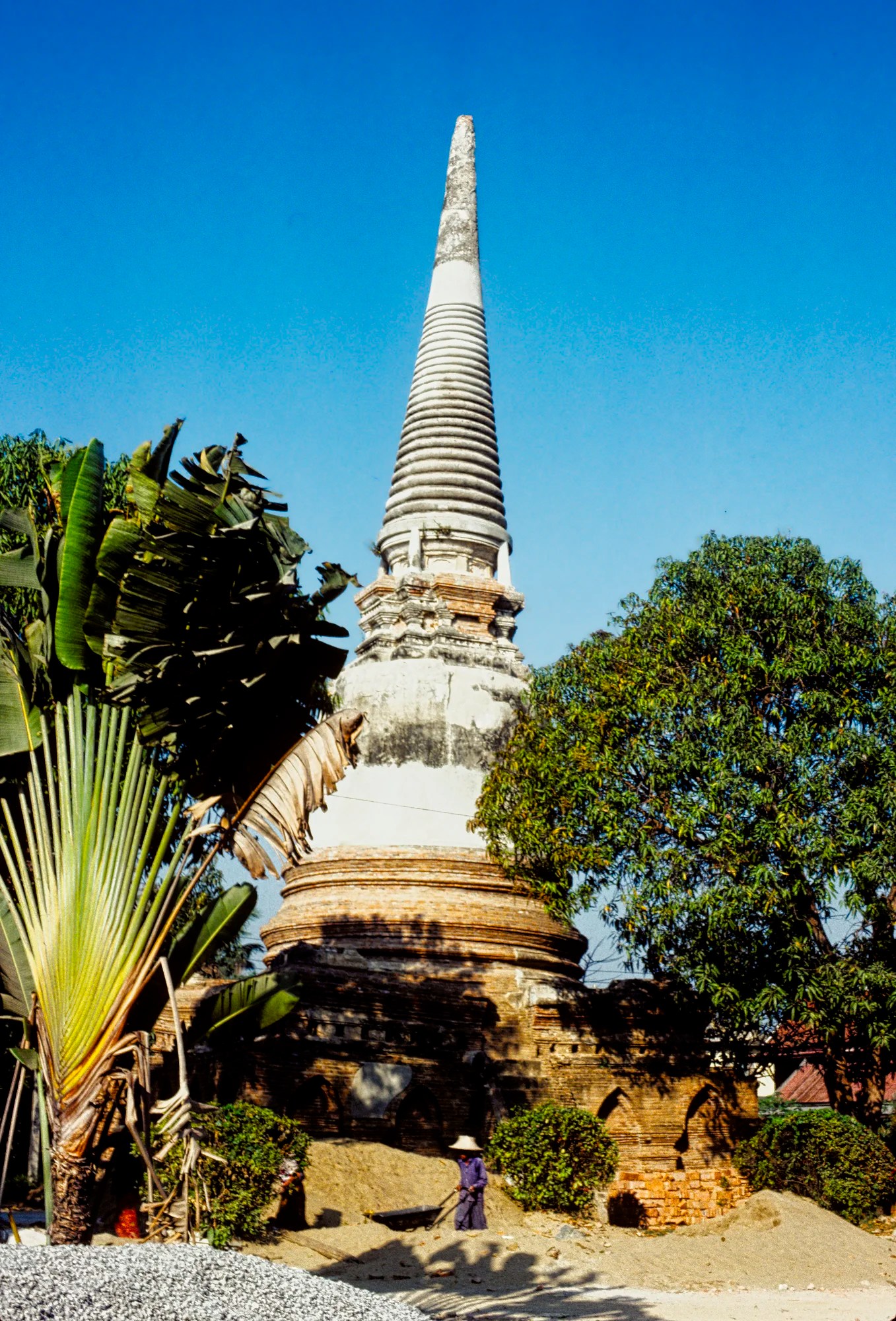
The wat is famous for its large chedi built by King Naresuan (1590-1605), who is revered by the Thais and is celebrated in literature and modern media. Prince Naresuan was held as a hostage in Burma to ensure Burmese control over Thailand. He learned Burmese military tactics and later returned as a prince during a long period of wars of independence. He defeated a Khmer invasion in 1580 and Burmese invasions in 1586 and 1593.
Wat Suwandararam
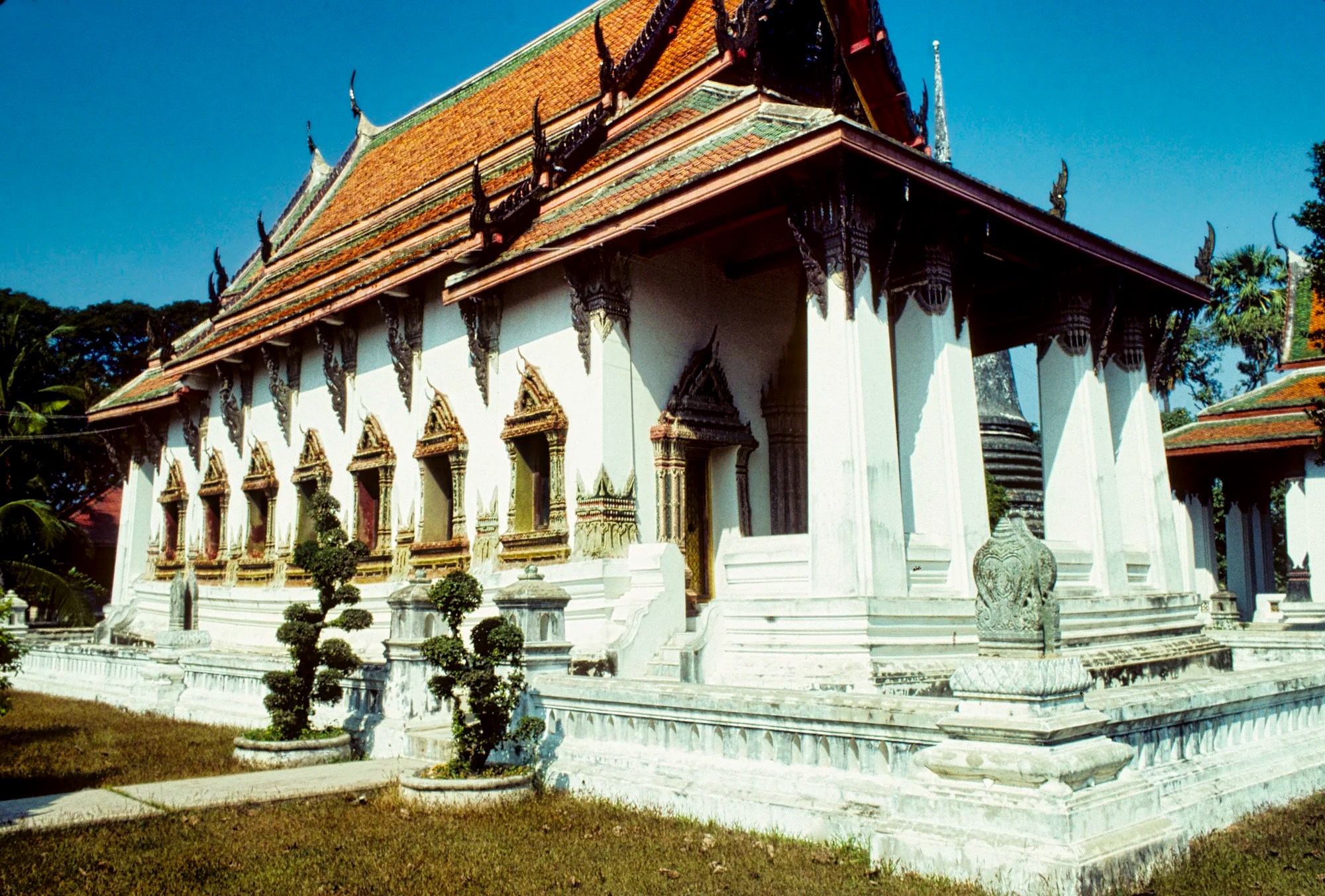
Wat Suwandararam (G4.6) is located in the southwest corner of the old city island. Here we were attracted by the bare wood window frames of the ubosot (ordination hall). You can really appreciate the ornate carvings. Window frames are typically painted in gold in Thai temples. Since this old slide was taken on our first trip to Thailand, the frames were gilded.
However, the main attraction of this ubosot is the interior. There are murals from the Jataka stories of the past lives of the Buddha. Look for the famous battle scene of King Naresuan on an elephant fighting the Burmese.
Wat Mahathat
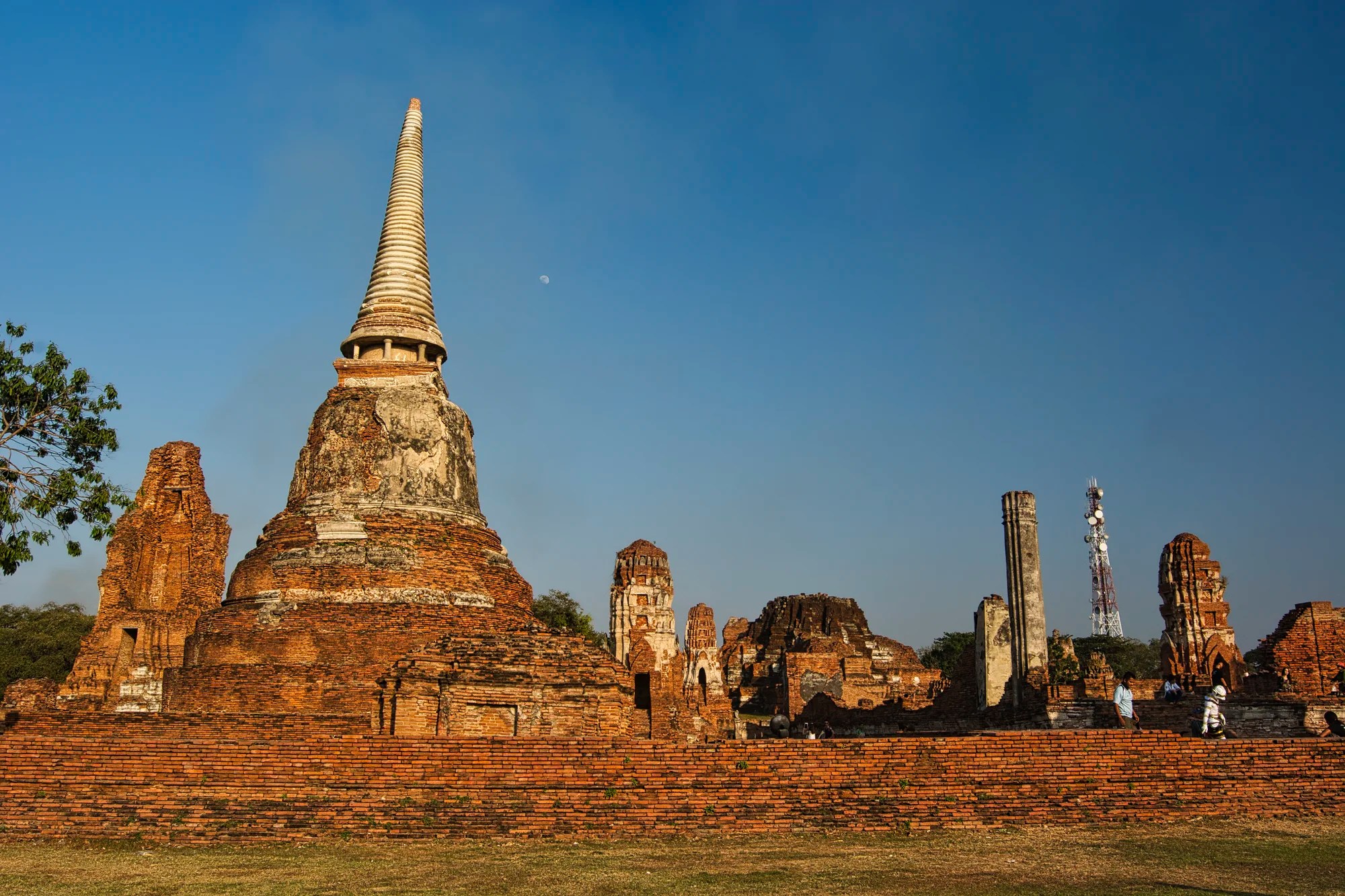
Wat means temple complex, not a temple building. Mahathat means Great Relic. This is where Buddha relics and other treasures were stored. Wat Mahathat (G4.8) was built between 1374 and 1395 on the edge of Ayutthaya’s Royal Palace. It was used by kings for royal ceremonies. This wat was also the centre for the Supreme Patriarch of Buddhism and Buddhist studies.
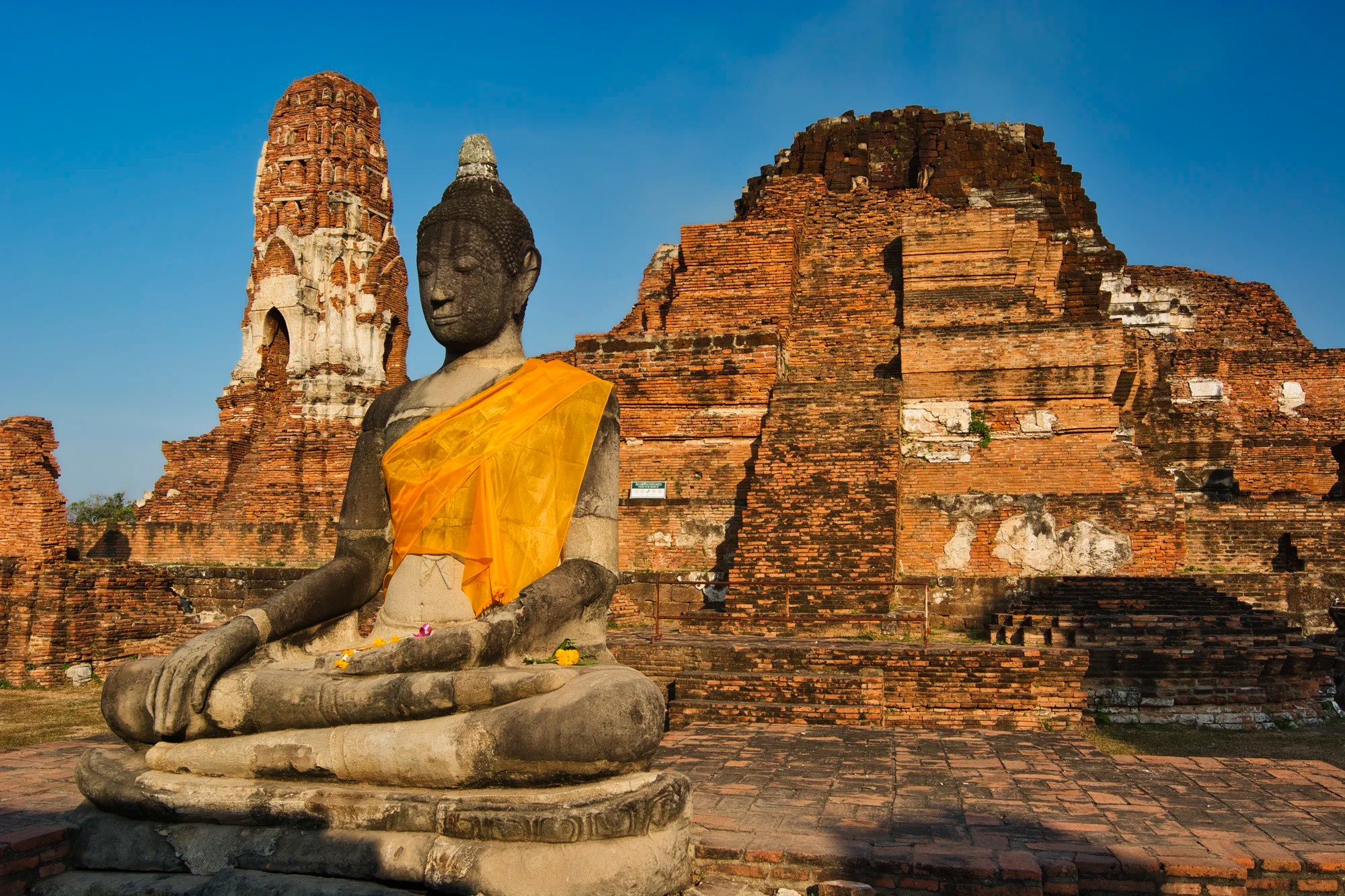
From this entrance, a beautifully decorated pathway led through the centre of the temple complex, to a staircase with railings resembling the mythical serpent-like naga, and up to the central prang.
What is a Prang?

The simplistic answer is that a prang is a tower. When a Thai wat is described as Khmer-style this usually means that the parabolic prang form is used.

However, it is actually derived from the shikara form shown in the picture of Kandariya Mahadeva Temple (G4.6), from our trip to Khajuraho, India. But it is much more symbolic than that.
Shikara is derived from Sanskrit shikar meaning peak. It represents the mountain where the gods live. This is called Mount Meru in Hinduism or Mount Olympus in Ancient Greece and Ancient Rome. This was part of the religious beliefs of their common ancestors, the Proto-Indo-European (PIE) tribes (formerly called the Aryans).

The Khmer were heavy influenced by India and adopted Hinduism. They created their own version of a shikara, a parabolic tower that is called a prang. It was built of bricks or laterite then plastered in stucco. Like the shikara, it was decorated with ornate carvings but the stucco was destroyed. To see what prangs used to look like, visit Wat Po and/or Wat Arun in Bangkok.
Buddha in a Bodhi

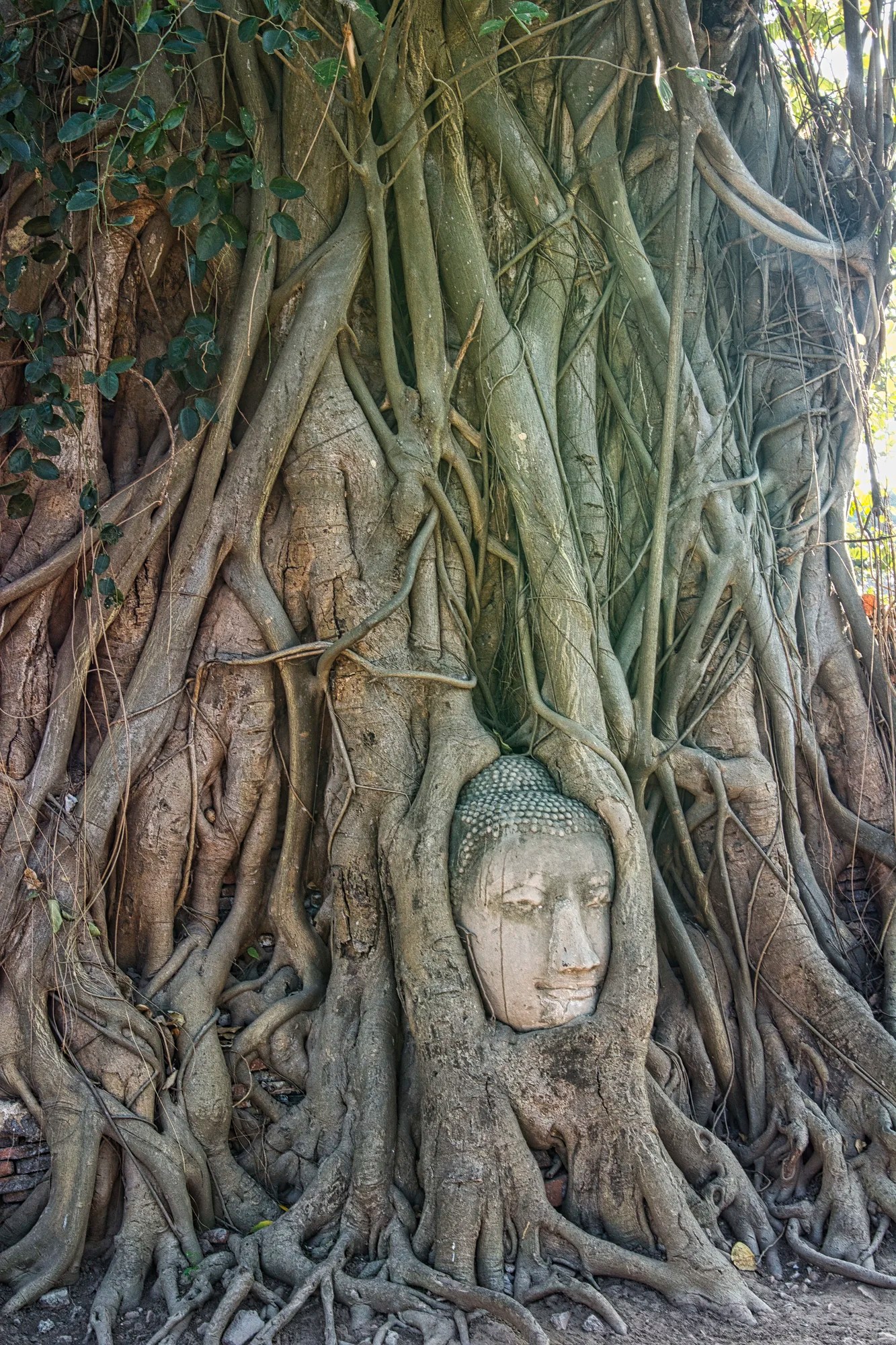
In the southeast corner of the wat is perhaps the most iconic image in Ayutthaya. The head of Buddha is embraced by the roots of a tree. What most people don’t realize is that this is a bodhi (fig) tree and has special significance in Buddhism. Prince Siddhartha meditated under a bodhi tree to achieve enlightenment. Many bodhi trees from India to Thailand are decorated with saffron ribbons (the colour of monks robes).
Wat Ratchaburana

Immediately north of Wat Mahathat is the entry gate of Wat Ratchaburana (G4.7), built in 1424 in Khmer style. It was built on the site where the king’s two older brothers on the backs of elephants fought each for the throne. Their younger brother became king.
When the Burmese conquered the Khmer Empire they brought many royalty, artists and architects from Angkor Wat (now in Cambodia) to Ayutthaya. This had a big influence on architectural styles in Ayutthaya.
Wat Phra Si Sanphet
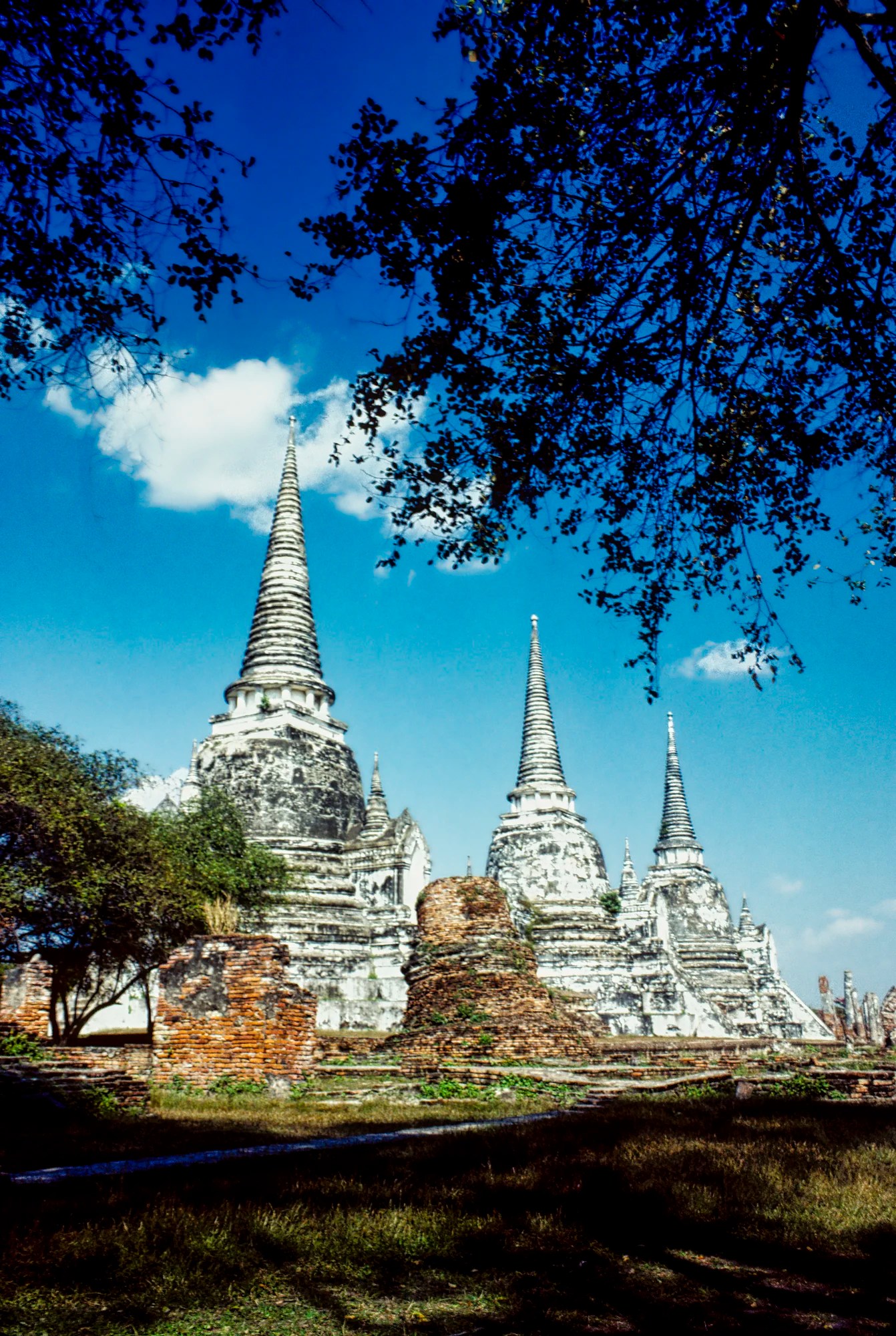
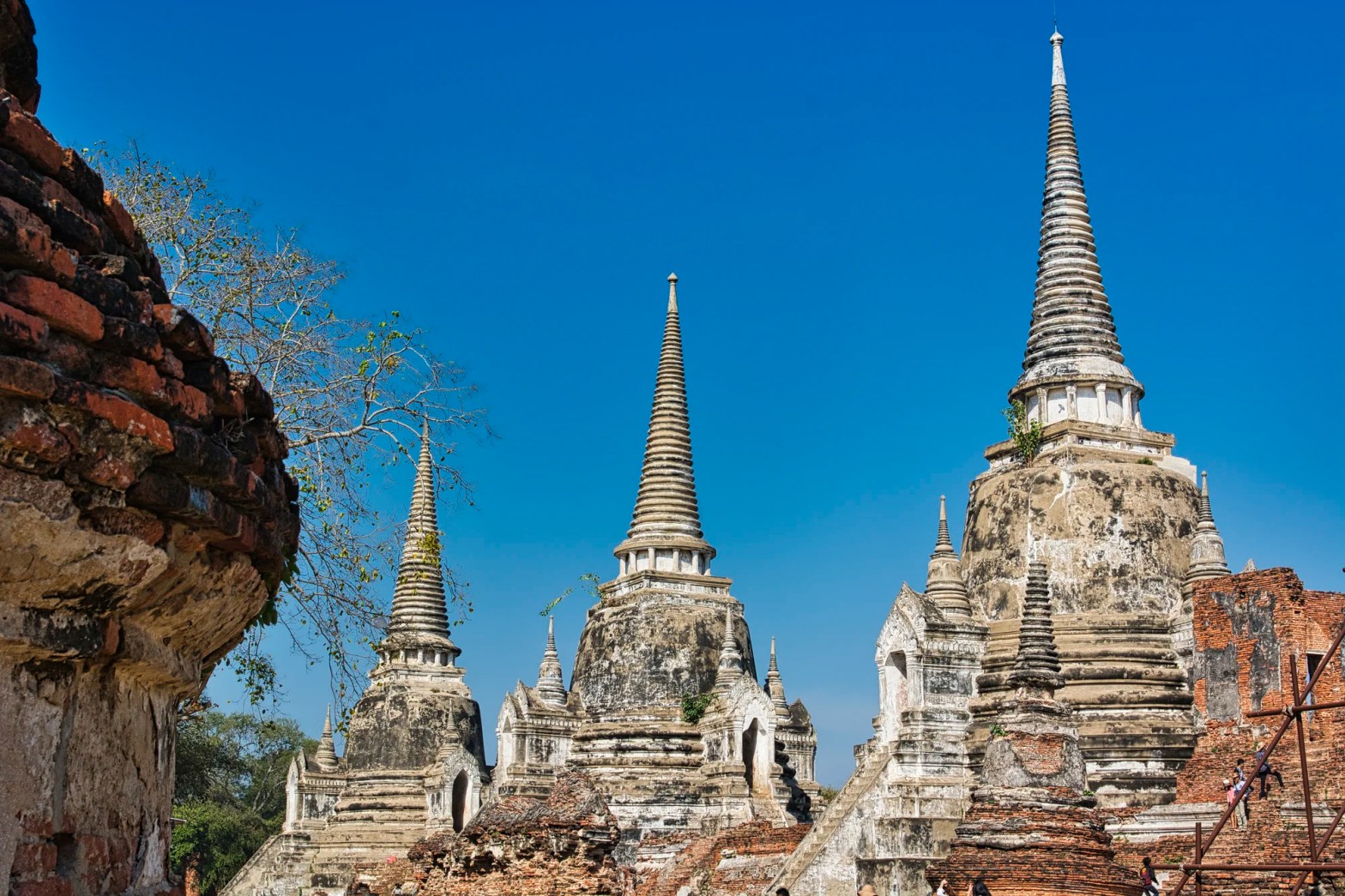
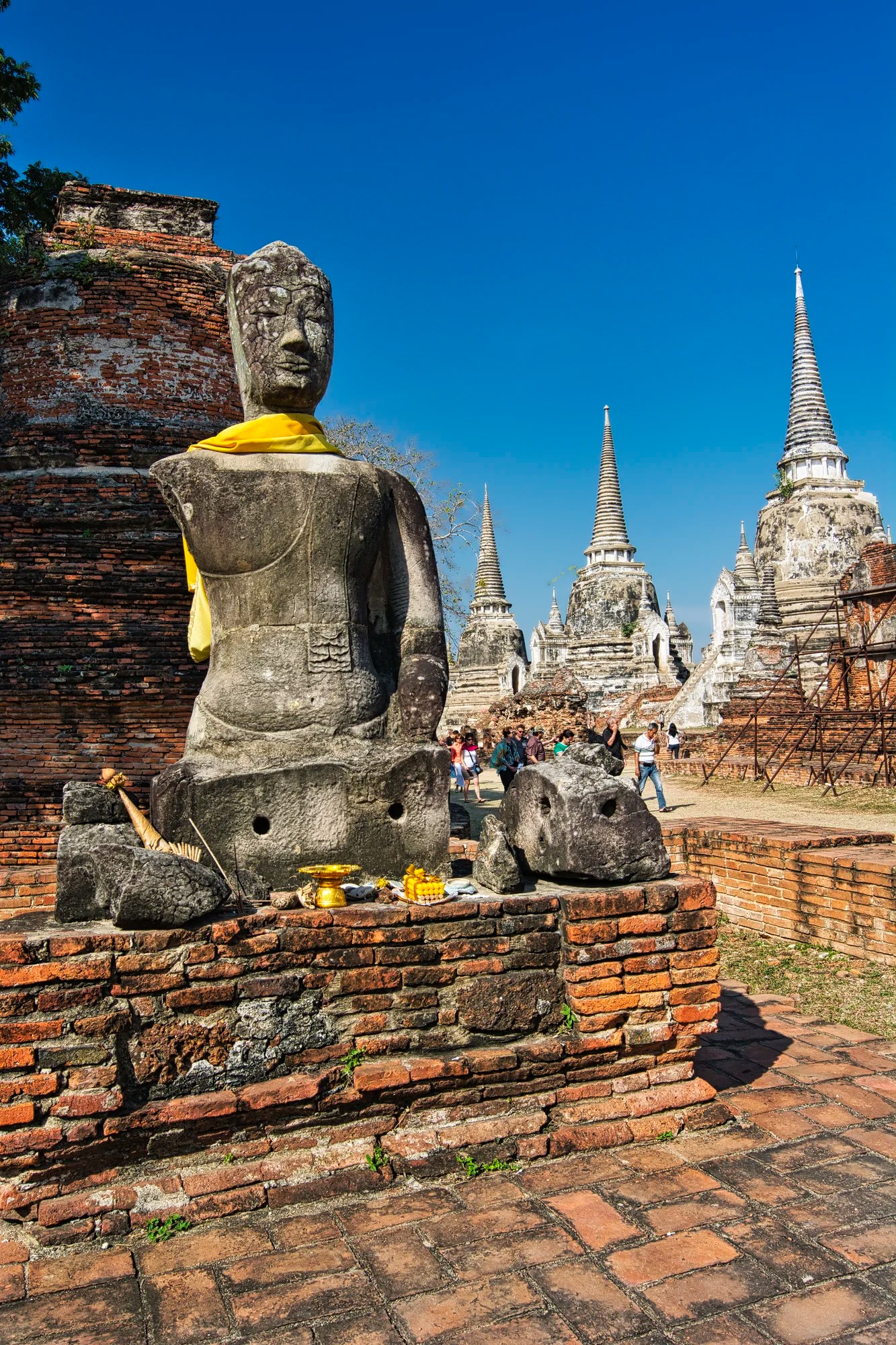
Another iconic sight of Ayutthaya is the three large, white chedis of Wat Phra Si Sanphet (G4.7). Many tourists are snapping photos of these structures, probably not realizing their significance. Perhaps it’s that three is a magical number and makes for a more pleasing composition. Think of the three little pigs or the rule of thirds in photography. In Hinduism, the number three represents completeness, stability, and balance as well as the trinity of their three main gods — Brahma, Vishnu, and Shiva.
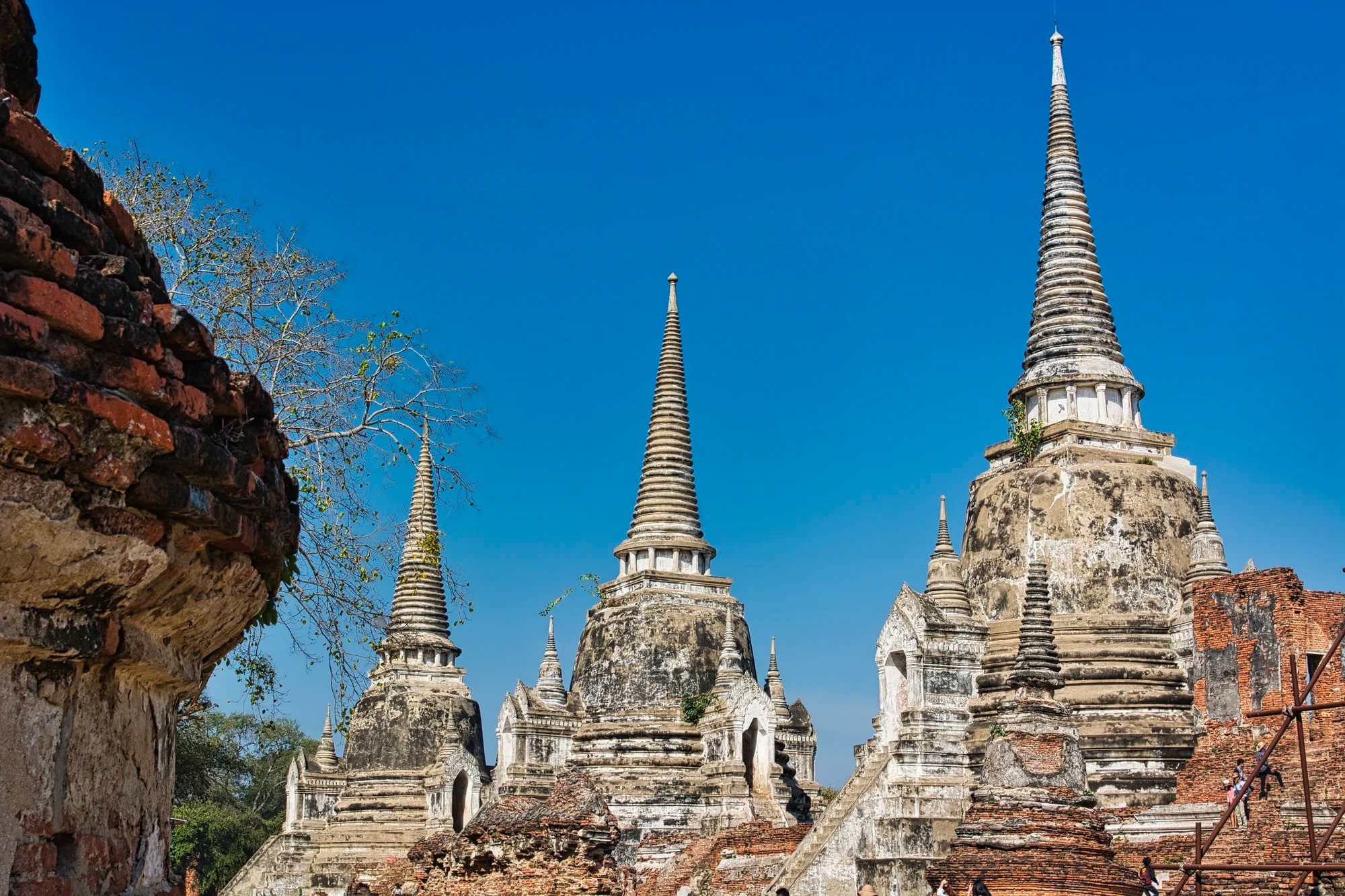
Chedis or stupas symbolize prehistoric burial mounds used to hold the remains of royal people or holy artifacts. These three chedis (G4.9) hold the ashes of King Boroma-Tri-Loka-Nat and his two sons, who also became kings.
Wat Phra Kaew, Bangkok
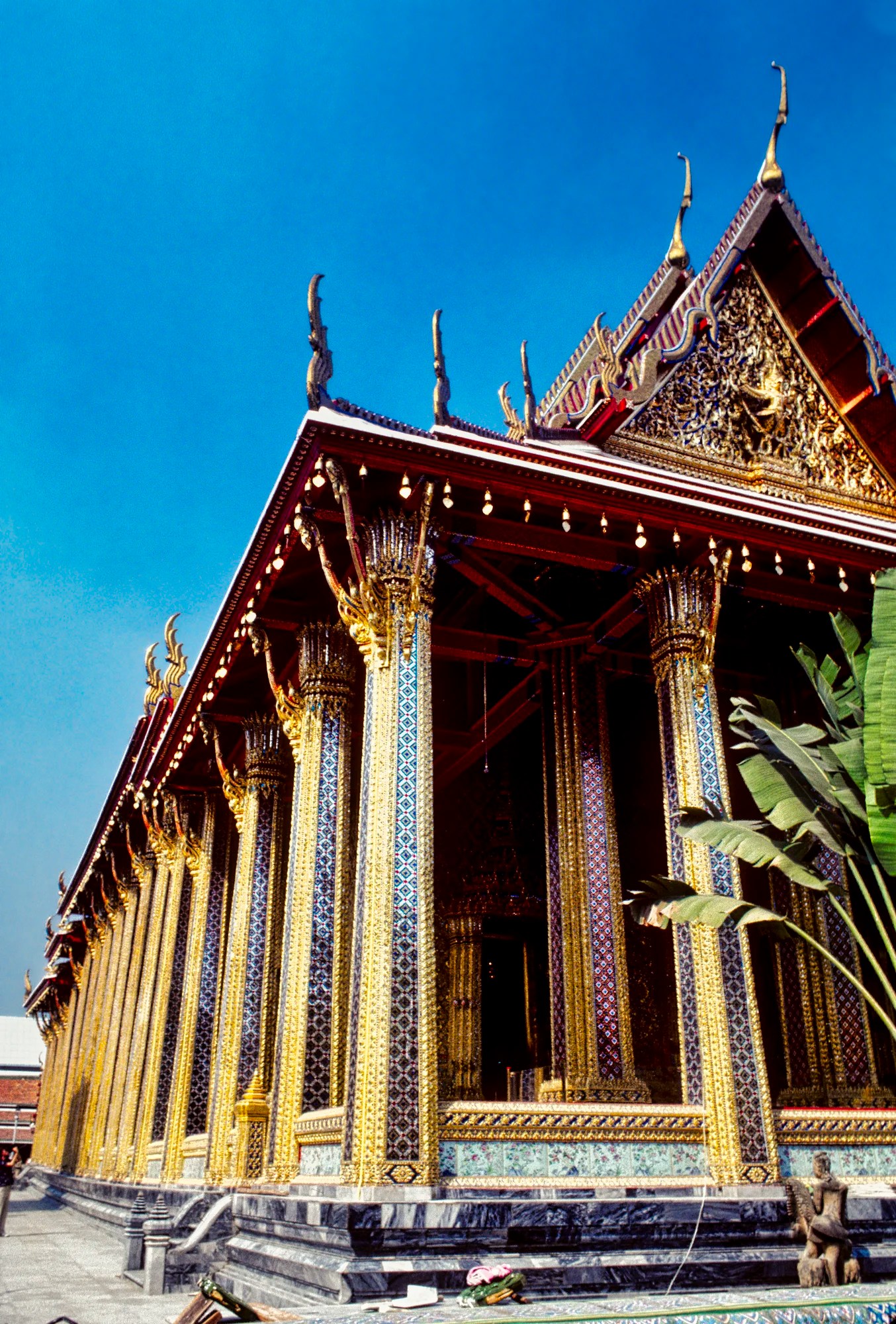
It is a shame that the wat was destroyed because it was considered to be the most beautiful complex in the city. It was the inspiration for the incredibly beautiful Wat Phra Kaew, Bangkok (G4.7).
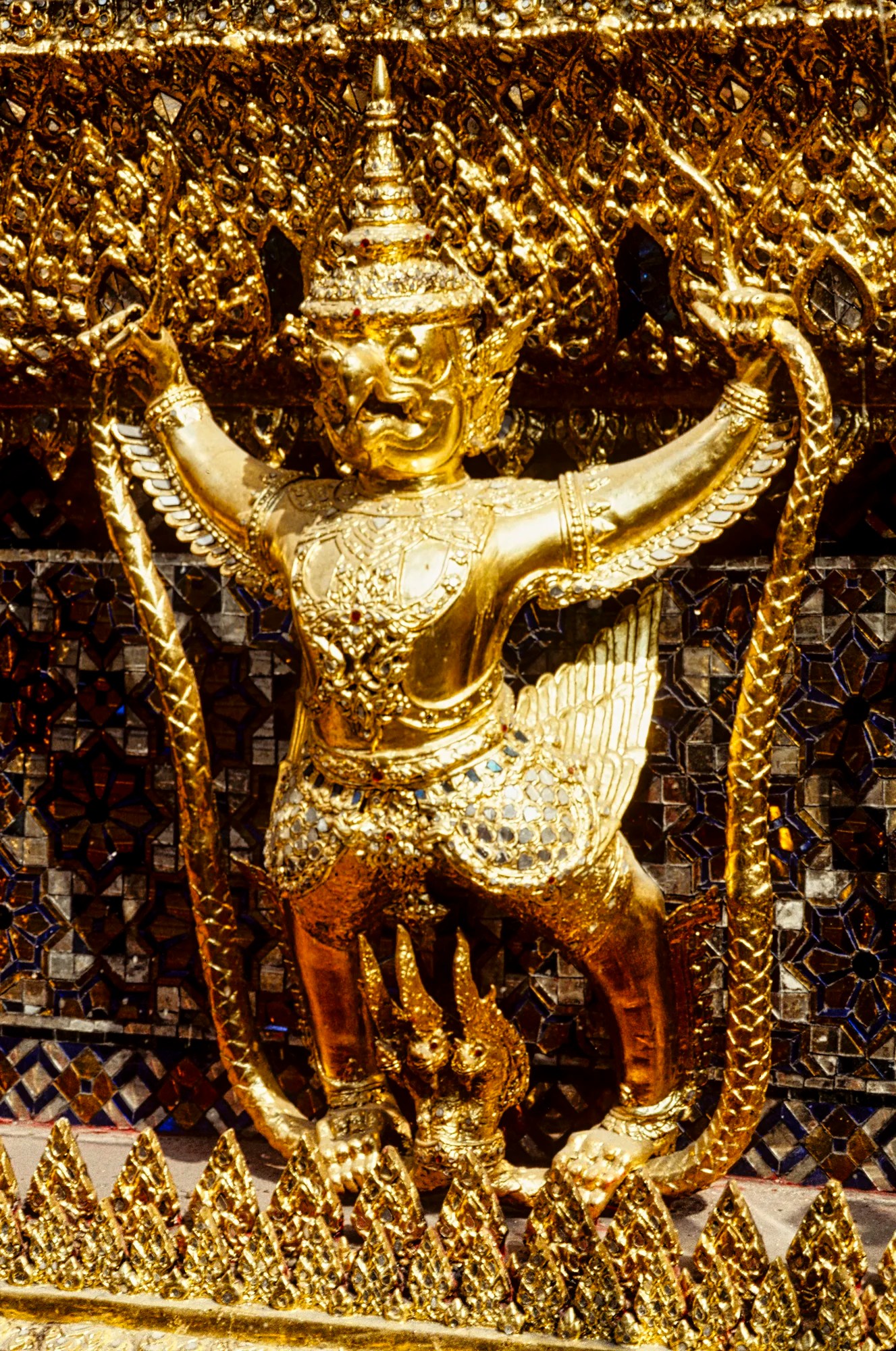
So to get an idea of the beauty of Wat Phra Si Sanphet and Ayutthaya in general, visit Wat Phra Kaew in Bangkok.
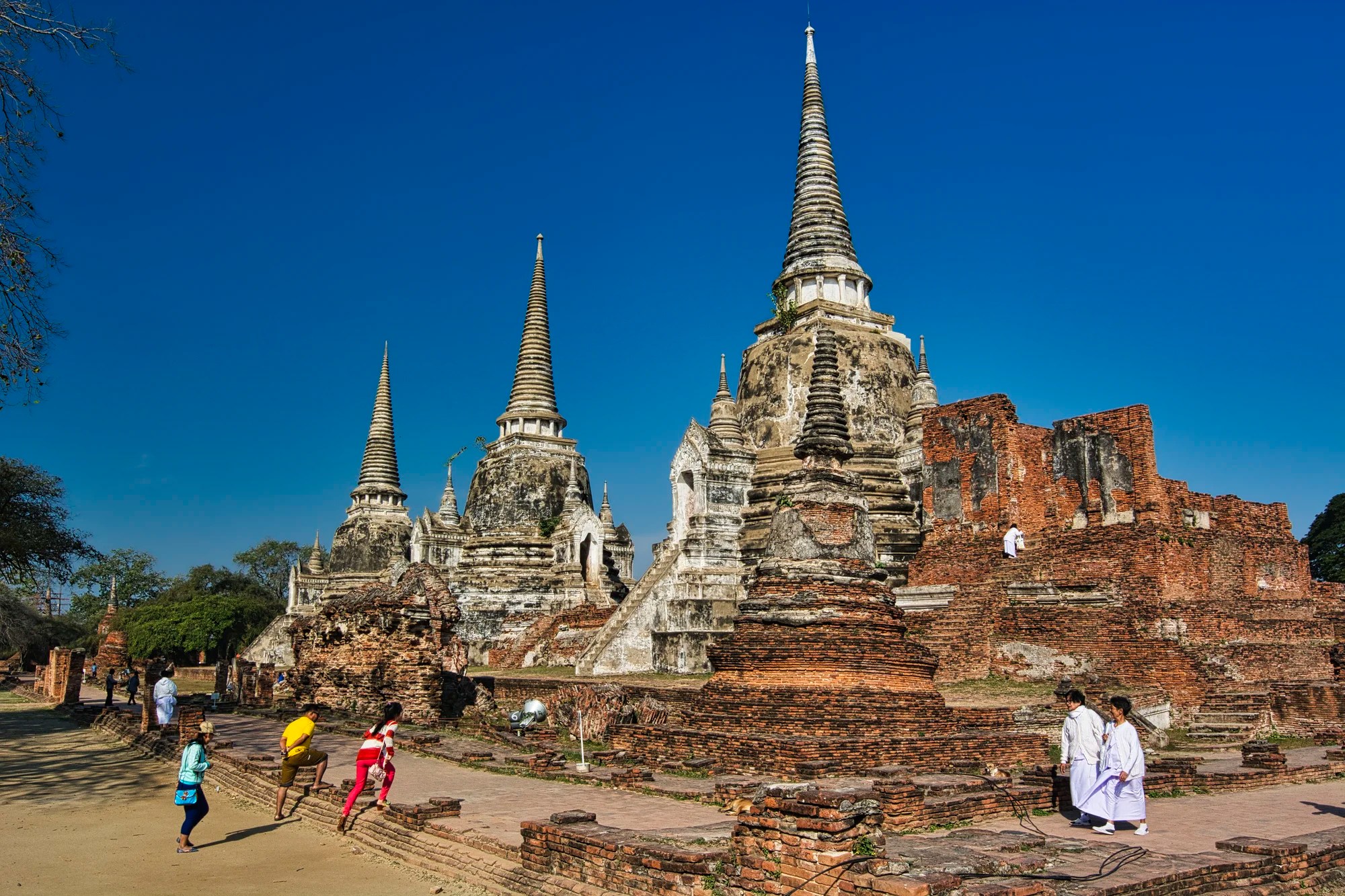
Wat Phra Si Sanphet became the royal temple of Ayutthaya and was where the most important ceremonies were held. It also served as the royal family’s private chapel and, unlike most other religious centres in the city, no monks lived within the complex.
Viharn Phra Mongkhon Bophit
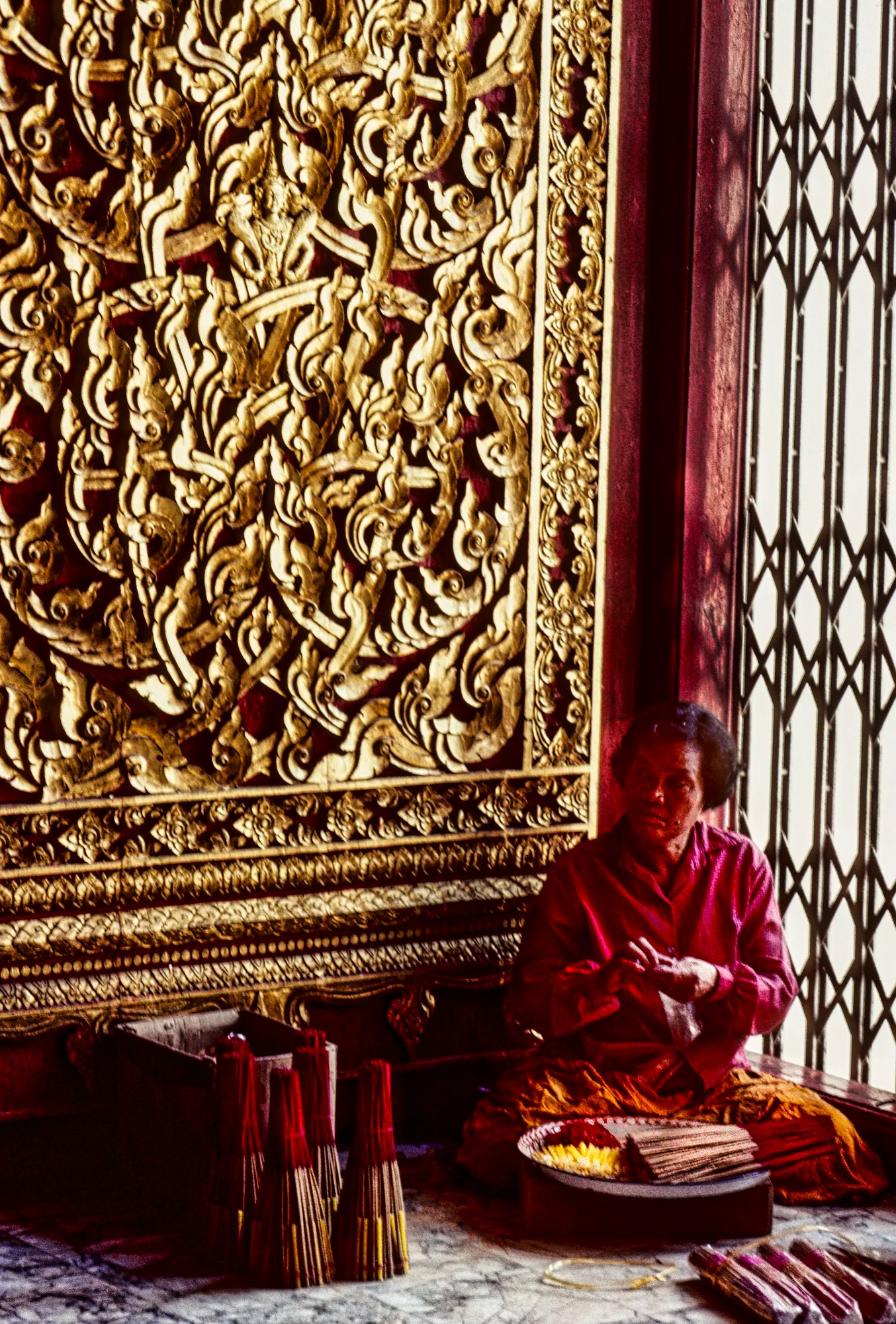
There are some wat buildings in the old city that are still in use. We particularly liked the orate carved wood panel in Viharn Phra Mongkhon Bophit (G4.7).
Wat Chaiwatthanaram
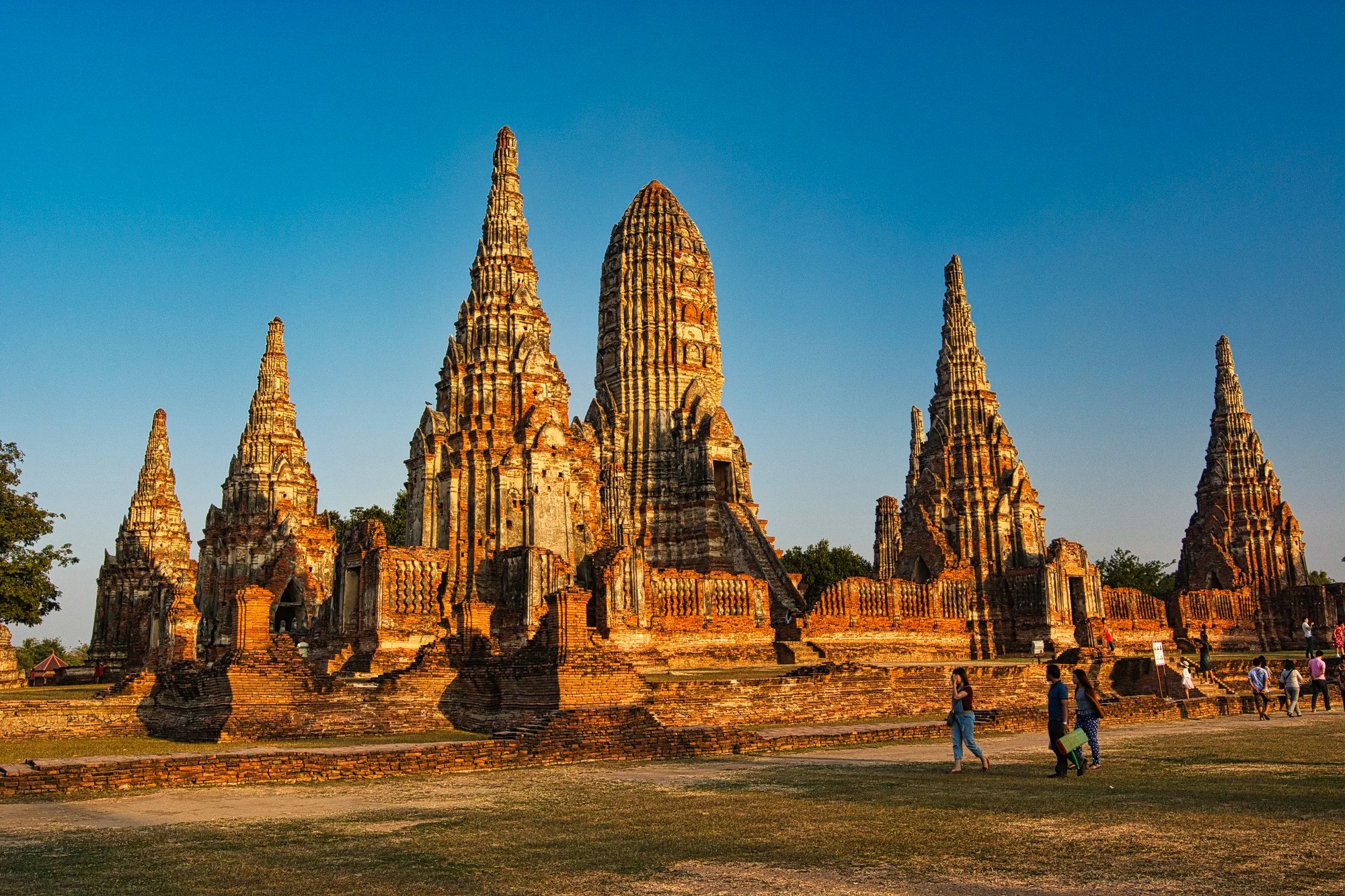
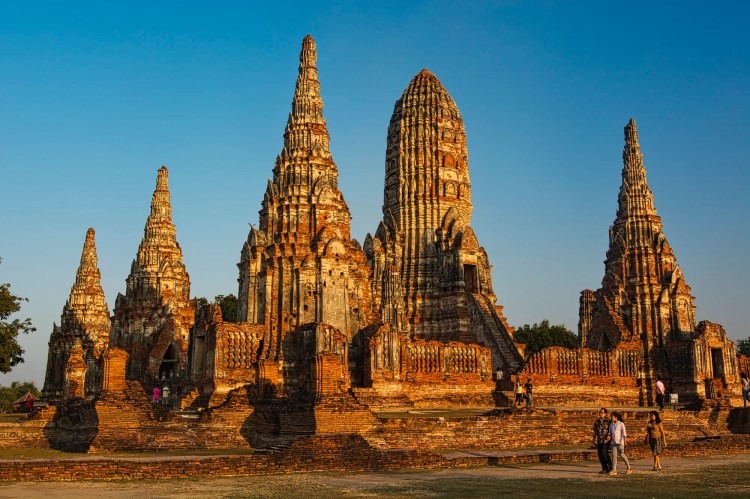
Wat Chaiwatthanaram (G4.7), meaning “temple of long reign and glorious era”, is our favourite area. It is spectacular at sunset when it is glowing in warm reds. It was built by King Prasart Thong in 1630 as a tribute to his late mother, so he build it on the site of her residence, on the other side of the river from the historical centre.
One reason for the success of the Ayutthaya Kingdom was that the Chao Phraya River, which flows south to the Gulf of Siam, was navigable by ocean-going ships. On the negative side, the ancient sites including this wat were damaged during the disastrous 2011 flooding.
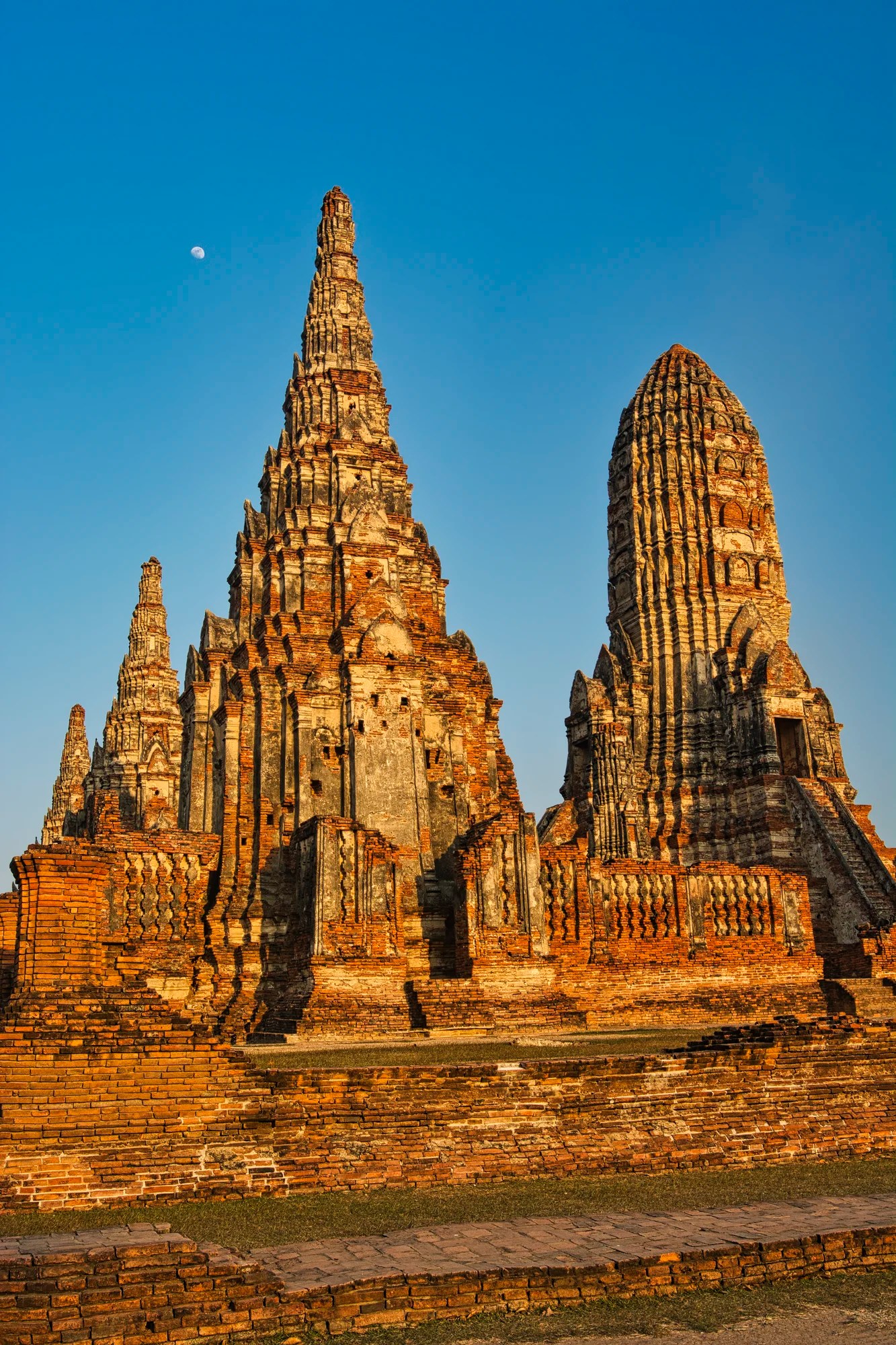
Wat Chaiwatthanaram was designed in Khmer style, with a central 35 m (115 ft) prang surrounded by four smaller prangs. This is located on top of a raised platform surrounded by eight chedi-shaped chapels.
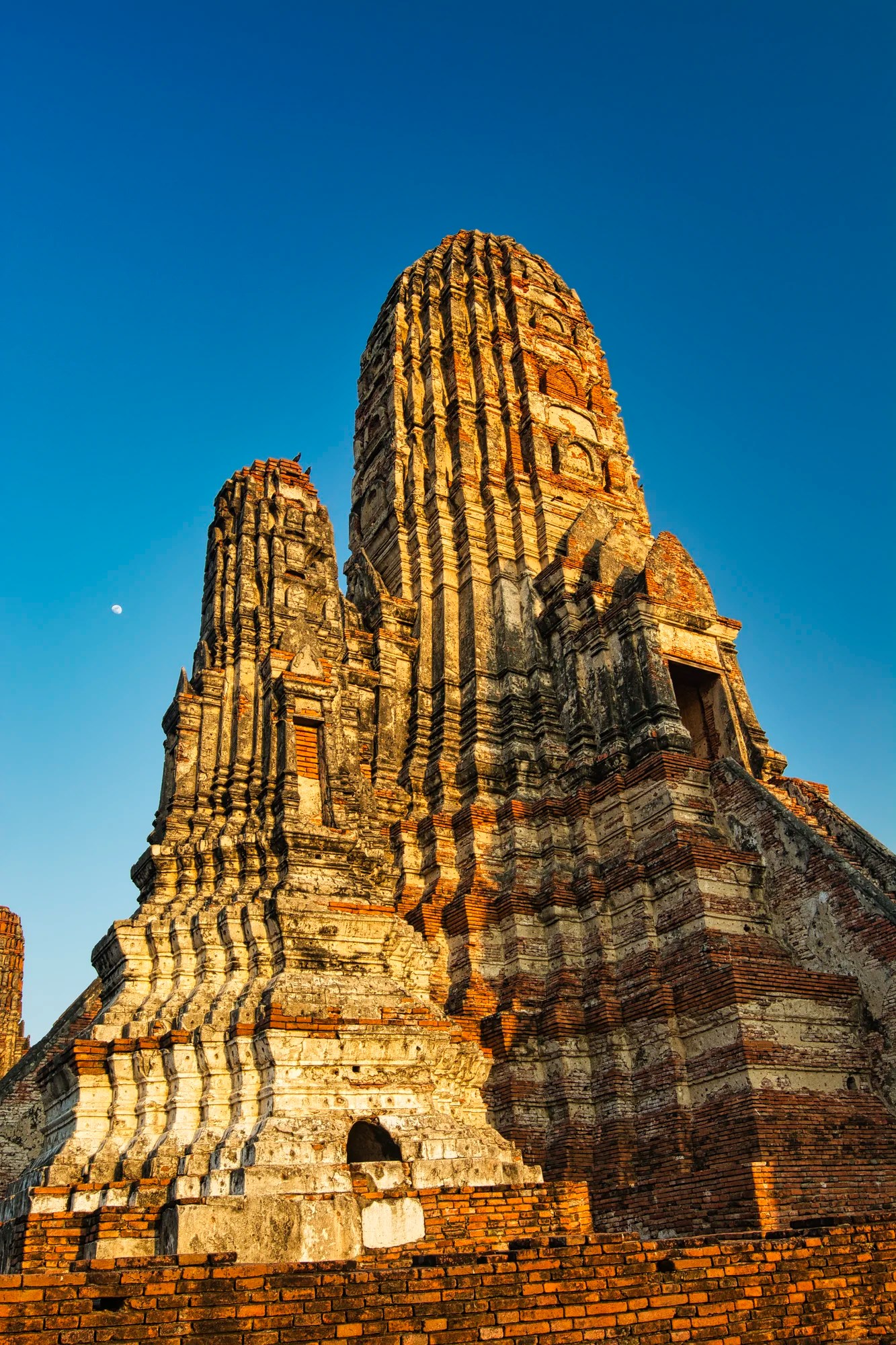
The central prang represents the cosmological centre of the Buddhist universe, Mount Meru. The four smaller prangs around it represent the four continents.
So to get an idea of the beauty of Wat Chaiwatthanaram and Ayutthaya in general, see our photos in our post Bangkok — Are Wat Pho, Wat Arun and the National Museum Worth Visiting?
It is reminiscent of Angkor Wat (1113-1175), which epitomizes Khmer art and architecture. At its peak, the Khmer Empire (892 – 1431 CE) included Cambodia, Thailand, Laos, and southern Vietnam. It was larger than the Constantinople Roman Empire.
How to Get to Ayutthaya and Sukhothai
On our first trip to Thailand, we travelled one hour by bus from Bangkok to Ayutthaya. You can also get here by train.
On our last trip, we drove 101 km in 1:30 hrs. from Ayutthaya to the Bangkok Airport. Ayutthaya is a good alternative to Bangkok as a stopover before flying home.
Ayutthaya to Sukhothai by car is 357 km and 4:50 hrs. Sukhothai to Chiang Mai is 286 km, 4:15 hrs. by car.
Sukhothai
In the 11th century, the ethnic Mon Kingdom (southern Burma and Thailand) was annexed by the Khmer Empire. Indian concepts in art and religion had been adopted by both ethnic groups during the Indianization Period. The Tai ethnic group combined the Buddhist concepts of the Mons, the Hindu beliefs of the Khmer, and their own animistic practices.
Sukhothai, which literally means “Dawn of Happiness”, was the capital of the first Thai-based kingdom (1238-1448) after the Thais freed themselves from the Khmer Empire. It ruled most of present day Thailand.
Sukhothai Historical Park is a beautiful and garden-like park. It is also less less-visited area than Ayutthaya.
Wat Mahathat
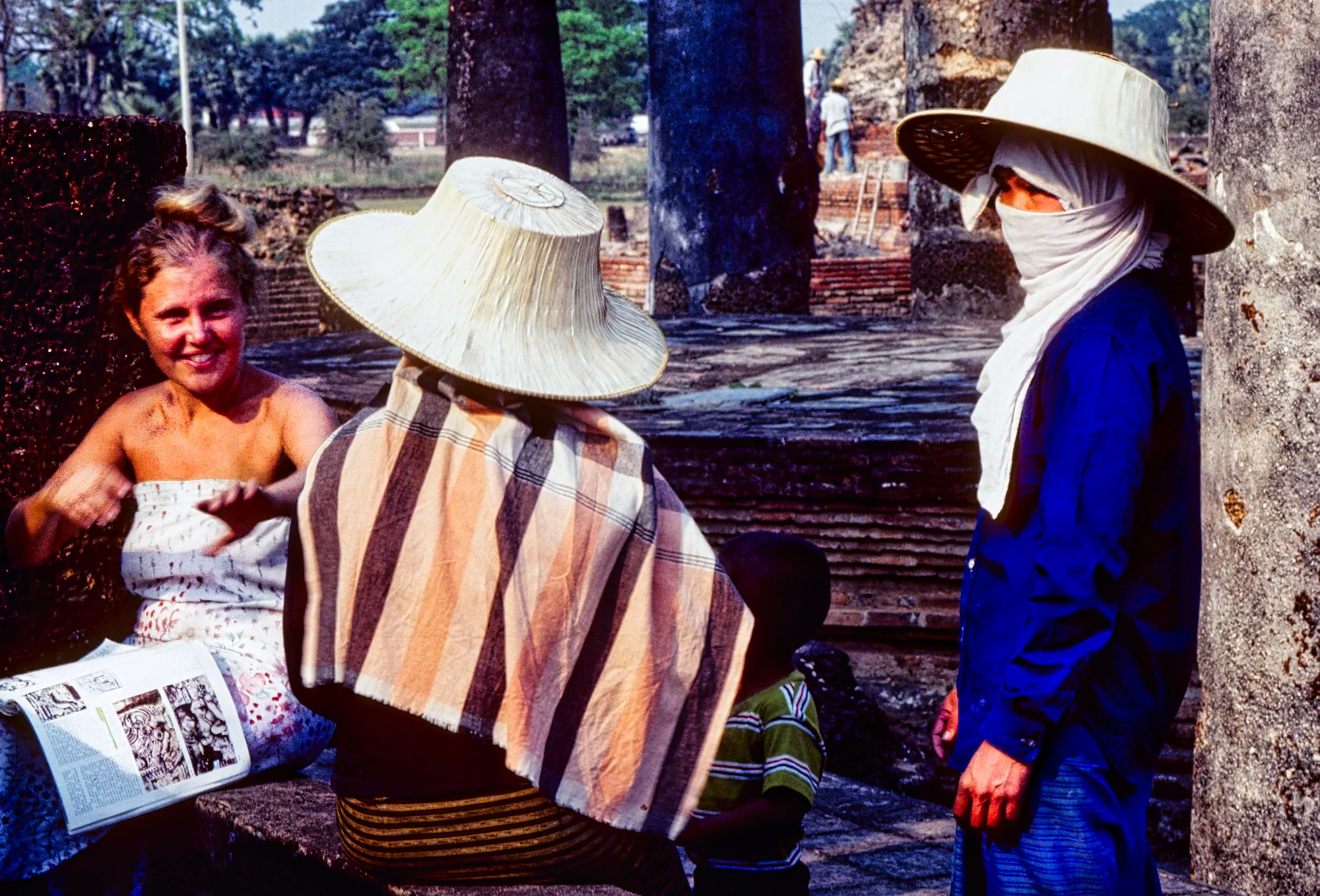
Corinne “spoke” (sign language) with some construction workers shovelling sand out of a pickup truck. The women draped their heads in towels topped with a sloping cane hat.
A forest of columns proceeds east to the chedi of Wat Mahathat (G4.8). Most interesting were the carvings on the towers surrounding the base. In particular, look at the east tower with the reclining Buddha achieving nirvana.
However, it was the frame that was of most interest with the body-less Kala, the Hindu god of death and time. Kala demanded that the Hindu god Shiva give him a victim to satisfy his voracious appetite. Instead, Shiva ordered Kala to eat itself so that only its head remained.
On the east face was a bird-like kinnara There is another carved chedi platform to the south with a curious demon. Best photos for a view of the wat are from the west side across the canal.
Wat Sri Sawai
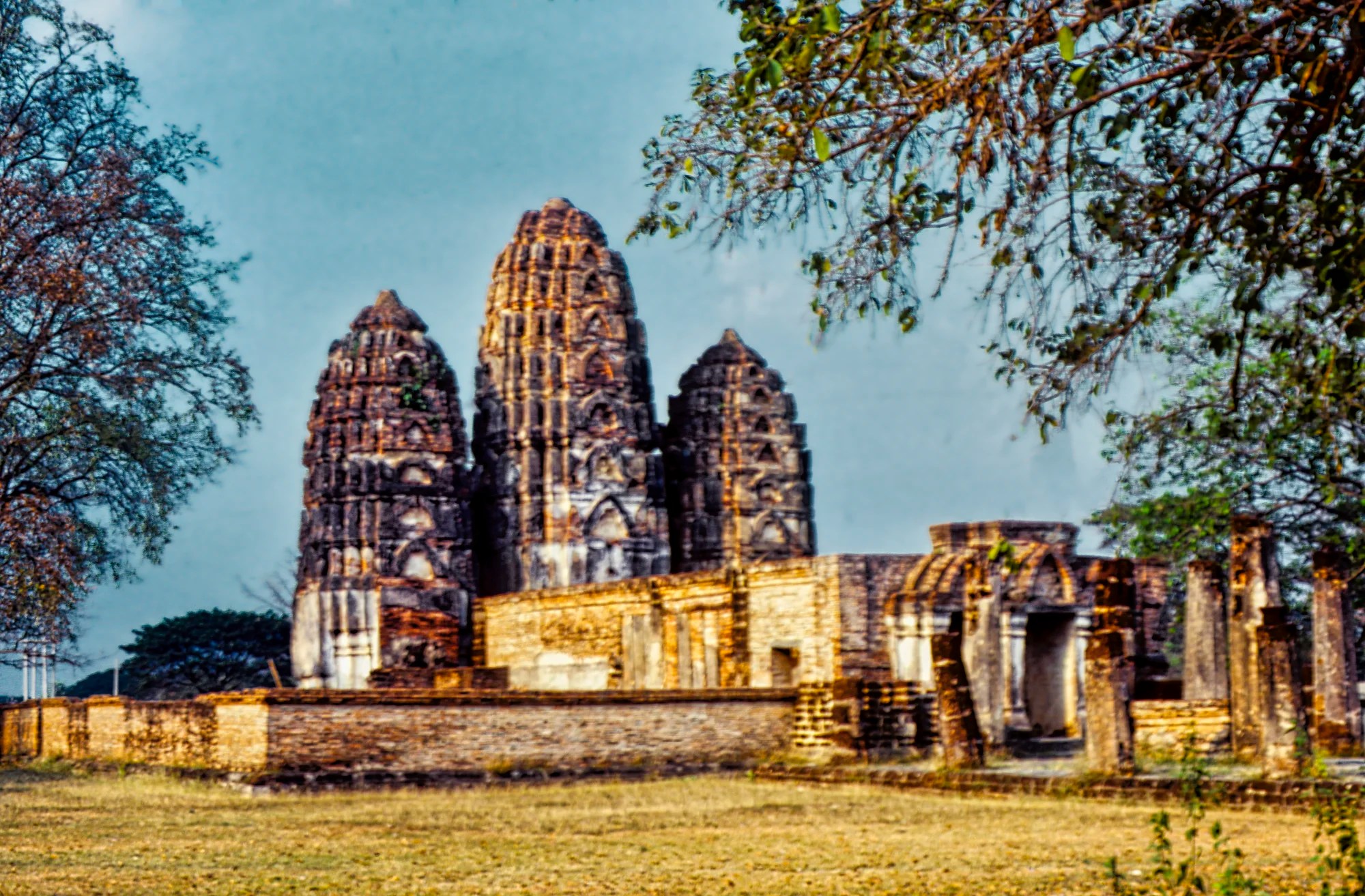
From Wat Mahathat, walk south to Wat Sri Sawai (G4.6), which dates from the 12th and 13th centuries. It was originally built by the Khmer as a Hindu temple to Vishnu.
There was a good view from the south side with the columns of the viharn in the foreground and three towers in the background. The mountains in the distance were too hazy to see in the photo. This is a good example of the Khmer-style parabolic towers, called prangs.
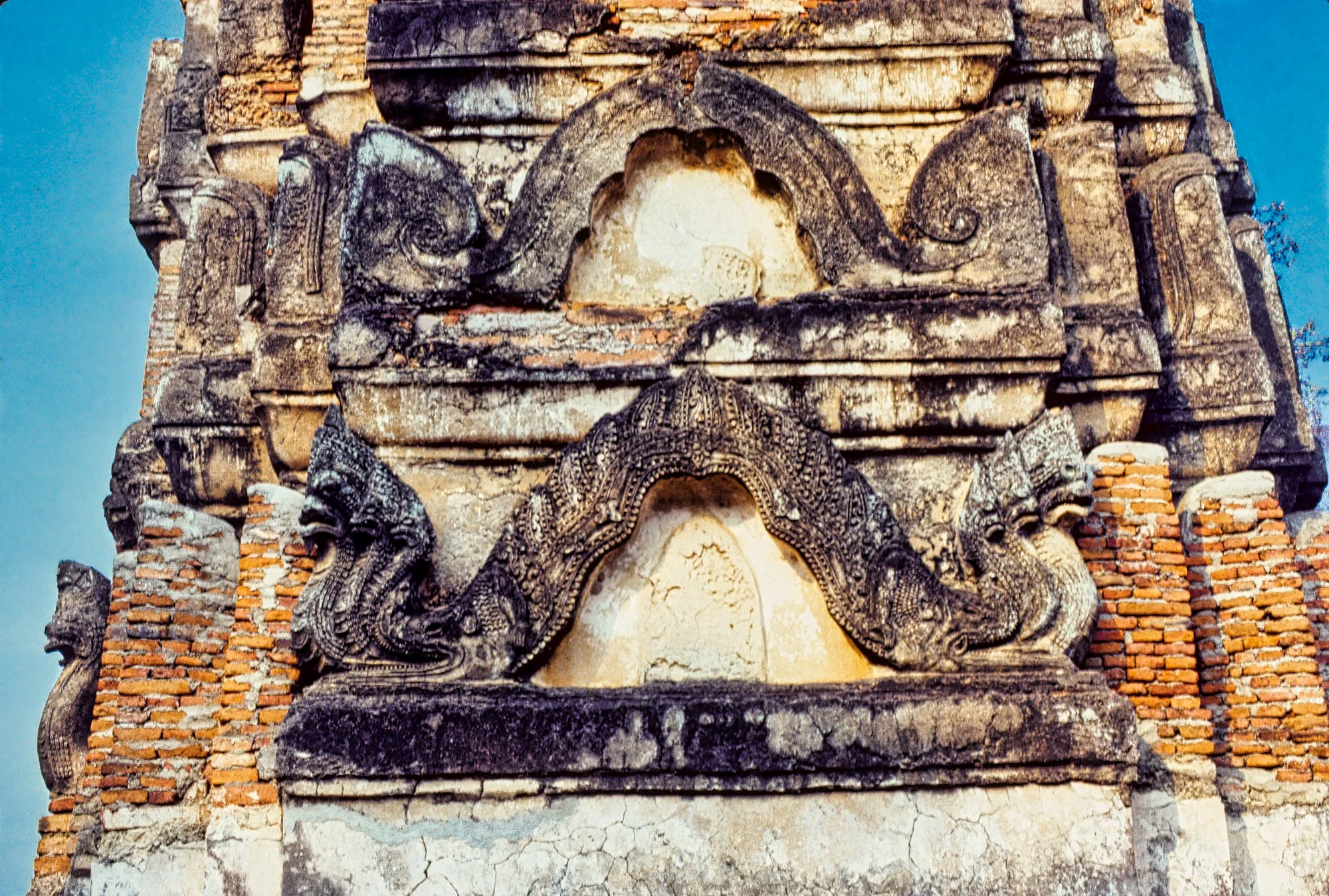
The makara-naga motif originated from India. The naga (serpent deity associated with water) emerges out of the sharp-toothed makara (crocodile deity associated with the sun). It was believed that makara and naga would ensure the correct proportion of sunshine and rain to ensure good harvests. As this was the most important thing to an agrarian society, these motifs are the most common in all the temples of Thailand.
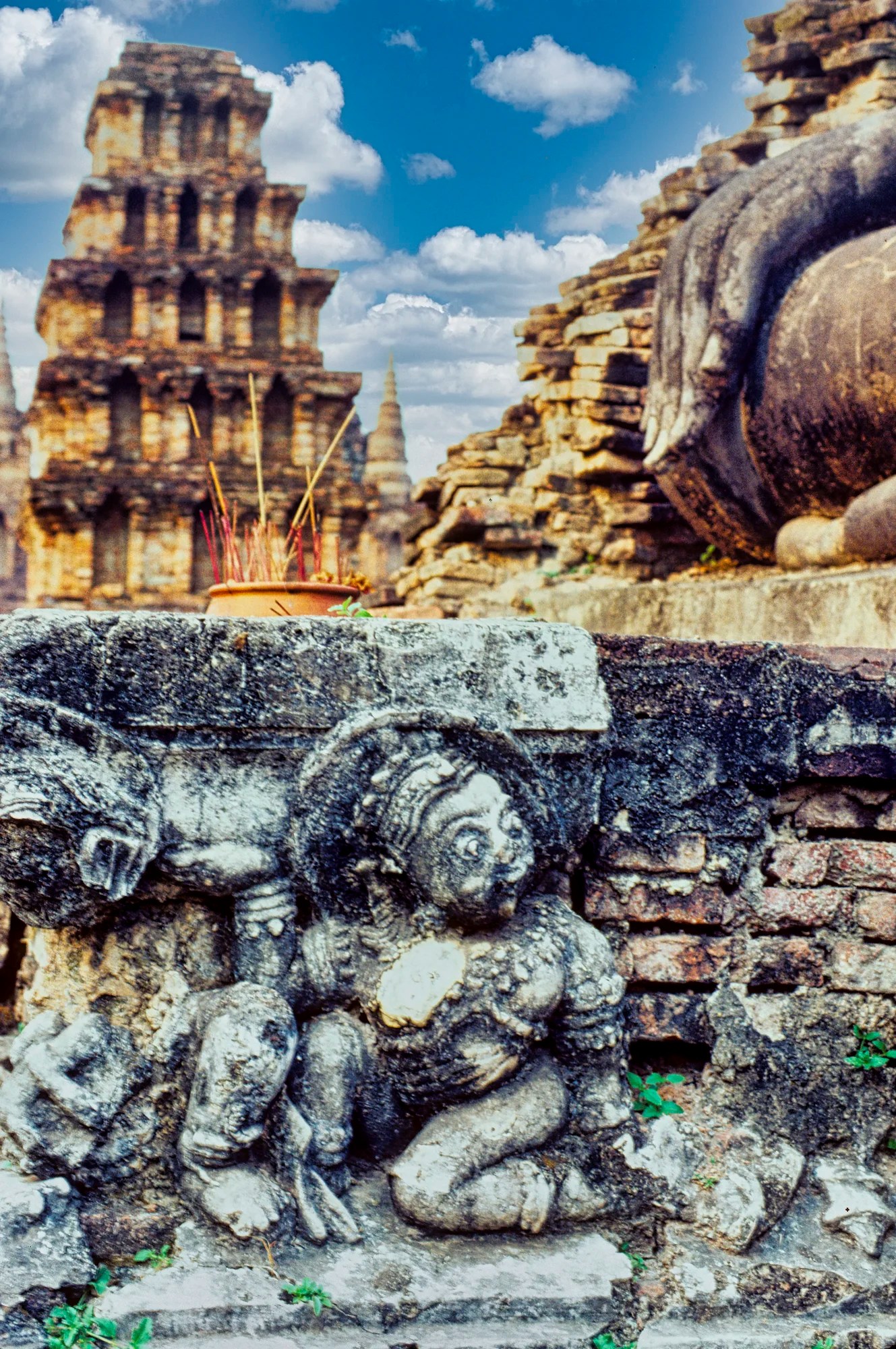
Stucco, which surprisingly can last for centuries, was the preferred medium for decoration by the Khmer.
Wat Traphang Ngoen
This is a photogenic place with a great view from a pond with a spired chedi and mountains in the background.
Other temples to see include Wat Sa Si, Wat Si Chum with an impressive mondop, and Wat Phra Phai Luang with three prangs, but it is not as good as Wat Si Sawai.
Lopburi
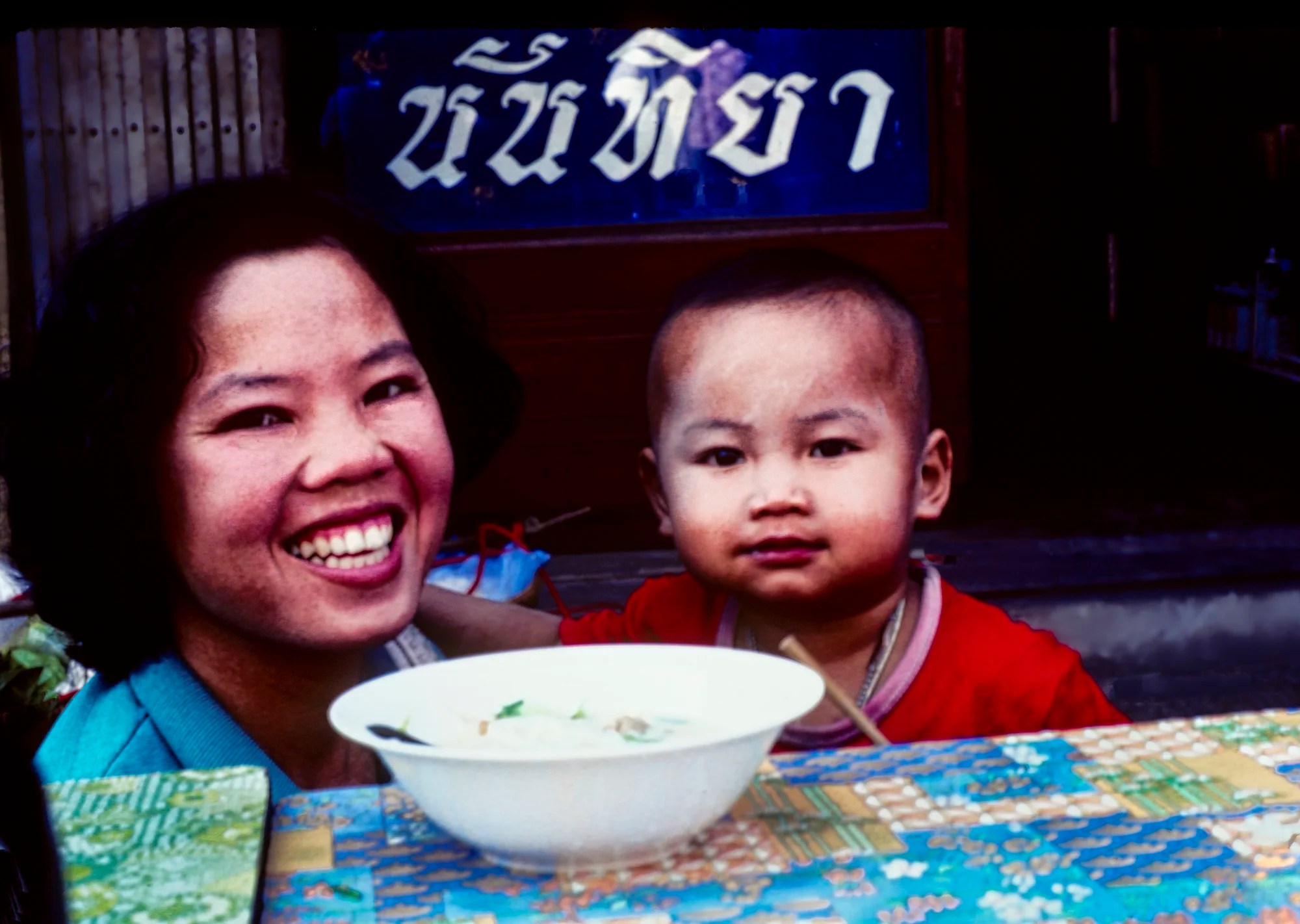
Lopburi, 150 km NE of Bangkok, is another town with ancient ruins. On the plus side, it is a very small town and quieter than Bangkok except for the trucks. On the minus side, there is less to see. We had very inexpensive meals at the stalls in the market. Breakfast was a fish ball and noodle soup with spices to make it as hot as you like. Our favourite fruit in January was the very sweet, yellow jackfruit.
We visited the King Narai’s Palace (G4.7), but for the most part, it is just a series of red brick buildings since King Narai used a French architect. It even used to have mirrored halls in imitation of Versailles.
Lopburi was nearly the capital of the Ayutthaya Kingdom but there was a smallpox epidemic. So, King U Thong moved his court to Ayutthaya.
We saw a group of students practicing what appeared to be classical dance steps, holding a cane as a sword. All the kids gathered around us. They tried out the only English phrases they knew, like ” hey you” and “where you go”. We replied, “Where are you going?”, which surprised them. They laughed and smiled when I took a group picture of them.
Wat Phra Si Rattana Mahathat
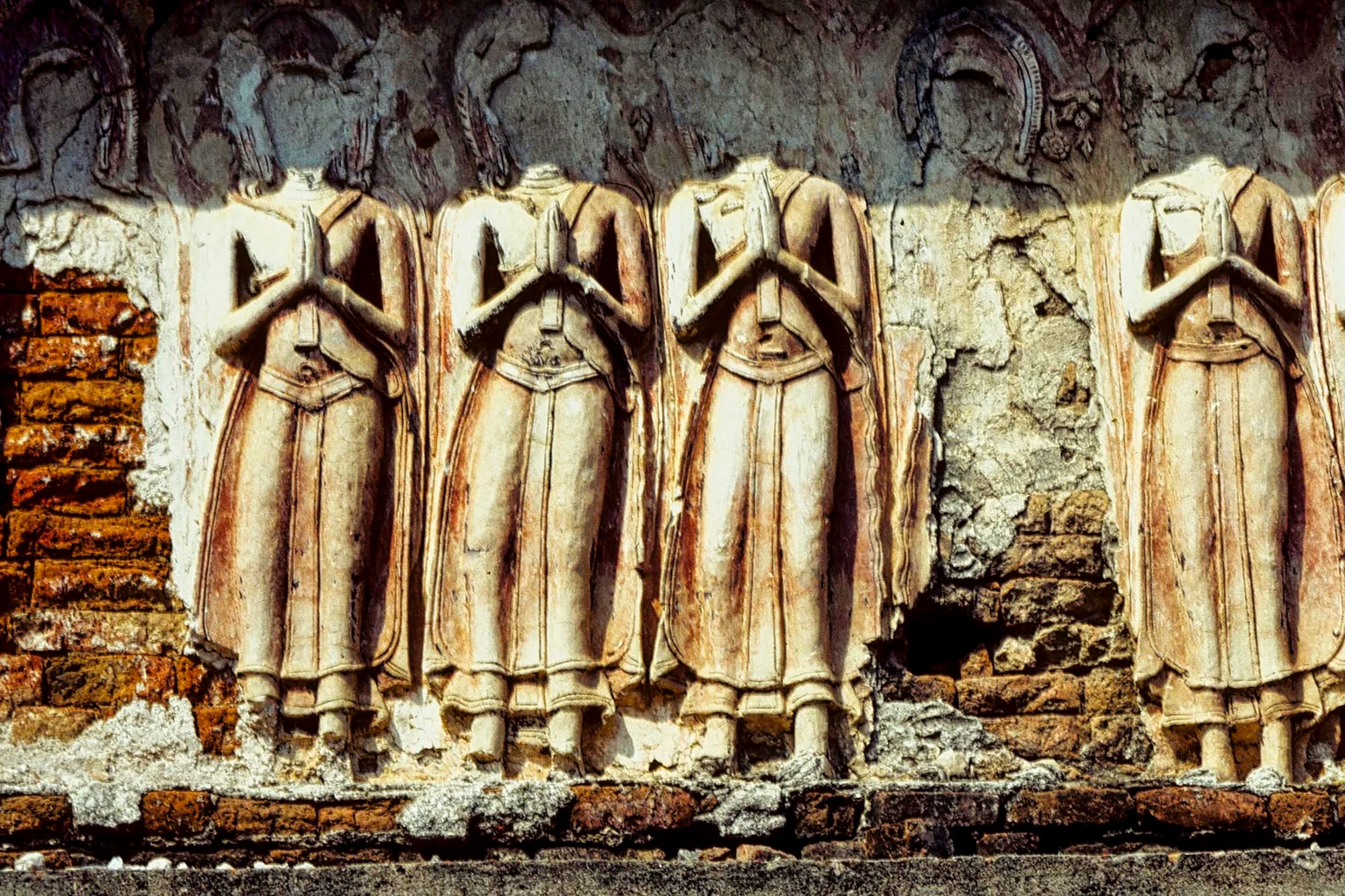
One block east of the palace exit was the more interesting 13th century Wat Phra Si Rattana Mahathat (G4.6). Some of the stucco decorations have survived. These angel-like figures (devatas or apsaras?) are folding their hands together in the namaste greeting or Añjali Mudrā, which literally means “I bow to the divine in you”.
The similar wai gesture (pronounced “why”) in Thailand originates from the namaste gesture of India. Wai could be used to say hello, thank you or sorry.
Phra Prang Sam Yot
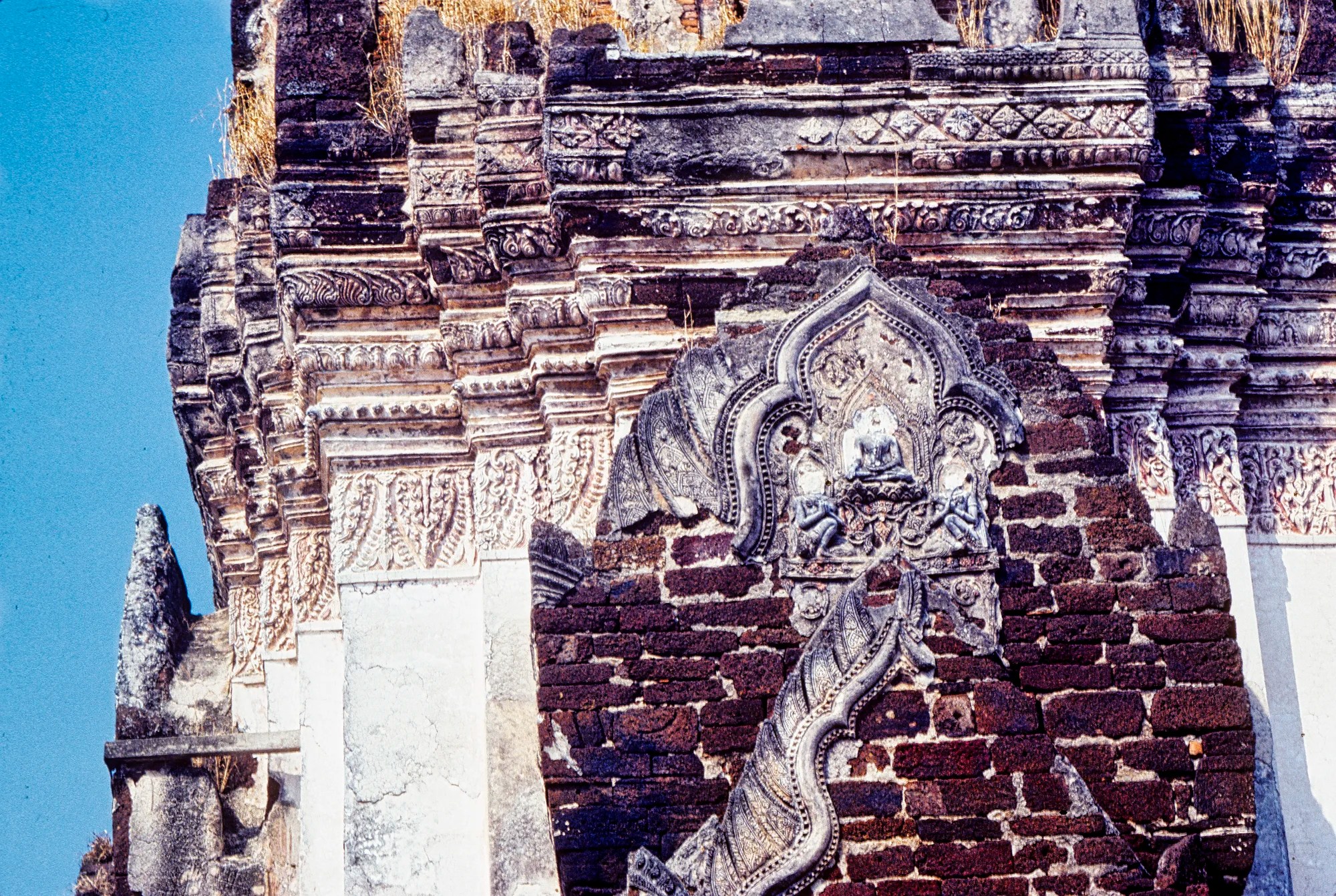
Phra Prang Sam Yot (G4.4) was built in the Khmer style. The three prangs represent the trinity of the three chief Hindu gods, Brahma, Shiva and Vishnu. Images of Buddha’s life and floral patterns were carved in the stucco applied to the prang.
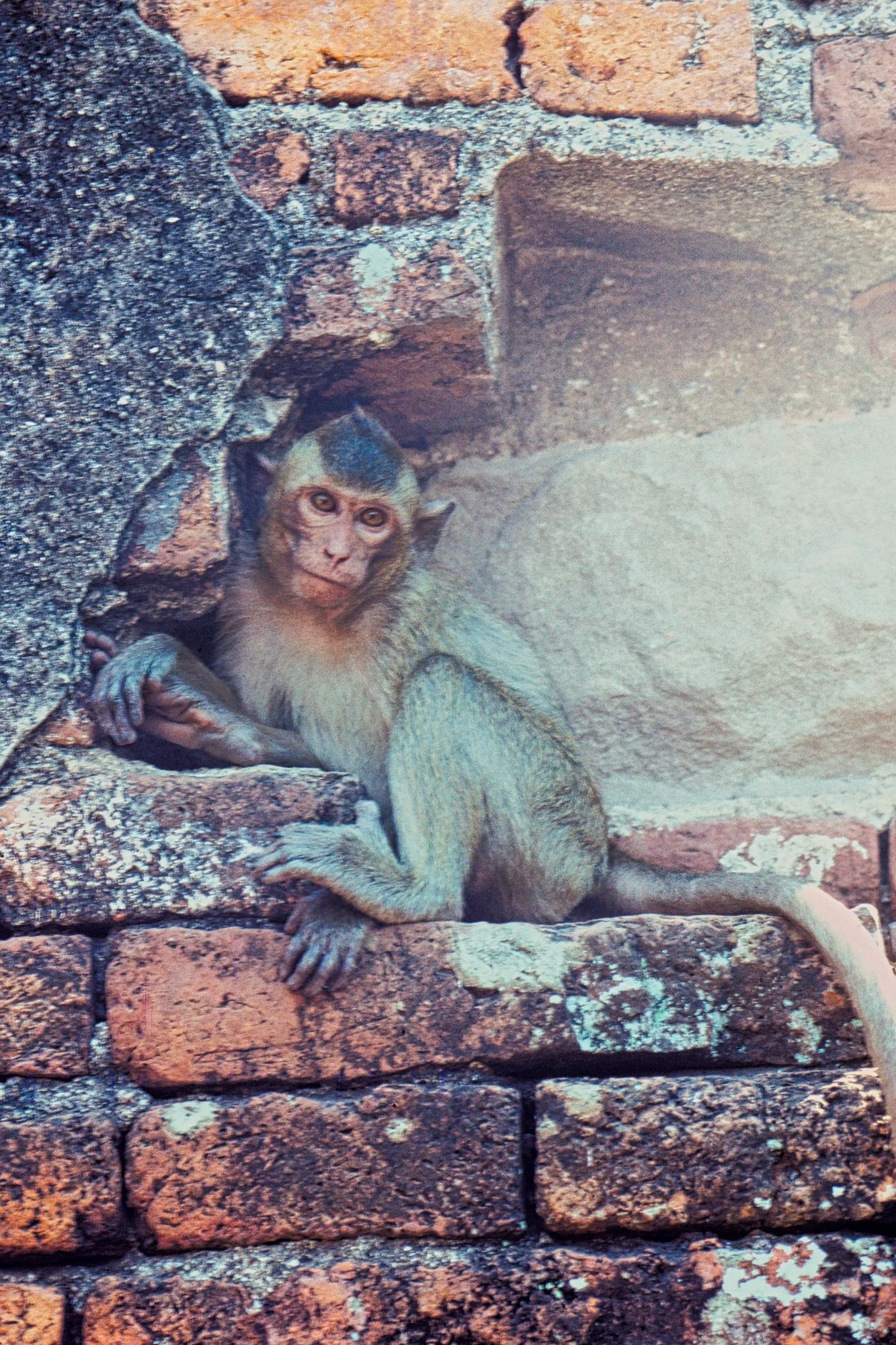
On our first trip to Thailand, this place was guarded by a troop of monkeys decorating the ruins. The monkeys were given this land because of a promise by the avatar Rama in the Ramayana (Ramakien in Thai) to reward the monkey army that fought for him. It’s a long story – literally. The Ramayana is a 480,000-word epic.
But we would hesitate to recommend visiting now, as there are many reports of the macaque monkeys having become aggressive. One idea if you still want to but wish to avoid the monkeys is to visit the wat at 10:00 and 16:00 hrs when the monkeys are fed by conservation officers.
Final Comments
We hope this post will encourage you to spend a decent amount of time outside Bangkok. Ayutthaya and Sukhothai really have a lot to offer.
Subscribe
Please subscribe to Terra Encounters because we offer valuable insights to improve your understanding and enhance your travels. We offer itinerary-based guides packed with the best sights and hidden gems. Let our knowledge help you fully appreciate every moment of your amazing journey.
Get travel tips and advice delivered directly to your inbox. The best part is that it is free.
This was only a taste of Thailand. What questions do you have? If you have been to Thailand, share your experiences with us. How long is/was your trip?
Itinerary Map & Resources
TH is the ISO Country Code for Thailand.
THB is the ISO Currency Code for Thai Bahts.
THB 100 = CAD 3.84, EUR 2.62, GBP 2.27, USD 2.81
Ayutthaya and Sukhothai Map — our custom Google map
Guide to the Sukhothai Historical Park was good, especially the map, but the numbers did not match the signs on the site!
Google Maps Ratings
Google Maps provides a rating from 0 to 5 for all sights, hotels and restaurants (but not cities). All of our recommendations are appended with the rating (prefixed with a G) from Google Maps. As it is based on feedback from tourists and locals, it is much more reliable than travel booking websites. We consider a score of 4 to 4.39 to be Very Good; 4.4 to 5 to be Excellent.
Other Places to Add to Your Itinerary
Ayutthaya and Sukhothai are on the way from Bangkok to Chiang Mai.
Bangkok’s Top 4 Self-Guided Walks

Understanding Thai Buddhist Culture
Read the articles below to learn about and understand Thai Buddhist culture that permeates all of Thailand.
When is the Best Time to Visit?
Based on average maximum temperatures from NOAA:
| Month | Season | Max Temp | Rain Days |
|---|---|---|---|
| Nov-Feb | Cool | 30 to 33°C | Nov = 4 |
| Mar-May | Hot | 34 to 35°C | 5 to 13 |
| Jun-Oct | Rainy | 31 to 33°C | 9 to 17 |
The data supports the fact that November-February is the best season to visit.
How to Get Around Thailand?
On our first trip to Thailand, we usually took the bus to travel between cities. In those days, the bus destination was only in Thai script. So we always made sure to find out the bus number, which use the same Arabic numerals as we do. There are also trains.
On our last trip, we rented a car. With good roads, bilingual signs, and Google Maps, it was relatively easy to get around. Driving in Bangkok is frenetic — we would not recommend it. We dropped our car off at the airport outside the city and took the bus into the centre.
Is Thailand Safe?
According to the Numbeo Safety Index, Thailand is a very safe country.
 Terra Encounters
Leave a comment