
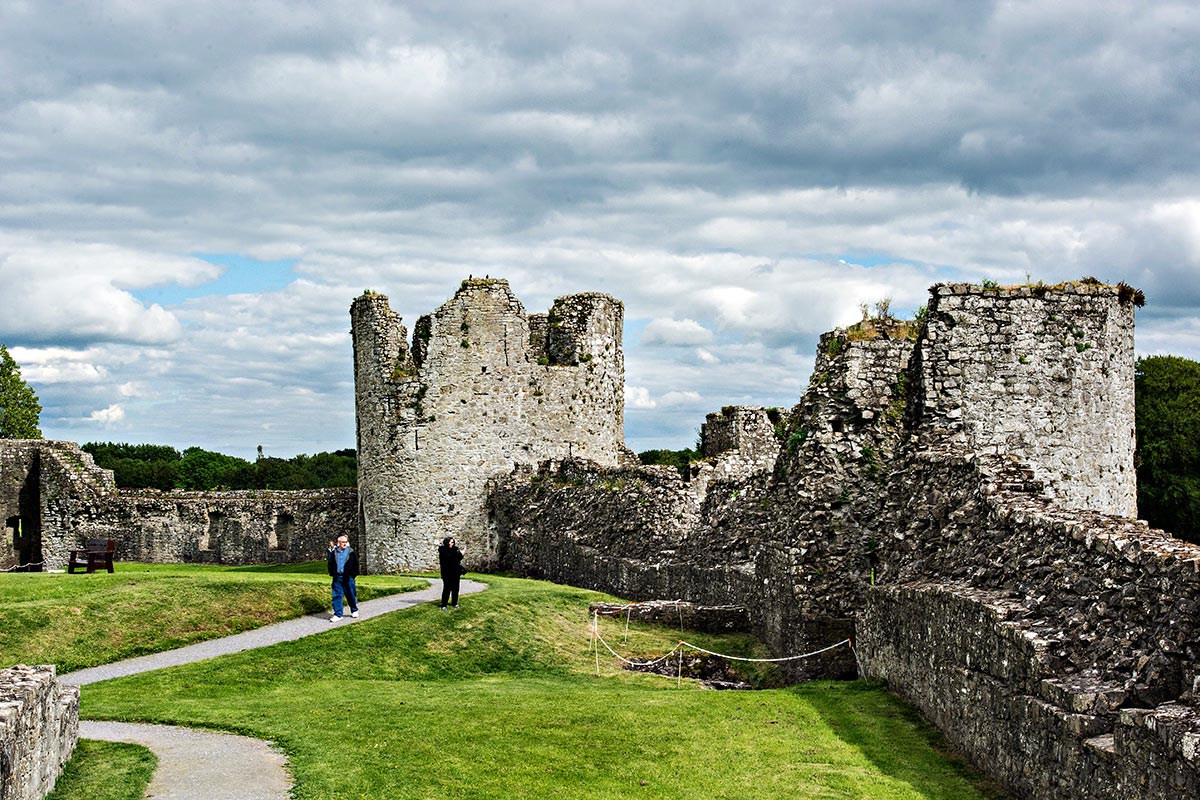
Why you should visit Trim in Ireland
No, this is not a post about dieting. Trim is an interesting small town of 9000 people with many good reasons to stay there. It is a good base for all the above sights as well as a departure point for Dublin Airport, only 49 km, 42 minutes away.
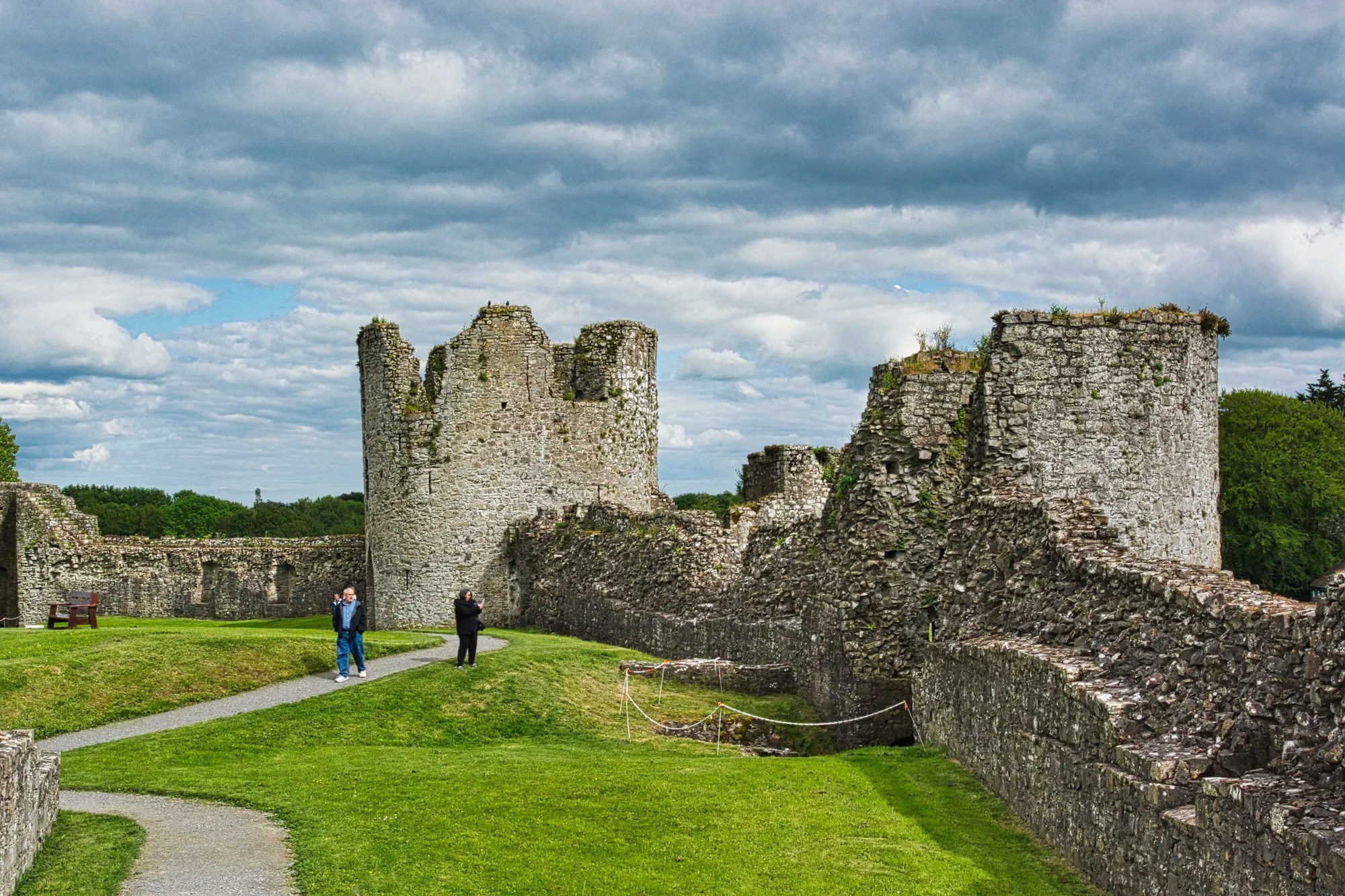
Trim is a great place to admire the quintessential Norman era Trim Castle. Enjoy the peaceful 12th-century Bective Abbey. Be amazed by the 5000-year-old Neolithic Newgrange.
Read on to find out how to make the most of your time — read which places you should visit, as well as get links to our custom Google maps and itinerary planning information.
Author & Photographer: George Mitchell

Our content and advice are derived from our personal experience and knowledge, gained from living in Europe for seven years and studying its art and architecture. Our recommendations are not influenced by affiliate links – we do not have any.
All of our recommendations are top-rated by Google Maps, which is based on the opinions of everyone, not just tourists. Each place recommended in our posts and custom maps is appended with a Google Maps Rating (G0 to G5).
Crannmor B&B
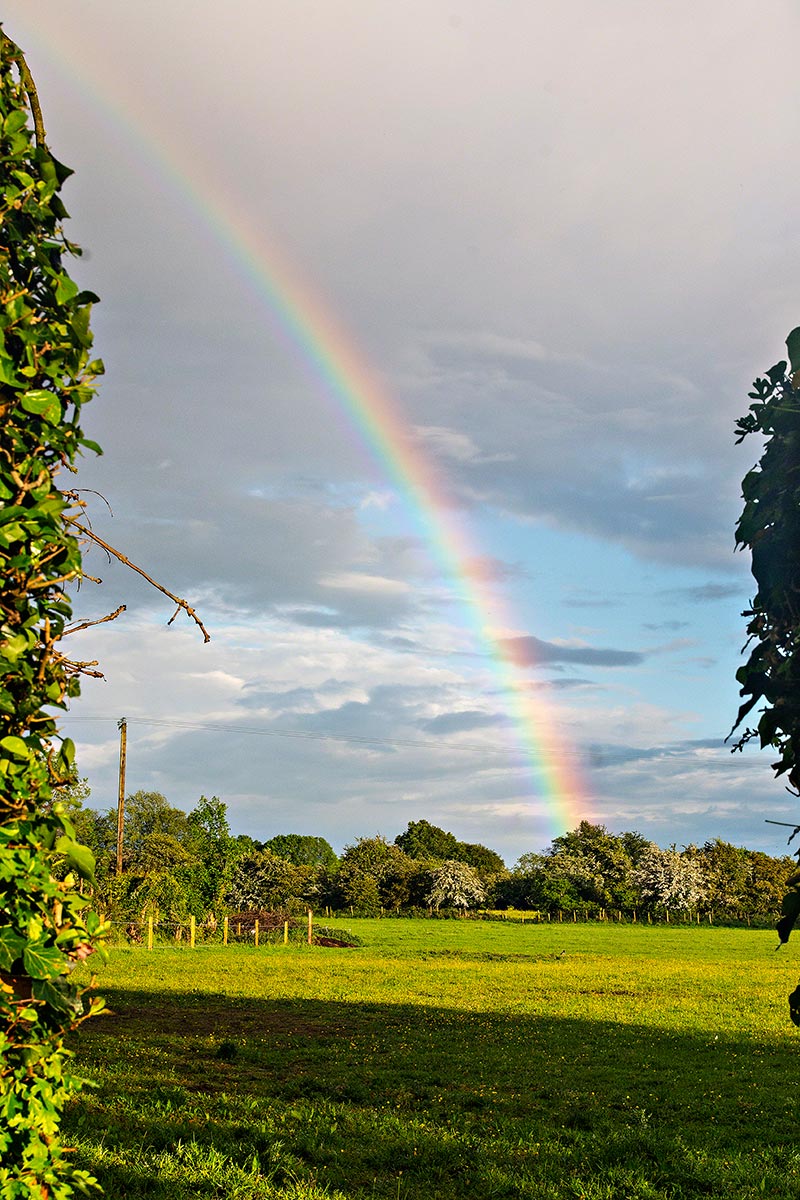
We arrived late on a rainy travel-to-Trim day. Suddenly, some blue sky appeared, and the most complete full semicircle rainbow came out. So where is that pot of gold?
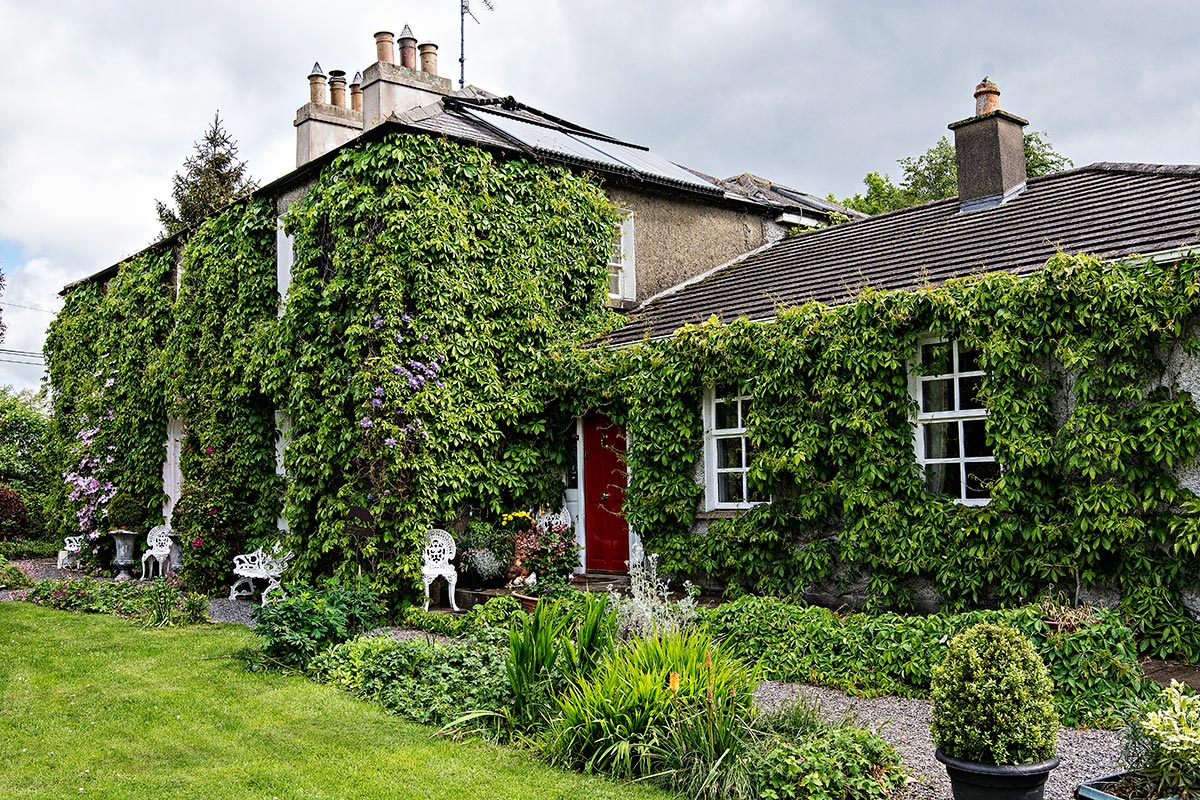
The B&B is in the countryside just outside Trim, next to a horse farm. After our host chased away a gaggle of geese stomping through her flower beds, we spent well over an hour talking with Anne. She spent much of her childhood helping her mom run a restaurant in Trim.

We spent a lot of time in the gorgeous dining room talking. Our host, Marc, spoke about his work on an Irish peace-keeping mission in Syria. A lot of it was about establishing trust. We also talked about Northern Ireland.
Trim Castle
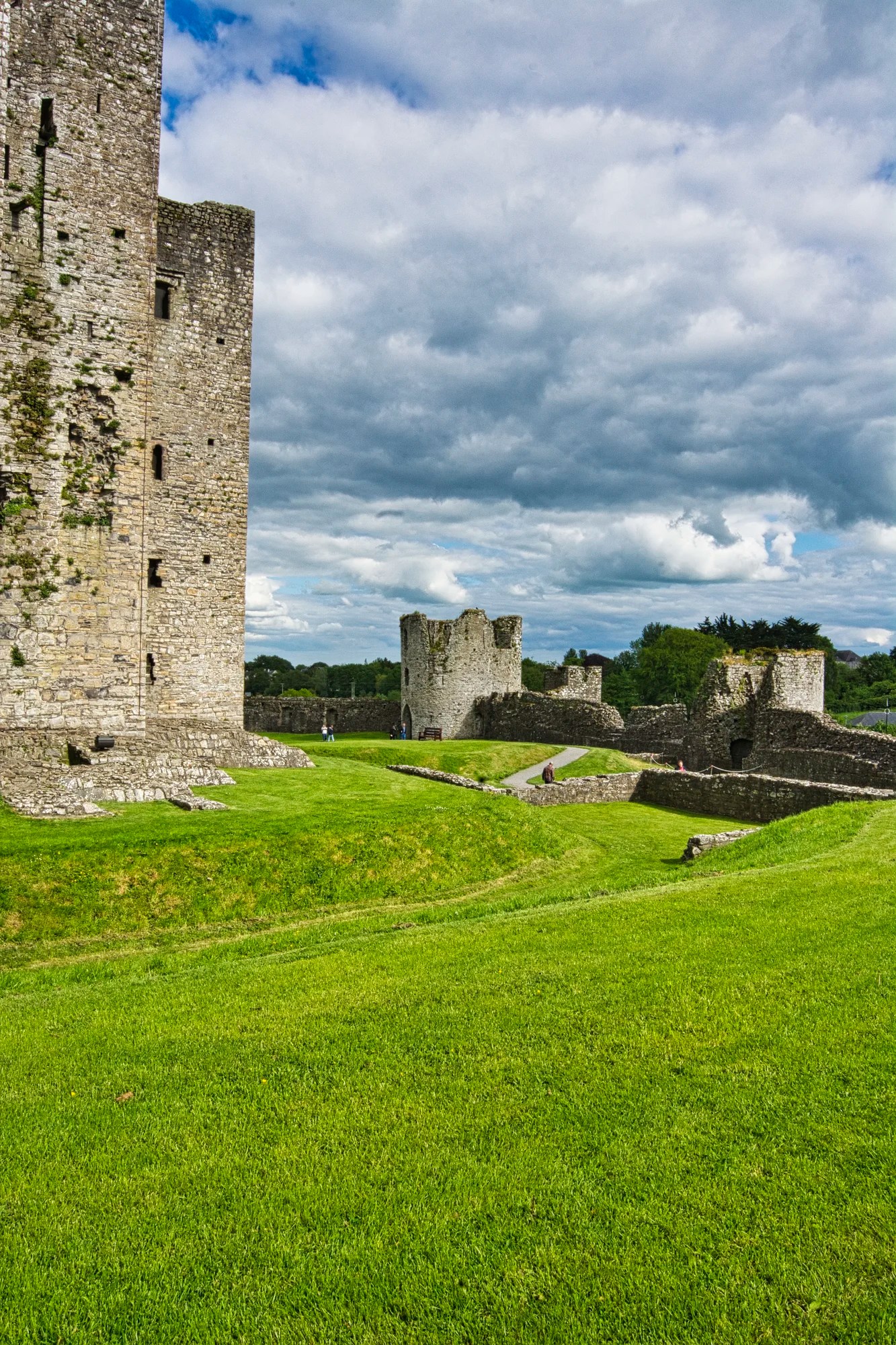
Before you write Trim Castle off as just another ruin, think about the year 1066. Why is this date significant? Why is this considered a turning point in European history?
The Vikings
The Vikings had claimed the throne because England had been ruled by Norwegian kings until 1042. The Saxons marched north to defeat the Vikings. Then the Normans invaded southern England and defeated the battle-weary Saxons at the Battle of Hastings in 1066.
In 911, Vikings called Northmen (Nor’man) were granted control of Normandy ‒ which was named after them ‒ in exchange for warding off any Viking attacks. But they adopted the French language and customs. Ironically, these Viking Normans conquered England and Ireland. The Normans ruled from 1066 to 1485, when the Tudors took over.
The Vikings lost their control and claims to England. So 1066 was significant because Britain changed from being Norwegian-oriented to being French-oriented. The famous Bayeux Tapestry illustrates the Battle of Hastings.
French Culture
One of the biggest impacts was the introduction of French words into the English language. In fact, 45% of all English words have a French origin. For example, there are words related to feudalism (liege, peasant, vassal), government (council, government, mayor, parliament), religion (abbey, clergy, cloister, diocese, prayer, priest), and the nobility (baron, duke, marquis, prince, sir).
William seized the lands of ALL the Anglo-Saxon nobles and imposed the feudal system on England. All land was owned by the king, who lent it to Norman supporters who became barons. The barons had to give loyalty, pay taxes and supply men for military service. If they were disloyal, they lost their land.
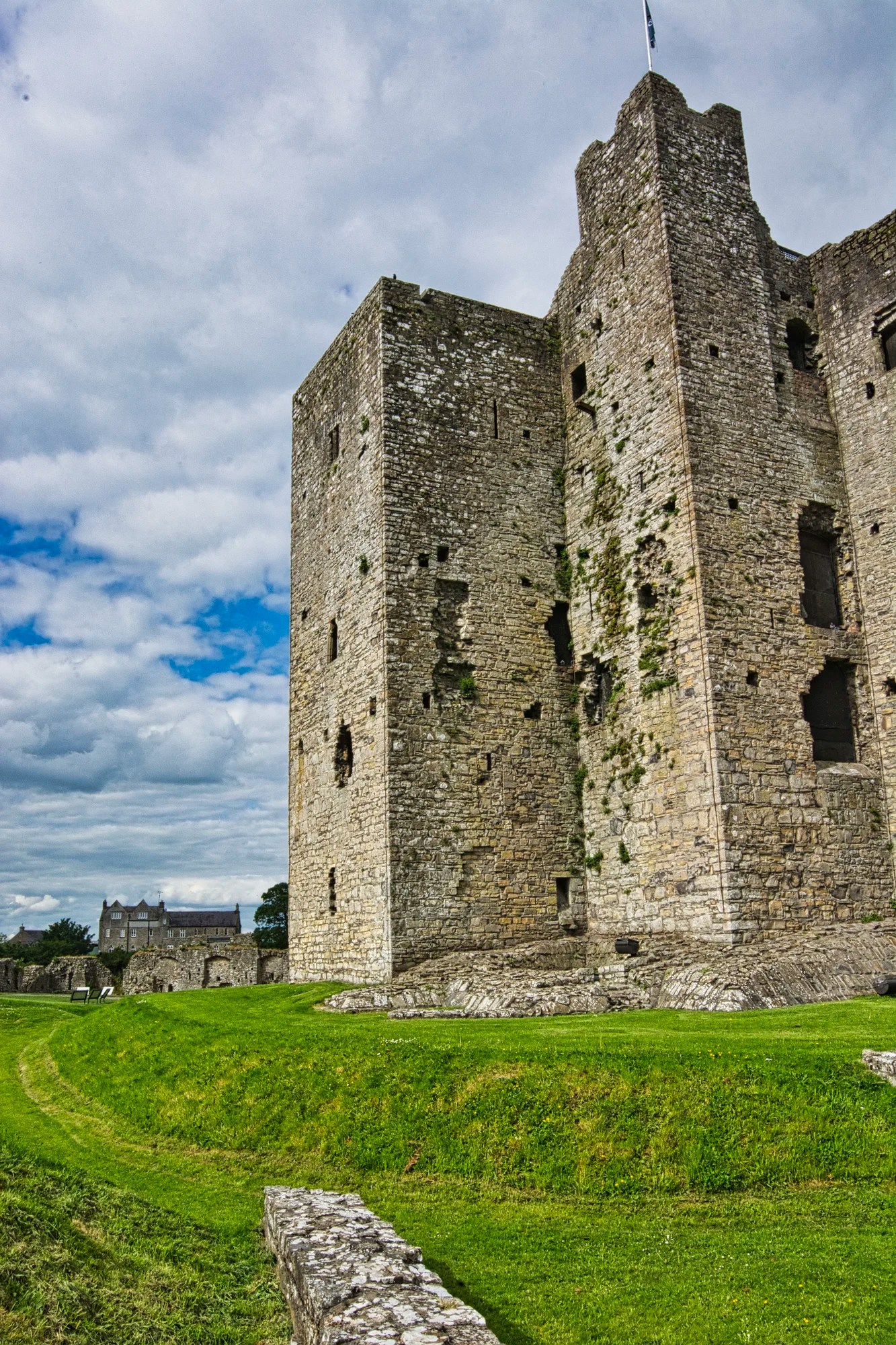
Hugh de Lacy was given the new territory of Meath (now a county) by Henry II. By 1172, Hugh completed the original castle. Today, it is the largest Norman castle still standing.
The Domesday Book was a full written record of property ownership across England. They needed to record the transfer and possession of the huge amount of land that changed hands. This is akin to the Land Title system of today.
The Normans also introduced the concept of only the oldest son inheriting all the land – this meant that land would stay in the hands of fewer people.
French Castles
You can thank 1066 for all the castles found in Ireland. Irish Castles were a French invention. The Normans built castles to defend themselves against the Saxons they had conquered.
At first curtain walls were sufficient to repel attacks. But over time, siege tactics changed, so the defences had to be changed. The keep is a tall and formidable-looking cruciform structure. It provides security for the lord’s family, as well as the public hall and offices. The new siege tactics forced the building of curtain walls and a moat. Before 1180, the timber palisade was replaced by stone.
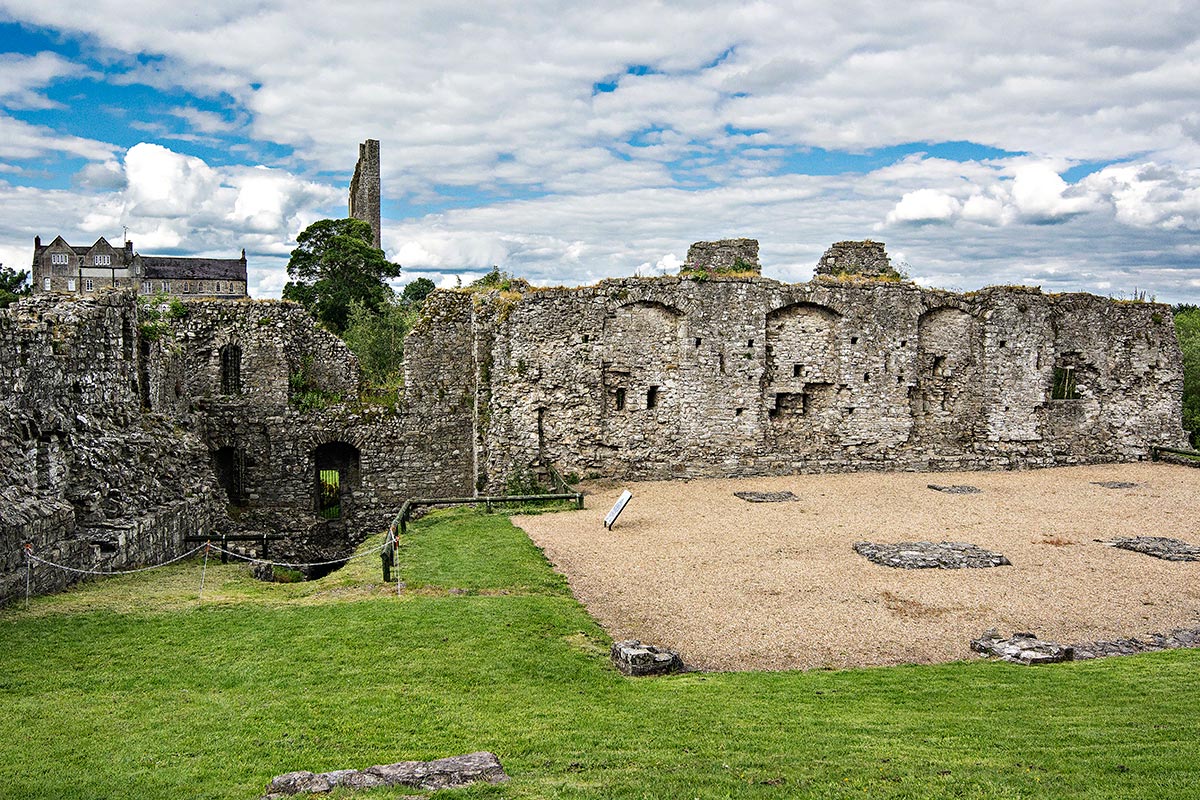
A separate hall above was built in 1250. During the 15th century, the Irish Parliament met here seven times. Cannons were invented in the 13th century, but were first used by the English in 1346. This marked the end of castles as a defensive foundation to be replaced with a chateau with everything a luxury-loving noble could want.
The keep is by tour only, but the rest of the grounds can be visited on your own.
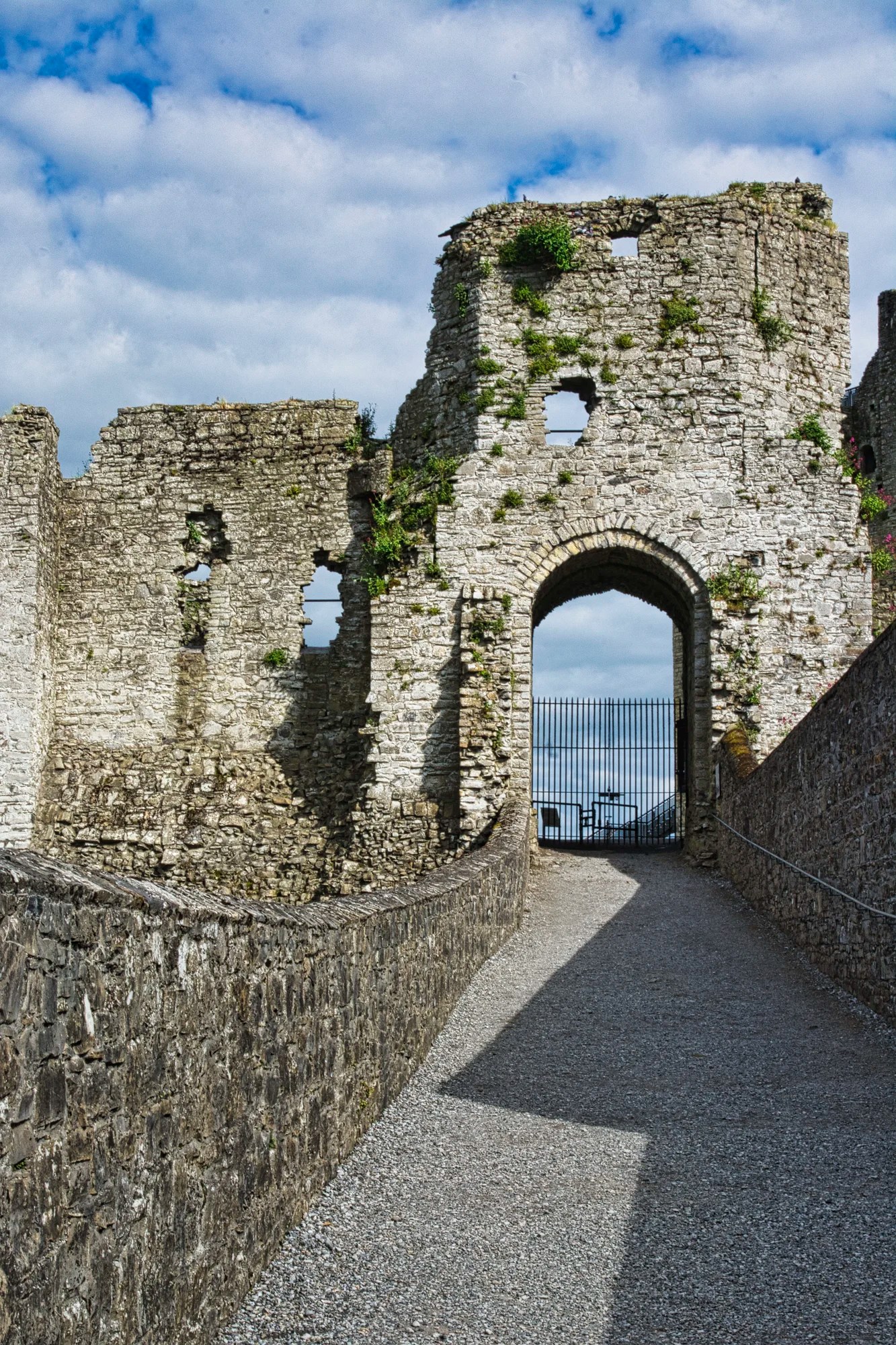
When I turned back to the castle gate, I realized I was the last person still standing. There was no one else there, and the gates were locked!! Finally, I realized there was someone hidden away in the dark ticket office. and knocked on the window. He joked that after 5:00 PM, you had to either climb the wall or swim out!
Hill of Tara
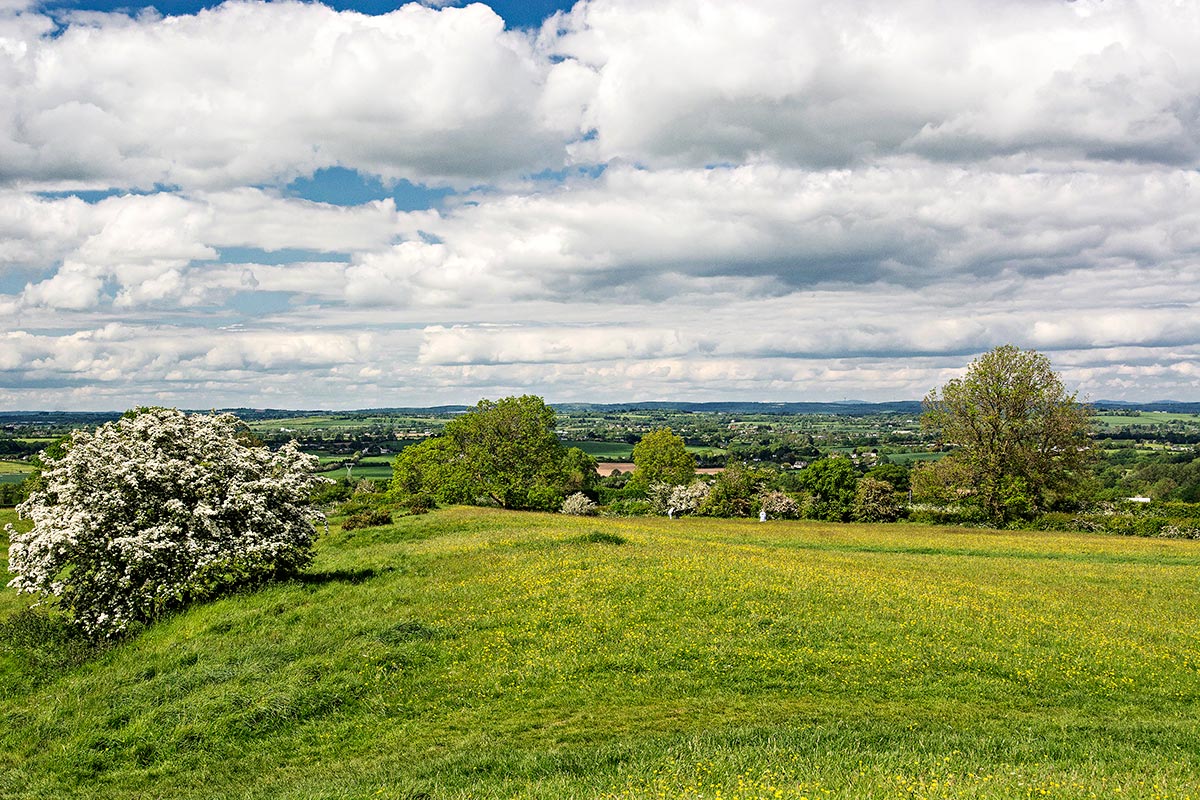
The Hill of Tara was an ancient sacred burial site dating back to the Neolithic Era. It was also the seat of the High King of Ireland. Lots of locals were walking here, but there is not much to see. It does offer a 360° view, but the panorama appears far away.
The white-flowering hawthorn or Goddess tree above was seen throughout our trip to Ireland. It can live for over 400 years. It has medicinal benefits such as reducing blood pressure. The blooms were used in spells for fertility and happiness.
Hawthorn is considered sacred. It is associated with fairies and Beltane, the ancient Celtic festival celebrating spring, now called May (1st) Day. Maypoles were made from hawthorn. But, politely collecting flowers was allowed for brides, who wore them in their hair to symbolize the union of love.
Bective Abbey
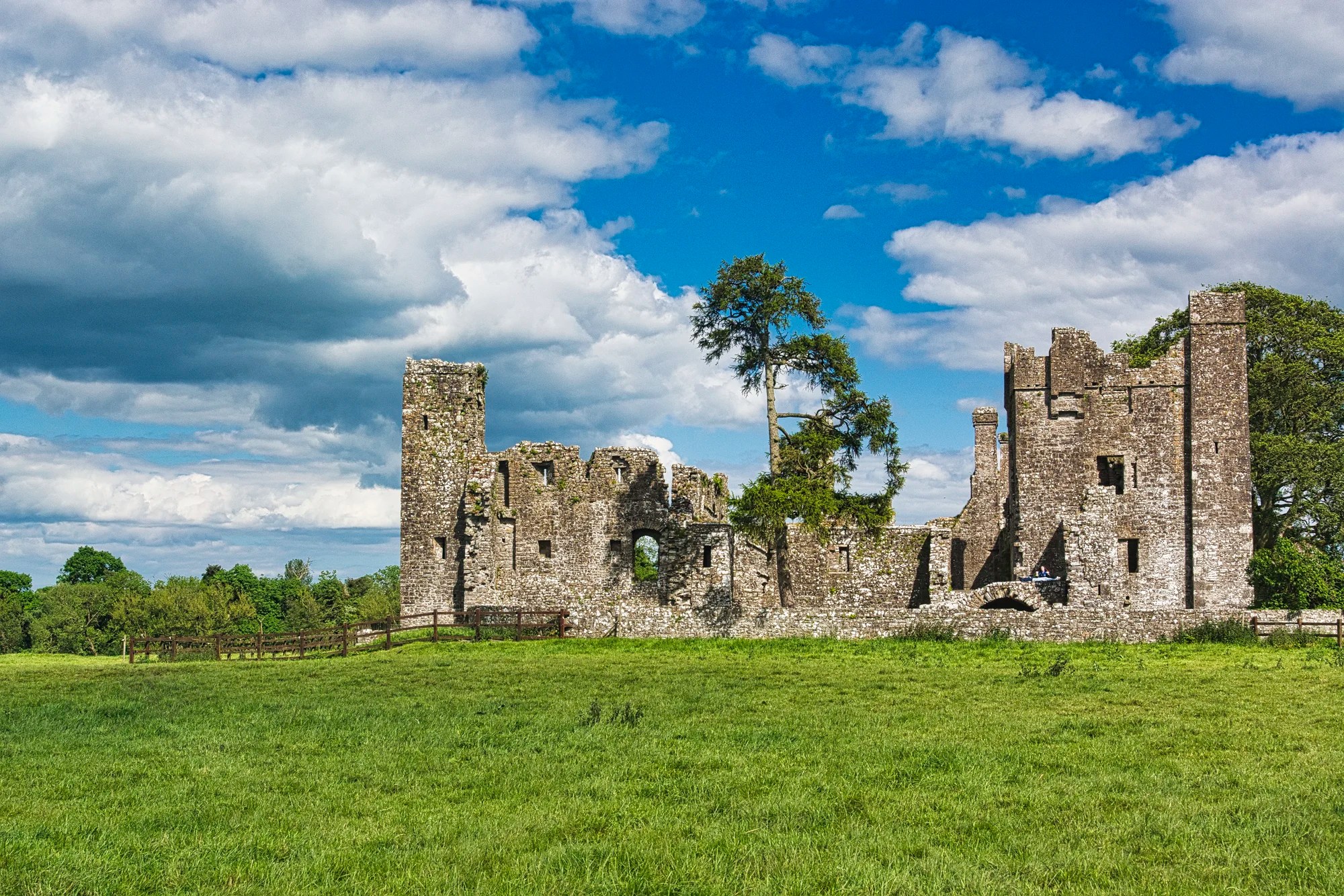
Bective Abbey (Route L4010) on the way back from the Hill of Tara, a Cistercian abbey on the River Boyne, is an OPW site. Hugh De Lacy was buried there before being moved to Dublin. Bective Abbey is one of the sites in the movie Braveheart. A better reason to visit is that there was no one there.
The Anglo-Saxons were not famed for building in stone. Another major Norman contribution is that the Normans rebuilt most ecclesiastical buildings in stone using the new Romanesque architectural style they popularized in France.
“Modern” Trim
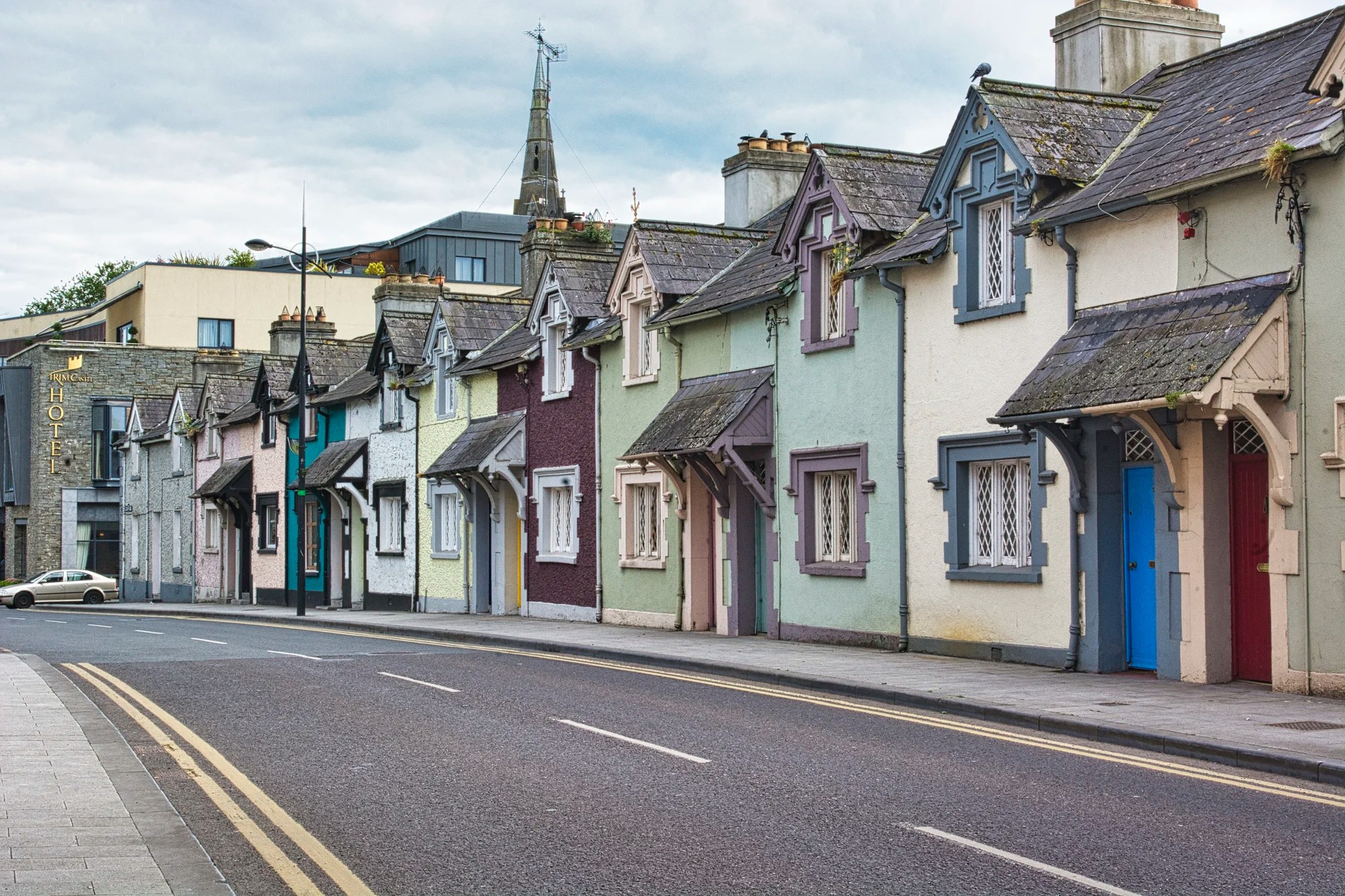
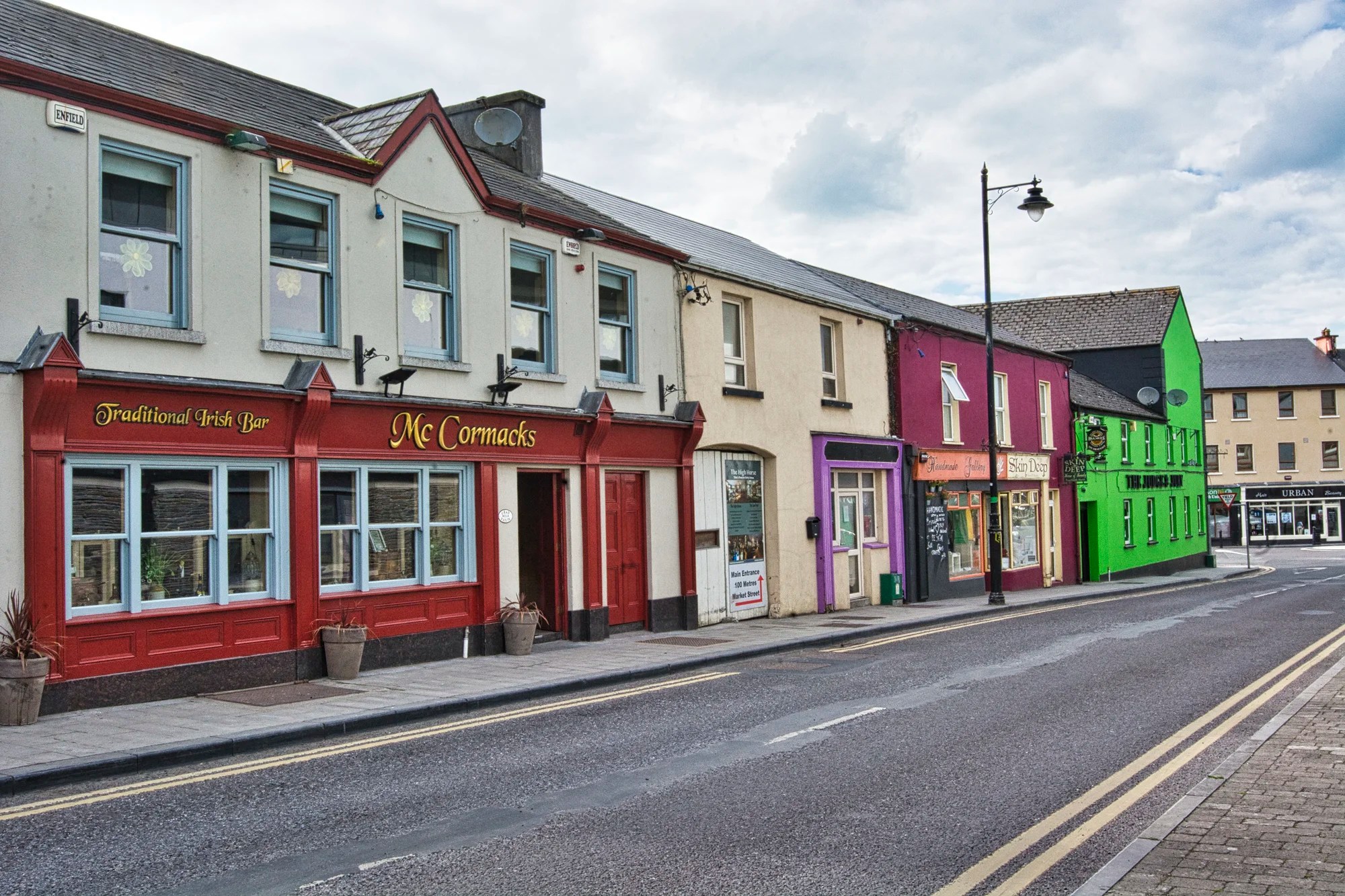
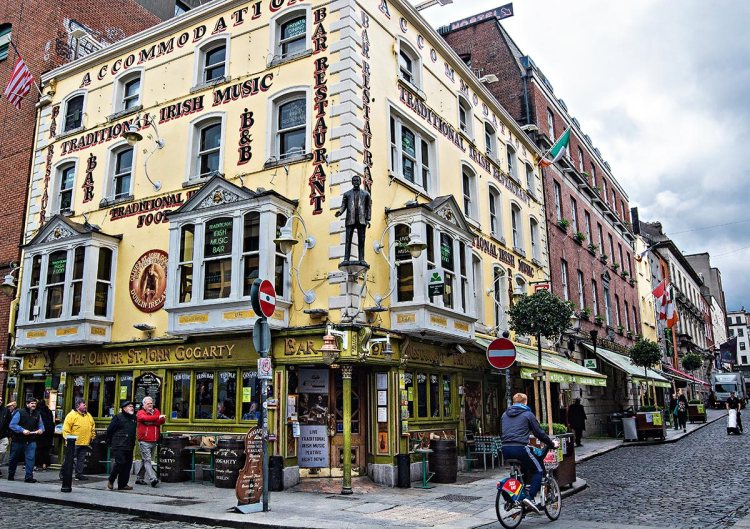
There was one set of row houses behind the castle that were muted in colour. Trim has its own eye-popping, colourful buildings. Supposedly, the reason ports have brightly colored houses was to help sailors and fishermen find ports, especially during fog and inclement weather. But, Trim is not on the coast. Perhaps this was to ensure everyone could find the pubs!
Final Comments on this Itinerary
This is an action-packed itinerary where you can get away from the crowds of tourists who head to sites that are famous because of name recognition. The places are all highly rated by the people, as shown by the high Google Map Ratings. Remember, the most important “destination” is meeting the people.
What things fascinate you? How long is your trip? What questions do you have? Do you want more information? Then subscribe for free.
Subscribe
Get travel tips and advice delivered directly to your inbox. The best part is that it is free.
What things fascinate you? How long is your trip? What questions do you have?
Itinerary Maps & Guides
This day trip is part of our ready-made Best Places for 2 Weeks in the North of Ireland itinerary.
Ireland North’s Best Sights Map
Google Maps Ratings
Google Maps provides a rating from 0 to 5 for all sights, hotels and restaurants (but not cities). All of our recommendations are appended with the rating (prefixed with a G) from Google Maps. As it is based on feedback from tourists and locals, it is much more reliable than travel booking websites. We consider a score of 4 to 4.39 to be Very Good; 4.4 to 5 to be Excellent.
Ireland FAQ
The Ireland FAQ post answers Frequently Asked Questions (FAQ) like:
- Where should I go in Ireland?
- What is the best season for travel?
- What is the best clothing?
- Where should I go? What are the must-sees?
- How much time do I need for Ireland?
- Can I see everything in a week?
- How safe is Ireland?
- How much cash should you take to Ireland?
- Should I pay in Euros or my own currency?
- What apps are useful for travel?
- Should I rent a car? Take a Taxi?
 Terra Encounters
Leave a comment