
Why is Rome called the “Eternal City”?
The Latin writer, Tibullus, used that moniker in a book he wrote in the 1st century BC! The Eternal Rome Walk uncovers art and beauty around every corner, even while enjoying your morning cappuccino or an afternoon gelato.
Only in Rome can you travel in time from Ancient Rome to Baroque gems, all while walking the streets — an open air museum. It seems odd that the last walk covers some of the most touristed sights of Rome but you have to end at the “temple” to pray for a return to Rome with a coin toss.
Author & Photographer: George Mitchell

Our recommendations are not influenced by affiliate links – we have none. Our advice is derived from our personal experience and knowledge based on living in Rome for four years and studying its art, architecture, and culture. All the places recommended in this post are pinned on our Roman Itineraries Map. The place names are appended with the Google Maps Rating (G0 to G5).
Piazza Eustachio
In the Sant’Eustachio Il Caffè you can start your day with some of the best cappuccino. Our favourite drink is named after the colour of the robes of the Capuchin monks.
Sant’ Ivo alla Sapienza
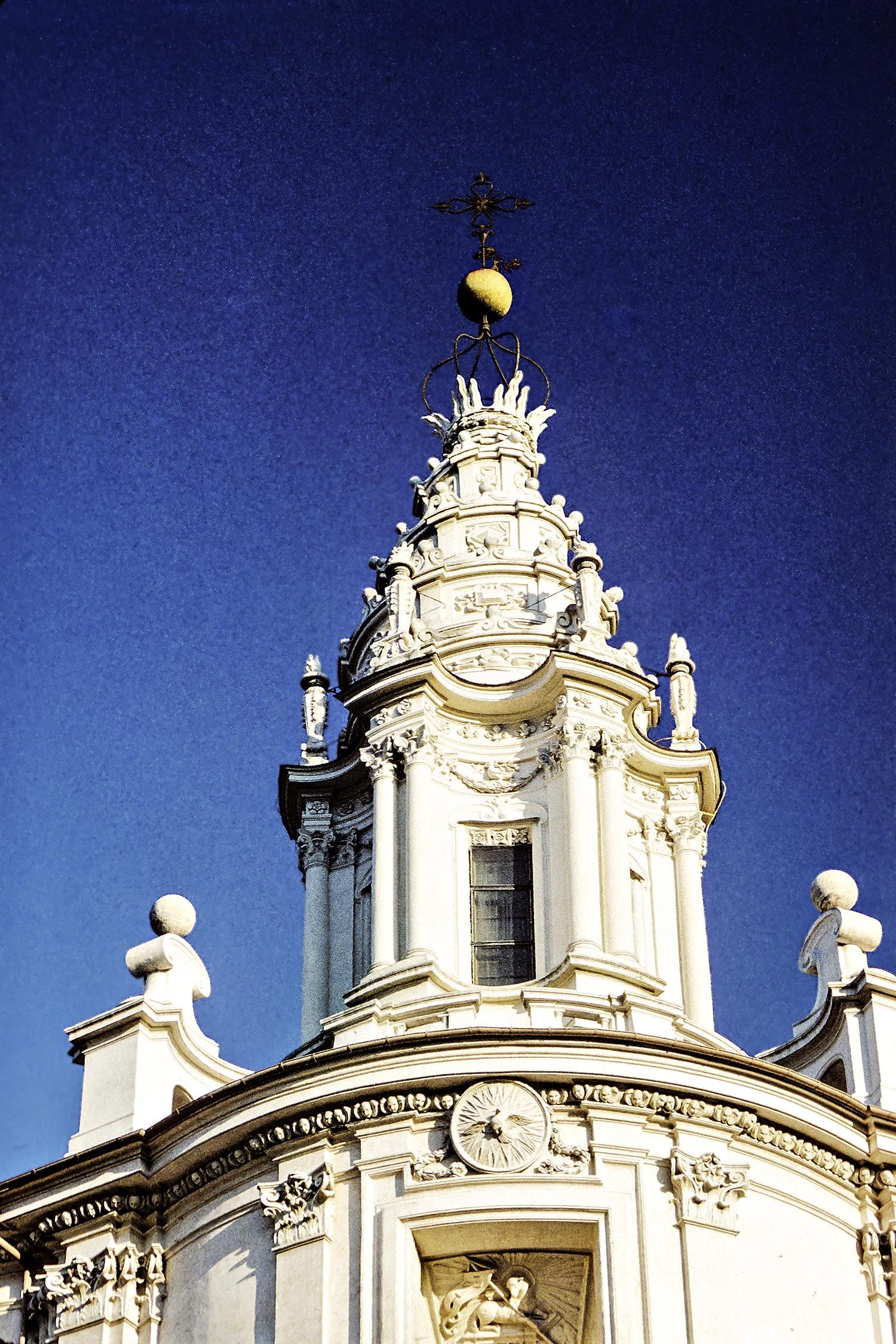
One of Francesco Borromini’s best works (1660) is a masterpiece of the Baroque Era. This Baroque Church shows dramatic geometric complexity with a contrast of concave and convex curves. The lantern is particularly distinctive with the twisted spiral. This concave concept was often copied in Baroque architecture.
Piazza Navona
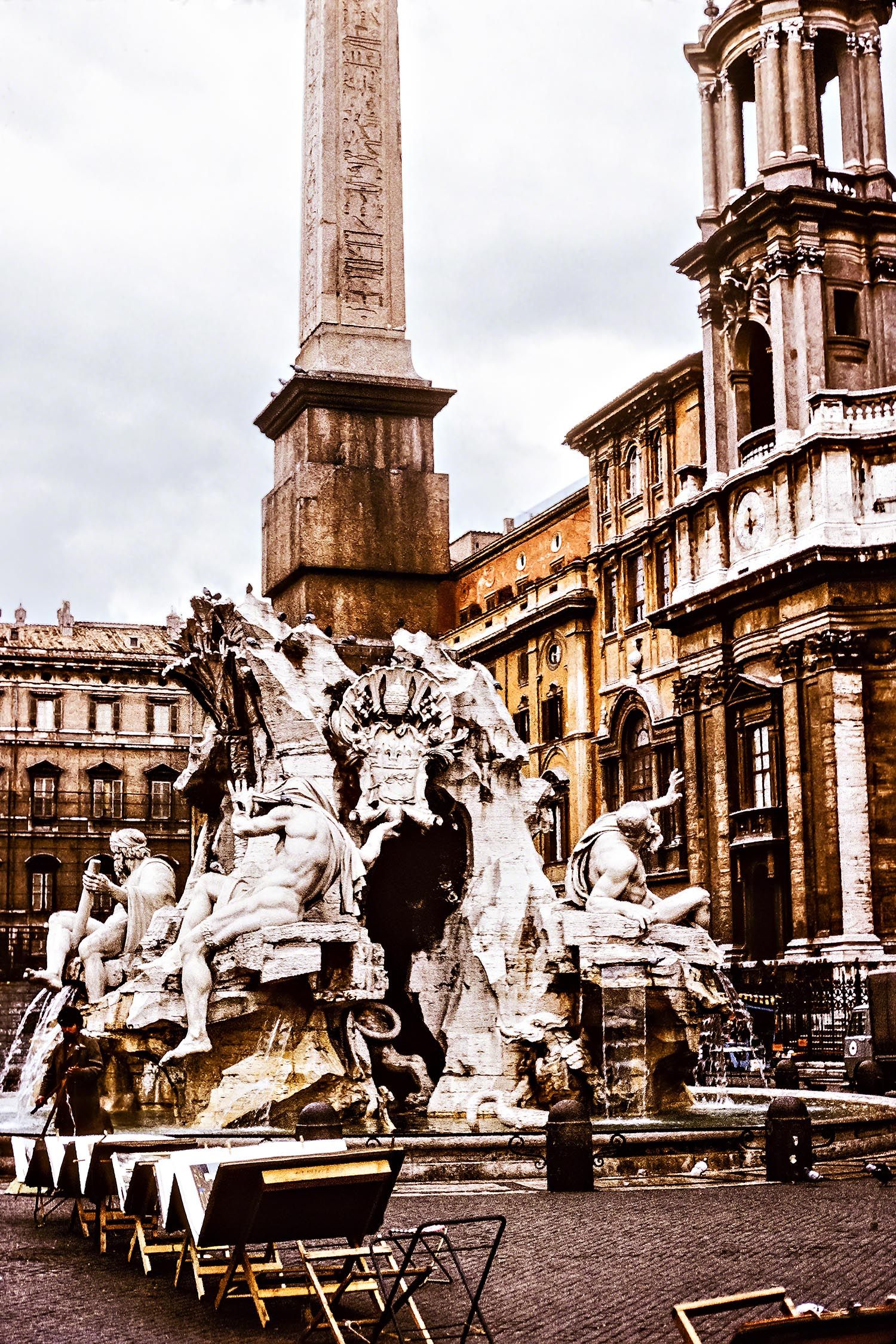
One of the most visited squares, Piazza Navona, retains the shape of the previous Domitian’s stadium. The surrounding buildings were built on the ruins of the grandstands of the stadium. The highlight is Bernini’s Fontana dei Fiumi (Fountain of the Four Rivers, 1651). The figures represent the four main rivers of the ancient world – the Ganges, Danube, Nike and Plate Rivers – supporting an obelisk. Rumour has it that the statue of the River Plate (on the right) holds his hands up as if the Church of Sant’Agnes in Agone might fall down. Was Bernini getting back at his arch-rival Borromini, the famous architect who built the revolutionary concave façade above? No, this is fake news. The fountain was completed before the church was built.
To the southwest, opposite Palazzo Pamphilj, is the worn statue of Pasquino where Romans hung satirical verses and sayings. Freedom of speech was not allowed in Papal Rome. These were known as Pasquinades. An ancient statue was erected near the shop of an outspoken cobbler named Pasquino. So the cobbler wrote satirical verses and hung them on the statue. The most famous Pasquinade was made after the Barberini Pope authorized the extraction of bronze ceiling tiles from the Pantheon: “what the barbarians did not do, the Barberini did“.
Palazzo Madama
Palazzo Madama is a 16th century palace built for the powerful Florentine banking family, the Medici. It was the home of powerful Medici cardinals. In 1871 it became the Senate (upper house) of Italy. Note the ornate cornice and bas reliefs.
Chiesa San Luigi degli Francesi

\The fifth chapel on the right houses paintings by Caravaggio, one of the most important influences on Baroque art. His paintings of St. Matthew use chiaroscuro and were a huge influence on Rembrandt.
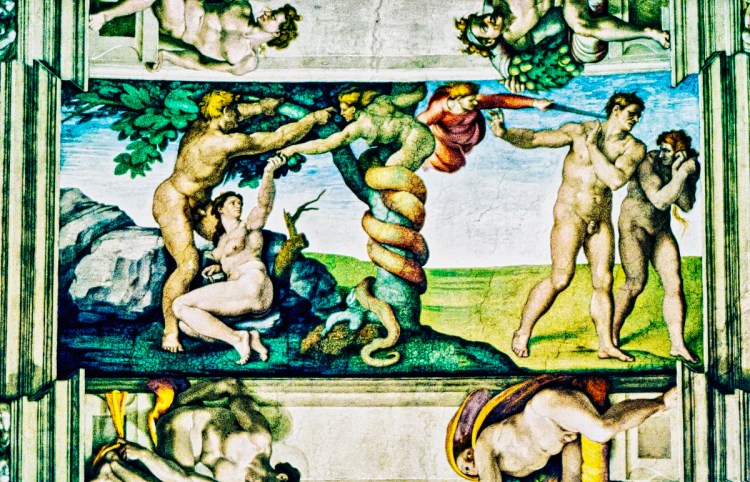
The church of St. Louis of the French is a shrine to Michelangelo Merisi, better known as Caravaggio, the name of his hometown. He painted huge canvases in 1598. The Calling of St. Matthew above depicts the tax collector with his men in a very down-to-earth setting, counting the money they collected. They are dressed in very richly coloured clothing. In comes two simply dressed poor people, one points at Matthew, who points to himself, asking, “Who, me?” By his commanding gesture, we realize it is Jesus calling. Only later do we recognize the faint halo above Jesus. His hand is a direct copy of God’s pointing hand in the Sistine Chapel, an influence of Michelangelo. The other figure BTW is St. Peter.
Artists pay attention to detail, and both paintings are struck by a beam of sunlight coming from the same direction as if lit by the window in the chapel. The selective beam of light on Jesus was unique at that time. Caravaggio had a profound influence on Rembrandt, who is renowned for chiaroscuro. Caravaggio was admired by other artists and art connoisseurs, but not by the general public.

The painting, The Inspiration of St. Matthew, was mostly shadow except for the angel and the saint, whose bright orange robes dramatically stand out. St. Matthew, as he jumps up, pushes the stool out into the viewer’s space.
St. Matthew, as a tax collector, would have been despised by the Jewish population as a collaborator of the occupying Romans. He supposedly wrote the Gospel of St. Matthew, but in fact that was only claimed in the 3rd century.
It is interesting that the subject, Matthew, is the namesake of the sponsor, Cardinal Matteo Contarelli. The cardinal was rich and had already paid a large sum towards the façade and the altar.
Baroque Architecture featured opulent use of colour and ornaments, lots of gold and marble, huge ceiling frescoes, some using trompe l’oeil (illusion). The nobility adopted Baroque art in Palazzo Farnese and soon this spread throughout Rome and the rest of Europe.
Chiesa di Sant’ Agostino
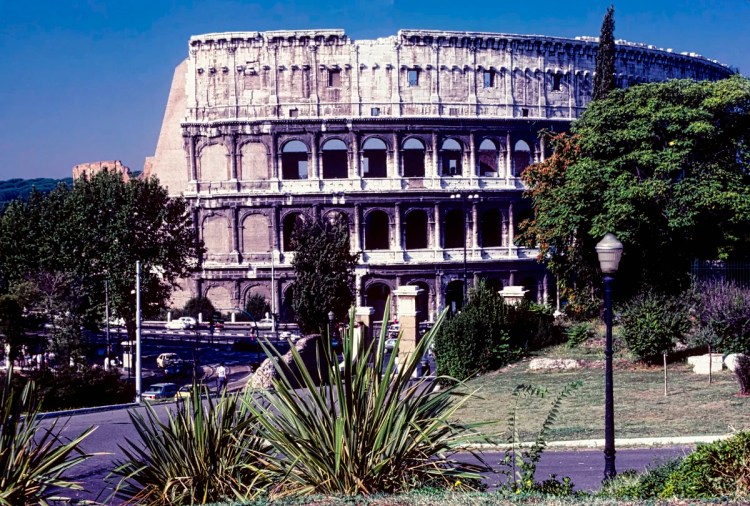
The walk continues through Largo Giuseppe Toniolo to Piazza di S. Agostino. This church was one of the first built in the Renaissance in Rome using travertine taken from the Colosseum! It has definite Florentine elements, such as the decorative and non-functional scrolls above the roof. These were invented to prevent a box-like façade. Inside, see an early Baroque painting, Madonna di Loreto by Caravaggio.
Gelateria Giolitti
You cannot last a day without a gelato! There are 37,000 gelaterie (plural of gelateria) in Italy. The Eternal Rome Walk takes you once again to Giolitti’s, founded in 1900! It was one of the best in all of Italy when we worked in Rome. See our favourite flavours in the What to Eat section of the Amazing Rome From Baroque to Ancient Temples Walk 2.
Piazza Montecitori
This square has the oldest obelisk standing in front of the Chamber of Deputies, the parliament if Italy. This was expropriated in 1870 when Italy was reunified and became a country. This “palace” was designed by Bernini for Cardinal Ludovisi in 1623.
Marcus Aurelius Column
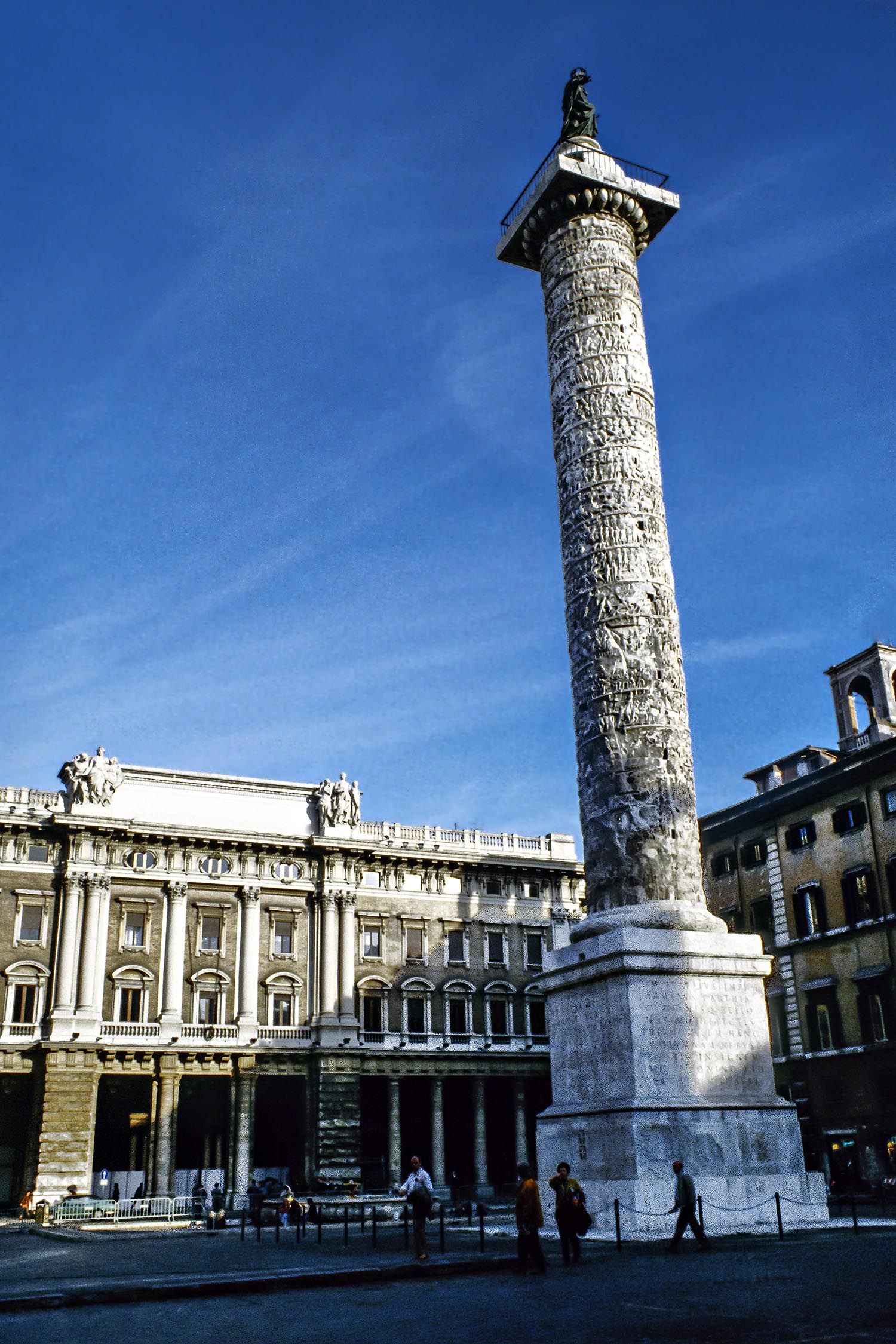
This Doric column features a spiral relief built in honour of Roman emperor Marcus Aurelius and modelled on Trajan’s Column. The column consists of 27 or 28 blocks of Carrara marble, each of 3.7 metres (12 ft) diameter, hollowed out whilst still at the quarry for a stairway of 200 steps within the column up to a platform at the top.
Like Trajan’s Column, this stairway is illuminated through narrow slits into the relief. Even though the relief is spiral, the scenes cross each marble block seamlessly! It tells the story of Marcus Aurelius’ Danubian wars, waged by him from 166 to his death.
Despite many similarities to Trajan’s column, the dramatic style is more closely related to the triumphal Arch of Septimius Severus, erected soon after. The figures’ heads are disproportionately large so that the viewer can better interpret their facial expressions. The pictorial language is unambiguous – imperial dominance and authority is emphasized, and its leadership is justified.
Trevi Fountain
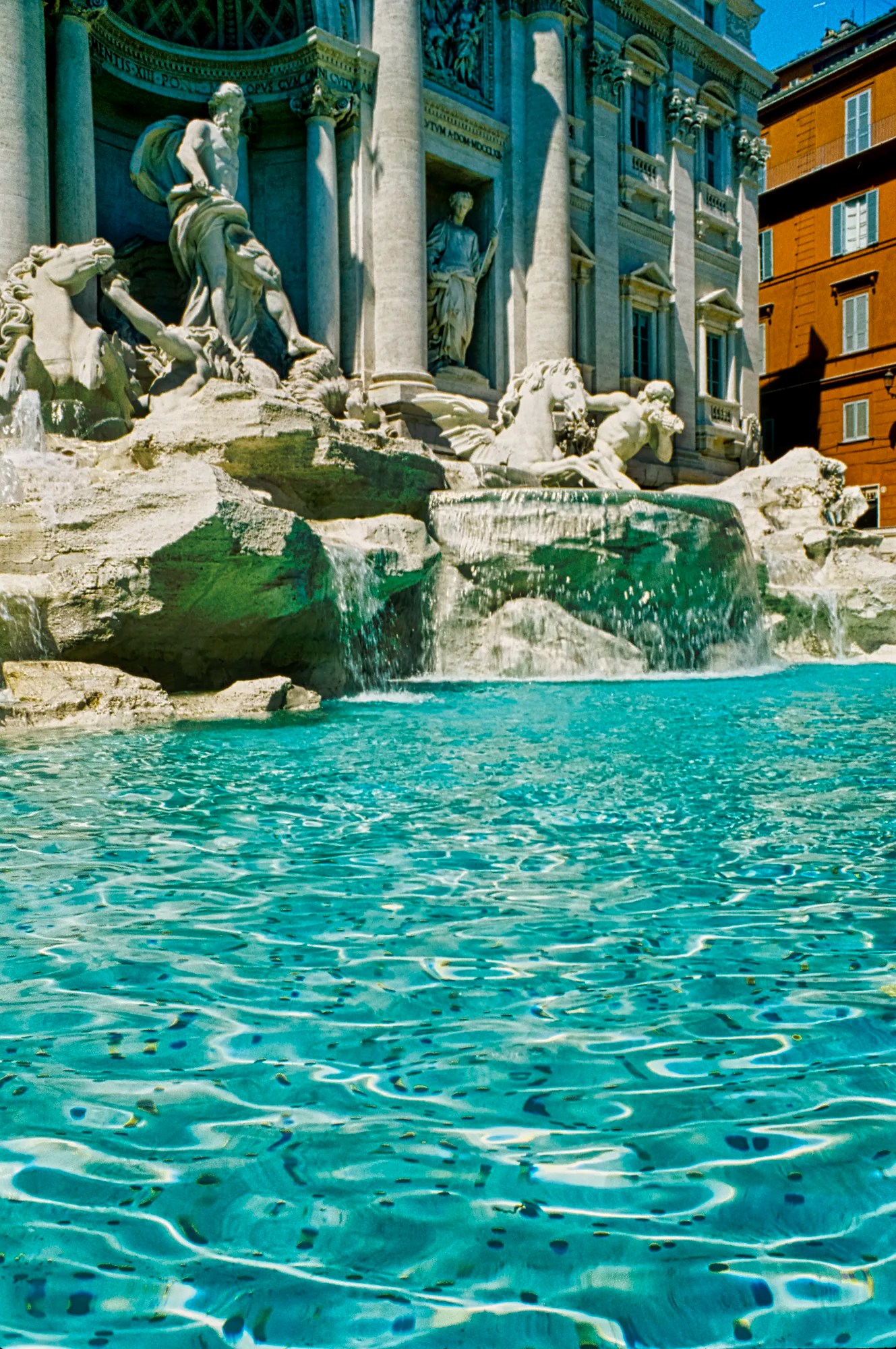
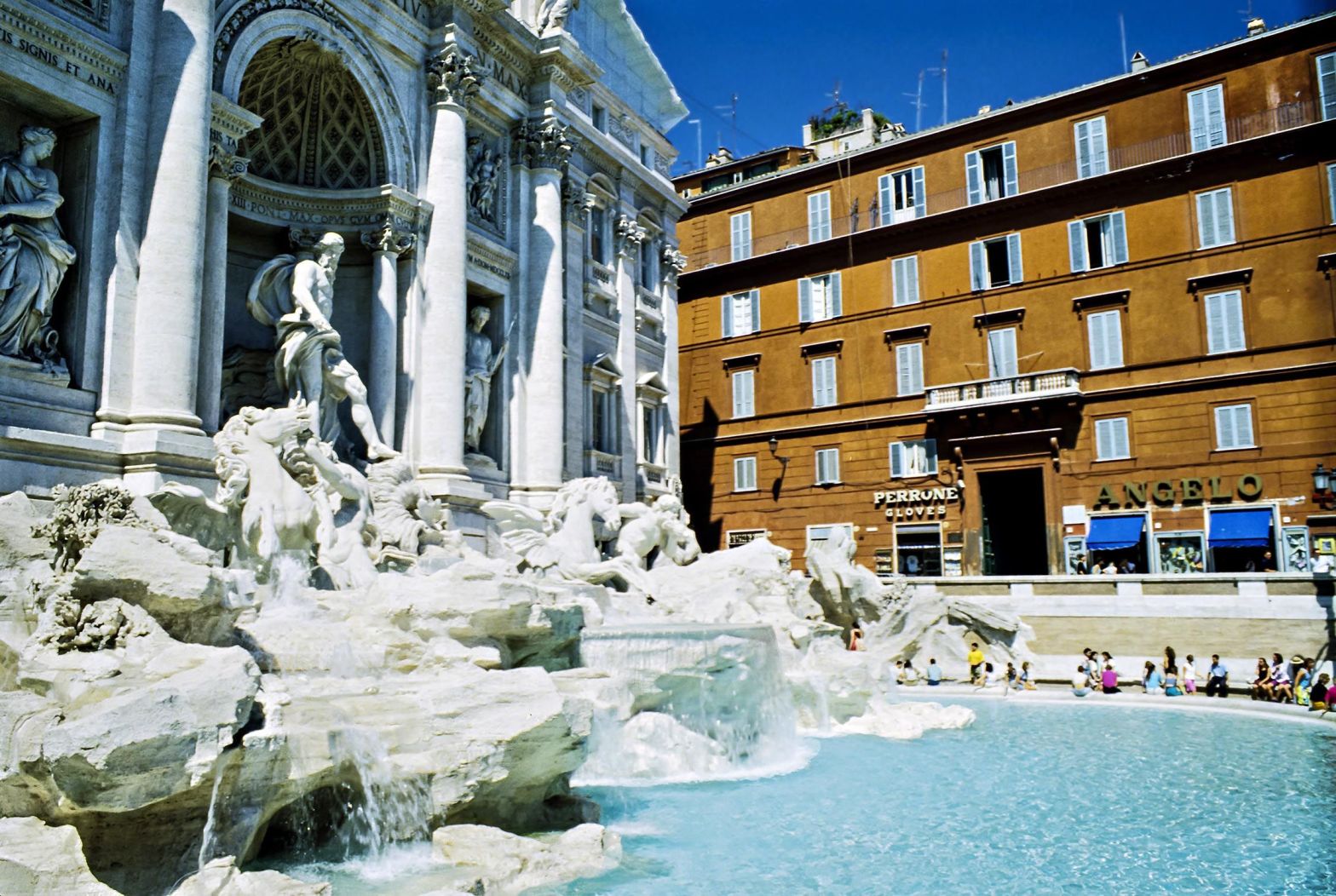
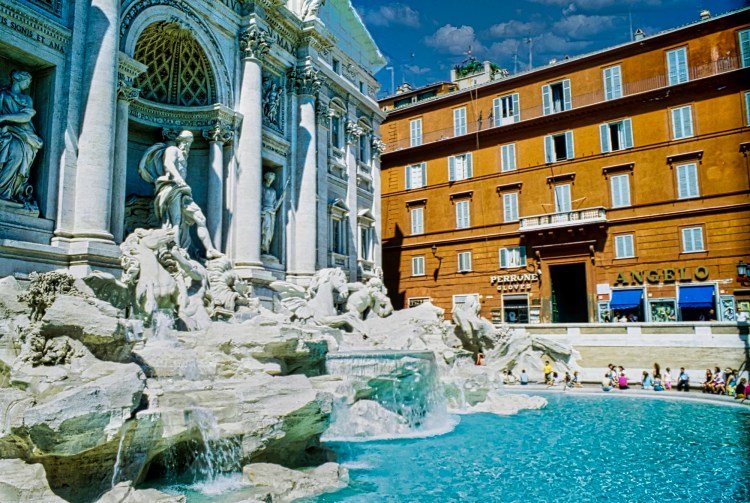
We have finally reached the temple of Eternal Rome! Wasn’t Trevi on the Best Baroque Blowout Walk 6? Yes, but you need to see Trevi many times, especially once at night and just before you leave Roma. After all, the fountain is waiting for your backwards coin flip to wish for your return to Rome.
Ever since coin throwing was made popular by the famous 1954 movie Three Coins in a Fountain, 1.4 million Euros have been collected for charity each year! Fashion mogul Fendi spent 2.2 million Euros to restore Trevi in 2015! Yowdza!
With all the art and architecture, Italy is a world leader in fashion, design and restoration. On our first trip to Bangkok we met Italians working on restoring Thai temples and palaces. It is a reflection of how much art and beauty are a part of Italian culture.
Final Comments
Rome is over-touristed. But we hope you have learned that these are the best places to experience quintessential Italy. We trust you now understand why the places are significant and how they have had such a great influence on the history and culture of the world.
Subscribe
Please subscribe to Terra Encounters because we offer valuable insights to improve your understanding and enhance your travels. We offer itinerary-based guides packed with the best sights and hidden gems. Let our knowledge help you fully appreciate every moment of your amazing journey.
Get travel tips and advice delivered directly to your inbox. The best part is that it is free.
This was only a taste of Rome. What questions do you have? If you have been to Rome, share your experiences with us. How long is/was your trip?
Itinerary Map & Resources
Roman Itineraries Map — our custom Google Map
What Should You Read about Rome
Eyewitness Rome, Dorling-Kindersley – has brief information but often some gems about major sights. Their real crown jewels are their “Street by Street” pages where they detail the sights on their attractive 3-D map of a neighbourhood.
Baroque and Rococo, Germain Bazin, Thames & Hudson – our art history book
Caravaggio, Giorgio Bonsanti, Scala
The Companion Guide to Rome, Georgina Masson, Collins – is too in-depth for tourists. But it is great for expats and budding archaeologists, and art historians living in Rome.
History of Art, H. W. Janson, Prentice Hall – is for learning about art and architecture. It is not for lugging around on your trip. It weighs about 20 kg – OK, would you believe 2.6 kg (5.7 lbs)?
Roma Pass
The 48-hour pass is probably not worthwhile. The 72-hour pass costs €38.50 and includes two museums and free metro/bus. Public transit ticket costs €1.50 per trip. After you use the two free tickets, you will get discounts on additional museums so always use the pass for the more expensive fees. The passes start at whatever time you first use it; e.g. bus or metro triggers it too.
The Roma Pass lets you skip the very long line (for buying tickets). But you can also skip the line by buying your tickets online. Most major museums in Rome are included, except the Vatican Museums! Note that some places like the Colosseum and the Roman Forum/Palatine Hill are two sites, but they count as one.
Google Maps Ratings
Google Maps provides a rating from 0 to 5 for all sights, hotels and restaurants (but not cities). All of our recommendations are appended with the rating (prefixed with a G) from Google Maps. As it is based on feedback from tourists and locals, it is much more reliable than travel booking websites. We consider a score of 4 to 4.39 to be Very Good; 4.4 to 5 to be Excellent.
Rome’s Top 8 Self-Guided Walks
Here are eight itineraries to explore Rome in more detail:
Understanding Italy
The Italy FAQ post your questions such as:
- When should I go?
- What is the best season for travel?
- Where should I go?
- Can I see everything in a week?
- How much time do I need for Italy?
- How much cash should you take to Italy?
- Should I pay in Euros or my own currency?
- How safe is Italy?
- Should I rent a car? Take a Taxi?
 Terra Encounters
Leave a comment