
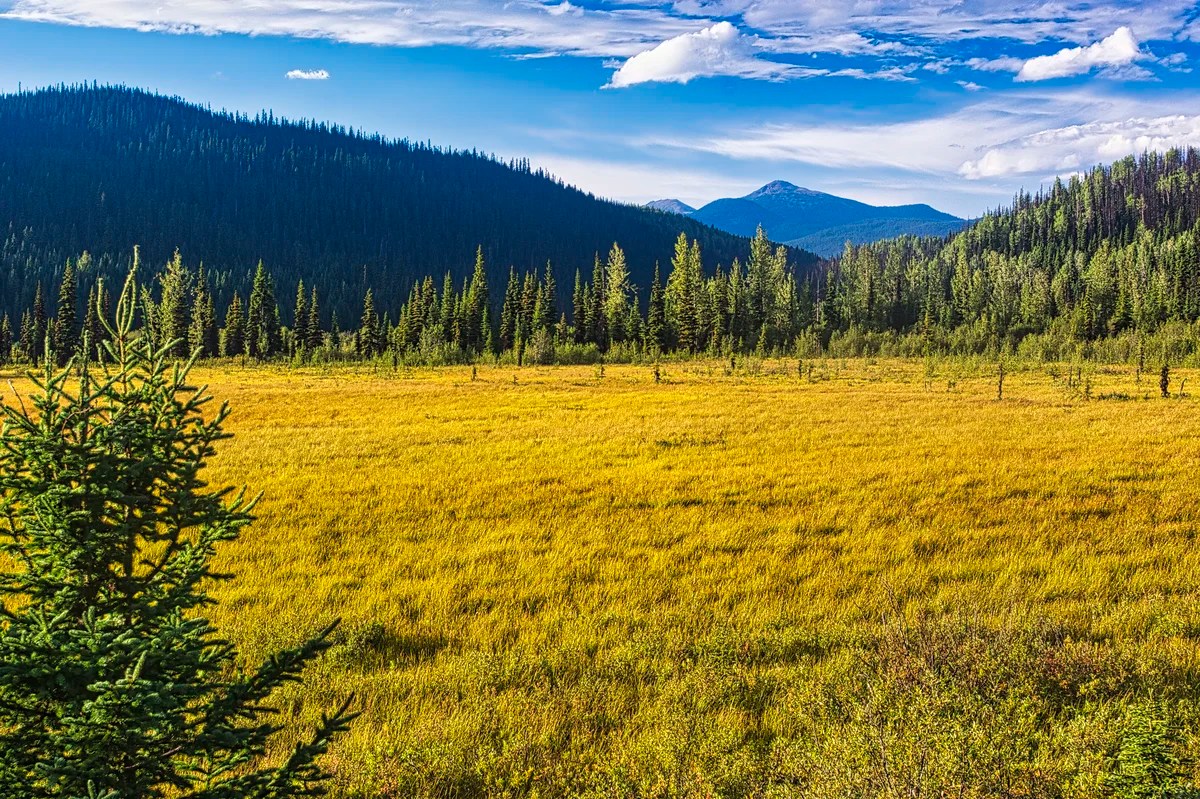
Why You Should Visit Barkerville
There is one hidden gem in the province of British Columbia (BC) that should not be missed. Everyone has heard of the California Gold Rush and the Klondike in the Yukon but few people know about the Cariboo Gold Rush. Many people including Canadians are not familiar with it.
What is special about the town of Barkerville? How did the Cariboo Gold Rush change the History of Canada? Why should Barkerville be your next travel destination?
First of all, it is not a ghost town — it was still in use until 1958. Filled with original wood buildings, it lets you travel back in time to the 19th century when there were only dirt roads and raised wood boardwalks. Second, the town was built almost overnight twice — The first time at the beginning of the Cariboo Gold Rush. The second time it was rebuilt in six weeks after a devastating fire in 1868. Third, it is the largest preserved historic site in Western North America. Fourth, Barkerville was the first Chinese community in Canada and half of the residents were Chinese!
Today, it is populated with costumed interpreters and shopkeepers who have assumed the identities of past colourful characters. The skits are entertaining and sometimes very funny.
Finally, it played a significant role in Canadian history that affected all of North America — see sections on Gold Commissioner Office and Future of British Columbia.
Author & Photographer: George Mitchell

Our recommendations are not influenced by affiliate links – we have none. Our content and advice is derived from our personal experience and knowledge based on living in Western Canada as well as travelling for three years around the world.
The town sights as well as driving routes to other destinations, can be found on the Barkerville Itinerary Map.
Striking Gold in Barkerville
The California Gold Rush ended in 1855. The next big one was in the Fraser Valley BC starting in 1858. This brought many prospectors, mainly American. When the gold petered out on the Fraser River, prospectors continued further north into the Cariboo Mountains. Where is the Cariboo? It’s in the middle of nowhere. That’s why it is still a hidden gem.
In 1862, Englishman William “Billy” Barker registered a claim, which over 30 years yielded $650,000 in gold. That would be worth $24 million today! The Cariboo Gold Rush exploded. Barkerville had the highest per capita gold yield per foot in the world! It resulted in more than 5 million ounces of gold. It is estimated that $30 million worth of gold was recovered between 1861 and 1898. That is the equivalent of $1 billion today!
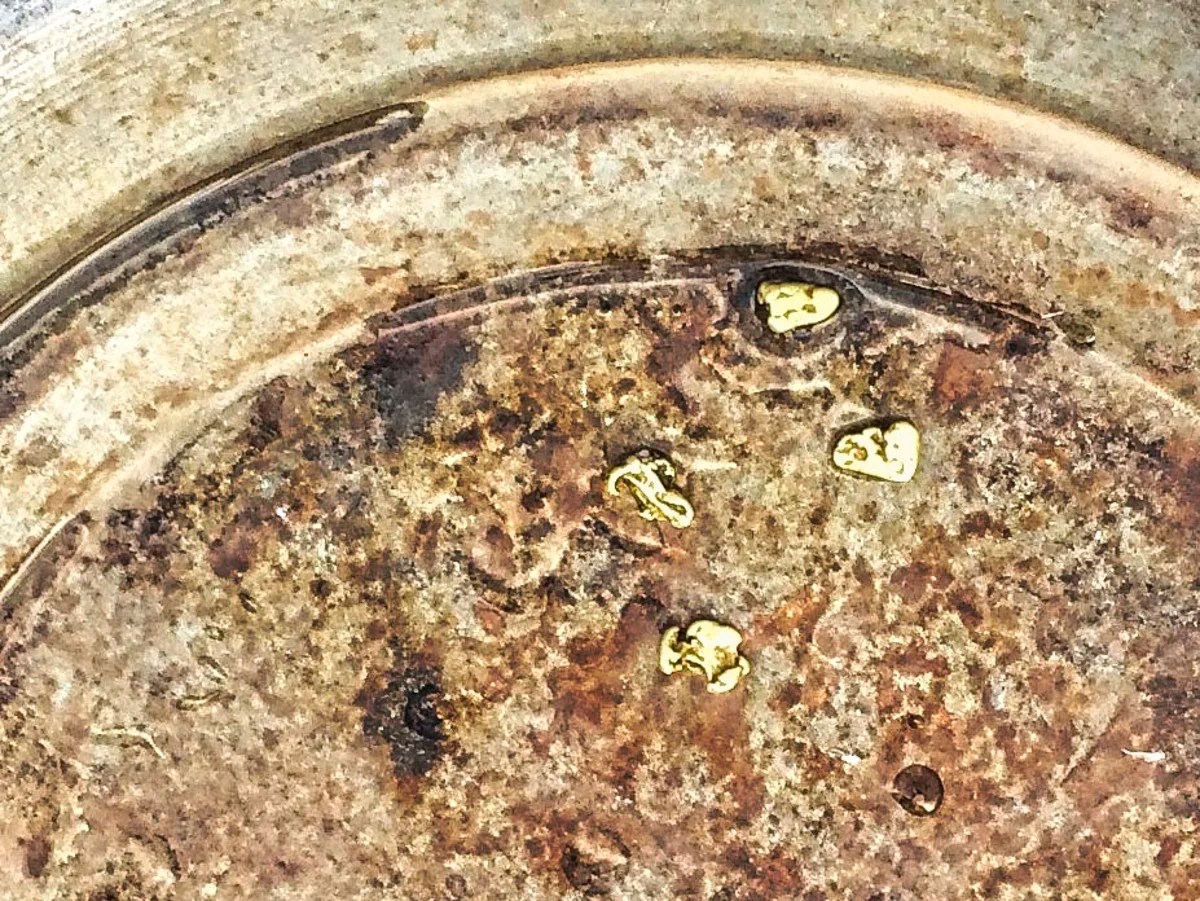
By 1863 Barkerville had 10,000 residents. It was never a ghost town. The whole town of Barkerville founded in 1862 still exists. It was in use until 1958 when it was converted into a historic park owned by the province of BC. The largest preserved historic site in Western North America includes 100 original and 21 reconstructed buildings. You have just teleported to the not so Wild West of Canada (joke).
Logistics
If you are flying to British Columbia, the nearby airport at Prince George has 12 flights arriving daily. Nearby Quesnel has very few flights. Alternatively, fly to Vancouver, Kamloops, or Calgary and drive north.
The town can be visited from 08:00 to 20:00 daily. Admission fees are now Adults $20.00 and Seniors (65+) $15.00. When we went, this fee was for two days, and you need that extra day. The Visitor Centre will give you a Welcome Map, which lists the timed events available. You can also buy the Traveller’s Guide to the Buildings of Barkerville if you plan on walking on your own. But it is much better to participate in the events. The costumed interpreters are excellent.
There are three places you can stay on site, plus two nearby campgrounds. We stayed in the nearby village of Wells only 3 km away.
Buildings
Programs are given at specific times, so it is essential to get the schedule/map at the visitor centre. The buildings described below are prefixed by the numbers on the Barkerville Map.
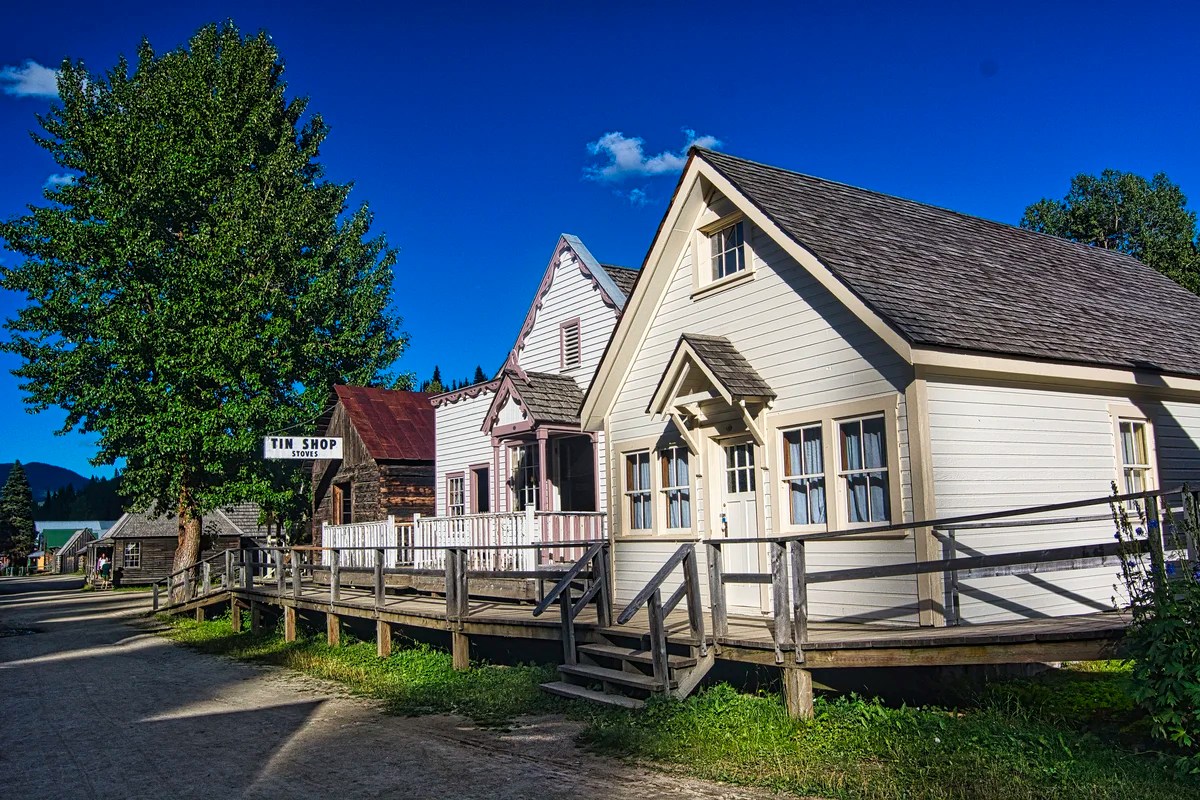
Because Williams Creek sometimes flooded the town, the stores and houses in Barkerville were built on log posts connected by a boardwalk.
While many buildings are original, many were burned down by a major fire. They were replaced by old structures from surrounding towns and redecorated to the purpose and décor of the original buildings. Some buildings are used for their original purpose by operating businesses. These provide hotels, restaurants, bakeries and period costume rentals.
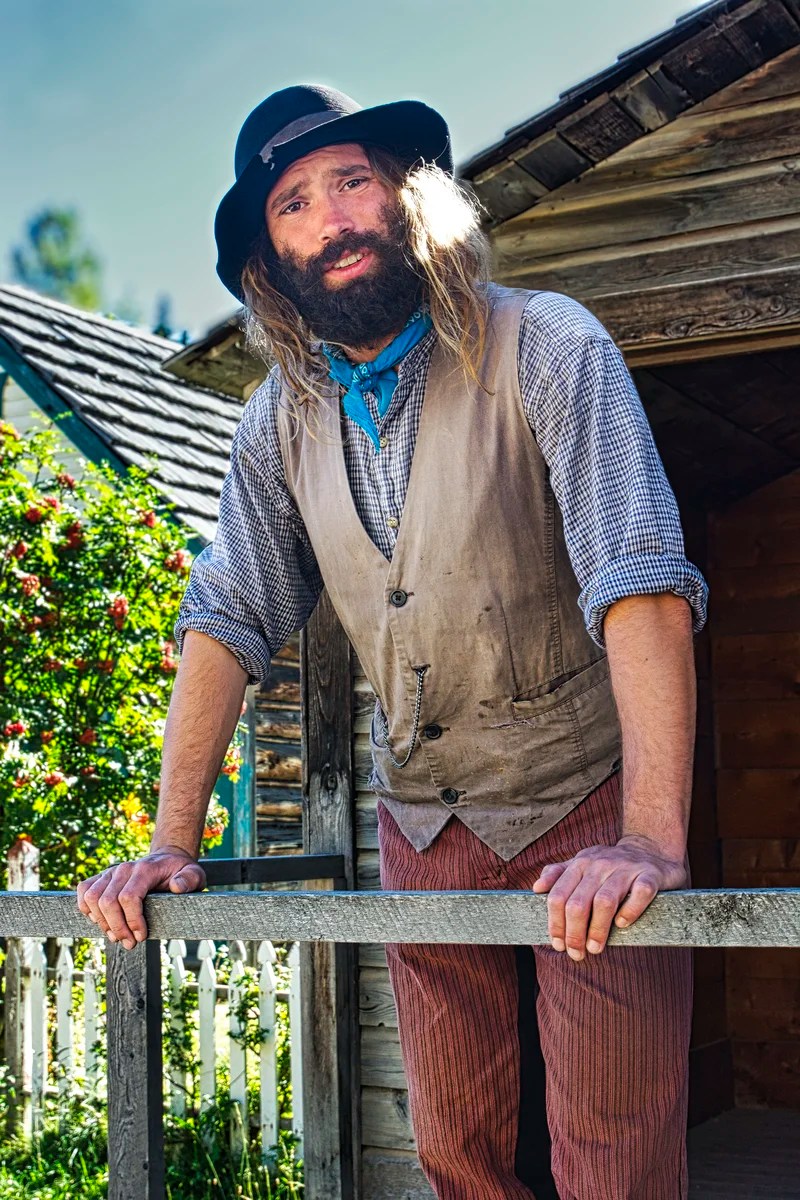
If possible, start your day with the 70-minute town walk to get an introduction to the gold rush history. Our interpreter above was superb. He looks like he just teleported from the 19th century.
The rest of the descriptions are provided in numeric order, but you should always go to the timed presentations for the educational and entertaining skits.
Cariboo Wagon Road
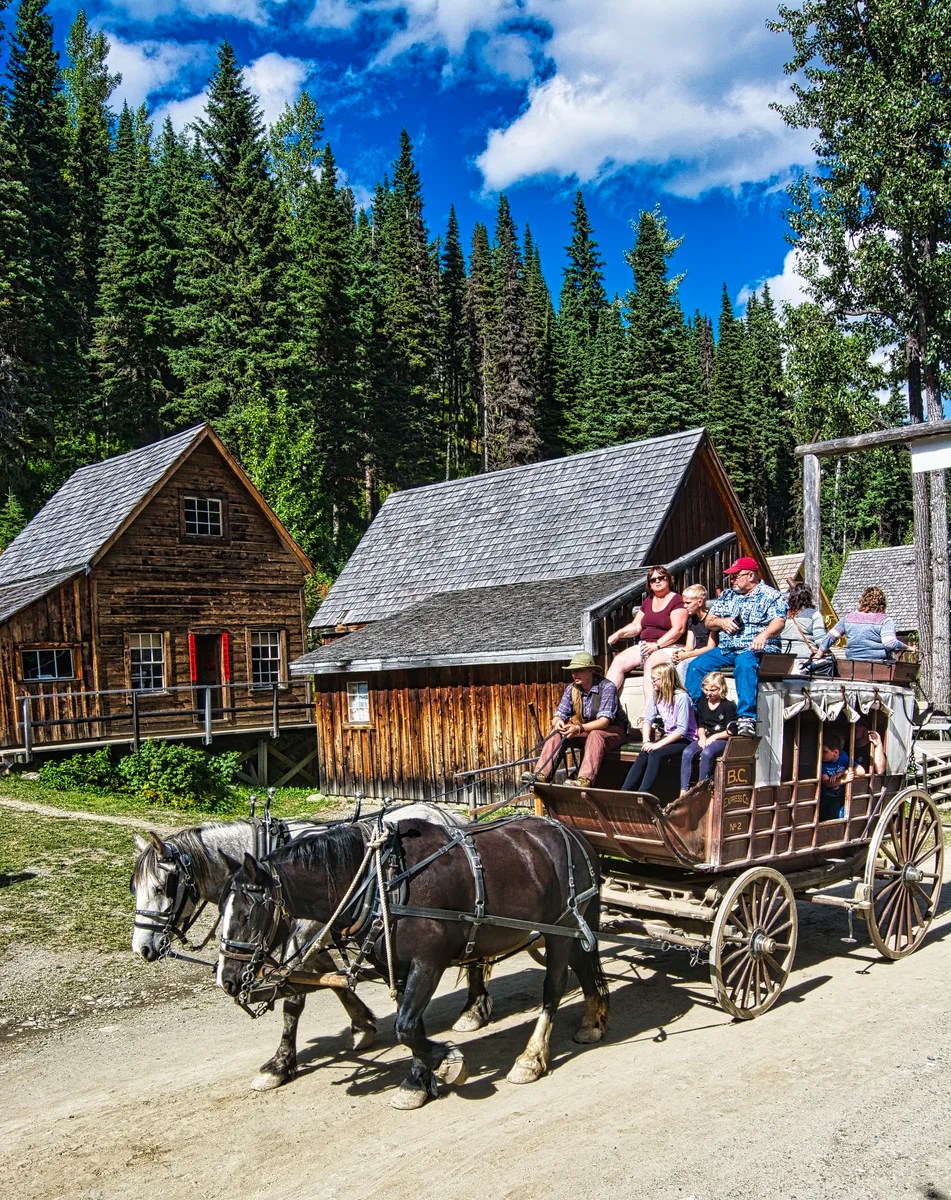
James Douglas was the Governor of the British colony of BC. Without the approval of Great Britain, Douglas built the 640 km long Cariboo Road from Lillooet to Barkerville in 1865. Barnard’s Express stagecoach service transported fortune seekers and freight to the interior of BC and the gold south. Today, Barnard’s Express only provides tours around Barkerville. The Cariboo Road is now Highway 97, the Trial by Fire 🔥 site of the horrific forest fires in 2017 that closed the highway.
In the beginning, only the driver protected the gold shipments carried by the Bernard Express. There were not that many robberies. This was the not-so-Wild West of Canada. In one case, the robber was caught because he deposited gold at the bank, but no one else had found gold on his creek. An assay showed that the gold matched the creek from which the stolen gold had come. Leave it to the British to implement law and order by the assignment of British military to the region and the creation of gold commissioners to certify claims and resolve disputes.
12 St. Saviour Church
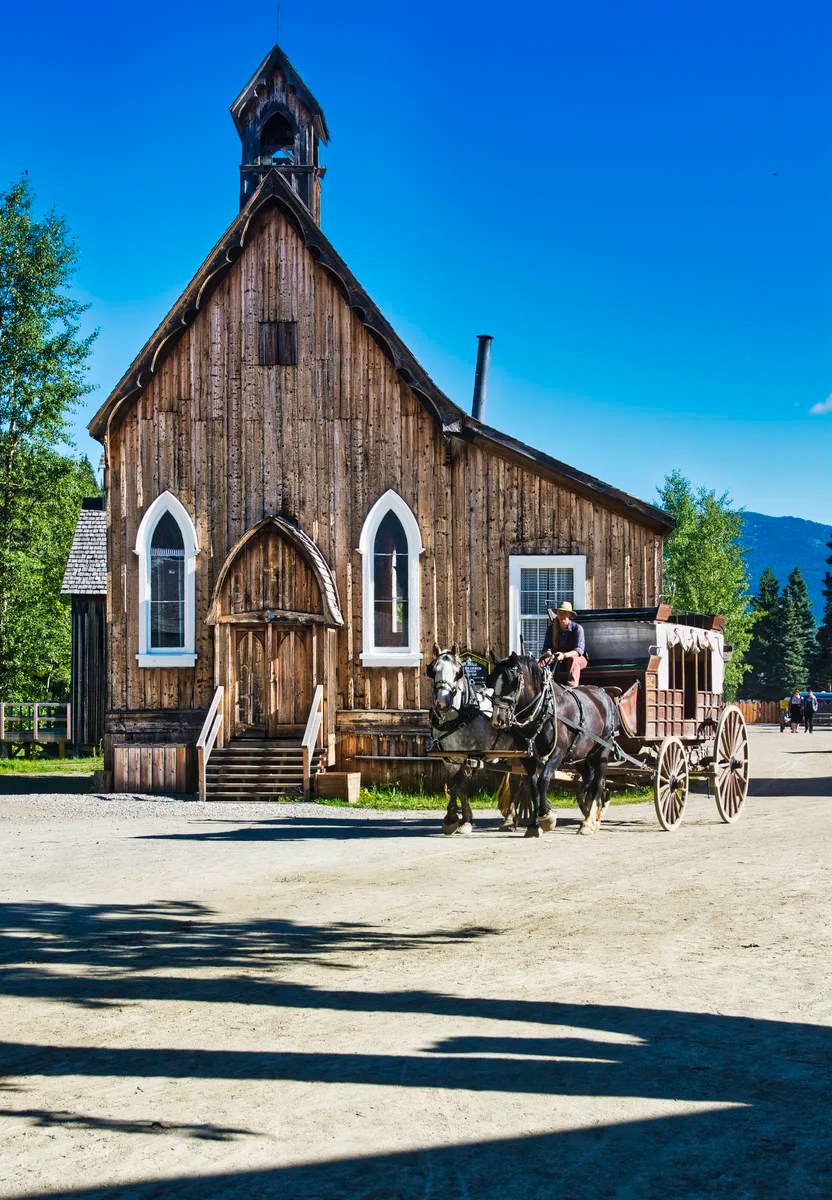
This 1869 building is still owned by the Anglican Church. We sat on the same solid wood pews used by the original townspeople.
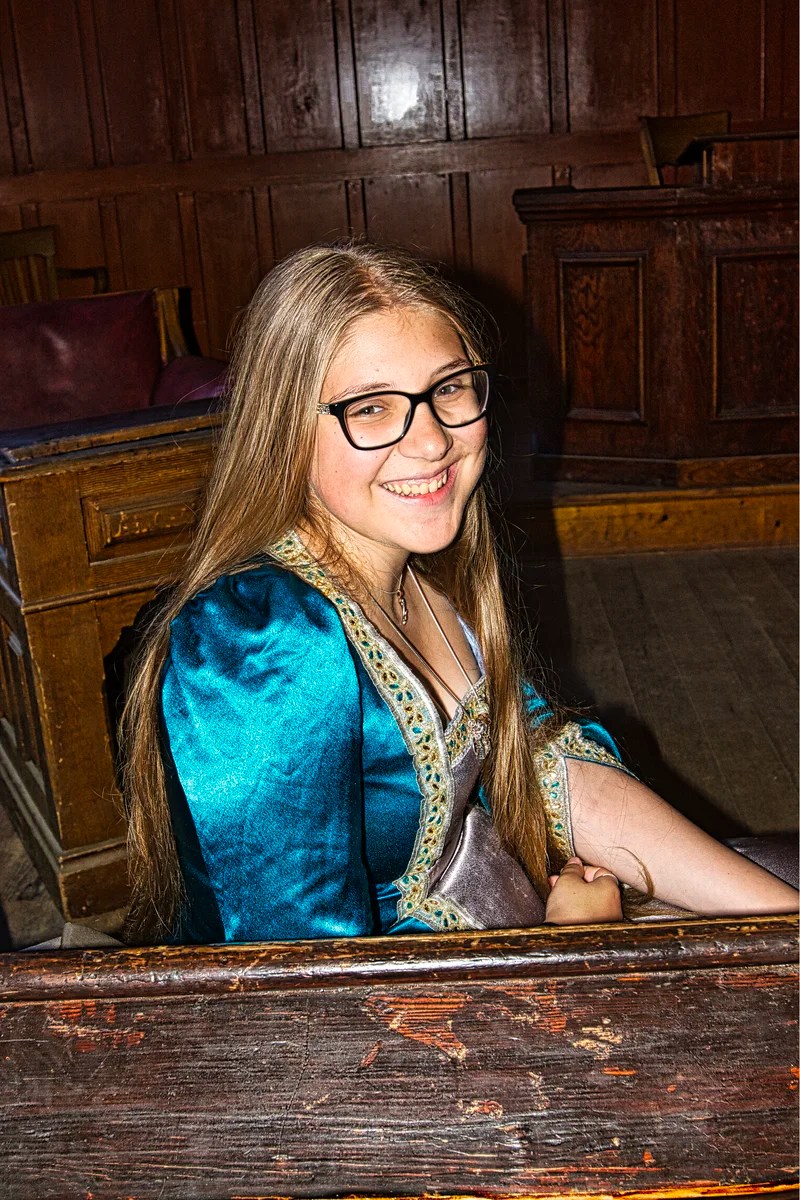
A young tourist dressed up in a period costume attended the program. Wow, talk about getting into the spirit of the past. You can rent period costumes at the photographer’s shop.
13 Williams Creek Schoolhouse
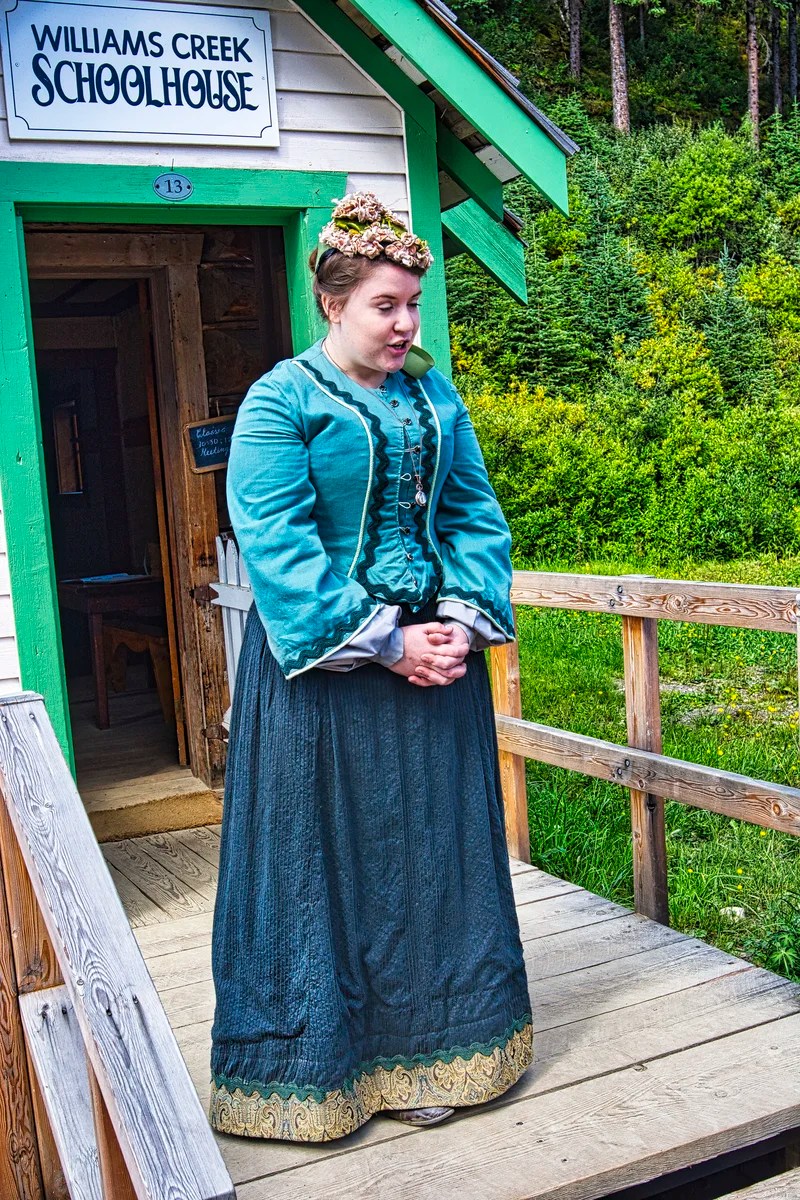
Williams Creek is the stream flowing near Barkerville. The Doddy Family built this log house in 1933. They created the 10 Mile Lake Park north of Quesnel.
In this skit, we all became school children and sat at the wood desks. The very Victorian teacher, who stayed very much in character, did a lesson on the three Rs. This was a very authentic classroom session. She called out all the students who displayed bad manners or did not give the answers she expected. It was eye opening how different school was in those days. Schools from around Northern BC are brought here to attend classes and learn about Barkerville.
15 Bibby’s Tin Shop
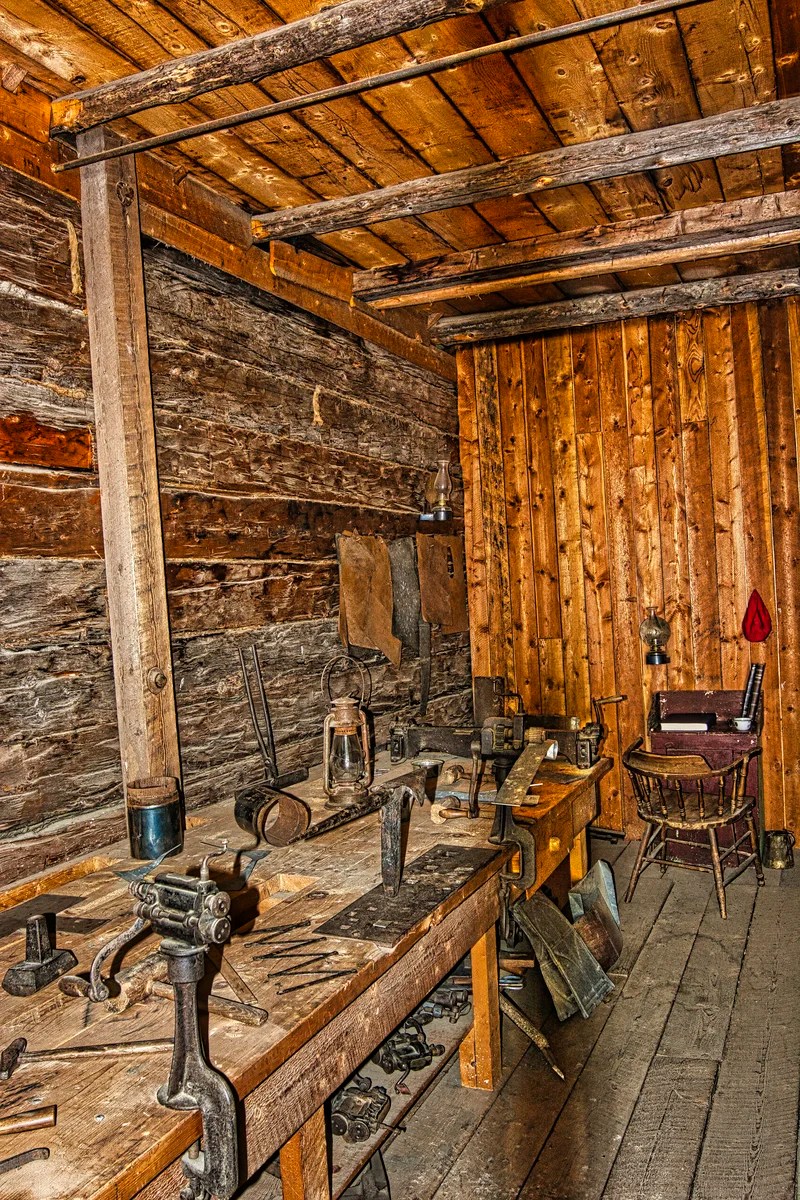
This 1871 workshop displays the tools and products used by the tin smith. Bibby was also a member of the fire brigade.
17 John Bowron House
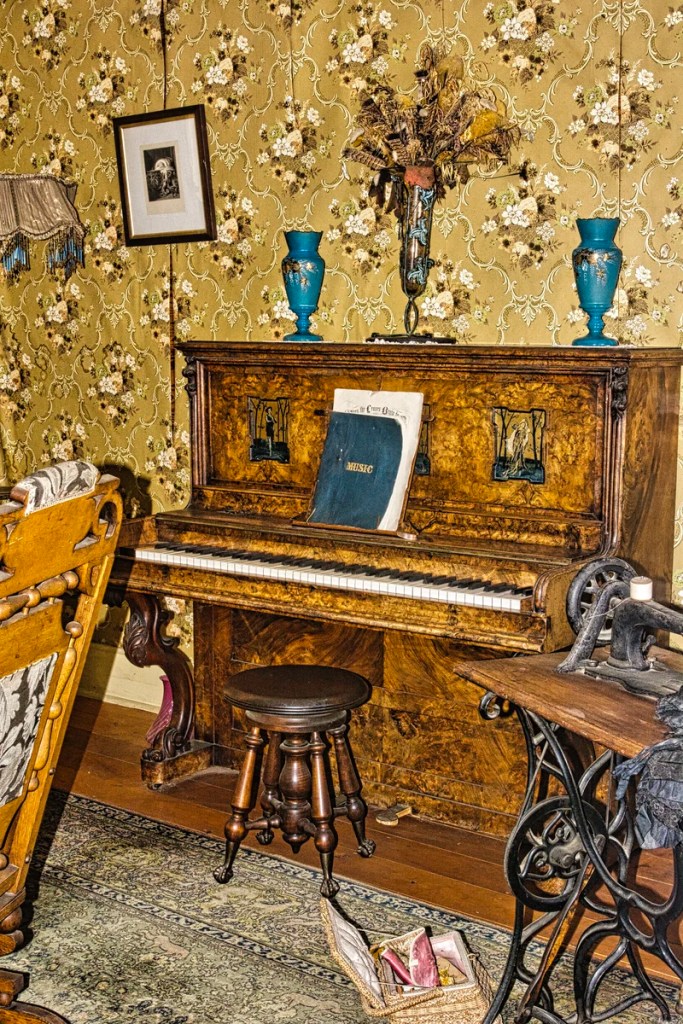
Here we learned that a group of adventurers, including John Bowron, left Ontario and Quebec in 1862 on a cross-country journey to the Cariboo Gold Rush. They were called Overlanders.
The original house dates from when John Bowron was appointed postmaster. What an amazing career he had — he came as a miner, then later served as the librarian, and finally was the gold commissioner of the Cariboo.
While this building looks authentic, it is a reconstruction built in 1964! The décor of the dining room and parlour was based on photos from 1900.
18 Wendle House
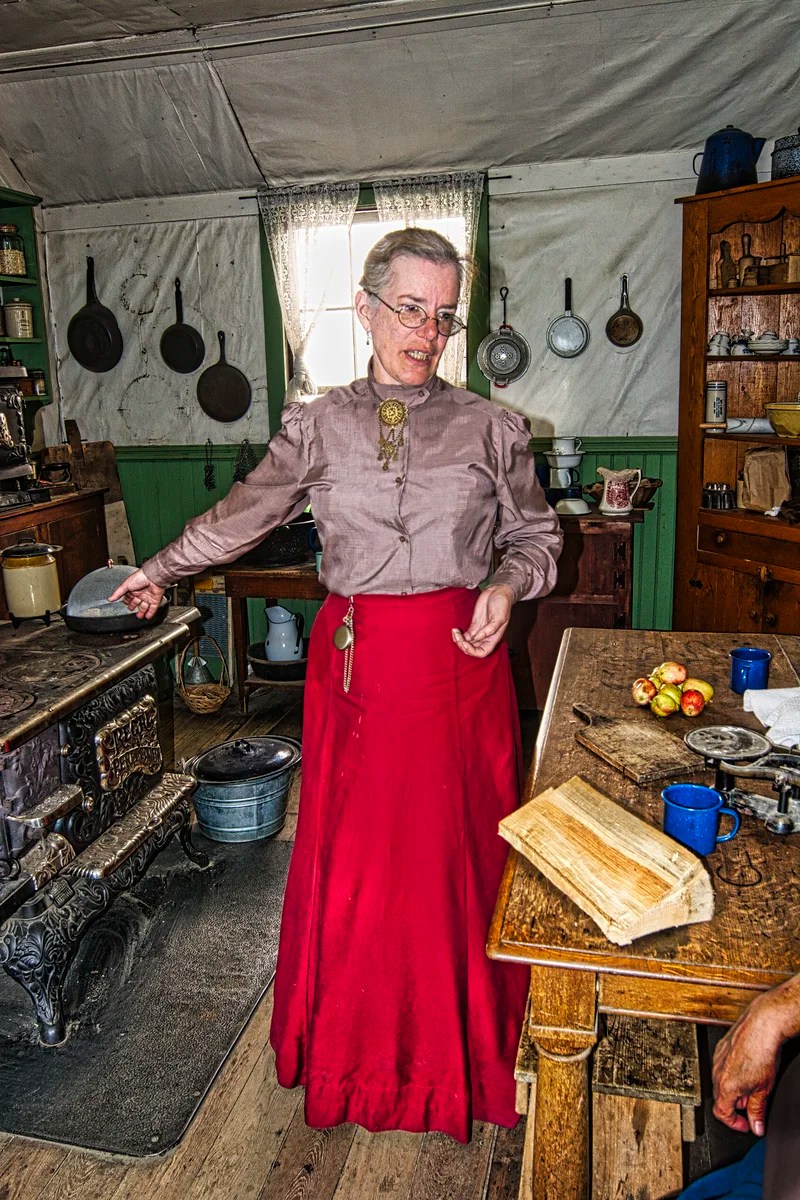
Here we had a long chat with Ms Betty Wendle while she cooked on the authentic wood stove. Unfortunately, it was the end of the day, and we missed her baked treats.
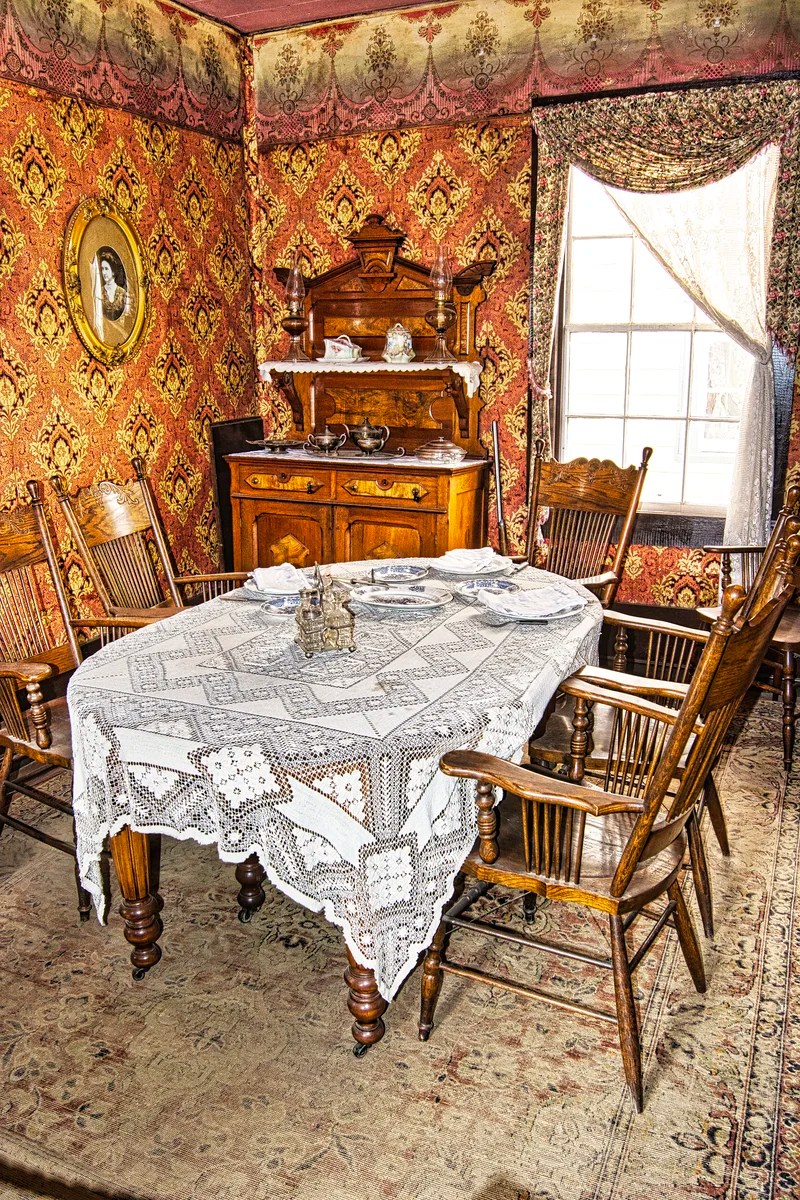
Twenty-something Joe Wendle immigrated from the USA in 1895. Wendle House was built in 1899. The elaborate wallpaper dates from the 1990s, but the furnishings are representative of that period.
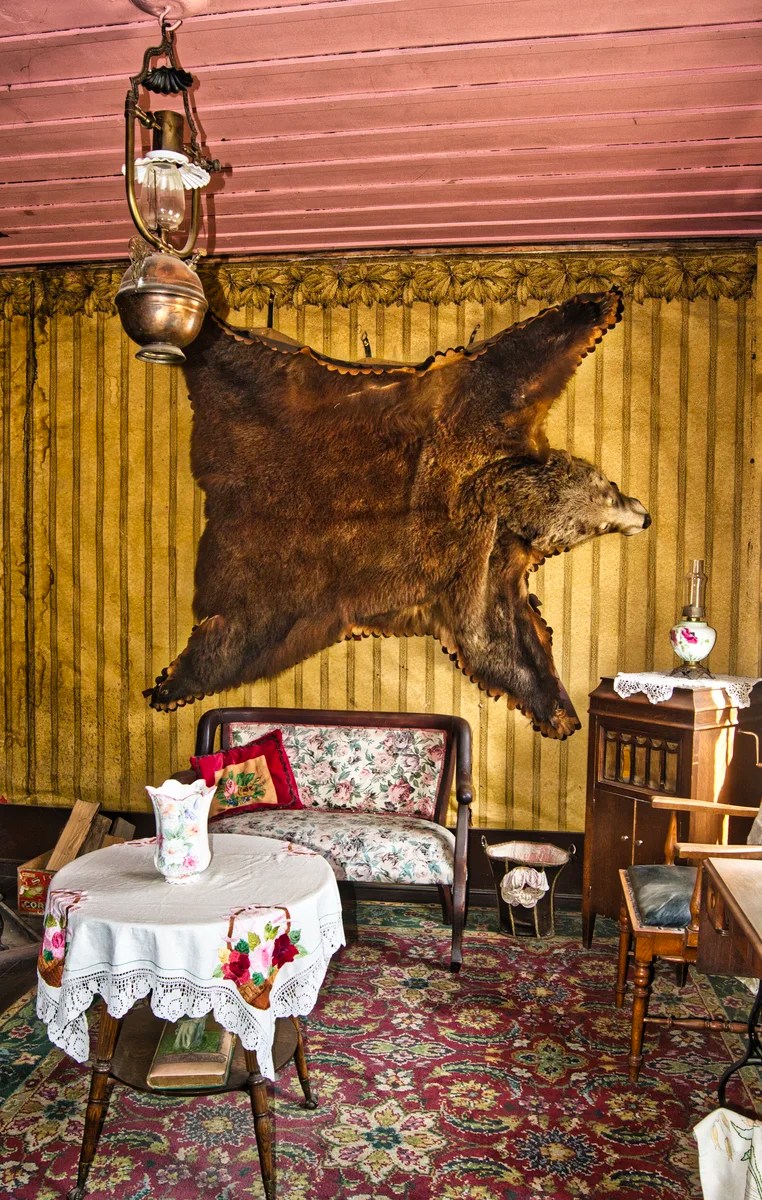
After working the mines, the Wendles saw the opportunities for recreation in the Cariboos and established Bowron Lake Lodge. She told us how she was surprised by a grizzly bear during a tourist guiding excursion and shot it. She showed us the bear hide in the parlour.
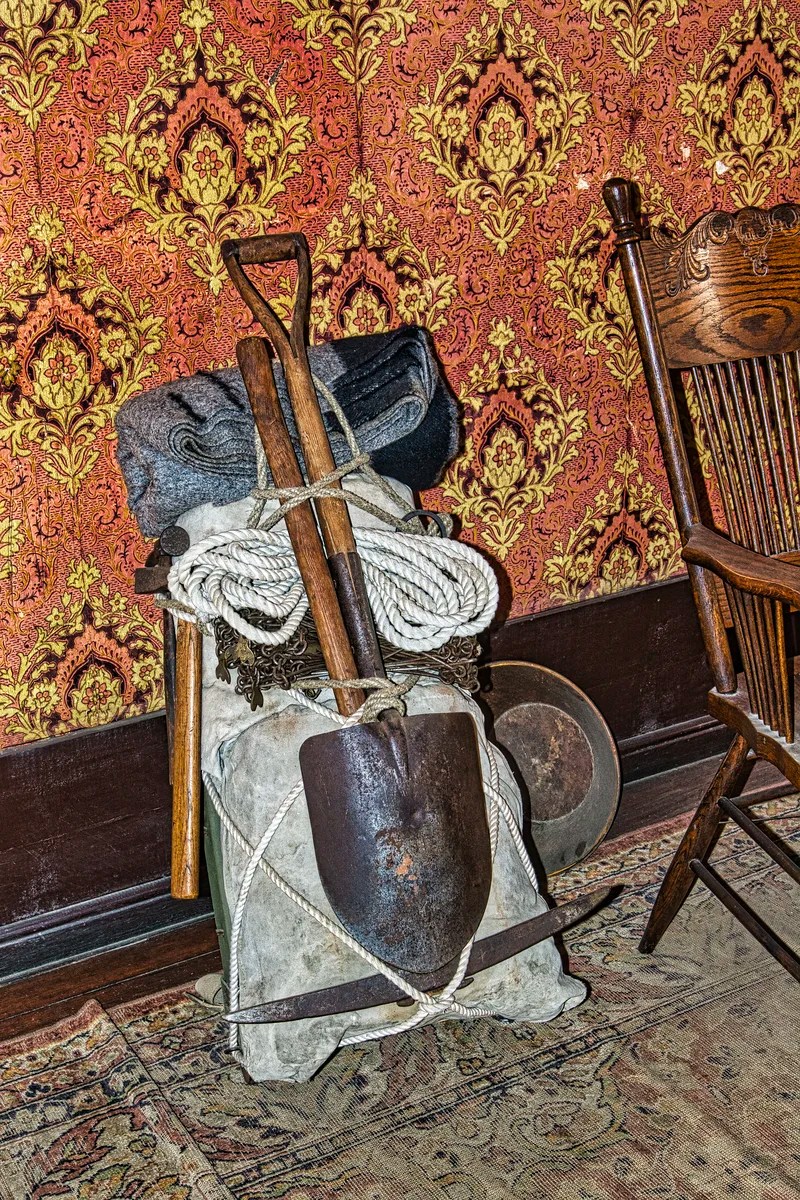
We did not try lifting the miner’s backpack. We are sure it was heavier than the 44-pound (20 kg) backpacks that we used on our Three-Year Round The World Trip.
20 Cameron & Ames Blacksmith Shop
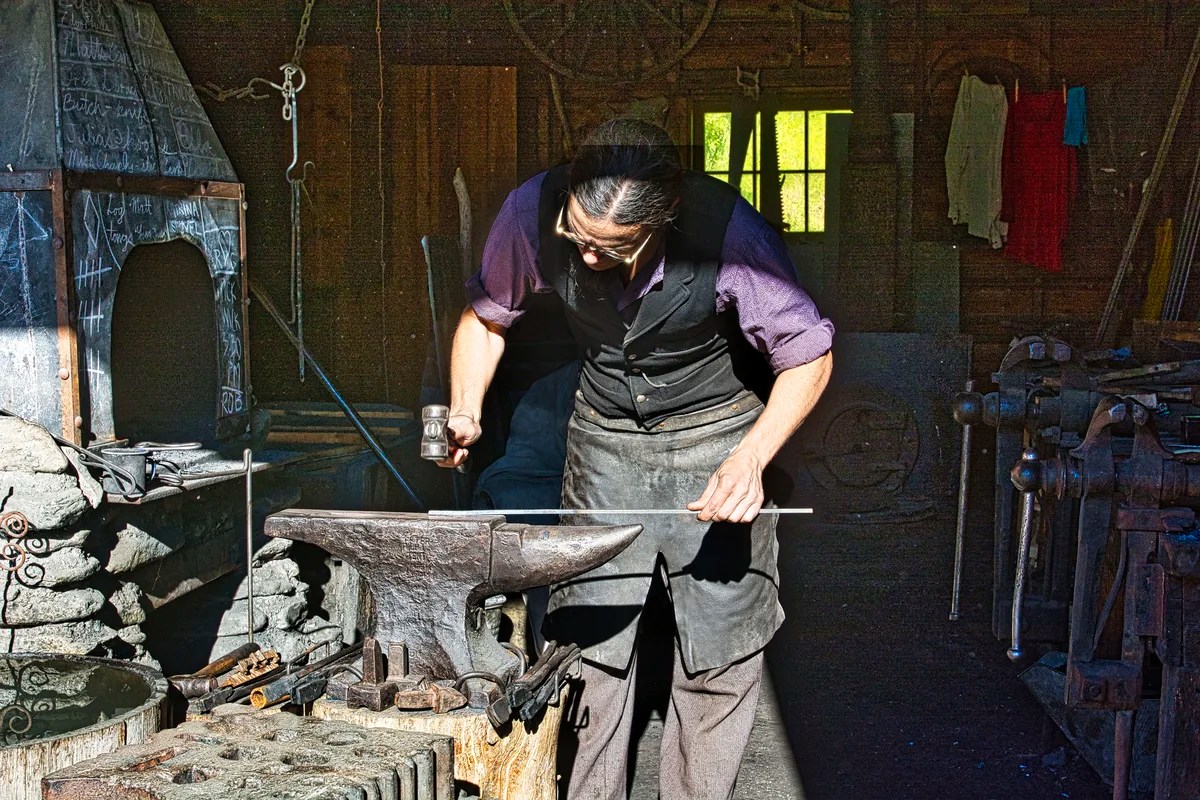
Here, Mr. Cameron showed us how he made cast iron objects in the 1870s Blacksmith Shop.
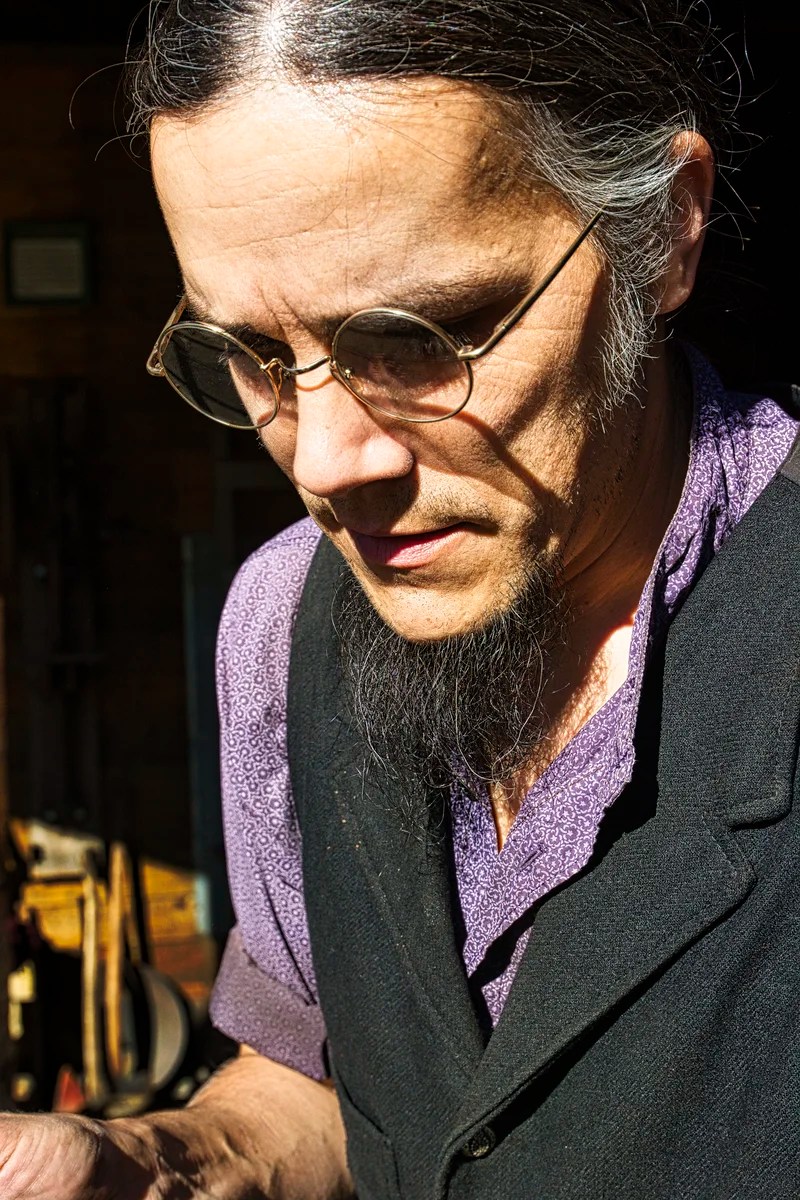
In this case, an actual blacksmith is used, not an interpreter. His handcrafted iron works are available for purchase.
21 Gold Commissioner’s Office
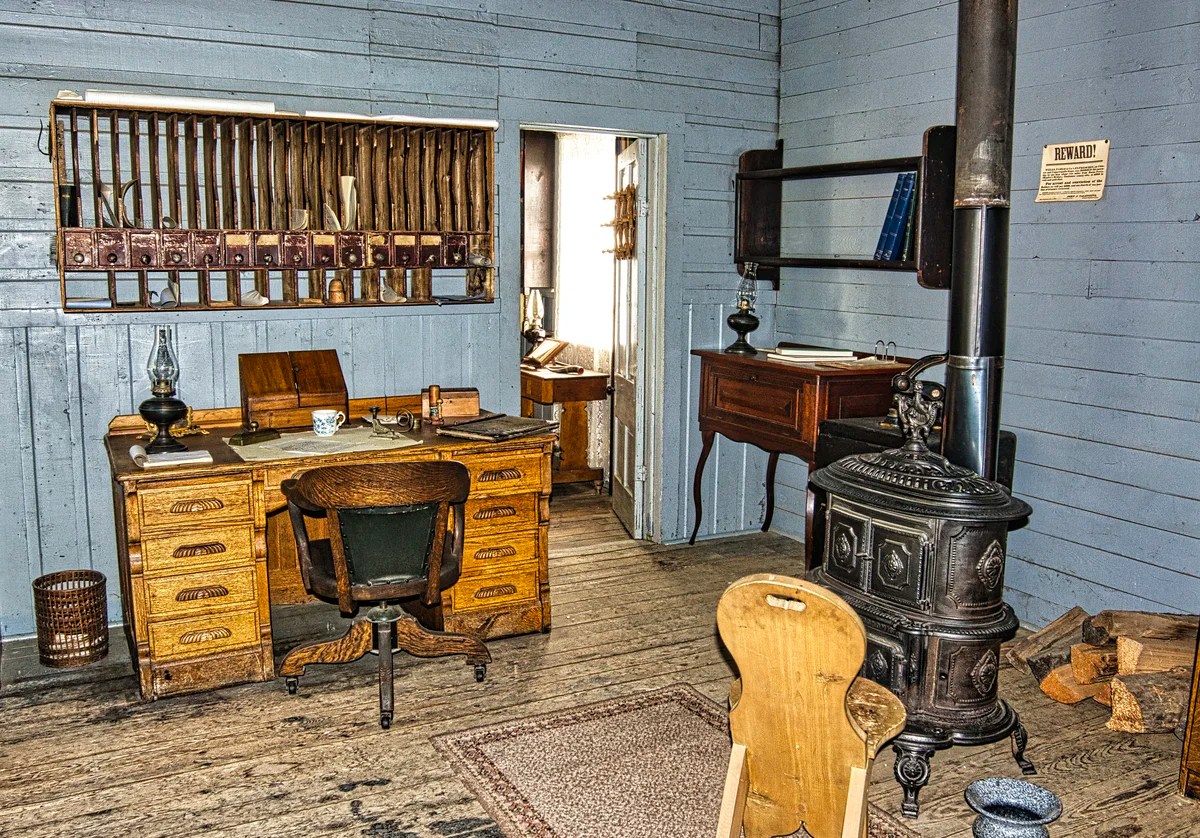
This is where John Bowron worked from 1896. Governor Douglas created police forces and law courts, and initiated the idea of a Gold Commissioners to avoid the chaos and lawlessness of the California Gold Rush.
Before 1858, BC’s settler population was only 1,000! Notice that they did not consider the 30,000 Indigenous people as part of the population. When gold was discovered in the Fraser Valley, Governor James Douglas predicted the influx of 10,000s of American prospectors that could tilt the future of BC to become part of the US. The first wave was 25,000 people!
Douglas asserted British sovereignty over the “mainland” – technically, it wasn’t under his jurisdiction as it wasn’t part of the colony of Vancouver Island. He asserted authority over American miners and undermined American territorial ambitions.
Shortly thereafter, the UK Colonial Office formally ratified Douglas’s proclamation of sovereignty and established a new colony encompassing the mainland. Queen Victoria named the new colony British Columbia. Douglas was appointed the first governor of the Colony of British Columbia in 1858.
He relied on his gold commissioners to record mining and land claims and arbitrate mining disputes. Their primary role was to issue mining licences and register gold claims. The commissioners also acted as agents of everyday authority. They settled mining disputes, collected government revenues, and oversaw land claims.
23 Todd Company Store
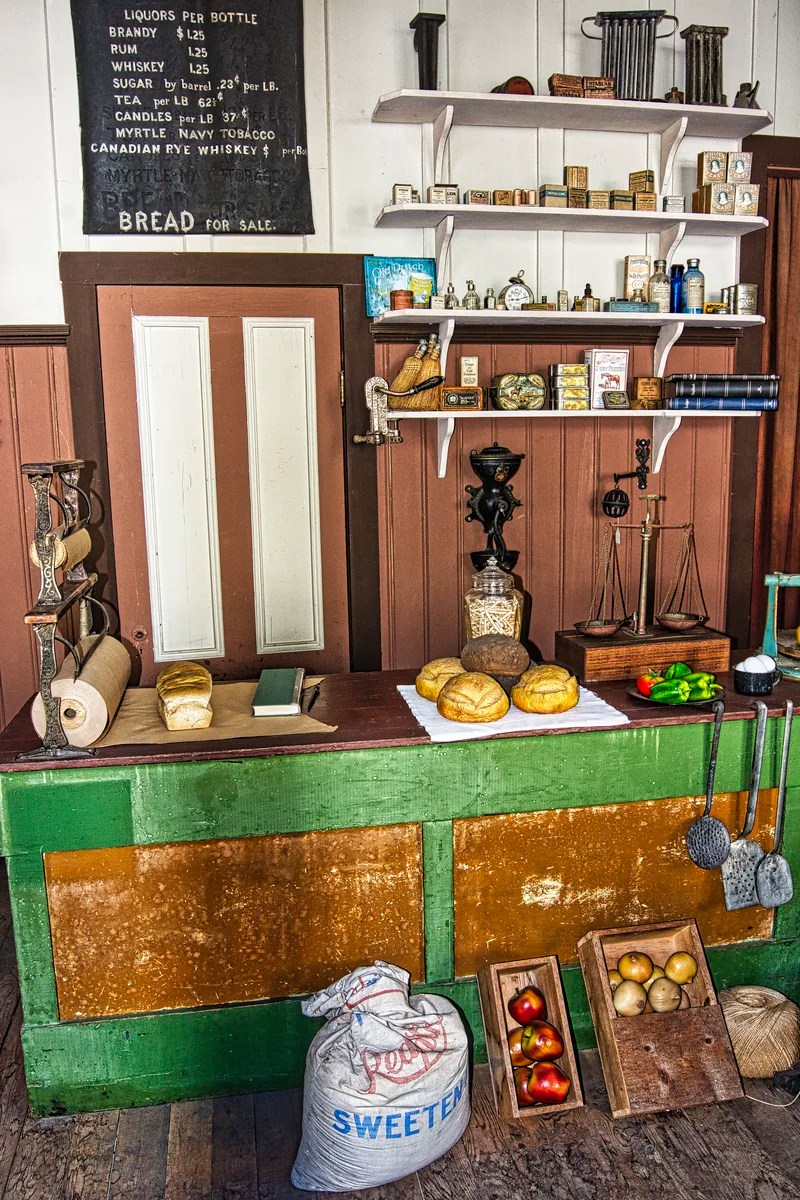
Jacob Todd came at the height of the Gold Rush but opened a general store. The original building was destroyed by the 1868 fire. This is a reconstruction made one hundred years later in 1968, based on a 1870 photo.
Here you can see replicas of the goods people bought a century ago. In some ways, things were very similar to today, such as fruits, vegetables, Redpath sugar, painkillers, and even Old Dutch cleanser. Epsom salts originated from a medicinal spring in the town of Epsom, England. It was determined that the active ingredient was magnesium sulfate heptahydrate. It was used as a laxative and an anti-inflammatory.
26 McMahons Confectionery
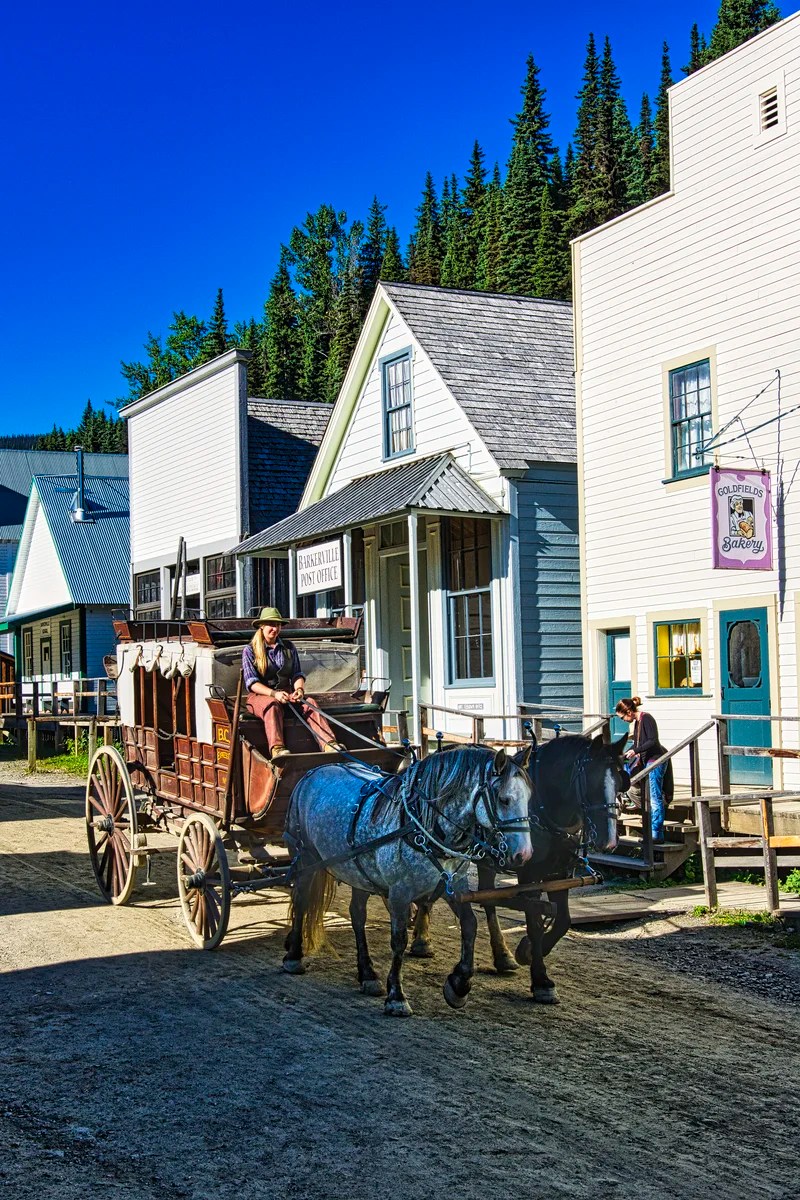
This 1946 building houses the Goldfield Bakery with ice cream and baked goods.
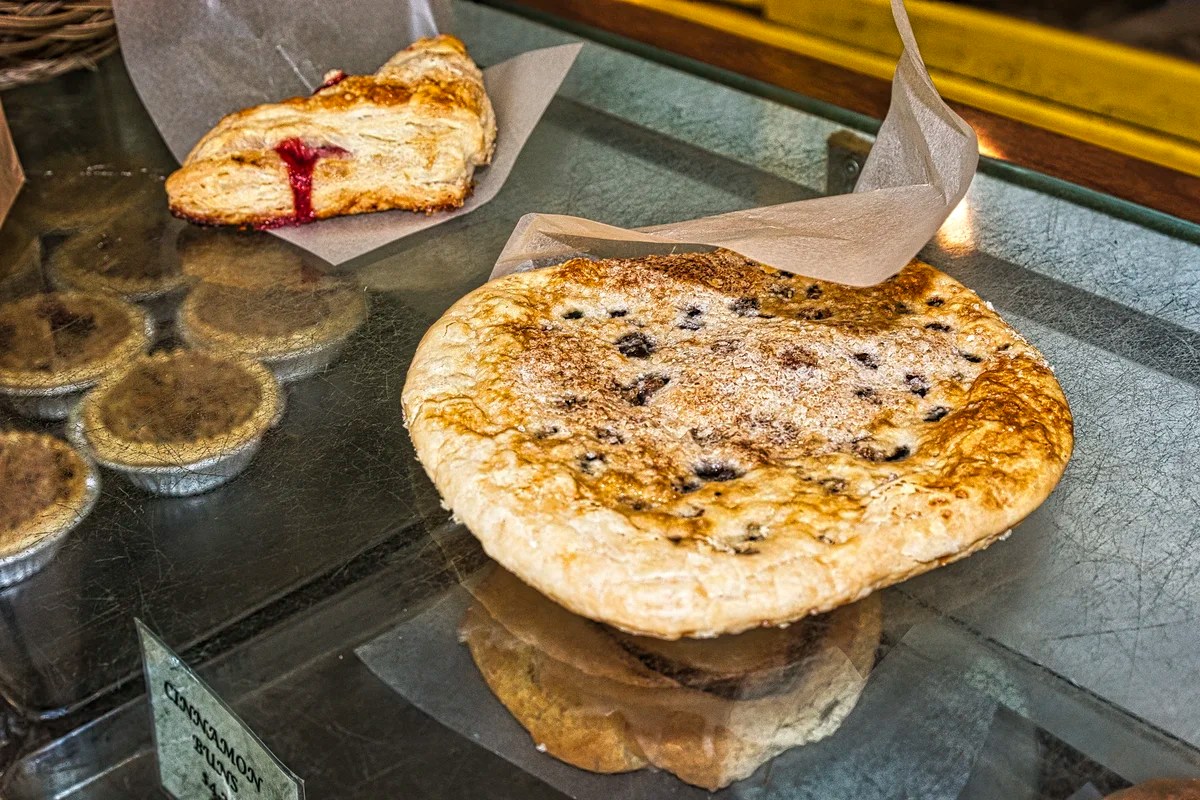
Besides the pastries on top, there were butter tarts, a quintessential Canadian invention. This pastry could have been available during the Cariboo Gold Rush. The earliest published recipe dates back to the Royal Victoria Hospital Cookbook in 1900. However, the origin is likely the filles du roi (King’s Daughters), the ca. 800 young women sent by France between 1663 and 1673 to help colonize Québec.
To quote the Canadian Encyclopedia, “Born and baked in this incredible land of ours to be a constant reminder of how sweet and likable we are.” You can find a year-round self-guided Butter Tart Tour in the Kawarthas-Northumberland region of Ontario.
27 Moses Haircutting
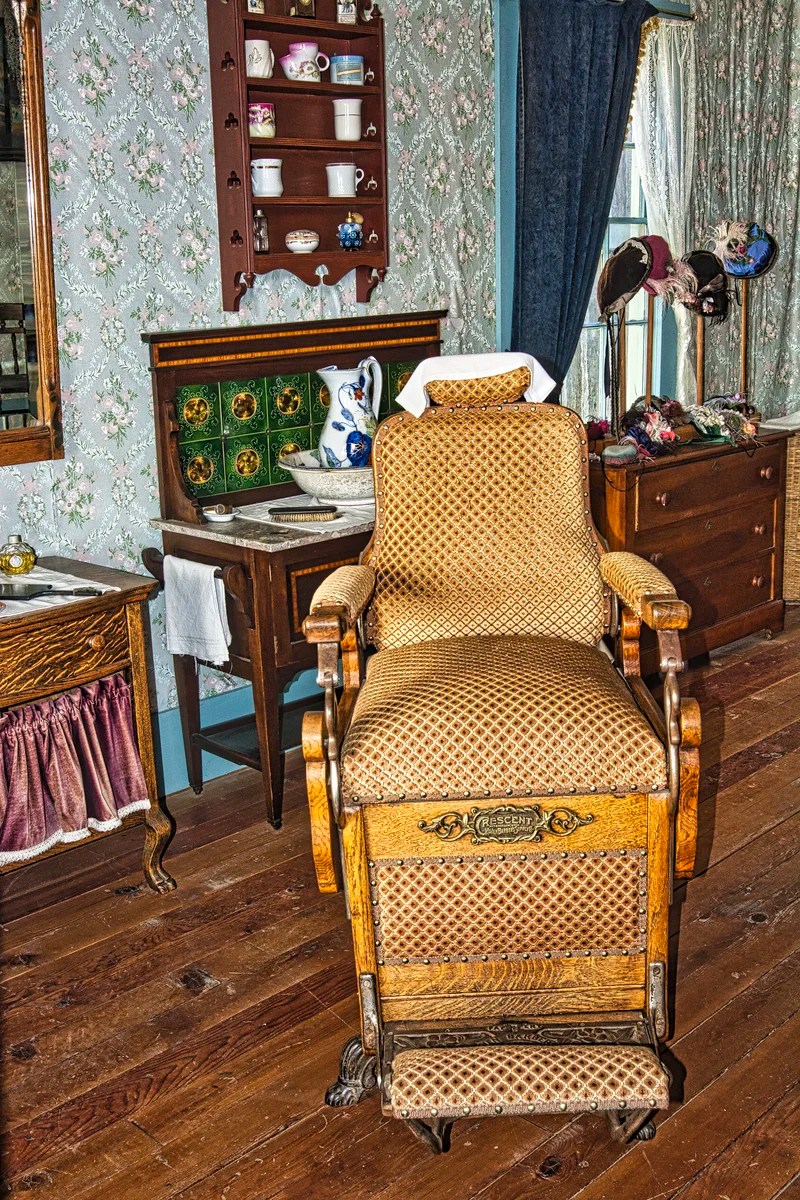
Wellington Moses sailed with a group of 35 blacks from San Francisco to flee racial persecution in the USA. In 1858, they arrived in Victoria and met with Governor Douglas. They were granted permission to settle in BC (not part of Canada yet). In 1862, Moses started his Victorian-style barber shop in Barkerville. His fashionable haircuts and silk bows were popular with the ladies.
35 Masonic Hall
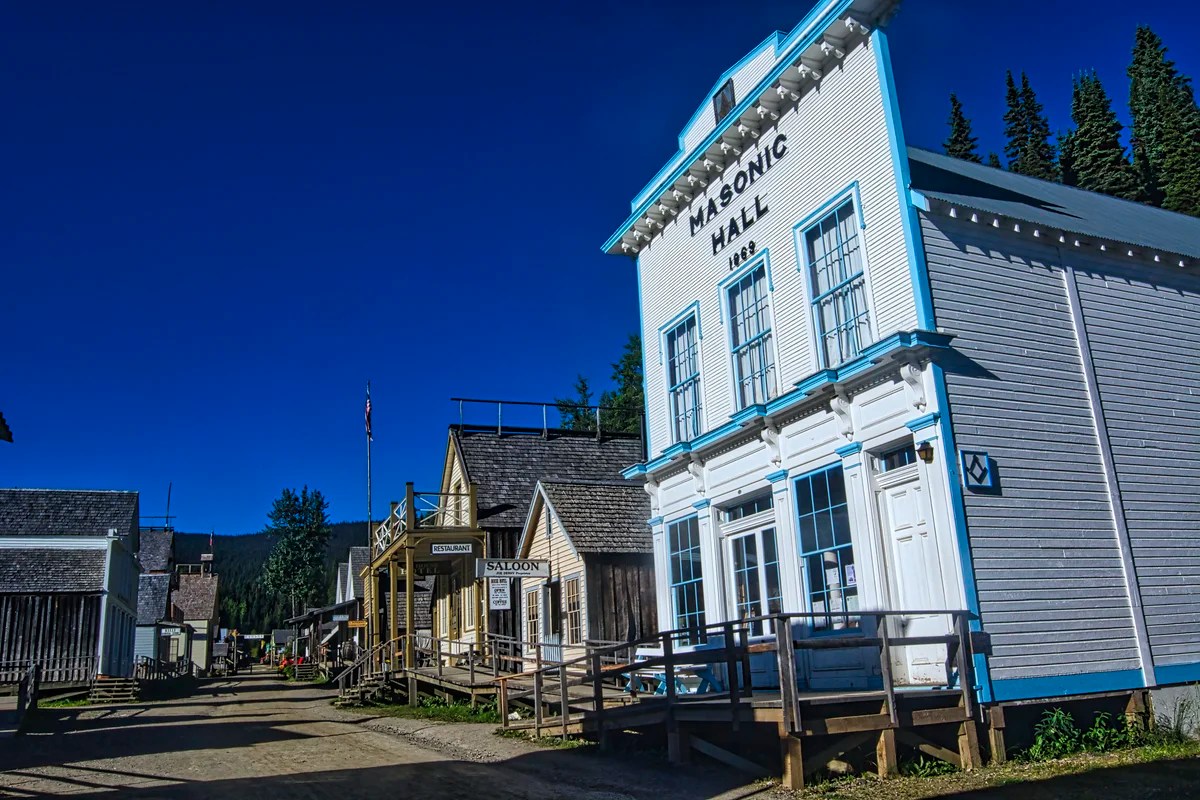
The first and second Masonic Halls both burned down! The Red Front Cigar Store on the ground floor was supposedly a front for a lucrative bootleg business. The second fire started in this store. The third building dates from 1937. In 1966, the building was restored to its 1869 façade.
Future of British Columbia
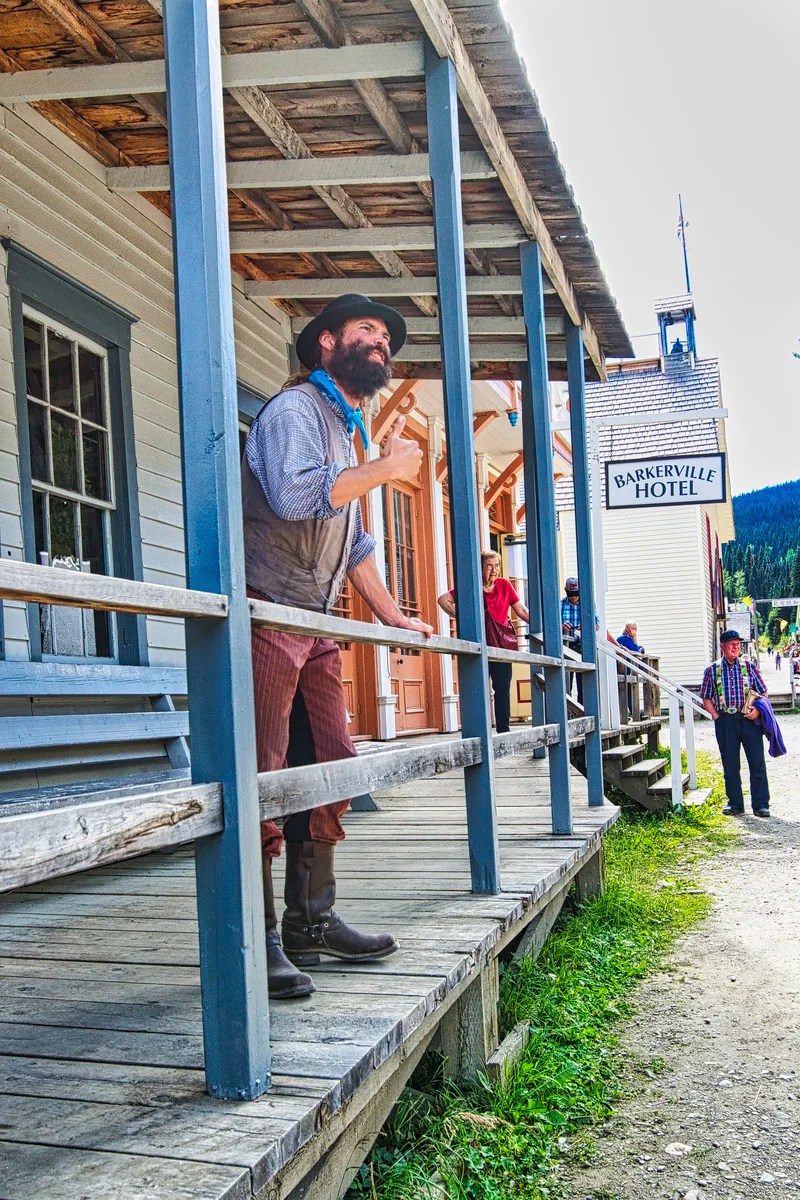
The interpreters re-enacted the vigorous debate between those who wanted British Columbia to join the USA and those who would choose the new country of Canada. Barkerville was the most vocal town in BC, arguing for joining Canada. Unlike the other gold rushes, a lot more Canadians came to the Cariboo.
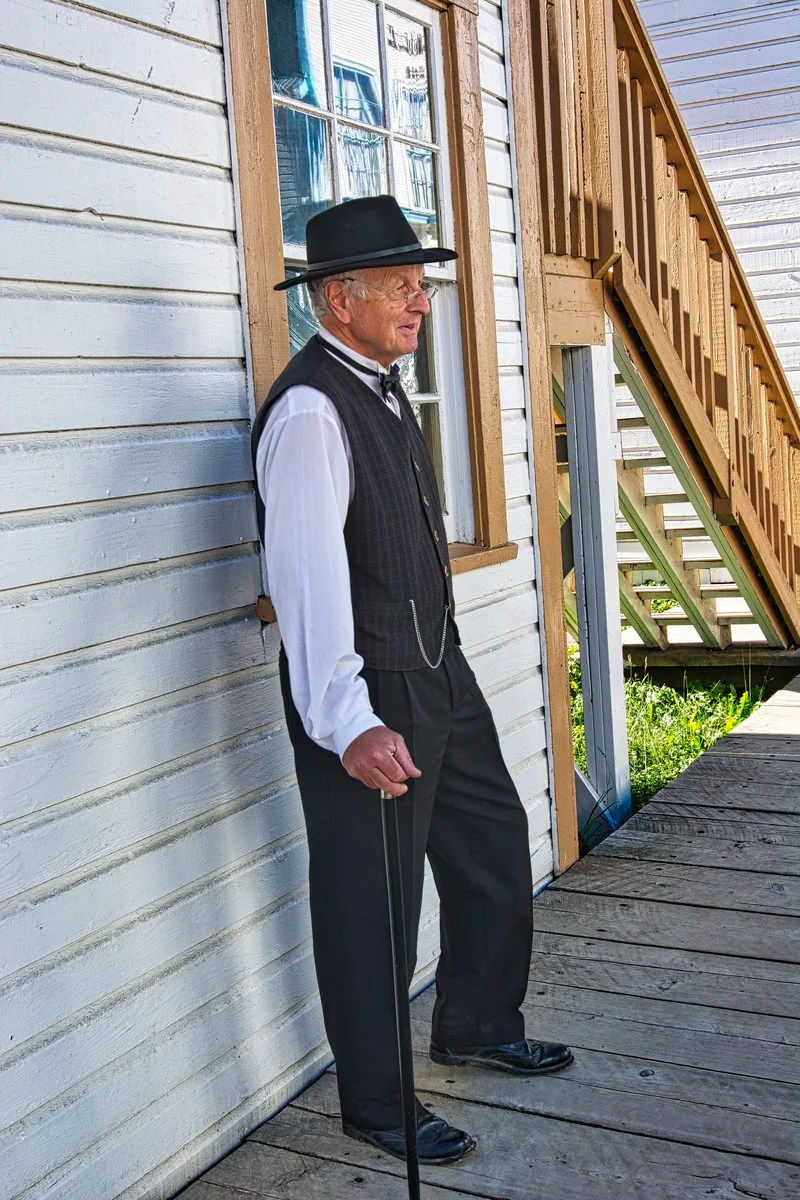
Dr. Robert William Weir Carrall of Barkerville joined the chorus of those calling for Canada to expand to the Pacific coast. At the same time, the British government seemed to be keen to help Canada and perhaps eager to contain the growing power of the United States.
In 1869, the Hudson’s Bay Company (HBC) rejected an American government offer of CA $10,000,000 to buy Rupert’s Land. That would have been quite a steal for the USA, considering the $7 million the USA spent to buy a 50% smaller Alaska. Instead, the British pressured HBC to sell it to Canada for $1.5 million. Overnight, Canada changed from a small nation to the second-largest country in the world. That was quite a deal, except HBC never paid for it in the first place!!
Rupert’s Land covered 3.9 million sq. km — over 3.5 times the size of Western Europe! This land became the Northwest Territories, Manitoba, Saskatchewan, and the northern parts of Ontario and Quebec. In other words, 40% of today’s Canada.
Dominion Day
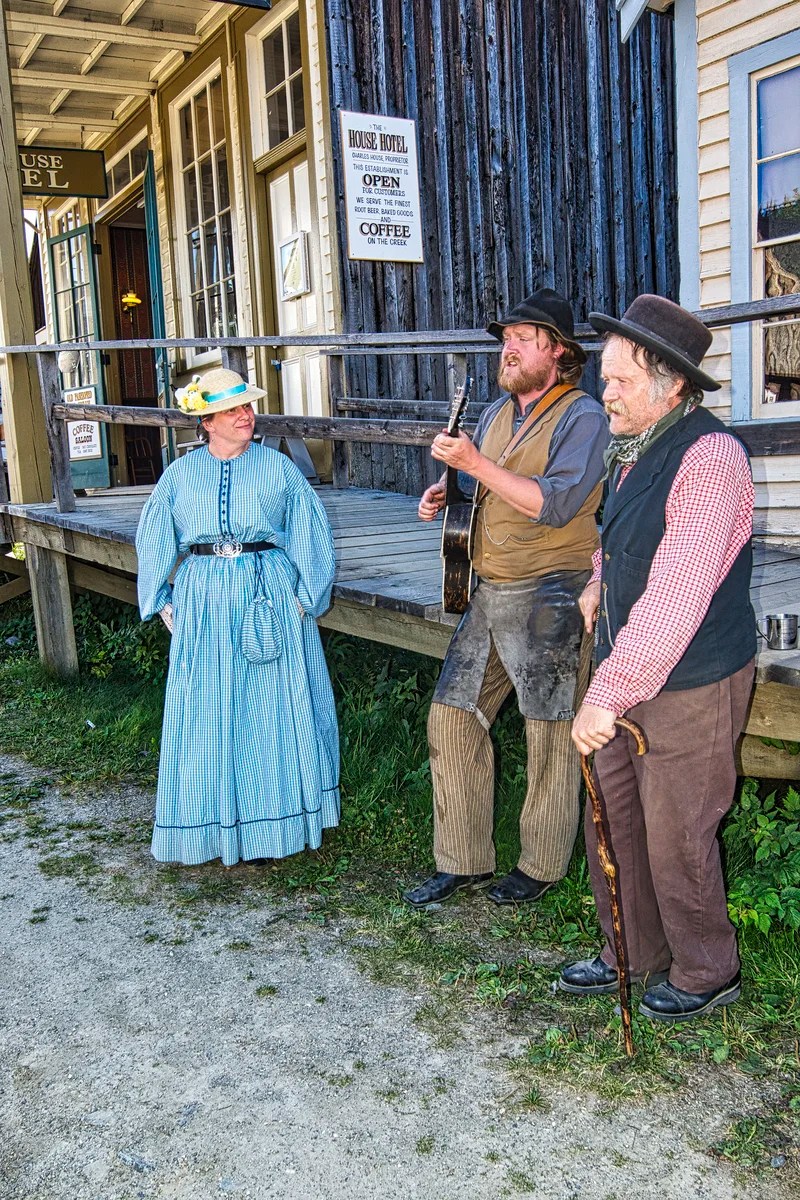
Gold miners looked for any excuse to celebrate. As many prospectors were American, the 4th of July was a popular celebration. The Dominion of Canada was declared on July 1st, 1867. Of course, BC was still a British colony. On July 1st, 1868, the local miners decided it was time to celebrate. They woke up the town with a 21-gun salute! But they had no cannons so they placed explosive charges between two anvils that were equally noisy. Then began the party with sports events, theatre performances, a dance ball, and ending with fireworks.
The Americans begrudgingly admitted that the pro-Canadians had organized a rip-roaring party but they pointed out that this fledgling dominion had a long way to go before it equalled their glorious country to the south. Why the new country didn’t even have a flag.
So, the next July 1st, the Pro-Canada group planned a better party. They even created a flag with a beaver surrounded by a wreath of maple leaves with a small Union Jack. They raised the flag overnight as a surprise and made sure it was higher than the American flag across the street at the Sterling Saloon, better known as the Eldorado Billiard and Dancing Saloon, which was a very American institution.
Three of the supporters of the Dominion Day celebration joined the BC delegation that negotiated the creation of the province of BC and the union with Canada in 1871. One of the Barkerville trio, Dr. Carrall, was appointed to the federal Senate. In 1879, he promoted a law declaring Dominion Day a national holiday. Most Canadians probably don’t know that Barkerville was the origin of the national Dominion Day, now renamed Canada Day. Alas, the present Canadian flag was only created in 1965.
Margaret House
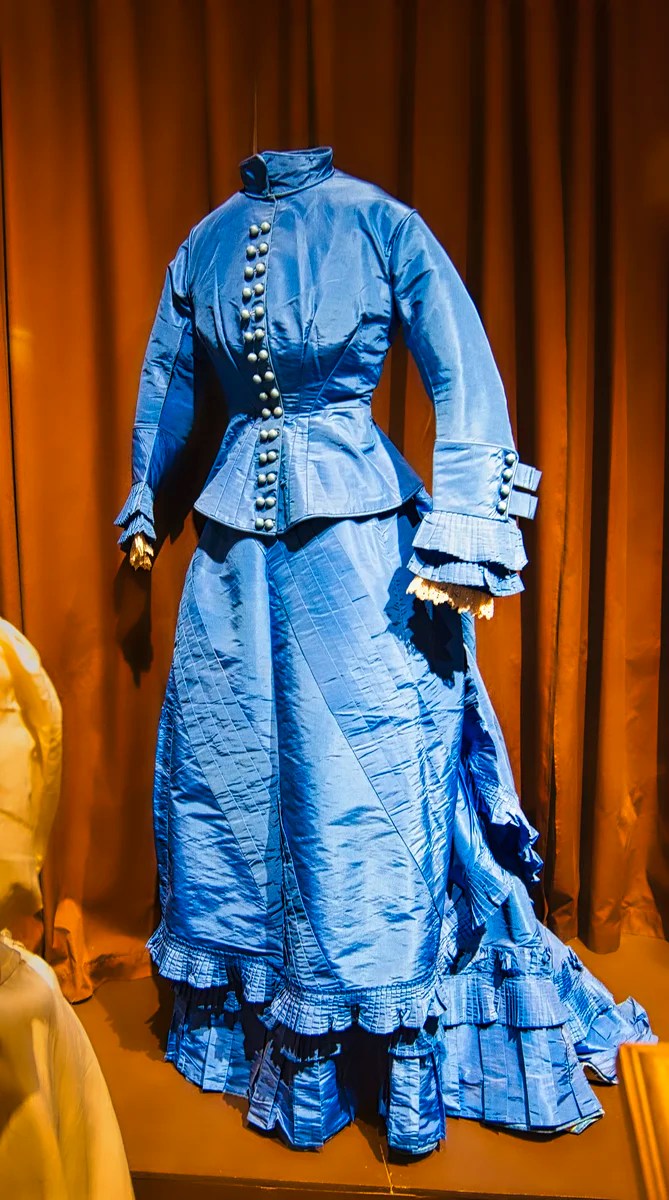
This beautiful blue silk wedding dress was handmade in San Francisco for Margaret Cerise for her marriage to Charles House in 1876.
58 Dr. Callanan’s House
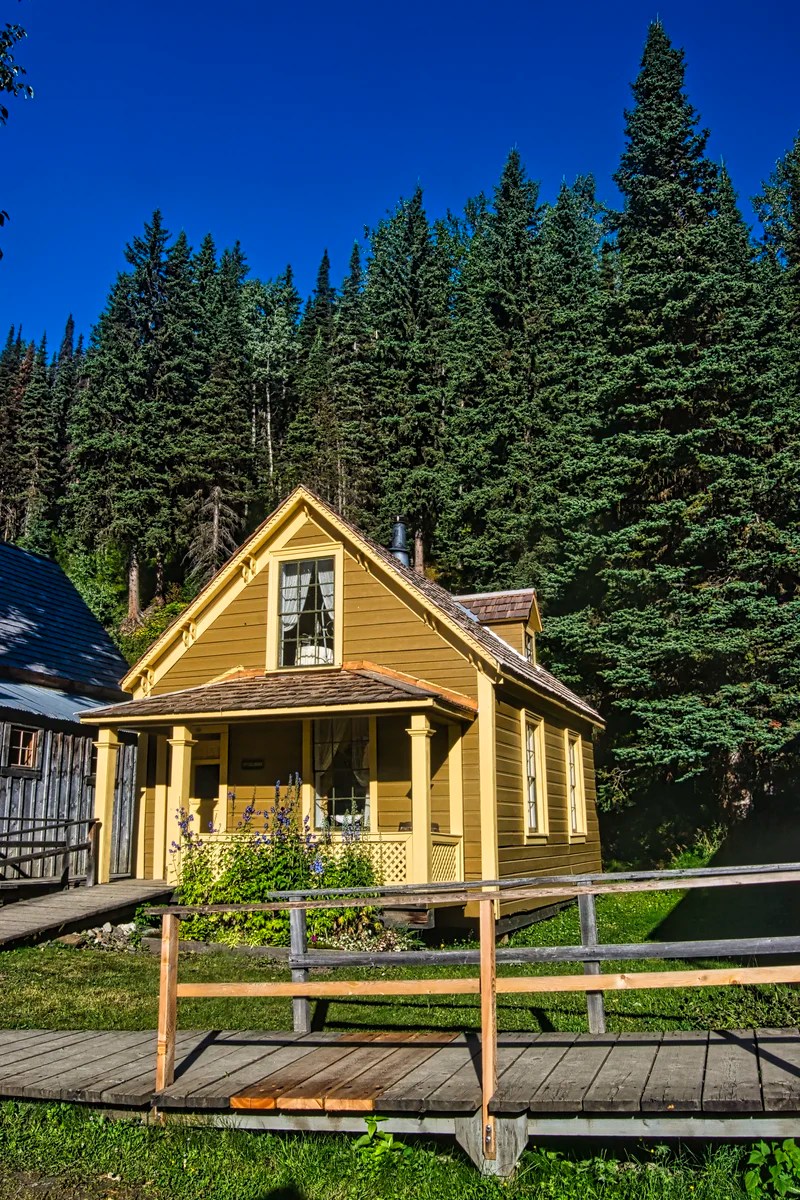
Dr. Callanan lived here from 1901 to 1928. He was elected as the Conservative Party representative for the Cariboo region in the BC legislature in 1909.
83 Cornish Water Wheel
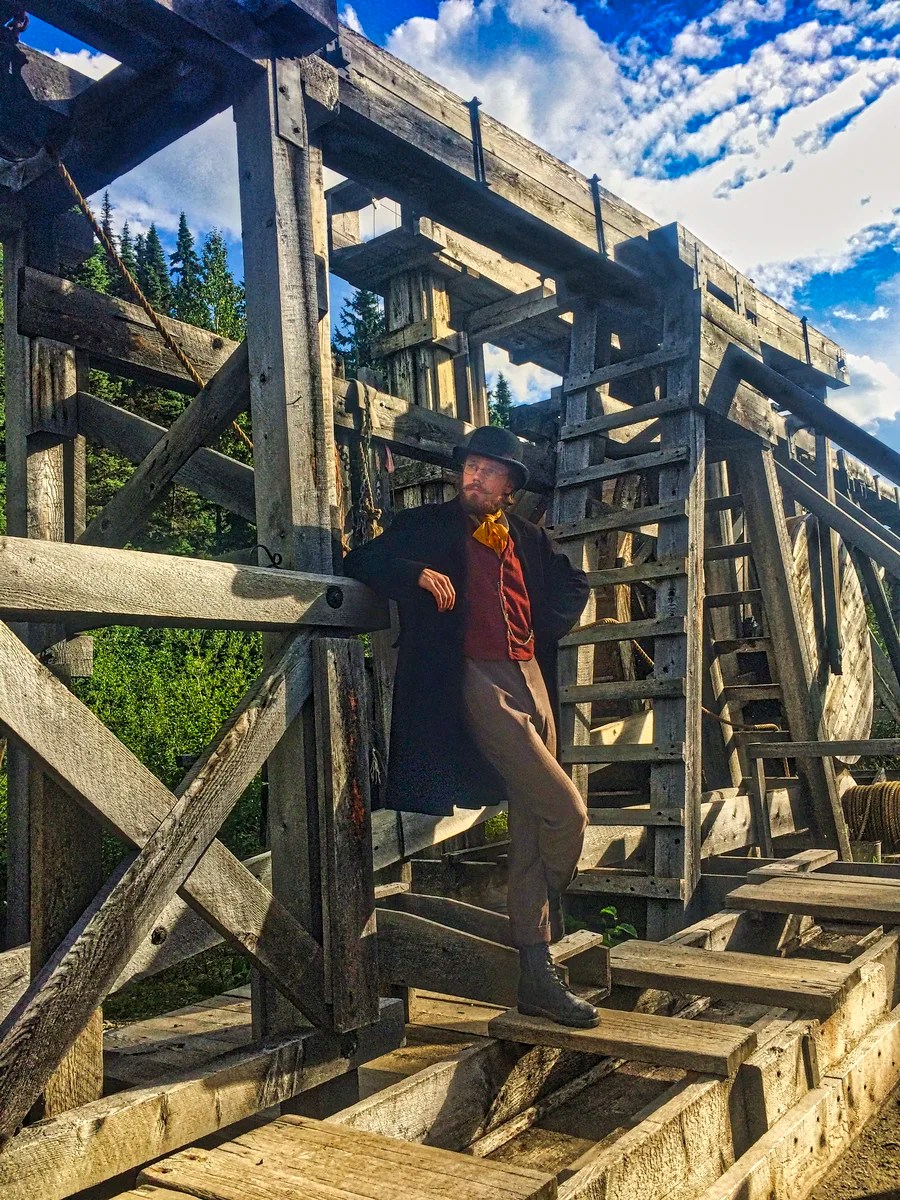
In this comical and entertaining skit, Mr. Grimbsby & Mr. Cruikshank of the Sheepskin Claim were trying to get us (the audience) to invest in their new company. They showed off the latest (1870s) technology to sift gold from gravel. This 16 foot diameter water wheel is modelled after the wheels used in tin mines in Cornwall. However, this machine is a reconstruction from 2007.
Chinese Community
In 1858, Chinese gold prospectors started migrating from San Francisco up the Fraser River. A Chinese gold rush started in 1872 when Chinese reworked played-out claims abandoned by white prospectors. In fact, discriminatory laws allowed the Chinese to only work on abandoned claims.
Barkerville became the first Chinese community in Canada with the largest collection of pre-railway Chinese buildings in North America.
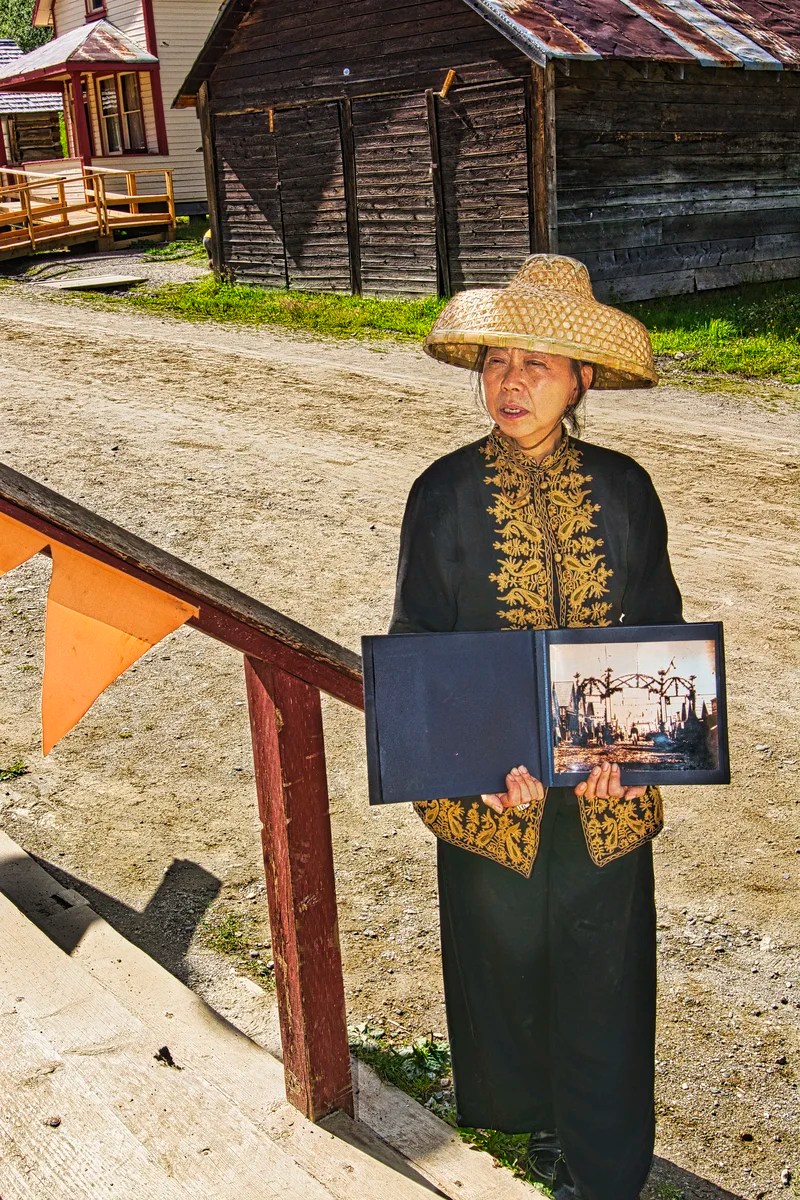
We had a Chinese archaeologist, Ying-Ying Chen, leading the Chinatown historical tour! She told us that most of the Chinese immigrants came from poor rural areas in southern China. For this reason, all the names are Cantonese.
Between 1880 and 1885, about 15,000 low-paid Chinese labourers completed the British Columbia section of Canada’s first transcontinental railway. At this point, this area was 50% Chinese! This is evident by the number of Chinese buildings, almost as many as European buildings.
60 Kwong Lee Wing Kee
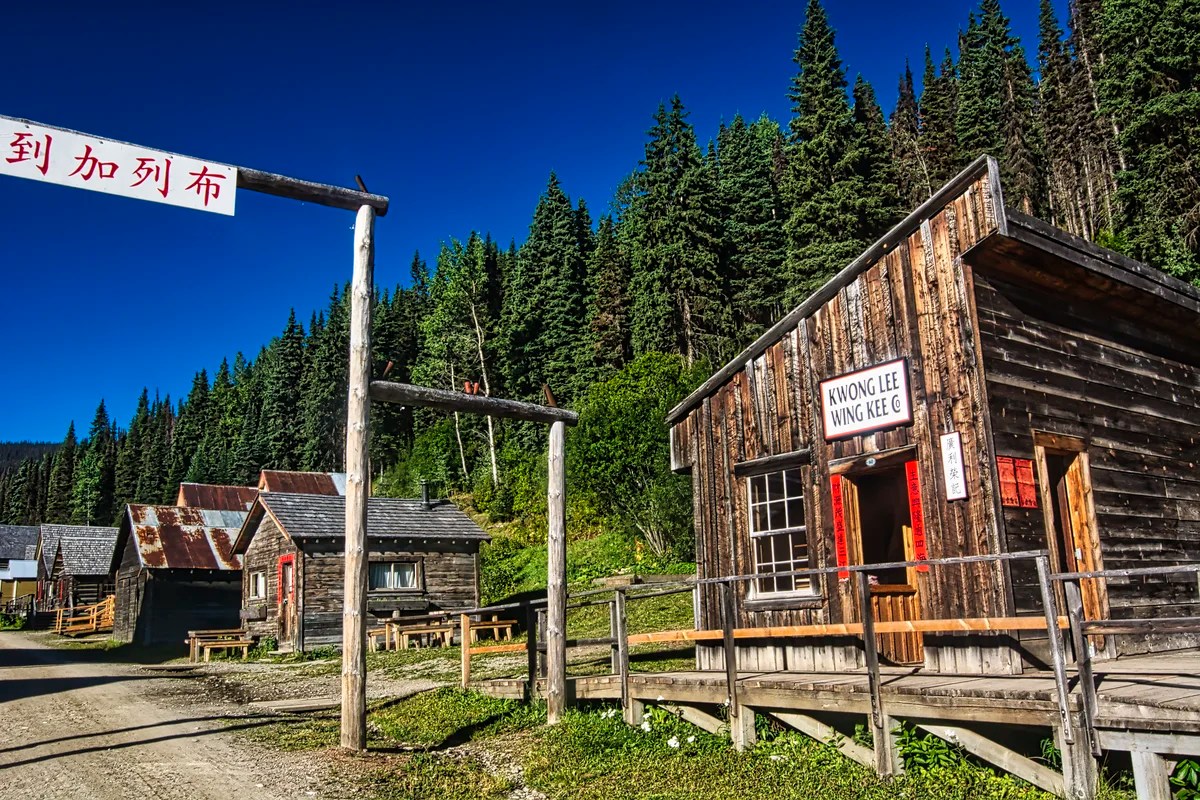
This shed-like building was the butcher shop for many years. By 1832, the Kwong Lee Company was one of the major Chinese import/export companies in the world. The company name translates as Extensive, Prosperous, Lasting.
69 Chee Kung Tong
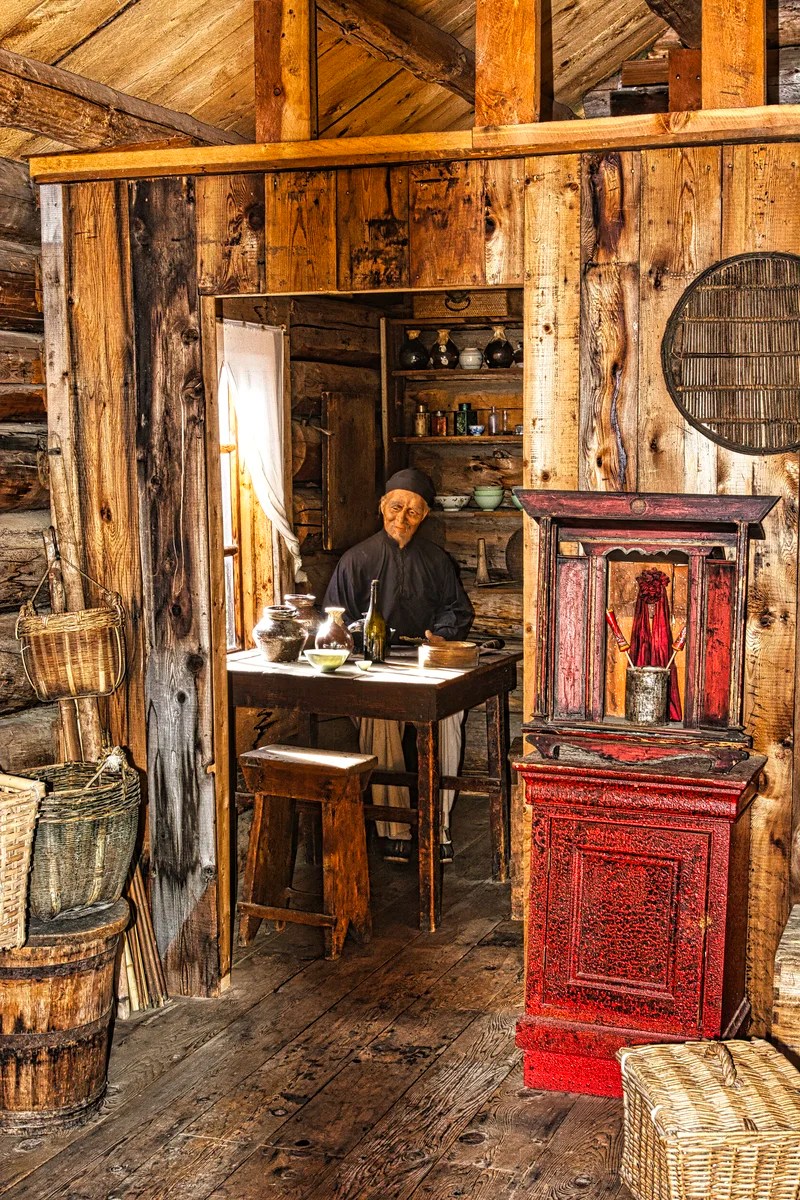
Chee Kung Tong was a Chinese charitable group which started here and then spread throughout the West. The Chinese Benevolent Society financed the overthrow of the Qing Dynasty and the Dr. Sun Yat Sen revolution in 1911. They worked to repeal the anti-Chinese immigration laws. The Society still exists in Vancouver and San Francisco.
72 Lee Chong Company
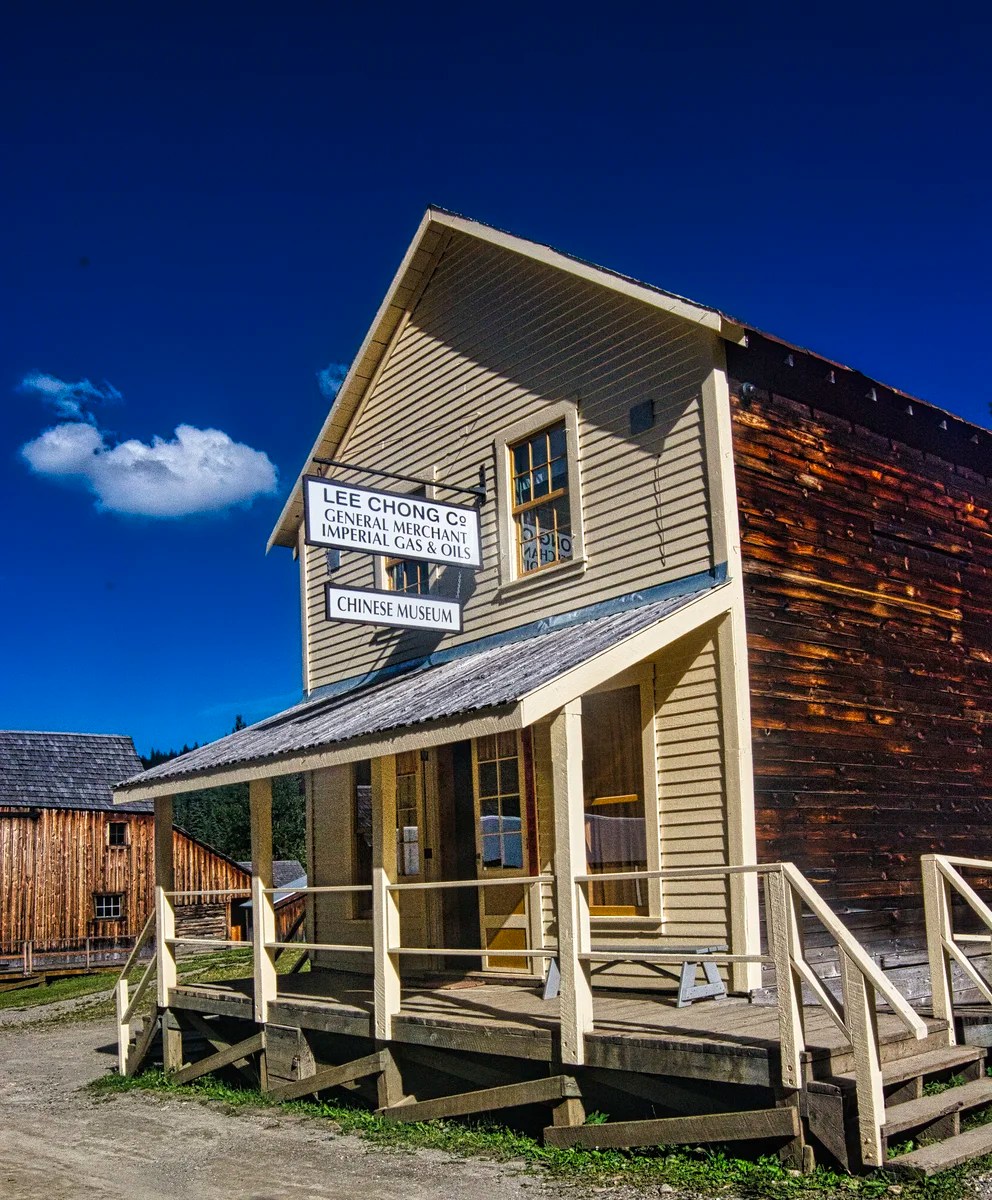
Lee Chong dates from 1932 and housed two families above the general store. Today the store serves as a museum with lots of antique artifacts.
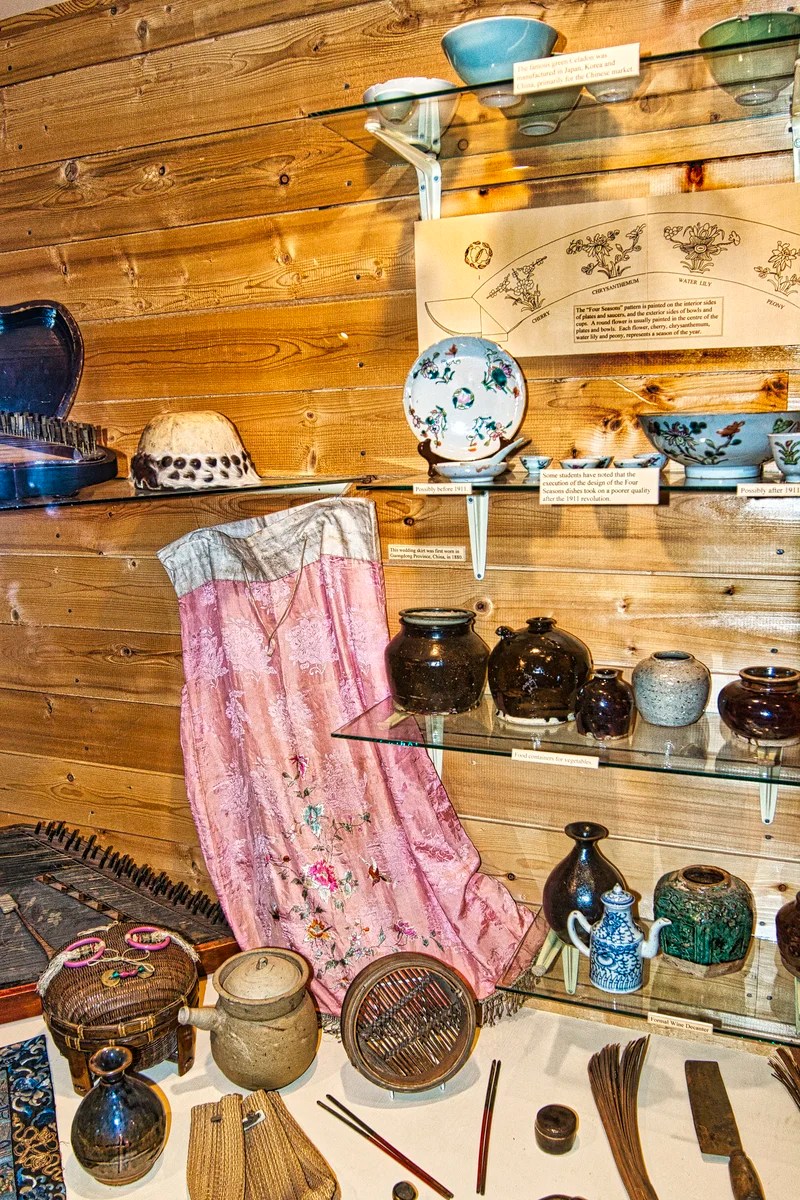
74 Kwong Sang Wing Store
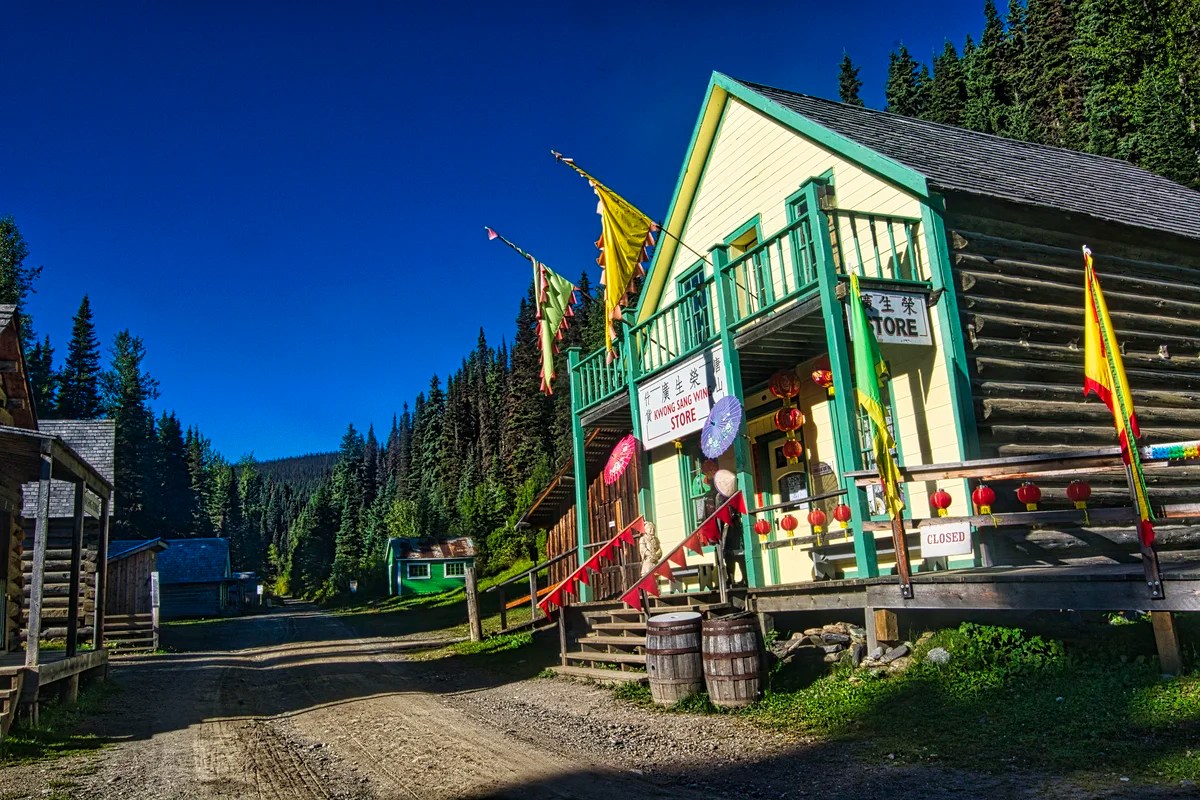
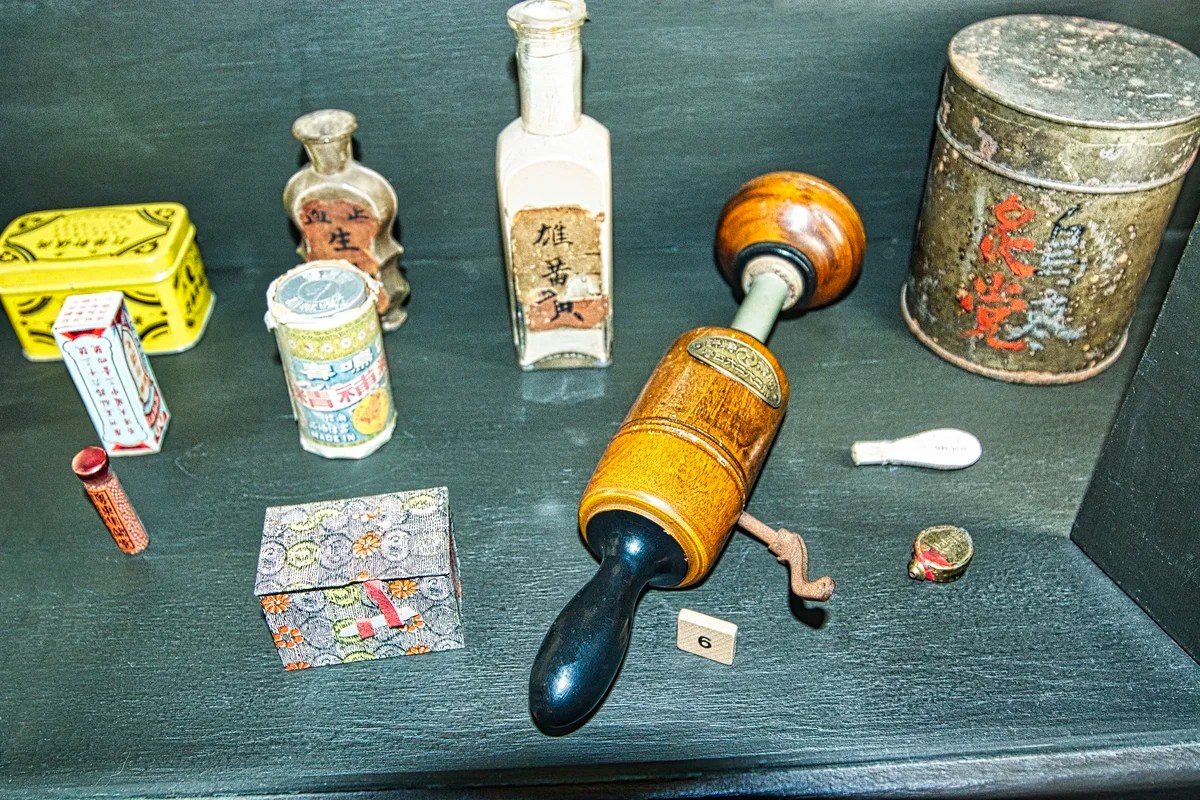
This 1902 store sells Chinese medicinal herbs, toys and clothing.
Wells
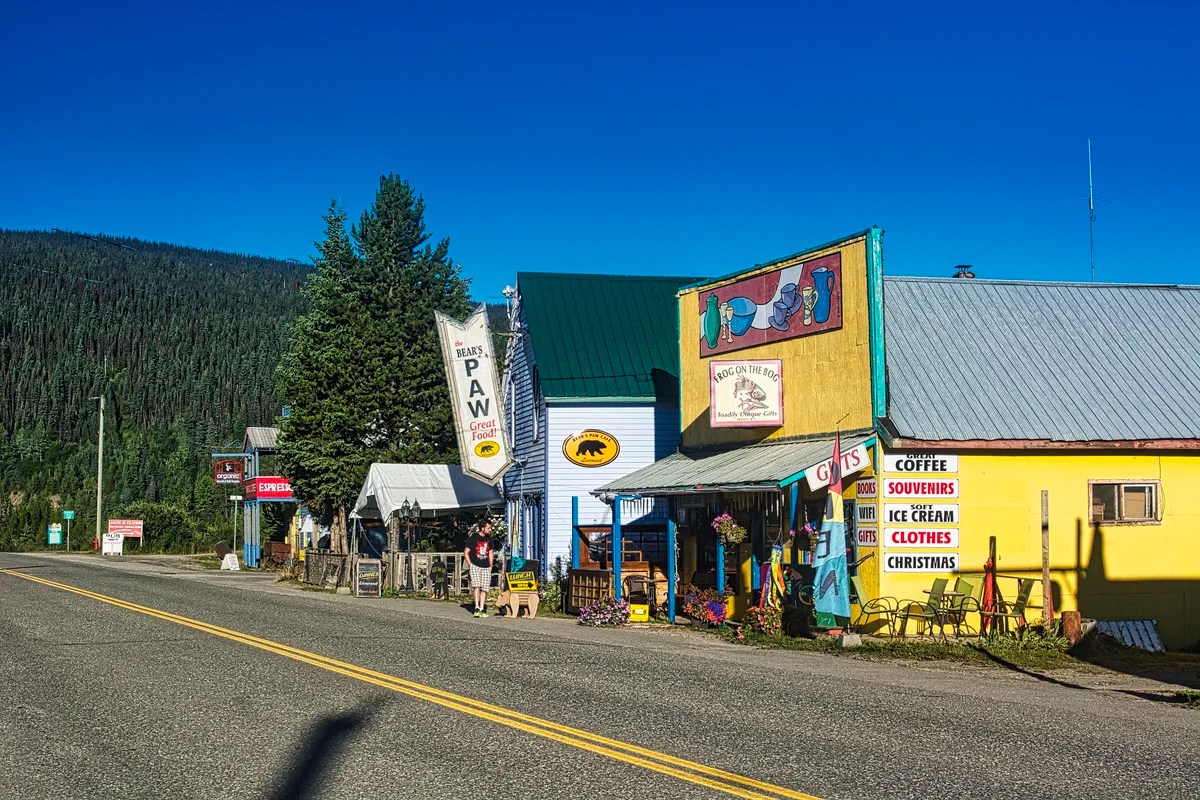
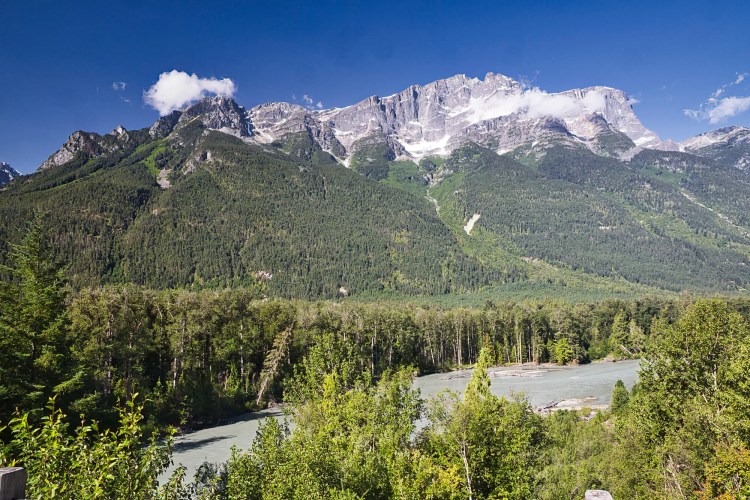
We stayed in this small village west of Barkerville. The cover photo above is a view of the Cariboo Mountains just east of town.
Quesnel
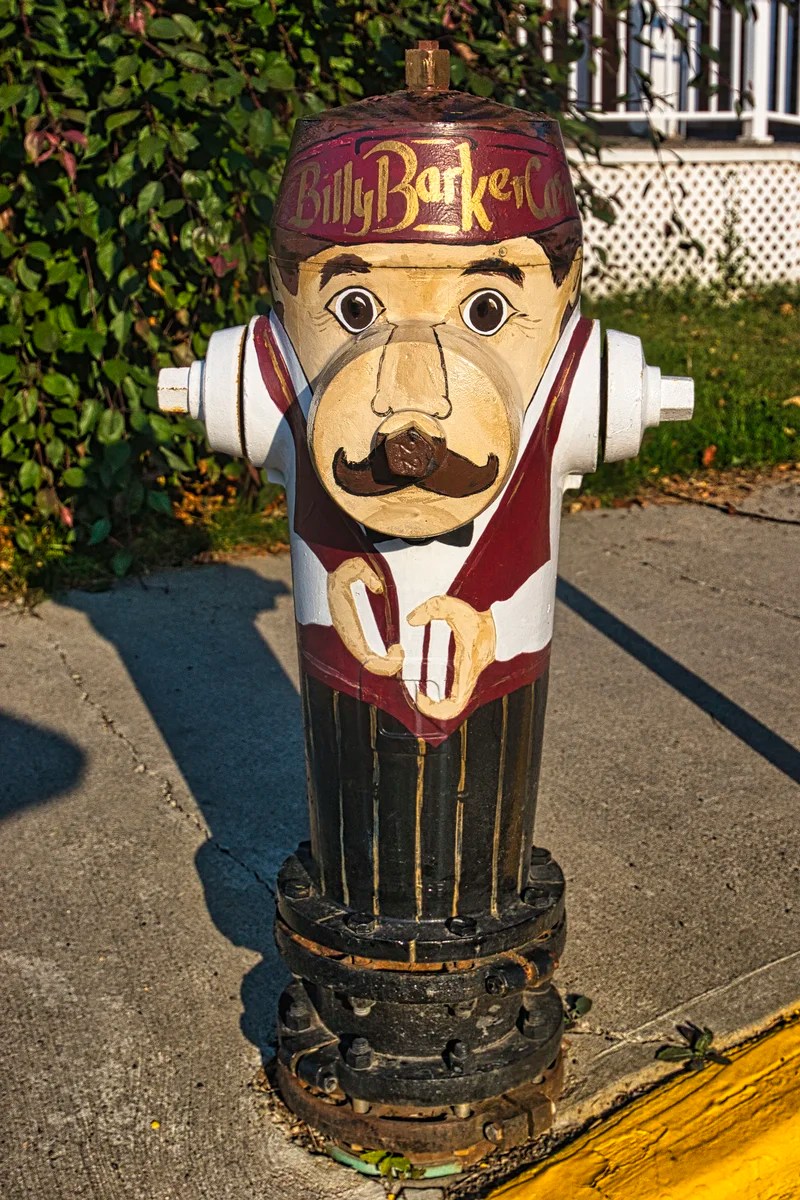
Billy Barker’s claim yielded him an incredible 2,350 lb of gold over a few years, but he died penniless in Victoria in 1894! He squandered his money with his expensive lifestyle, living in hotels in Victoria and Barkerville. He had suffered under the stress of his fortune and the progression of Parkinson’s disease.
Six Mile Lake
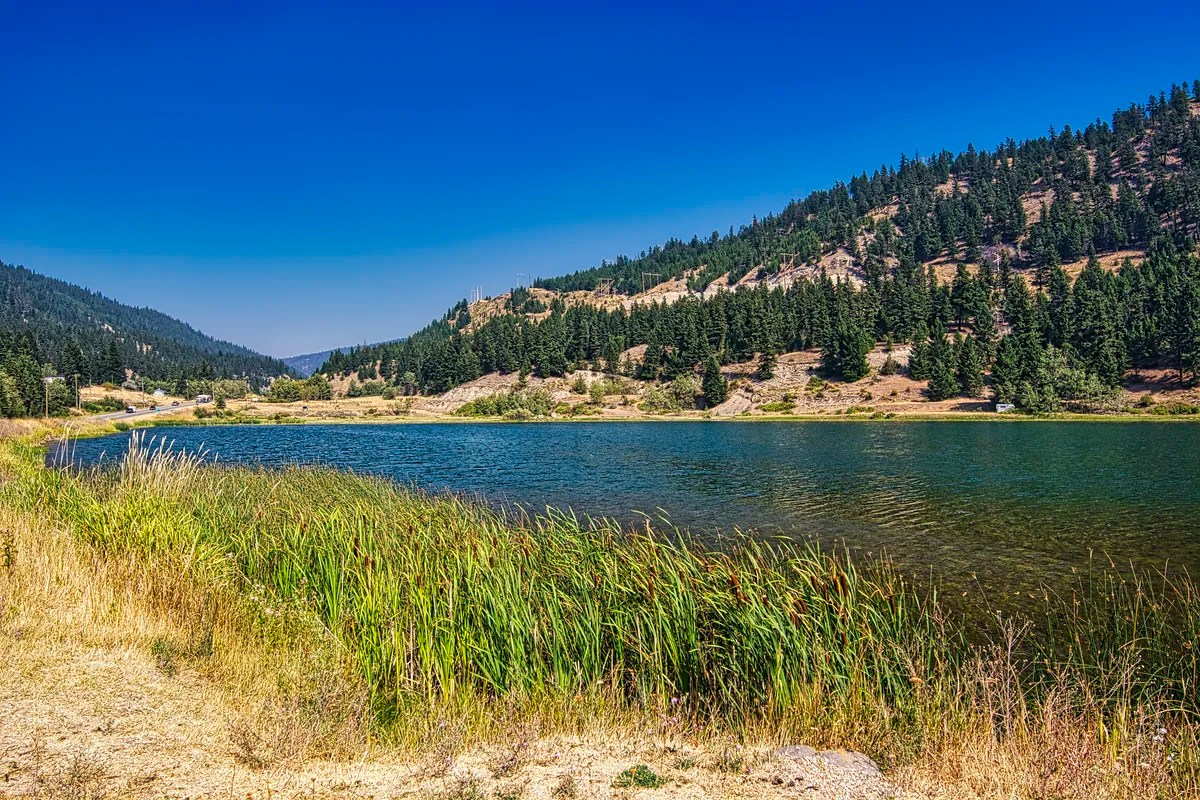
This was a scenic greenish lake on Highway 97 after the town of Clinton — it was a 286 km, 3:10 hrs. drive south of Quesnel.
Pavilion Lake
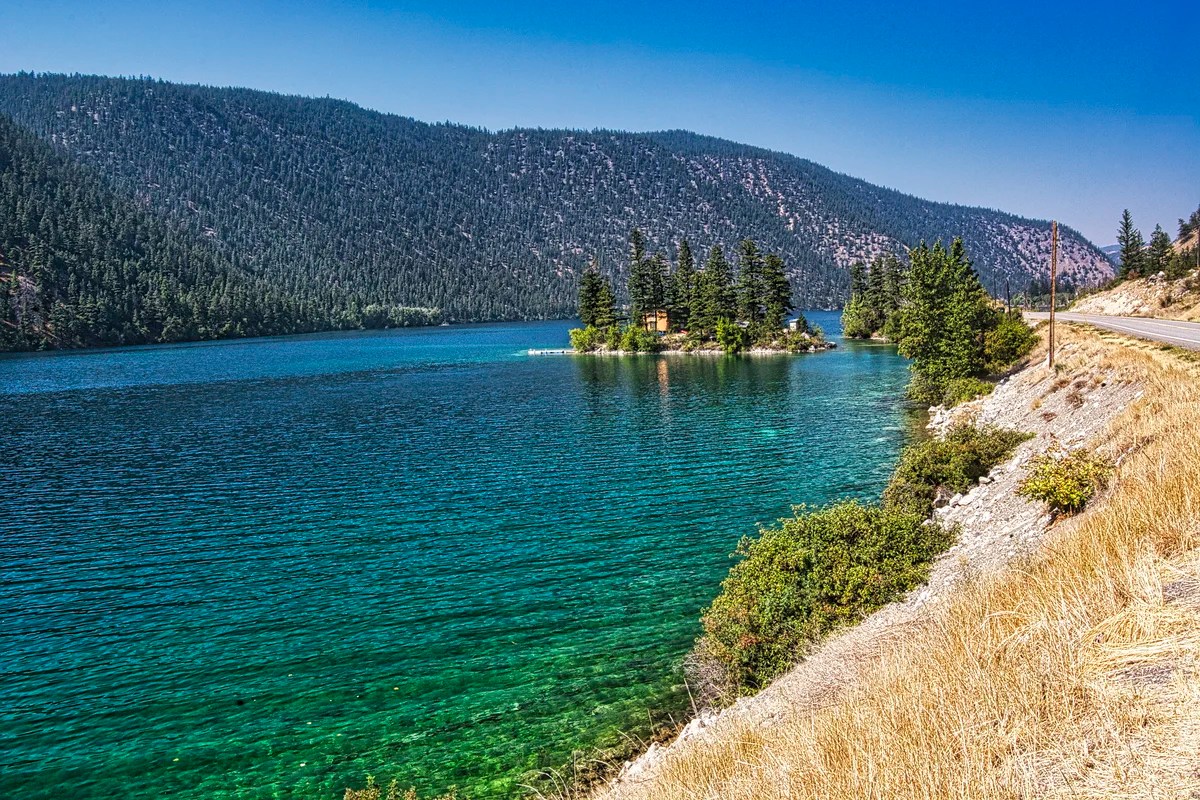
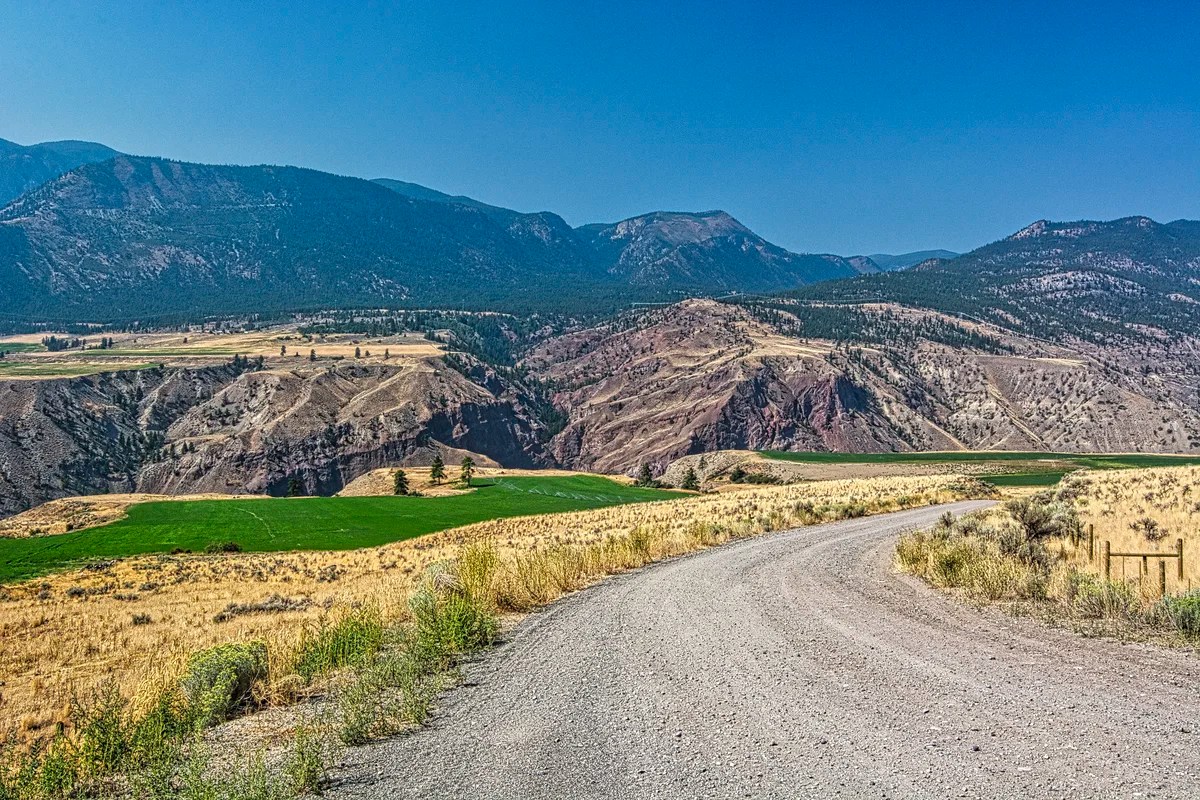
This was the most scenic part of the 384 km 4:17 hr. Quesnel-Lillooet segment. Besides the turquoise Pavilion Lake, the Pavilion area was a contrast between green-gold crops and the arid Fraser Canyon. This is the least travelled part of Highway 99 from Lillooet to Vancouver, described in the Sea-to-Sky Highway. You basically have the place to yourself.
Itinerary Map & Resources
CA BC Mt Robson to Furs and Jade Map — our custom Google map
CA BC North Map — our custom map with points of interest
Google Maps Ratings
Google Maps provides a rating from 0 to 5 for all sights, hotels and restaurants (but not cities). All of our recommendations are appended with the rating (prefixed with a G) from Google Maps. As it is based on feedback from tourists and locals, it is much more reliable than travel booking websites. We consider a score of 4 to 4.39 to be Very Good; 4.4 to 5 to be Excellent.
Other Places to Add to Your Itinerary
Boohoo!! That’s the end of the Northern BC segment of our 19,000 km road trip across Canada! From Barkerville, you can continue on to several exciting experiences:
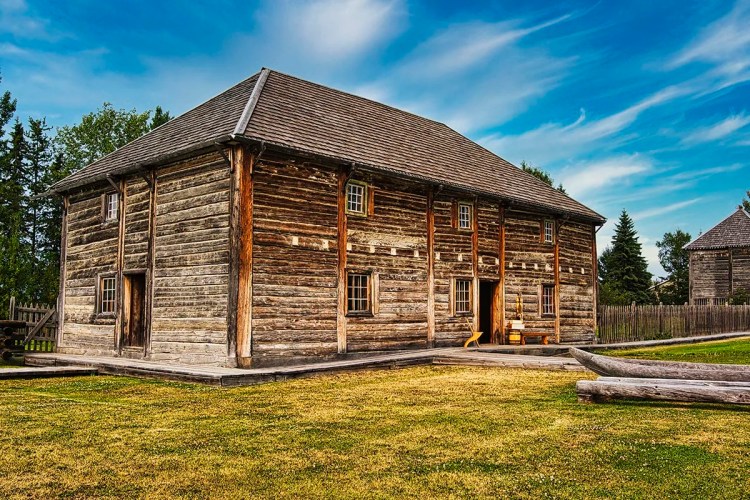
- 360 km (224 mi), 4:20 hours north to Fort St. James, the last Hudson’s Bay fur trade post still open for the tourist trade
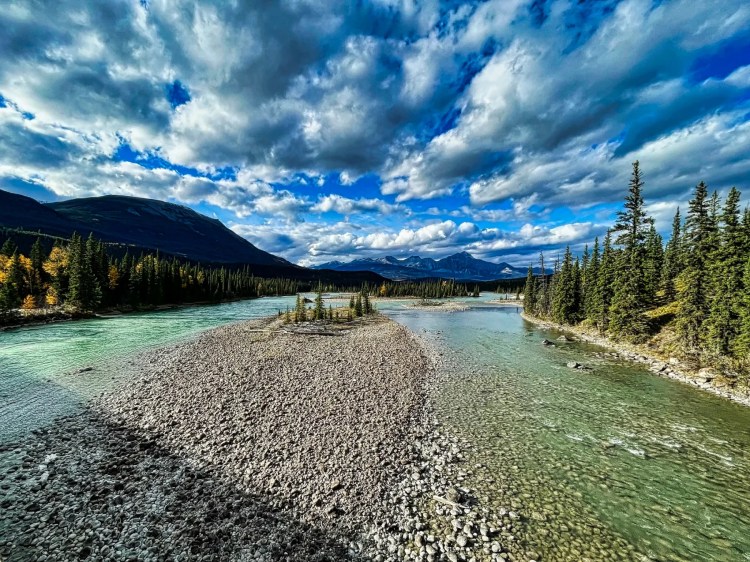
- 485 km (301 mi), 5:25 hours east to Mount Robson, gateway to the spectacular Rocky Mountains
- 470 km (292 mi), 5:25 hours south to Lillooet, along the arid Fraser River Valley and the Sea-to-Sky Highway to Vancouver
To reduce driving time, after our second day in Barkerville, we slept over in Quesnel, reducing the above distance and time the next day by 86 km and 1:07 hours.

Canada FAQ

The Exploring Canada post answers Frequently Asked Questions (FAQ) such as:
- How do you plan a trip to Canada?
- How safe is Canada?
- What is the best season for travel?
- Can I see everything in 3 or 3 weeks?
- What are the best places to see in Canada?
 Terra Encounters
18 thoughts on “Barkerville BC: the Town that Changed the History of Canada”