
Frequently Asked Questions
Some questions tourists frequently ask are:
- Is New Zealand more beautiful than Canada? United States? Switzerland?
- What time of year is best to visit New Zealand?
- Should I visit North Island or South Island?
- Do you need a car to explore New Zealand?
- What are the best places for a Bus Trip?
- Where are the best hiking trails?
- How do I plan an itinerary for New Zealand?
- How many days are enough for New Zealand?
- Which parts of New Zealand should I visit?
- Is New Zealand food expensive?
- How safe is New Zealand?
- What is the Symbolism of the NZ Flag?
- What do these Kiwi words mean?
- What are Some Surprising Facts About NZ?
Author & Photographer: George Mitchell

Our recommendations are not influenced by affiliate links – we have none. Our itineraries, photos, and advice are based on having stayed in NZ for a total of six months (over three trips). We are avid hikers, nature lovers and photographers. NZ is one of our favourite destinations.
All of our recommendations are top-rated by Google Maps Ratings, which is based on the opinions of everyone, not just tourists. Each place recommended in our custom maps is appended with a Google Maps Rating (G0 to G5). Acronyms can be found in the Abbreviations section.
Is New Zealand Really that Beautiful?
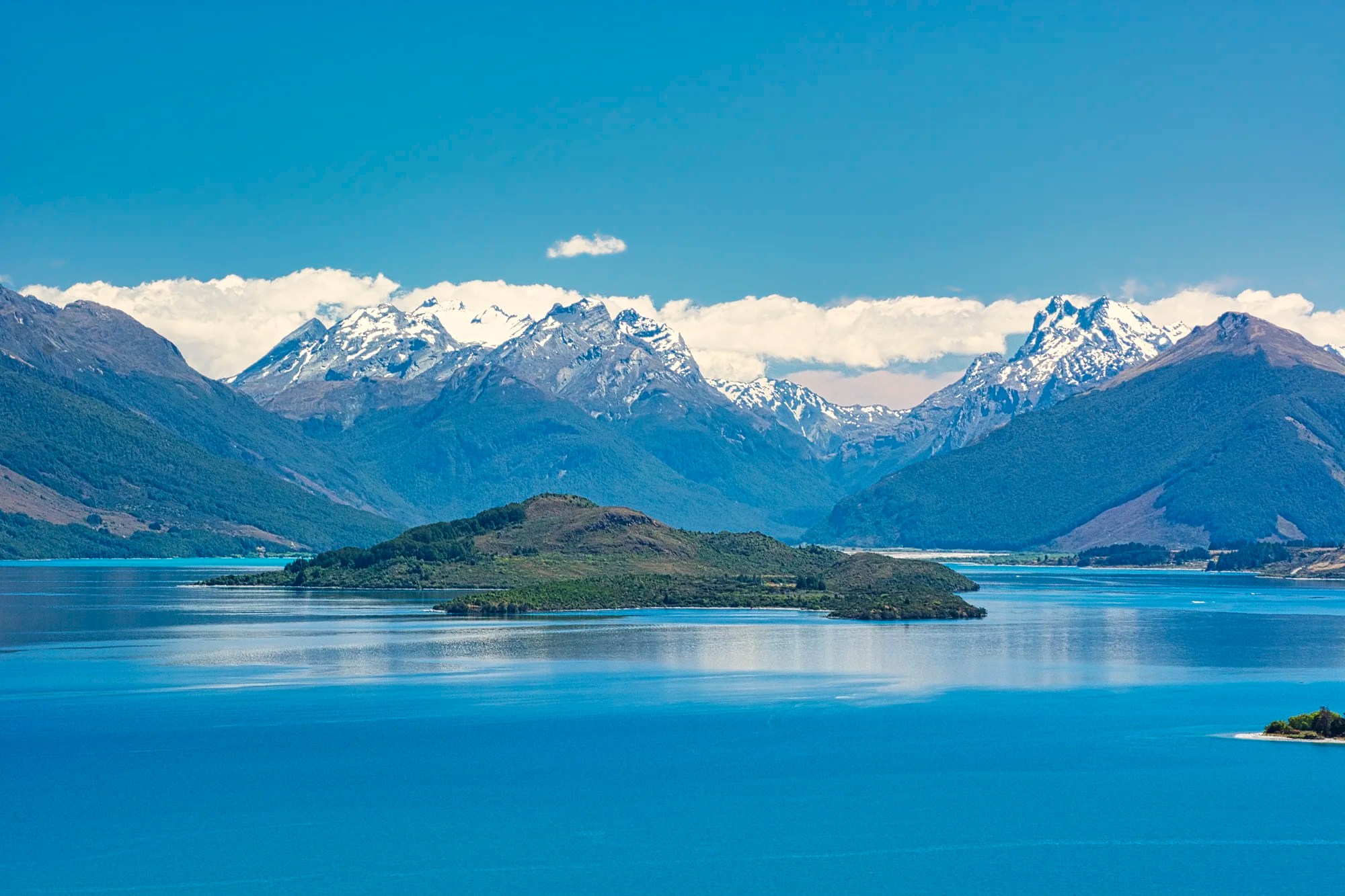
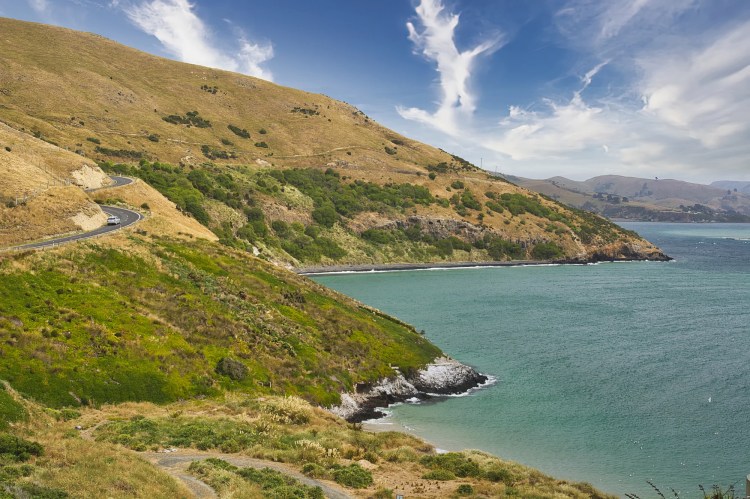
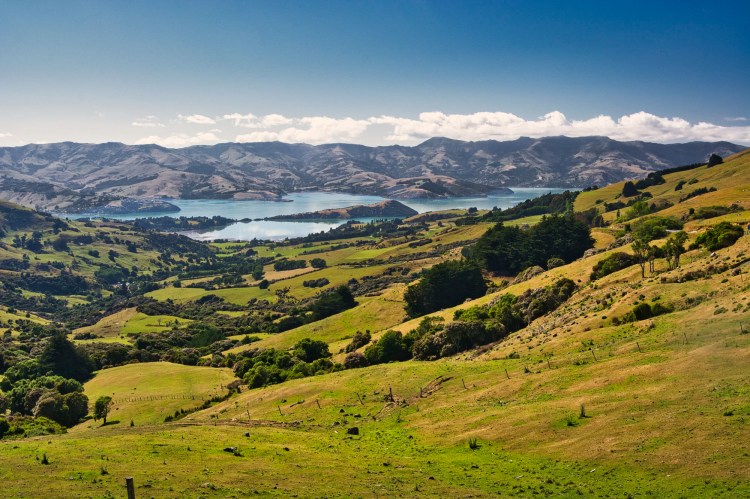
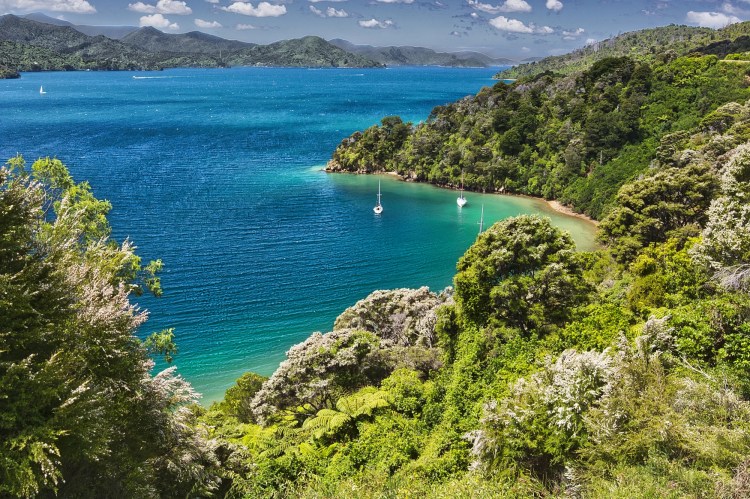
The short answer is yes! New Zealand (NZ) is predominantly a pastoral country with many National Parks (NPs) and diverse spectacular scenery.
As I argued in my post Is Switzerland more beautiful than Canada or USA or NZ?, Switzerland is beautiful but it has basically two types of beauty — alpine scenery and quaint villages. Its’ alpine views are enabled by the deforestation of the Alps to accommodate sheep grazing and its’ high population of 8.7 million people. New Zealand is a combination of the uncommercialized Canadian Rockies with volcanoes and thermal areas that rival Yellowstone NP, plus turquoise waters surrounding rugged coastlines. Well, it is the South Pacific.
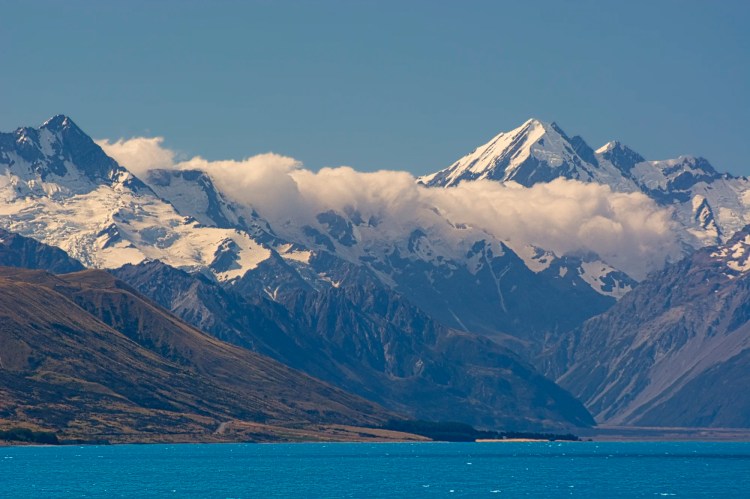
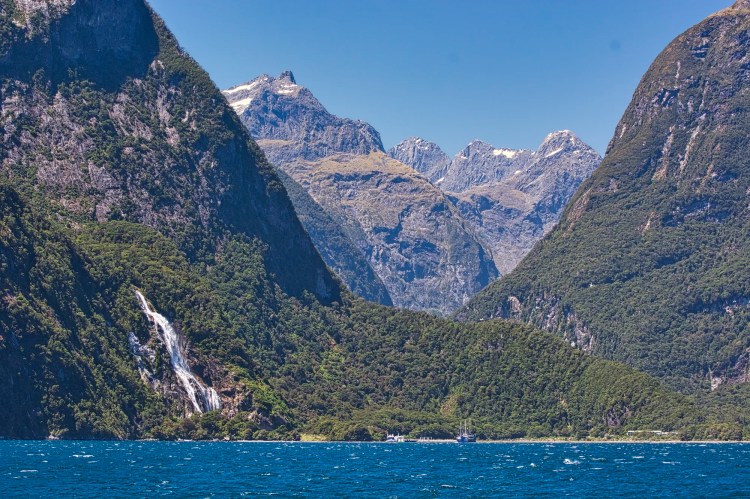
For the scenic beauty of snowy sierras, gorgeous glacial lakes, volatile volcanoes, colourful thermal areas, formidable fjords, sheep-studded rolling farmland, and verdant vineyards — it is hard to beat NZ. Since we have been to New Zealand three times, you know it is one of our favourite places in the world.
One quintessential feature of NZ is that the journey from point A to point B is just as spectacular as the destination. Moreover, the diversity of natural beauty comes in a small package. New Zealand is 10% larger than Great Britain, the same size as Texas, 3% smaller than Ecuador, and 40% of the size of the province of Alberta in Canada.
When is the Best Time to Visit NZ?
Weather
Many sources say that the best time to visit New Zealand is during the summer months of December to March. We don’t totally agree with that, as we have lived and hiked in NZ for several seasons. There is no problem visiting the North Island as it is fairly warm year-round, especially if you live in the “Great North” and are used to frigid cold temperatures. Here is a temperature chart of the minimum and maximum temperatures for the three winter months (June-August in NZ).
| Place, Country | Min Temp | Max Temp |
|---|---|---|
| Auckland, NZ NI | 8.2 °C | 15.2 °C |
| Christchurch, NZ SI | 1.4 °C | 12.5 °C |
| Mt. Cook Village, NZ SI | -6.4 °C | 0.3 °C |
| Te Anau, NZ SI | 1.1 °C | 6.3 °C |
| Ottawa, CA | -14.4 °C | -3.2 °C |
The only problem would be alpine areas and the southernmost South Island, especially if you want to go hiking — I mean tramping. Moreover, not all facilities will be open.
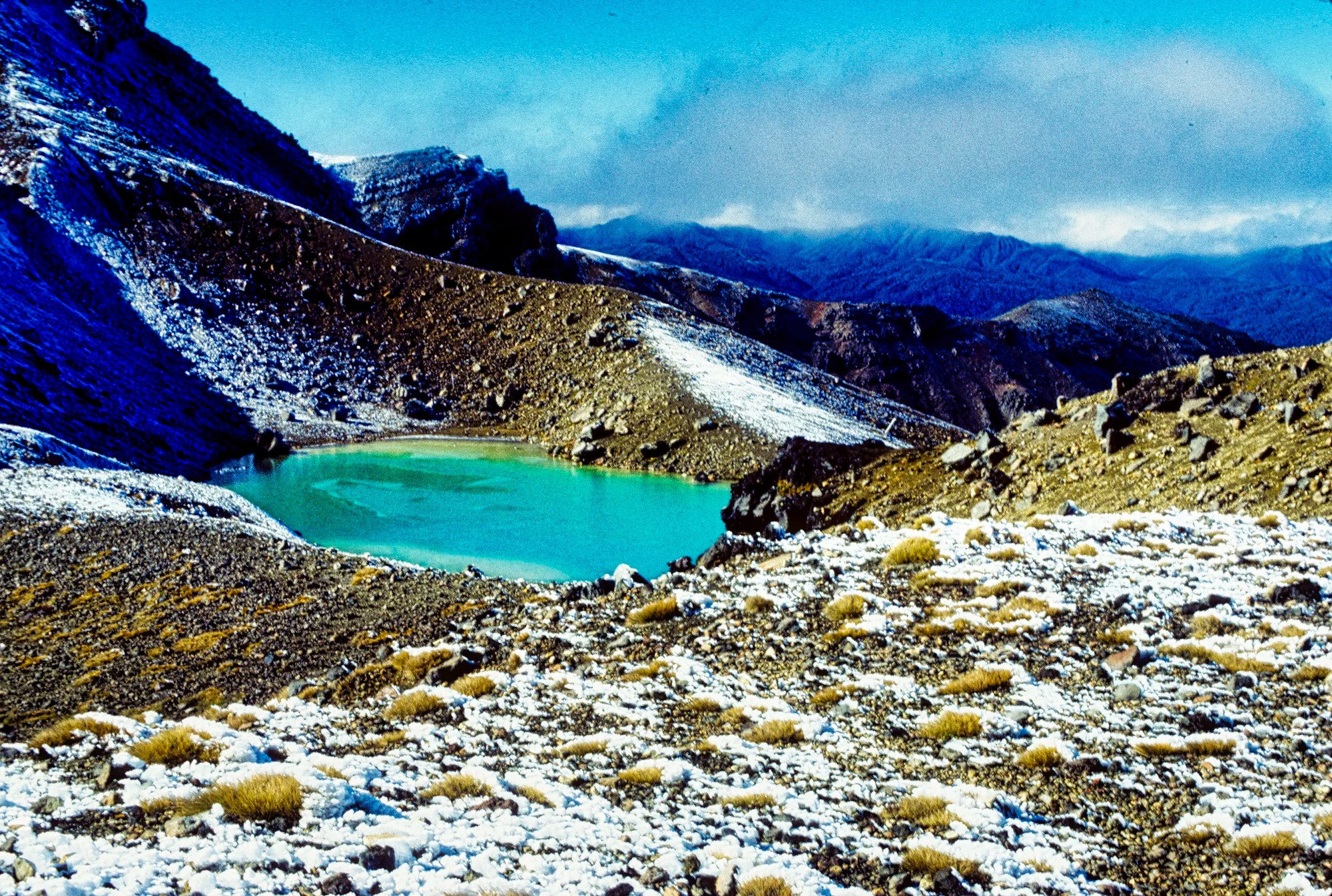
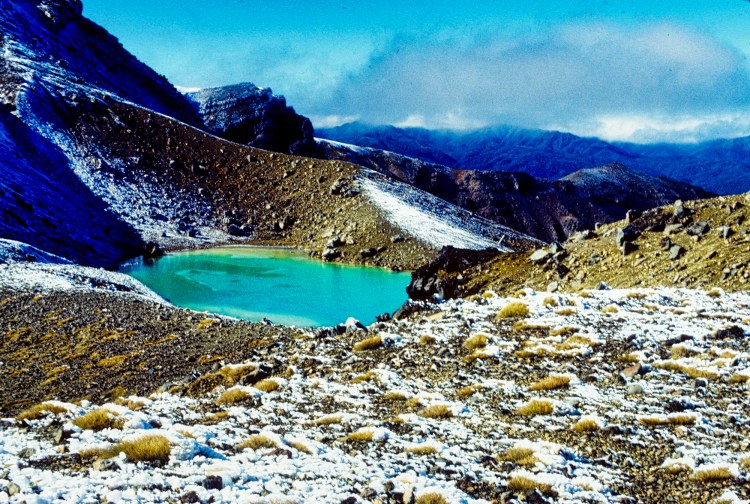
On our first trip, we hiked the three-day Tongariro Alpine Crossing Track in Tongariro NP starting on May 24th with a dusting of snow and ice on the trail. The sleeping huts were open, but the gas stoves and water heaters were turned off. Fortunately, we had our own camping stove.
It was doable because we had layers of clothing on our Round The World (RTW) trip. Our Gore-Tex jackets, Patagonia sweaters, and hiking boots were invaluable. Thin gloves and a toque would also be useful. Getting out of our down sleeping bags in the morning, we were cold until the day warmed up.
Like Ireland, NZ is very green for a reason — rain. It rains at any time of the year, so it’s luck of the draw. The North Island (Auckland) is rainiest between May and August. By contrast, Christchurch is much drier, with June and August having the highest rainfall. Te Anau (near Milford Sound) is rainy year-round, with marginally higher precipitation from September to December. The West Coast (Franz Josef) of the South Island has exceedingly high precipitation, and the worst months are September to January.
Costs and Crowds
Accommodation is more of an issue in the touristy areas on the South Island. There are 5 million residents in NZ but only 1.1 million in South Island and half of them reside in Christchurch and Dunedin. Fewer people can provide accommodation in the most touristy areas of the island.
In terms of costs and crowds, the worst time to go is peak summer, between mid-December and January. This is when Kiwis travel and they book their accommodation, ca. six months in advance. While some websites say to book 6 months ahead, we booked about 4 months ahead. However, we don’t recommend that you follow our example. Because we had to confirm tour and boat dates, we went in date order. We booked New Year’s in the Manipuri area last, and our booking was rejected. Agoda.com got us the last place left for December 30th on October 26th. I think they asked one of their clients who was not planning to have any guests. In conclusion, book ahead if you travel during the Christmas-New Year period.
Does NZ Have Over-Tourism Like Other Countries?
I would say the Christmas-New Year’s period is extremely busy for accommodation and a few overly desired tourist sights. But, it is not as bad as Europe, Banff NP, or the USA National Parks.
New Zealand had 3.9 million visitors in 2019. This is much lower than the much smaller Banff NP in Alberta, which has 4.5 million visitors per year. Are the Kiwis justified in feeling overwhelmed by too many tourists? Definitely, since there are almost as many tourists as the 5 million residents in NZ. Only the sheep population is much greater at 25 million!
Should I See North Island or South Island?
You really should see both islands, but that requires (at least) a four-week trip. You might be able to squeeze both into a three-week trip.
North Island
You want to go to the North Island for:
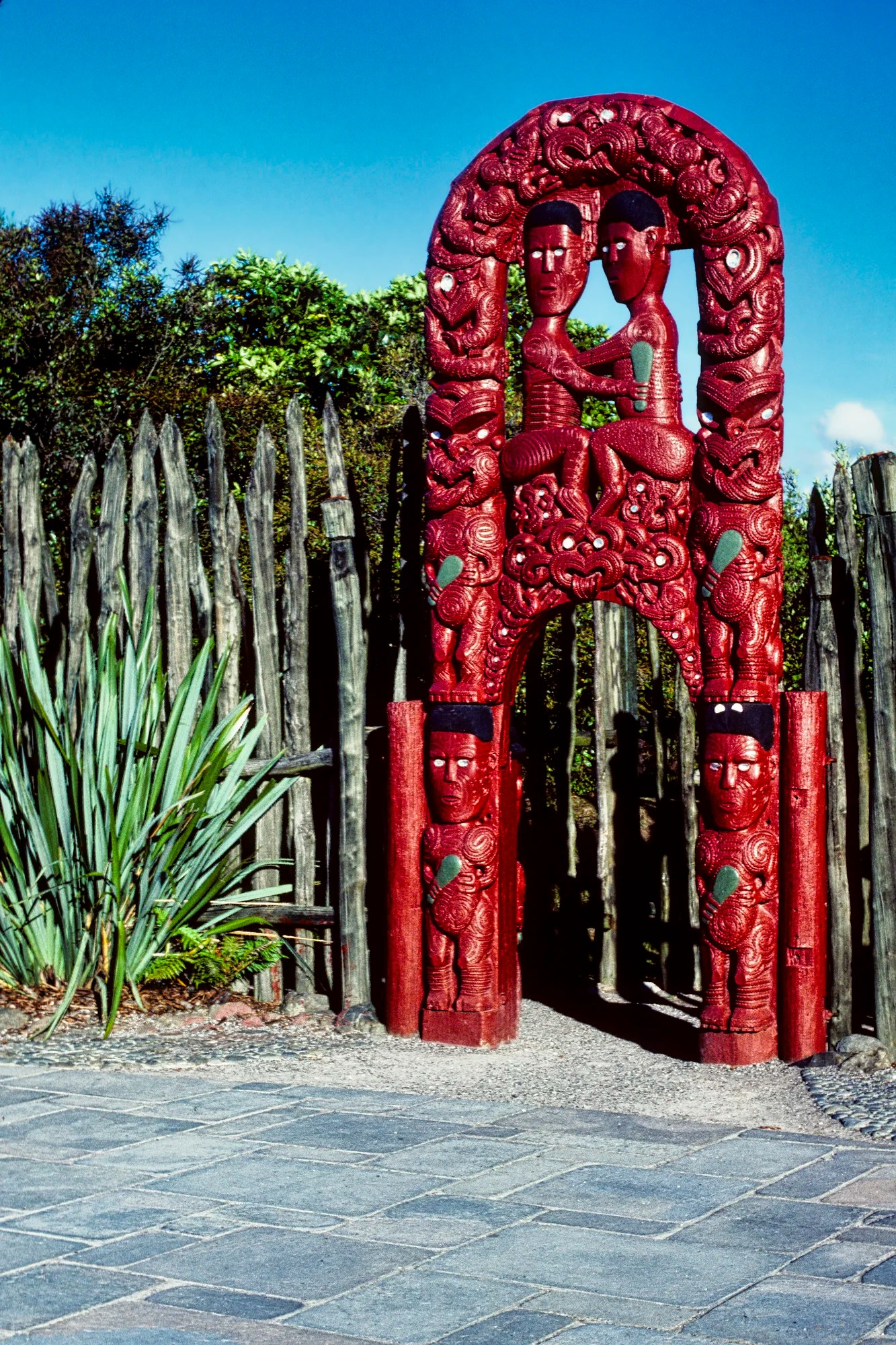
- Māori culture at Whakarewarewa, Rotorua
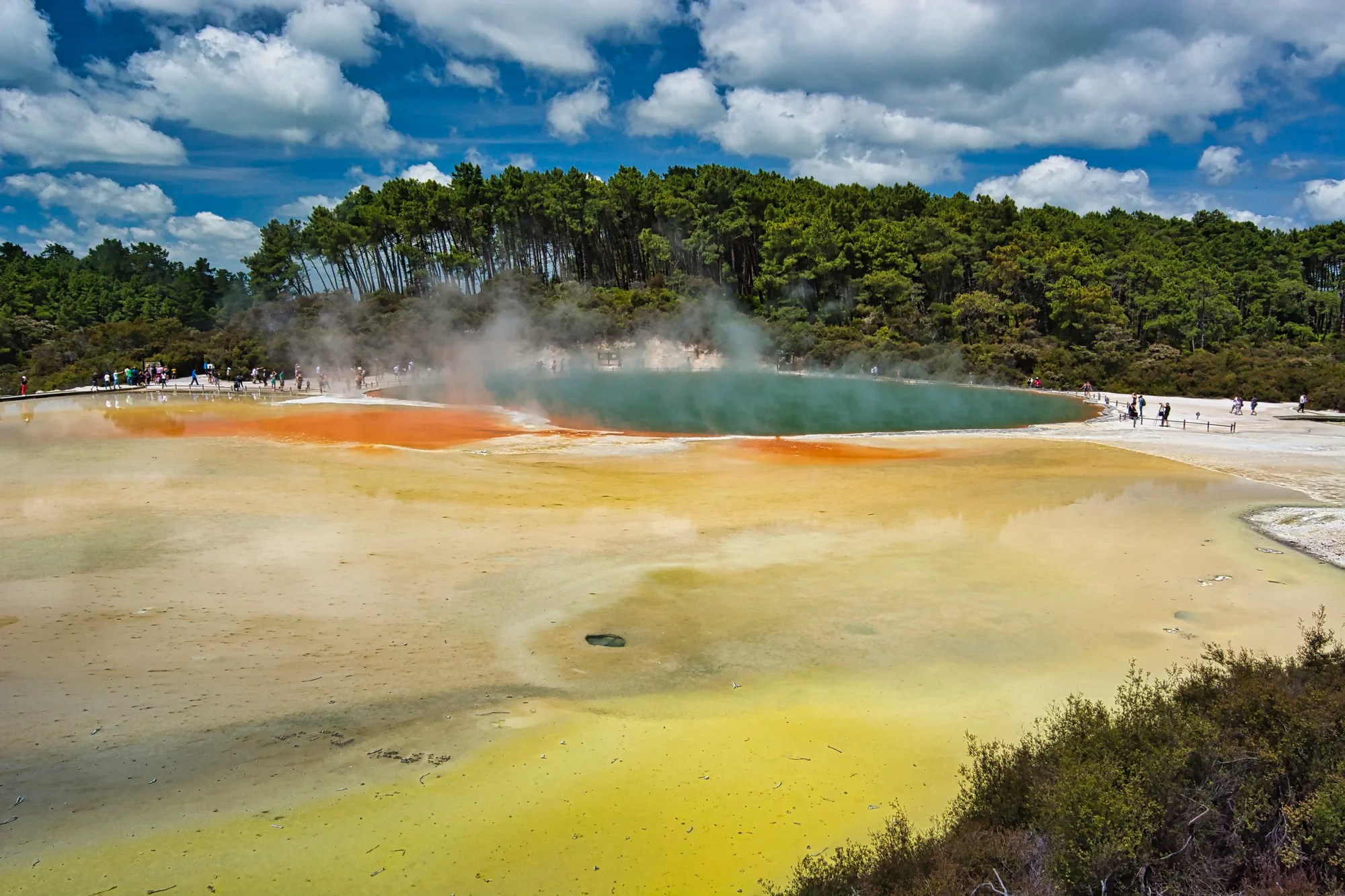
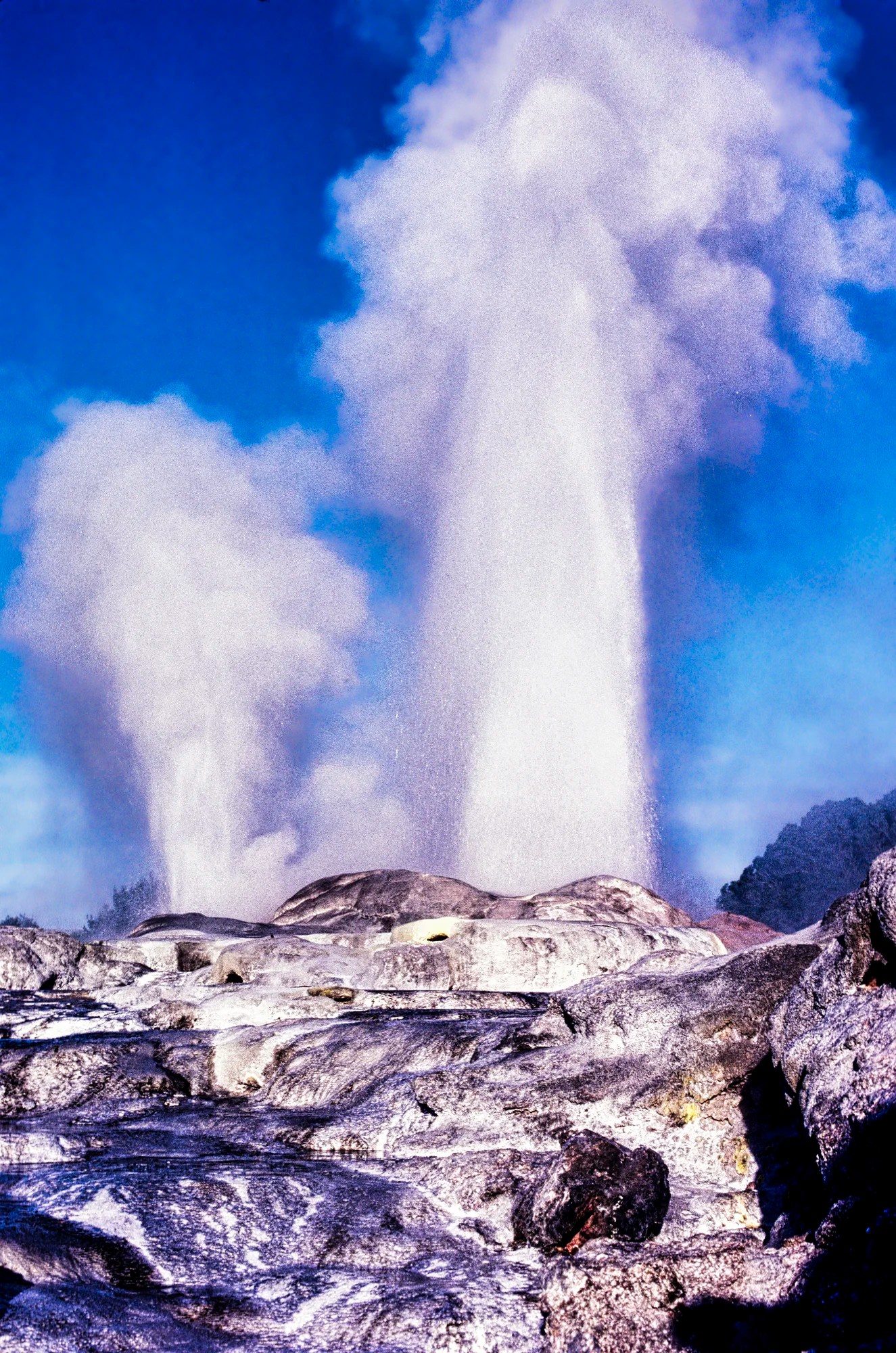
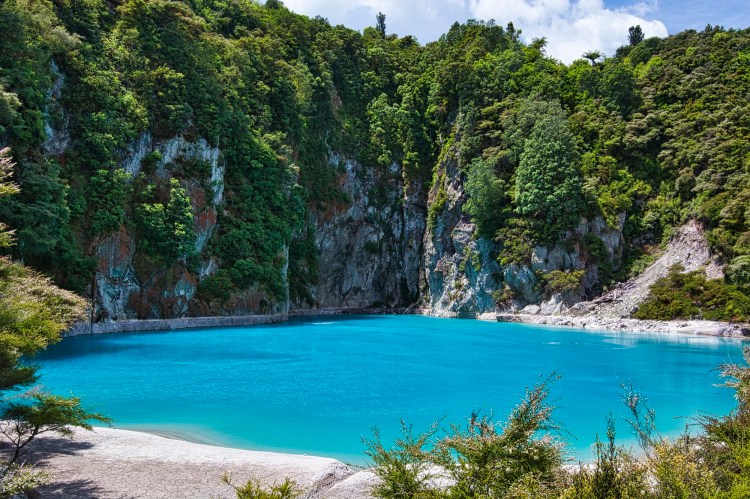
- Geothermal pools and geysers in Whakarewarewa and the other fantastic thermal areas that are a short drive from Rotorua

- Volcanoes and alpine hiking like Tongariro NP
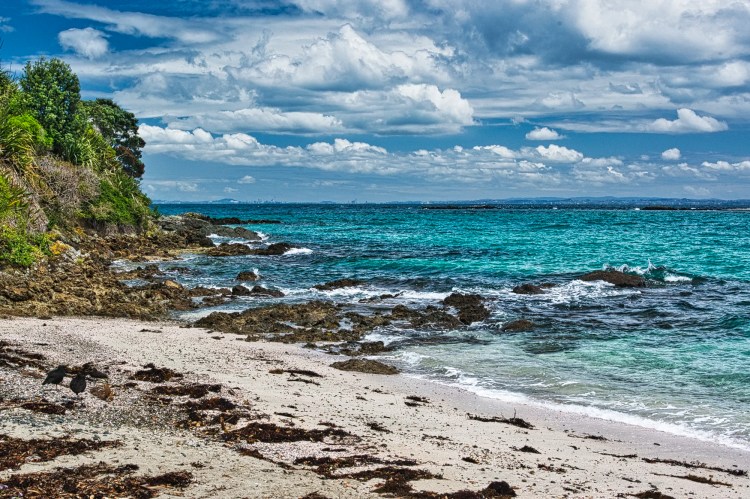
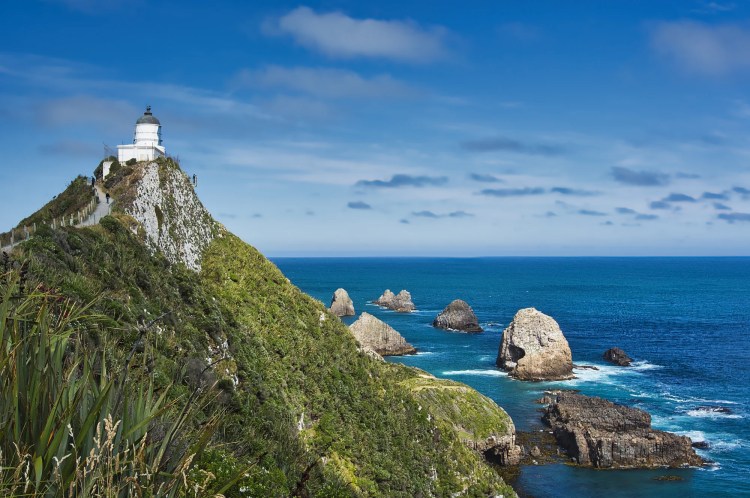
- Coastal scenery and better beaches than many countries
- Hot Water Beach for a unique thermal area experience
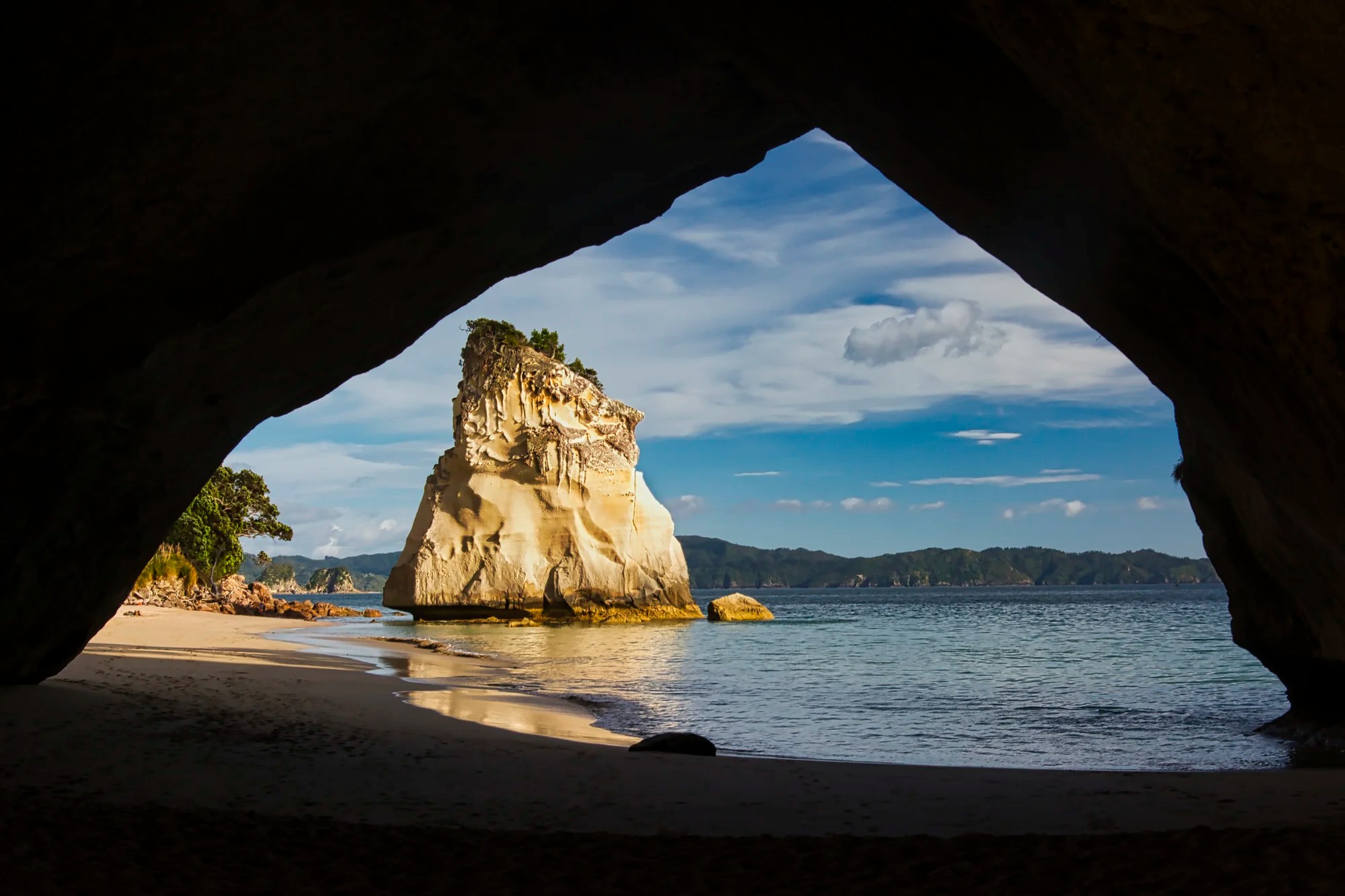
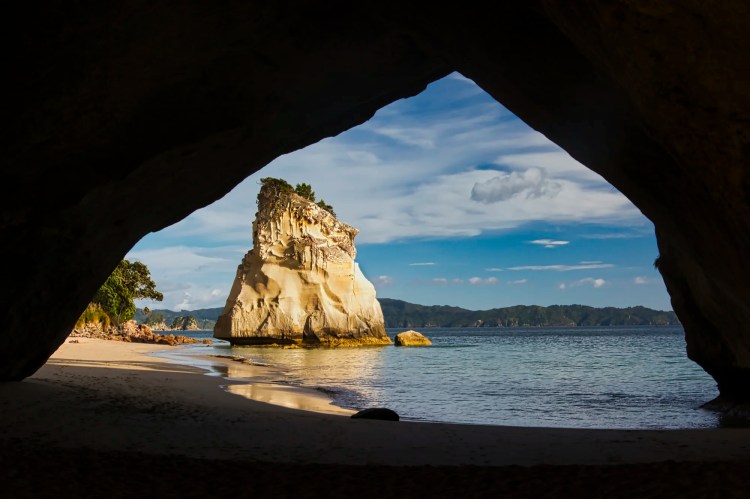
- Cathedral Cove for an easy short walk through a cave to a “stacked” beach
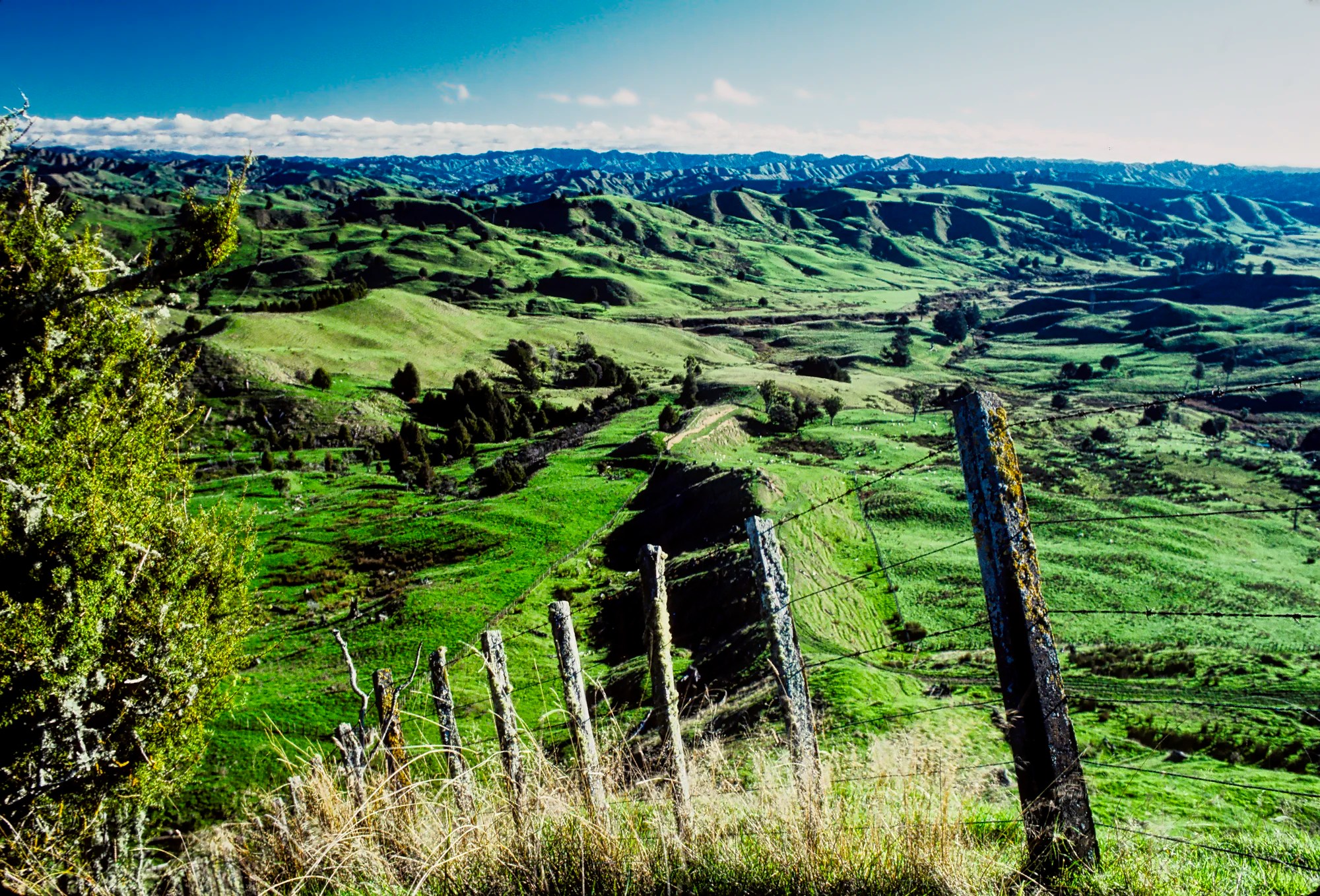
- Hilly sheep farmland is Quintessential NZ.
South Island
You want to go to the South Island for:
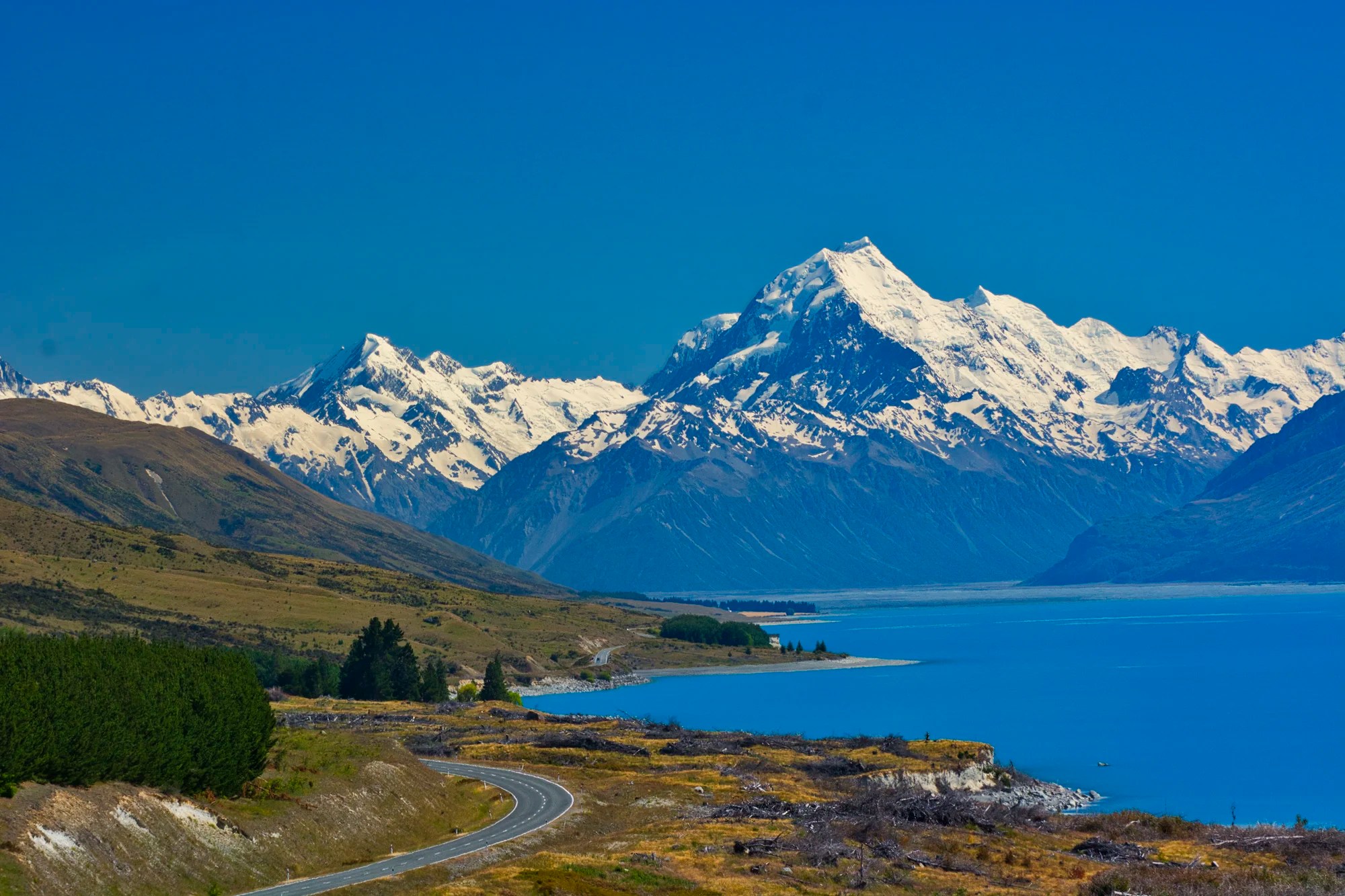
- Alpine tracks (hikes), mountains, glaciers, and fjords
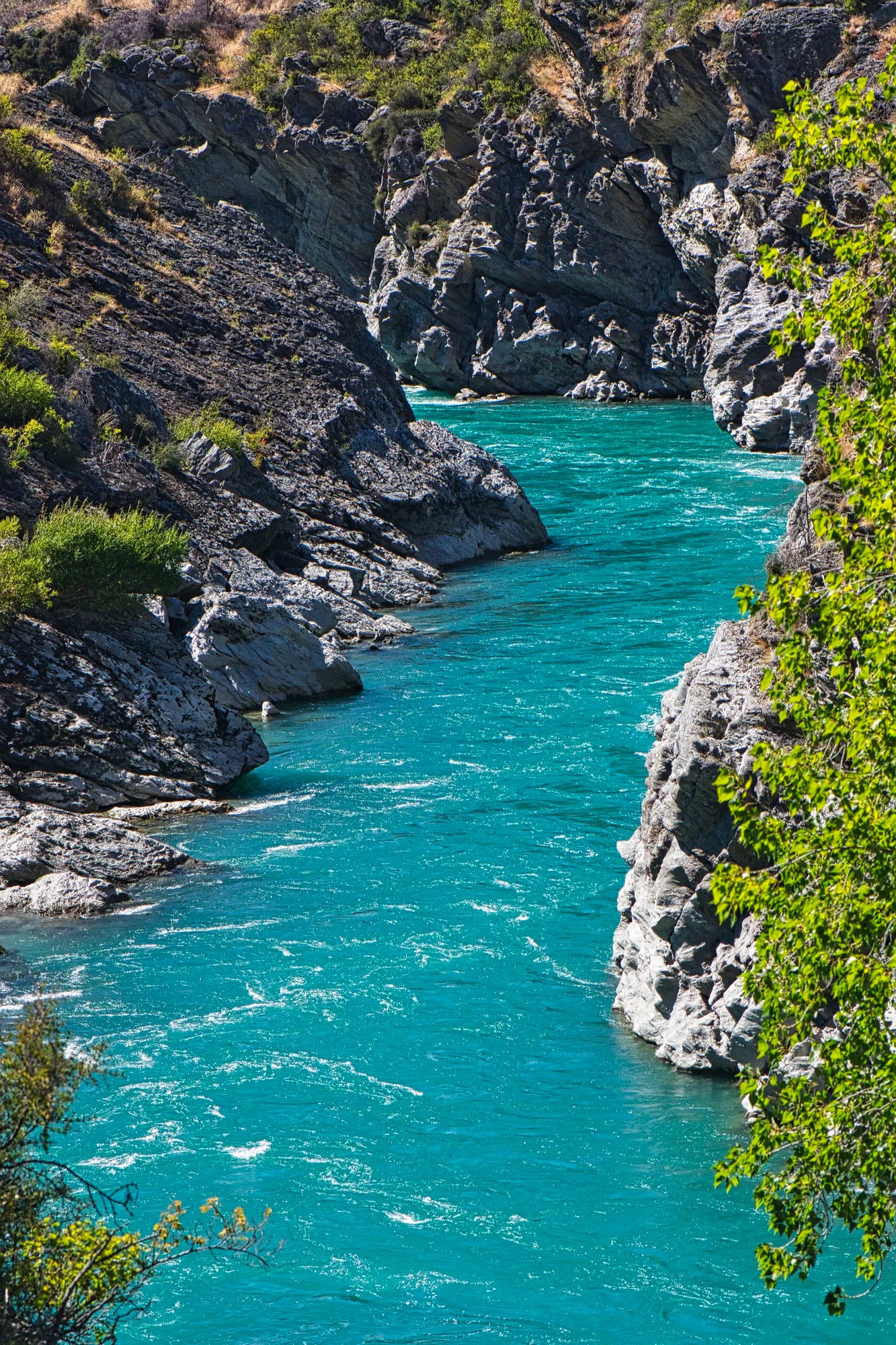
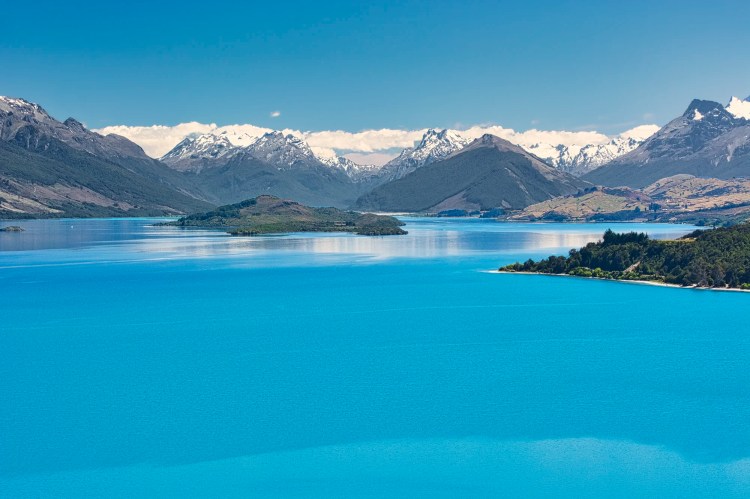
- Glacial lakes and rivers with OMG blue and turquoise colours
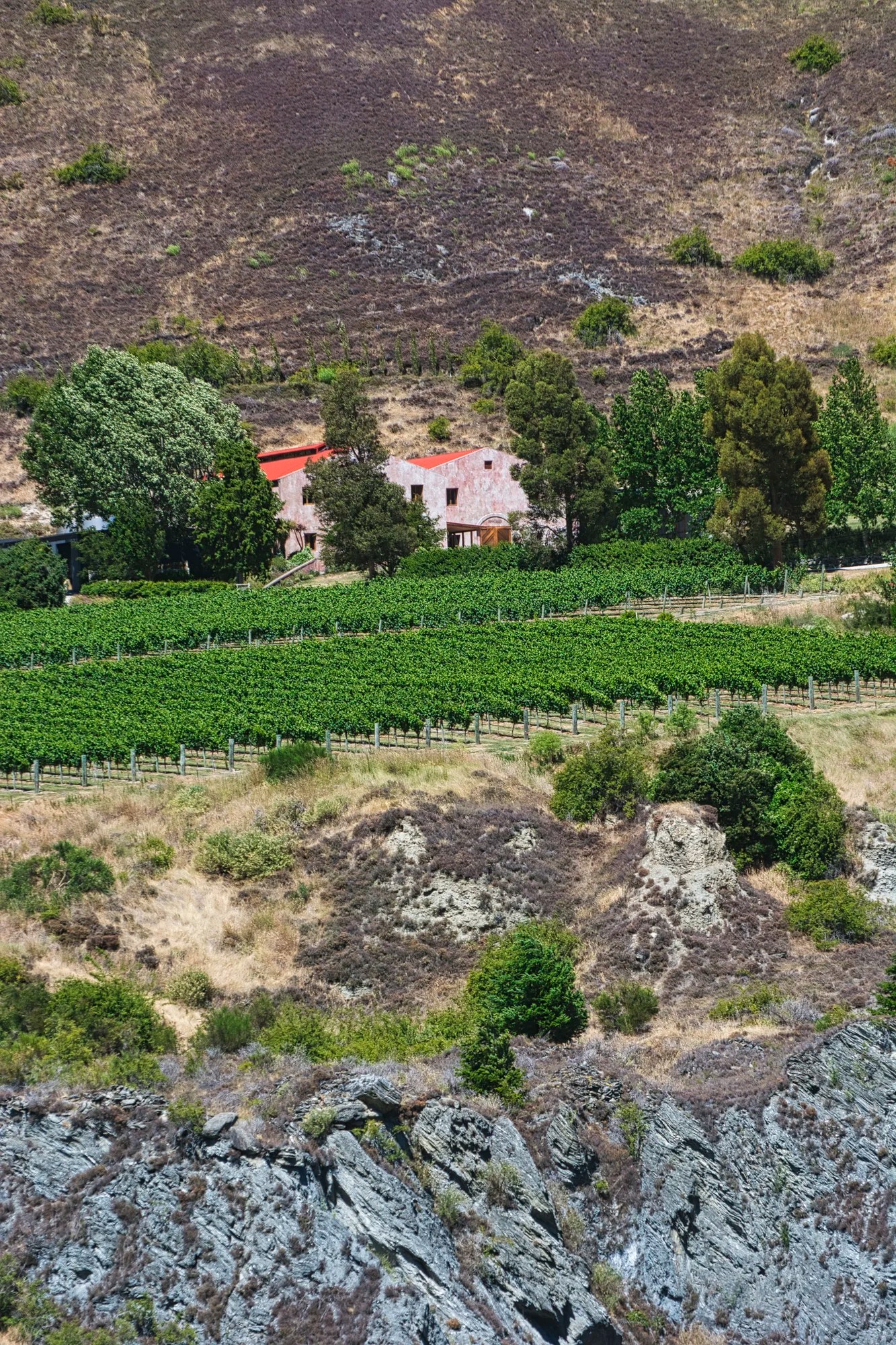
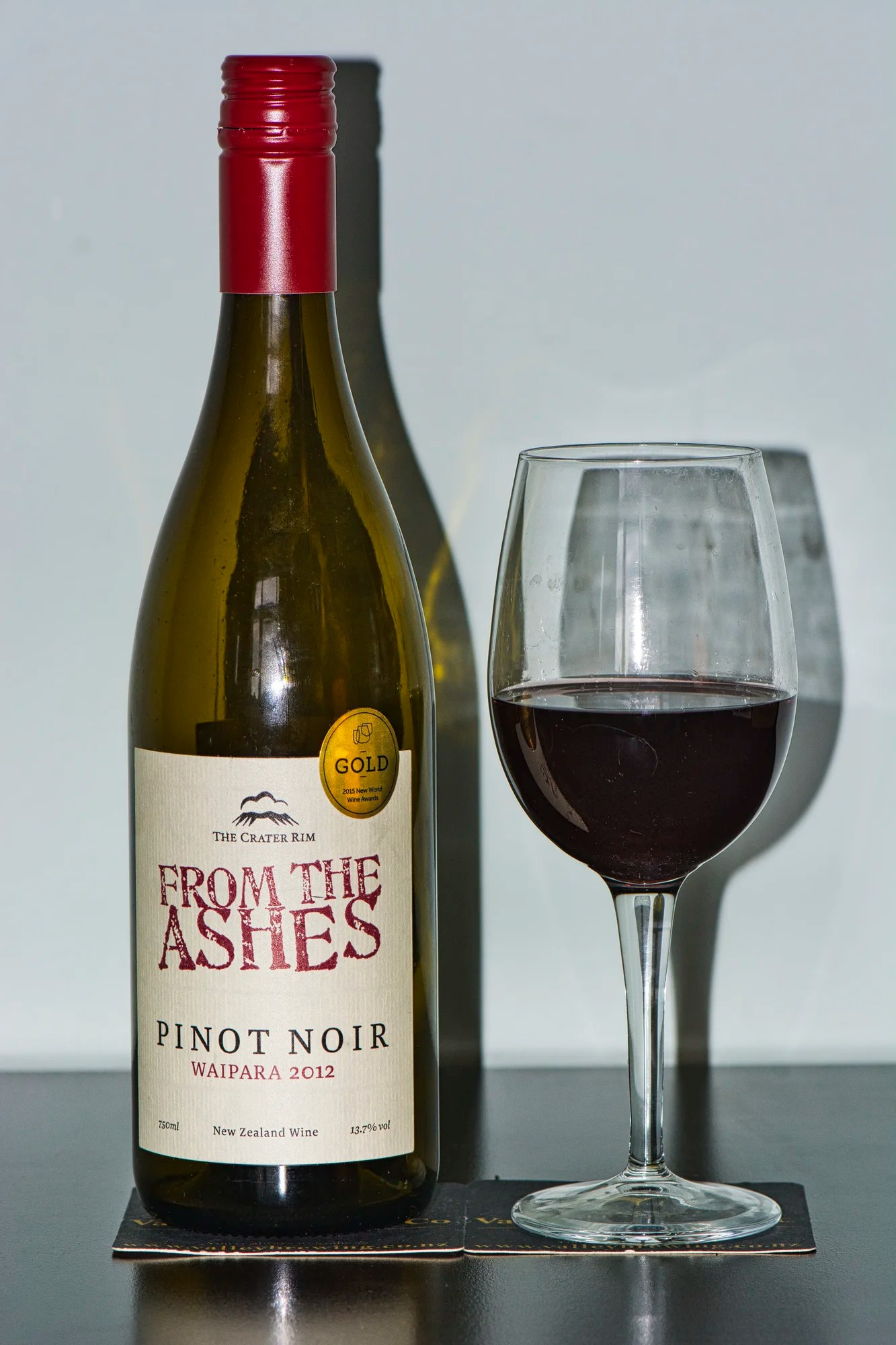
- Go wine tasting with superb wines – especially Pinot Noir, Chardonnay, and Cabernet Sauvignon: Kawarau is near Cromwell; Waipara is north of Christchurch.
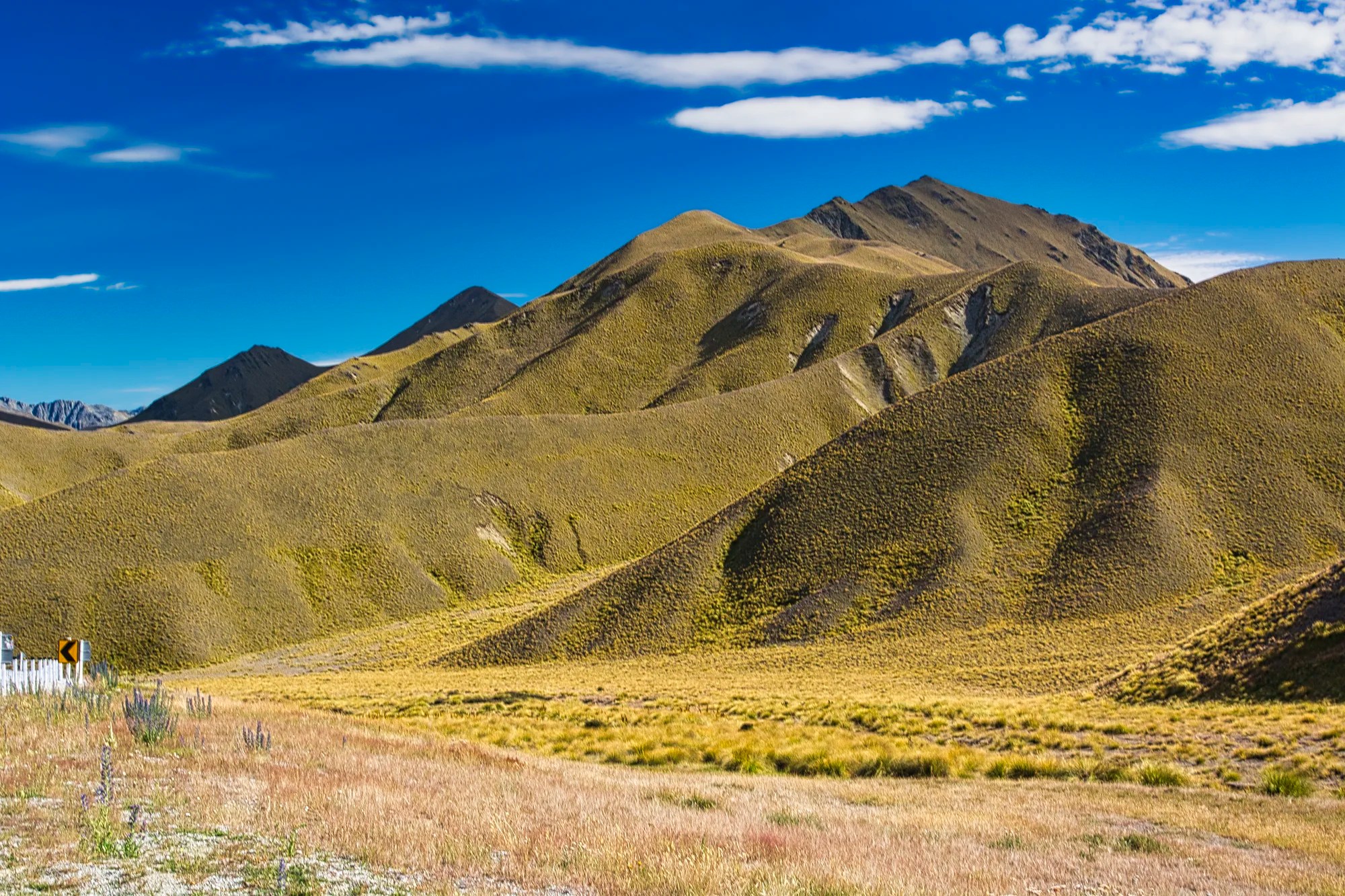
- Stark, grassland scenery like Lindis Pass
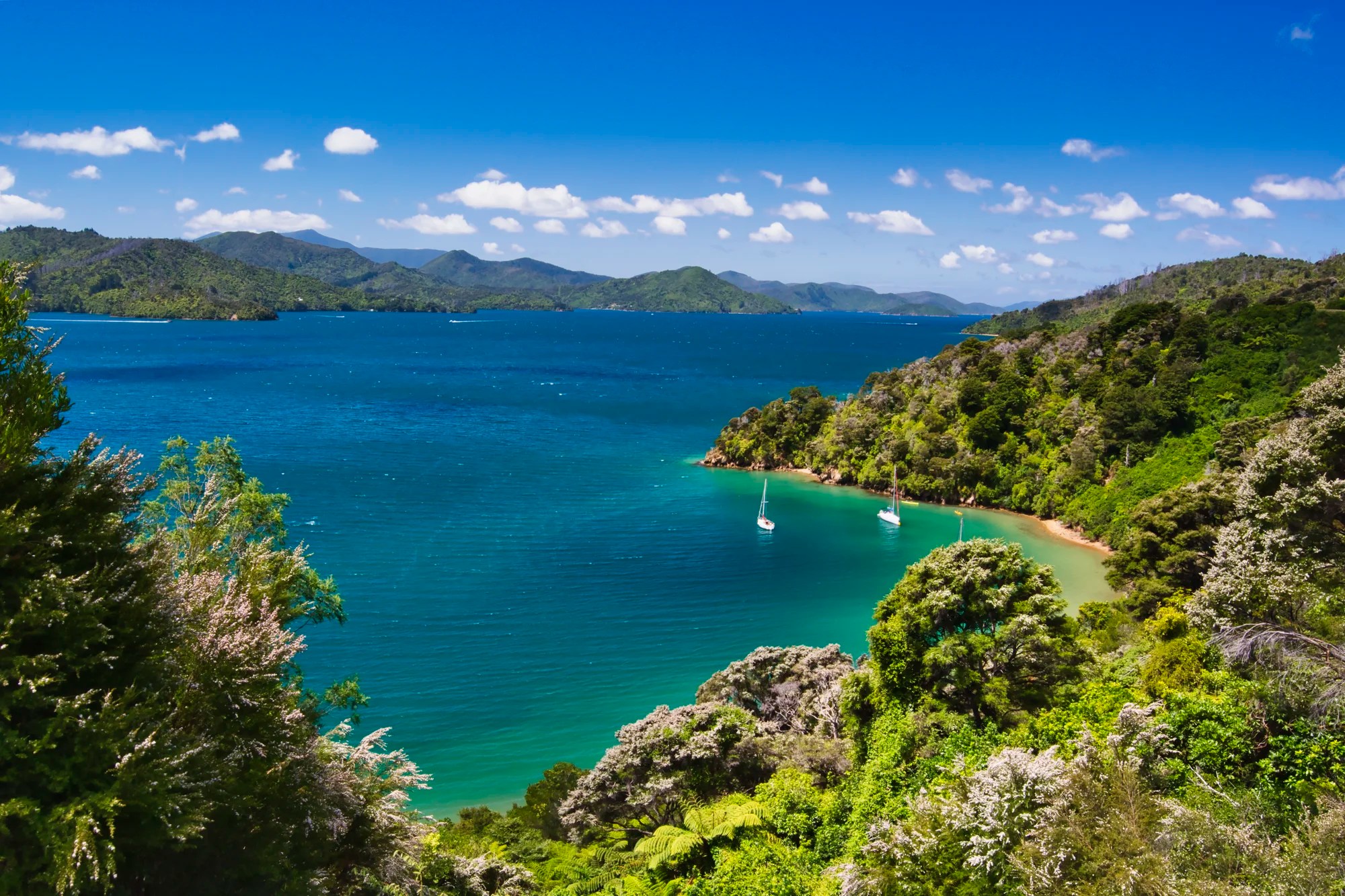
- Coastal scenery, coastal tracks, and better beaches than many countries
- Victorian Christchurch and Banks Peninsula, a volcano
- Victorian hidden gems like Oamaru and Dunedin
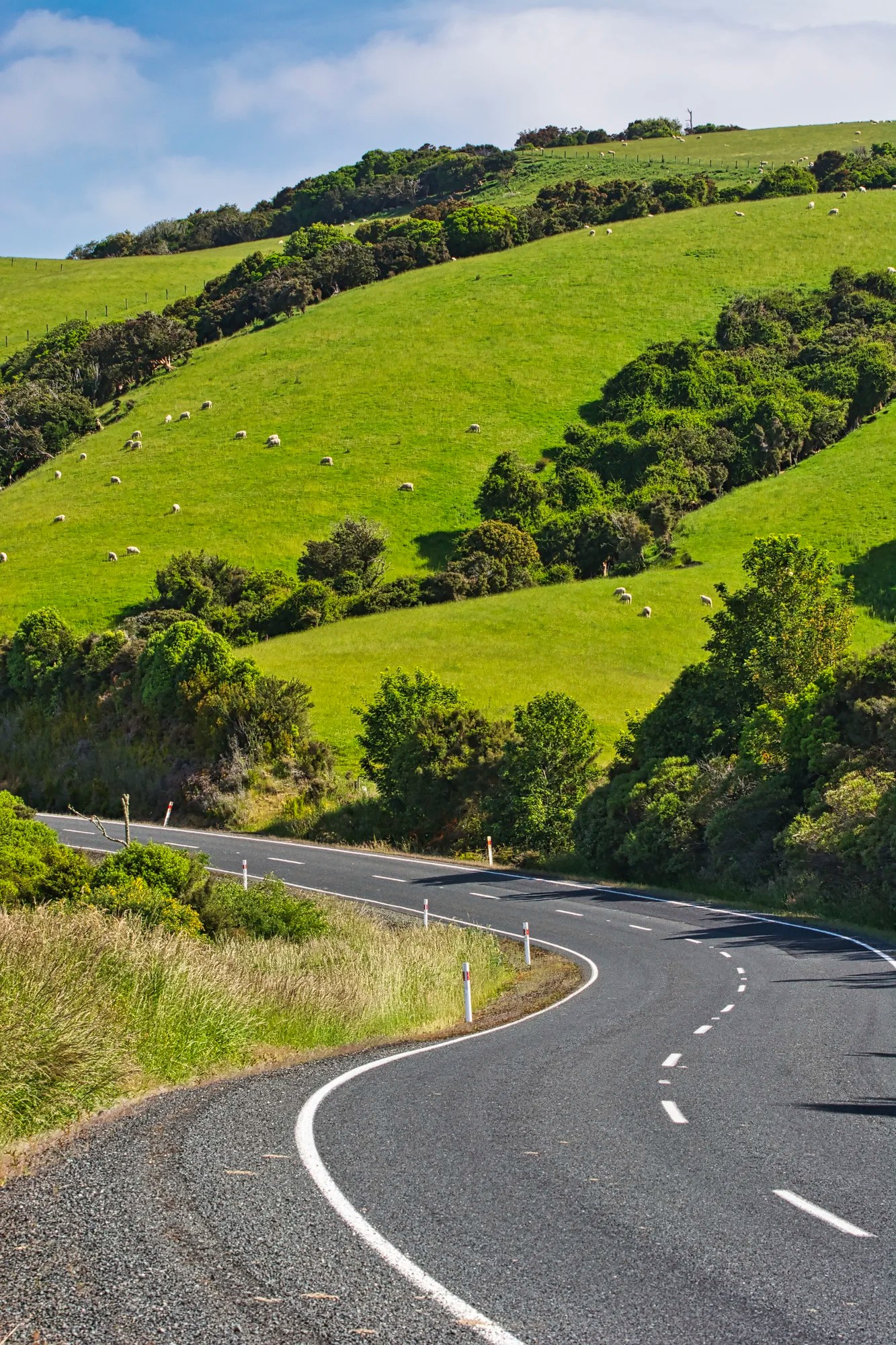
- White sheep on green rolling hills in the Catlins is Quintessential NZ.
Do you need a car to explore New Zealand?
North Island has 90% of the population and therefore has more public transportation, such as trains and buses. If you are doing a mainly city trip, then it is feasible to travel by train and bus.
However, if your primary focus is on hiking and scenery then renting a car is essential. This is especially true for the South Island. Due to the smaller highways and beautiful scenery, driving time will take longer than what Google Maps states. South Island could really use one north-south expressway between Picton and at least Dunedin to take the commercial traffic off the smaller roads.
Note that you often book two cars if you are going to both the North and South Islands as many rental companies do not transport cars on the ferry! The car rental companies do this for you. It also saves you money as the car costs a lots of money.
NZ Automobile Association
If you have an AAA or CAA membership, stop in an NZ AA office and get your complimentary AA card which gives you a 10% discount on accommodation, ferries, et al.
What are the Best Places for a Bus Trip?
The easiest places to visit by bus are cities. But some cities are nicer to visit than others. Here are the urban places you should build your itinerary around:
- Rotorua for the thermal areas, not for the city
- Nelson for a peaceful town
- Christchurch for Victorian architecture and the volcanic Banks Peninsula
- Oamaru for Victorian architecture and penguin viewing
- Dunedin for Victorian architecture and coastal scenery
- Queenstown for the scenery, not for the city
What are the Best Hikes in NZ?
Our favourite hikes in NZ are the longer distance and multi-day ones — Tongariro Alpine Crossing on North Island; Routeburn Track and the Abel Tasman Coast Track on South Island. There are many superb day hikes throughout the country. Our first regional post covers hikes in the Southern Alps, such as Hooker Valley Track in Aoraki NP.
How do I Plan an Itinerary for New Zealand?
Do you want to learn how to plan an itinerary? The purpose of our blog is to provide tailored itineraries with custom Google maps. A composite two to three-week itinerary will be available after we have published enough posts of individual road segments.
Itinerary Planning Process
This is quite a challenge since there are too many places to see. Here is the general process:
- Identify how much time you have;
- Decide which country and/or region you want to visit;
- Identify your interests;
- Perform basic research on what makes New Zealand or country X unique and where you can see these quintessential things;
Process Part Two
- Determine the top sights to see and things to do;
- Record these places as pins in a custom Google Map; Narrow these places down to fit in the timeframe you have;
- Fine-tune and book your itinerary.
Google Maps Ratings
Google Maps provides a rating from 0 to 5 for all sights, hotels, and restaurants (but not cities). All of our recommendations are appended with the rating (prefixed with a G) from Google Maps. Google Ratings are based on feedback from locals as well as tourists. They are much more reliable than travel booking websites or tourist anecdotes. We consider a score of 4 to 4.39 to be Very Good and 4.4 to 5 to be Excellent.
Places to Add to Your Itinerary
Here are posts to help you plan your itinerary. The first one provides you with ready-made itineraries of different lengths.
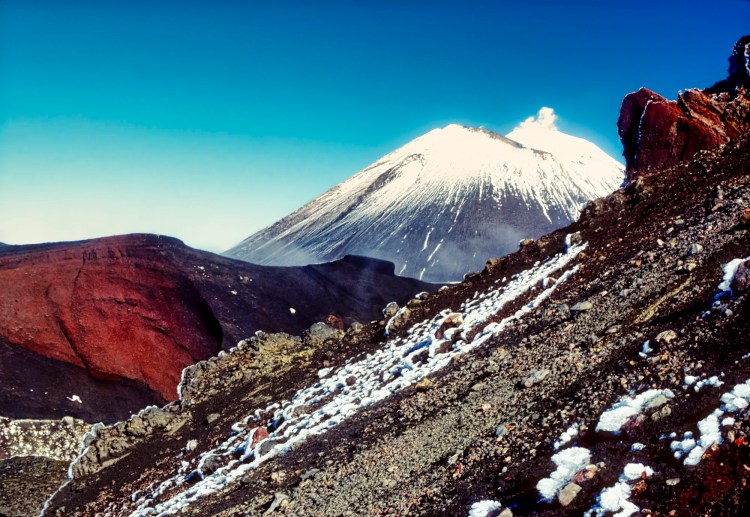
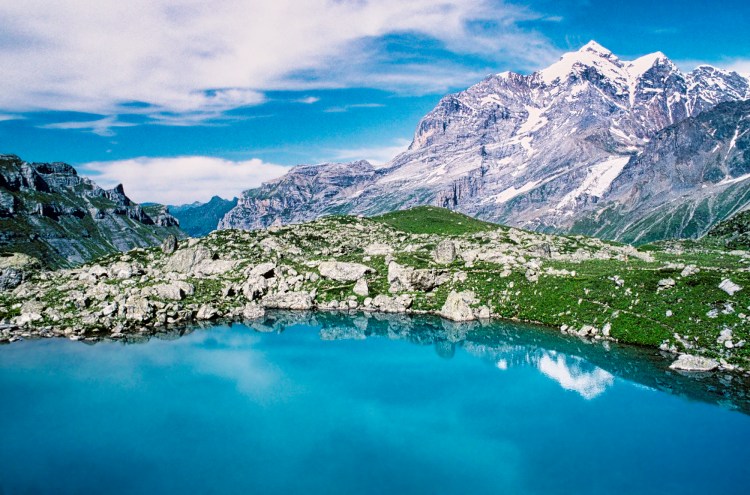
North Island Detailed Itineraries
South Island Detailed Itineraries
How Big is New Zealand?
NZ is a large country compared to Europe. It is the size of the UK or Italy. It is half the size of the province of Alberta, Canada.
Booking Accommodation
NZ only has 5 million people. South Island is even smaller, with 1 million people. So why is the South Island so busy during the summer peak season? Too many tourists go to the same famous places — what I call name recognition. Fewer people are available to work in the hospitality industry for a short tourist season. So there is a lack of accommodation.
If you are going during the Christmas peak season, most Kiwis are on the summer holidays from December 20th to January 20th. You need to book your places at least 5 months ahead.
The best value places were family-run B&Bs (not Airbnb) and fully-equipped cabins and tent sites at campgrounds. Use Agoda or Booking to find places for your price range. Verify the quality by the more reliable Google Maps Rating.
How much Time do I Need for New Zealand?
Is 7 days enough for New Zealand? Personally, we would say you don’t go halfway around the world for 7 days.
If you have only two weeks then select one island and enjoy it to the fullest. If you have three weeks then we would recommend one week in the North Island but limit yourself to the Rotorua and Tongariro areas then two weeks in South Island. To save time fly home from Christchurch (via Auckland).
How to Economize on Eating in New Zealand?
Is New Zealand food expensive? It wasn’t many years ago since NZ is an agricultural country producing its own food. But we feel that not only has it become much more expensive but the quality has gone down.
For instance, on our first trip, we thought NZ had the second-best ice cream in the world (after Italy). But this is no longer true. You used to be able to get the top ice cream in supermarkets and dairies rather than specialty shops. They previously used very fresh fruit and their original whole milk, which had 6% cream! We were not impressed by what we found on our last trip. NZ wines are superb, but they are cheaper at home. We discovered them via wine tasting on our first trip.
For breakfast, on our first trips, we would buy food and make our own breakfast. You can rent small houses in campgrounds that provide kitchens. If you are camping, most campgrounds we stayed at provided a communal, covered kitchen area with stoves and other facilities! On the last trip, we stayed at B&Bs. We never went out to restaurants for breakfast.
In fact, we hardly ate out at all as restaurants are very expensive. Also, taking a lot of time to eat lunch cuts into sightseeing time. We often went to supermarkets and bought Kiwi products. Alternatively, we found meat pies, pastries and other local specialties for lunch.
The problem with eating out for supper is that restaurants charge twice as much as for lunch. Moreover, we found that the high price was only for the protein dish not including vegetables. So lunch is a more reasonable time to eat.
Another big change is that NZ has become a big coffee culture, as they almost always serve espresso-type drinks only. We often had flat whites, which Kiwis claim they invented since their high-fat milk was too much for making cappuccinos.
How safe is New Zealand?
It is very safe. It ranks at the top with Canada as one of the safest countries to visit. See the comparative table in Travel Safety.
What is the Symbolism of the NZ Flag?
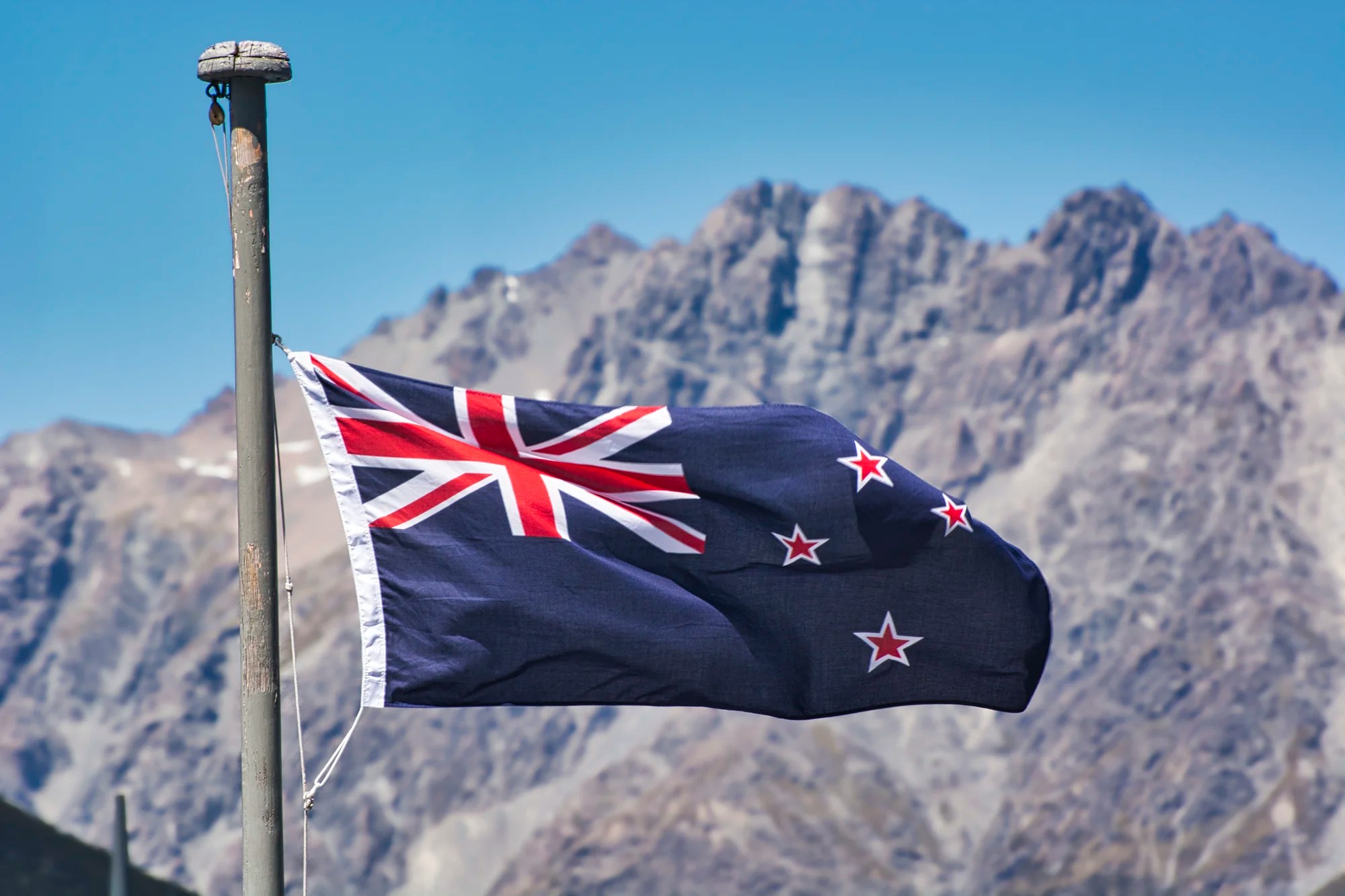
The left corner is the Union Jack, which represents New Zealand’s origin as a British colony. The royal blue background is derived from the ensign of the Blue Squadron of the Royal Navy. The four stars represent the Southern Cross constellation, which is unique to the Southern Hemisphere.
The flag was only formally adopted in 1902 as a result of patriotism. The Boer War (1899-1902) was the first time that NZ troops were sent abroad to fight.
In 2016, New Zealanders voted on whether to adopt a new black, white and blue flag with a Silver Fern design replacing the Union Jack. But 57% of voters opted to keep the current flag.
What are Some Surprising Facts About NZ?
New Zealand was not ‘discovered’ by the British. Captain Cook only came in 1769.
NZ was discovered by the Māoris after ca. 1320. The Māoris are Polynesian and are believed to have come from Tahiti.
By convention, place names are always chosen by the first explorer. So the country should really be called Aotearoa. This name is usually translated as “land of the long white cloud”. Apparently, cloud formations helped early Polynesian navigators find the country.
The Dutch explorer Abel Tasman was the first European to ‘discover’ NZ in 1642. He named it Nova Zeelandia after the Dutch province of Zeeland. Abel Tasman NP and Abel Tasman Coast Track in NZ are named after the explorer.
Unlike the North American aboriginals, the Māoris were never conquered. The Treaty of Waitangi (6 February 1840) recognized Māori ownership of their lands and established New Zealand as a British colony.
- NZ was the first country to allow women to vote in 1893.
- New Zealand is the world’s second-largest producer of wool (after Australia).
- NZ has 5 million people and 25 million sheep. We used to tease our Kiwi friends about giving the sheep the vote.
- The father of nuclear physics, Ernest Rutherford, was from New Zealand. But NZ is strongly against nuclear proliferation and will not build nuclear power plants.
- New Zealand is now very cosmopolitan. An amazing 27.4% of its people are foreign-born. That’s higher than Canada, which has 21.9% foreign-born.
What to Read About New Zealand?
Walking Tracks in Aoraki/Mount Cook National Park, NZ DOC
Email: mtcookvc@doc.govt.nz, NZ DOC
New Zealand, Lonely Planet — the book, but nowadays most people use the Internet for research
Lonely Planet New Zealand — their website
How to Get Lost & Found in New Zealand, John McDermott, Air New Zealand
North Island, Diana & Jeremy Pope, Mobil NZ Guide
South Island, Diana & Jeremy Pope, Mobil NZ Guide — these last two are similar to the Michelin Guides but with much more detail
Final Comments
This post is packed with information for planning your itinerary. We hope this gives you a high-level overview of what New Zealand is like. Remember, the most important “destination” is meeting the people.
Subscribe
Do you want more information? Then subscribe for free.
What things fascinate you? How long is your trip? What questions do you have?
What do these Kiwi Words Mean?
Is Kiwi English another language? Sometimes it seems so. On our first trip, we met our Kiwi friends, R and D, on Rarotonga. They invited us for tea at their home in Wellington, NZ. When we finally arrived there, we found out tea meant supper! Oh, they meant tea as in British English! During supper, their daughters commented on how cute our accents were. I teased back that we Canadians didn’t think we had accents but that their accent was very cute.
Dags
Over the weeks, D educated us on all the Kiwi expressions and Kiwi humour. We made a list in our diary. Our favourite was “be a dag and drop off”, which translates as get lost. Dag is the sheep poo that hangs onto the wool near the bum. Dag can be used as an affectionate insult for someone who is perceived to be unfashionable and/or has poor social skills yet is affable.
There are too many expressions than can be listed here. So we have limited the list to the ones that you are most likely to hear.
Chilly bin – cooler to keep your drinks
Crack up – that is funny
Crook – does not mean criminal; it means sick or out of sorts
bit of a Dag – hard case
rattle your Dags – hurry up
Dairy – corner store for general goods not just dairy
Dunny – toilet
Gummies, Gumboots – Wellingtons or rubber boots that are very useful in this high rainfall country: no, Wellingtons are not named after Wellington, the capital of NZ, but were popularized by the Duke of Wellington
Metal road – gravel road
No worries – no problem
Overdone – tired out
Packing a sad – tantrum
Pakaru – Maori word meaning broken
Ring me – call me
Sell out – throw up
Ta – thank you
Throw a wobbly – mad
Thunderbox – toilet
Togs – swimsuit
Track – hiking trail
Tramp – no it does not mean slut; it means to hike
Tucker – food
Abbreviations
asl = above sea level
DOC = Department of Conservation = Parks NZ
Kiwi = New Zealander, or a nocturnal flightless bird
Max Elev = Maximum Elevation above sea level
NI = North Island
NP = National Park
NZ= New Zealand
NZD = New Zealand Dollar
OW = One Way
RT = Round Trip
SI = South Island
USD = United States Dollar
 Terra Encounters
Leave a comment