
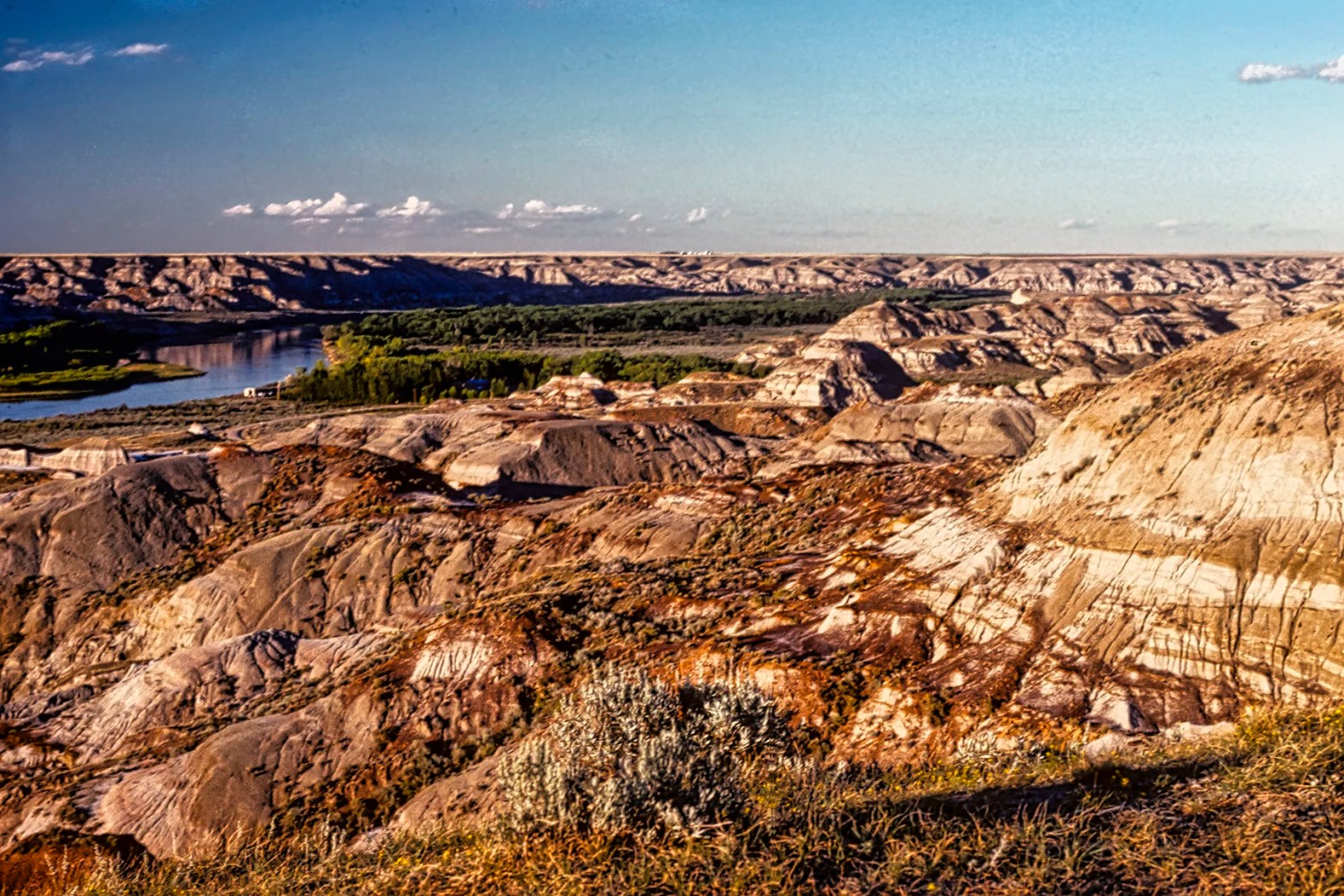
Why go to Dinosaur Provincial Park?
Are you looking for a one-of-a-kind experience? Do you want to chill out after the trial by tourist experience at overcrowded Lake Louise? Then the place to visit is Dinosaur Provincial Park (DPP), a mere 2.5 hrs. east of Calgary in the province of Alberta.

Indeed, it is THE must-see in Canada! Here you can view a stark, arid landscape that is so different from the stereotype of forested Canada. This is also Canada’s mini Grand Canyon. It is a photographer’s dream of vermillion and cream hoodoos and coulees.
Can you imagine herds of dinosaurs roaming here? Except, you would be wrong because Canada then was a lush tropical paradise (for dinosaurs).

The park provides guided fossil safaris so you can find your own bones. Even if you gave up dinosaurs after age six, come here and you will reignite your inner fossil hunter.
Author & Photographer: George Mitchell

Our recommendations are not influenced by affiliate links – we have none. Our advice is based on extensive experience living in Alberta. We are avid hikers, nature lovers and photographers (all photos are my own). The photos and stories are primarily from our most recent trip. For photographers, I have included the lens type and focal length in the image caption (RF is the Canon mirrorless lens).
All of our recommendations are top-rated by Google Maps Ratings, which is based on everyone, not just tourists. Each place in our custom Google Maps is appended with a Google Maps Rating (G0 to G5). At the end of the blog is information on camping, guided tours, itinerary planning and maps.
Dinosaur Provincial Park
We did a drive-by visit of Dinosaur Provincial Park (DPP) on our 4,328 km drive across Canada. We tell other people NOT to do this. But we were in a rush to see our son in Vancouver before his trip to Kenya.
We left our hotel in Moose Jaw SK at 07:00 hrs. and drove 550 km with a 1:15 hr. stop at Medicine Hat Costco for gas and food. We arrived at DPP at 14:00 hrs.
Dinosaur Provincial Park Viewpoint
We have not been to DPP since we lived in Alberta. Would it be different? Would it be spoiled?
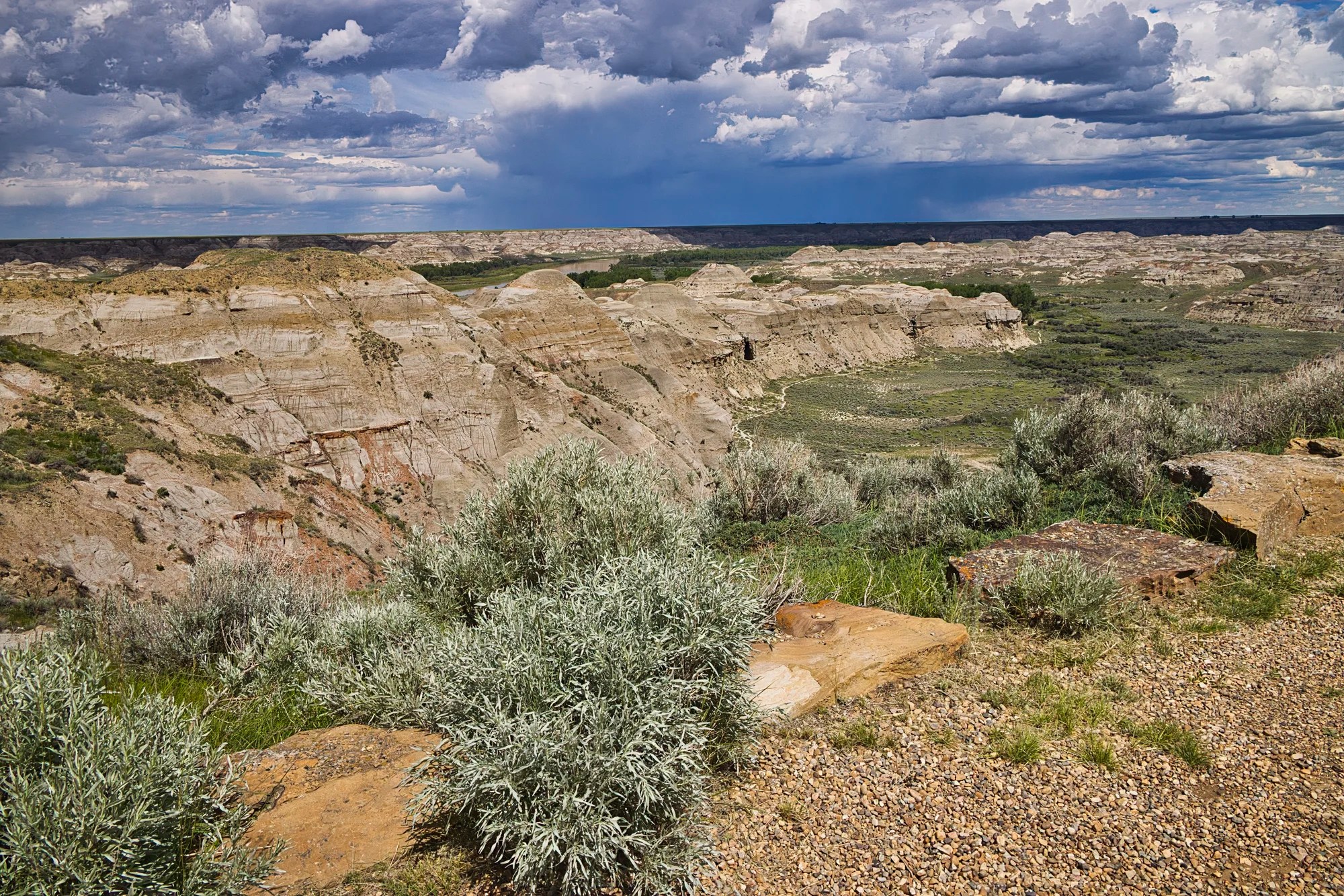
Our first surprise was the new viewpoint at the top of the hill before descending into the park. This was one major difference and definitely worth stopping. The prairies disappear into a canyon. An otherworldly scene stretches before you.

This is a rare terrain in Canada with reddish-orange rock layers, hoodoos and a desert-like environment. It is hard to believe that this was once a tropical area with large dinosaurs!
Why are there so many fossils here?

© 2010 plosbiology.org
North America was a set of islands more than 65 million years ago. Dinosaur PP was located in the coastal plain of Laramidia on the Western Interior Seaway. Much of the United States did not exist.
This flat area was ideal for massive, roaming dinosaurs. Five percent of the world’s known dinosaur species have been found here! Fifty-eight dinosaur species have been discovered. More than 500 specimens have been removed and exhibited in museums around the globe. DPP is one of the best places to find dinosaur bones in the world. That is why it has been a UNESCO World Heritage Site since 1979.
How do Fossils Form?

Generally, organisms decay completely. When dinosaurs died, they were quickly covered in sand and mud of the coastal plain. The heat and pressure from being buried in sediment preserved their bones.
Another common fossilization process is permineralization, the replacement of cells by minerals. Minerals carried by water seep into the remains, filling the soft tissue or empty spaces with crystals.
How did they Discover Fossils in DPP?

The massive Laurentide ice sheet covered all of Canada during the Ice Age. When it melted ca. 11,500 years ago, the advancing and receding glaciers carved through 75 million years of layers surrounding the Red Deer River down to the Cretaceous strata. The current dry climate has minimized erosion, enabling fossils to be preserved.
How did they discover fossils? Blame it on coal. The Geological Survey of Canada sent explorers to search for coal, which was needed for the railway being built across Canada (1885). The railroad was a condition for incorporating British Columbia into Confederation.
While exploring for coal in 1884, Joseph Tyrrell made the first discovery of a dinosaur in the Red Deer River Valley. This skull is his most famous fossil. In 1905, it was named Albertosaurus, a three ton bi-pedal relative of the Tyrannosaurus Rex. This discovery is also the reason why the world class Royal Tyrrell Museum (G4.8) in Drumheller is named after Tyrrell.
Why are they called Badlands?
About 200 years ago, French Canadian fur traders called this land “les mauvaises terres a traverser“, bad land to cross. The term badlands has stuck, even in the United States.
Why are Cacti Dangerous?

Smaller species of cactus are everywhere, including Opuntia (prickly pear) and Pediocactus (pincushion). They bloom in late June.
Watch where you walk. One time when we visited, cactus spines painfully pierced a tourist’s running shoes. We had no idea they could pierce such a thick sole. In fact, you are not allowed to wear sandals, flip-flops, or Crocs on any of the guided tours!
Is Dinosaur PP a Desert?

Most experts agree that a desert is an area of land that receives no more than 25 cm (10 in) of precipitation a year. Dinosaur PP receives 40.6 cm per year, so it is not a desert. But when it does rain, the lightning can be dramatic and the flowers bloom.
Why is Access Restricted?

Note that 90% of the park is a restricted area and is only accessible by guided tours described below. The restrictions are not only to protect the fragile area from trampling tourists and bone thieves. Pretend you are in the scene above and gaze around you. Everything looks the same. There are no marked trails. The park covers 73 sq km (28 sq mi) with no landmarks!
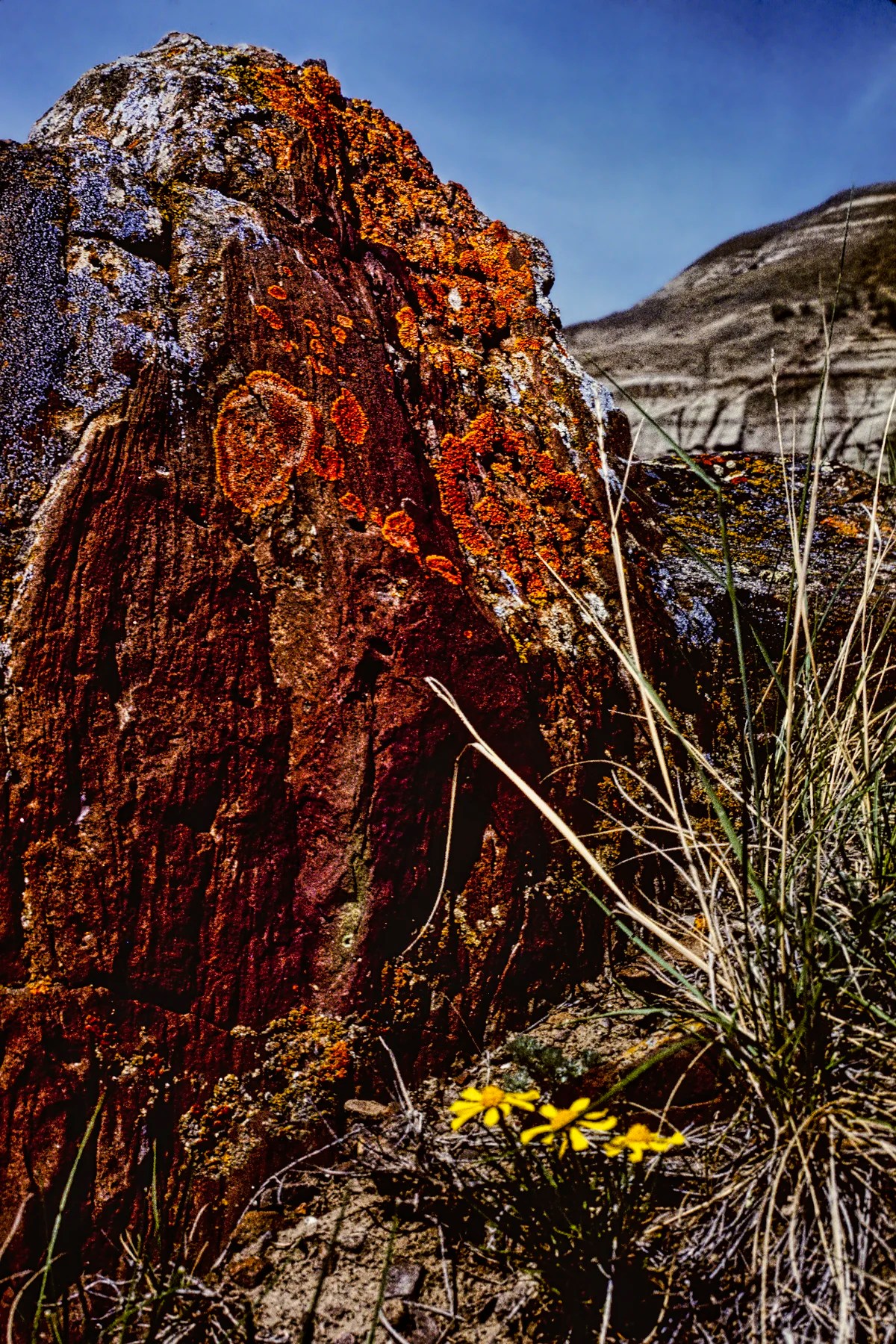
If you get lost, you have no idea where to go! We know from experience! We were on one of the guided hiking tours. On the way back, we stopped to take several macro photos. We looked up and there was no one to be seen. There was just a series of eroded hills that all looked the same. We were lost!!
Fortunately, we had paid attention to a previous interpretive program. They taught us that all the rain will drain into the Red Deer River. We followed the largest dry stream bed downhill until we reached the Loop Road.
Scenic Loop Road
That leaves 10% of the DPP area that you can walk or drive on your own. This is the zone near the campground and within the loop road.
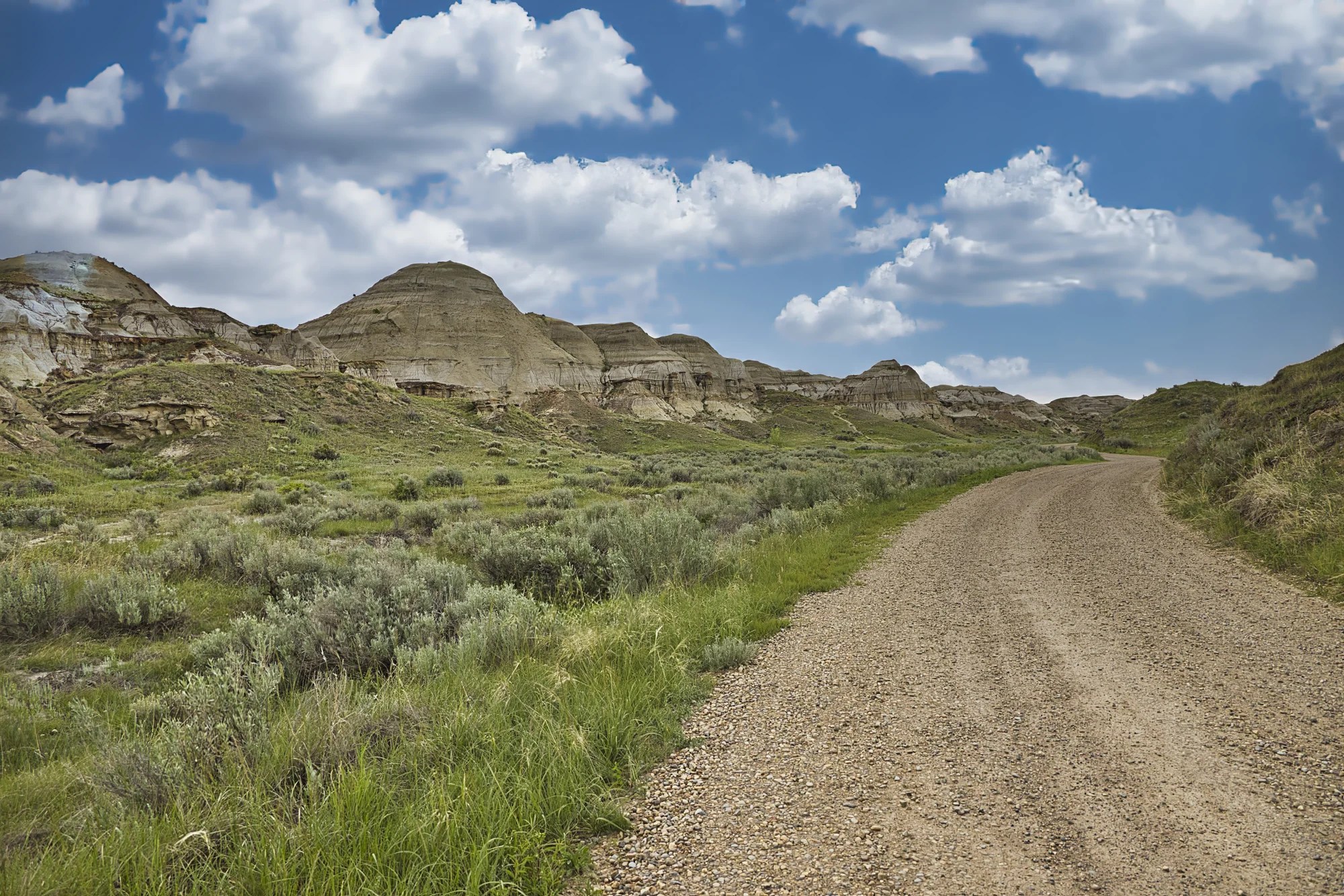
The 3.7 km scenic Loop Road is a one-way gravel track that must be driven counterclockwise. It begins at the campground bridge.
Badlands Trail
Length: 1.5 km
Walking Time: 45 mins.
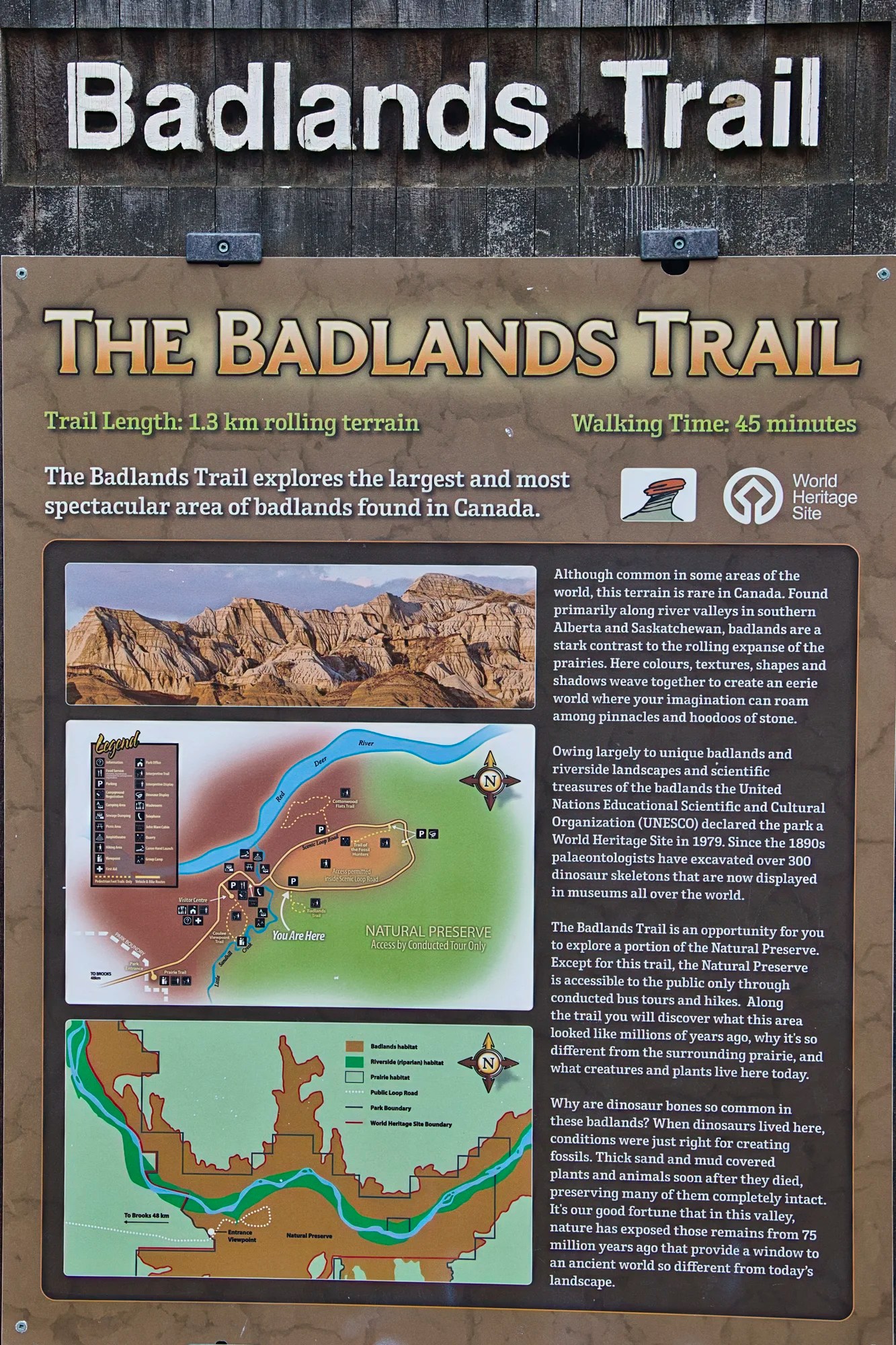
The first stop along the Loop Road is the Badlands Trail. By the way, DPP has excellent signs along the road and trails.
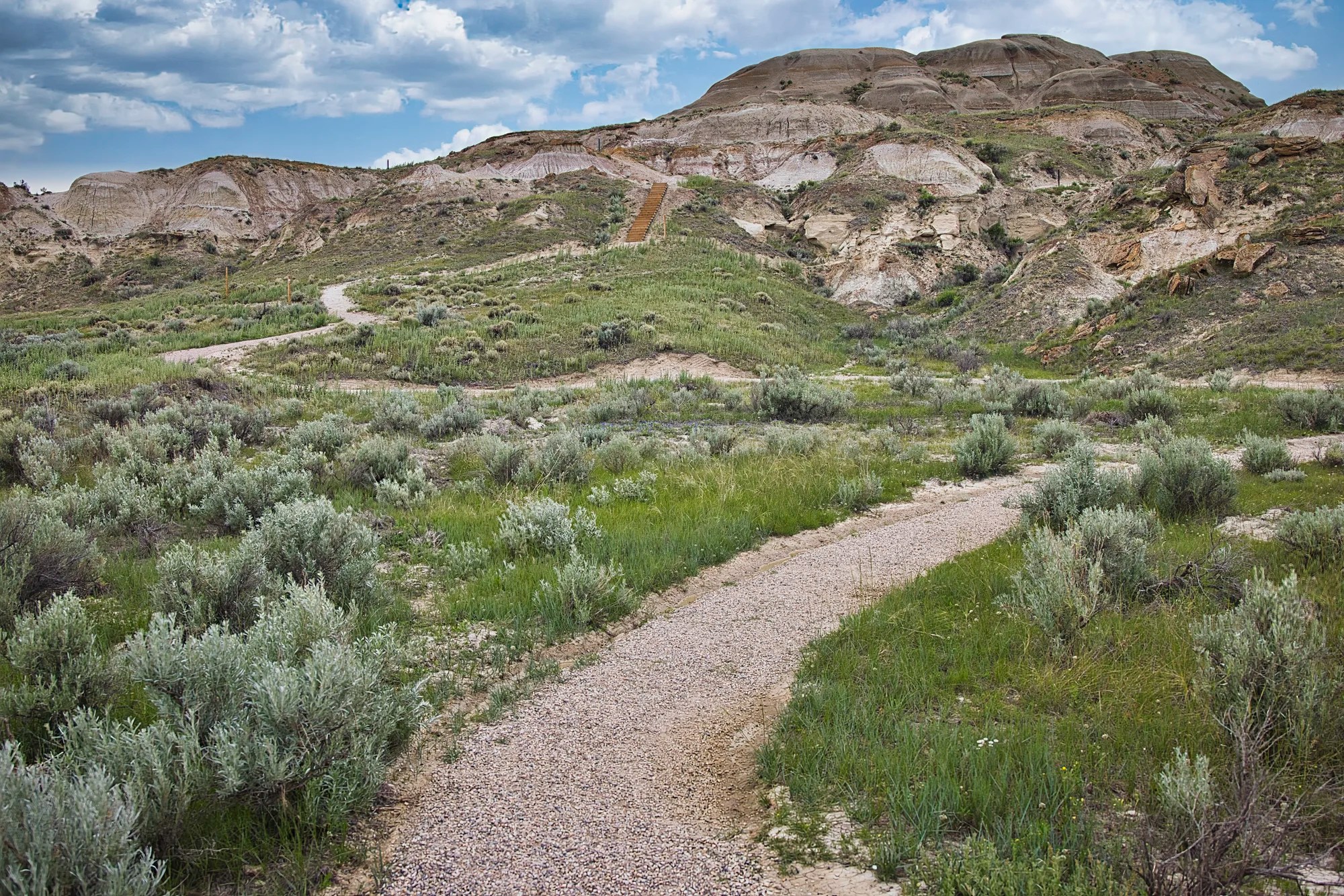
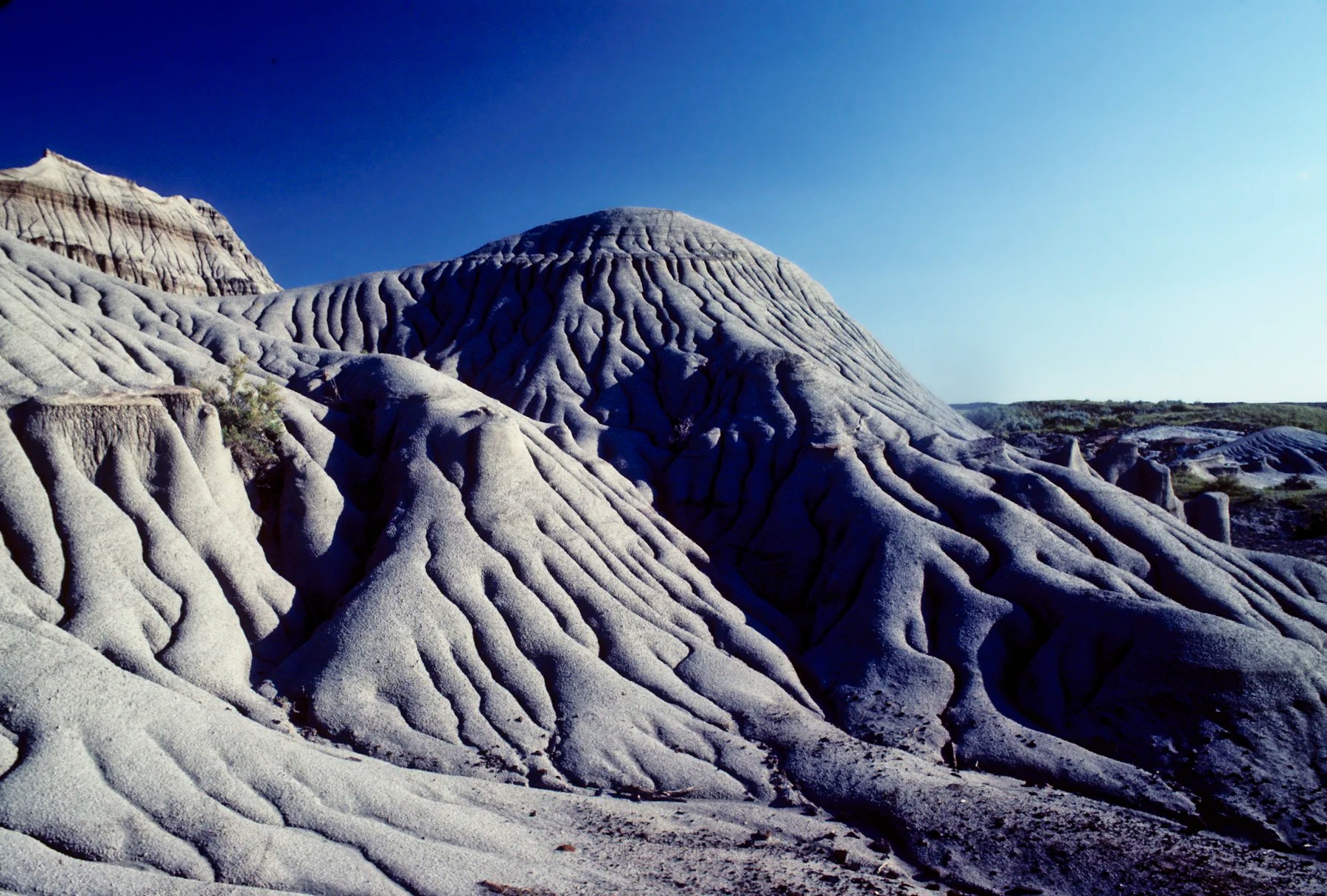
The Badlands Trail gives visitors the chance to explore a small part of the restricted area. The hike gently climbs while you marvel at the hoodoos and coulees around every bend. The sandstone ridges and bentonite clay layers are cut by dry stream beds.
Bentonite Clay
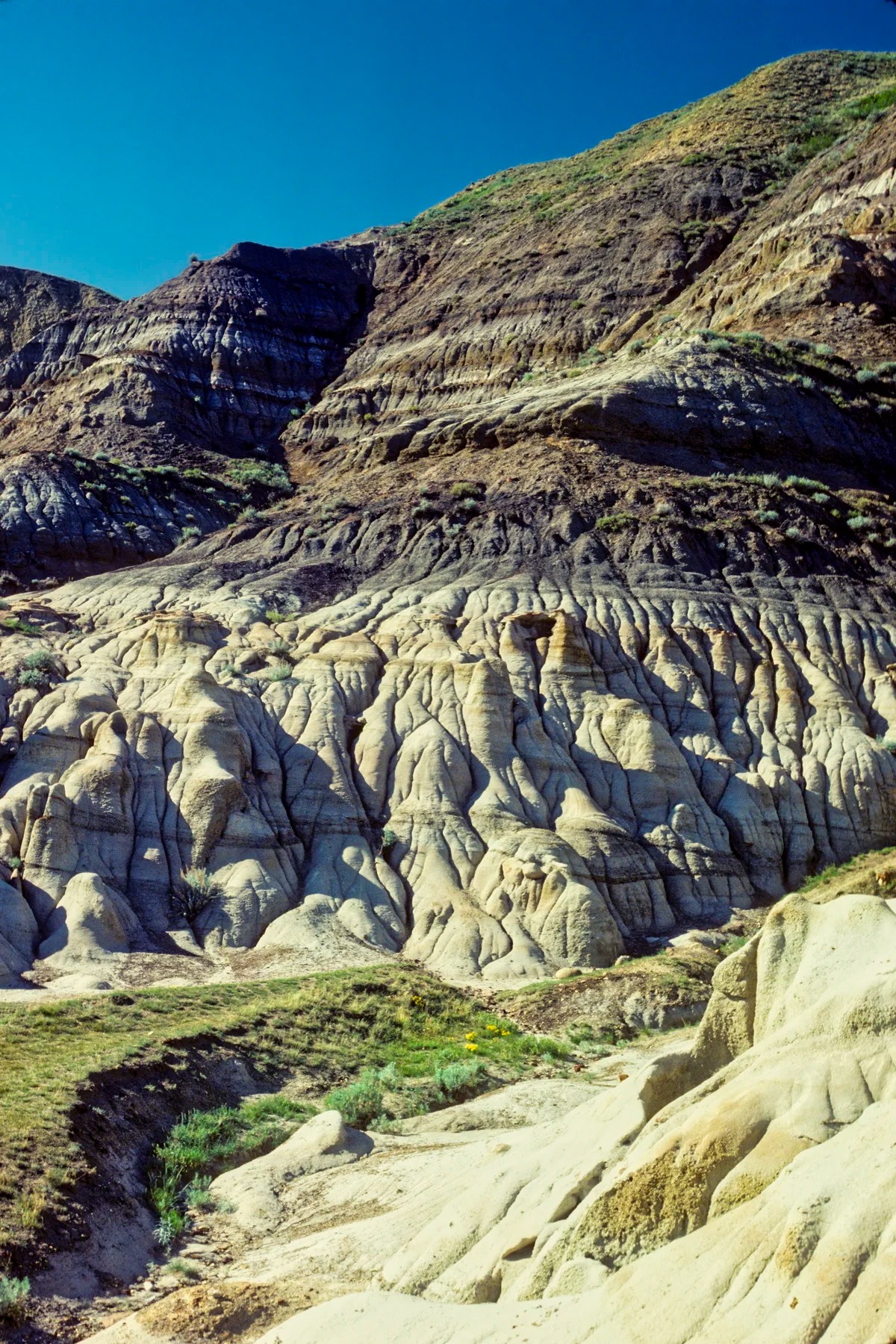
Bentonite is a specific layer in the sedimentation that came from volcanic ash and tuff. This layer can be over one metre thick. Imagine how much volcanic activity was needed to create and compress that much ash into bentonite clay!
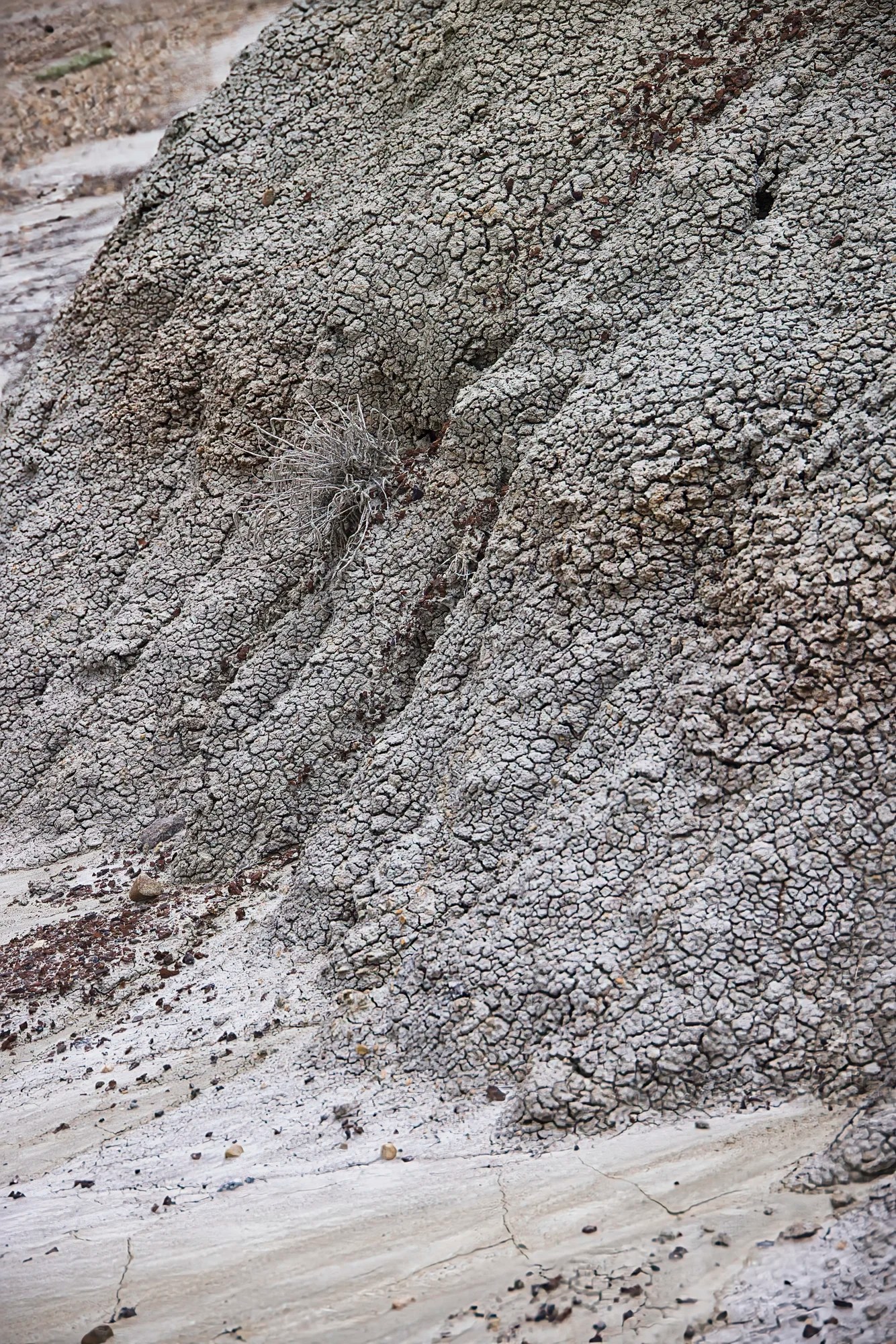
Bentonite beds are usually white and have a popcorn texture on the surface. Bentonite is a swelling clay that can absorb large quantities of water, increasing its volume up to eight times! On one of our trips from Edmonton, it rained. We forget that bentonite is very slippery when wet. Do not walk on it.
In southern Alberta, bentonite is found in sediments from 67 to 75 million years ago. The ashes came from active volcanoes in British Columbia and the northwest USA. What happened during this time? The Pacific plate smashed under the North American plate, which squished the land like a piece of tissue, forming a series of mountain ranges ending with the Rockies! This uplifted the ocean floor 1430 m (4692 ft) above sea level! Johnston Canyon in Banff NP is made of limestone, which is a million years of seashells.
Do you think all this has no relationship to your life? You use Bentonite clay every day! Bentonite is used to make many products:
- Toothpaste;
- Shampoo and Indigenous soap;
- Acne lotion and sunscreen;
- Face masks, nail polish, and cosmetics;
- Drilling mud to lubricate and cool cutting tools.
This shows how interrelated everything is.
Hoodoos & Coulees
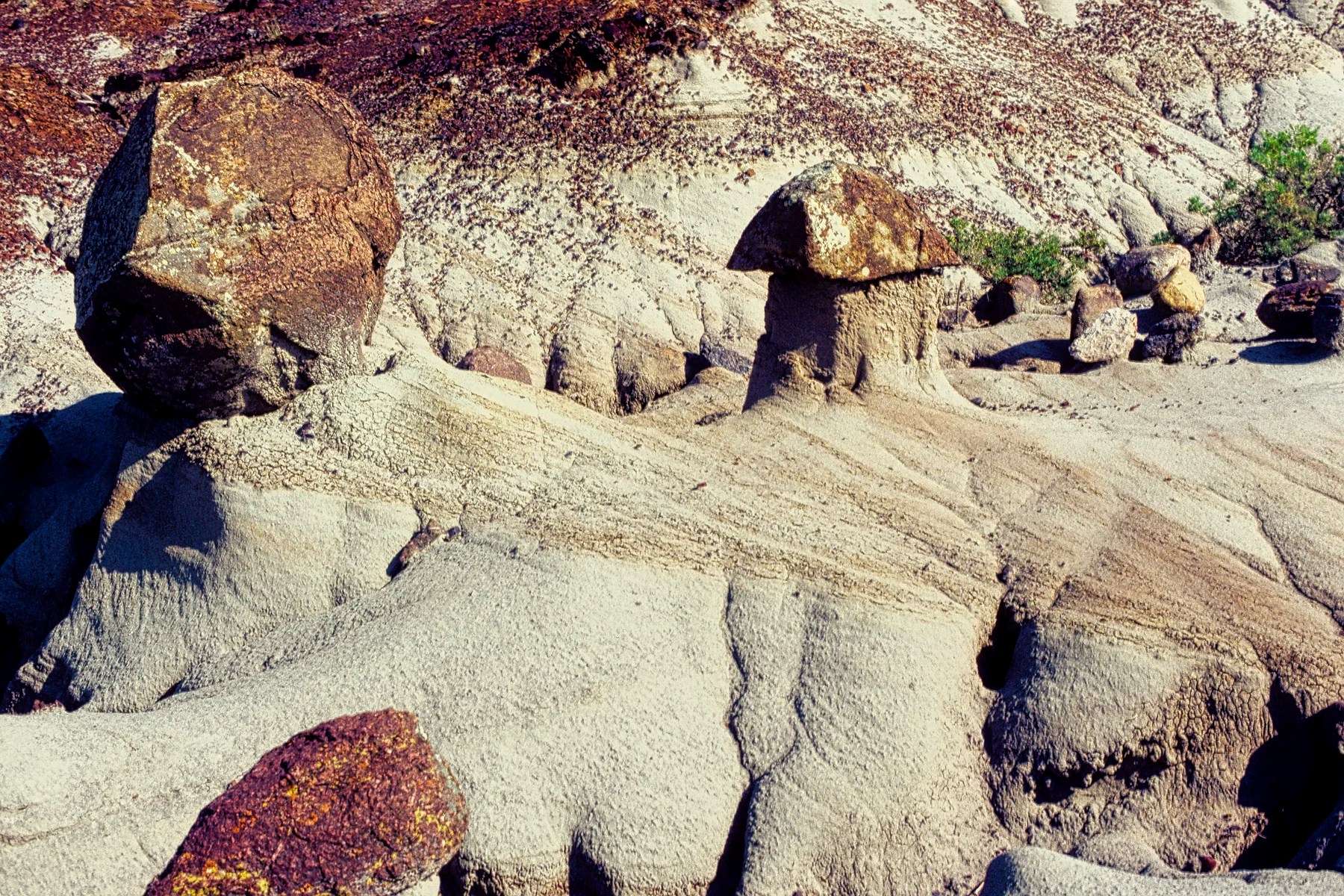
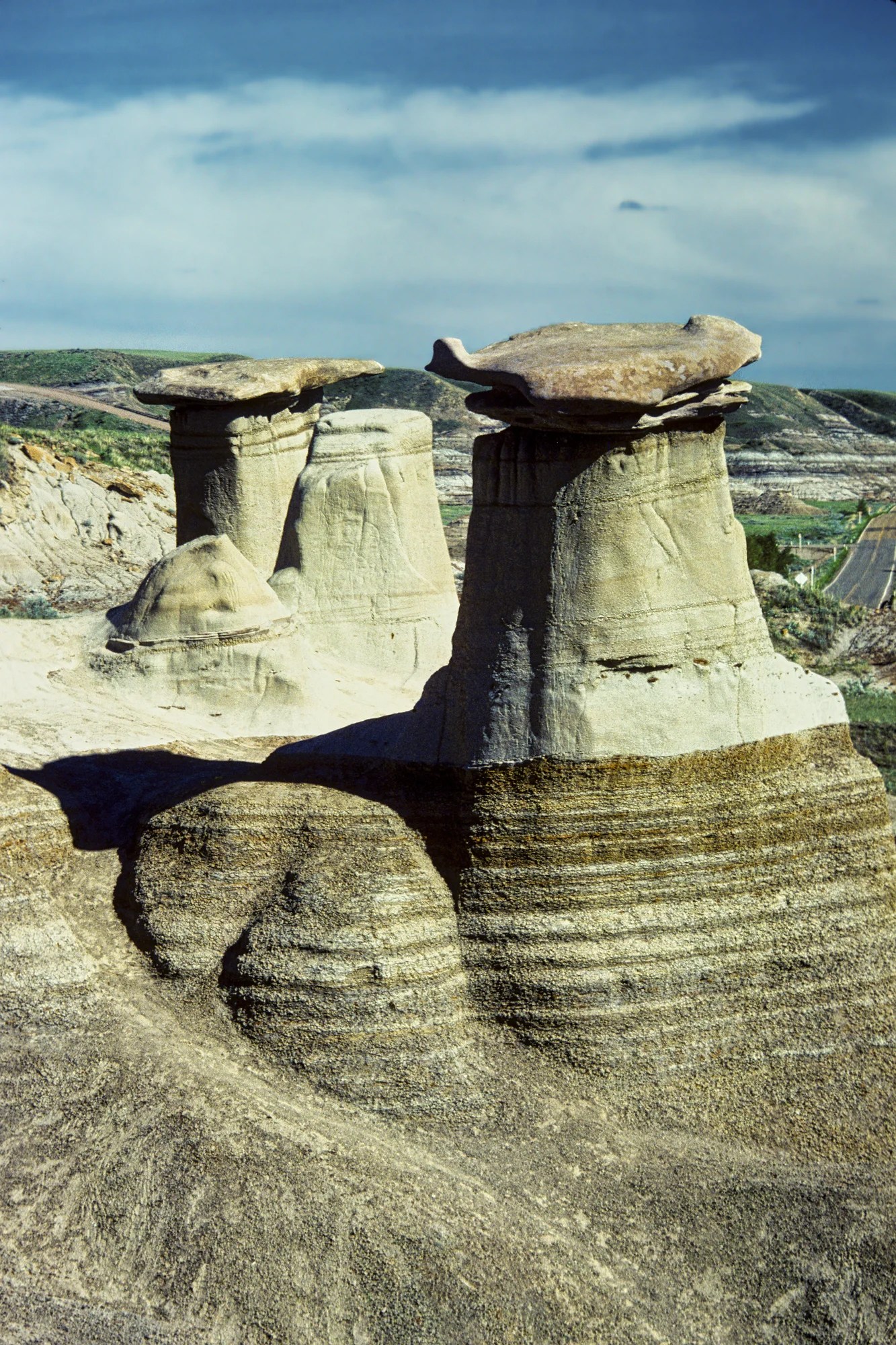
Dinosaur Provincial Park is home to unique landforms called hoodoos. They were formed over millions of years when the softer rock, called sandstone, erodes more quickly than the harder ironstone layer. What’s left behind are sandstone pillars with an ironstone caprock, typically iron-rich sandstone. The iron content gives the rock its distinctive reddish hue.
Coulee is a deep ravines or gulches, carved by water but now dry. The name originates from the Canadian French word “coulée,” which means “flow”.
Ironstone is a sedimentary rock rich in iron. The red and purple hues come from the oxidation of iron minerals within the rock.
It’s Cretaceous, not Jurassic
The film Jurassic Park is bad history with lots of misconceptions. The main characters, Velociraptor and Tyrannosaurus, are not even found in the Jurassic Period, which ended 145 million years ago. The Jurassic world was mainly an ocean dominated by marine reptiles (ichthyosaurs, plesiosaurs) and flying dinosaurs (pterosaurs).
The scary meat-eaters are from the Cretaceous Period (145 to 65 million years ago)! The Velociraptor is from Central Asia and is smaller. The movie was actually based on the Deinonychus (meaning terrible claw), a bigger version of the Velociraptor found in North America. These pack-hunting raptors are the scariest creatures.
Fossil Display 1
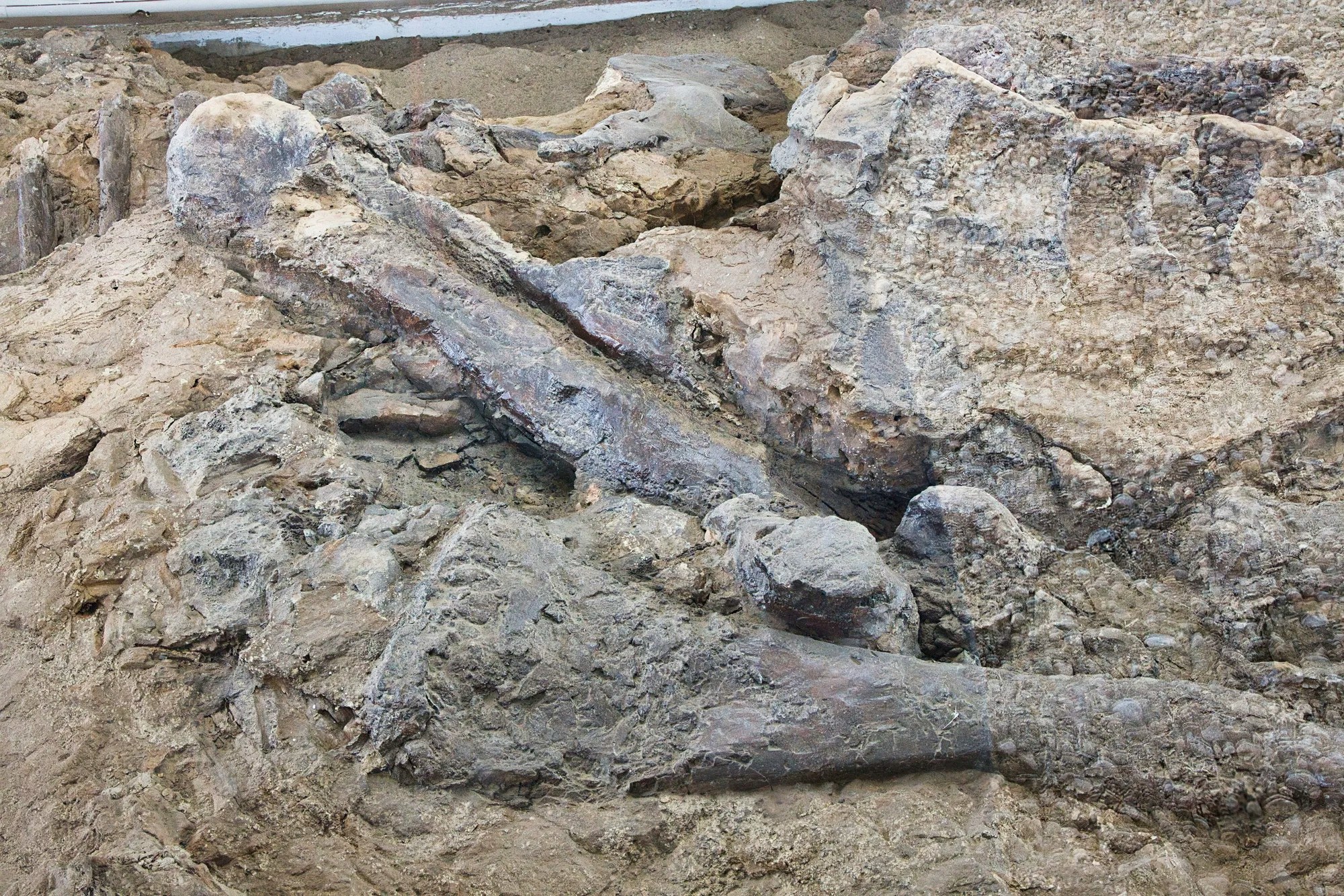
The Headless Hadrosaur lies exactly where it was found by an amateur fossil hunter in 1959. Roy Fowler (1902–1975) was a farmer, not a paleontologist. He became the first park warden.
Also known as a duck-billed dinosaur, this large plant-eating animal weighed 4 metric tons! There are many species of hadrosaurs, especially in DPP. But paleontologists don’t know which type this was because the head is missing.
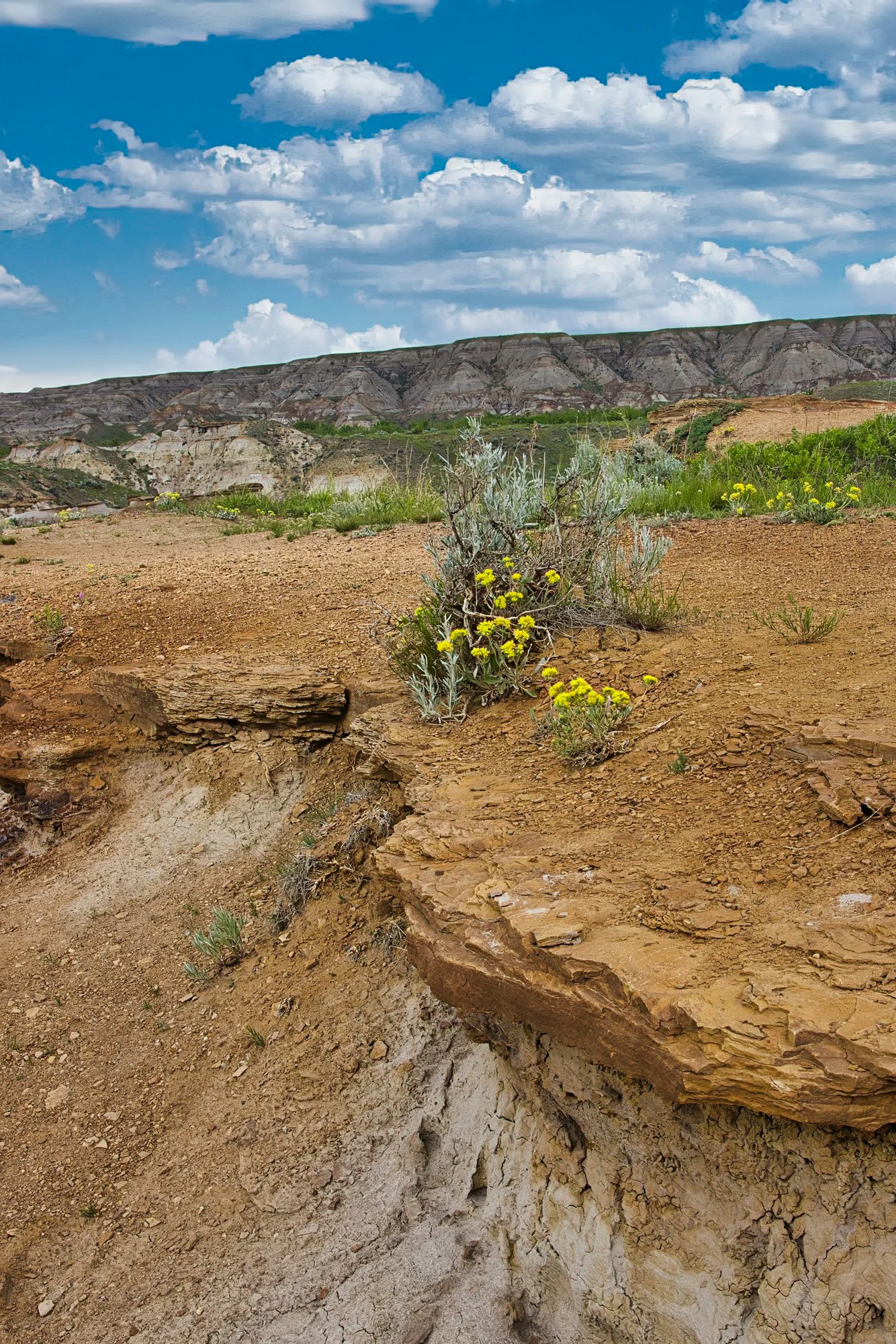
This is the view from Fossil Display 1 with yellow Bitter Sneezeweed flowers in the foreground.
Fossil Display 2
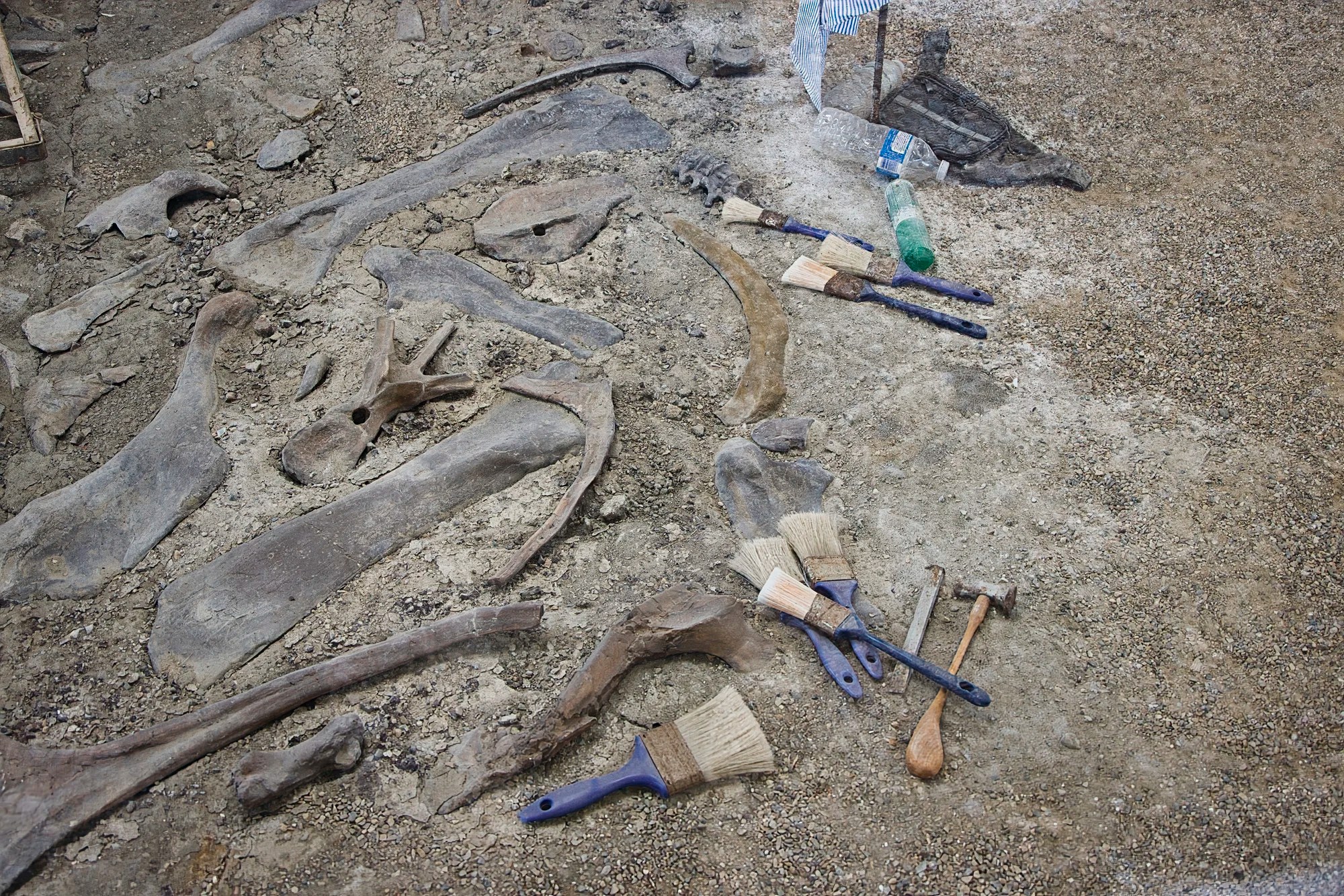
This is a display about paleontology, the painstaking removal of rock and soil to extract fossils without damaging them. This is a fossil of a Centrosaurus, a horned dinosaur. The first Centrosaurus remains were discovered in DPP and named by paleontologist Lawrence Lambe. This 1977 excavation is historically significant as it was the first evidence that horned dinosaurs moved as a large herd.
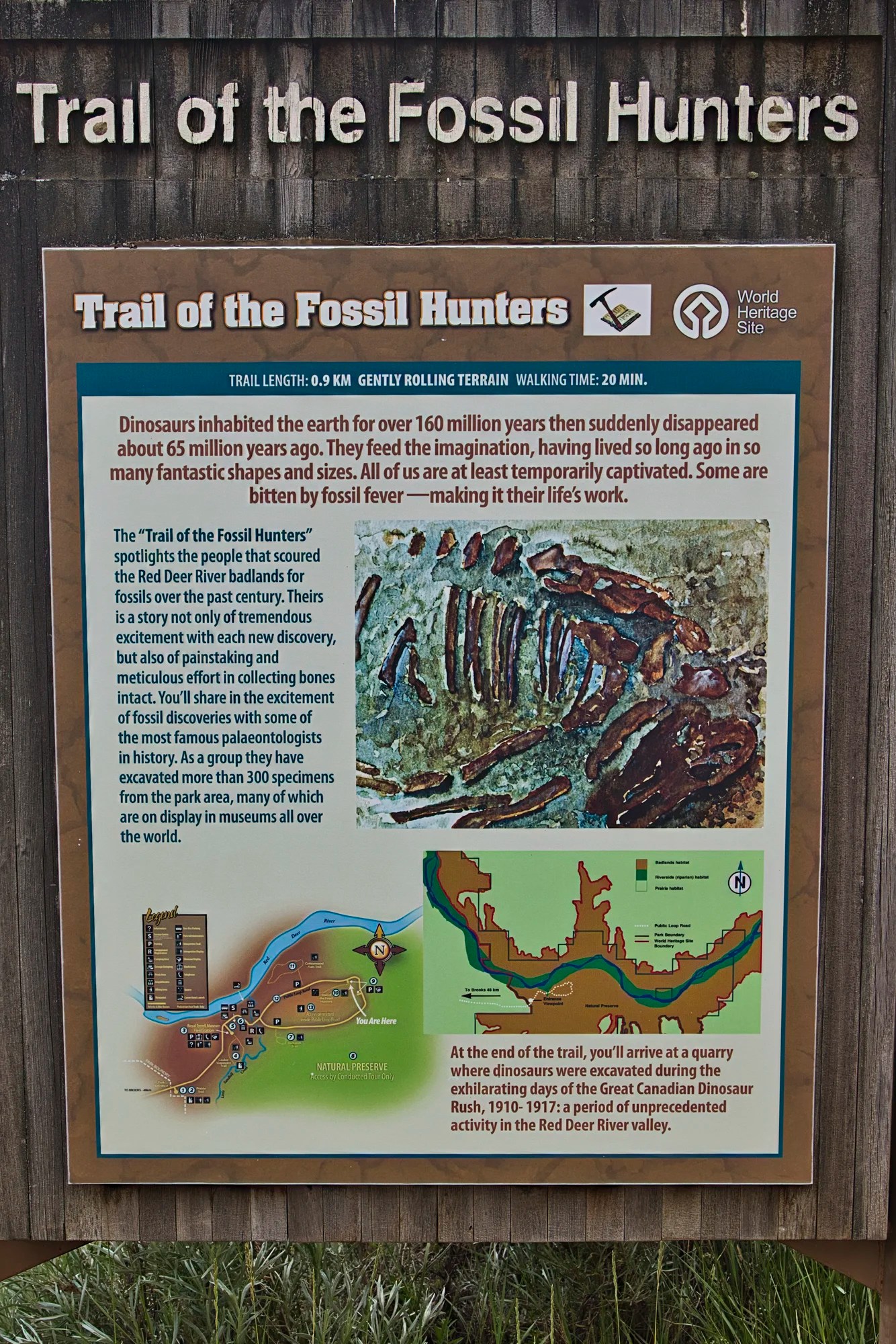
Trail of the Fossil Hunters
Length: 0.9 km
Walking Time: 20 mins.
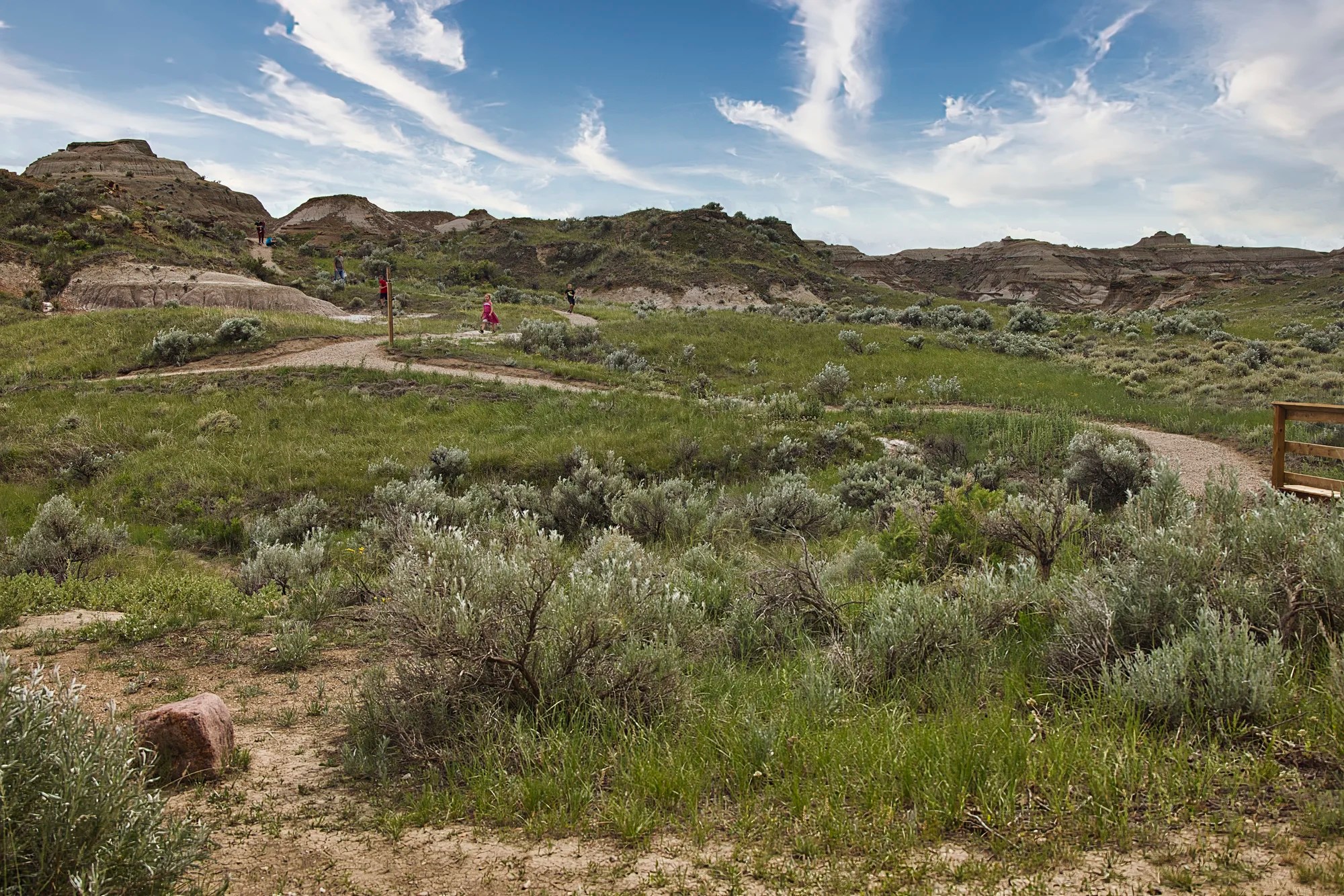
This trail leads to a quarry where fossils were extracted during the Great Canadian Bone Rush, 1910-1925.
This was not the ruthless fossil hunting and theft of the Bone Wars in the United States. In Canada, this was a friendly rivalry between the three top paleontologists who came to Dinosaur PP.
Barnum Brown explored 1910 to 1915 and discovered the first remains of Tyrannosaurus Rex. Charles Sternberg prospected 1911–17 and interestingly, immigrated to Canada.
A third paleontologist was Canadian Lawrence Lambe, who discovered several hadrosaurs, such as the Edmontosaurus, named after the city of Edmonton. Lambeosaurus is a genus of hadrosaur named after Lawrence Lambe.
Some of the dinosaur species that roamed DPP were:
- Ankylosaurus
- “Duckbilled” Hadrosaurs
- Iguanodon
- Spinosaurus
- Triceratops
- Tyrannosaurus Rex
- Albertosaurus, a smaller species of Tyrannosaurus
The Tyrannosaurus Rex was, in fact, one of the last non-aviary dinosaurs to roam before the Mass Extinction Event (MEE) that ended the Cretaceous Period.
Cottonwood Trail
Length: 1.4 km
Walking Time: 1 hour
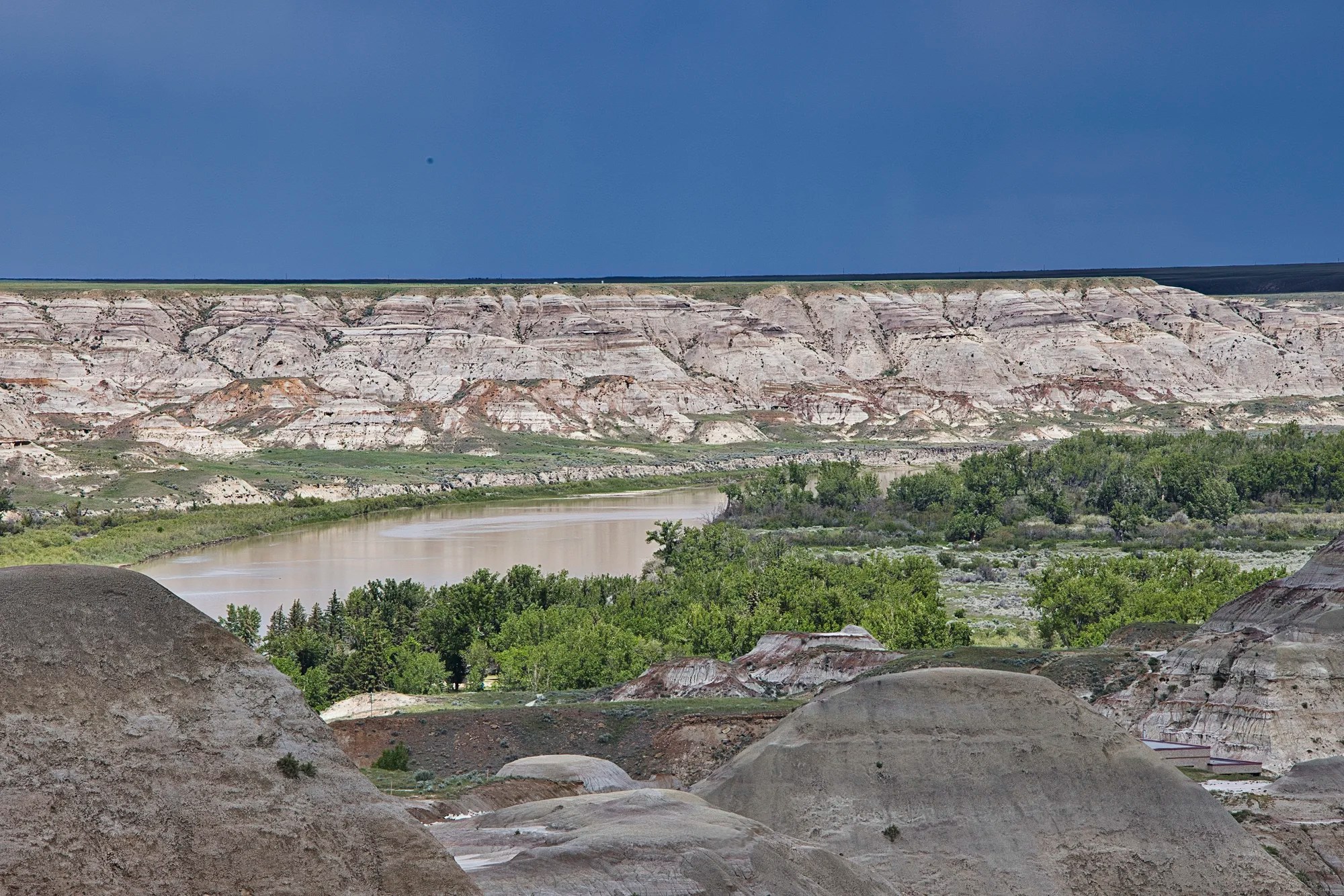
DPP protects 26 km of the Red Deer River. This trail explores the riparian (riverside) habitat near the river. Unlike the Badlands, the river enables flowers and tall trees. This in turn provides habitat for birds and humans (campgrounds). the 165 different kinds of birds.
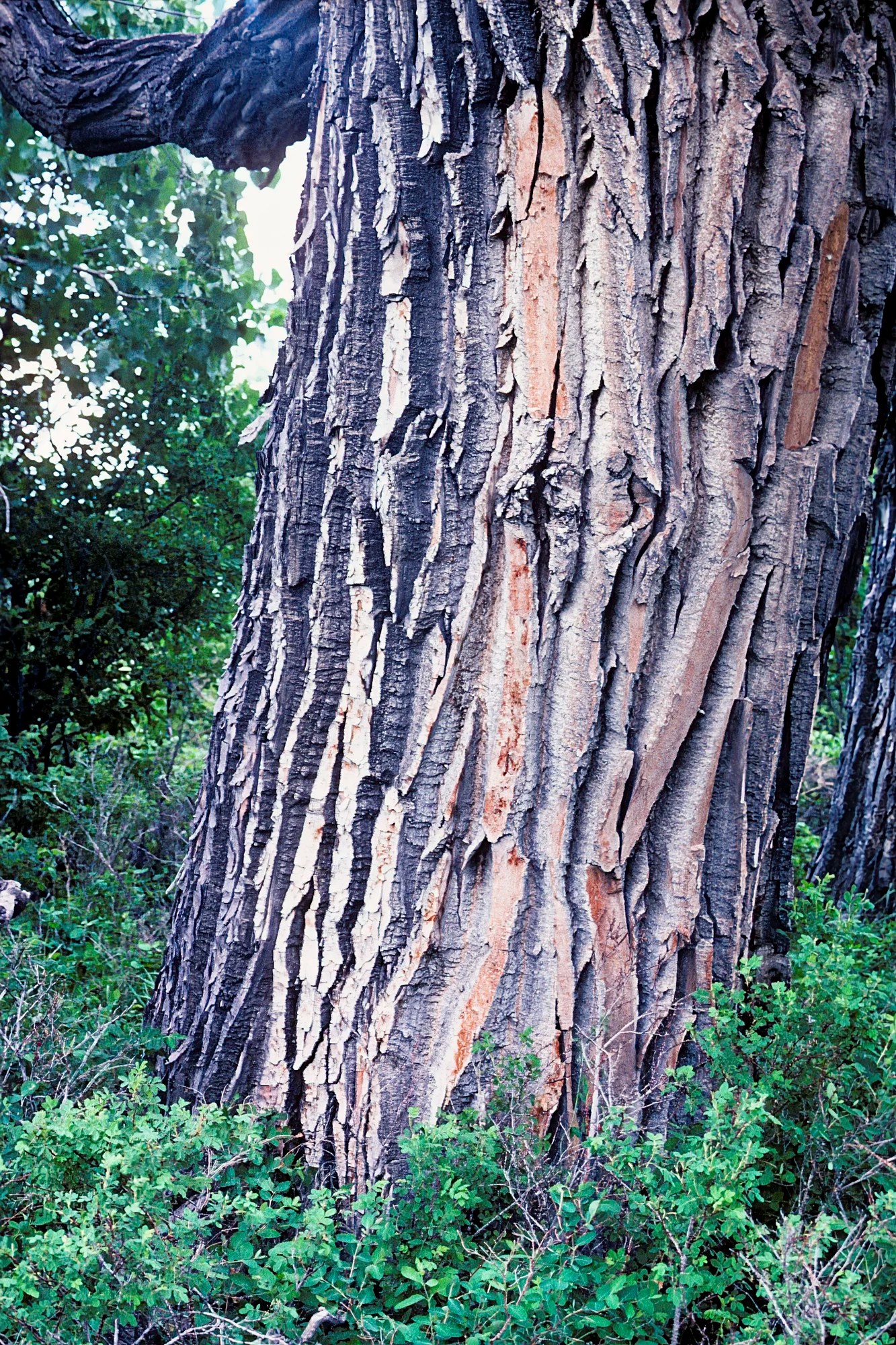
Cottonwood trees not only have a large girth with deep grooves but they grow 30 m (100 ft) tall. They give shade to the campground area. There are two other interesting facts. They are one of the fastest growing trees in North America. There are male and female trees!
Visitor Centre
Visit the visitor center to see an impressive display of dinosaur bones and fossils, as well as educational exhibits on ancient environments and ecosystems. We were blown away by the amount of detail and the abundance of things to learn in a fun and interactive way. The Dinosaur Provincial Park Visitor Centre features an impressive display of dinosaur bones and fossils
Dinosaur Provincial Park Viewpoint
Unfortunately, all good things must end. It was 17:00 hrs. and we still had to drive 220.5 km (2:20 hrs.) to get to Calgary. So we returned to the viewpoint to bid DPP farewell.
Wildflowers
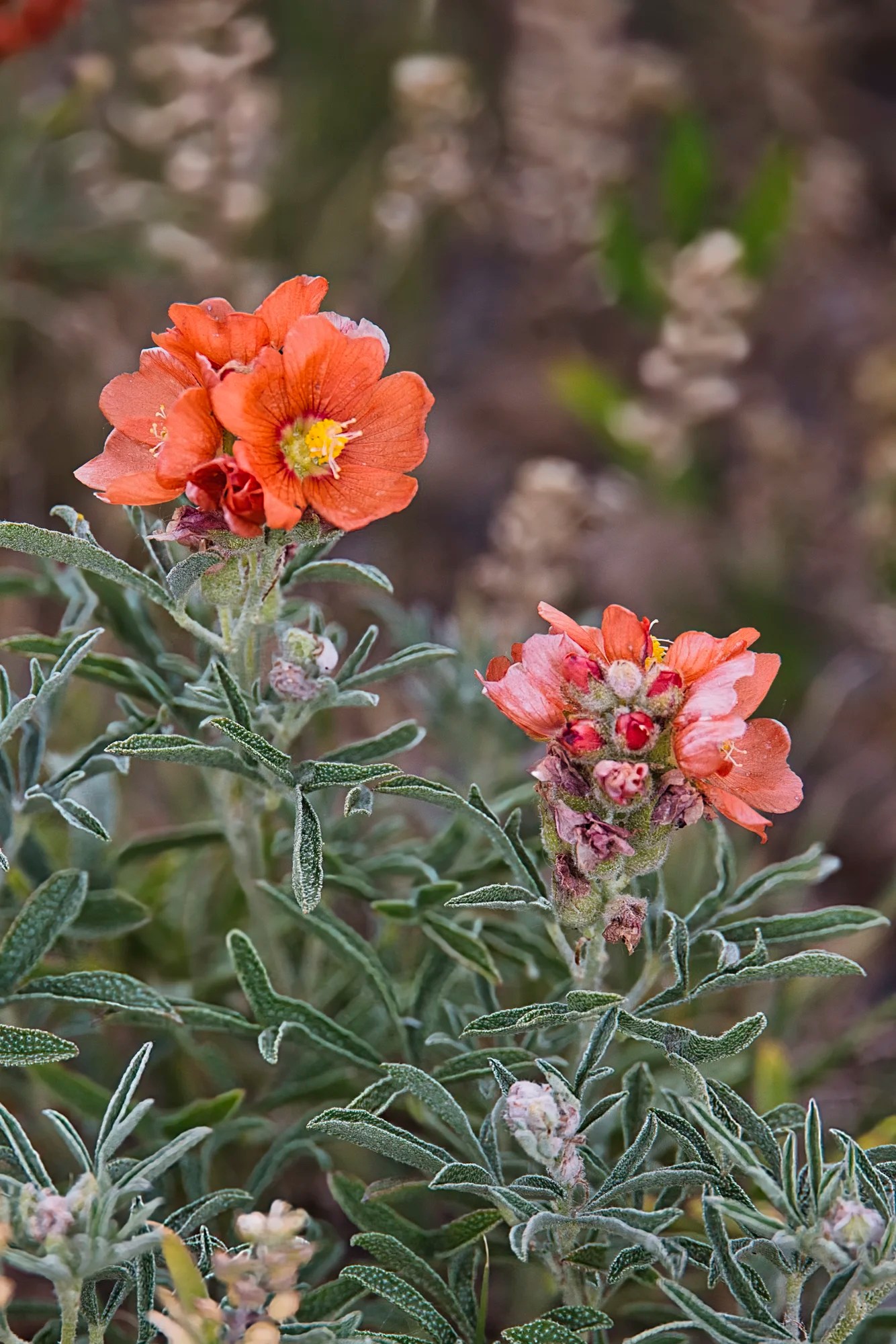
We found the Scarlet Globemallow (Sphaeralcea coccinea) flowers at the edge of the viewpoint. The vegetation today is suited to a much drier climate. This species is native to dry grasslands, prairies, and badlands. It was mashed by the Blackfoot nation and applied to wounds and burns.
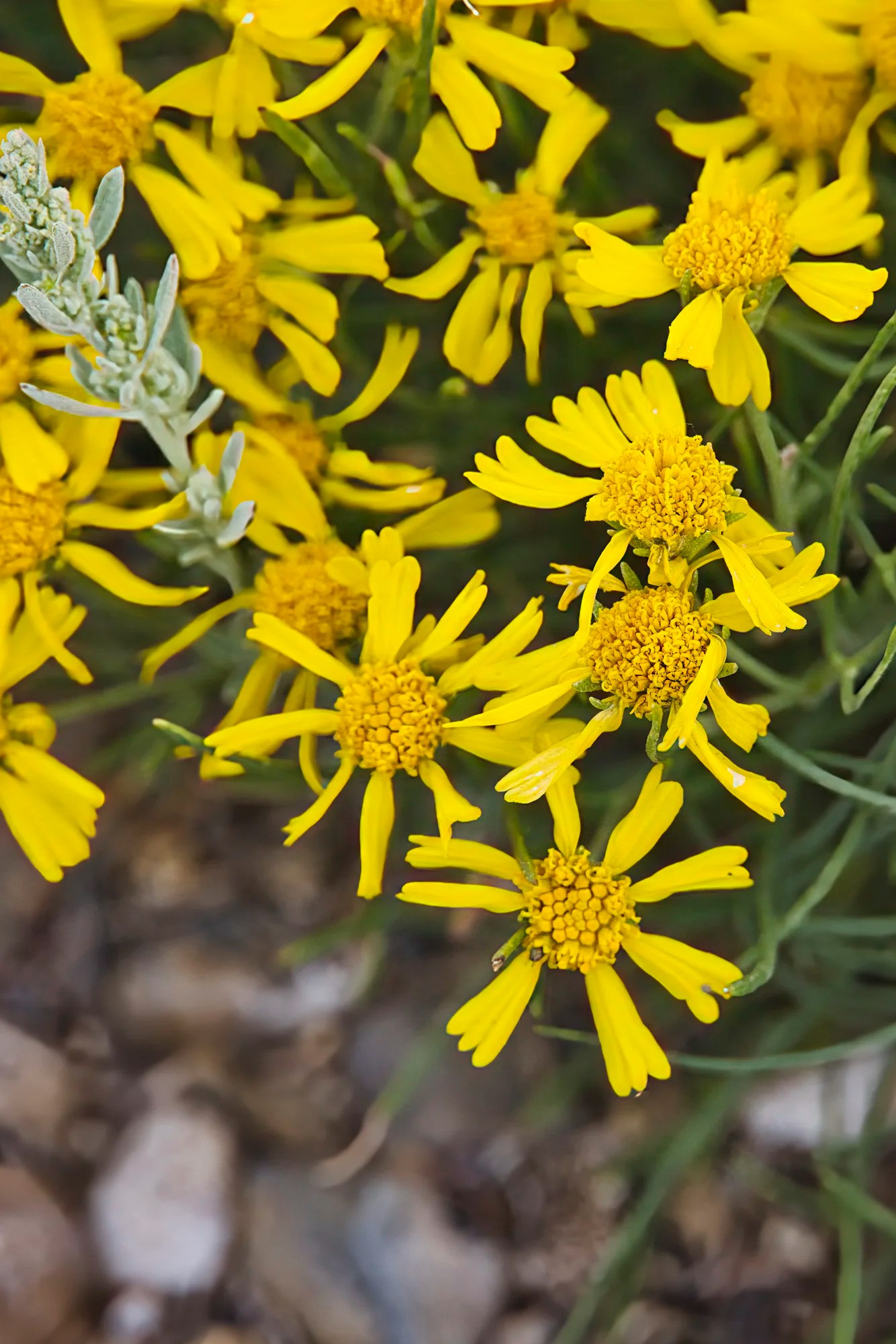
Bitter Sneezeweed (Helenium amarum) is a member of the Aster family.
What is most significant is that the late Cretaceous Era was the first appearance of flowering plants. This was helped by the simultaneous evolution of pollinating insects like bees. These species survived the Cretaceous Mass Extinction Event (MEE), which wiped out about 75% of all animal species.
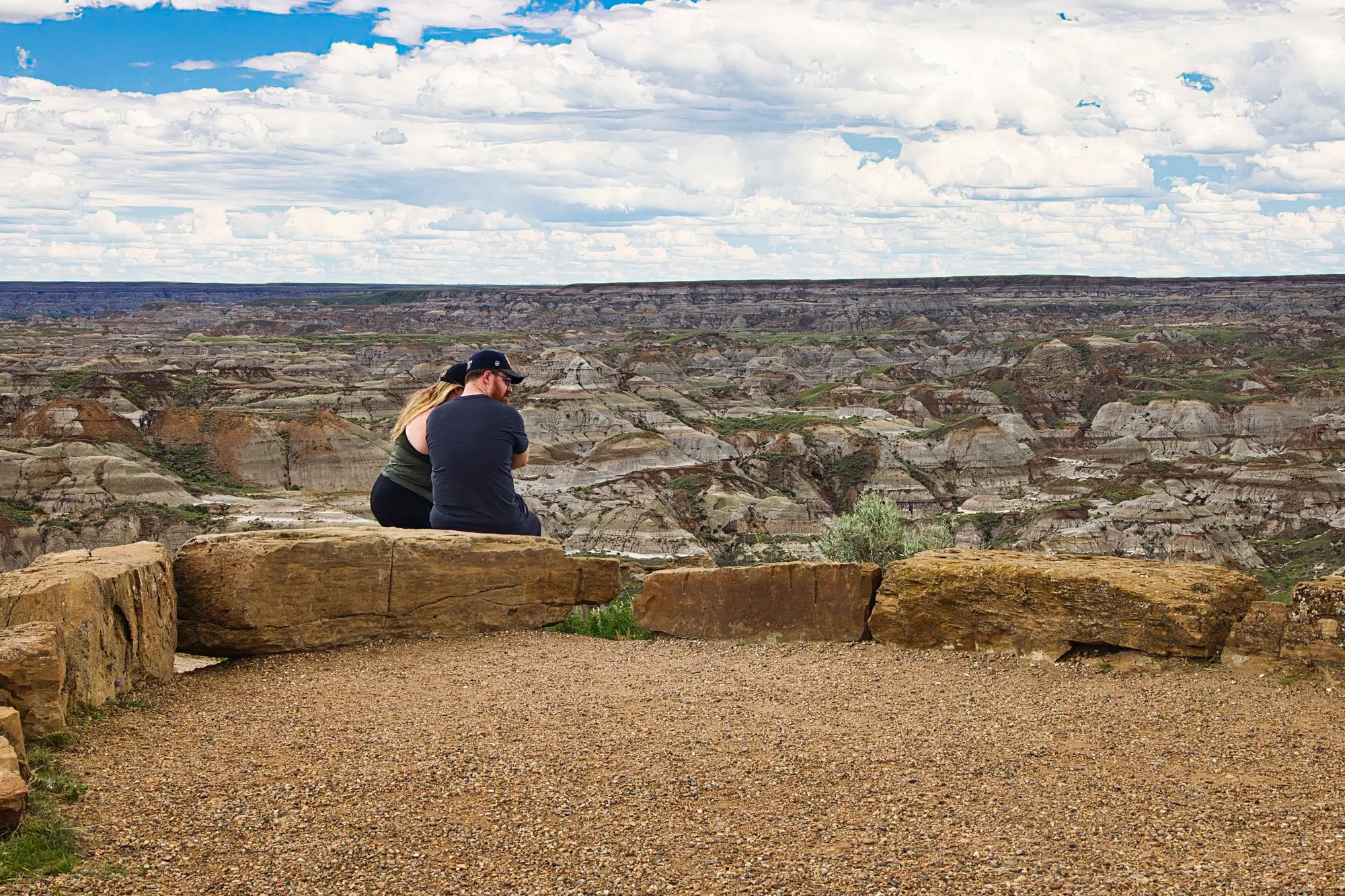
Before leaving, it is worth coming back to the viewpoint to contemplate the significance of this place.
What is a Mass Extinction Event?
The current theory about the Cretaceous MEE is that a 12 km (7.5 mi) wide asteroid, travelling at about 43,000 kph (27,000 mph), hit the Yucatán Peninsula. It created the Chicxulub crater 180 km (110 mi) in diameter, about 364 times the size of DPP. This triggered a 10-magnitude earthquake. A <= 250 m (820 ft) high tsunami wiped out the flat, shallow shoreline. Vaporized rock sent about 435 gigatons of carbon dioxide and dust into the air for months.
Other scientists hypothesize that massive volcanic eruptions were also responsible for the MEE, as MEEs had happened four times before the Cretaceous MEE. It just so happens that the Rocky Mountain creation, accompanied by massive volcanic eruptions 66 million years ago, coincides with the end of the dinosaur era.
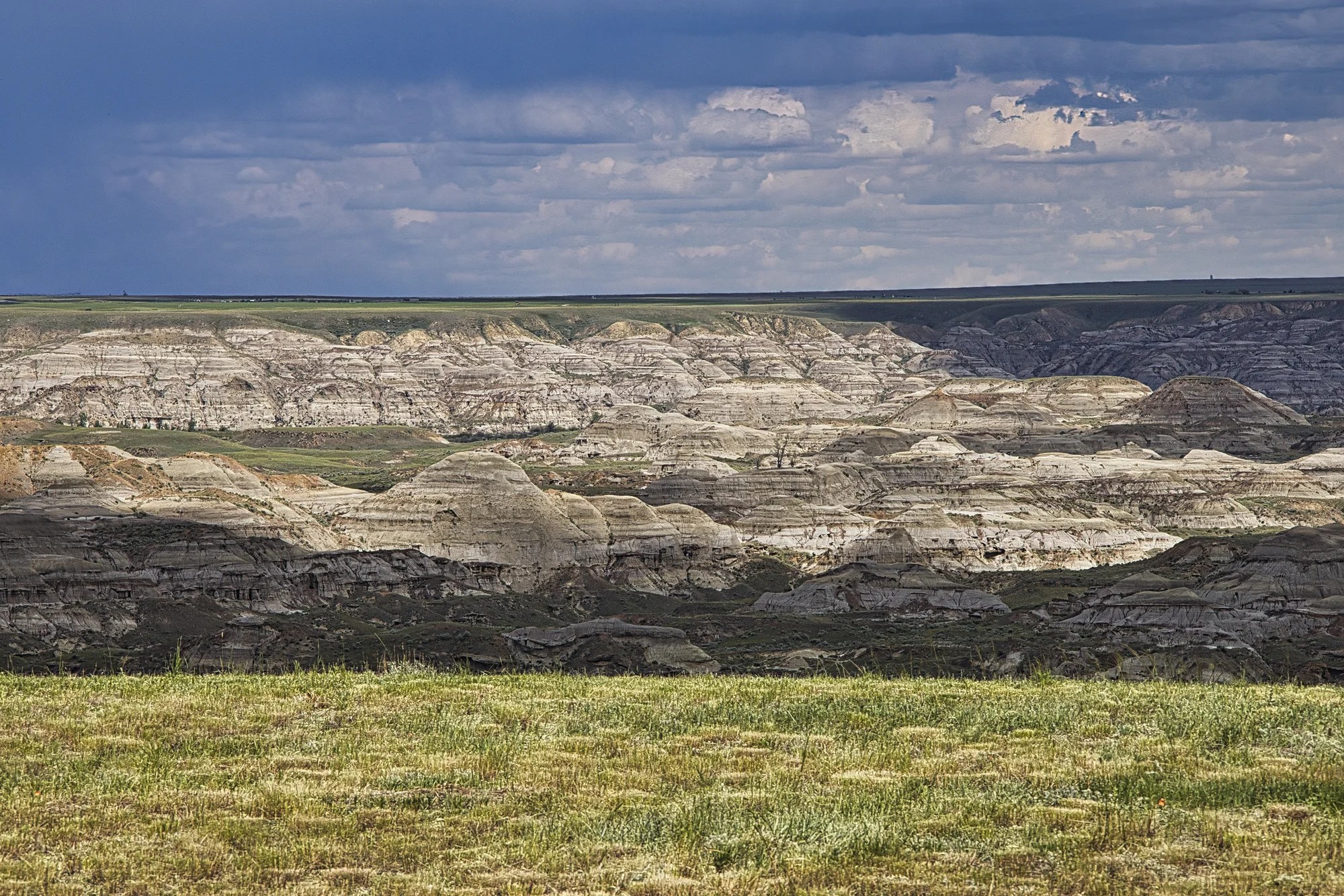
The dust would have drastically lowered global temperatures from a subtropical 27°C (81°F) to a measly 5°C (41°F). The newly frigid climate and reduced sunlight would have killed the ancient tropical vegetation.
The dinosaur diet focused on tropical ferns, cycads, ginkgos, and conifers. If the MEE wiped out plants, then that would have depleted plant-eating dinosaurs, which in turn would have depleted meat-eating dinosaurs. About 75% of all plants and animals went extinct.
Information Sources
Cretaceous period: Animals, plants and extinction event
Massive Volcanic Eruptions 66 Million Years Ago Happened Almost Exactly When the Dinosaurs Died Off
What to See or Do?
We do not recommend the drive-by view of DPP that we just did. But we have been to DPP many times when we lived in Alberta. You really need to participate in the interpretive program to understand and appreciate the dinosaurs.
Free Programs
Several programs and activities are given for free, including activities geared to kids:
- John Ware’s Cabin
- Interpretive Talks
- Dark Sky Talk and other evening programs
- Films
- Dino Trivia
Dinosaur PP Hiking Tours
There are a few interpretive programs that bring you to a bone bed. These walks are a must-do. You do not realize how much your inner self wants to find a fossil. There are six guided hikes (costs for adults and children) you can book:
- Golden Hour Wander $30 $18 2 hrs for photographers
- Family Dino Stomp $25, $16 2.25 hrs easy
- Bonebed Express Hike $25, $16 2.25 hrs moderate
- Fossil Finders Hike $30, $18 2.25 hrs moderate
- Centrosaurus Bonebed Hike $30, $18 3 hrs moderate
- Great Badlands Hike $35, $20 4 hrs difficult
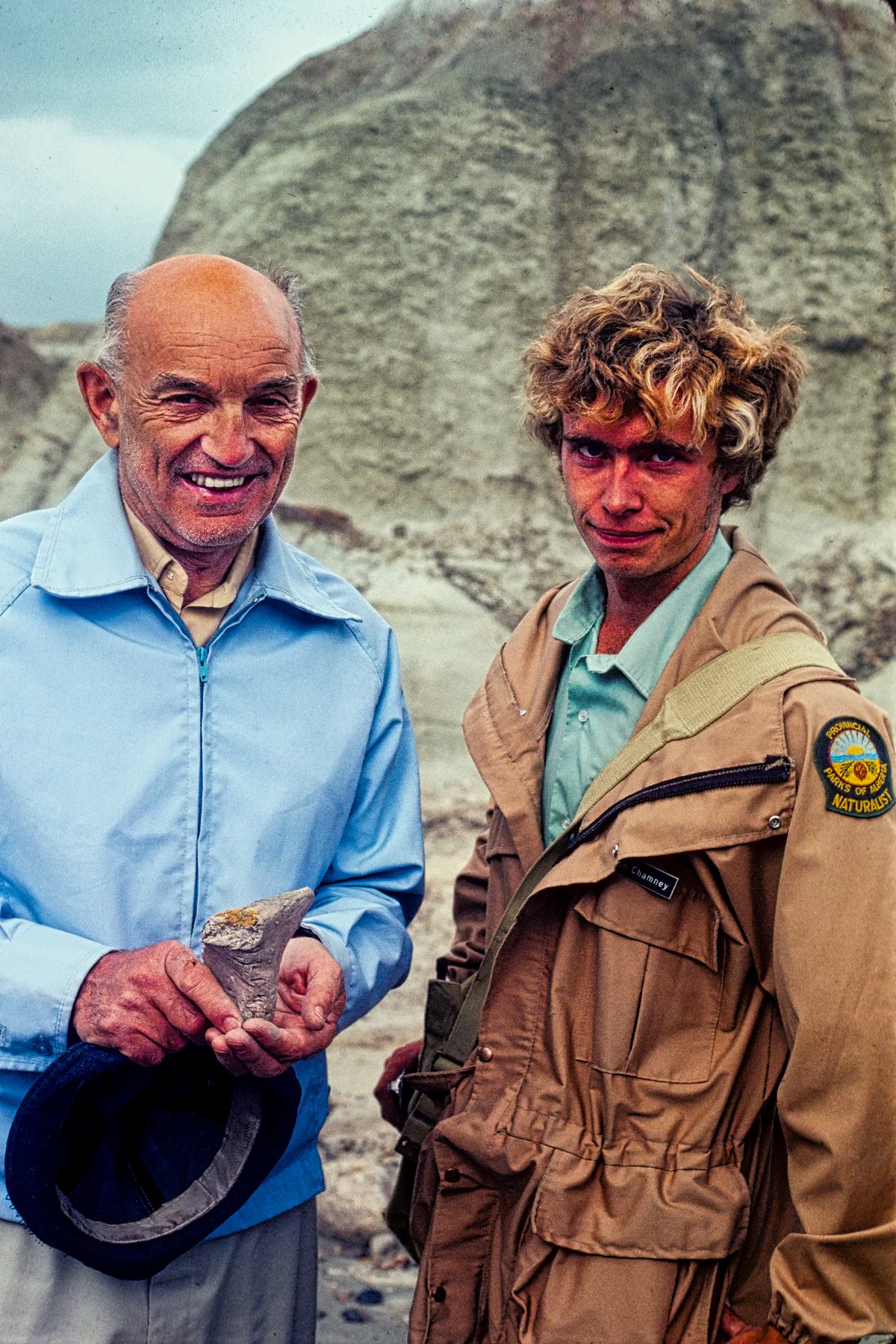
We visited DPP so many times, but we never found anything significant — only some bone fragments and fossilized wood. We brought my father-in-law once, and he found the base of a horned dinosaur! No, you cannot keep any fossil found anywhere in DPP. That is verboten. But you do get a certificate and, if significant, the fossil goes into the museum. Not bad for the ego!
Dinosaur PP Bus Tours
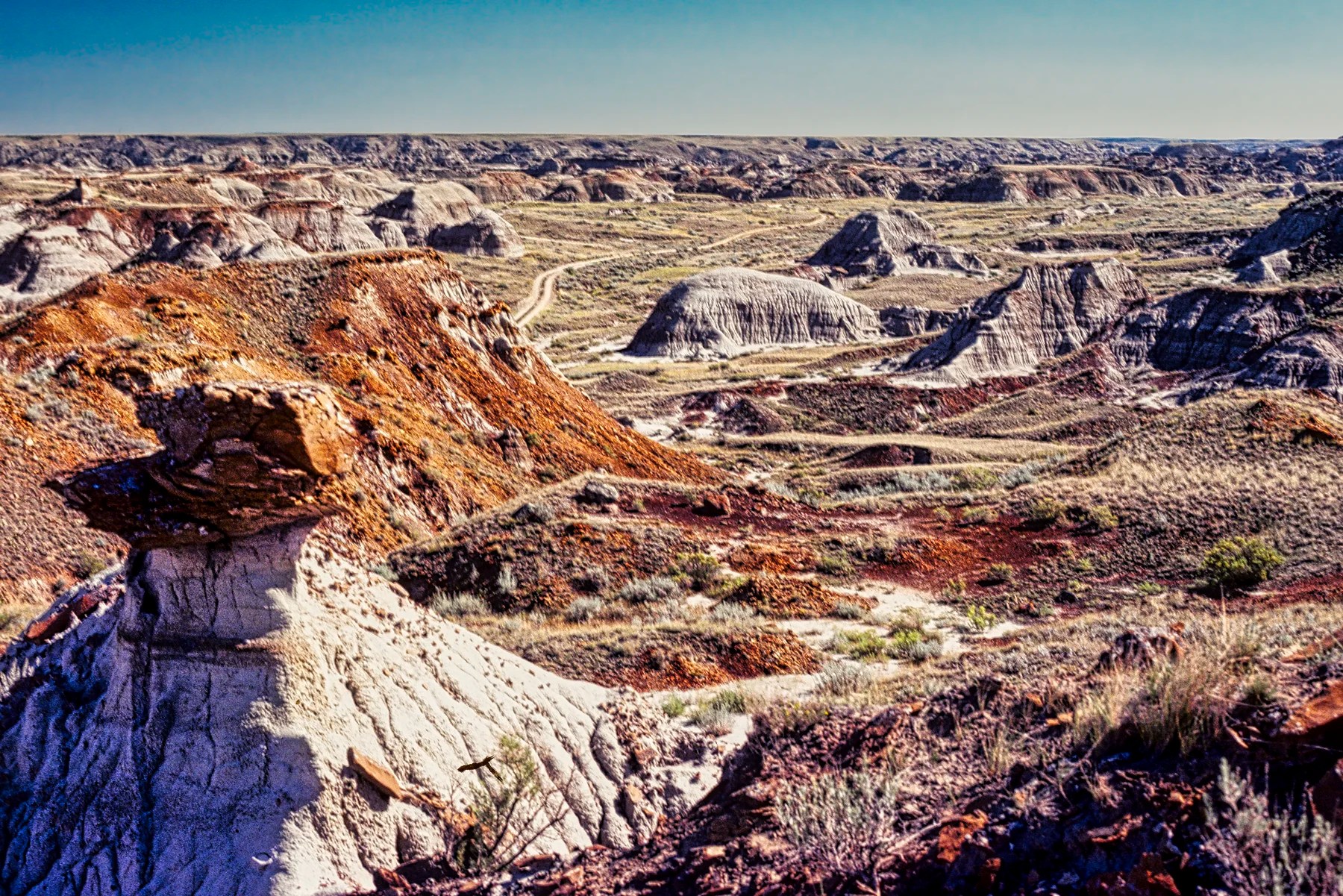
There are three bus tours you can book:
- Bare Bones Bus Tour $18, $12 1.25 hrs.
- Capture the Badlands $30, $18 2 hrs. in early morning or late evening for softer lighting geared to photographers
- Explorer’s Bus Tour $25, $16 2 hrs.
There are many more guided tours than when we lived in Alberta. But there are also a lot more tourists, and you must book them in advance during peak season.
The interpretive tours are only available between May 09 and October 29. Tours given vary by day. Some events are only on weekends. For the latest information and schedule, see the official Dinosaur Tours & Events.
Explorer’s Bus Tour
The tour we loved used a minivan to travel through the restricted area. Today it is called the Explorer’s Bus Tour. It was quiet and peaceful travelling the dirt road in total wilderness.
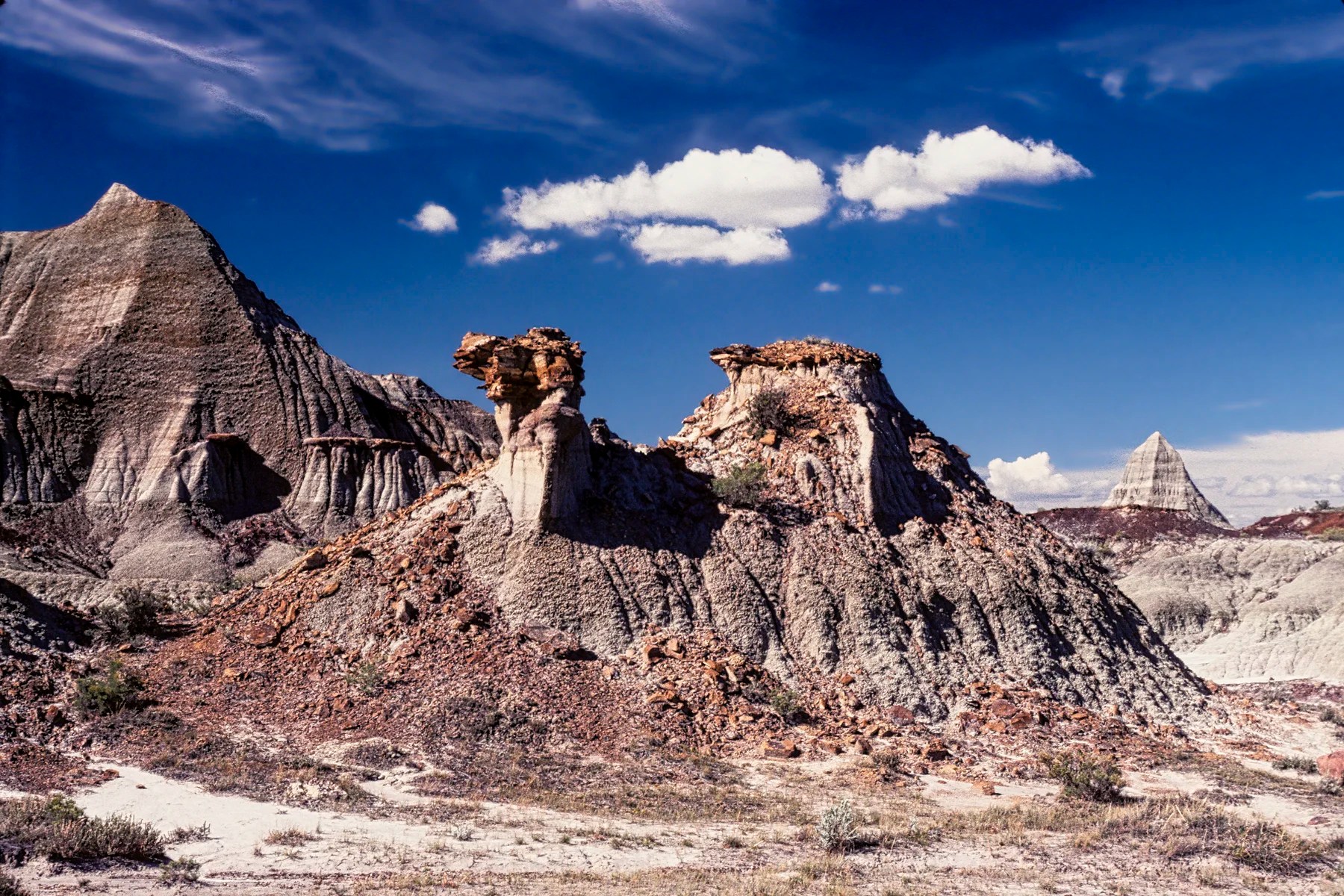
Our interpreters, besides being educational, were very funny. They told us to look out for Fred the camel and Fred the pyramid.
Final Comments on this Itinerary
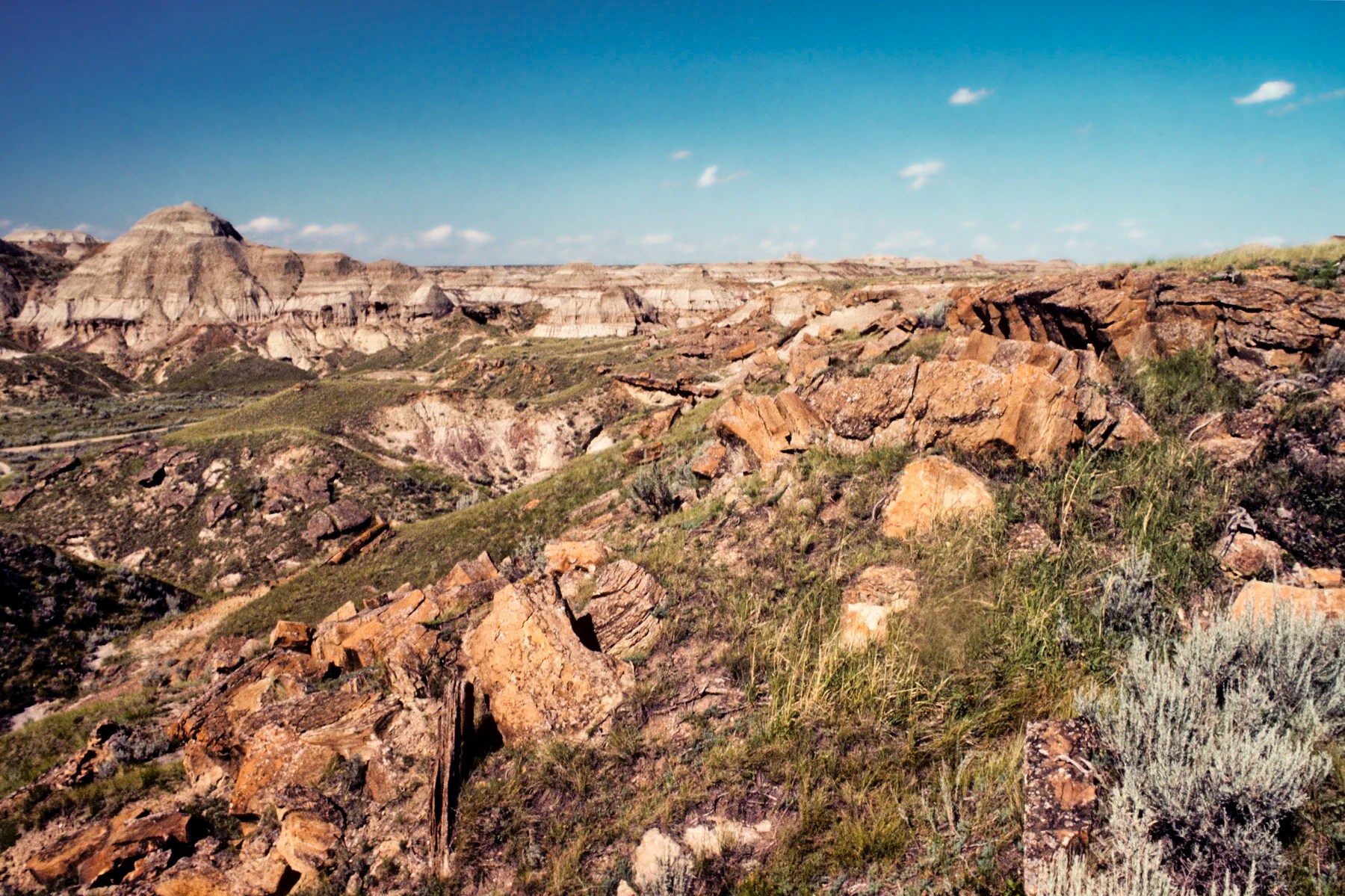
This is a relaxing itinerary where you can get away from the crowds of tourists. What a difference compared to the overcrowded Banff the town and Louise the Lake in Banff NP. Dinosaur PP has not been spoiled. Nor does it look different other than the increased facilities.
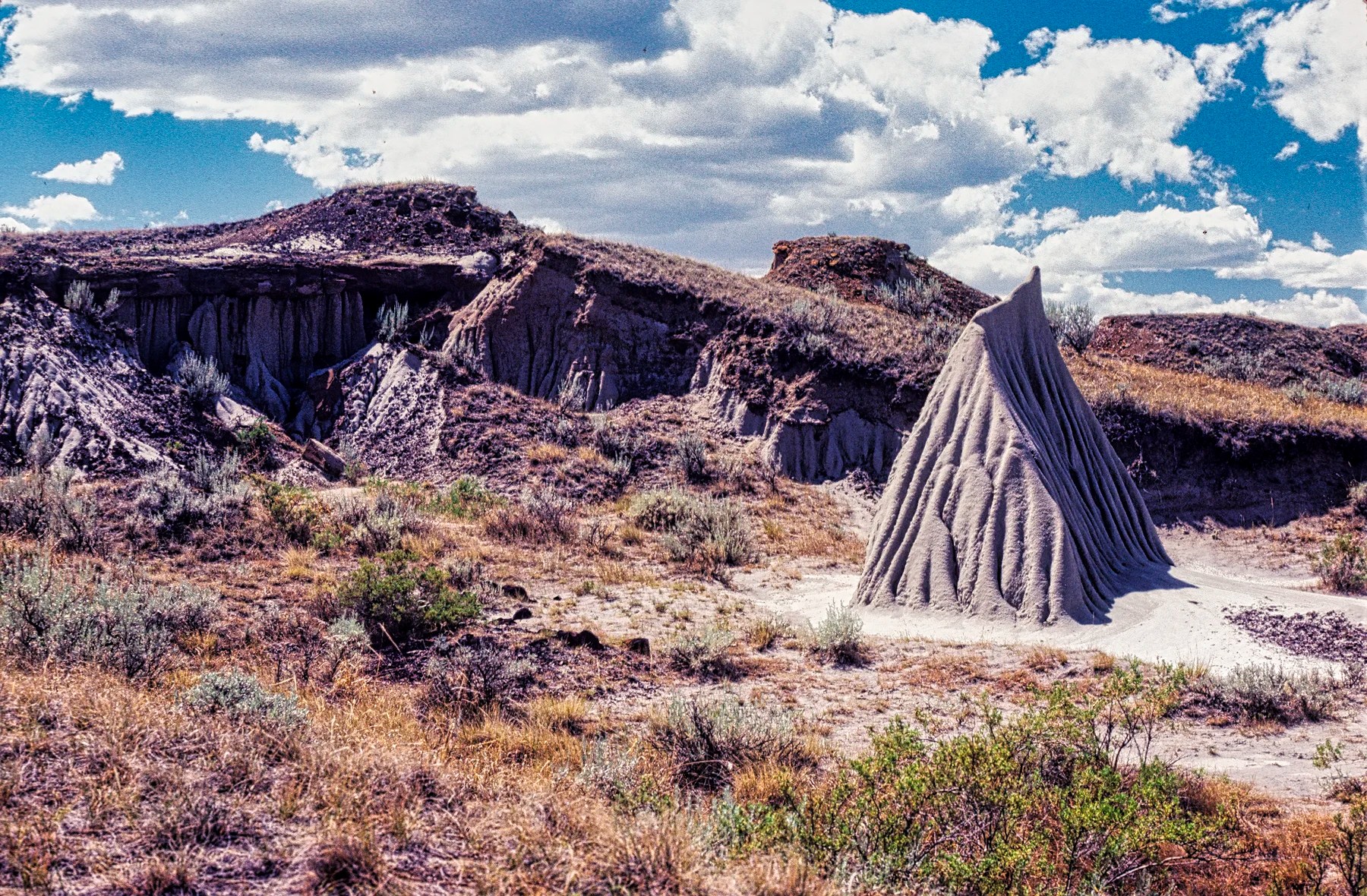
Hikers and photographers can enjoy the many trails in the Loop Road area, such as the Badlands Trail, Trail of the Fossil Hunters, and the Cottonwood Trail. Don’t miss the viewpoints of the overall canyon and the Red Deer River.
Young kids are fascinated by dinosaurs. Families with children should take advantage of the many child-centred interpretive programs and tours. They will be more excited by seeing actual fossils at the fossil displays in the park.
Subscribe
Get travel tips and advice delivered directly to your inbox. The best part is that it is free.
What things in this post fascinate you? What questions do you have? What experiences would you like to share? What tips for visiting the park would you like to suggest?
Itinerary Map & Resources
Alberta Itinerary Map – our custom Google map
Dinosaur Provincial Park Map – our custom Google map
Dinosaur PP Map – official park map download
Dinosaur PP Trail Map – official park hiking map
The park’s home page is at Dinosaur PP.
Cretaceous Period: animals, plants and extinction event, Michael Dhar, Live Science, 2022-07-26
How Do Fossils Form?, Joseph Castro, Live Science, 2015-09-21
Massive Volcanic Eruptions 66 Million Years Ago Happened Almost Exactly When the Dinosaurs Died Off, Evan Gough, Universe Today, 2019-02-25
Google Maps Ratings
Google Maps provides a rating from 0 to 5 for all sights, hotels and restaurants (but not cities). All of our recommendations are appended with the rating (prefixed with a G) from Google Maps. As it is based on feedback from tourists and locals, it is much more reliable than travel booking websites. We consider a score of 4 to 4.39 to be Very Good; 4.4 to 5 to be Excellent.
DPP Fees and Hours
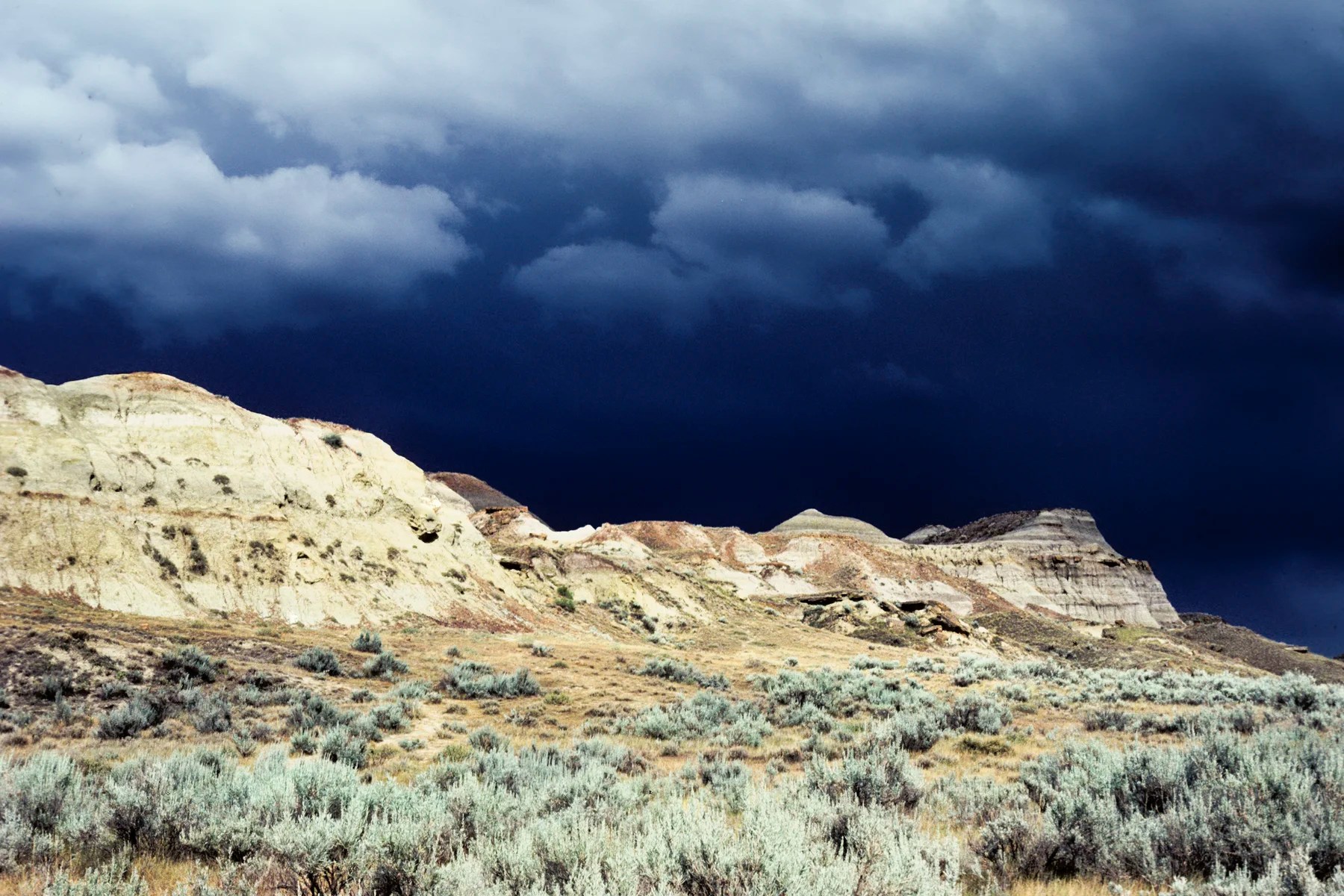
Entry Fee: You can drive around for free! There are fees for the interpretive programs.
Open: year-round
How to Get There?
From Calgary, drive 187 km (1:51 hrs) east on Highway 1 to Brooks and exit north. Drive 45 km (0:30 hrs) north on Highways AB-873, AB-544 and PR-130 to get to Dinosaur Provincial Park (DPP) viewpoint.
On our last trip we left DPP at 17:00 hrs and drove 220.5 km (2:20 hrs.) to get to Costco Gas in Calgary Belvedere. It was another 25 minutes to our hotel in west central Calgary.
How Long Should You Visit?
For our drive-by visit we spent only 3 hours. But for a full experience you need at least two full days (i.e. 3 nights).
Where to Stay?
Dinosaur Provincial Park Camping
Camping Fee: Unserviced 29 sites @ $31; Serviced 92 sites @ $39
Online Booking Season: Apr 19 – Oct 31
Campground Map: DPP Campground Map
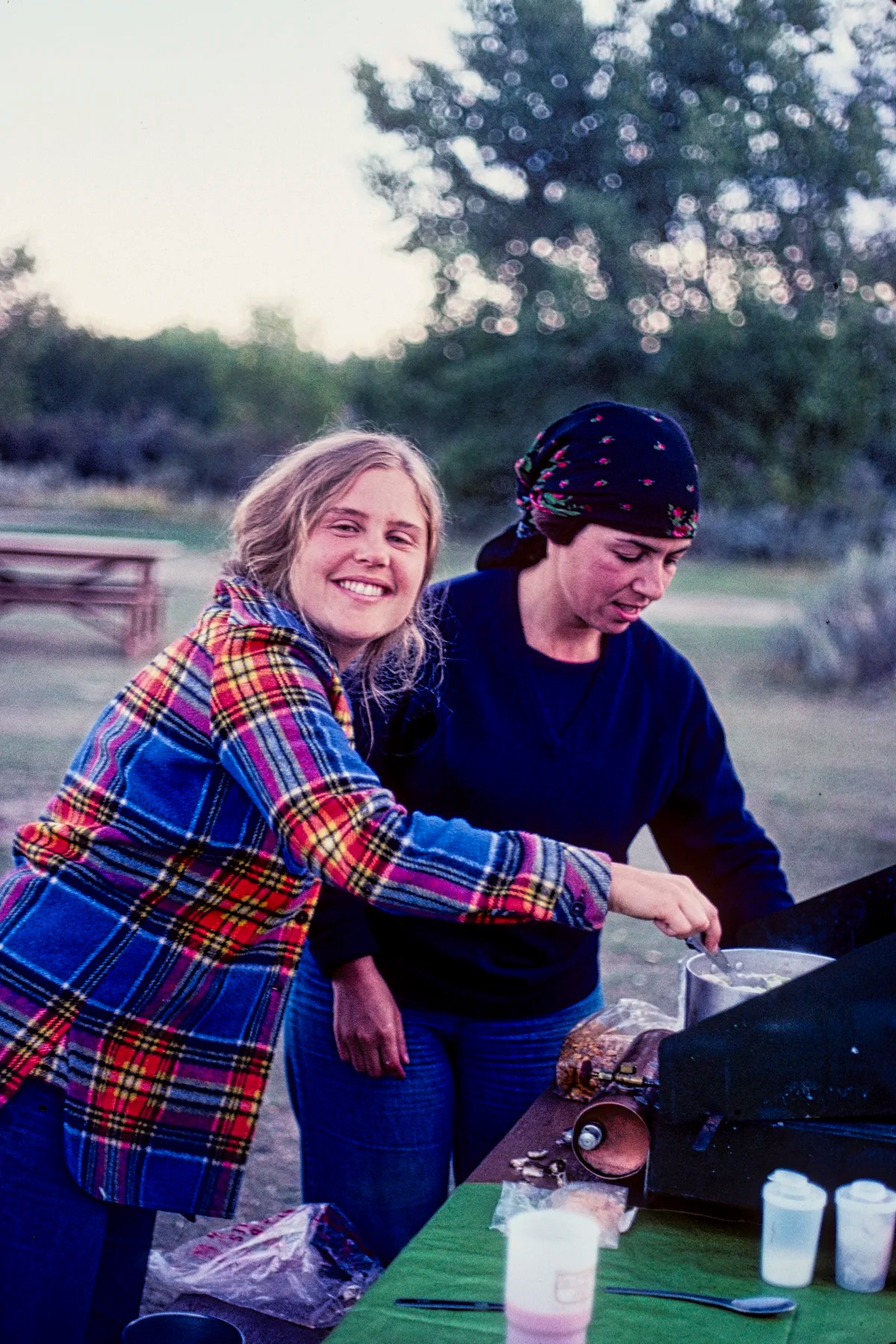
It’s great to stay right inside DPP for ca. 2 or 3 days, but you need to camp. When we came on June 20th on our last trip, there were still sites available at 17:00 hrs. However, July and August are quite busy and sites need to be booked well in advance, especially for weekends and holidays, which should be avoided. Otherwise, you can stay at a motel in Brooks and commute 45 km northeast to DPP.
Where to Eat?
There are no supermarkets nearby so you need to bring food and a cooler if you are camping. There is one Cretaceous Café for standard fare. You stop at the Café to check in for the campground.
When to Visit?
The park is open year-round, but you really want to go on the amazing guided tours, which means May to October is the best time. Avoid weekends and holidays when the locals come.
Dinosaur PP Weather
The Winter (Nov-Mar) is cold and should be avoided. April and October may also have some snow.
| Season | Mean High Temp | mm Rain per Month |
|---|---|---|
| Nov-Mar | -0.8°C 30.6°F | 37.2 (snow) |
| Apr-May | 13.8°C 56.8°F | 52.0 (some snow) |
| Jun-Sep | 24.8°C 76.6°F | 53.8 |
| Oct | 14.0°C 57.2°F | 25.0 (some snow) |
The mean annual precipitation is 406 mm (16 in). A true desert gets under 260 mm (10 in).
Other Places to Add to Your Itinerary
Here are nearby places you might want to explore:
Drumheller
If you want to see full skeletons found in DPP, then you can head to Drumheller. The must-see is the Royal Tyrrell Museum (G4.8), where many fossil specimens are displayed. This excellent museum is named after Joseph Tyrrell, who found the first fossil in the Red Deer Valley. You could spend a day here. Admission fee is $21, and between May 15 to August 31, the museum is open seven days a week, 09:00 – 21:00.
Dinosaur PP to Drumheller
Do not try to do Dinosaur PP on the same day as Drumheller. They are linked by slow regional roads, and it will take 176 km (2 hrs.) one way. From the DPP Viewpoint:
- Go south towards Patricia, but continue west to Hwy 876.
- Head north, then turn west on Cut Across Road.
- Turn north on Hwy 36.
- Turn west on Hwy 573 to the Willow Creek Hoodoos.
- Continue west on Hwy 56 to Drumheller.
Canadian Rockies
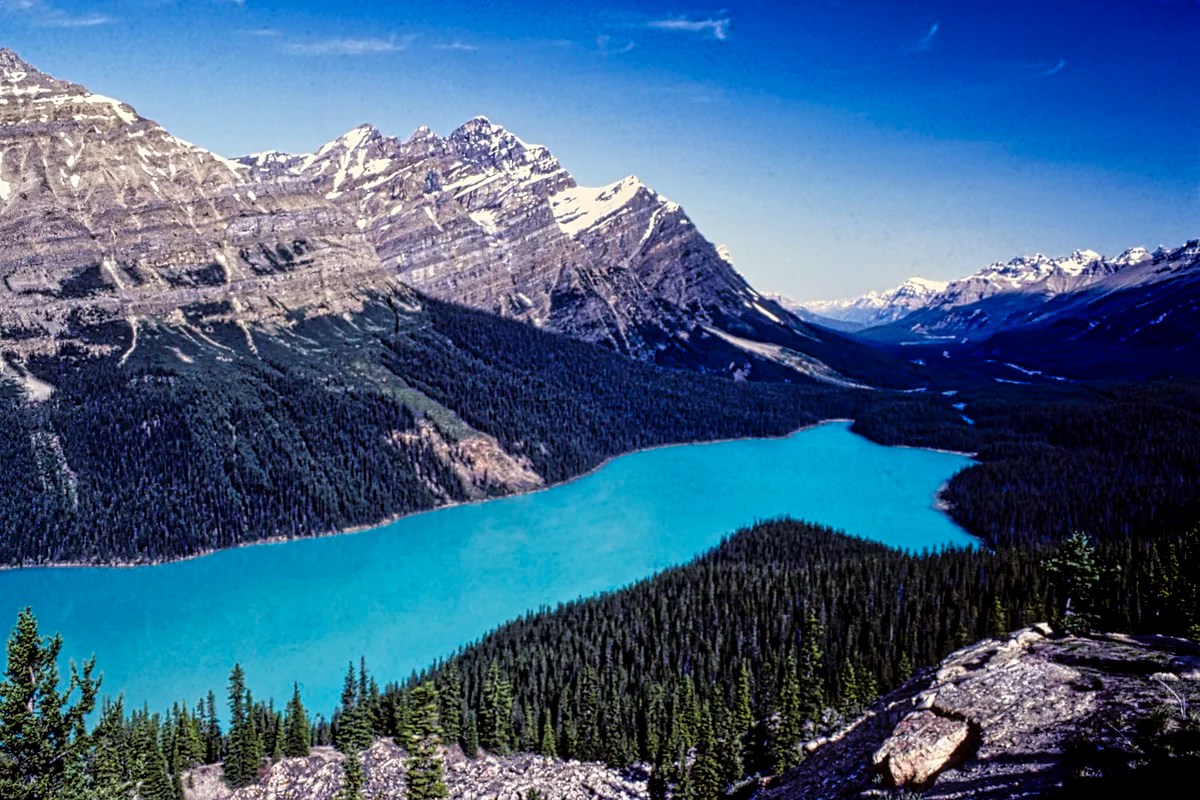
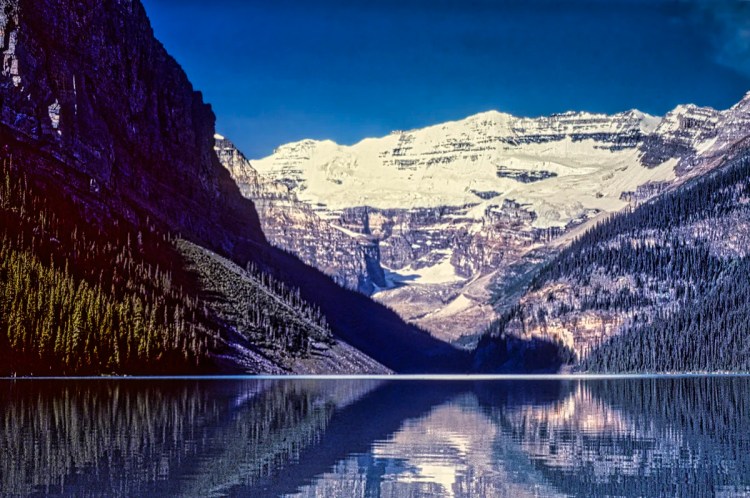
Drive west to Banff, 310 km (3 hrs) away.
Trans-Canada Itinerary
Make Dinosaur Provincial Park a part of your Trans-Canada Itinerary.
Canada FAQ

The Exploring Canada post answers Frequently Asked Questions (FAQ) such as:
- How do you plan a trip to Canada?
- How safe is Canada?
- What is the best season for travel?
- Can I see everything in 2 or 3 weeks?
- What are the best places to see in Canada?
 Terra Encounters
Leave a comment