
Winter Trip to Saint Lucia
Where are you planning to go to escape the cold? Which Caribbean Island is the best choice? So many ads and blogs push the most visited islands. But we suggest a better alternative, Saint Lucia.
Author & Photographer: George Mitchell
Our recommendations are not influenced by affiliate links – we have none. Our content and advice is derived from our personal expertise, experience, and knowledge based on travelling and living 23 years around the world. All the places recommended in this post are pinned on our Saint Lucia Map. The place names are appended with the Google Maps Rating (G0 to G5).
South and East Saint Lucia
Almost everyone has been to the south of St. Lucia because that is where the Hewanorra Airport is located. But I wonder how many people have actually seen the south or east of the island. If you want an unvarnished experience this is the area for you. This is where you can hike in the rain forest that covers 70% of the island. This is where you can go birding — which is why our avid birder son chose to visit Saint Lucia. This is where you can enjoy flowers and plants — see the Mamiku Botanical Gardens. section below. BTW, Saint Lucia has once again been bestowed the coveted title of the World’s Leading Honeymoon Destination.
Beaches
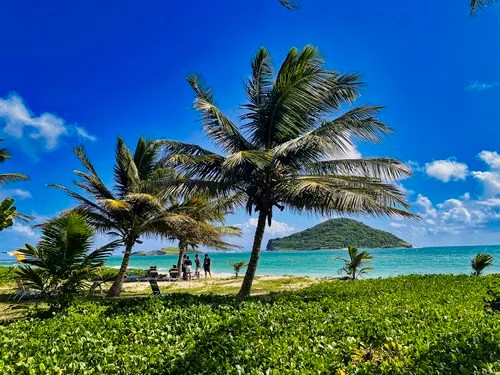
There are some beaches on the southeast side but very little is said about them. Most tourists go to the myriad of resorts in the north and west. We saw only a couple of beaches at Vieux Fort (airport) and Dennery; but the road often travels inland and there may be “private” beaches at resorts along the coast. Grand Anse Beach in the northeast requires a long hike.
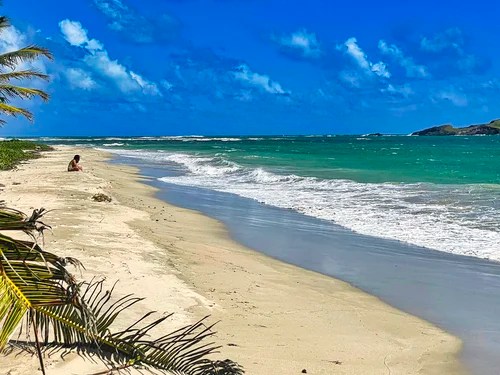
Anse des Sables is French for Sandy Bay. This beach right next to the airport is ranked as the 7th best beach of Saint Lucia. The Atlantic coast is the windward side so the water can be choppy, and there is a lot of algae on the shore. On the positive side there is soft sand and gorgeous turquoise water dotted with sizeable islands. See more photos in the Anse des Sables section below
Birding Hot Spots
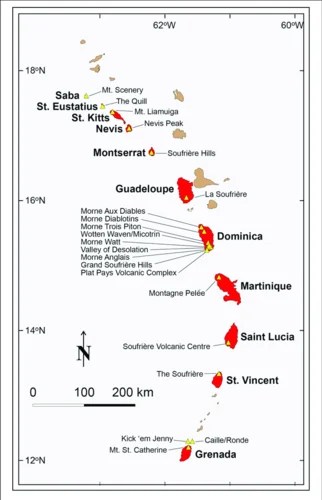
Lesser Antilles is the name of the arc of volcanic islands between Granada and Puerto Rico, which includes Saint Lucia. The birds that are endemic or only found in the Lesser Antilles were the target birds for this trip.
Our son saw 70 species during our one-week trip, which places him in 13th place on the all-time Top 100 eBirders (in Saint Lucia) who have contributed sightings to Cornell University’s research. He took all the bird photos in this post using the extremely sharp Canon EF 100-400mm lens on a Canon EOS 7D Mark II camera. However, I had to scrape his pictures from his eBird pages as he lives on the west coast, 4430 km (2753 mi) away from us. Therefore, the clarity and resolution may not be the best.
The rest of the photos including the flowers were taken with my iPhone 12 Pro since my Nikon DSLR failed on the first day of the trip. This meant I could not use my 105mm macro lens.
If you stay in the Soufrière region you can easily do multiple trips the the airport region. It is very unlikely that you can do all of the following sites in one day, but they are arranged in the counterclockwise order we took in order to get to Praslin area near Dennery. One has to actually drive north passing Belvedere Road to Marigot Bay then turning right on the only road the crosses the centre of the island in the direction of Dennery, as shown on the Saint Lucia Travel Map.
Belvedere Road
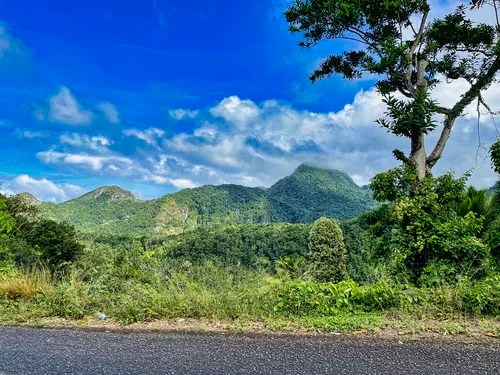
Belvedere Road starts just northeast of Soufrière and the Mirador Piton. This road heads downhill to Mahaut, which is a village near the coast. The narrow but low traffic road is generally enclosed by a tall forest canopy. This photo is one of the only views that I took. We probably came here a half a dozen times and saw many species. I am showing the photos of the endemic birds that can be found.
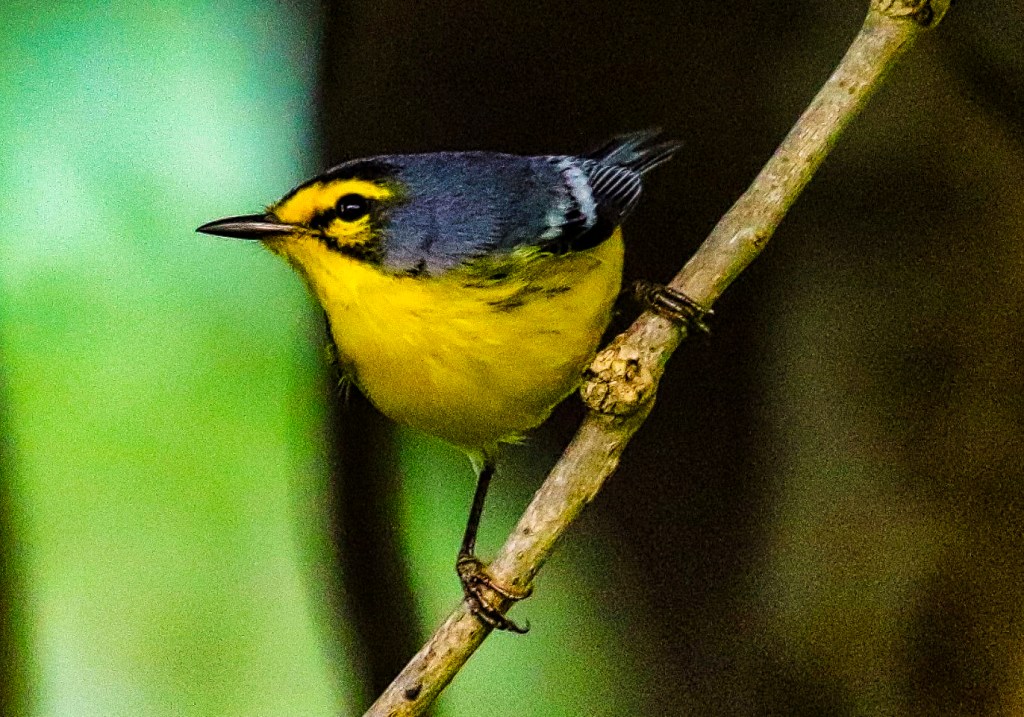
The yellow breasted Saint Lucia warbler (Setophaga delicata) is one of the few colourful birds that can be seen. It is endemic to Saint Lucia.
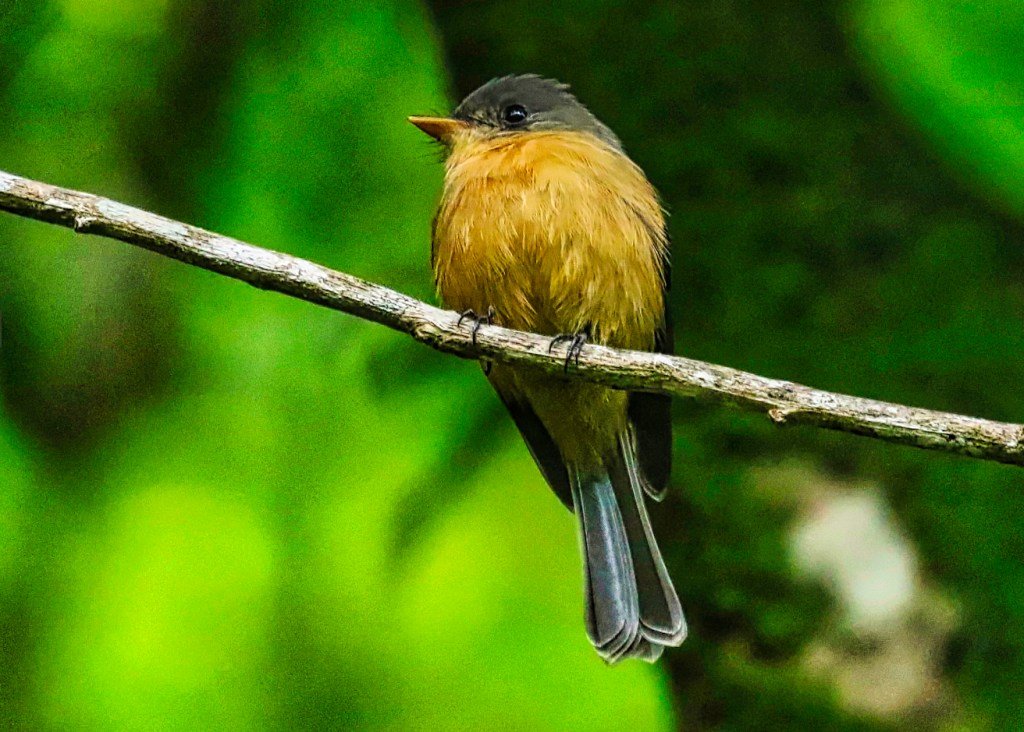
Lesser Antillean peewee (Contopus latirostris) is small drab flycatcher found in woodlands on only five islands in the Lesser Antilles.
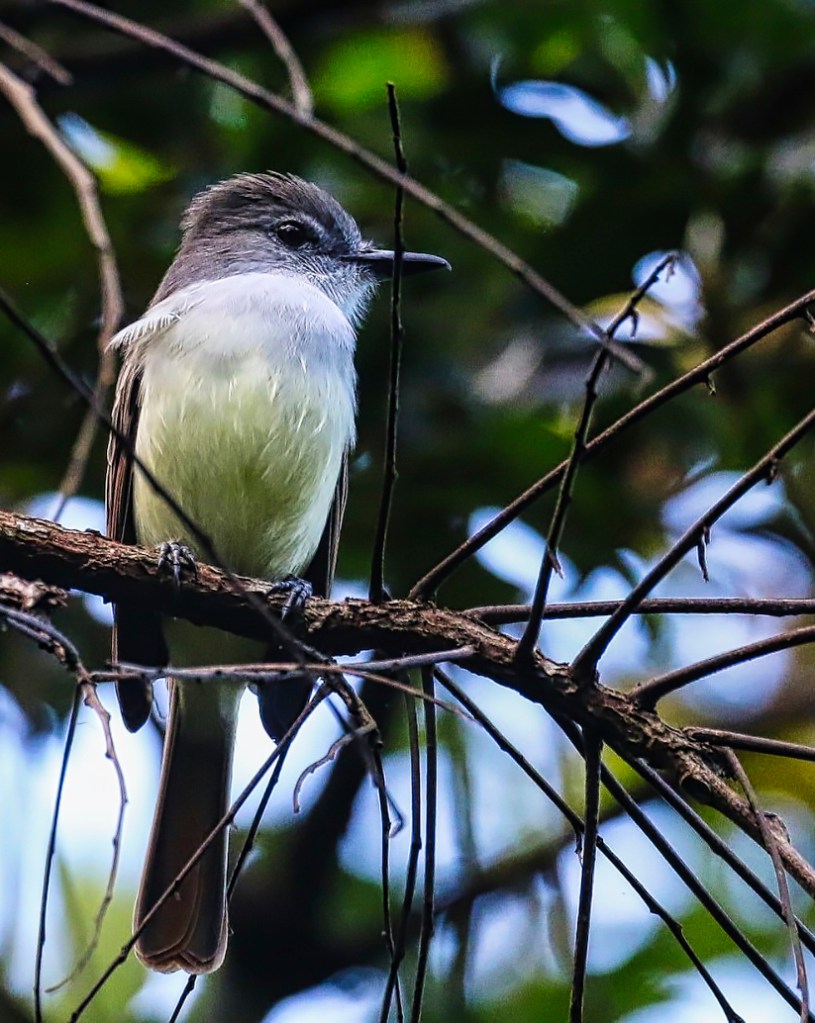
Lesser Antillean flycatcher (Myiarchus oberi), a species in flycatcher family Tyrannidae, is found on only six islands in the Lesser Antilles.
Dennery
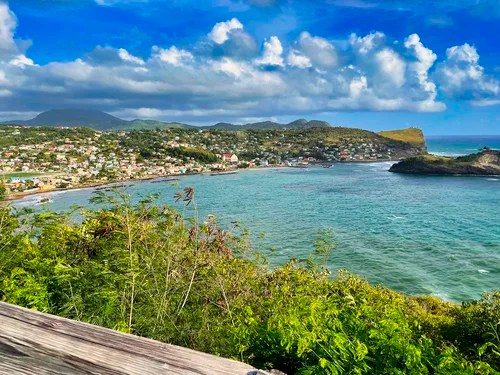
The west to east highway was uneventful until the Dennery Lookout. This was a beautiful view of a small town named after Count d’Ennery, who had written extensively on Saint Lucia in 1765.
The surrounding Mabouya Valley is known for plantations, formerly sugar and now bananas. Near the lookout, we tried several tracks that started at the highway looking for birds but finding cliff top views instead.
Praslin
At an unmarked pull off with log “benches” on the west side of the highway, we found the cart track to Praslin. A local man stopped his car to tell us to be careful in this area. It is known for the fer-de-lance, a poisonous viper snake. We made sure to stay on the path. After two of us left for the hike, another man stopped his car to check if C. had car trouble or needed help. Wow, how many places would people do that?
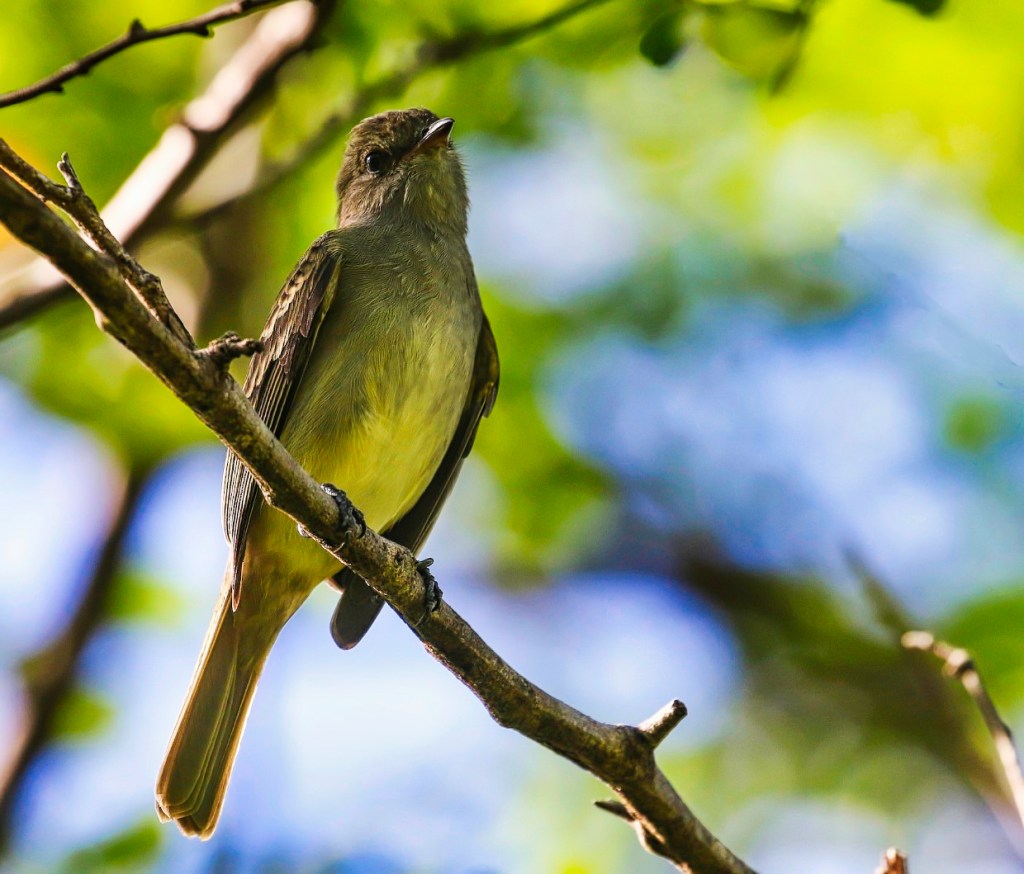
The Caribbean elaenia (Elaenia martinica) is a species first recognized in 1766 by Swedish naturalist Carl Linnaeus, the father of biological taxonomy (i.e. hierarchy of class, order, family, genus and species). This drab and inconspicuous flycatcher is found in the tropical forests of the Caribbean and parts of Central America.
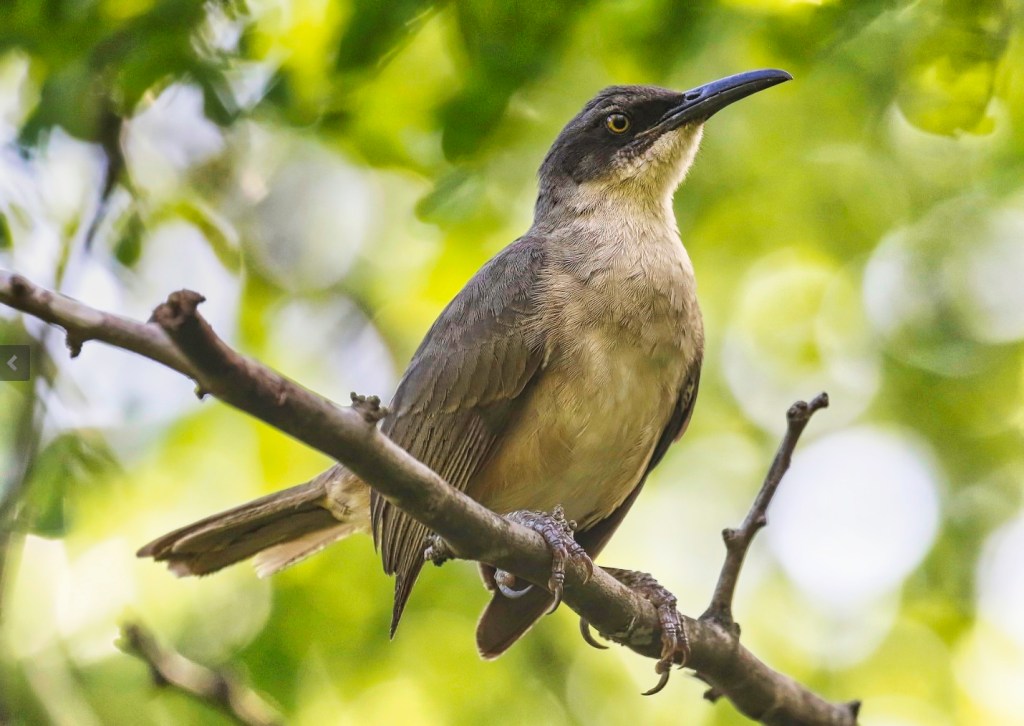
The Gray trembler (Cinclocerthia gutturalis) is a passerine in the same family as mockingbirds and thrashers. It is endemic to the islands of Martinique and Saint Lucia.
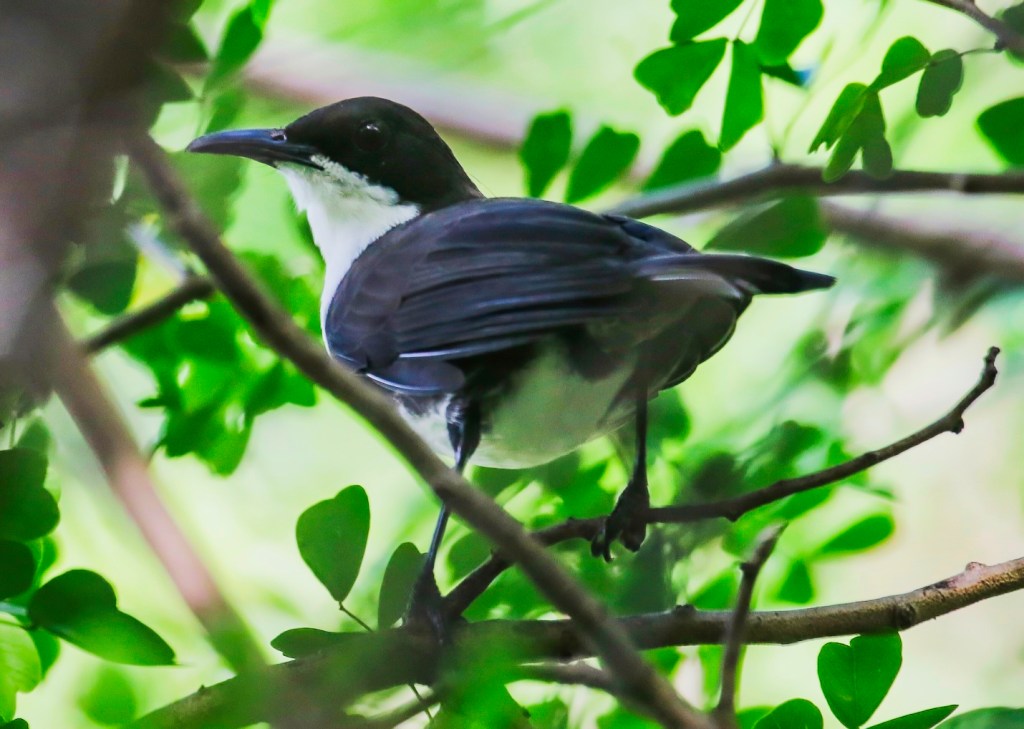
The White-breasted thrasher (Ramphocinclus brachyurus) somewhat resembles the Gray trembler in shape but it has bold white underparts and a dark red eye, which the tremblers lack. This endangered species is endemic to Martinique and Saint Lucia.
Des Cartier Rainforest Trail
This rugged rainforest trail was strewn with rocks and roots, slick with mud and moss, and came with lots of mosquitoes. The low light made it particularly hard for photography. Fortunately, I had my personal bird photographer along for the hike and he captured some good photos in very difficult lighting.
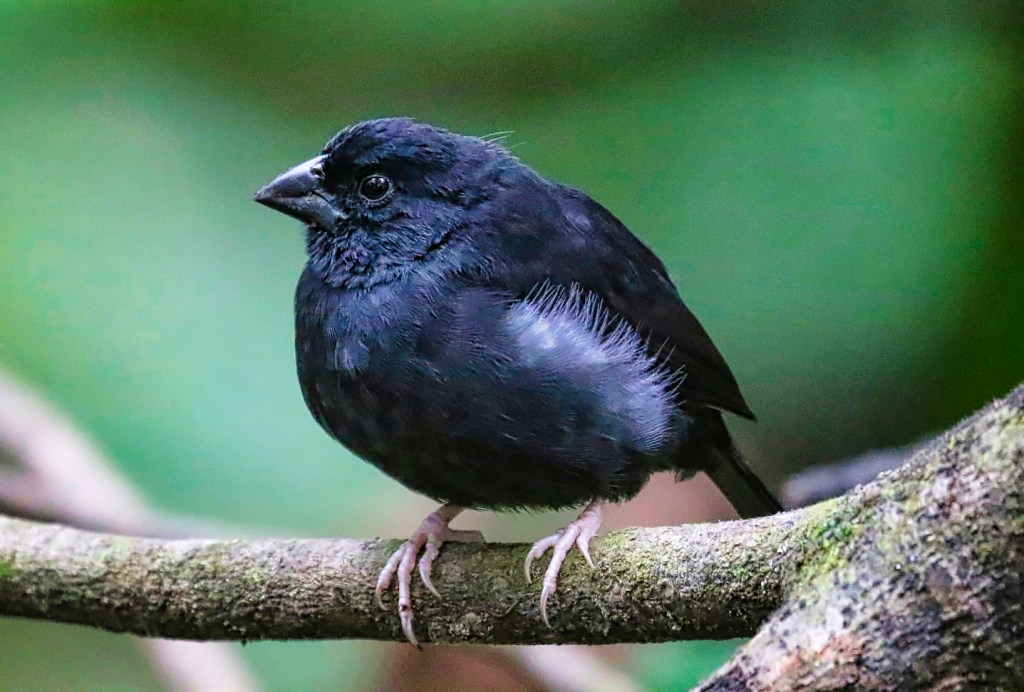
The distinctive Saint Lucia black finch (Melanospiza richardsoni) is endemic to Saint Lucia. Males are entirely jet-black.
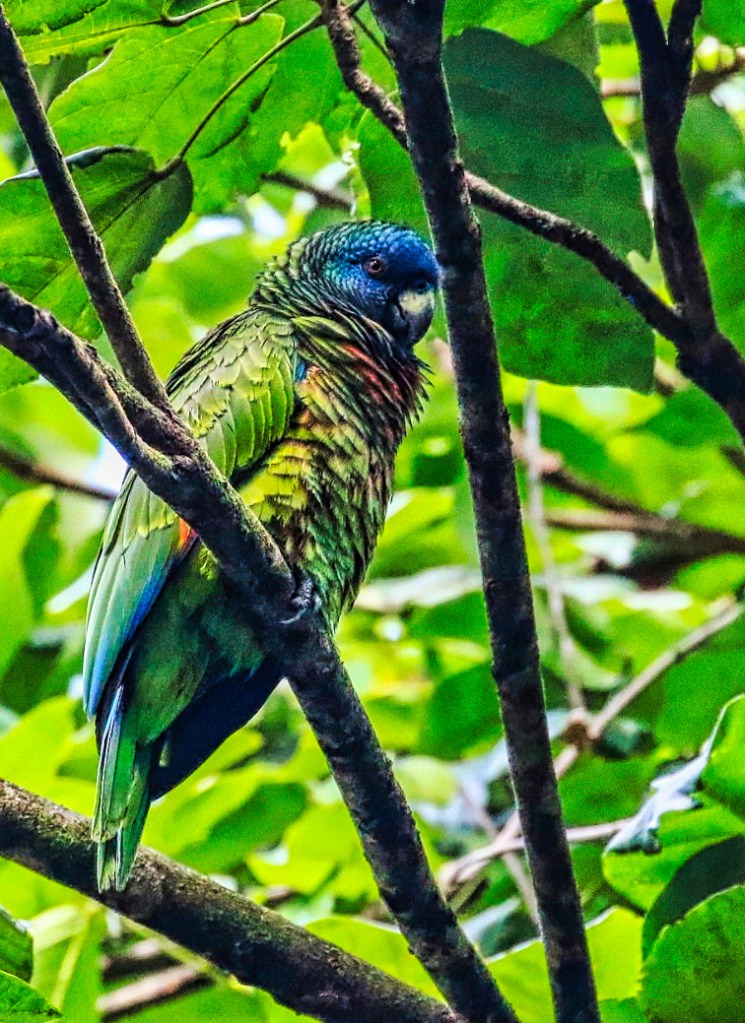
The Saint Lucia amazon (Amazona versicolor) is one of the most colourful birds. Commonly known as the Saint Lucia parrot, this endemic is the country’s national bird.
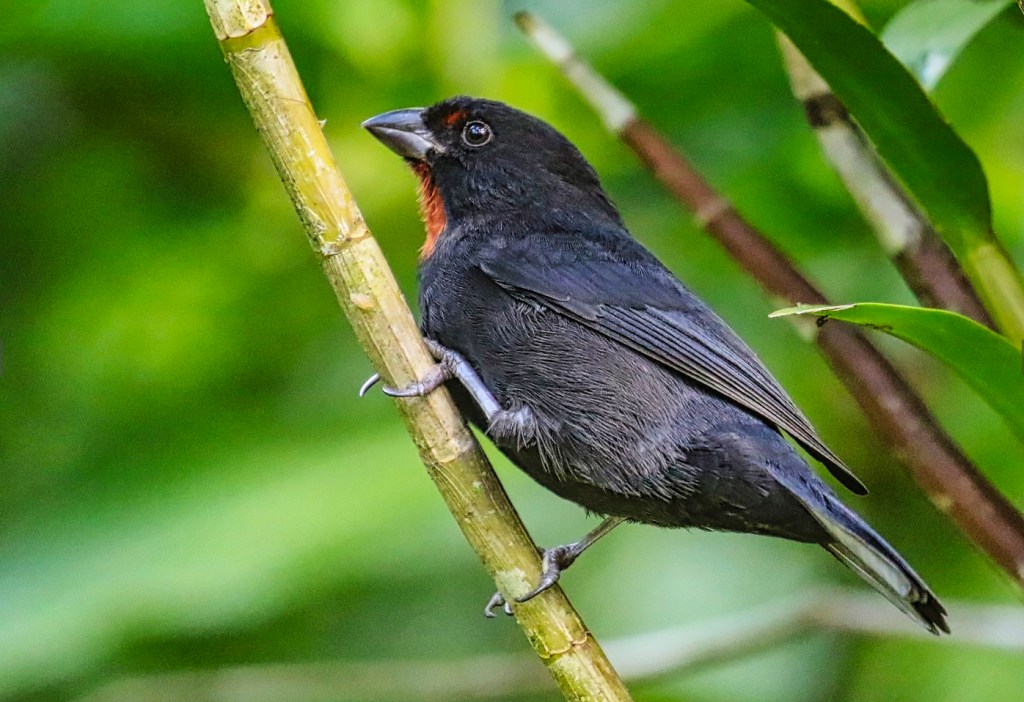
The Lesser Antillean bullfinch (Loxigilla noctis) is endemic to the Lesser Antilles.
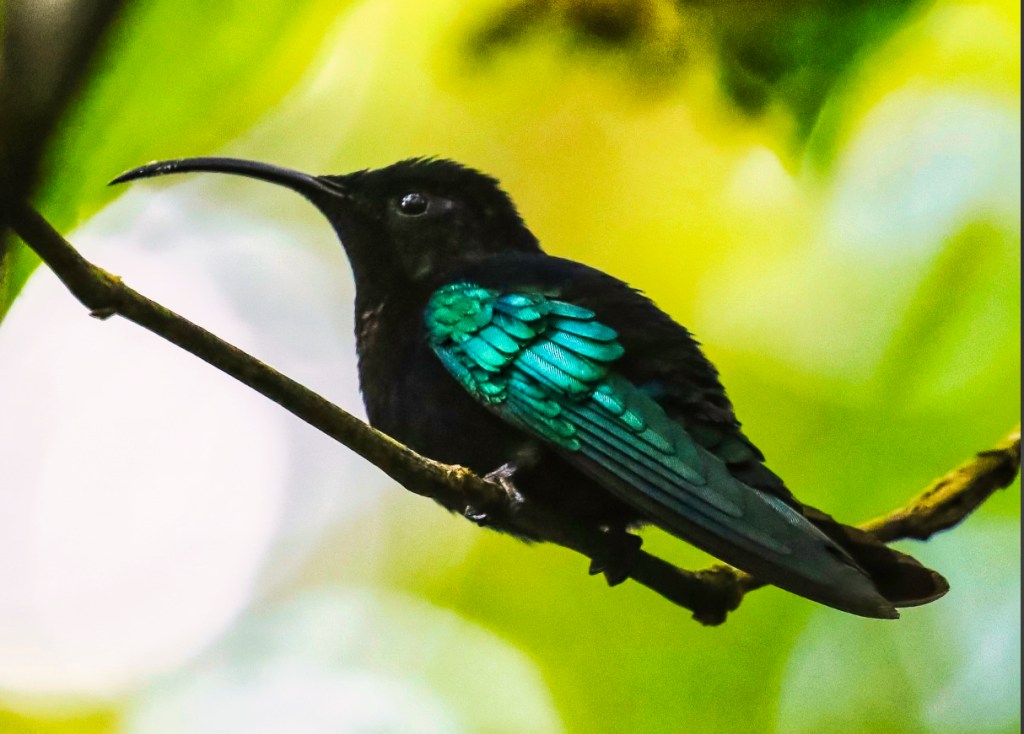
The Purple-throated carib (Eulampis jugularis) is a species of hummingbird. It is endemic to most of the islands of the Lesser Antilles.
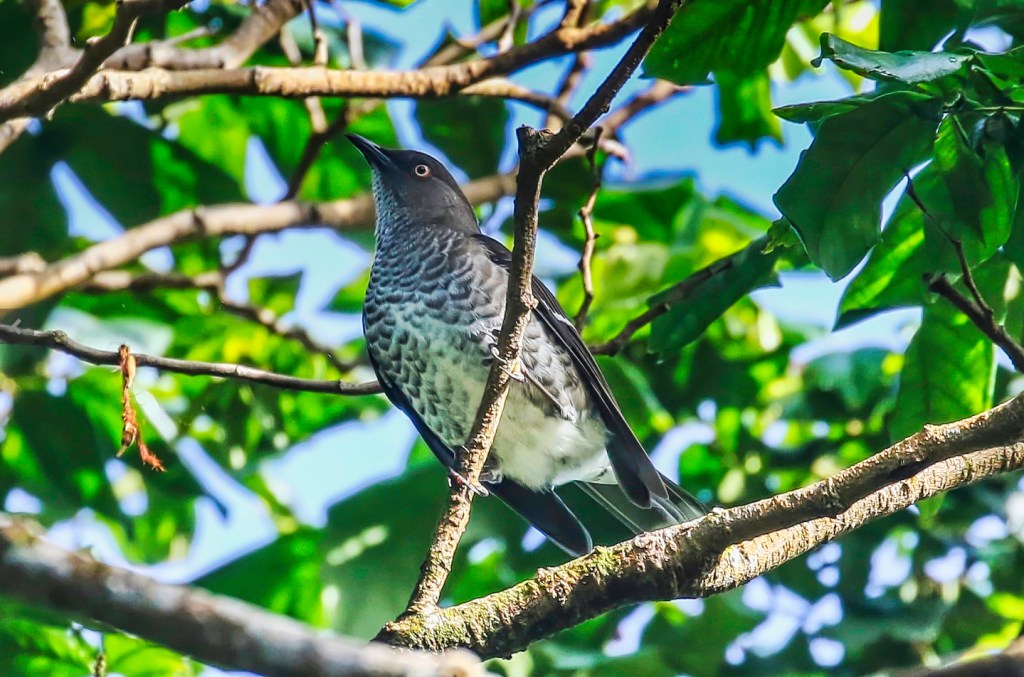
The scaly-breasted thrasher (Allenia fusca) is found throughout much of the Lesser Antilles.
Mamiku Botanical Gardens
The Baron de Micoud was a colonel in the French army and a former Governor of St. Lucia. This estate was gifted to him by King Louis XIV in 1766. After the French Revolution, the British once again seized St. Lucia in 1796 and ingeniously banned the French from owning land in St. Lucia. But Baron de Micoud had married Marie Anne Devaux from Soufrière.
The estate was put in the name of “Madame de Micoud”, which was corrupted to “Ma Micoud”, and now is known as Mamiku. Today, Mamiku Estate is a plantation producing cocoa, tropical flowers, bananas, and other fruits.
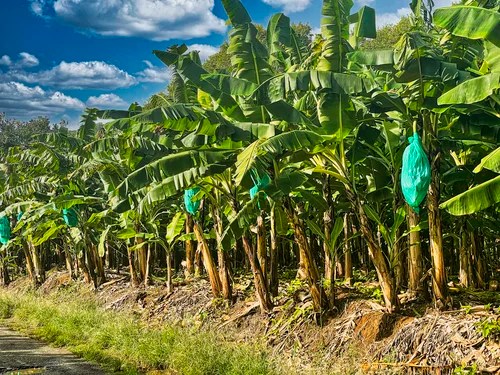
The Mamiku Road leading to the gardens was lined with banana trees. Interestingly, the bananas were covered by green bags. What are these for? It reduces UV radiation and prevents the invasion of white flies. Apparently, we foreigners do not like markings on our bananas.
Mamiku Hiking Trail
Of course, the real reason we came here was for the birding. But this was not a lucky day for target birds. The loop trail was lined with tropical trees decorated with epiphytes but it was a desert for birds.
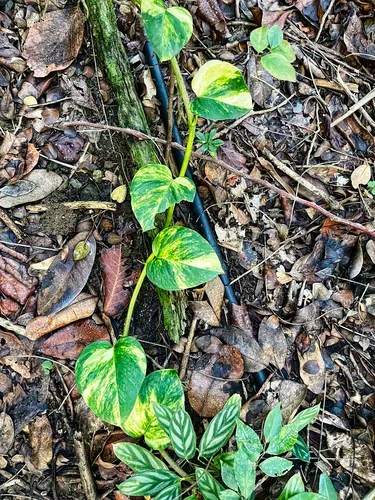
Golden Pathos (Epipremnum aureum) is native to Moorea (island) in French Polynesia. It has spread to the West Indies, where it has caused severe ecological damage in some cases. It is also called Devil’s vine or Devil’s ivy because it is almost impossible to kill and it stays green even when kept in the dark!

Tricolor stromanthe (Stromanthe sanguinea) is native to the Brazilian rainforest. It is valued for its striking variegated leaves with purple undersides. Hummingbirds and bees are the main pollinators.
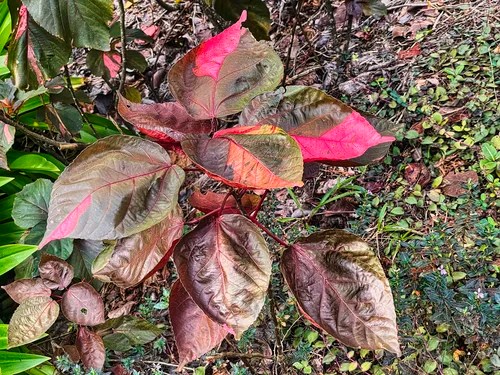
Copperleaf (Acalypha wilkesiana) is native to Fiji and South Pacific islands. This plant is not only colourful, but it is used to make an ointment that is 73% effective in treating fungal skin diseases.
Mamiku Flowers
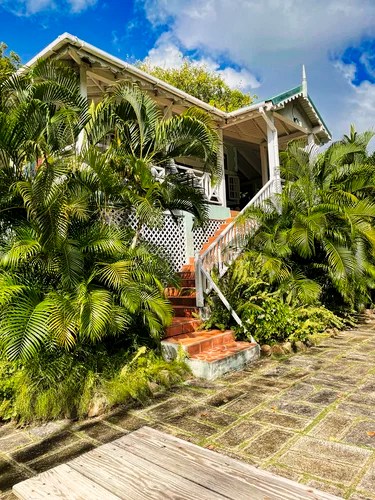
The Mamiku Botanical Gardens were added to the estate in 1997 as an agro-tourism initiative. Since 2006, Mamiku has been owned by Veronica Shingleton-Smith. Born in Jerusalem, she moved to Britain and then Saint Lucia. She is a landscape designer who has worked all over the Caribbean and USA. For instance, she landscaped the famous Sugar Beach Resort below Petit Piton.
The gardens boast an extensive collection of tropical flora but most were not flowering. However, it was a great time to see some wonderful orchids.
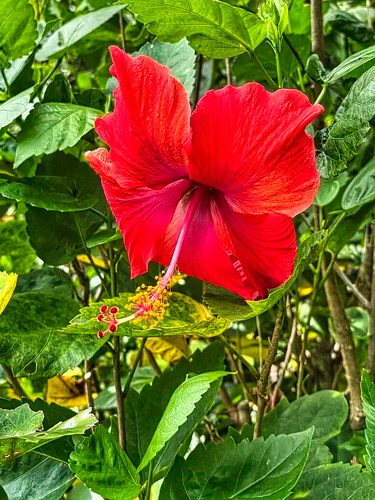
Chinese hibiscus (Hibiscus rosa-sinensis) is a well-known flower. The species name rosa-sinensis literally means “rose of China”, but the plant is neither a rose, nor is it from China. While it is native to Vanuatu (South Pacific), today it is spread throughout the tropics. It is the national flower of Malaysia and unofficial national flower of Haiti.
The flowers of Hibiscus rosa-sinensis are edible and are used in salads in the Pacific Islands. But the most common use of hibiscus is as a decoration in the hair of women. We enjoyed this custom on our three-year Round-The-World trip when we visited various Polynesian islands.
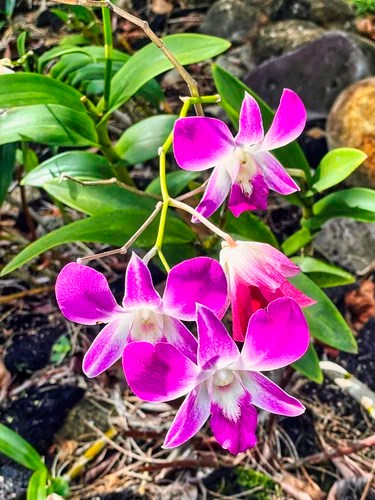
Noble dendrobium (Dendrobium nobile) is native to southern China, the Himalayas, and Southeast Asia, and is the state flower of Sikkim. It is an epiphytic orchid, meaning that it grows on another plant. In traditional Chinese medicine, shí hú (Dendrobium) is used to replenish fluids. It is very effective for treating conditions such as dry mouth, stomach pain, mouth sores, sunstroke, and other conditions caused by dry weather, pollution or smoke.
Aphrodite’s phalaenopsis (Phalaenopsis amabilis) is an epiphytic orchid commonly known as the moth orchid. It is known by the much nicer name Moon orchid in Indonesia, where it is the national flower. The species name amabilis is a Latin word meaning “lovely”. Aphrodite is the ancient Greek goddess of sexual love and beauty,
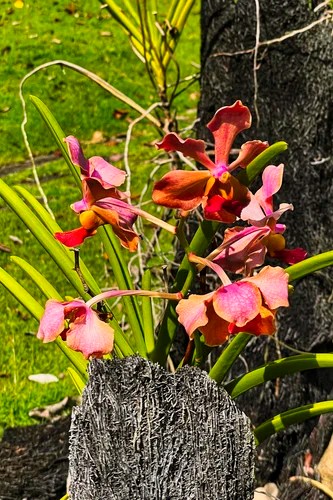
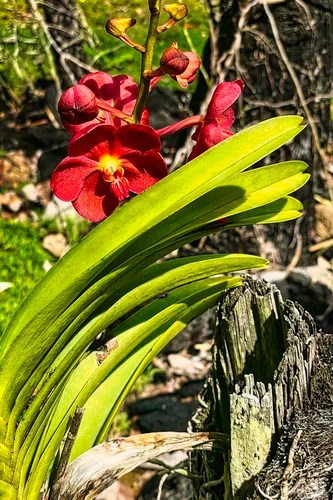
Renanthera a genus of epiphytic and terrestrial orchids found in China, the Himalayas, Southeast Asia, New Guinea, and Melanesia. The name Renanthera is a combination of the Latin renis meaning kidney (root of our word renal), which refers to the distinct kidney shape of the pollinia (pollen grains). The Greek anthera means anther, which is the top, bulbous portion of the stamen where male reproductive cells are produced.
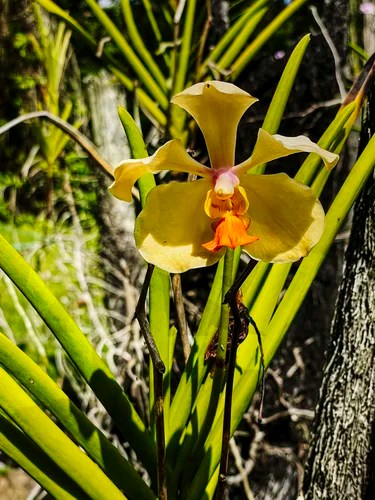
Tampa butterfly orchid (Encyclia tampensis) is an epiphytic orchid native to Florida, the Bahamas, and Cuba. The species name Encyclia is derived from Greek enkykleoma meaning “to encircle”. Its’ common name is derived from the butterfly-like movement of its flowers in the wind.
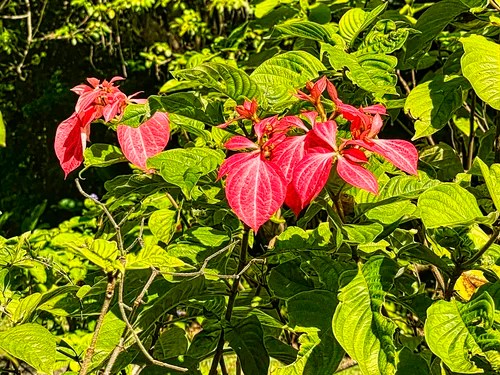
Ashanti blood (Mussaenda erythrophylla) is a West African shrub. Mussaenda has been used in traditional medicine for the treatment of skin infections, ulcers, wounds, jaundice, tuberculosis, and bronchitis. A recent study, Anti-microbial and Phytochemical Studies of Mussaenda, in May 2020, provided scientific support for the medicinal use of the plant by traditional healers.
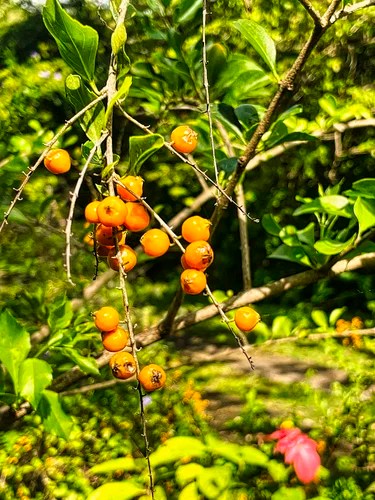
Golden dewdrops (Duranta erecta) is a species of the verbena family, native to Latin America and the Caribbean. The leaves and unripen berries of the plant are toxic and can kill cats and dogs.
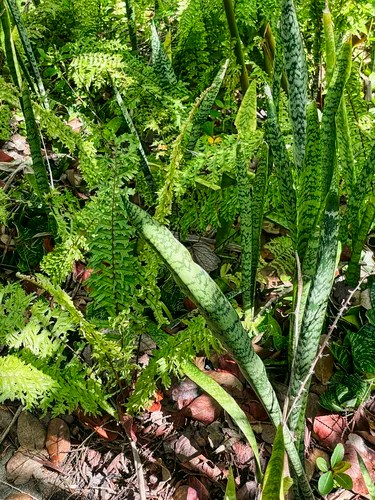
On the left side of the image, Sword fern (Nephrolepis exaltata) is native to the Americas. On the right side, Snake plant (Dracaena trifasciata) is native to tropical West Africa from Nigeria to the Congo.
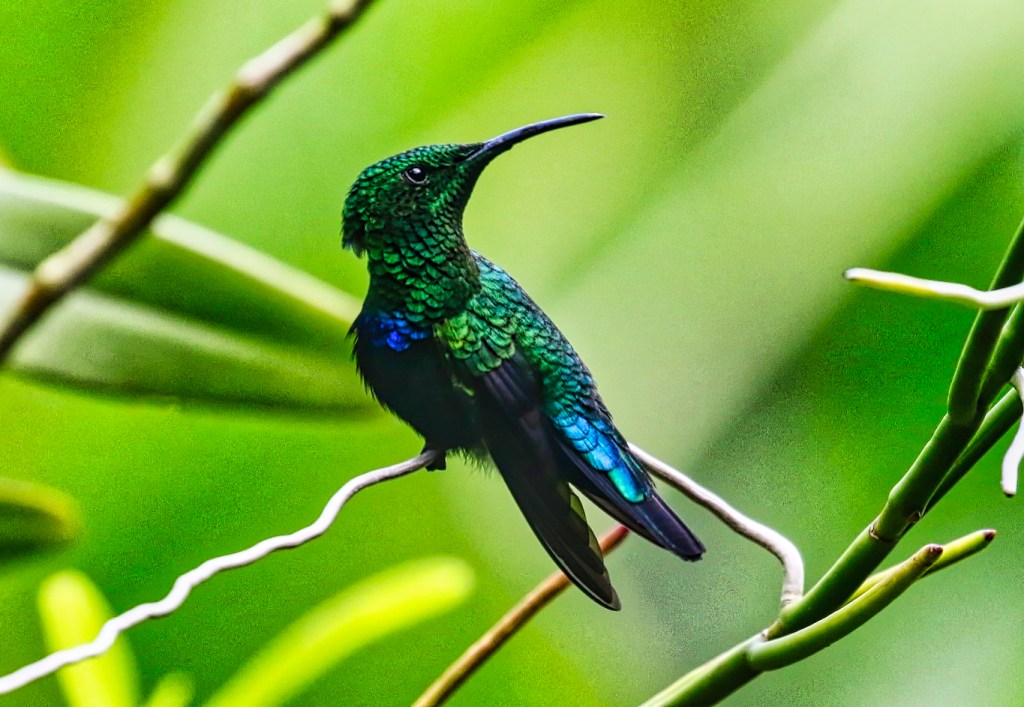
Green-throated carib (Eulampis holosericeus) is a species of hummingbird. It is found in Puerto Rico and most of the Lesser Antilles. The specific name is from the Ancient Greek holosērikos meaning “silken”. Botanical Gardens are a good spot to see caribs and hummingbirds.
Another place you can visit is nearby LaTille Falls and Garden. The farmer/owner gave two of us a personal tour after he found out we were from Canada. He had participated in an agricultural training program in Canada when he was a young man.
Seaweed Farm
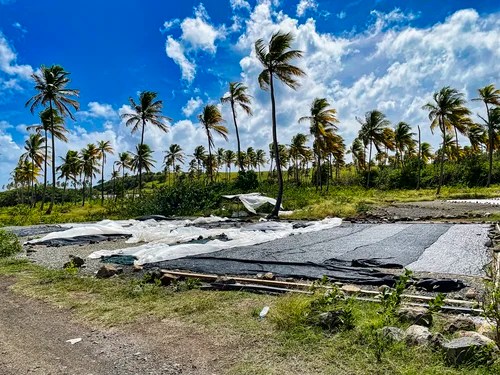
I’m not mentioning the name of this farm as the owners may not want visitors. We were able to go in because our son asked to go birding on the property near a beach. We stayed to talk with the workers to find out what they were doing. Two women explained how they gathered sea moss from the seashore, then spread it on the ground to dry in the sun.
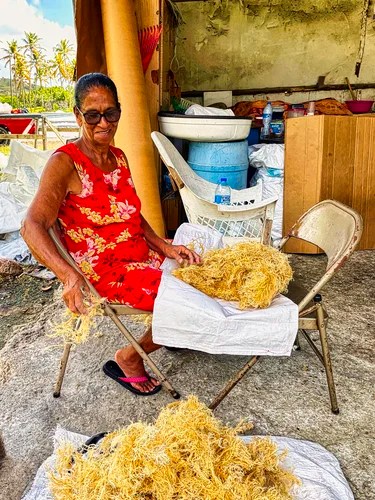
When we arrived, one of the women was combing the sea moss. Sea moss cultivation is recent and only started in the 1970s. Cultivating sea moss is an extra income earner for Saint Lucian farmers, many of whom lack resources. It does not require expensive machinery or equipment.
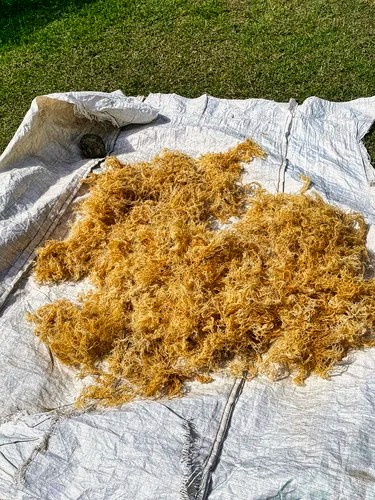
In the Caribbean, sea moss is considered an aphrodisiac. But it’s only been in the past five years that global demand for sea moss has begun to take off. Sea Moss (Irish moss) is rich in amino acids, vitamin C, antioxidants, antiviral and antimicrobial agents. These can help the body to fight off and prevent infections.
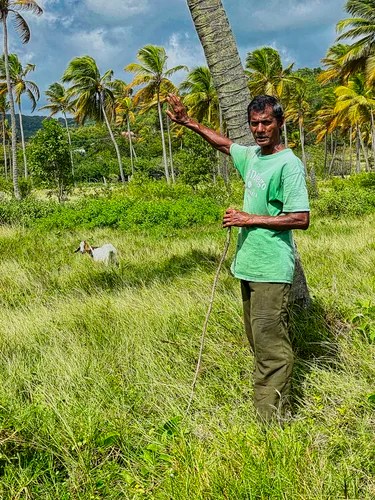
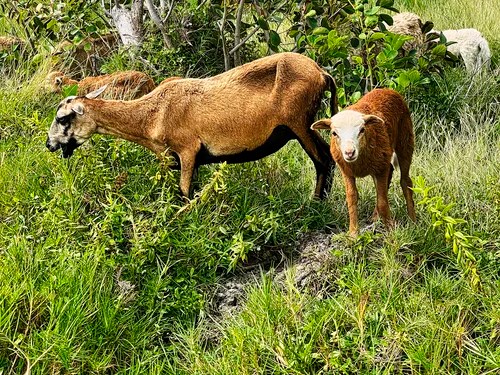
We spoke to the farmer who was watching his flock of goats. He told us that a short while ago, a pack of wild dogs descended from the forest and killed several goats.
Cedar Heights Beach
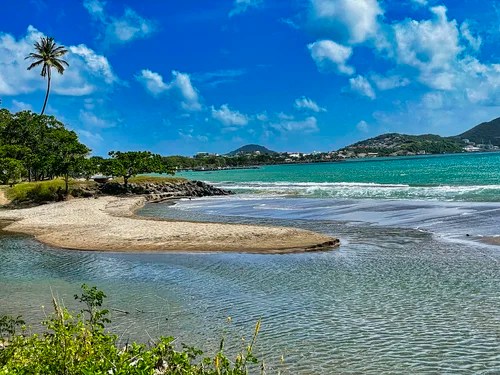
There was no sign just a rough road that started at a highway bridge to the southwest of the airport. It was not a much of a beach (narrow), but it had some nice views. We came here frequently looking for plovers, sandpipers and other shorebirds.
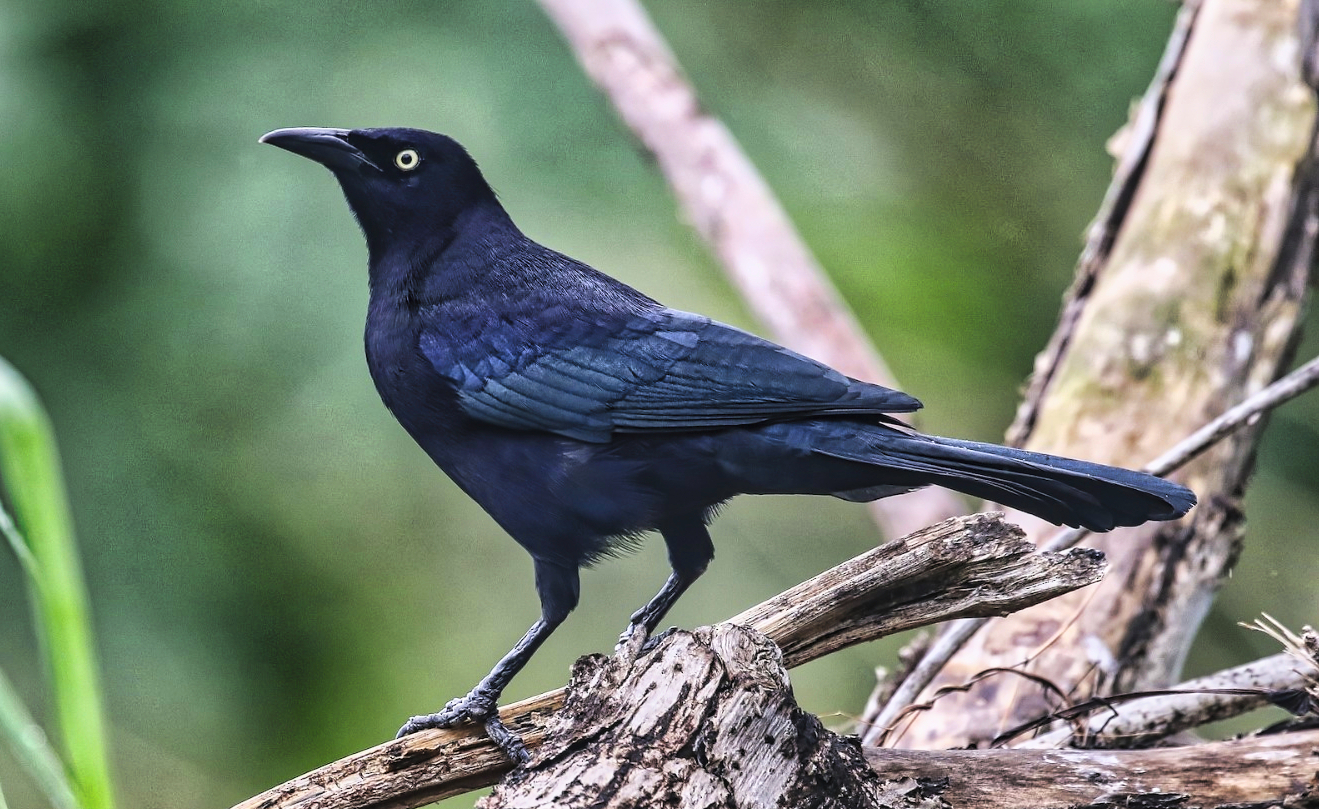
We saw a Carib Grackle (Quiscalus lugubris), common to northern South America and the Lesser Antilles. It is found in open habitats, including around towns and cities, and is especially abundant along the coast. the male is glossy black with a pointed bill and a yellow eye
We had lunch at Mama Tilly’s (Google rating 4.6) in Laborie. We had a combination of mahi-mahi, coleslaw, beans, carrots, rice and fried plantains. It came with a great local hot sauce and friendly customers, a couple from Castries who drove 1.5 hours just to eat here! The woman, an insurance company trainer, lived just around the corner when she was young.
Anse des Sables Beach
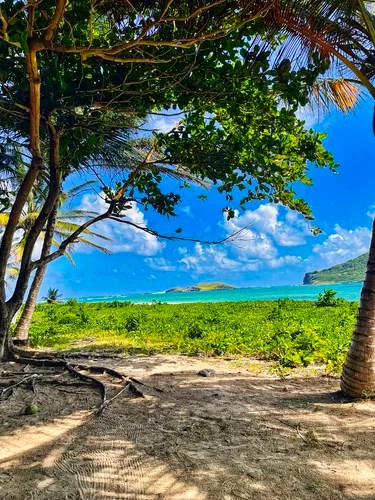
Anse Des Sables (aka Sandy beach) is close to the town of Vieux Fort so there are many locals having a drink or a picnic under the shade of the palm trees. With the gorgeous turquoise water, islands and palm trees; it is not surprising that it is rated the 7th best beach of Saint Lucia.
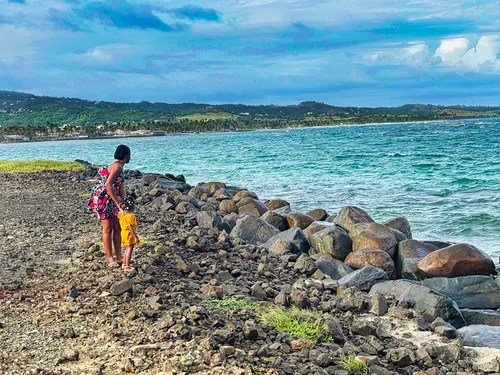
This is Atlantic coast, so the wind can be strong and the water choppy; but it was fine all the days we visited except the one where I capture a mother with her young child. There was a lot of algae on the beach. If this was Australia there would be a tractor to remove all the debris and leave pristine sand. This is definitely one of the best beaches, and very uncrowded.
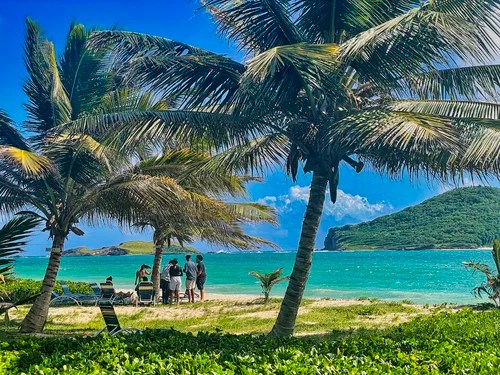
Anse des Sables Beach is right near the main airport of Saint Lucia. So, this is where we spent our last morning before taking our flight home. What a way to end our trip!
Other Posts You May Like
Be sure to read the previous posts:
 Terra Encounters
Hi George,
How have you and Corinne been keeping?
This was a fabulous post. I imagine that the bird pix all were taken by yr photographer son. Brilliant. So clear and detailed in all their glorious colours. I loved yr explanations. I can seesaw you had made a great teacher.
Only 9 more days to countdown for CLM. I’ll be having my first in-person appointment with my cardiologist at that time. First time in 1 1/2 years.
Michelle arrived as a surprise two days ago. I had thought she would arrive Dec 11th. She has a lot of work related things to do in town. In addition she wants to do catch-up with family and many friends. Today’s the big day for the Senate run-off. Wowser’s.
With much love Hope
>
LikeLike