
Why is History Important?
It’s not important if you are going on a beach or hiking holiday. Historical dates are not critical to know. But if you are interested in art and architecture, culture and cuisine, then history is exceedingly significant.
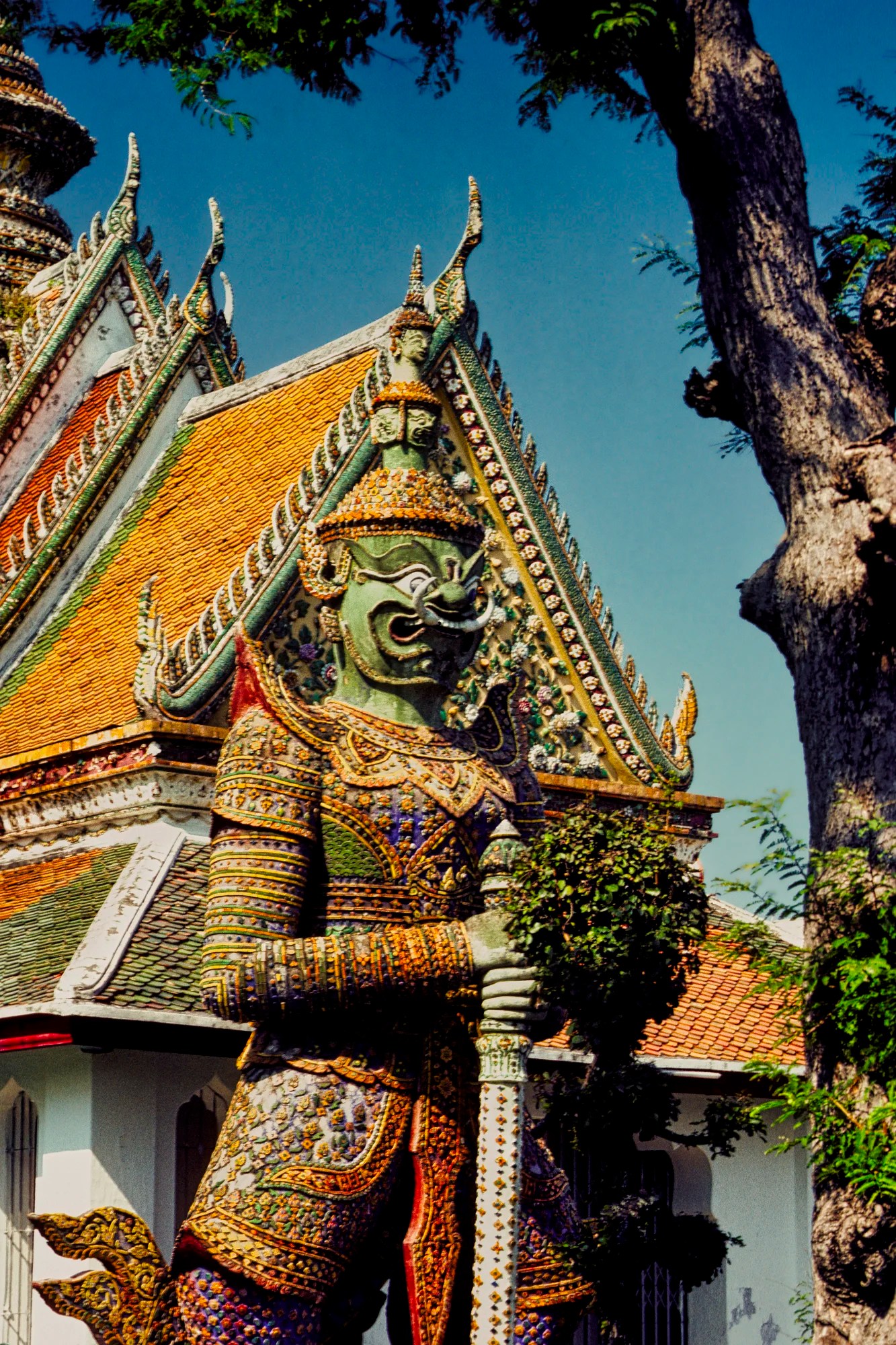
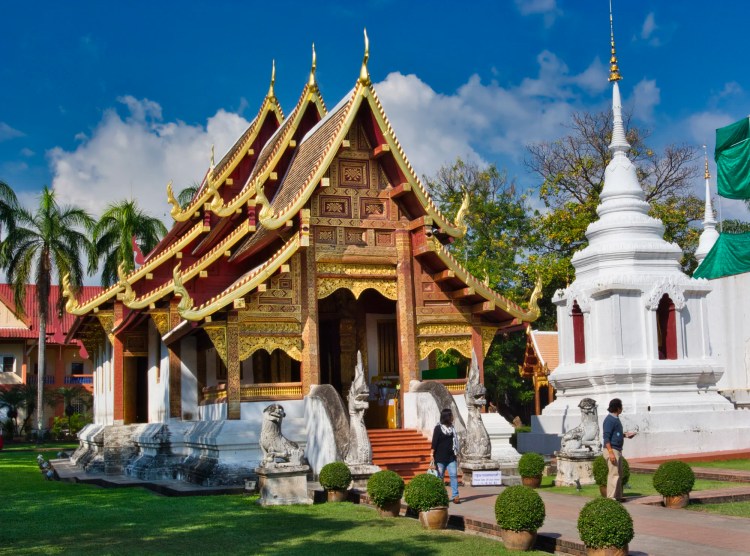
For instance, why is there a Demon King statue in front of a famous Buddhist wat (temple) above? It is the historical influences on culture that are important.
Author & Photographer: George Mitchell

Our recommendations are not influenced by affiliate links – we have none. Our advice is derived from our personal experience and knowledge based on spending five months in Thailand as well as travelling three years around the world.
Historical Principles
- The places with the most interesting art and architecture were generally political powers like Rome or Ayutthaya (Thailand), or economic powers like Florence and Venice.
- Nations that are economically and technically more advanced exert a big influence on other cultures they come in contact with.
- Art, architecture and history of seemingly different countries and cultures are highly interrelated.
Indianization of SE Asia
India was the most advanced country in ancient times (322 BC to 1279). and had a big impact on most of the nations of Southeast Asia. Indian traders set up trading posts in Malaysia and Indonesia and spread art, Hinduism (e.g. Bali), Buddhism, astrology, et al. to many places.
Silk Trade Routes
The silk trade is another example of the interrelationship of people and culture around the world. The insatiable demand of Ancient Rome for spices, silk and sandalwood pushed India into contact with Southeast Asia. Many people think of the silk trade as one overland Silk Road.
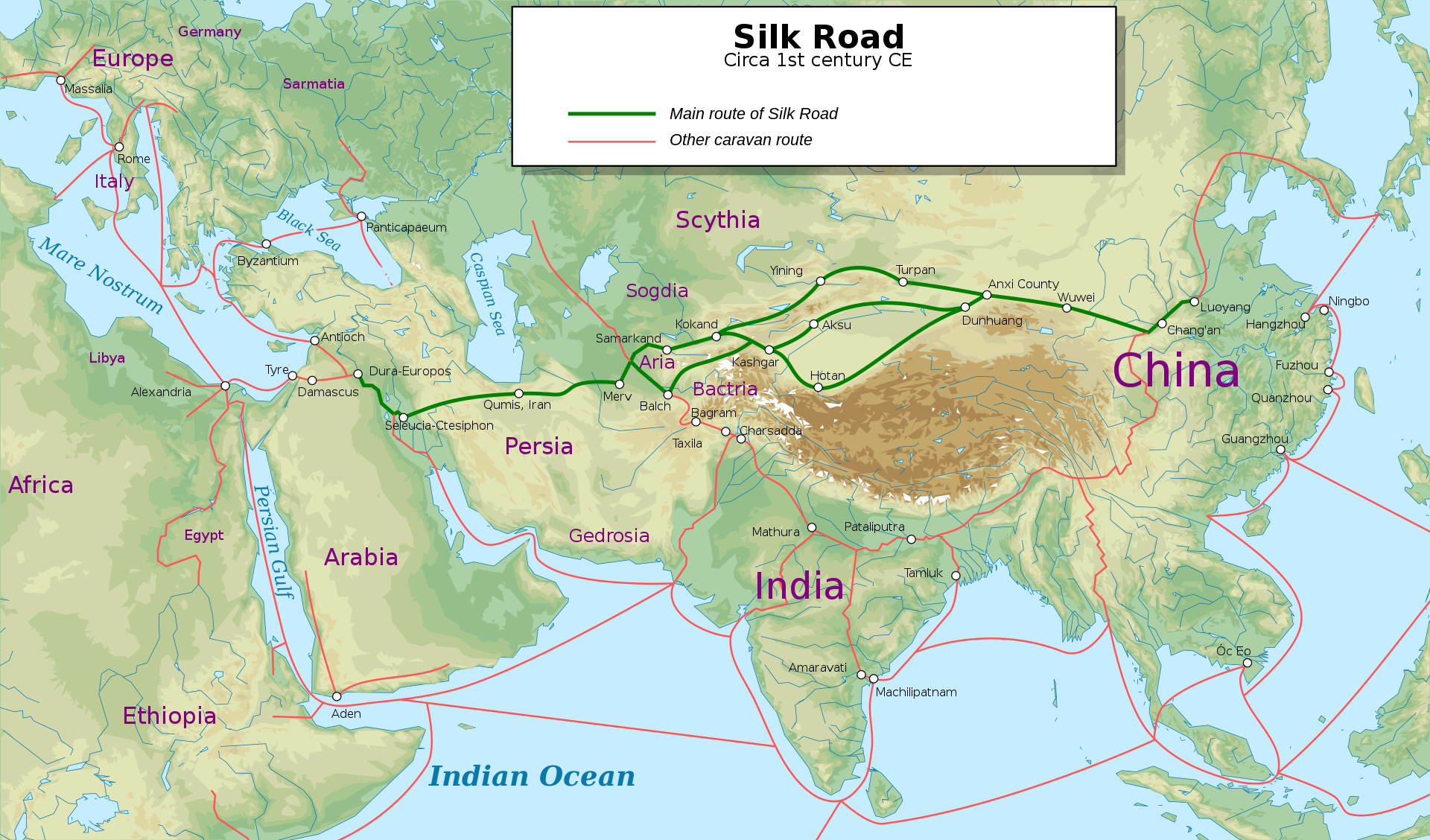
In fact, there were many Silk Trade Routes, many of which were by sea. The advancements in shipbuilding in the first century AD allowed the Indians to sail via Southeast Asia to the spice islands of Indonesia and the silks of China.
Indian Culture Impacts
The Indians were respected by SE Asians as a richer and more advanced civilization to be emulated. Indian culture has had a major impact on Thailand:
- Religion — Buddhism with Hindu deities and rites;
- Culture — marriage and ordination ceremonies, merit making;
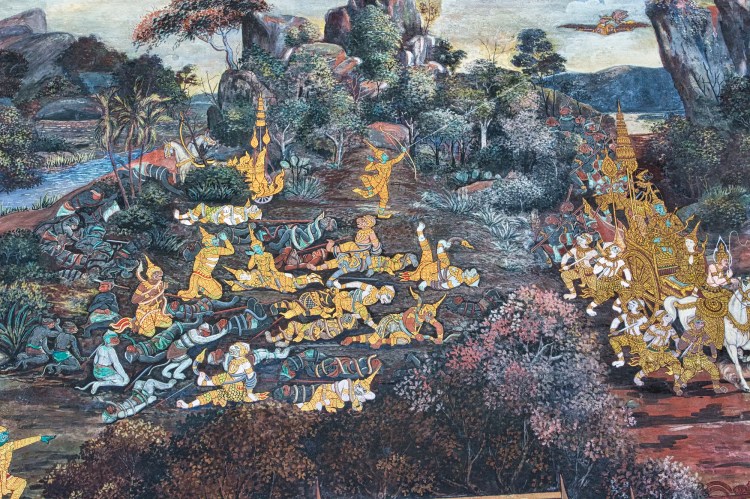
- Art and Literature — influenced by Hindu epics like the Ramayana;
- Language — introduction of many Sanskrit words, and was the origin of the Thai script;
- Cuisine.
The most obvious impact for travellers is the adoption of Buddhism. Not only are 94% of Thais Buddhist, but almost every architectural gem is Buddhist. So, to appreciate what you are seeing, you need to better understand Buddhist concepts and symbolism, starting with our post Thailand — a Traveller’s Guide to Buddhism.
When was the Peak of Thai Power?
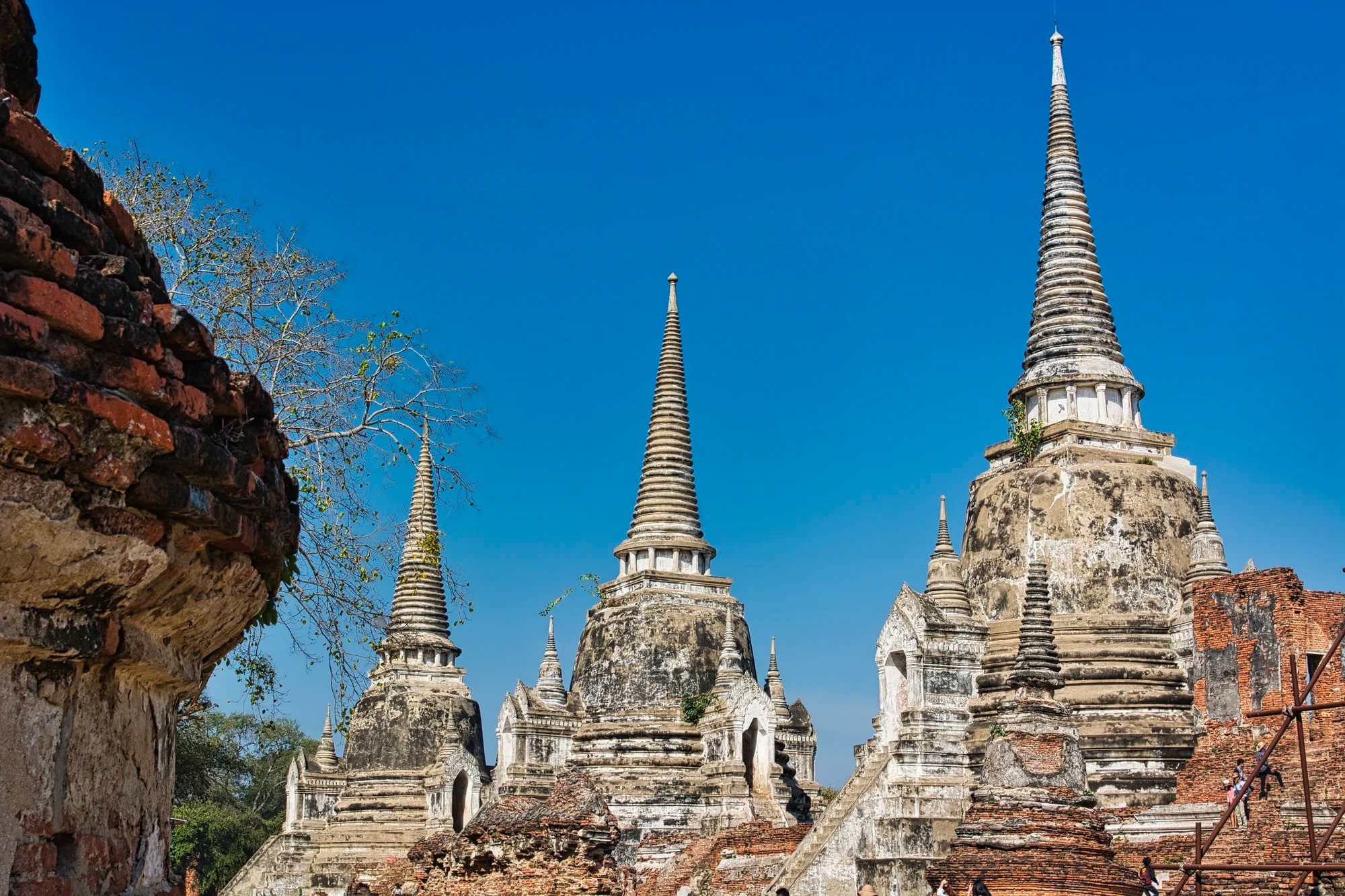
The height of Thai power was during the Ayutthaya Kingdom, which ruled much of Southeast Asia. Ayutthaya was the Rome of Southeast Asia. Southeast Asia is the size of Western Europe without Scandinavia.
Historical Periods
This is a simplification of the historical timeline and includes three earlier, non-Thai empires that influenced Thailand: the Maurya and Chola (India) and the Khmer (Cambodia) Empires.
Emperor Ashoka (274-236 BC) of the Maurya Empire was one of the most important rulers in Indian history. He sent Buddhist missionaries to SE Asia and his son to Sri Lanka. Now SE Asia is more Buddhist than India.
| Dates | Historical Period | Capital City |
|---|---|---|
| 322-184 BC | Maurya Empire: Indianization Era | Pataliputra (aka Patna) |
| 300 BC – 1279 | Chola Dynasty: Indianization Era | Many capitals: a maritime empire with colonies in Malaysia and Indonesia |
| 802-1431 | Khmer Empire: ruled Thailand | Angkor Wat, Cambodia |
| 9-13th C | Tai tribes pushed south of Yunnan | Mongols took over China |
| 1238-1448 | Sukhothai Era | Sukhothai |
| 1292-1775 | Lanna Kingdom | Chiang Mai |
| 1350-1767 | Ayutthaya Kingdom ruled Thailand, Laos, Burma, and parts of Cambodia | Ayutthaya |
| 1767 | Burmese Attack | destroy Ayutthaya |
| 1767-1782 | King Taksin defeats Burmese | Thonburi |
| 1802 – 1899 | Kingdom of Chiang Mai | Chiang Mai |
| 1782-1932 | Chakri Dynasty | Bangkok (local name Krung Thep) |
Other Posts You May Like
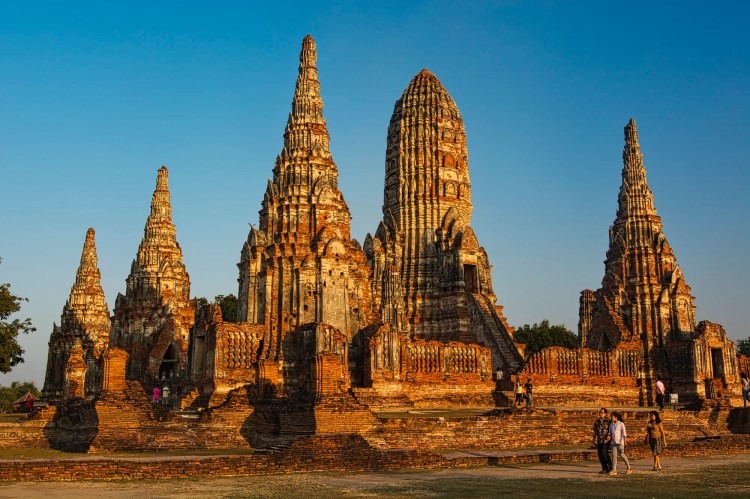
For more on the history of Ayutthaya, Sukhothai, and Chiang Mai, see:
Subscribe
Please subscribe to Terra Encounters because we offer valuable insights to improve your understanding and enhance your travels. We offer itinerary-based guides packed with the best sights and hidden gems. Let our knowledge help you fully appreciate every moment of your amazing journey.
Get travel tips and advice delivered directly to your inbox. The best part is that it is free.
This was only a taste of Bangkok. What questions do you have? If you have been to Thailand, share your experiences with us. How long is/was your trip?
 Terra Encounters
Leave a comment