
Is the Real Story about the Fall of Rome Important?
There are so many questions on social media about the fall of Rome. When did Rome fall? What caused the decline of Rome? What are the causes of the Fall of the Roman Empire? Did the Germanic tribes destroy the buildings of Rome? Was there a “Dark Age” in Europe after Rome fell?
Was the Roman Empire replaced by the Byzantine Empire? What was the Byzantine Empire? How did this influence the history of the world?
Judging from all the questions, there are several serious misconceptions surrounding the Fall of Rome.
Author & Photographer: George Mitchell

Our recommendations are not influenced by affiliate links – we have none. Our advice is derived from our personal experience and knowledge based on living in Rome for four years and studying its art, architecture, and culture. We also gave a course on Discovering Our Ancient Routes in the Mediterranean at the University of Alberta.
What caused the decline of Rome?
Plagues Decimated Rome
At its peak in 133 to 200 CE, it is estimated that Rome had 1,000,000 people. This decreased dramatically due to various plagues brought in via the Silk Routes.
Plague of Cyprian
Imagine a continual pandemic from 249 to 262 CE! Just like the Black Plague, the Plague of Cyprian probably wiped out 1/3 to 1/2 of the Roman population. This is just a guestimate as there were no stats in those days!
Corruption and Decline
Add in 50 years of civil war, called The Anarchy. This span saw 25 claimants to the throne, most of whom were assassinated. The Palmyrene Empire had split off the Middle East provinces for a short time (260-273 CE). The Roman Empire also lost France and Britain to the Gallic Empire in 271 CE. So pieces were hived off well before 476 CE.
Economics
Rome itself did not produce any material wealth. They lived off the pillage of war and a slave economy. Most Roman citizens did not work. But Rome was no longer strong enough to conquer new territories. Civil unrest during The Anarchy crisis made it hazardous for merchants to travel and the internal trade network collapsed.
Mercenary Army
The Romans always included local militia in their defence of the Empire. At the time of Emperor Augustus, 65% of the army came from Roman citizens. By the mid-second century, this had dwindled to 1%. The Romans had become soft. Due to the population decline and an increased series of invasions, Rome started relying on Germanic tribes for their army.
Rome, the City, Fell in 476 CE
Rome suffered three major sacks before its demise:
- 410 CE by the Visigoths led by Alaric;
- 455 CE by the Vandals under Genseric; and
- 476 CE by the Ostrogoths.
Rome, the city, fell in 476 CE because it could no longer pay its mercenaries. Odoacer, head of the Germanic mercenaries protecting Rome, took over the administration of Rome, nominally on behalf of the Roman Empire. The city continued to function.
Loss of Architectural Heritage
The word vandalism, meaning wanton destruction, originates from the Germanic tribe, the Vandals. But most of the Germanic attacks did not destroy the buildings and monuments of Rome. Many of these so-called Barbarians were already Christian.
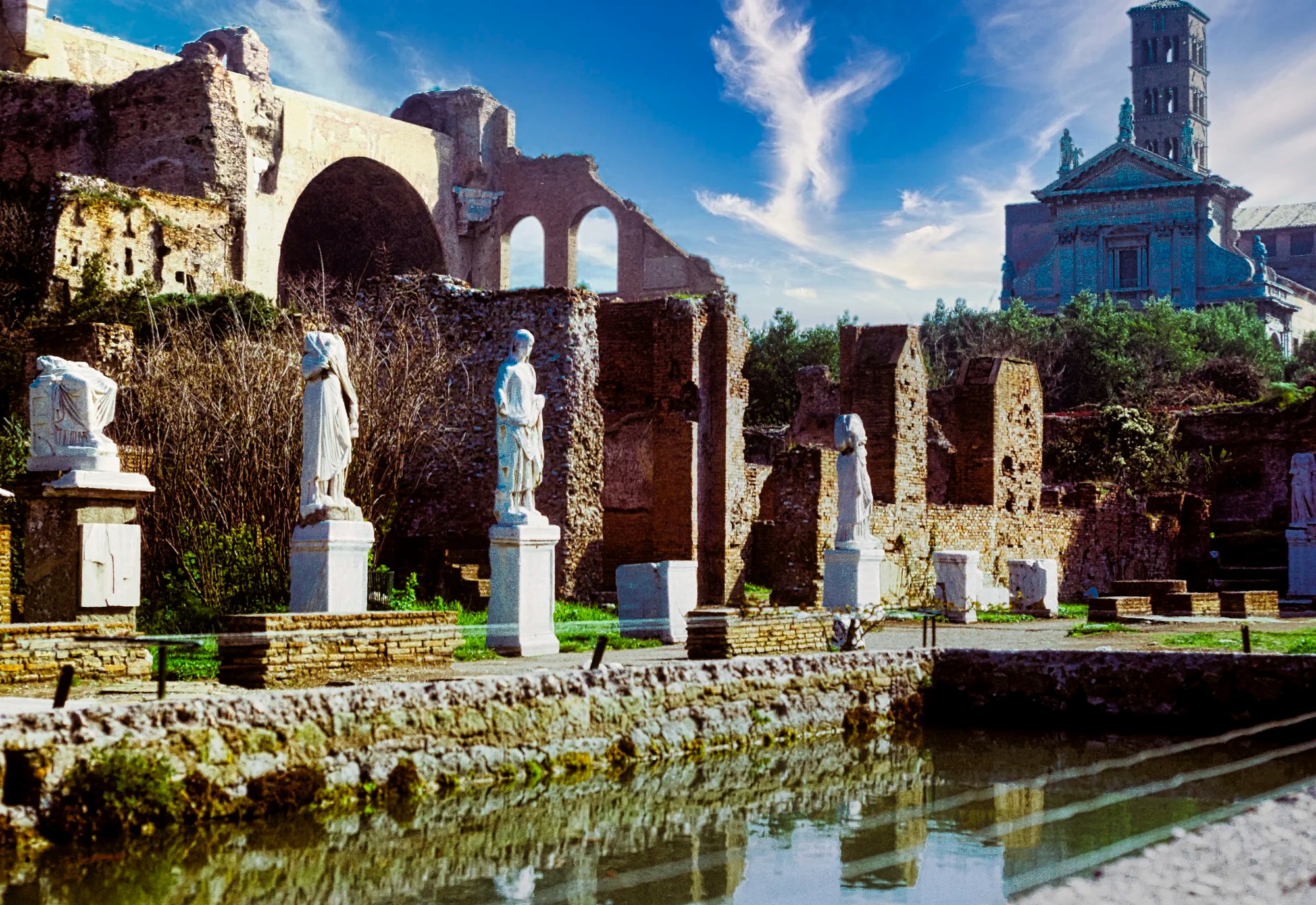
On the other hand, the later Medieval and Renaissance Christians believed these Roman temples and artifacts were pagan. Notice how all the heads of the statues of the Vestal Virgins were destroyed except one. This was no accident. Vestal Claudia had converted to Christianity in 364 AD, and hers is the only statue still intact!
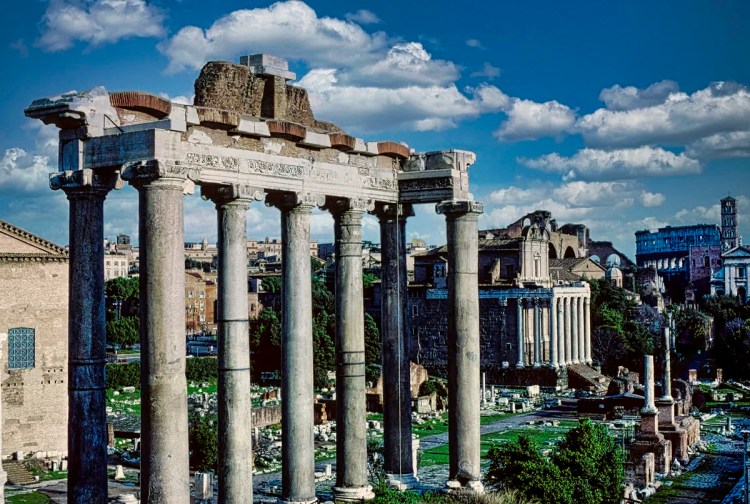
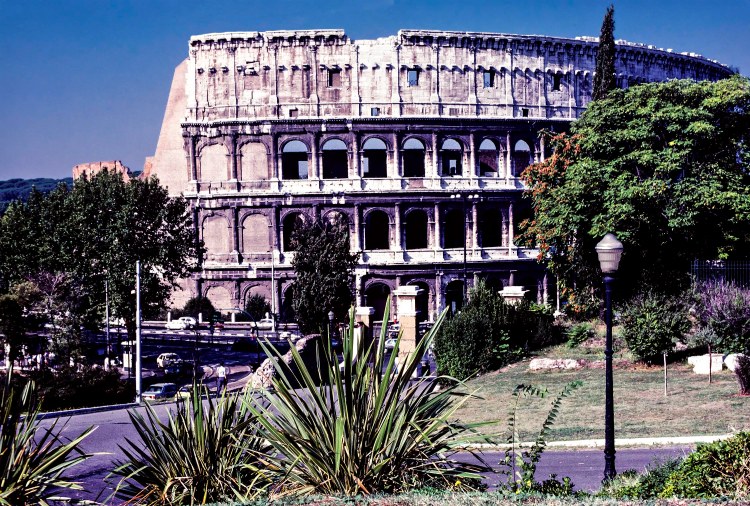
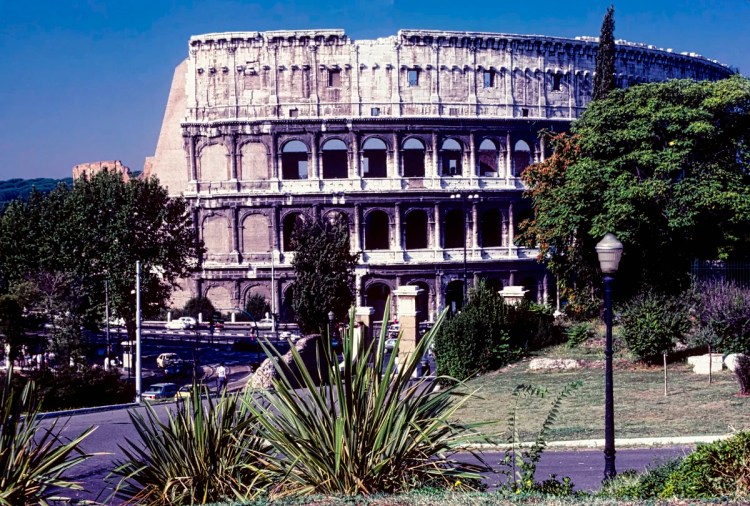
The Forum and other sites were not just destroyed. They used the stone to build new Medieval and Renaissance buildings! Significant damage was also caused by major earthquakes.
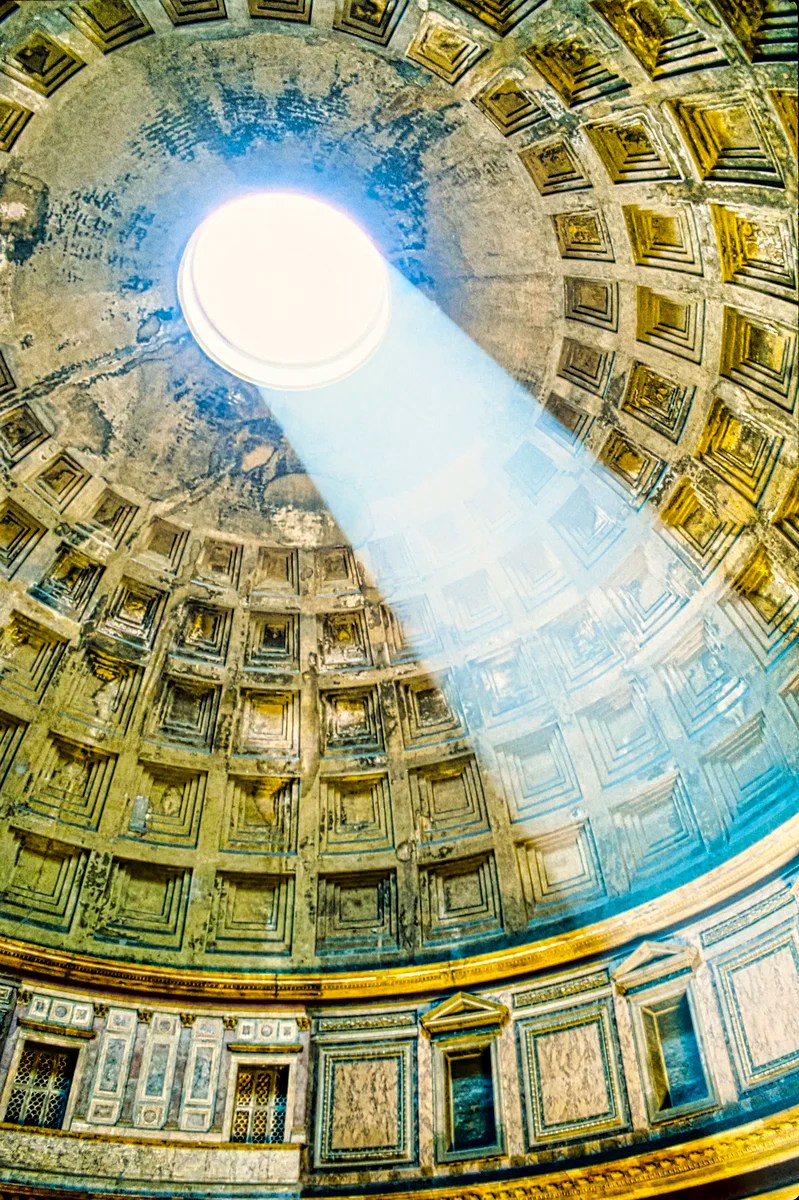
The sites that survived had been converted into Christian places of worship. The world-famous dome, the Pantheon (temple to all the gods), became the church of St. Mary and All Saints. For some really interesting facts about the significance of the Pantheon, see Discover the Secrets of Ancient Rome – Part 1.
Our word basilica comes from the huge halls of the same design as our current-day churches, which were used for law and commerce. In other words, our Christian basilica is based on Ancient Roman architecture.
The Roman Empire Did NOT Fall
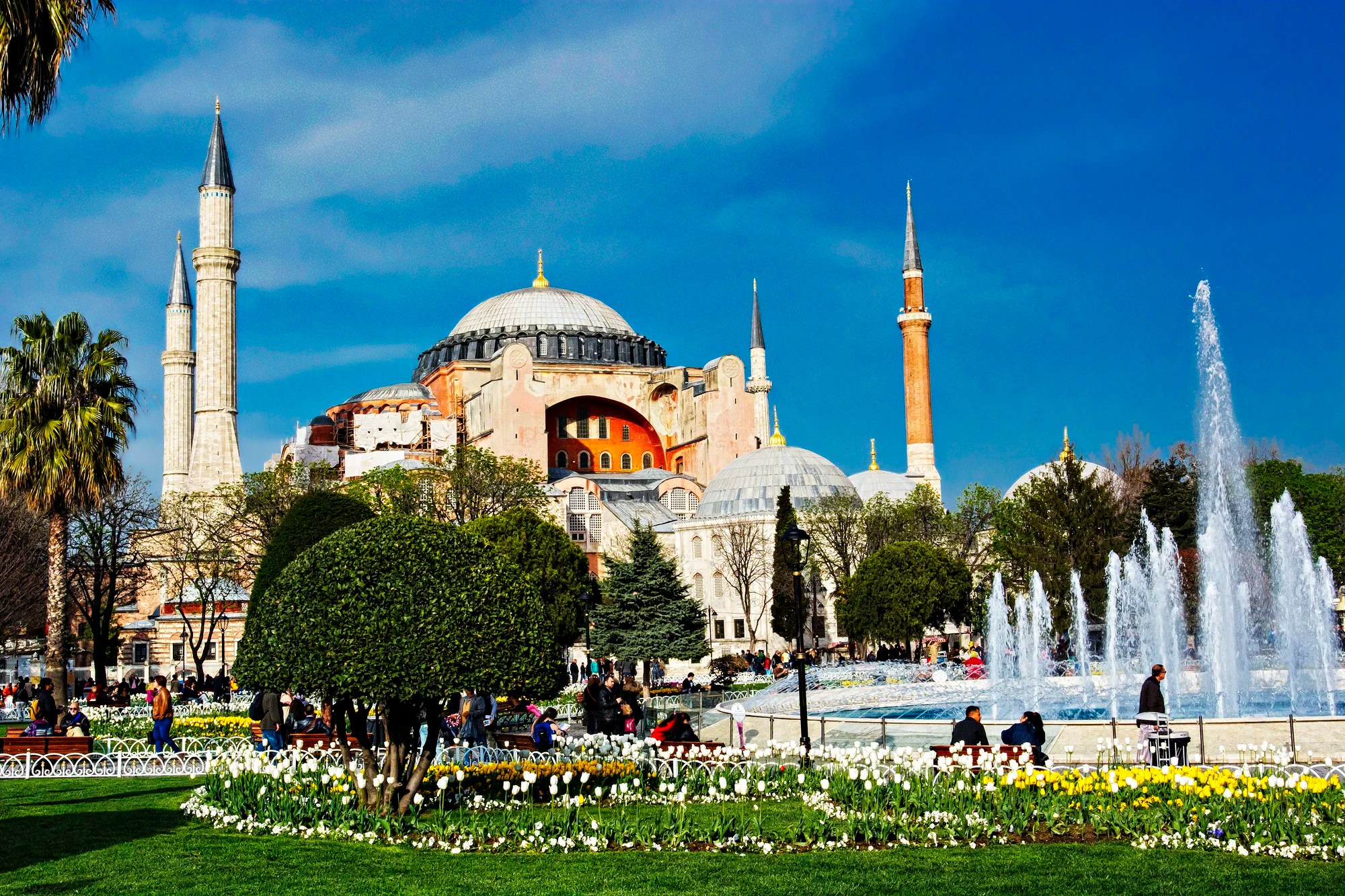
In the year 330 CE, the Emperor Constantine decided to move the seat of the government from Rome to Byzantium, which was renamed Constantinople.
Rome, the city, fell in 476 CE, but the eastern and southern half of the Roman Empire, along with Pax Romana, continued to exist for another thousand years. Ancient Roman architecture, like the very famous Aya Sofia (Constantinople) above, continued to be built.
In other words, prosperous Constantinople (now Istanbul), which was the financial and educational centre of the Roman Empire, became the political centre. Important things to know are that:
- People of that time still called it the Roman Empire.
- The principal language of this empire was Greek, not Latin.
- The term Byzantine Empire was only coined in the 16th century by a German historian – it never existed!
Silk Routes
But all roads really did lead to Nova Roma, i.e. Constantinople. It was the financial capital of the Roman Empire because it became the terminus of the Silk Routes — note the plural because there were several routes, both by land and by sea.
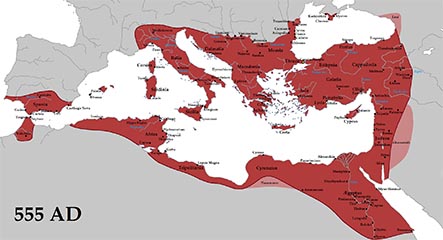
Constantinople became the largest and wealthiest city of Europe up until its zenith in the 12th century, with a population of around 600,000 people (in 600 CE). The Byzantine/Roman Empire was still huge, as shown in this map of 555 AD. It just did not include the northern parts of Western Europe.
Venezia = Venice
What happened to Rome the city after it fell? The city faded in importance. The Roman Empire (Constantinople) regained control of major parts of Italy but the capital of the much smaller Western Rome was now Ravenna.
The sleepy village of Venezia turned out to be the most important colony. The Birth of Venice is linked to the Fall of Rome (the city).
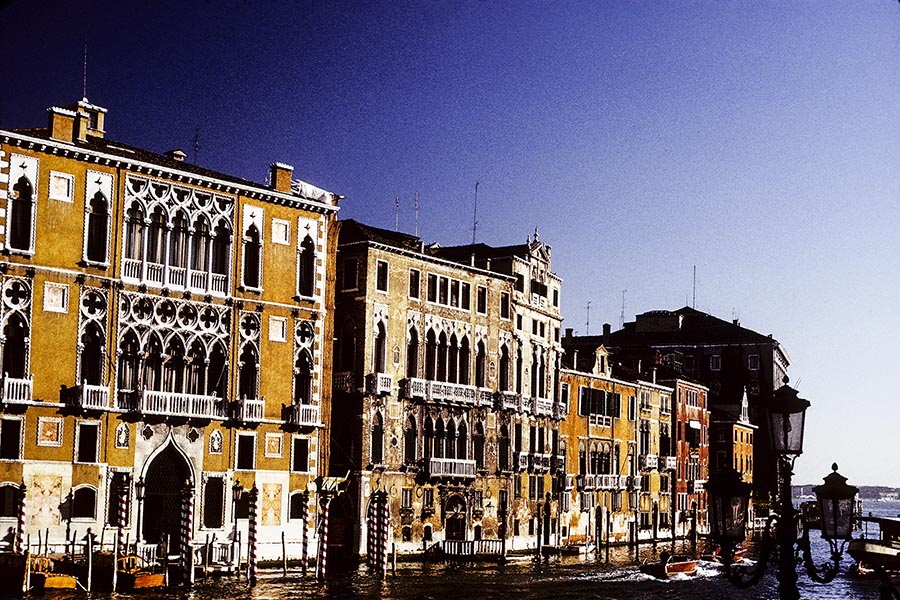
In 810 CE, Venezia became an independent republic and in 1082 CE made a free trade deal with Constantinople. Thanks to their more powerful navy, Venice monopolized trade between Constantinople and Western Europe; in other words, all trade with the Silk Routes. Because of their navy, they made a fortune transporting Western armies to the Holy Land during the Crusades.
There is a reason for all the incredible buildings and monuments in Venice during the so-called Dark Ages. They were not dark in Venezia, which became one of the largest cities in Europe, ten times the size of Rome! It became one of the powerful city-states of the Medieval Era and controlled much more territory the the present-day city of Venezia.
Medieval Italy was the birthplace of the modern city-state that led to the demise of feudalism, the rise of the Renaissance, and the rise of mercantilism and thus capitalism.
Venice became even more powerful than Constantinople, which it sacked in 1204, seizing most of its Greek islands in the Aegean and along the Turkish Coast. Venice was THE major West European power until it was conquered by Napoleon in 1797!
The country of Italy did not exist
The rest of present-day Italy was divided into many provinces ruled by France, Spain, the Habsburgs and the Vatican! The Vatican was the feudal lord of the Papal States. The country of Italy did not exist until 1871!
European Expansionism
Europe changed history by looking for colonies and resources outside of Europe. The fall of Rome (the city) did not lead to this. It was the gradual decline of the Roman Empire and then the Fall of Constantinople in 1453. The Fall of Rome was important because it led other European countries to aspire to be world empires.
Europe was forced to explore because the Ottoman Empire (Turks) monopolized and throttled the Silk Trade Routes, which had also become less reliable. The Europeans wanted to bypass these obstacles.
Contrary to what we think, scientists at that time already knew the world was round. They just had no idea that North and South America were in the way of travelling west to Asia, nor how large was the circumference of the world. The explorers would not have had enough food to make it to the Far East if there had been only an ocean.
So the Portuguese and Spanish began the quest to circumnavigate the world to reach the Orient and its important spices and other trade goods. Then the Portuguese discovered the route around South Africa.
The main difference between this expansionism and previous Terran empires was that the Europeans had technologies that enabled them to project their power using superior weapons and naval fleets to enforce their control of remote colonies.
Final Comments
We hope you have learned a few things. There was no Byzantine Empire – that was a fictional name from a 16th-century German historian. The Roman Empire ended in 1453 when Constantinople fell to the Turks. This led to the search for new trade routes to the Far East.
Subscribe
Please subscribe to Terra Encounters because we offer valuable insights to improve your understanding and enhance your travels. We offer itinerary-based guides packed with the best sights and hidden gems. Let our knowledge help you fully appreciate every moment of your amazing journey.
Get travel tips and advice delivered directly to your inbox. The best part is that it is free.
This was only a taste of Rome. What questions do you have? If you have been to Rome, share your experiences with us. How long is/was your trip?
Itinerary Map & Resources
Google Maps Ratings
Google Maps provides a rating from 0 to 5 for all sights, hotels and restaurants (but not cities). All of our recommendations are appended with the rating (prefixed with a G) from Google Maps. As it is based on feedback from tourists and locals, it is much more reliable than travel booking websites. We consider a score of 4 to 4.39 to be Very Good; 4.4 to 5 to be Excellent.
Other Posts You May Like
Rome’s Top 8 Self-Guided Walks
Here are eight itineraries to explore the contributions of the Roman Empire:
 Terra Encounters
Leave a comment