
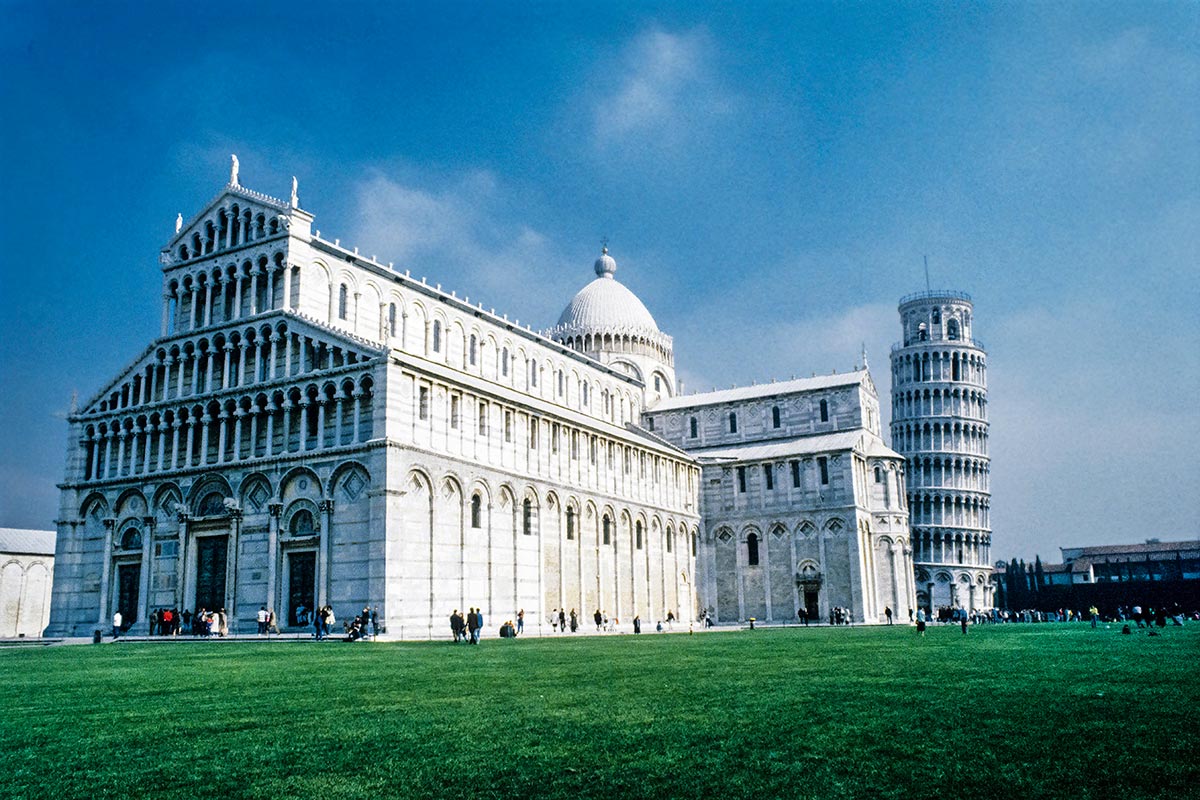
Campanile is a Unique Feature of Italy
One of the unique features of Italy is the free-standing tower called a campanile. The Italian word campana means bell. I wonder how may tourists appreciate that the famous towers are always bell towers associated to churches or monasteries? What is unique about campanile in Italy is that they are built as works of art and architecture.
Author & Photographer: George Mitchell

Our recommendations are not influenced by affiliate links – we have none. Our advice is derived from our personal experience and knowledge based on living in Rome for four years and studying its art, architecture, and culture. We also gave a course on Discovering Our Ancient Routes in the Mediterranean at the University of Alberta.
Leaning Tower of Pisa
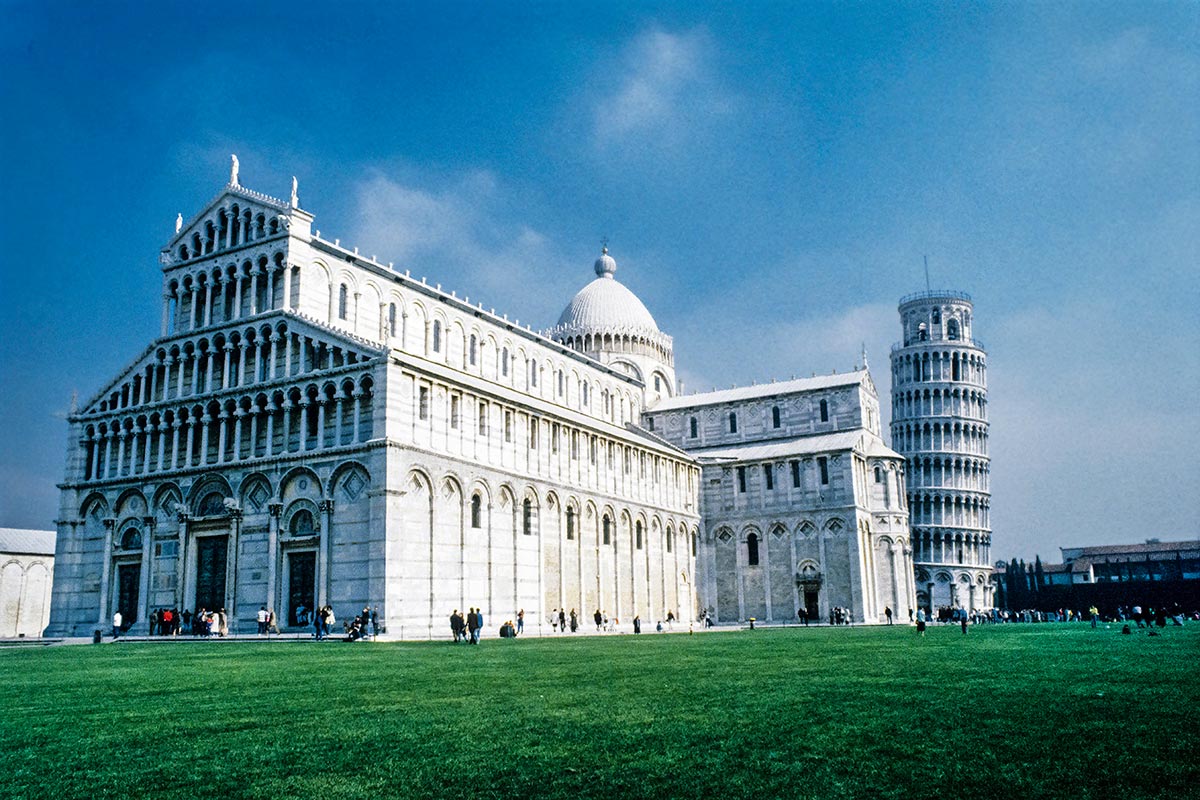
The Leaning Tower of Pisa is the campanile of the Cathedral of Pisa. The tower, built in 1178, was already leaning due to the weight of marble on the unstable soil. But the soft soil also protected the tower from being toppled by four major earthquakes. Recent projects have decreased the lean from 5.5% to 4%.
The tower may look like classical architecture, but it is not. The campanile was built in the Middle Ages using the popular Romanesque style, which was based on Roman classical architecture. The Leaning Tower is also famous for Galileo dropping two cannonballs with different weights to prove that mass does not affect the speed of descent.
We are fortunate that the Leaning Tower still exists. During World War II, a US Army Sargent refused to order an artillery barrage against the tower where the Germans were firing.
The Florence Campanile
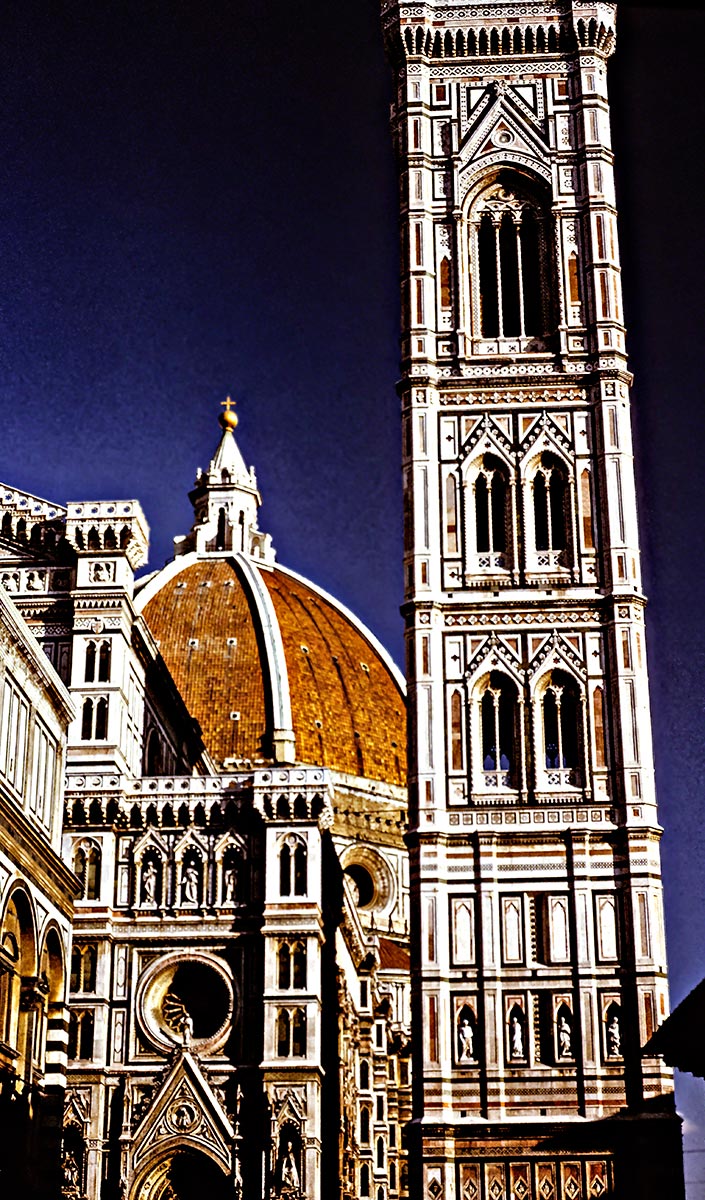
The Duomo is the name of the Cathedral of Florence, the first dome raised since Ancient Rome. Even though this building was started in the Middle Ages, it is considered the birthplace of Renaissance architecture.
The Duomo Campanile (1334) was built by one of the most famous medieval painters, Giotto. The 84.7 m (278 ft) tall tower is in Gothic style. But, instead of an austere design, Giotto incorporated white, green and orange-red marble inlay to match the style of the Duomo.
Venice Campanile
The famous tower near Basilica San Marco (1174) in Venezia is a campanile. It was often damaged by lightning and an earthquake in 1511. It totally collapsed in 1902 and was rebuilt. The 98 m. (323 ft) brick tower is on an unstable, waterlogged base and is under repair right now.
The Fall of Rome led to the Rise of Venice. Venice was the major European power other than Constantinople during the Middle Ages until the Renaissance. Venezia ruled the sea, controlled all trade between the Silk Routes and Western Europe, and ruled the Adriatic as well as the Greek Islands in the Mediterranean.
The tower was copied in the Venetian colonies of Slovenia and Croatia. In fact, the tower has been copied by many countries on both sides of The Pond.
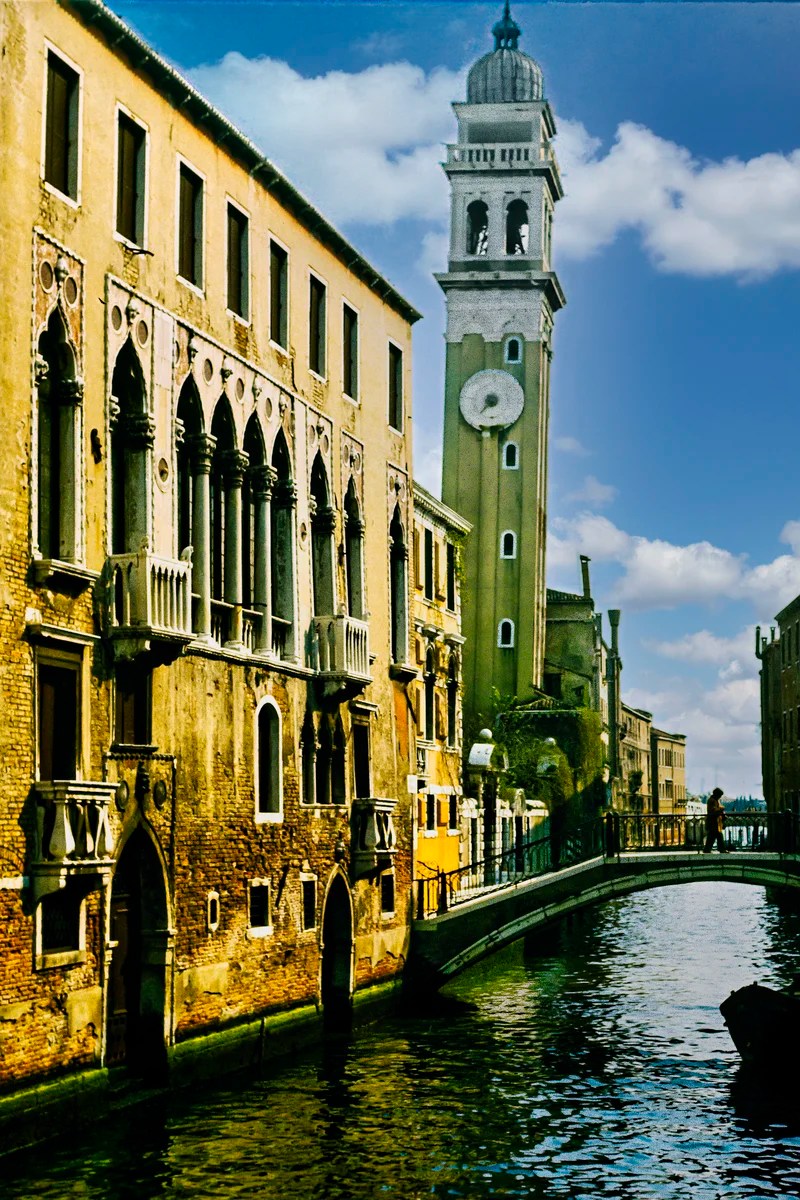
We never realized that Venice has its own leaning tower, the Campanile of San Giorgio dei Greci.
The Original Renaissance Men
It is amazing how many famous painters were multi-talented artists, who also worked as architects, sculptors and even scientists. Artists were like rock stars and were often known, even today, by their first name alone. For instance, do you know the last names of Michelangelo, Raffaello, Giotto, Galileo and Leonardo?
Glendalough, Ireland
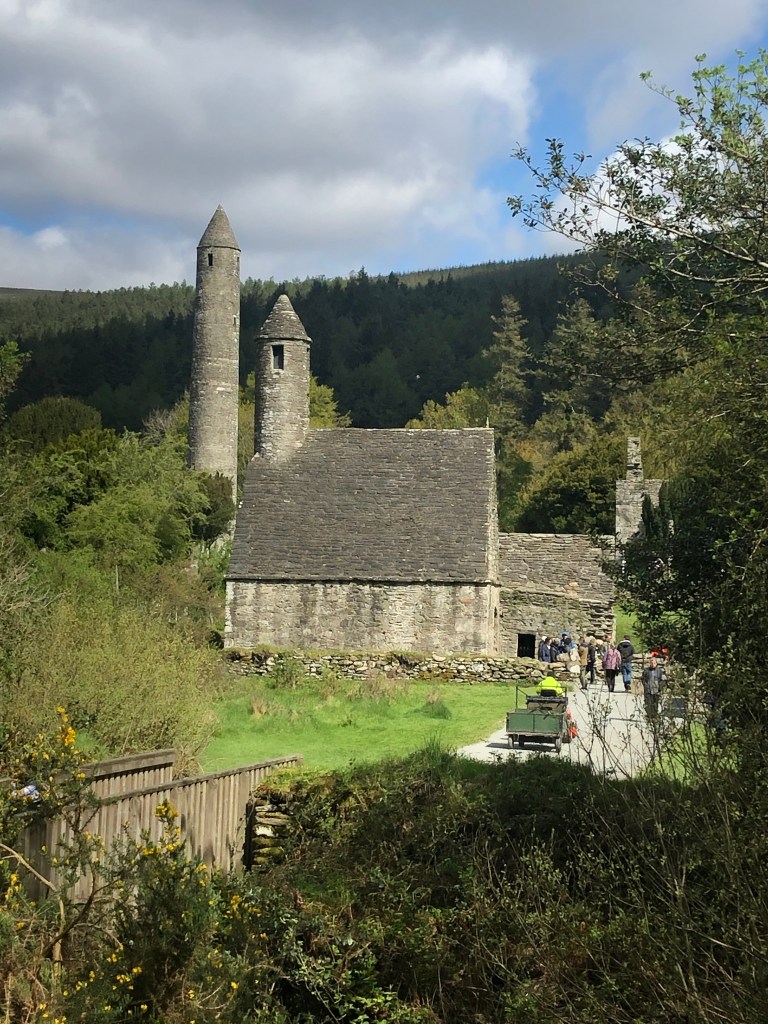
The bell tower tradition started around 400 CE in Italy, and around the 9th century, the idea spread to Ireland, whose towers are always round.
Many Round Towers are still standing because their round shape is gale-resistant and the section of the tower underneath the high up doorway is packed with soil and stones. The one at Glorious Glendalough is 30.5 m tall.
A more recent one was built in 1935 for the Church of the Four Masters in Donegal.
Final Comments
Pisa, Florence, and Venice are very over-touristed. If you plan to visit, spend more than ten minutes photographing a leaning tower. We hope you now understand why these places are significant and how they have had such a great influence on the history and culture of the world.
Subscribe
Please subscribe to Terra Encounters because we offer valuable insights to improve your understanding and enhance your travels. We offer itinerary-based guides packed with the best sights and hidden gems. Let our knowledge help you fully appreciate every moment of your amazing journey.
Get travel tips and advice delivered directly to your inbox. The best part is that it is free.
This was only a taste of Italy. What questions do you have? If you have been to Italy, share your experiences with us. How long is/was your trip?
Itinerary Map & Resources
Roman Itineraries Map — our custom Google Map
Central to Northern Italy Itinerary — our custom Google Map
Google Maps Ratings
Google Maps provides a rating from 0 to 5 for all sights, hotels and restaurants (but not cities). All of our recommendations are appended with the rating (prefixed with a G) from Google Maps. As it is based on feedback from tourists and locals, it is much more reliable than travel booking websites. We consider a score of 4 to 4.39 to be Very Good; 4.4 to 5 to be Excellent.
Other Posts You May Like
Rome’s Top 8 Self-Guided Walks
Here are eight itineraries to explore Rome in more detail:
Itineraries Outside of Rome
Here are itineraries to explore the north from Tuscany to the Dolomites, and south from Pompeii to Sicily:

Understanding Italy
The Italy FAQ post answers questions such as:
- When should I go?
- What is the best season for travel?
- Where should I go?
- Can I see everything in a week?
- How much time do I need for Italy?
- How much cash should you take to Italy?
- Should I pay in Euros or my own currency?
- How safe is Italy?
- Should I rent a car? Take a Taxi?
 Terra Encounters
Leave a comment