
Visit St. Peter’s on the Vibrant Vatican Walk
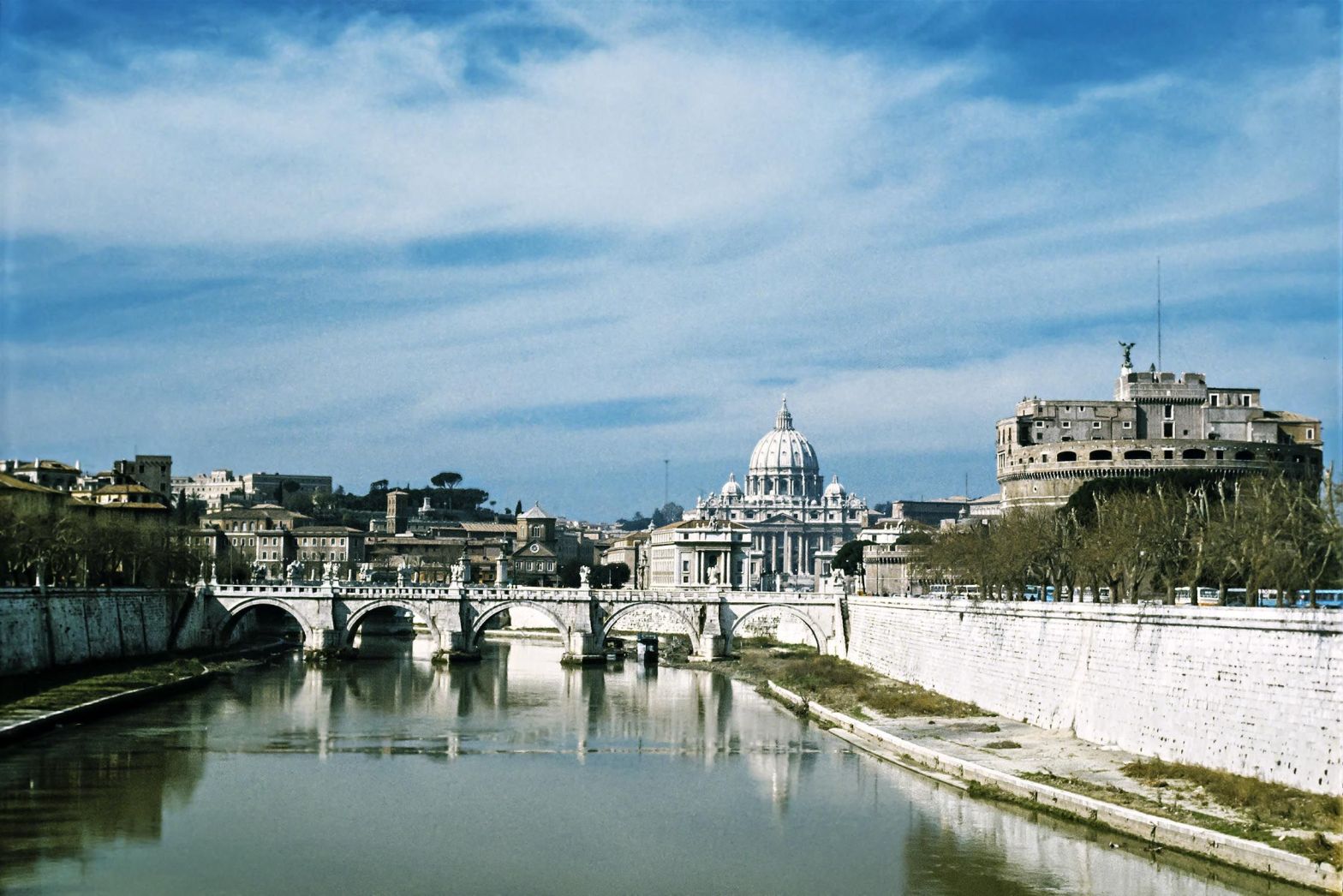
Why is Rome the place to see Baroque art and architecture? The Catholic Church began and sponsored the Baroque Era to regain its followers after the Reformation with a new style that inspired surprise and awe. The Vatican area is so power packed with vintage sights, it was split into two walks. This walk explores the epitome of Baroque art and architecture also known as St. Peter’s Basilica, travels to Hadrian’s Mausoleum and ends by crossing an angel-encrusted bridge Ponte Sant’Angelo back to Roma Centro.
Author & Photographer: George Mitchell

Our recommendations are not influenced by affiliate links – we have none. Our advice is derived from our personal experience and knowledge based on living in Rome for four years and studying its art, architecture, and culture. All the places recommended in this post are pinned on our Roman Itineraries Map. The place names are appended with the Google Maps Rating (G0 to G5).
Piazza di San Pietro
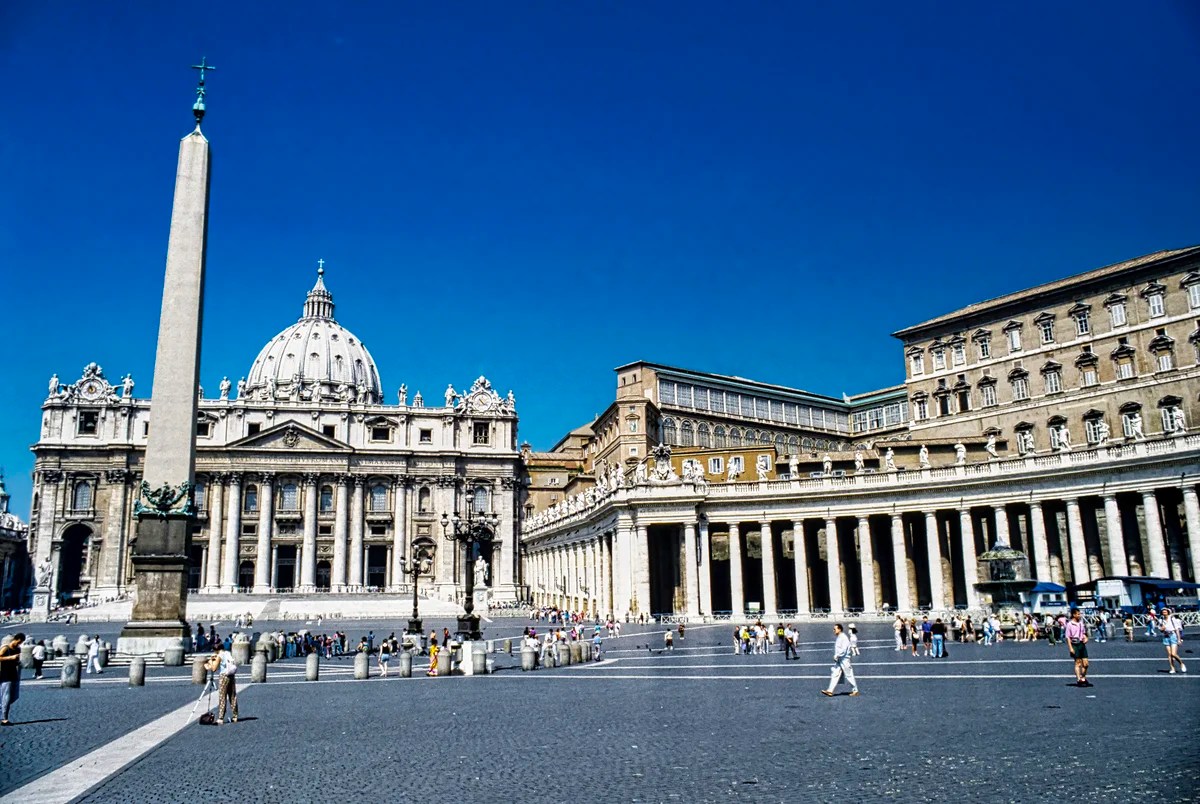
It took 900 men and 140 horses to raise the Ancient Egyptian obelisk in 1586. About a hundred years later, this magnificent square was designed by Bernini. And you thought he was only a sculptor! He sculpted, architected and even wrote operas simultaneously. The elliptical colonnade symbolizes the arms of the Church embracing the faithful. It is topped by 140 statues of saints carved by the workshop of Bernini. Famous artists would train people in their artistic style and would run these workshops as a business. The exterior is the work of another famous architect, Carlo Maderno.
You will see Swiss Guards along the walls leading to the interior of Vatican City. They still wear the very colourful orange and purple outfits from Renaissance times. We were allowed to go inside to the farmacia (pharmacy) to get the DPT combination vaccination for our son, which was not available in Italian pharmacies at that time. Who knew that the smallest state in the world has its own pharmacy?
BTW, the Swiss Guard, the world’s smallest army, was formed in 1506 by Pope Julius II. Five hundred years ago, Switzerland was a poor country whose young men often worked abroad as mercenaries. The current 130 members of the Swiss Guard are required to be Catholic, unmarried Swiss citizens who have completed Swiss military service. They can be seen on guard outside the Vatican every day, dressed in striped blue, red and gold uniforms and carrying halberds as their traditional weapons.
St. Peter’s Basilica
The Basilica was constructed over the original built by Emperor Constantine. The original temple was built over a famous Mithraic temple. Mithras (the Persian sun god) was the main competing religion at that time. Early Christians eventually converted all Mithraic temples to Christian temples. This was based on a deliberate policy, Interpretatio Christiana, to adapt pagan cultural beliefs and say they were part of Christianity.
The hill the temple was on was called the called Vaticanum, hence the name still used today. Very little of the Basilica version 1.0 remains other than six twisted columns. The bronze front doors in the centre were part of the St. Peter’s version 2.0 and date to 1445.
Bramante Architecture
So what happened to the previous basilica? Pope Julius II ordered it be replaced so a new and bigger church would be built to symbolize the rebirth of the Catholic Church as part of the Counter Reformation. While this era was considered the High Renaissance, the building programs of the Church triggered the Baroque Era.
So Bramante, who architected the Vatican Museums building, tore down the old basilica and designed a new one. But he only got as far as building the massive piers, as he died in 1514. Unfortunately, he did not leave his plans, and the piers were considered by others as not thick enough to support the weight of the dome. Almost every major architect of the 16th century had some role in designing St. Peter’s, but not much progress was made over the next forty years. It’s ironic that Bramante laid the foundation for his arch-rival Michelangelo. In 1547, an unwilling 71-year-old Michelangelo took over. Because of his fame, he got carte blanche. To quote Pope Leo X, “one cannot deal with him”.
Michelangelo Architecture
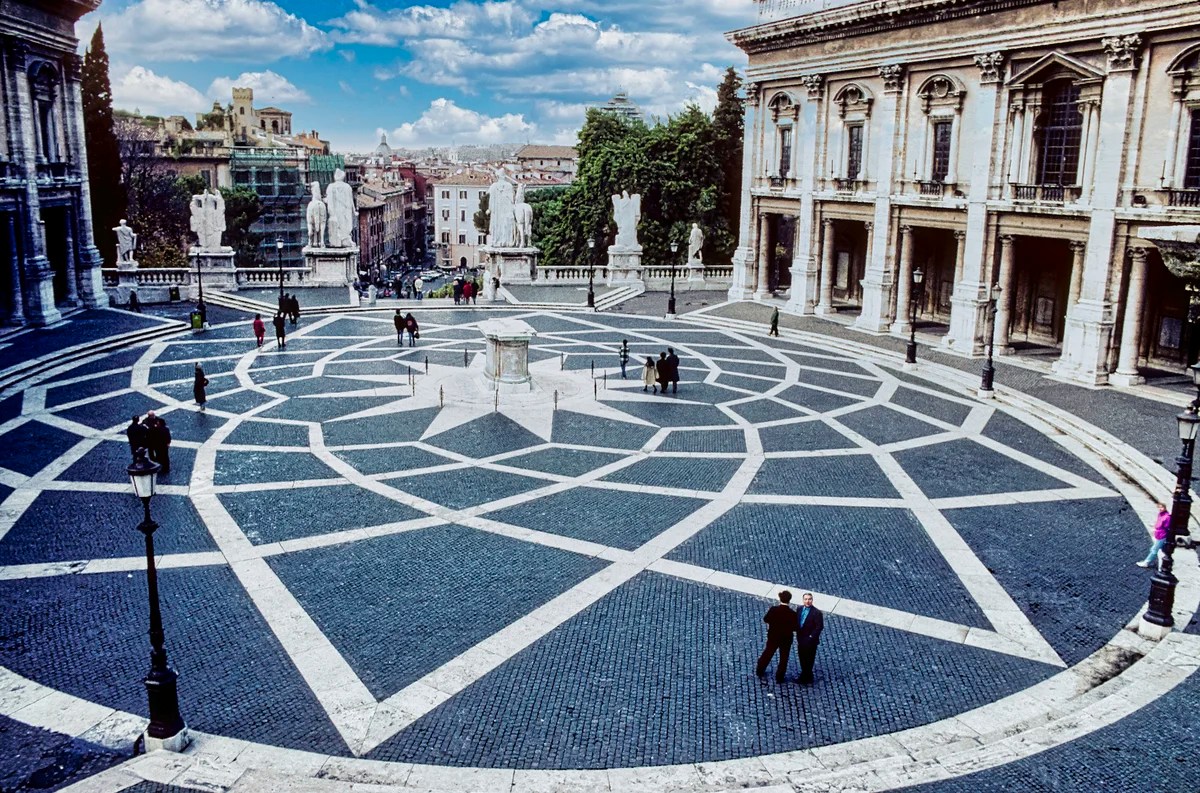
Michelangelo did some minor design work in Florence before he redesigned the Piazza Campidoglio in the Discover the Secrets of Ancient Rome walk. One of his main architectural principles was symmetry with a dominant central feature. The goal was to make a dramatic setting or scene. However, the symmetry of Campidoglio was not achieved until decades later when the city built the Capitoline Museum on the opposite side.
The basilica and not just the dome of St. Peter’s owes more to Michelangelo than any other architect. However, it was later modified to become the supreme example of Baroque architecture. Bernini played a big part in that.
The basilica is first and foremost the symbol and embodiment of the Catholic faith. On one of our very first trips to Rome, we stayed at a nunnery. They gave us tickets to the regular Wednesday audience with the Pope. The hall was infused with enthusiasm and reverence as the Pope was brought in as per tradition on a palanquin.
Tourists are amazed by the size and beauty of St. Peter’s. But they cannot understand the significance, meaning or purpose of what they are seeing if they do not learn more about Christianity. After a while, the “sights” of St. Peter’s will just become a blur.
Pietà
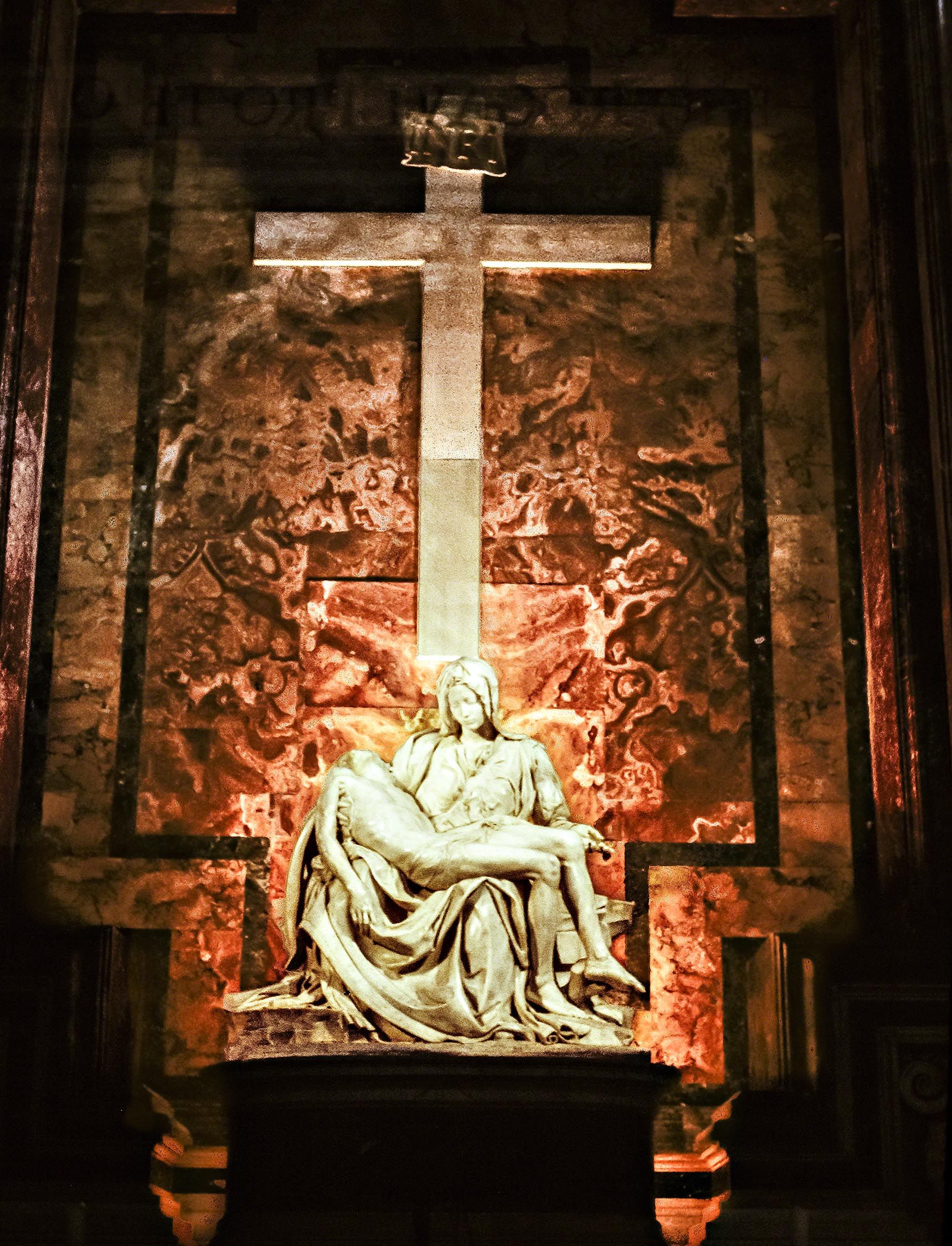
The Pietà (1498) shows equal measures of tragedy and serenity – just focus on the face of Mary. She looks graceful and youthful as if her purity has prevented any aging. Jesus was 33 years old when he was crucified, according to a Roman tradition. But the sculpture also shows how Michelangelo could minimize the bulk of Jesus resting in the lap of a petite Mary. He placed a veil over her hair to make the head appear larger and carved voluminous drapery around her body. It looks like Mary is offering the sacrifice of her son. At 24 years old, this is the only sculpture that Michelangelo ever signed – in Latin, by the way.
The Pietà was commissioned by a French cardinal for his tomb. Because the cardinal was also the representative of the French crown to the Vatican, he was buried in the chapel of the Kings of France in St. Peter’s. As this chapel was demolished – ironically by Michelangelo – to build the new St. Peter’s, the Pietà was moved to its present location in the first chapel on the right. The Pietà is now glassed away after an early cultural terrorist smashed it into pieces.
Sights of St. Peter’s
On either side of the altar in the Capella del SS. Sacramento are two columns from Constantine’s Basilica that inspired the twisted Baldacchino. This is followed by a statue of Gregory XIII, who gave us our current Gregorian calendar. The ancient statue (c. 1300) of St. Peter has toes worn down over the centuries by the hands of pilgrims!
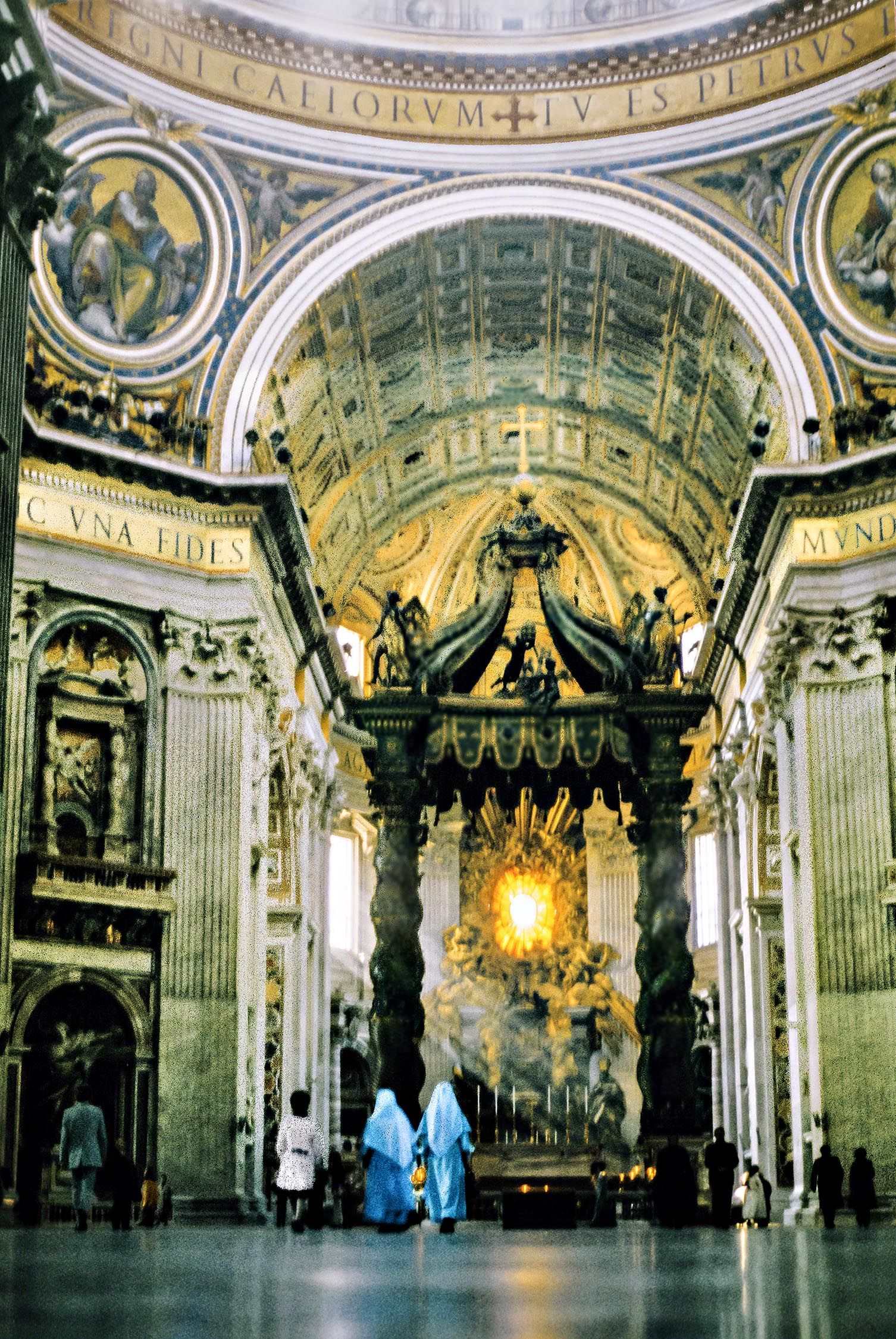
The apse of the basilica above holds a grandiose sculpture monument, created to enclose a wooden throne, once thought to be that of the Apostle. The luminous alabaster window shows the Holy Spirit as a dove.
Bernini designed the bronze Baldacchino (canopy over the altar) using twisted columns. But he did not know that Constantine’s original canopy also used twisted columns. The Baldacchino took ten years to build and earned the most famous pasquinade “quod non fecerunt barbari, fecerunt Barberini” – “what the barbarians did not do, the Barberini did”. This refers to the removal of the bronze ceiling panels from the Pantheon in order to build this canopy.
The Barberini Pope Urban VIII commissioned the canopy as an offering for the survival of his niece, who nearly died in childbirth. Observing each corner carefully, one can see the niece in various expressions of pain, and finally her smiling little one sculpted into the base forever
Under the crypt, wartime excavations uncovered the pavement of Constantine’s Basilica. But that is not all. Underneath is a well-preserved Ancient Roman (pagan) cemetery. There is one more surprise! The Basilica was built on top of the main temple to Mithras. A stone throne of the Bishop of Rome (the Pope) is covered in Mithraic carvings! There were also caves underneath that gave off perfume-like gases and served as a Delphic oracle. The name Vatican originates from vaticinor, which means foretell or prophecy – a place where high priests communicated with the Roman gods! This is a reminder of the co-opting of pagan beliefs by early Christianity.
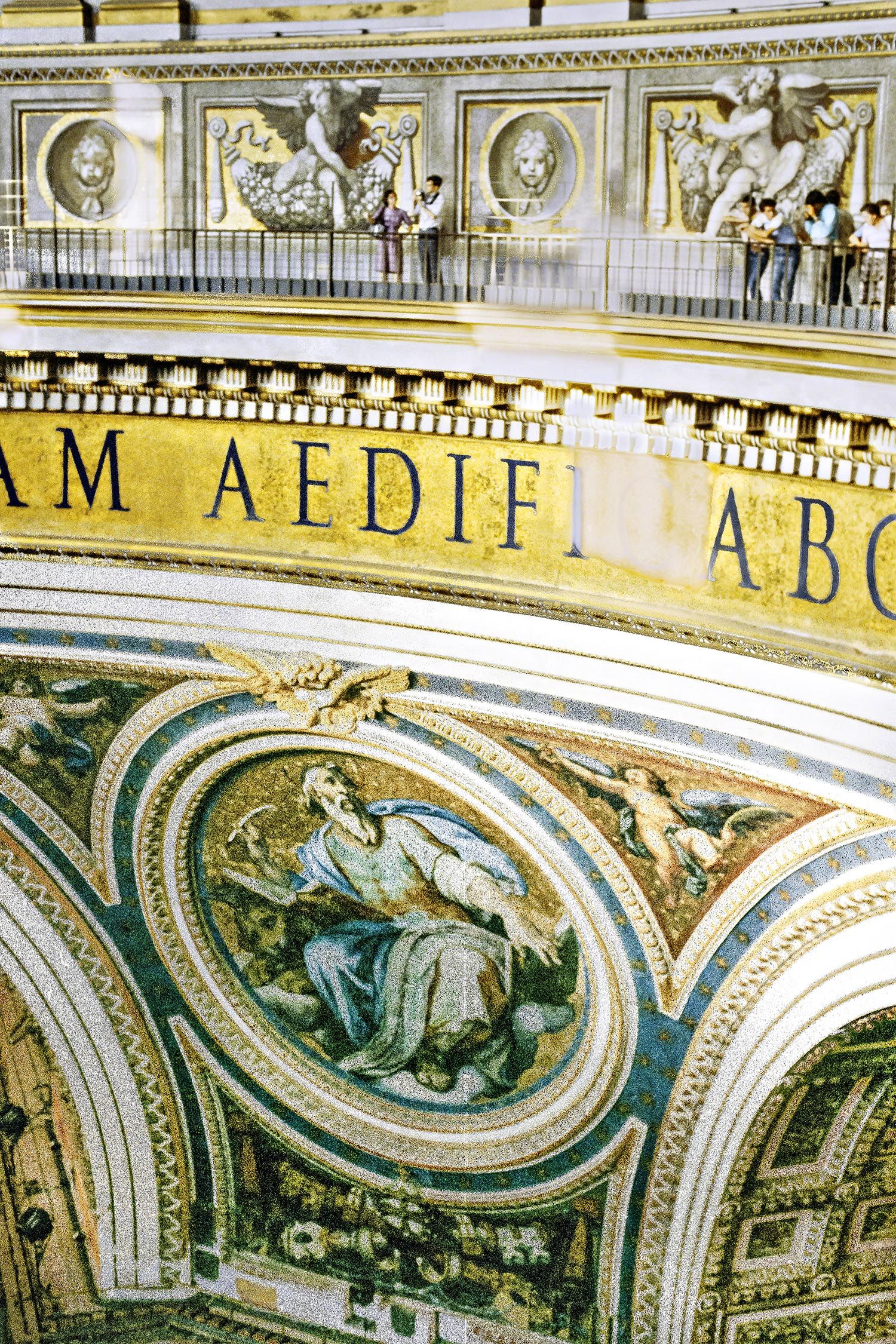
Ascend to the balconies high up, circling the massive dome. You will be stunned by the scale, as well as be able to see the decorations close up. The pen of St. Mark is 1.5 metres long!!
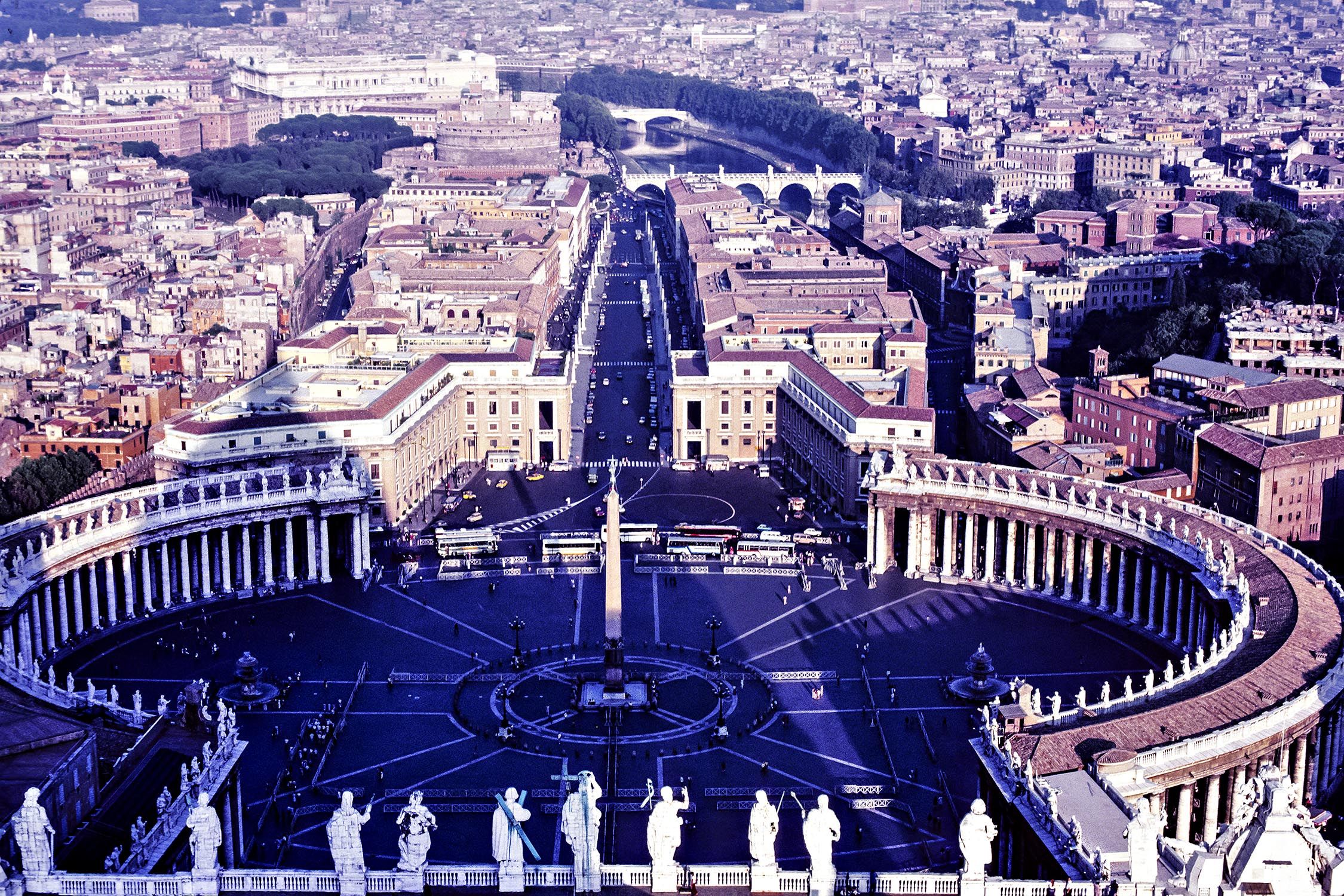
Take the elevator to the roof, which gives magnificent views of the piazza, the wide boulevard, and the city of Rome. Stairs within the drum lead to the gallery over 50 m further above.
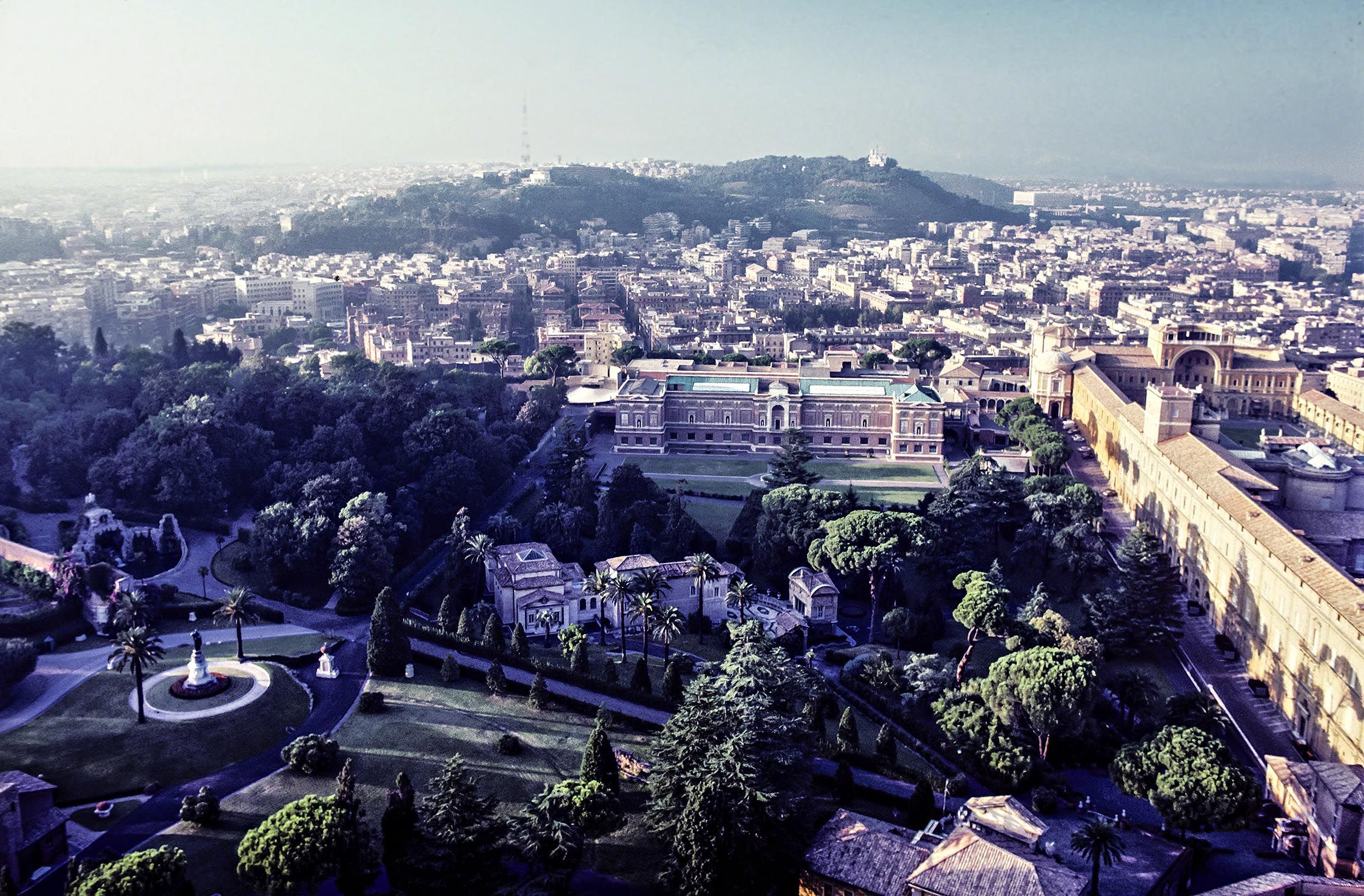
In this view, we can see the Vatican City grounds. On the right is the building designed by Bramante that houses the Vatican Museums.
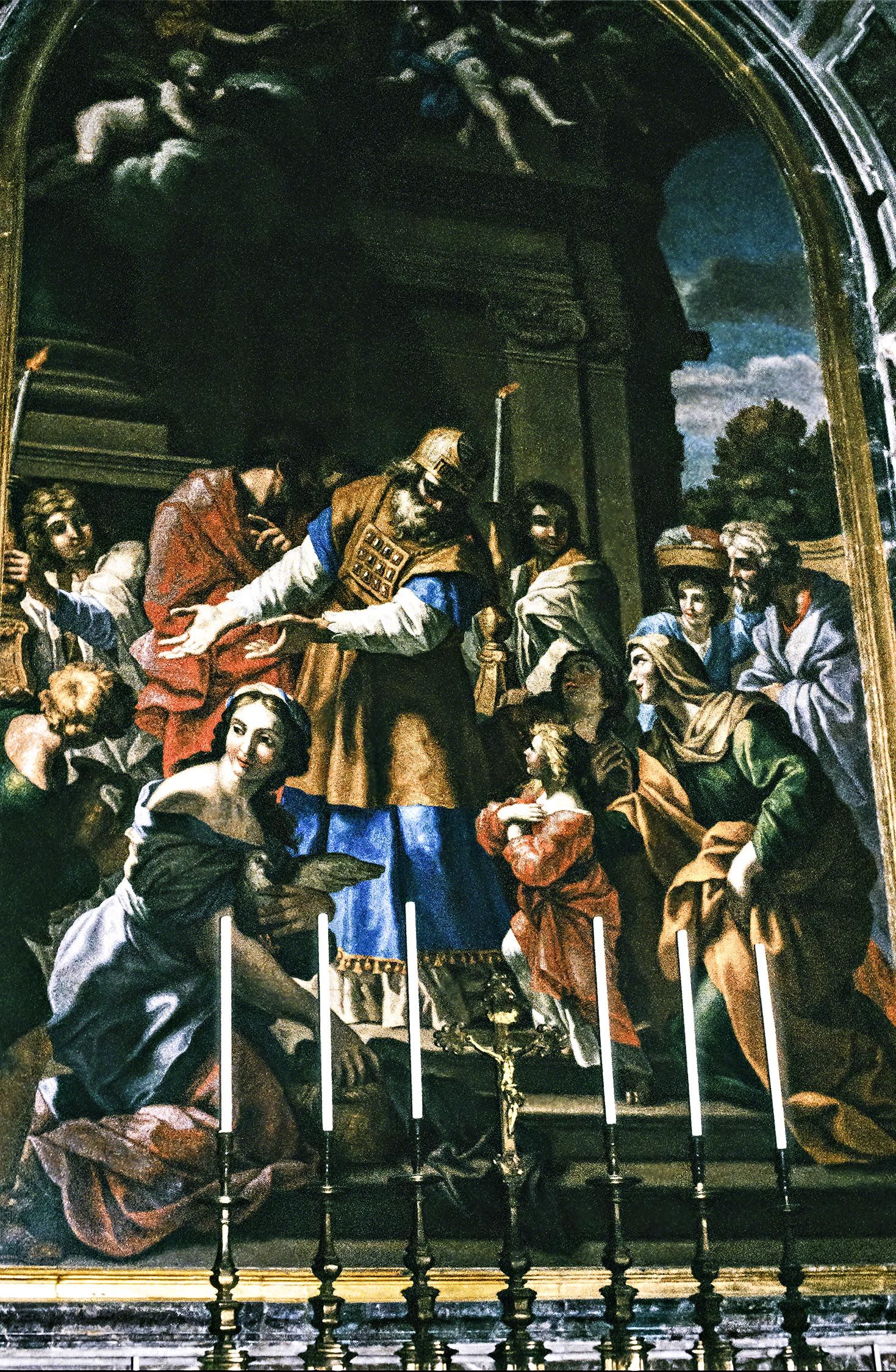
On the way out, on the right aisle near the entrance, stop in the Cappella della Presentazione for the Presentation of Mary. At the age of three, her parents, Joachim and Anne, who had been childless, brought Mary to the temple in Jerusalem and consecrated her to God. I would love to say how beautiful the paintings in St Peter’s are. But they are not paintings; they are mosaics!
Don’t miss the historic porphyry circle near the entrance way where Charlemagne was crowned the first Holy Roman Emperor by the Pope in 800 AD, since the fall of Rome. He united most of Western Europe for the first time under the Carolingian Empire.
Castel Sant’Angelo
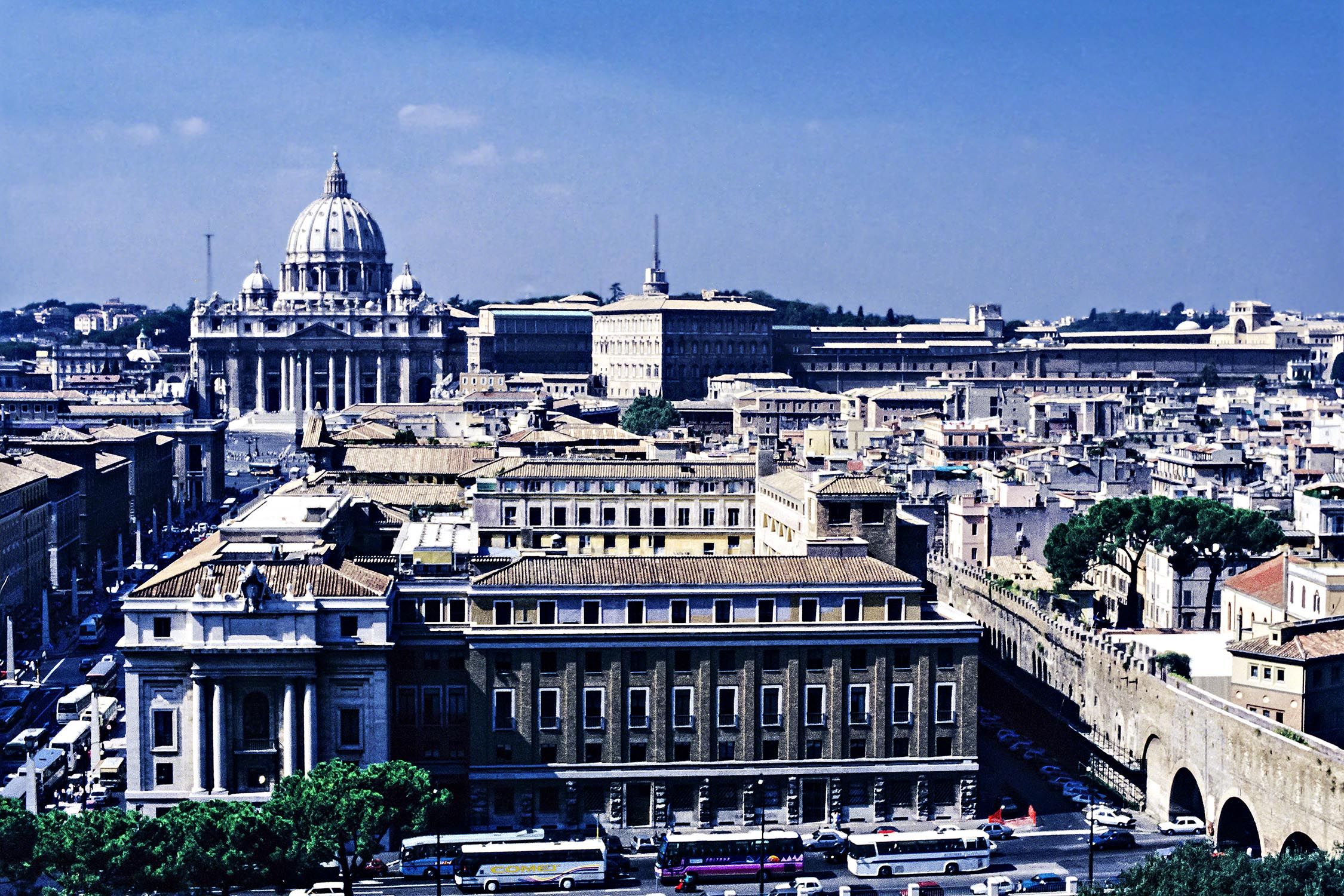
Along the Via dei Corridori stretches what looks like a wall or aqueduct. It’s actually an escape route for the popes. It was used by Pope Clement VII during the Sack of Rome in 1527.
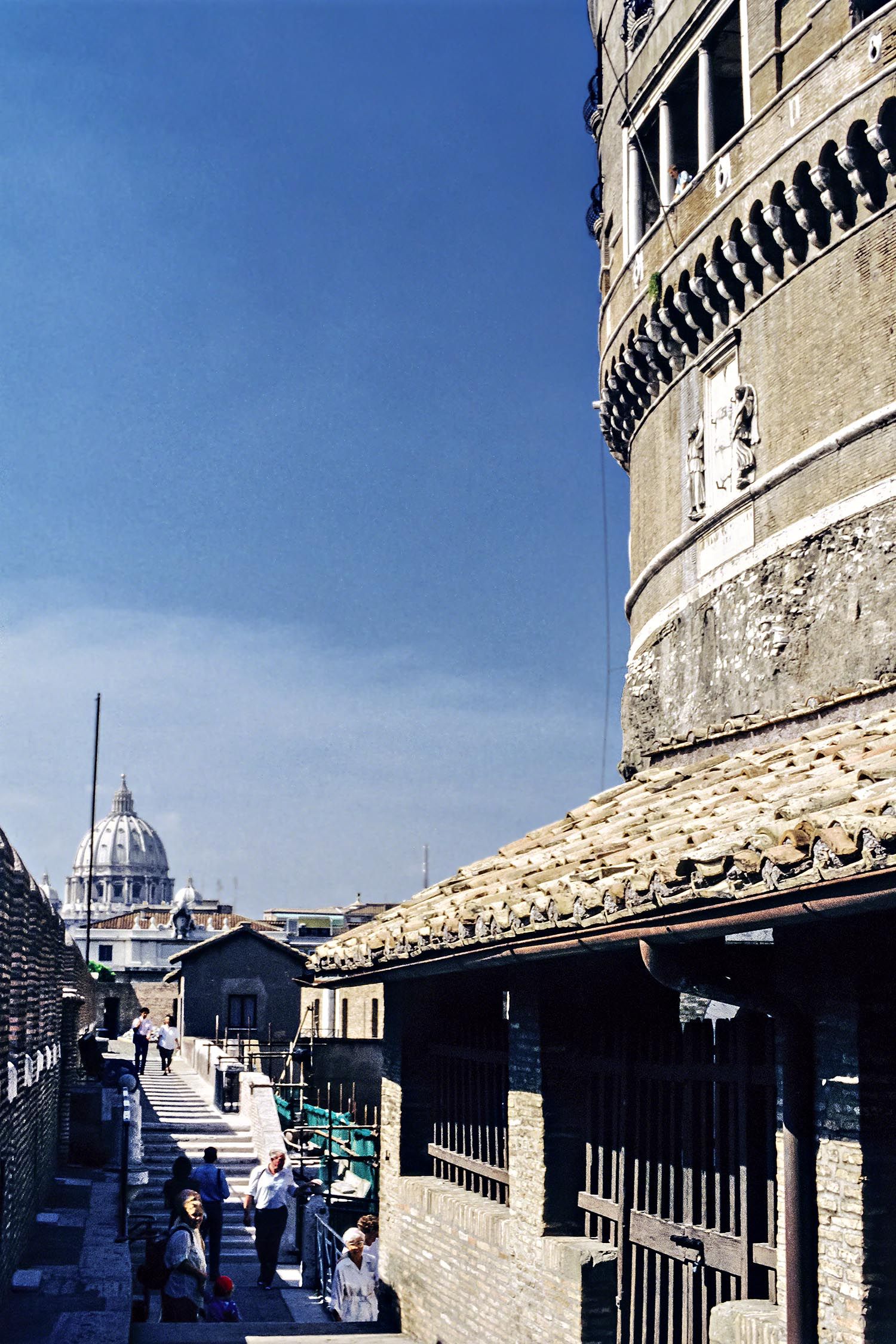
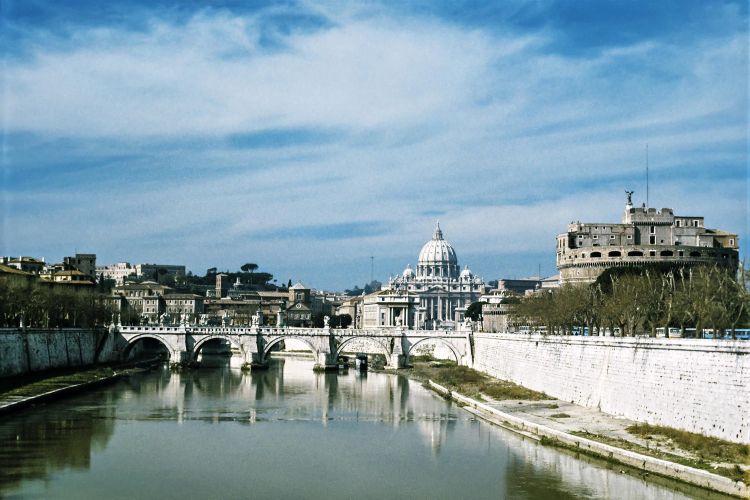
It leads to Castel Sant’Angelo, the fortress and prison of the Catholic Church. You can visit the interior except on Mondays. Here is the view from the castle looking along the passageway to St. Peter’s.
However, this building dates back to 139 AD. It was a conical mound of earth enclosed by circular walls faced with Parian marble, columns and statues. So what was it? Hadrian’s Mausoleum was modelled after the Etruscan funerary urn.
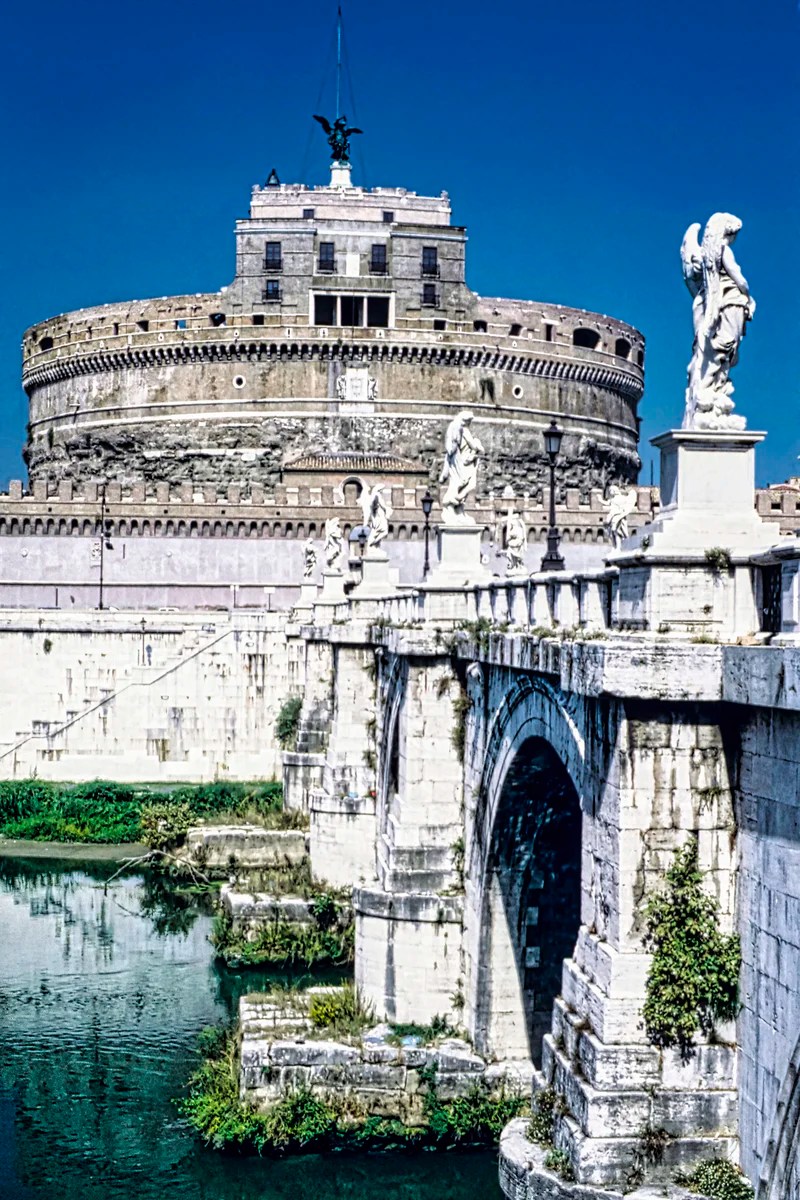
During the Black Plague, Pope Gregory saw a vision of Archangel Michael on top of the mausoleum. At that point the plague stopped, so a statue was place at the top and Castel Sant’Angelo received its name.
Ponte Sant’Angelo
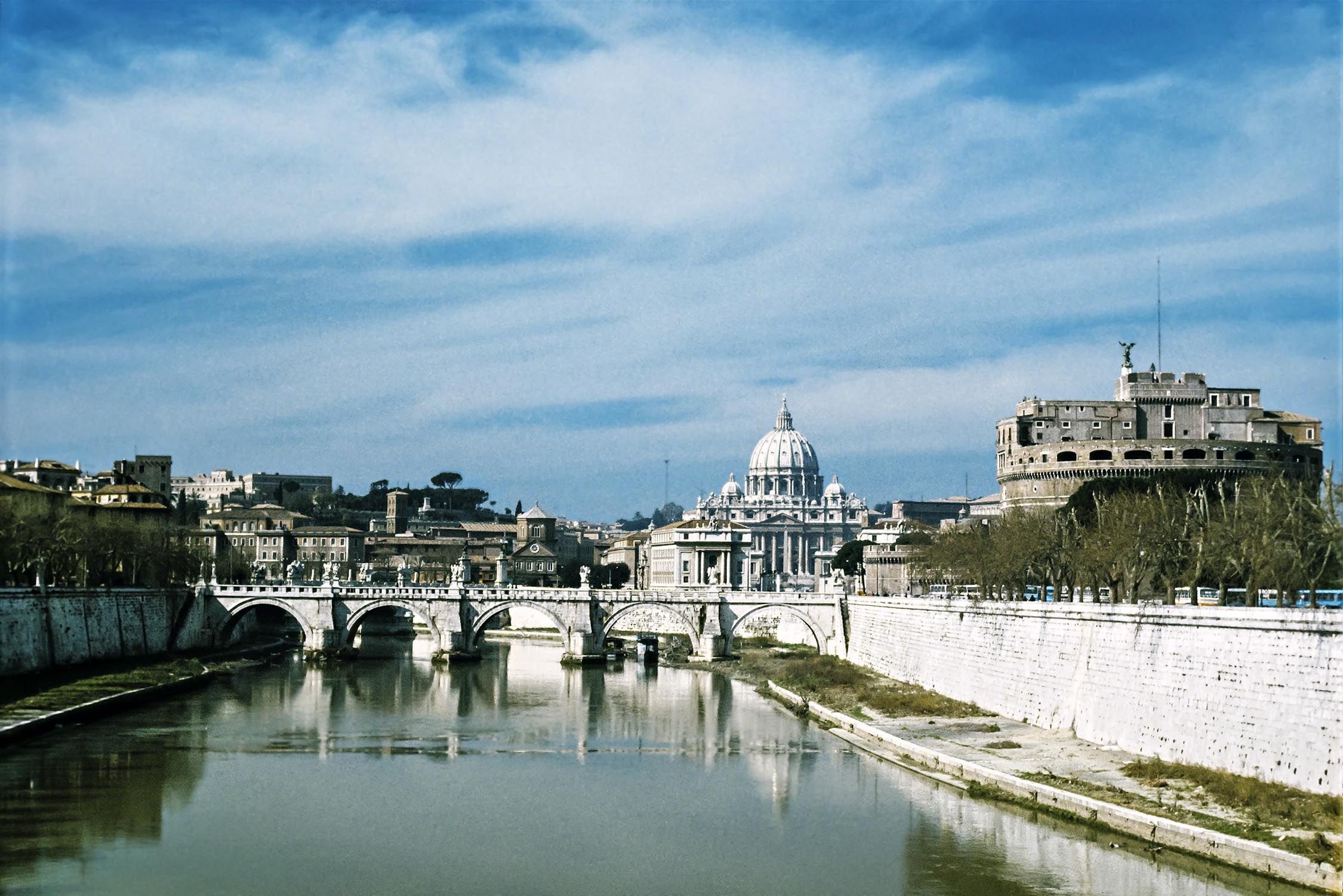
Before crossing this magnificent bridge, walk past the arches along the Tiber River until you can get a good view of St. Peter’s in the background and the bridge and Castel Sant’Angelo in the foreground.
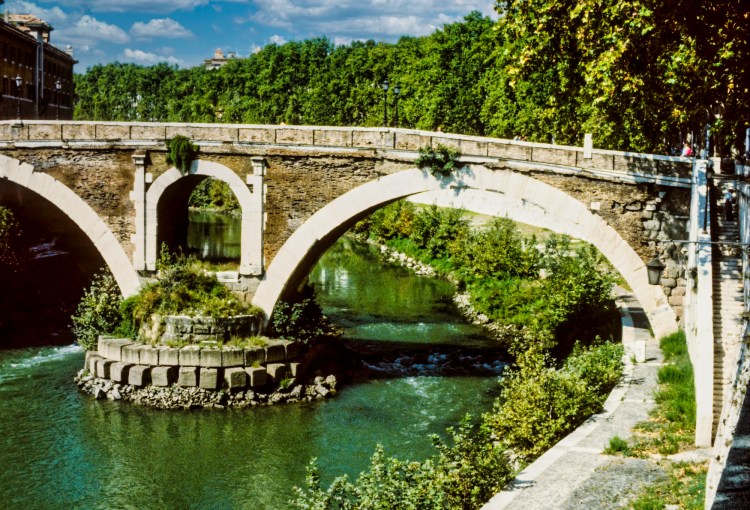
The three central arches are ancient and were built by Hadrian. The bridge is faced with travertine marble. The Roman ramps leading to the three central arches were destroyed, and two more arches were built in exactly the same style.
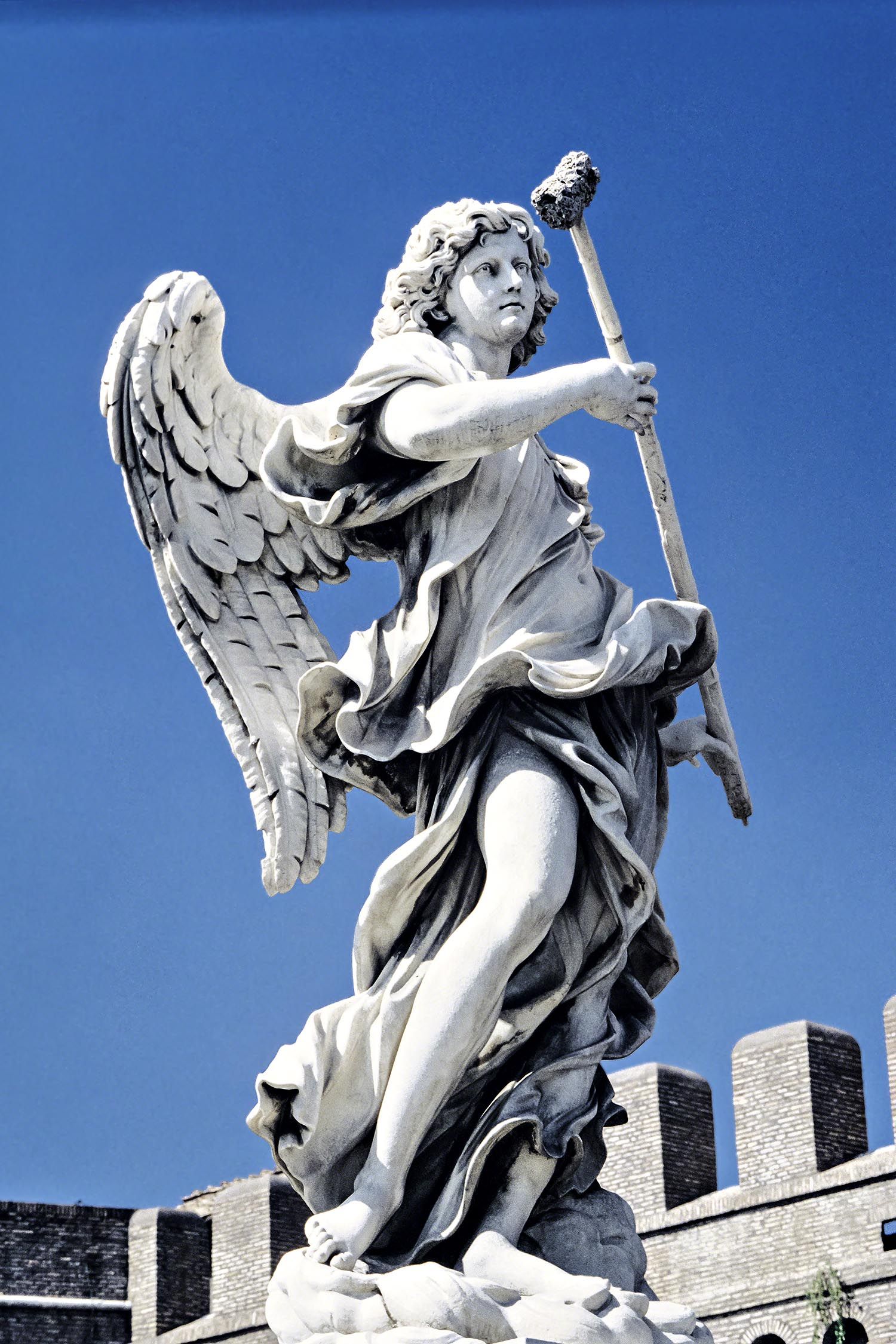
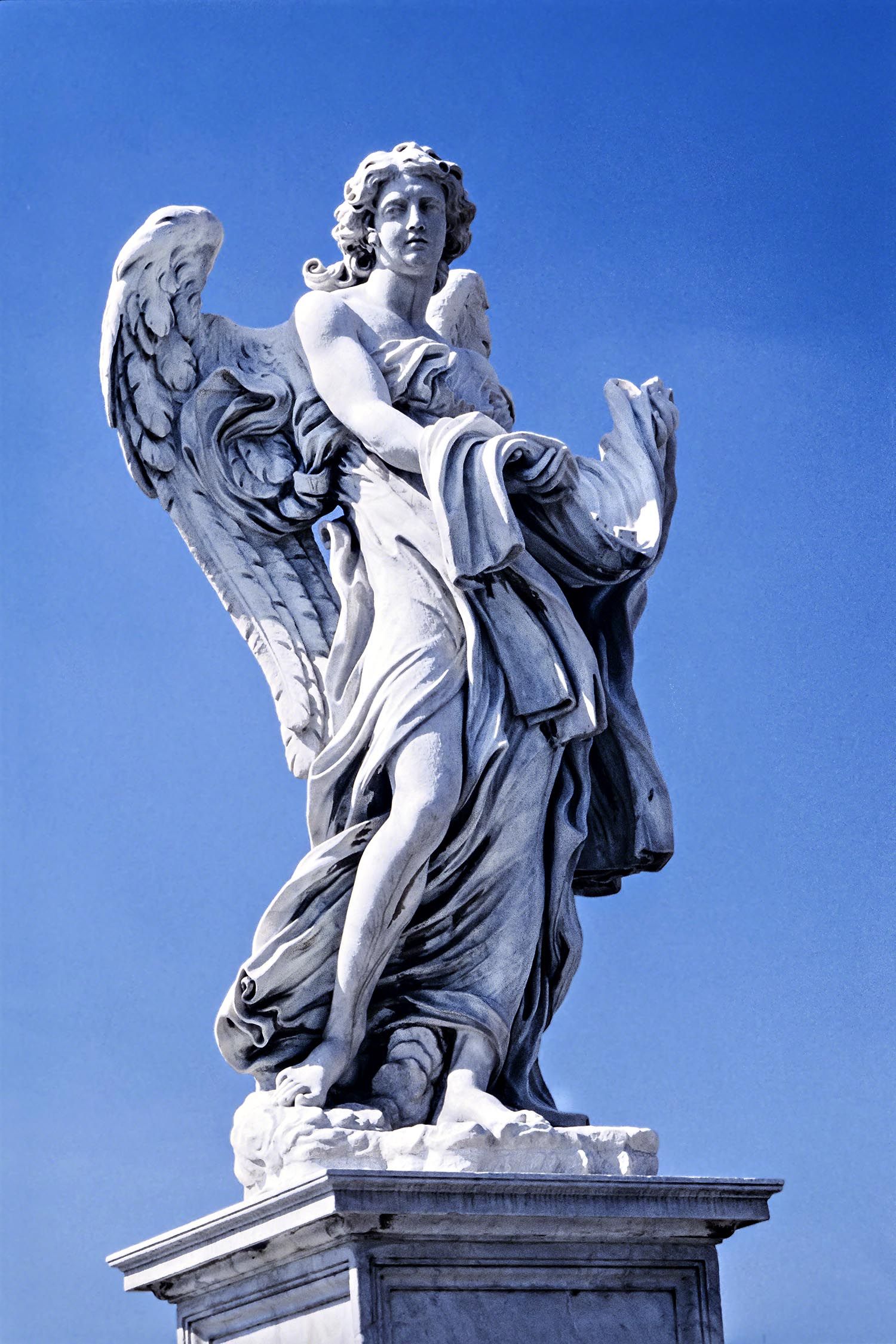
It is not often that crossing an angel-encrusted bridge is like walking in an outdoor museum. But it is! These angels were designed by Bernini but he only finished two statues himself and those are kept in a church. The Angel with the Crown of Thorns and the Angel with the Superscription are copies.
Final Comments
We hope you have learned to look at the details rather than just the typical Instagram view shot. You will get a lot more out of your trip.
Subscribe
Please subscribe to Terra Encounters because we offer valuable insights to improve your understanding and enhance your travels. We offer itinerary-based guides packed with the best sights and hidden gems. Let our knowledge help you fully appreciate every moment of your amazing journey.
Get travel tips and advice delivered directly to your inbox. The best part is that it is free.
This was only a taste of Rome. What questions do you have? If you have been to Rome, share your experiences with us. How long is/was your trip?
Itinerary Map & Resources
Roman Itineraries Map — our custom Google Map
What Should You Read about Rome
Guide to the Vatican Museums, Monumenti, Musei e Gallerie Pontificie – provides detailed itineraries and many artifacts, but not much text about them
Vatican City, Plurigraf – one of the many excellent picture books sold to tourists
The Companion Guide to Rome, Georgina Masson is too in-depth for tourists. But it is great for expats, budding archaeologists and art historians living in Rome. We used it extensively.
Google Maps Ratings
Google Maps provides a rating from 0 to 5 for all sights, hotels and restaurants (but not cities). All of our recommendations are appended with the rating (prefixed with a G) from Google Maps. As it is based on feedback from tourists and locals, it is much more reliable than travel booking websites. We consider a score of 4 to 4.39 to be Very Good; 4.4 to 5 to be Excellent.
Rome’s Top 8 Self-Guided Walks
Here are eight itineraries to explore Rome in more detail:
Understanding Italy
The Italy FAQ post answers questions such as:
- When should I go?
- What is the best season for travel?
- Where should I go?
- Can I see everything in a week?
- How much time do I need for Italy?
- How much cash should you take to Italy?
- Should I pay in Euros or my own currency?
- How safe is Italy?
- Should I rent a car? Take a Taxi?
 Terra Encounters
Leave a comment