
Why Should You Visit Charming Chemainus?
Just 80 km north of Victoria in British Columbia is the tiny town of Chemainus. It boasts 39 amazing wall murals and a few sculptures. This is basically a free, open-air art gallery sprinkled amidst the shops of Chemainus. The artwork is of excellent quality rather than a tourist trap and it is a very worthwhile stop or sleepover.
This town on Vancouver Island is an art lover’s gem. You should include it in your tour of Vancouver Island. The following are just a subset of the murals that we really liked.
Author & Photographer: George Mitchell

Our advice below is not based on a couple of tourist trips. Our recommendations are based on our extensive experience living in Western Canada. We are avid hikers, nature lovers and photographers (all photos are my own).
All of our recommendations are top-rated by Google Maps Ratings, which is based on everyone, not just tourists. Each place recommended in our custom Chemainus Itinerary is appended with a Google Maps Rating (G0 to G5).
Waterwheel Park
Start at Waterwheel Park (follow the signs for the tourist bureau in the same square, where you can get a map of all the sights). Park and walk around the town following the Chemainus Itinerary.

The first sculpture is appropriately about logging. Chemainus started as a logging town in 1858. It is used to be one of the plants of the $5.27 billion company, MacMillan Bloedel, which was bought by Weyerhaeuser in 1999. The tourist industry and especially the murals helped the town recover from the shutdown of the MacMillan sawmill in the 1980s.
I never knew they used a “spool donkey” (1882) to pull the heavy logs from the forest. These were powered by steam engines not donkeys!

This is a full-sized replica of the waterwheel used by MacMillan Bloedel set amidst spectacular trees and flowers. Picnic benches are included.

First Nations Villages Through The Eyes of Emily Carr (EC2) simulates a FN longhouse with Salish-style carved boards. The painting is a reproduction of Emily Carr’s Haida Totems, Cha-atl 1912. Emily Carr, one of our favourite Canadian painters, is described under Emily Carr House, Victoria.
Utopia Café Area Murals

Turn south on the lane behind the Utopia Café and the interesting Three Generations sculpture. Here are a couple of paintings inspired by Emily Carr, whose painting is shown as an inset.
The Keeper of Secrets (EC3, by Cim MacDonald 2016) is the supernatural Raven. The Raven is an important symbol of the Northwest Coast First Nations. In fact, the Haida First Nations consider themselves descendants of either the Raven or Eagle Clan.
Ancient stories describe the FN creation myth. The Raven steals the sun, the moon and stars – that had been hidden by the great chief in a bentwood box. The Raven placed them in the sky to give light to humans.
The Raven is known as the keeper of secrets, which he would dole out to deserving people. This is symbolized by the story of the Raven transforming into a baby to live among the beaver people in order to determine the secret of the origin of salmon, the FN’s most important food source. The beavers had hidden the salmon in a secret river and lake. The Raven rolled up the river and lake and transported them around the coast. But it was so heavy that the Raven would have to stop to rest. The beavers would gnaw on trees to block his way but this caused some of the water and salmon to escape creating huge rivers of salmon throughout the West Coast.

The Sacred Cedar (EC4, by Cim MacDonald 2016) shows the canoes, totems and houses carved from red cedar, a very durable wood. The inset of totems is his reproduction of Emily Carr’s Blunden Harbour.
Cedar has a special significance in FN traditions. The use of the cedar tree in FN culture is so extensive that it is often called the Tree of Life. It is burned to purify the air and drive out negative energies. It is used as swaddling material for newborn baby and an anti-inflammatory agent. Cedar has a built-in fungicide to prevent rotting and fungus. This is why it is still used today for shingles, storage cabinets and boxes.

By the Bay (EC5, by Mario Labonte 2016), was inspired by and contains a reproduction of Emily Carr’s Chemainus Bay on the right side. The red-barked arbutus tree is the only deciduous evergreen tree in Canada. It was important to the Salish First Nations, who used its leaves and bark to create medicines to treat stomach problems, wounds and colds. Just left of the three central arbutus trees is a hidden face in the sky, shown in the extract below. The nose and lips are made of wisps of clouds and the eyes are shadowed by molded leaves.

Mill Street & Chemainus Road Area Murals

I thought the woman was Japanese in an elaborate kimono when I first looked on mural #6, the Arrival of the Reindeer (Sandy Clark and Lea Goward 1983, restored 2007). Actually, she is an FN princess draped in a cedar bark cloak from the Tree of Life. The HMS Reindeer was a frequent visitor to Chemainus.

This is one of my favourite squares in Chemainus. It combines shrubs, rocks, water and a contemplative sculpture, In Search of Snipes. This is topped off by perhaps the most powerful mural in Chemainus.

This is one of my favourite murals. Native Heritage (#12, by Paul Ygartua, 1983) was restored and enhanced in 2014 — it is amazing how well these murals last outdoors. The photo is just an excerpt of the huge 15.4 m x 5.2 m (50’ x 20’) mural. I did not take a wide-angle shot. There is a power and majesty in these portraits of real people: from left to right: Chief Ce-who-latza, a Native Police constable and a Royal Navy pilot; Chief Clay-sa-luke; and a Salish woman; and Mary Rice on the upper right. The Chemainus area is still populated by Cowichan people (Salish FN language group).

World in Motion (Alan Wylie, 1986) is another huge mural that spans the side of a large building. The photo is just an excerpt of this massive mural, 31 m x 3.7 m (101’ X 12’). The collage not only displays historic buildings but also changes between 1883 and 1939, as we see the horse and buggy replaced by the automobile. The antique car even looks like it is about to drive onto the modern street. It almost feels like it is part of the current street scene. The Horseshoe Bay Inn on the right hosted two well-known American millionaires in 1900 – Standard Oil tycoon J.D. Rockefeller and steel magnate and inventor of the Bessemer Process, Andrew Carnegie.
Other Murals

There are many more areas with murals, but you will probably want to drive to them. I have included one photo from the Waterfront area above, but there are many more that are equally interesting. It is like stepping back in time to the 1920s.
The Hong Hing Waterfront Store (#4, by Paul Marcano, 1982, restored 2004) is a massive 8 m or 26′ wide mural on Esplanade Street. Hong Hing immigrated to Canada and set up his business in 1915. He started in the laundry, expanded into groceries, and then bootlegging! His easy credit terms won him many friends but lost him (some) money.

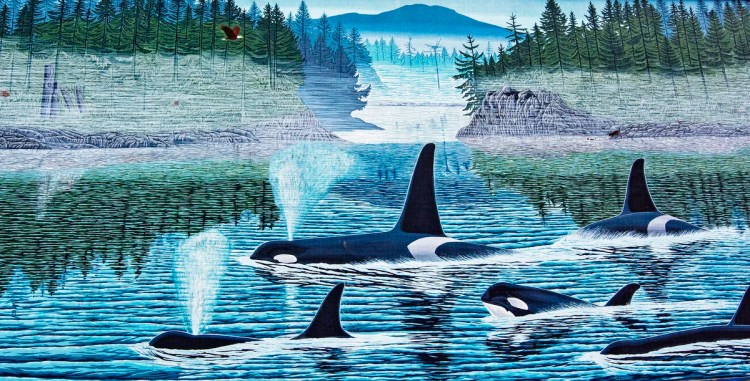
This is one of my favourite murals. It is so majestic. Orcas (by Joshua Raven, 2001) is in the parking lot of the ACE Hardware store on Chemainus Rd as we headed out of town. We were so lucky that there were no cars parked in front of this 7.3 m or 24′ wide painting. If you see it in full size, it looks pointillistic or impressionistic as shown in the excerpt below.

This is one of our favourite murals. I used the faded version of the photo below as a background to my New Year’s card.
Who doesn’t like the majesty of killer whales, though they are actually the largest species of dolphins. So, orca is the better name to use. They are highly social, like humans, living and hunting together. We hope you are swimming as happily as the Orcas. Maybe they are heading to Nanaimo to pick up some Nanaimo Bars – yummm! Happy hunting!

Final Comments on this Itinerary
This is a relaxing itinerary where you can experience the quiet town of Chemainus.
Subscribe
Get travel tips and advice delivered directly to your inbox. The best part is that it is free.
What things fascinate you? How long is your trip? What questions do you have? If you have been to Chemainus, share your experiences with us.
Itinerary Map & Resources
Google Maps Ratings
Google Maps provides a rating from 0 to 5 for all sights, hotels and restaurants (but not cities). All of our recommendations are appended with the rating (prefixed with a G) from Google Maps. As it is based on feedback from tourists and locals, it is much more reliable than travel booking websites. We consider a score of 4 to 4.39 to be Very Good; 4.4 to 5 to be Excellent.
Other Places to Add to Your Itinerary
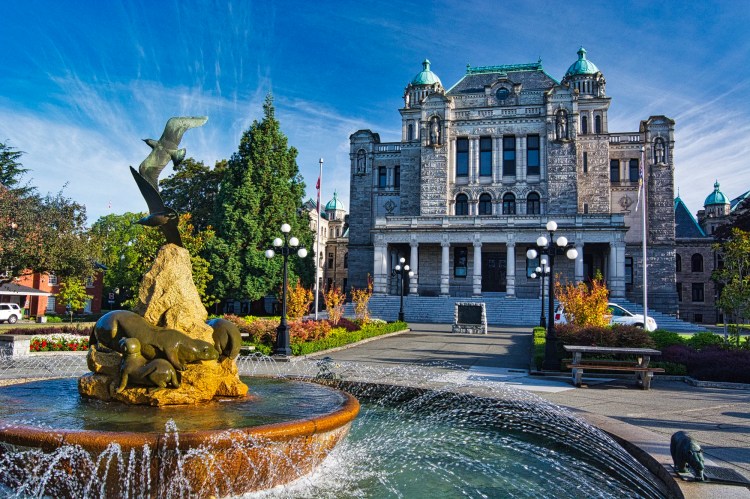
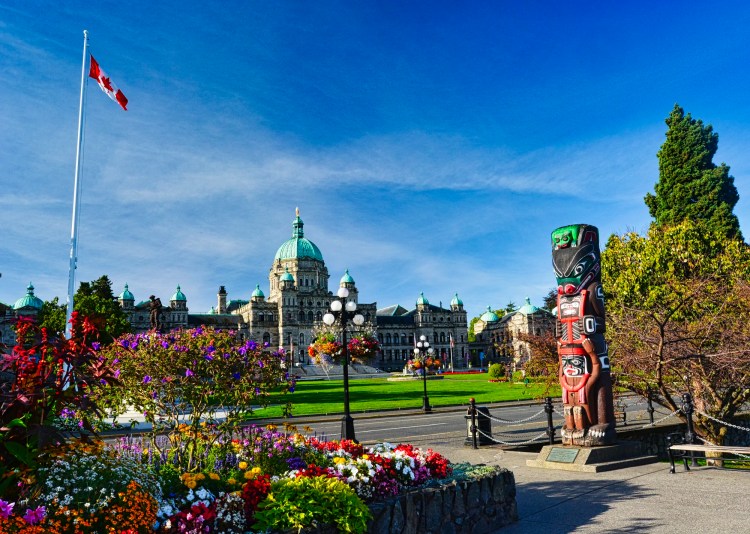
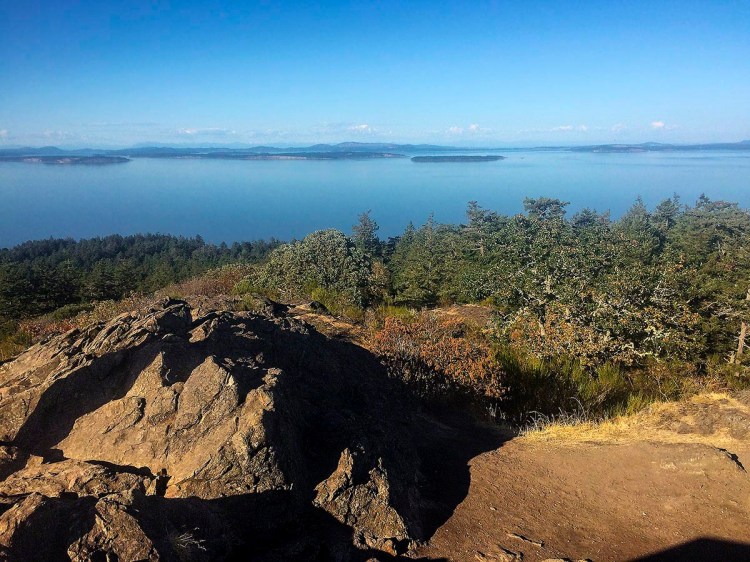
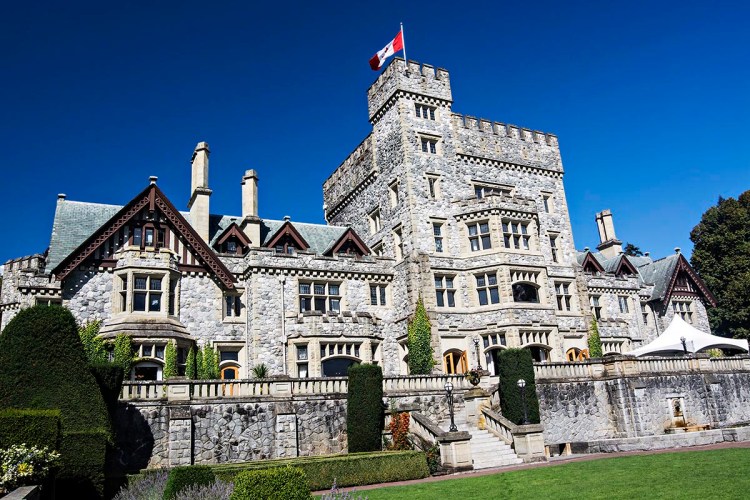
Victoria, the capital city of BC, has the best climate. This is the city of flowers and gardens, views and volcanoes! It’s one of our favourite places. Victoria may just be the best small city to visit in all of North America.

Canada FAQ

The Exploring Canada post answers Frequently Asked Questions (FAQ) such as:
- What are the best places to see in Canada?
- How do you plan a trip to Canada?
- How safe is Canada?
- What is the best season for travel?
- Can I see everything in 3 or 3 weeks?
 Terra Encounters
Leave a comment