
Facts vs Perceptions about Canada
This blog post was originally started in response to two Quora posts Why is Canada irrelevant despite its size? and Why did Canada do so little in WW2? These questions had assumed that Canada had contributed very little to the world and had even less impact on history.
I remember many years ago a Brit working on our NATO Command and Control Interoperability System project team saying to some potential UK clients that Canada does not toot its own horn.

“All our civilization is based on invention; before invention, men lived on fruits and nuts and pine cones and slept in caves.”
Reginald Fessenden, Canadian inventor, AM Radio and Sonar
Here are some inventions that will amaze you! Canadian contributions help nourish your babies, keep you warm in the winter, give you the sports you watch, feed your family… So next time you eat a peanut butter sandwich or watch a football game, give thanks to Canada!
Author & Photographer: George Mitchell

Our recommendations are not influenced by affiliate links – we have none. Our advice is based on extensive experience driving across Canada as well as travelling for three years around the world.
Canadian Contributions
After researching these issues, I learned that our contributions far exceeded what I knew before, and I thought I would share the results. The scale of contributions is so large that I have described them under category headings appended with a count of the inventions or innovations.
I have enclosed photos of Canada to give examples of these innovations, as well foods you can eat and places you can visit to appreciate these innovations. This post is background info for planning a trip for Exploring Canada’s Most Beautiful Places.
Canadian contributions to World War II are equally impressive, but obviously, someone forgot to tell the world. Try finding a movie about Canada’s role in World War II. The last section will tell you the truth about Canadian military innovations.
Clothing Inventions (11)
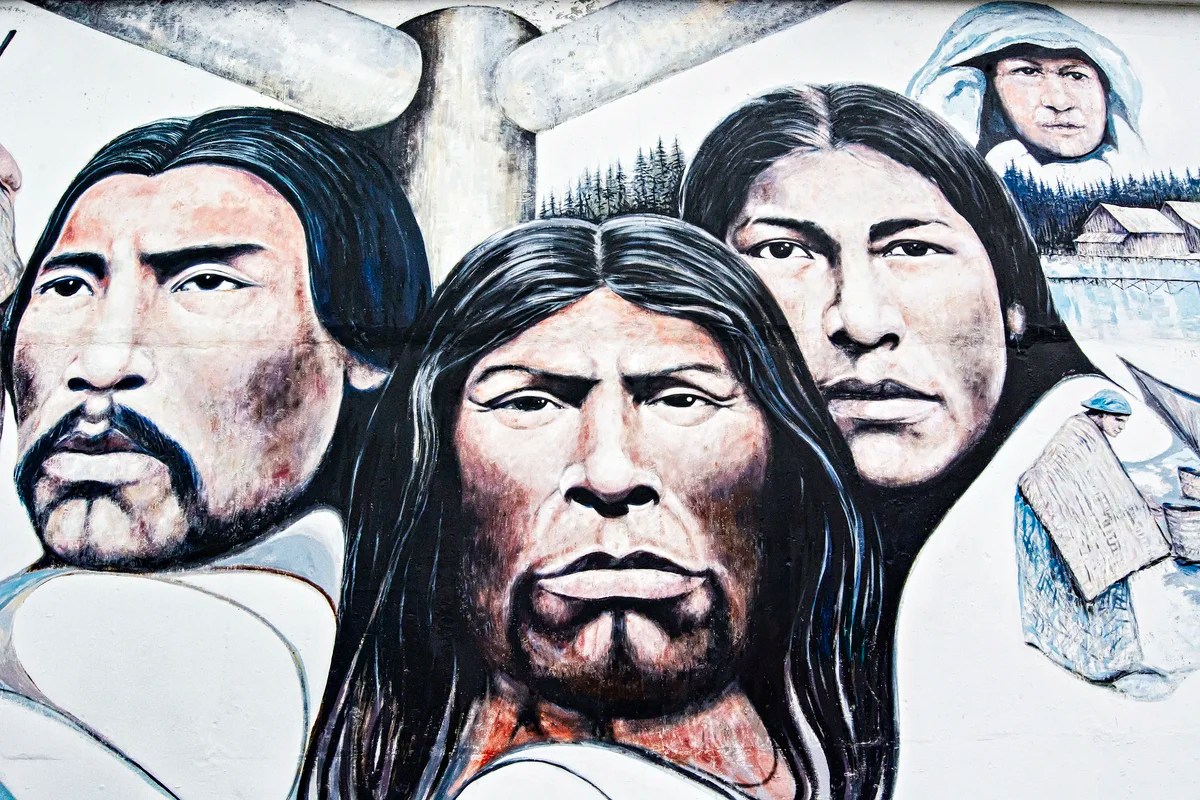
This powerful mural of some local natives can be seen along the Chemainus Mural Trail in British Columbia (BC). First Nations or FN (as they are now called) invented many things that are needed to survive in the Canadian winter (before central heating and cars).
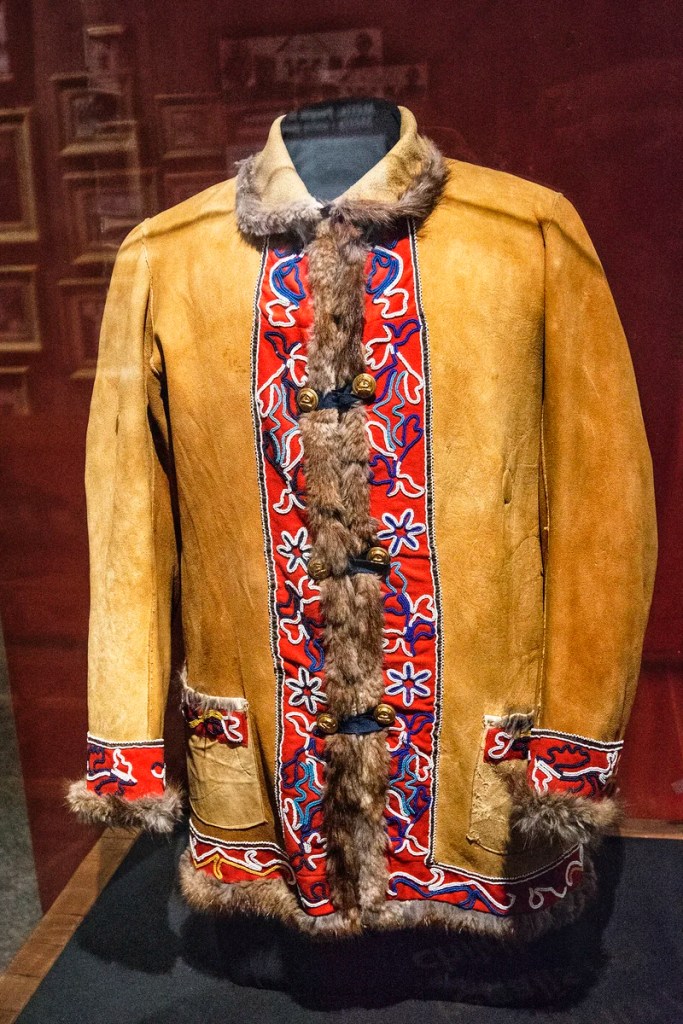
Parkas and snow goggles— were invented by the Inuit in the Arctic, moccasins, mukluks, snow shoes, and camouflage (for both hunting and warfare), birch bark canoes, and maple syrup. Can you imagine life without corn and potato chips/fries? You can thank the FN, especially the FN located in our neighbours to the south.
Finally, there is one major and more recent clothing invention – Wonderbra (1963).
Food Inventions (14)
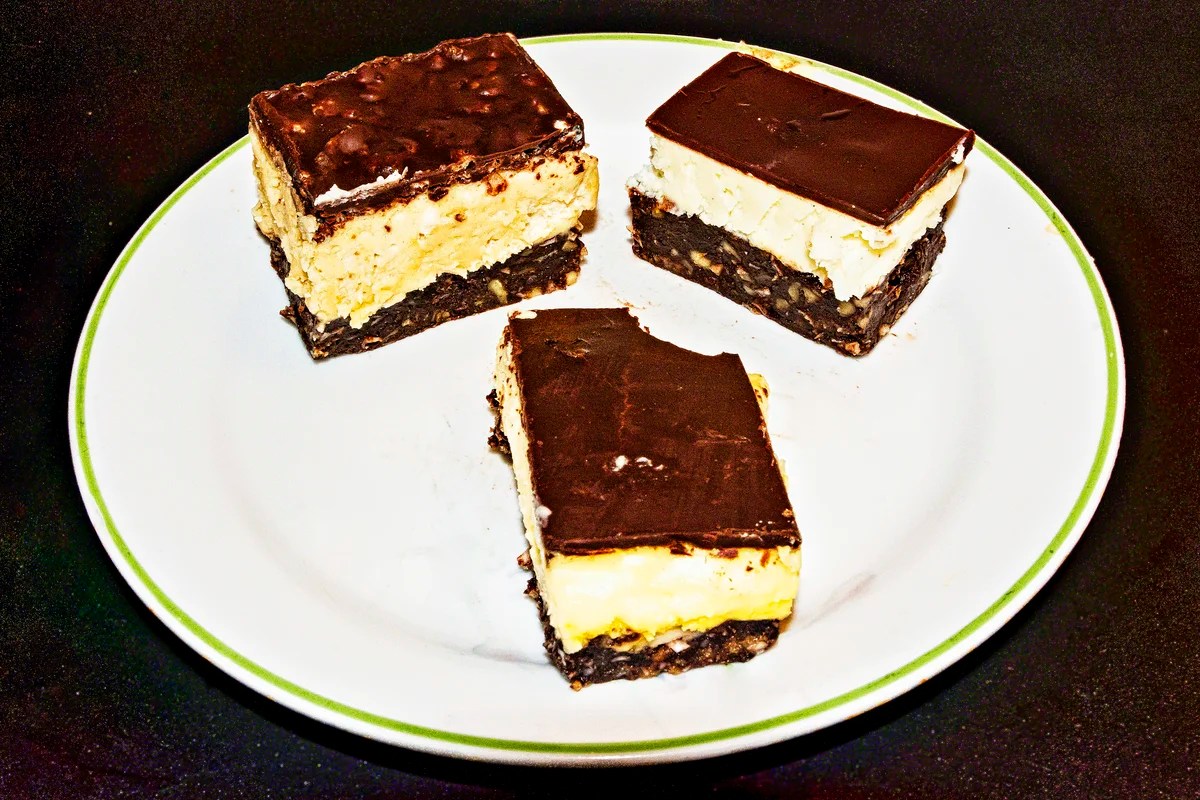
Be sure to try Nanaimo Bars (a layered combo of chocolate, wafer, and custard) above. If you visit its origin in the city of Nanaimo, BC, please go on the Nanaimo Bar Trail – yes, it actually exists – and try the special flavours. They are unique and tastier than the ones found in stores elsewhere.
Who knew that peanut butter, North America’s favourite spread, was invented by Canadians? The first patent was issued to Marcellus Edson, Montreal 1884.
Then there are Pablum cereal (babies love it), Butter Tarts (adults love it), and Hawaiian Pizza (Australians love it)! Some of the other foods created in Canada include:
California Roll (popular sushi) — Japanese-Canadian chef, Hidekazu Tojo, 1970s
Caesar (cocktail) — introduced in Calgary in 1969
Canadian bacon
Canola (oil) — developed by NRC personnel in the 1970s
Crispy Crunch — created by Harold Oswin in 1930
Canada Dry Ginger Ale (1904)
Poutine — delicious Québécois fries and melted cheese curds (1950s)
Thousand Islands Dressing
Tourtière — delicious Québécois meat pie

Canada ranks fifth in wheat production in the world. The provinces of Saskatchewan and Alberta are the top two producers of wheat in the country.
Canada has the most doughnut shops per capita in the world. One of the most popular chains is Tim Horton’s, created by and named for a former hockey player!
Resources (13)
Canada has the fourth largest oil reserves in the world after Saudi Arabia, Venezuela and Iran. It is a world leader in producing hydroelectricity, a word invented by Canadians. We usually just call it Hydro.
About 30% of Canada is covered by forest. It is a major producer of forestry products. Canada is the fifth-largest pulp and paper producer in the world.
Canada is one of the world’s leading mining countries and has become a center of global mining finance and expertise. It is the largest producer of uranium and potash. Canada ranks in the top five in the world for aluminum, cobalt, copper, diamonds, gold, platinum, and titanium production.
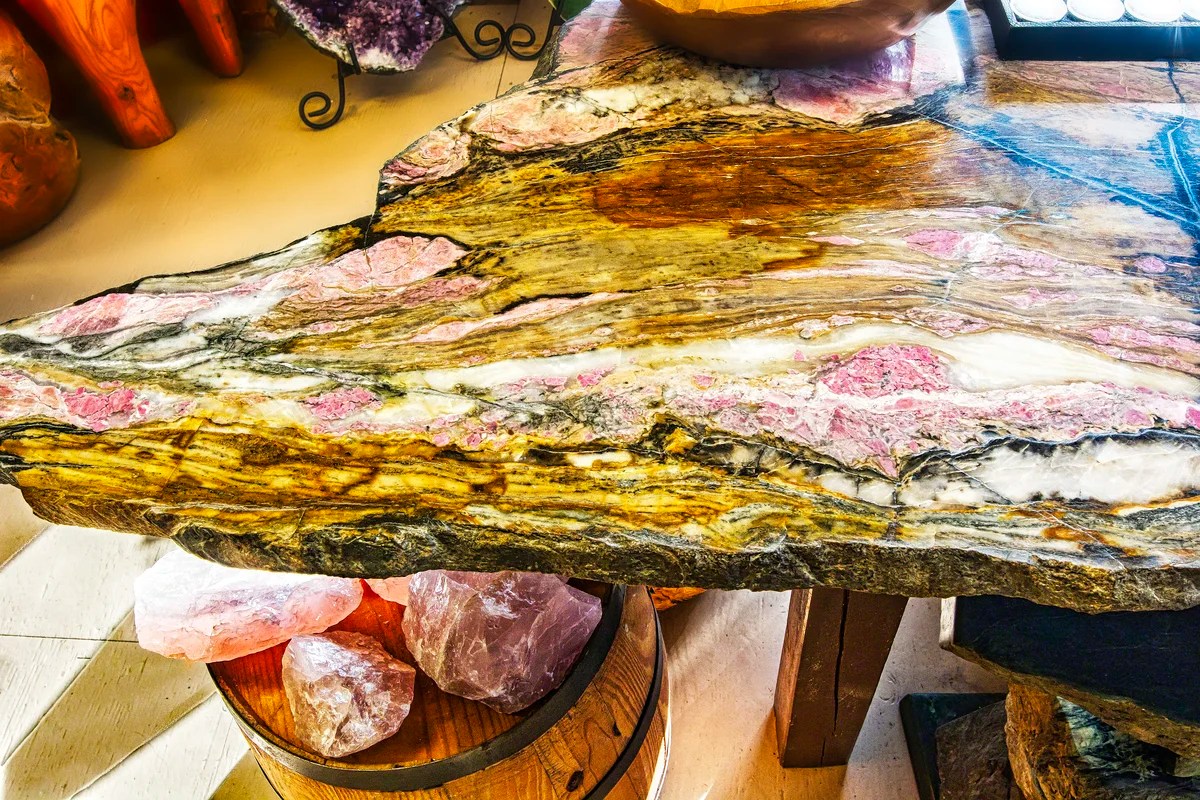
Volcanic heat and pressure are needed to produce jade. Northern BC is the world’s largest producer of green nephrite jade. Jade is more valuable today than gold. The Cassiar Mountain Jade Store above is located at the best place for jade mining, Cassiar, BC.
Sports & Games (6)

The Rideau Canal in Ottawa, a UNESCO World Heritage Site, is the world’s longest skating rink at 7.8 km. That’s in the winter only. In the summer, you can navigate your boat 202 km through the 45 locks of the Rideau Canal. It was built in response to intelligence after the War of 1812 that the Americans would lead an invasion into Canada. Led by Col. John By, it took six years and was completed in 1832.
Did you know that Canadians invented the three sports considered the most “American” — football, baseball, and basketball? Hockey and lacrosse were derived from Aboriginal sports. As for games, there is Trivial Pursuit — invented by Chris Haney and Scott Abbott in 1979.
Appliance and Tool Inventions (11)
Here are just some of the Canadian appliance and tool inventions that are used around the world.
Alkaline battery — invented by Lewis Urry in 1954.
Baggage tags (1882)
Caulking gun — Theodore Witte in 1894: The first caulking gun was made from a cake icing decorator tube!
Easy-Off — an oven cleaner invented by Herbert McCool in Regina in 1932
Egg carton — Joseph Coyle of Smithers, British Columbia, in 1911
Electric cooking range — Thomas Ahearn in 1882
Garbage bag — Harry Wasylyk in 1950
Incandescent light bulb — invented in 1874 by Henry Woodward, who sold the patent to Thomas Edison — what a shocker!
Paint roller — Norman Breakey, Toronto, 1940
Plexiglas — thanks to William Chalmers’ invention while a graduate student at McGill University, 1931
Robertson screw – P. L. Robertson, 1909
Health Inventions (6)
Artificial cardiac pacemaker — John Hopps in 1950-51
Ebola vaccine — researchers at the federal Public Health Agency of Canada in 2014
Electron microscope was built in 1939 by James Hillier and Arthur Prebus
Forensic pathology in policing, Dr. Frances McGill, 1959
Insulin – Frederick Banting 1921
Prosthetic hand – Helmut Lucas, 1971
Technology Inventions (6)
Archie (search engine) — the first internet search engine, Alan Emtage, McGill University, 1988
Blackberry cell phone – Mike Lazaridis, 1984, well before the Apple iPhone in 2007
Java programming language — invented by James Gosling, 1994
Cesium Beam atomic clock — National Research Council personnel, 1960s
Neutrinos — minuscule atomic particles at the Sudbury Neutrino Observatory, Dr Art McDonald shared the Nobel Prize in physics, 2015
American “Greenbacks” were invented in… Canada! An American, Thomas Hunt, was teaching at Université Laval and invented the green ink in 1857 to prevent counterfeiting. The Union used it during the Civil War. Americans stayed with the greenback while Canada has since advanced to more durable, multicoloured polymer money.
Transportation Inventions (10)
Here are just some of the Canadian transportation inventions that are used around the world.
Commercial jetliner — James Floyd: the term jetliner was derived from his Avro Jetliner (1949)
Crash position indicator — invented by the National Research Council in the 1950s
Kerosene — discovered in the 1840s by Abraham Gesner; You may not have personally used a kerosene lamp but you probably have used kerosene — it’s also called jet fuel.
Electric car heater — Thomas Ahearn in 1890
Vehicle Odometer — Samuel McKeen, Nova Scotia 1854
Road lines — John D. Millar, an engineer for the Ontario Department of Transport. The world’s first road lines were subsequently painted on the highway between Ontario and Quebec in 1930.
Snow blower — Robert Harris, New Brunswick, patented a “Railway Screw Snow Excavator” in 1870; but, Arthur Sicard is generally credited as the inventor of the first practical snow blower (1927).
Snowmobile — invented by Joseph-Armand Bombardier (1937). They introduced the Sea-doo water jet ski in 1968.
Wheelchair-accessible bus — Walter Harris Callow 1947
Communications Inventions (14)

The most significant Canadian invention of all time was made by Alexander Graham Bell – the telephone! But he also co-invented the Gramophone (1889) and the Hydrofoil boat (1908). Alexander Graham Bell was among the original founders of the world-famous National Geographic.
You can visit his lab in Cape Breton, Nova Scotia, and enjoy the tour along the cliff-hugging Cabot Trail shown above. Other communication inventions were:
AM broadcasting — Reginald Fessenden, 1906
IMAX movies
Modem
Newsprint & Pulped-paper — Charles Fenerty 1838
Pager
Radio telephony
Time zones and Standard time — invented by Sandford Fleming 1878, so that the trains could run on time.
Undersea telegraph cable — Fredric Gisborne 1857
Walkie-talkie, 1937
Military Innovations
Americans invaded a future Canada twice, in 1775 and 1812. They lost both times. The Americans used British military tactics with straight rows of soldiers advancing. The Canadians and their indigenous allies used Indian guerrilla warfare tactics to defeat a much larger army.
Canadians also used deceit to fool American commanders. Tecumseh joined General Isaac Brock near Detroit. They convinced the Americans that their forces were much larger than they actually were, and preyed on American fears of an unbridled aboriginal attack. Detroit fell without a fight! Canada has never invaded or colonized any country.
World War I Contributions
In World War I, Canada stormed and defeated the Germans on Vimy Ridge after two great armies, the French and the British, failed to take this strategic hill. The Canadians used an attack strategy that was feared by the Germans back in World War I. The Germans called them Sturmtruppen (storm troopers). The Germans based their blitzkrieg tactics in World War II in part on the way Canada stormed fortifications.
The first significant chlorine gas attack was launched by the Germans against British and Canadian forces at Ypres. This was the reason Canadians were very angry and aggressive with the Germans. The first widely used military gas mask was introduced by Canadian Cluny MacPherson in 1915.
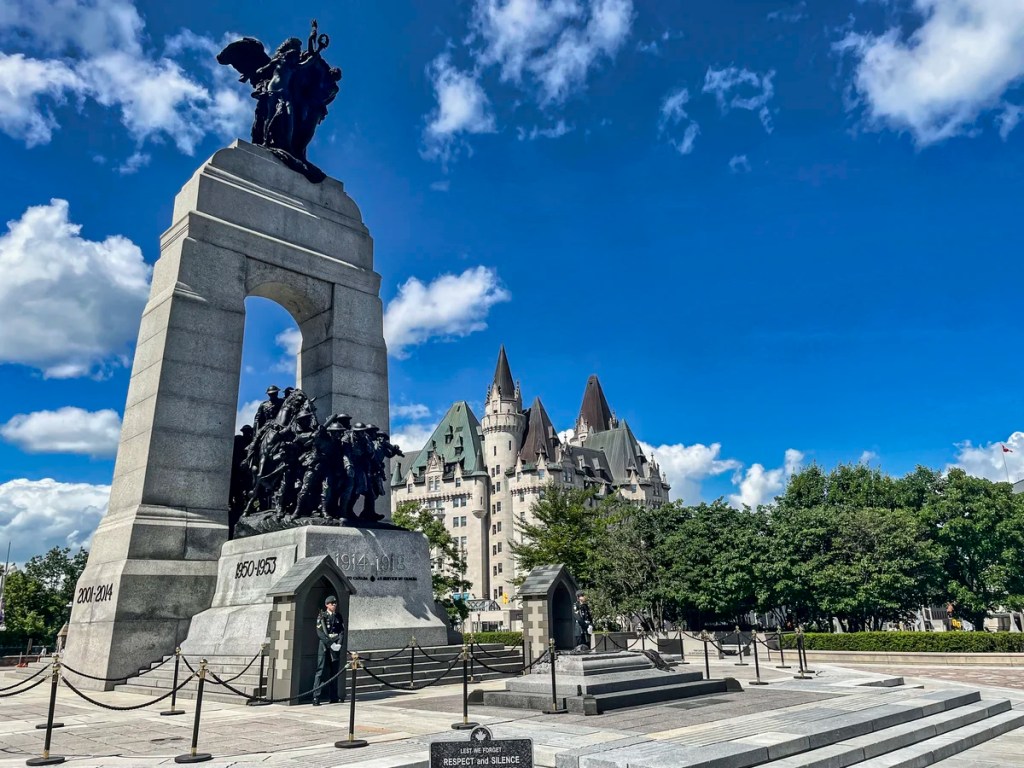
The War Memorial in downtown Ottawa is the centre for the main Remembrance Day celebrations every November 11th. The adoption of the red poppy as a symbol of Remembrance by all Allies can be attributed to a November 1918 poem, “In Flanders Fields” by Canadian military doctor John McCrae.
World War II Contributions
Now let’s explore the Quora question, Why did Canada do so little in WW2? Maybe this is a perception caused by the media and the war propaganda machine of that era. Even the movies after the war talk as if the Americans are the only ones who fought and won the war. Meanwhile, the Canadians joined the war in 1939, and the Americans only in 1941.
During World War II, Canada had the third-largest navy and the fourth-largest air force after the US, Russia and the UK. Allied pilots were trained in Canada. During World War II, Canada trained 131,553 airmen, of whom about half were Canadian. In fact, a NATO Flight Training in Canada (NFTC) program is still run. We have lots of sky and lots of varied terrain to practice on. I worked on the KF Defence Program, a $1.7 billion contract to build and run a flying training “university” for helicopter and prop planes at Southport, Manitoba. Jet flying training is done at Moose Jaw, Saskatchewan.
One of Canada’s most significant contributions was the Battle of the Atlantic, the only theatre commanded by a Canadian during World War II. Canada was responsible for escorting supply convoys to Europe, sinking more than 30 German U-boats. Canada’s Merchant Navy, along with the Royal Canadian Navy (RCN) and the Royal Canadian Air Force (RCAF), played a key role in the Allied efforts. New radar and sonar technologies from Canada helped the Allies find U-boats.
Britain essentially passed all their microwave radar development over to Canada. Canadian scientists developed the Plan Position Indicator, still in use today. Canada provided some 9,000 radar sets (worth hundreds of millions of dollars) to the Allies. At one stage of the war, the National Research Council (NRC) built and installed submarine detection radar in the St. Lawrence River in just seven days.
When you heat food in a microwave oven, you can credit the research done by Canadian scientists during the Second World War.
World War II Food & Transportation Inventions (9)
In response to food shortages in Britain, the National Research Council developed successful processes to manufacture better powdered eggs, powdered milk and preserved bacon. These helped solve some of the problems of food transportation and led to the development of some of the powdered and condensed foods still in use today.
Here are some of the Canadian wartime inventions that are used around the world.
Electro-thermal De-icer helps protect aircraft and is still in use today.
G-suit, enabling pilots to withstand forces 8 times that of gravity, was invented by Wilbur Franks in 1941.
Auto-inflating Life Jackets
Nylon Parachutes
Canadian companies and scientists played a leading role in the development of Synthetic Rubber.
Anti-fog Windshield Fluid developed for military vehicles is used by all of us today.
World War II Intelligence and Military Campaigns
A little-known mission was Operation Fish. As the war was going badly for Britain, Winston Churchill devised a plan to ship British wealth to Canada and run the British Empire from Canada in the event of the fall of Britain. Britain moved all the gold reserves of the Bank of England to Ottawa. Privately-held securities were transferred to the Sun Life Insurance building in Montreal. Not one ship was lost. It was the largest movement of wealth in history.
A very little-known fact was that Canadian and British special forces and spies trained at Camp X in Ontario. The facility was operated by the Canadian military with close ties to Britain’s MI-6. Camp X also opened to clandestinely train agents from the Federal Bureau of Investigation (FBI) and the American Office of Strategic Services (OSS), now called the CIA, before the USA joined World War II.
Tension between Britain and the US over the development of a nuclear bomb was resolved by a 1943 agreement that led to the construction of a nuclear reactor at Chalk River, just north of Ottawa.
Canada played a significant role in the liberation of Nazi Europe, starting in 1943 with the capture of Sicily, Ortona and Montecassino in Italy.
As Canada had the third largest navy, they were given the task of protecting the Allied flanks in the English Channel from counter-attack by the German U-boats (submarines) during the D-Day landing in Normandy. Canada itself landed on the central Juno Beach. Indeed, the Canadian advance on D-Day was the most successful and outstripped that of the Americans and the British on their flanks. This led to the capture of the French city of Caen.
Canadians liberated the Netherlands, which meant also feeding them since they were starving thanks to the Nazis. Canadian soldiers gave their rations to the children. Canadian bombers were then sent to drop food supplies.

In 1945, the people of the Netherlands sent 100,000 tulip bulbs as a post-war gift for the role played by Canadian soldiers in the liberation of the Netherlands. Every year, the Dutch royal family sends 10,000 bulbs to Ottawa. This led to the colourful, annual Canadian Tulip Festival.
Space Travel (5)
After World War II, Canada created the Avro Arrow jet, which would still be an advanced supersonic jet even today. Then in 1958, Canada cancelled this expensive program and bought Bomarc nuclear missiles instead. Canada eliminated its nuclear missiles in 1984.
Canada was the third country in space and was considered to have the most advanced space program in 1962. Many of the top Avro engineers headed south and designed NASA’s Gemini and Apollo spacecraft. The Canadarm is a robotic arm used on the Space Shuttle and the International Space Station.
Speaking about space travel, guess who created Superman? – a Canadian.
Final Comments
I have highlighted over 100 innovations and inventions by Canadians, focusing on the ones familiar to and used by people today. I did not include the many actors, movies and TV shows, singers and musicians that are Canadian.
Subscribe
Get travel tips and advice delivered directly to your inbox. The best part is that it is free.
What things fascinate you? How long is your trip? What questions do you have?
Other Posts that May Interest You
Here are other posts that might interest you:



 Terra Encounters
Leave a comment