
This Walk is Pure Magic
Walking in Rome is magical and involves considerable time travel. Only in Rome can you walk from the Baroque Trevi Fountain fantasy to Ancient Roman Pantheon harmony, from medieval magic Santa Maria Sopra Minerva to a perfect example of an Ancient Roman Basilica at San Paolo.
Author & Photographer: George Mitchell

Our recommendations are not influenced by affiliate links – we have none. Our advice is derived from our personal experience and knowledge based on living in Rome for four years and studying its art, architecture, and culture. All the places recommended in this post are pinned on our Roman Itineraries Map. The place names are appended with the Google Maps Rating (G0 to G5).
Fontana di Trevi — Trevi Fountain
You will probably be coming from the Piazza di Spagna (Spanish Steps) as it is the nearest Metro stop in the heart of the shopping district. Pull yourself away from this touristy area to begin your time travel magic. Head south along Via Propaganda curving into one of the three streets (tre vie) leading to Trevi Fountain (hence the name Trevi).
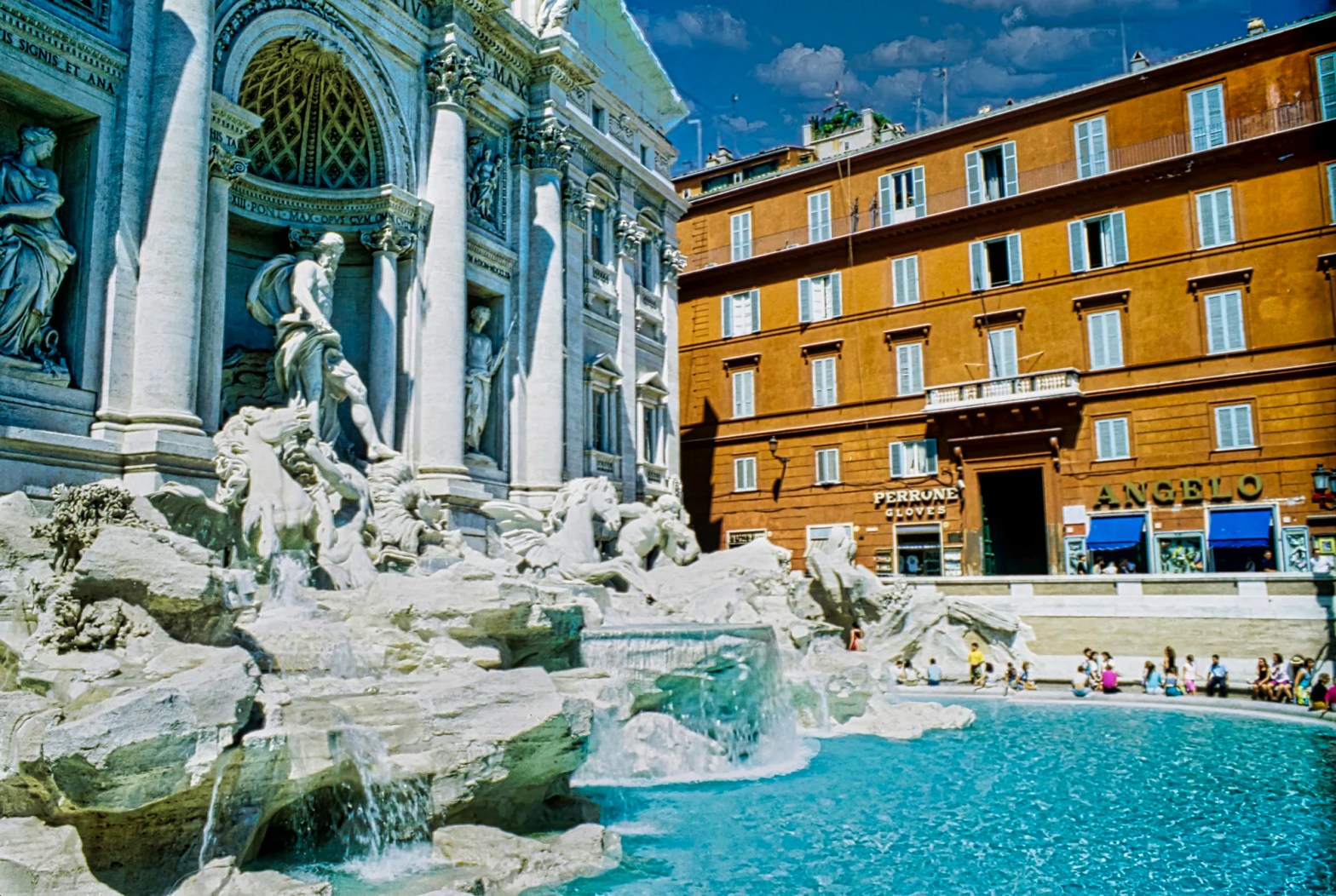
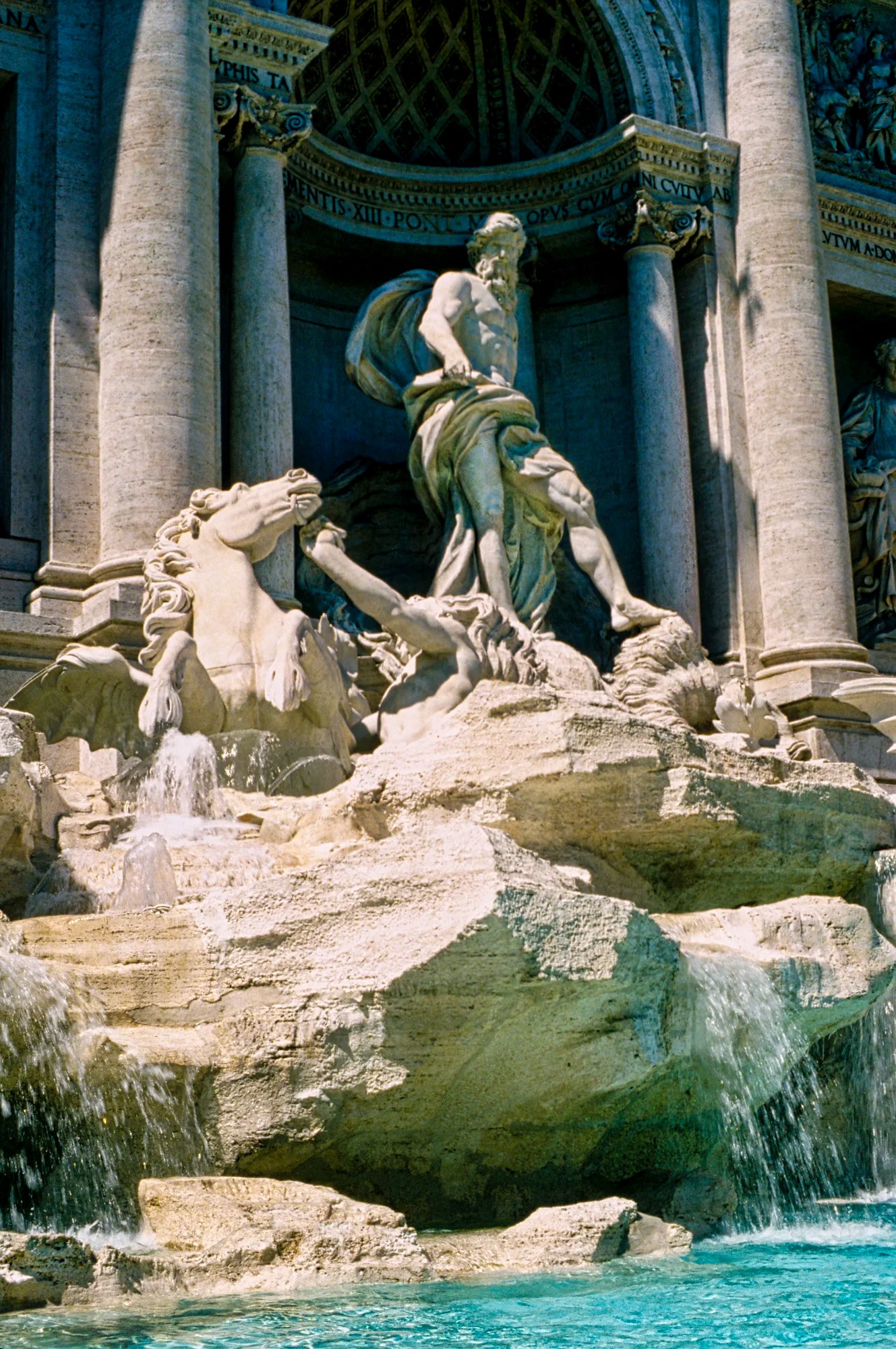
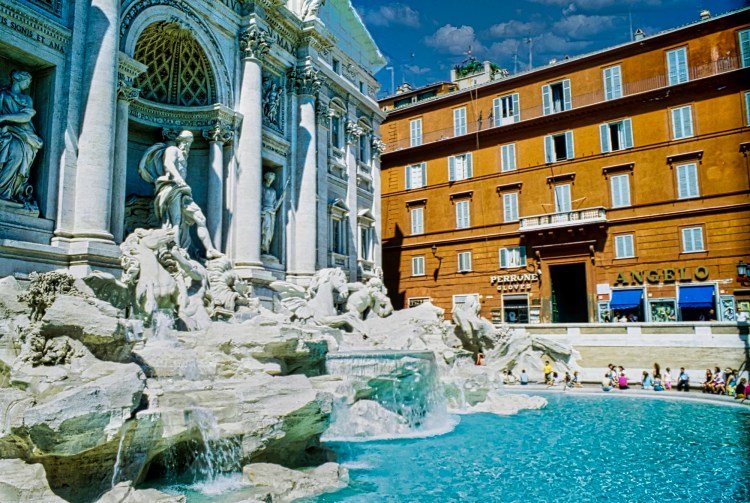
In this small piazza, a palace was turned into a Baroque water fantasy (1762). The whole wall is decorated with ornate Corinthian pilasters with many statues filling the niches. In the central ceremonial arch, Oceanus (god of water) sails on his shell chariot. It is drawn by Triton (son of Poseidon and messenger of the sea), blowing through a conch that controls the size of the waves.
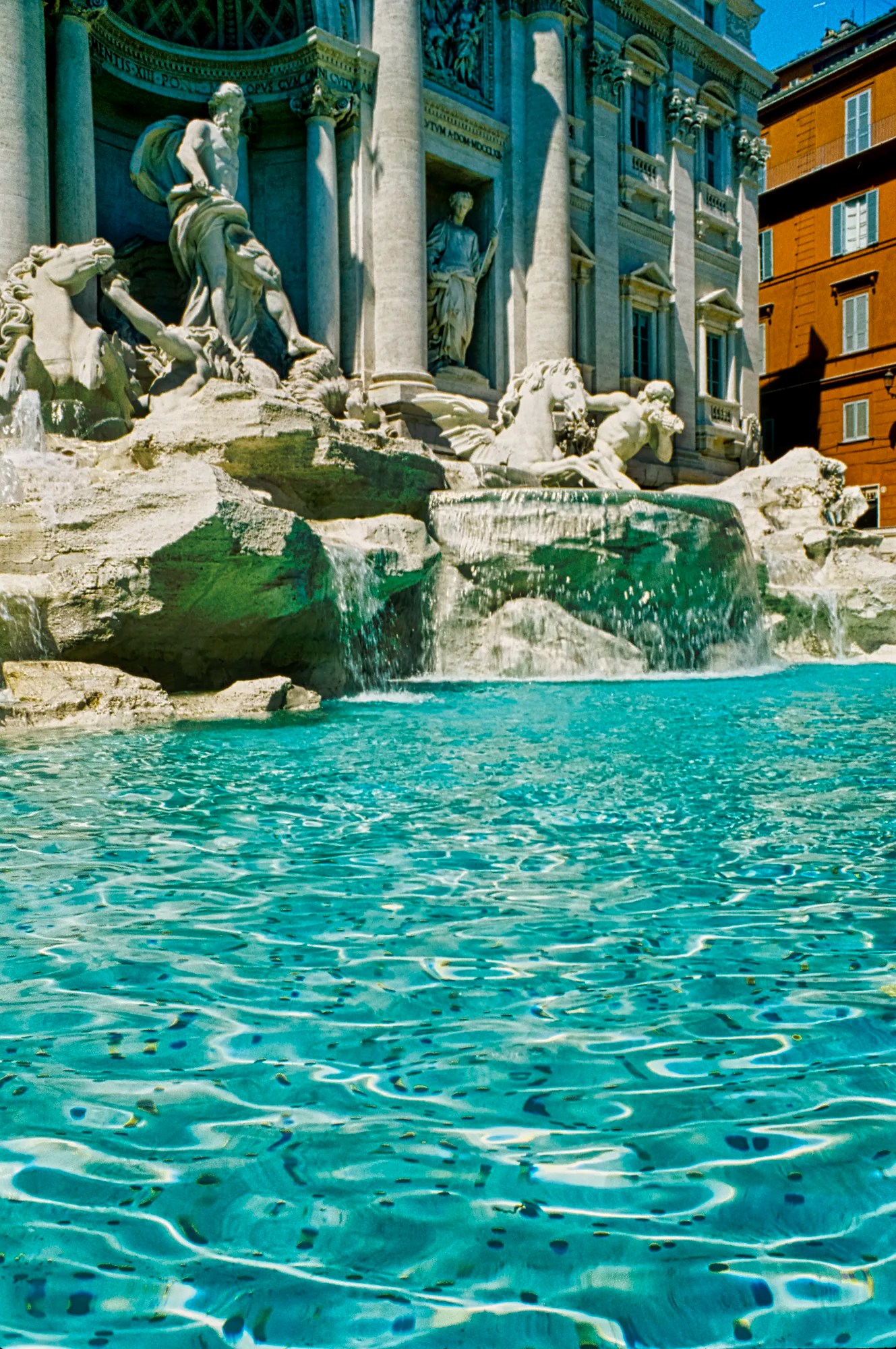
Water cascades over “rocks” down to the bottom of the “sea”. This multi-level diorama is made of travertine stone. The water is fed by a real aqueduct (Agrippa 19 BC). No you cannot see the aqueduct because in Rome it runs underground.
Ever since coin throwing was made popular by the famous 1954 movie Three Coins in a Fountain, a considerable bounty is collected for charity each year.
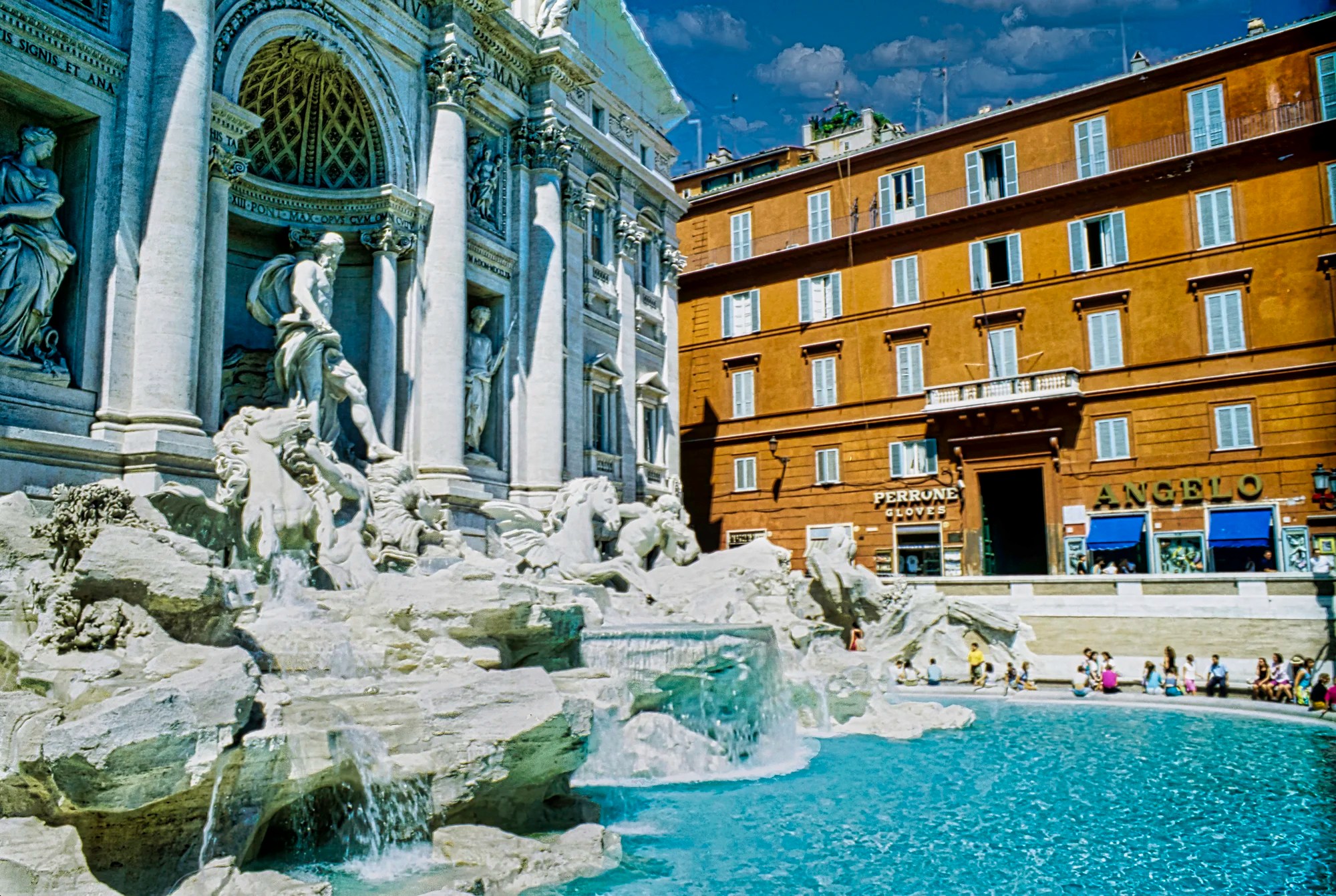
Fashion mogul Fendi spent 2.2 million Euros to restore Trevi in 2015! Yowdza! With all the art and architecture, Italy is a world leader in fashion, design and restoration. On our first trip to Bangkok we met Italians working on restoring their temples and palaces. It is a reflection of how much art and beauty are a part of Italian culture.
Piazza di Pietra — Square of Stone
The imposing wall with eleven massive columns are all that remains of the Temple of Hadrian in the Square of Stone. This impressive colonnade is now incorporated into the Borsa Italiana, the stock exchange. While Italy is no longer a powerful empire, it should be noted that it is the world’s 7th largest economy.
The column base is now below street level — we forget how human detritus keeps raising the level of cities. But think back to the Roman Forum, which is well below street level.
Piazza di Montecitorio
Palazzo Montecitorio is the seat of the Italian Chamber of Deputies, the lower House of Parliament. After the Roman Empire, Italy was divided among European powers and the Vatican (the central Papal States) plus a set of independent city-states. Italy has only been a unified country since 1871 – it’s younger than Canada!
Only in Rome can you go back in time to Ancient Egypt! The Obelisk of Montecitorio (Obelisco di Montecitorio) is the oldest Egyptian obelisk in Rome. The red granite monument (589 BC) came from Heliopolis, now a suburb of Cairo. In 10 BC, Emperor Augustus brought it to Rome to serve as a sundial!! There were 48 obelisks shipped to Rome to be used as gnomons in each major piazza. Montecitorio is one of two that still have a ball and point on top that can cast a clear shadow needed for a sundial.
Gelato
OK, now it’s time for a modern treat, gelato. The Ancient Roman emperors had snow brought from the mountains and mixed with fruits, et al. But these are really called granite (ices), which you can still buy today.
As usual, ice cream was invented in China in 200 BC. Marco Polo brought back the recipe to Italy. I think we have to change China’s Four Great Inventions (do all humans have a fascination with lists?) to the Top Five, as ice cream should be right up there with paper, printing, compass and gunpowder!
Italian-style ice cream was invented in 16th century Florence (real name Firenze) in the era of Catherina dei Medici. It is made from 3.5% whole milk with about 1/3 of the fat of North American ice cream (10-12% fat). But gelato also uses at least four types of sugar, which decreases the freezing point and increases the viscosity.
The consistency should always be soft. As it is served at a warmer temperature, the flavours are more intense. We had the chance to meet the Perfetto family of Napoli who manufactured cones as well as gelato and were able to see the whole process.
Gelateria Giolitti
There are 37,000 gelaterie (plural of gelateria) in Italy. A short zig-zag northwest of the Obelisco brings you to Giolitti’s. It was one of the best in all of Italia when we worked in Roma. See our favourite flavours in the Gelato section below.
Palazzo Capranica
Palazzo Capranica was built in the late 15th century and shows elements of medieval and Renaissance architecture. Note the traditional medieval trefoil window arches. Head south, then west, passing Caffè Tazza d’Oro for your cappuccino fix. Then turn south at the corner.
Pantheon
Now we have time-travelled to the Classical Era. If there is one building that is a must-see in Rome, it is the Pantheon (open 09:00 – 18:00 hrs). In fact, it is probably the most important architectural building of antiquity because of its engineering techniques. It was only saved because Constantinople gifted it to the Pope (608 CE). Instead of being a temple to all the gods (pantheon), it became the church of St. Mary and all the martyrs.

The exterior is nondescript, especially since the figures in the pediment were removed. Also, there is a far larger staircase under the ground. The original level of the ground was 6 m (20 ft) lower than it is today! Why did this happen? Earthquakes, fires and wars collapsed buildings. Without modern bulldozers and steam shovels, it was easier to leave debris on the ground and build over it. The ruins of Troy, Turkey, were found seven layers down! Speaking of earthquakes, the Pantheon has survived them all.
The columns of ancient temples were usually built as layers of drums that were placed on top of each other. These would easily collapsed in a major earthquake. But the columns in the Pantheon are one piece of solid stone imported from Egypt. Imagine rolling these into position from the port!
Contrary to the inscription on the portico, Agrippa did not build the Pantheon: he built the original temple. Emperor Hadrian was responsible for rebuilding the Pantheon (118 to 125 CE). Hadrian was humble and did not replace the original inscription with his own name.
Yes, we always say Emperor X built this temple, but they did no more than sponsor it. But in this case, Hadrian trained as an architect in Athens. It is not certain who the actual architect but some scholars claim it was Apollodorus of Damascus. Some sources state that Apollodorus offended Hadrian by dismissing and ridiculing the emperor’s forays into architecture. We do know that Apollodorus was the architect of the world’s first multi-storey shopping centre, Trajan’s Market.
Once you enter the interior of the Pantheon, rather than being overwhelmed by the massiveness, there is a calm sense of harmony. The height of the dome is exactly the same as the diameter. They are in balance. This comes from Greek architectural concepts. BTW, the diameter is larger than St. Peter’s. In fact, the dome was the largest in world history until the first modern domes were built in the 1960s.
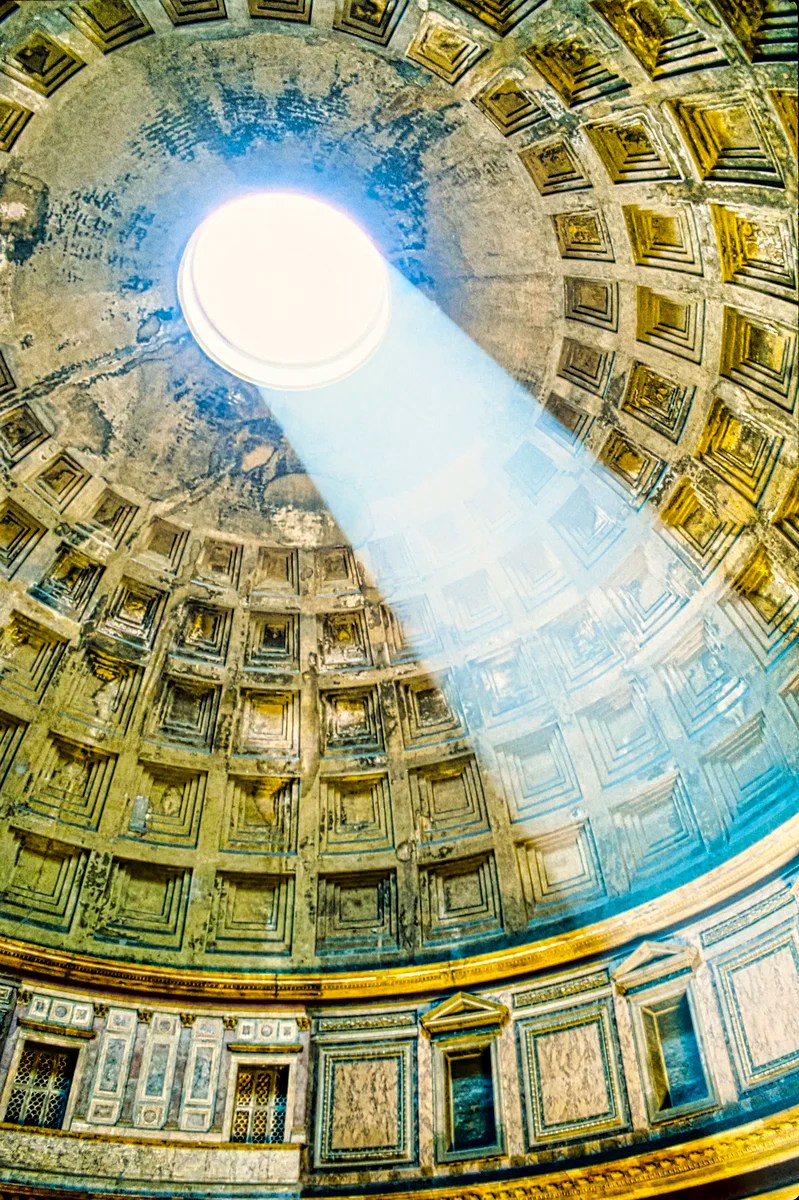
The interior looked very different from today, as it used to be covered with gilded bronze sheets. Some of the bronze in the portico was plundered by Pope Urban VIII, who was a member of the rich and powerful Barberini family. The bronze was reused to build the beautiful serpentinata columns of the Baldacchino (altar canopy) in St. Peter’s and the cannons of Castel San Angelo! Romans love political satire. They reacted with graffiti stating Quod non fecerunt barbari, fecerunt Barberini, which means “What the barbarians did not do, the Barberini did”.
So, how did such a large dome survive? Did you know that the Pantheon used concrete? The Romans invented concrete, and we have been using it ever since.
Concrete was mixed with tufa and pumice to make it lighter. But the Romans did not have concrete reinforced with steel bars that we use today. What has made it strong enough to survive 2000 years as well as all the major earthquakes that have affected other Ancient Roman buildings?
Vitruvius was a 1st century Roman architect and author of De architectura, which detailed how Ancient Rome built its temples, basilicas and domes. Scientists analyzed the recipe recorded by Vitruvius. They discovered that the mortar included a durable mineral called strätlingite, which reacts with the lime and volcanic matter to prevent the spread of microscopic cracks. Amazing!
The walls of the drum had to be really thick – 6 m (20 ft) – in order to support the dome. However, a property of volcanic rock made these walls lighter. Volcanic rock is riddled with empty spaces caused by gas bubbles.
The concrete was poured into temporary wooden forms. Relieving arches in the walls help distribute the weight. The coffering of the dome is not just decorative; it also reduces the weight.
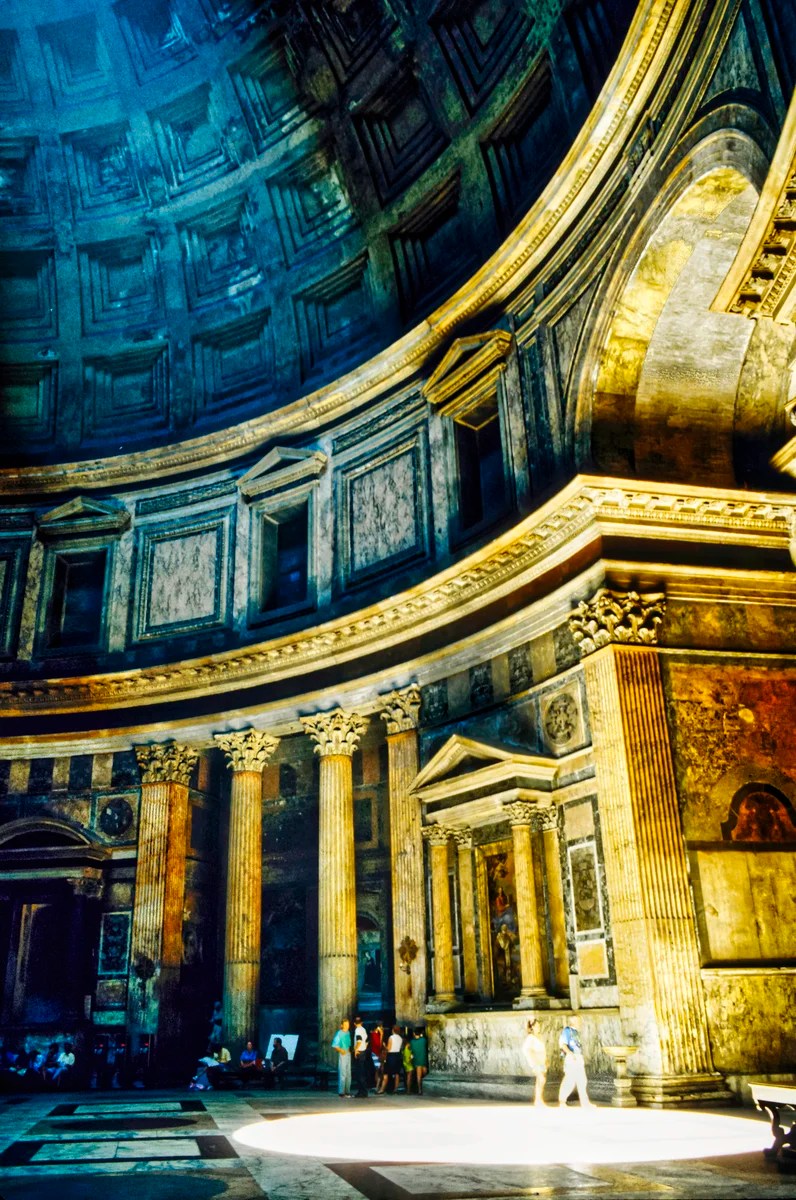
The marble and porphyry floor and walls were restored in 1873 to look like the original. Porphyry is an Ancient Greek word meaning purple, the colour of royalty. This rare igneous stone was shipped from Egypt!
Raphael is buried here under this sculpture of the Madonna. He lived for years with his model, La Fornarina. She was not allowed to attend the burial.
The hole in the dome, the oculus (eye), provides the only light! In fact, it is best to visit when sunlight shines through the oculus at an angle like a stage spotlight. The Oculus is a wonderful feature. It draws your gaze to the clouds in the sky and allows rain to fill the porphyry basin below.
Arches, vaults and concrete enabled the Romans for the first time in history, to create vast, awe-inspiring interior spaces. It is for this reason that we would say if you could only go to one sight in all of Rome then this is the one. This was a history-making architecture that influenced all future and for us, current architecture.
Piazza Santa Maria Sopra Minerva
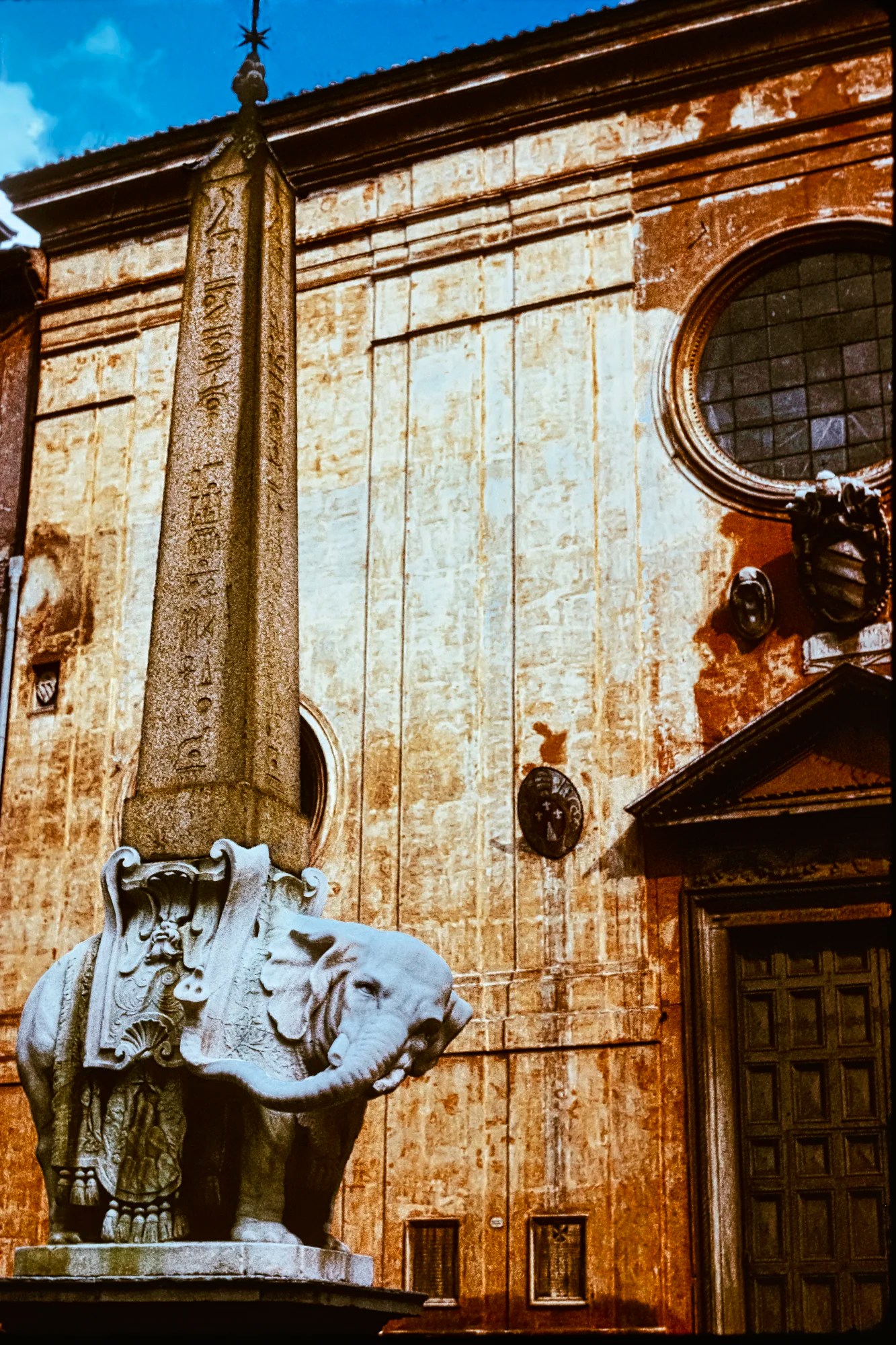
Now we have time travelled from Ancient Rome to medieval magic. This square is named after the adjacent medieval church with the same name. BTW, the middle name of every Catholic woman used to be Maria.
Sopra means above. Minerva is a Greco-Roman goddess. So what does this mean? It is wrong! The Gothic church was built over the foundation of a temple dedicated to the Egyptian goddess Isis. An obelisk was found in the church grounds, which gave away that it was an Egyptian goddess.
This is one of the few Gothic churches (1280) in Rome. As usual, churches are often art museums. Be sure to see Michelangelo’s statue of Christ to the left of the High Altar and Filippino Lippi’s Assumption of Our Lady (1489).
But the piazza is an open-air museum with a real gem. In the centre is a cute elephant sculpture with a 6th-century BC obelisk on top. It’s a Bernini masterpiece completed in 1667 to glorify the reign of Pope Alexander VII. The idea came from a 15th-century romance book. But Bernini only designed it. Another sculptor actually carved it.
Chiesa di Sant’ Ignazio di Loyola
Now we have time-travelled to the Baroque Era. St. Ignatius of Loyola was the founder of the Jesuits and a force behind the Counter-Reformation. The imposing exterior faces a Rococo piazza (1727) surrounded by houses of the bourgeoisie. The vast interior is filled with gold, marble and other precious stones. The church was built in 1626 mainly by Jesuit labour. A cupola was planned but never built as the Jesuits had little money.
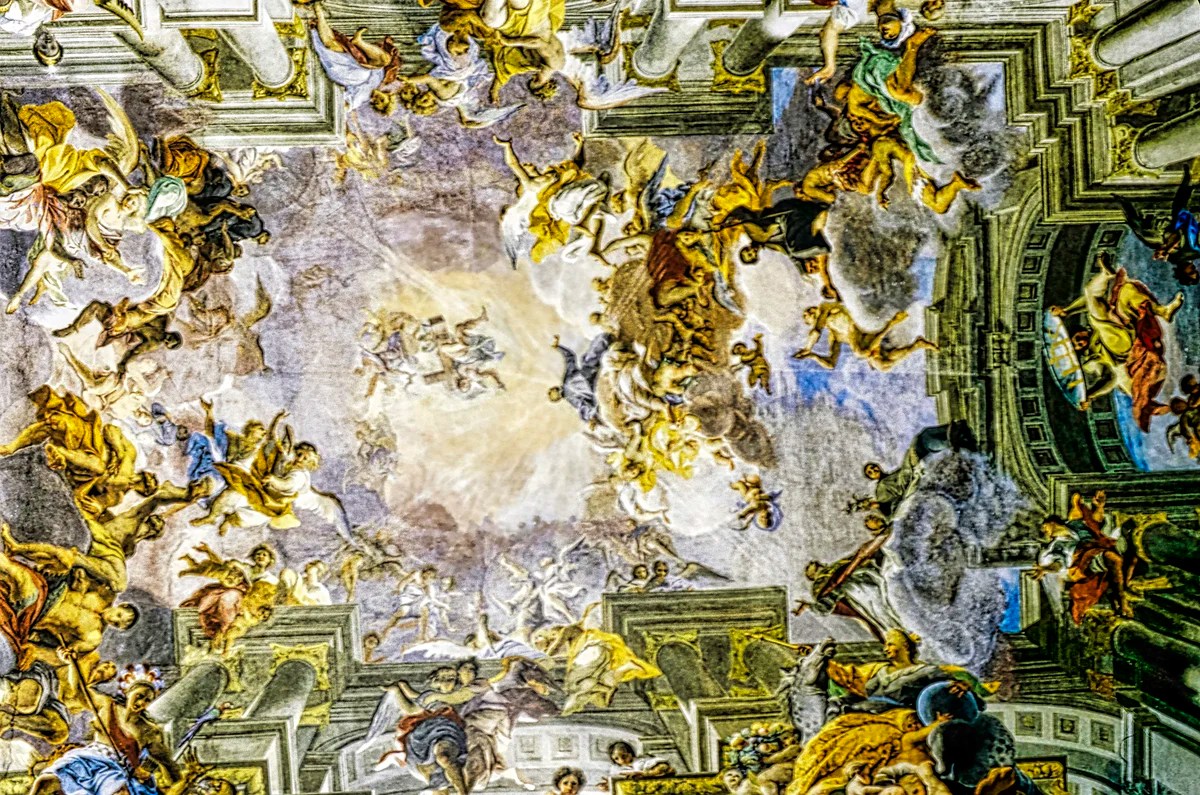
Stand on the disc in the centre of the nave and look up at Fra (brother) Andrea Pozzo’s amazing fresco ceiling (1684). This trompe l’oeil ceiling is considered the apogee of illusionist painting! The ceiling includes three-dimensional architecture continuing into space filled by soaring figures. Motion in space is a major theme of Baroque art.
San Paolo Fuori le Mura – St Paul’s
Do you want to see what a Roman Basilica looked like? If you have time, you should take the Metro and head south to the San Paolo stop. Now we have time travelled to the Classical Era – sort of.
The basilica is an architectural structure invented by the Ancient Romans. It was used for legal and commercial buildings, not temples. The Christians named and modelled all their major churches after the Basilica.
St Paul’s is located outside (fuori) the walls (mura) of Ancient Rome, hence the Italian name. It was founded by the first Christian Emperor Constantine over the burial place of St. Paul.
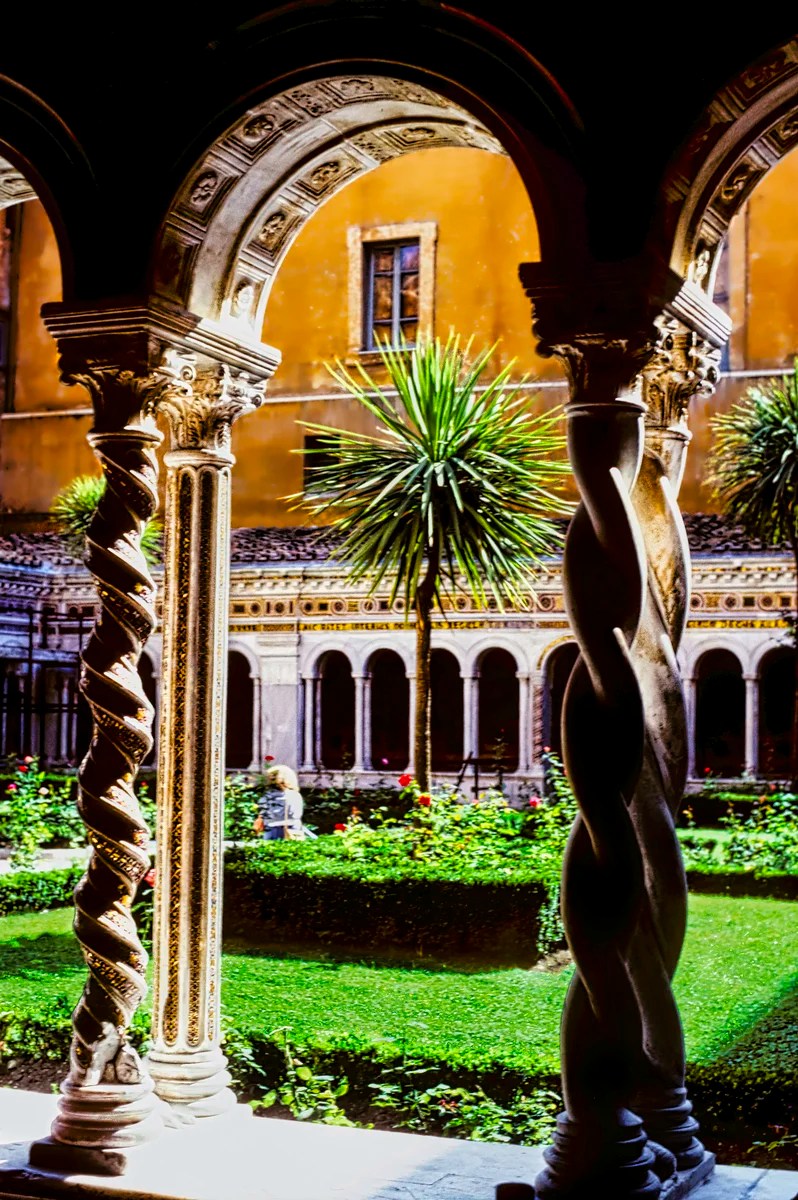
It would be exciting to say that San Paolo dates to 324 AD when it was originally constructed. A fire in 1823 collapsed the roof, and it was rebuilt to the same plan. The Basilica was reconstructed identical to the original plan, utilizing all the pieces which had survived the fire.
It is very worthwhile to see what a Basilica really looked like. You will be blown away by 80 massive granite columns. But don’t forget to enjoy the peaceful cloisters (1241) with the unique serpentinata columns embedded with Cosmati-style tile pieces. It was the only part that survived the fires.
Where to Eat and Drink in Italy

The best meals we had in Italy were at the homes of our Italian friends. Even before we worked in Rome, we met people while we travelled who invited us to stay at their houses. I swear, Mama Perfetto in Napoli tried to fatten us up!
When we explored, we would avoid eating at places in a famous piazza or fountain sites. They would be geared to tourists and not be good value. Italian meals are usually three courses with plenty of wine – you will be thoroughly stuffed afterwards!
When we travelled, we often would order just pasta (primo piatto or first course). If it was not tasty and served al dente, we would leave afterwards. If an Italian restaurant cannot make good pasta there is no point eating a protein dish (secondo piatto or second course). They usually gave huge quantity of pasta anyways and you are well fed.
Be careful about using Trip Advisor or other travel and food sites. Many times we found the food was not anywhere near being superb as tourists claimed. We currently look for very high ratings (≥ 4.0) on Google Maps, which are based on the opinions of everyone.
Gelato
If you want to try Italian gelato, be sure the shop is a true gelato artiginale. You used to be able to trust the label in the window, but today that is no guarantee. Use the Google Map ratings to check how good they are.
Gelato is not made the same way as ice cream. Gelato uses more sugar and less fat so it is creamy and soft. Ice cream is higher in fat and is hard.
Giolitti’s Gelato is just up the street north of the Pantheon. It was one of the best in all of Italy when we worked in Rome. My favourite flavours are nocciola (hazelnut) and bacio (literally means kiss, made of hazelnut and chocolate). Other great flavours are gianduia and tiramisu. There are also fruit flavours like myrtillo (blueberry) and limone. Even “ordinary” flavours like fragola (strawberry) taste better as a gelato. Yummy!
Coffee
Fourteen billion espressos are consumed in Italy each year. Sant’ Eustachio Caffe was my favourite in Centro but you also get coffee at Giolitti’s when you go for gelato. Caffe Tazzo d’Oro is also renown and very conveniently located right on this itinerary.
What Should You Read about Rome?
The Companion Guide to Rome, Georgina Masson, Collins – is too in-depth for tourists. But it is great for expats and budding archaeologists and art historians living in Rome. It was the key book we used for studying art, architecture, and history.
Eyewitness Rome, Dorling-Kindersley – has brief information but often some gems about major sights. Their real crown jewels are their “Street by Street” pages where they detail the sights on their attractive 3-D map of a neighbourhood.
Rome Past and Present, Vision Publications – is one of the excellent tourist guide books on sale by vendors throughout Rome. What is unique about this spiral bound book are the reconstructed drawings on cellulose of the ancient monument or temple to help you imagine what the ruins used to look like.
History of Art, H. W. Janson, Prentice Hall – is for learning about art and architecture. It is not for lugging around on your trip. It weighs about 20 kg – OK, would you believe 2.6 kg (5.7 lbs)?
Final Comments
Rome is over-touristed. But we hope you have learned that these are the best places to experience quintessential Italy. We trust you now understand why the places are significant and how they have had such a great influence on the history and culture of the world.
Subscribe
Please subscribe to Terra Encounters because we offer valuable insights to improve your understanding and enhance your travels. We offer itinerary-based guides packed with the best sights and hidden gems. Let our knowledge help you fully appreciate every moment of your amazing journey.
Get travel tips and advice delivered directly to your inbox. The best part is that it is free.
This was only a taste of Rome. What questions do you have? If you have been to Rome, share your experiences with us. How long is/was your trip?
Itinerary Map & Resources
Roman Itineraries Map — our custom Google Map
Google Maps Ratings
Google Maps provides a rating from 0 to 5 for all sights, hotels and restaurants (but not cities). All of our recommendations are appended with the rating (prefixed with a G) from Google Maps. As it is based on feedback from tourists and locals, it is much more reliable than travel booking websites. We consider a score of 4 to 4.39 to be Very Good; 4.4 to 5 to be Excellent.
Rome’s Top 8 Self-Guided Walks
Here are eight itineraries to explore Rome in more detail:
Understanding Italy
This Italy FAQ post answers questions like:
- When should I go?
- What is the best season for travel?
- Where should I go?
- Can I see everything in a week?
- How much time do I need for Italy?
- How much cash should you take to Italy?
- Should I pay in Euros or my own currency?
- How safe is Italy?
- Should I rent a car? Take a Taxi?
 Terra Encounters
Leave a reply to Shelley Cancel reply