Why go to Queen Elizabeth Park?
Queen Elizabeth Park is Vancouver’s horticultural jewel. This post provides a photo montage of the beautiful flowers, trees, sculptures, and views. It discusses interesting stories about the park and its flora. The landscaping is very picturesque. The flowers and city views are great for photography.
It is a well-known place, at least for Vancouverites. But during the week, it feels like a hidden gem as so few people are visiting. I was able to easily take these photos from four different trips without any people in them.
Author & Photographer: George Mitchell

Our recommendations are based on our extensive experience living in Western Canada. We are avid hikers, nature lovers and photographers (all photos are my own).
All of our recommendations are top-rated by Google Maps Ratings, which is based on everyone, not just tourists. Each place recommended in our custom Vancouver Mountains and Water Map is appended with a Google Maps Rating (G0 to G5).
Queen Elizabeth Park
No, Queen Elizabeth Park (G4.7) is not named after beloved Queen Elizabeth II. The park was dedicated to Queen Elizabeth, the mother of Queen Elizabeth II. The park was renamed during the visit of King George VI on 31 May 1939 – a mere three months before the start of World War II.
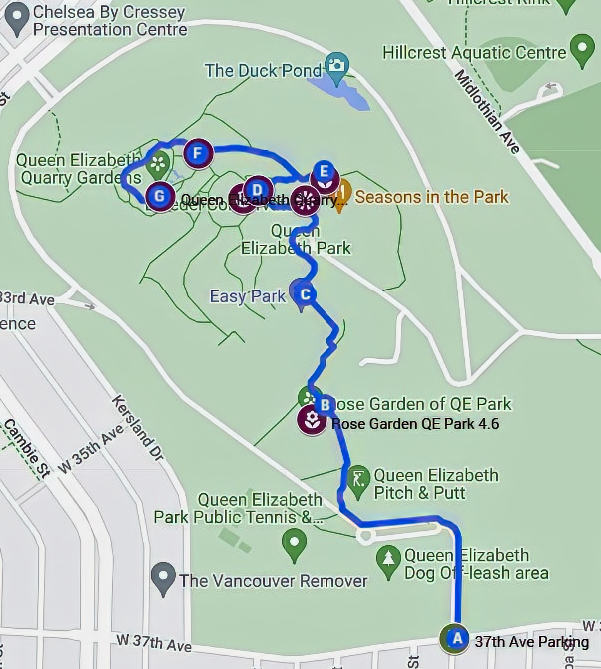
Queen Elizabeth Park (QEP) is a 52-hectare (130-acre) municipal park with sports facilities as well as a garden. For an expandable, interactive map of the itinerary, open up the CA Vancouver Mountains and Water Map.
You can find free two-hour parking on 37th Ave. or other nearby residential streets between 33rd and 37th Ave or north of W 29th Ave (Yukon, Nigel, Dinmont). We spent two hours here without visiting the Conservatory. If you park in any of the lots inside the garden, be sure to pay. A parking ticket, ca. $65, costs way more than the parking fee.
Rose Garden
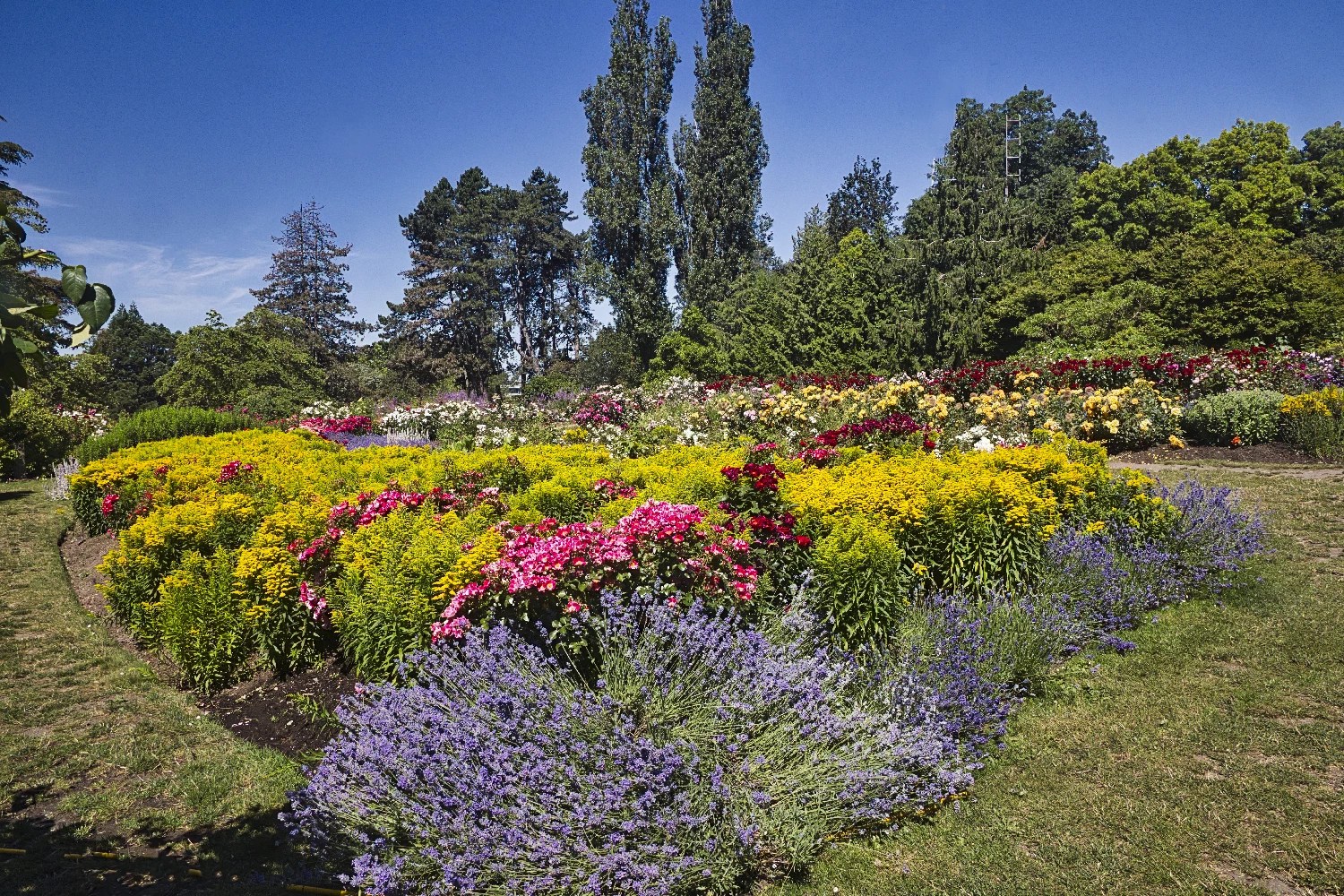
From W 37th Ave., walk north up the street to the Rose Garden. On the way, you will pass the Pitch & Putt, snack bar, toilets, and the QEP pay parking lot.
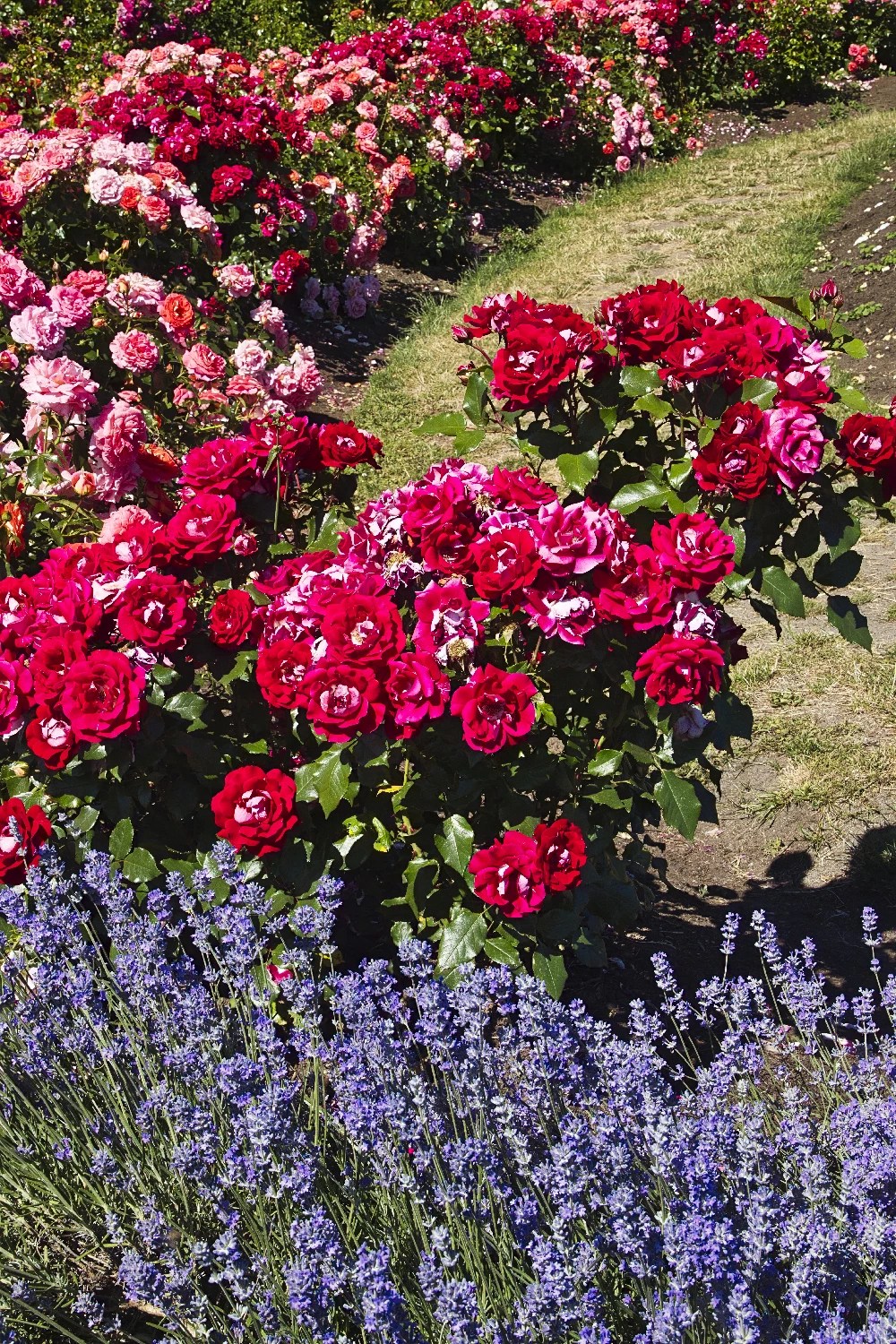
This vast Rose Garden is sprinkled with lavender and a few other plants. Lavender (Lavandula angustifolia) is native to the drier, warmer regions of Eurasia. It is grown commercially for the production of lavender essential oil, used in balms, perfumes, and cosmetics.
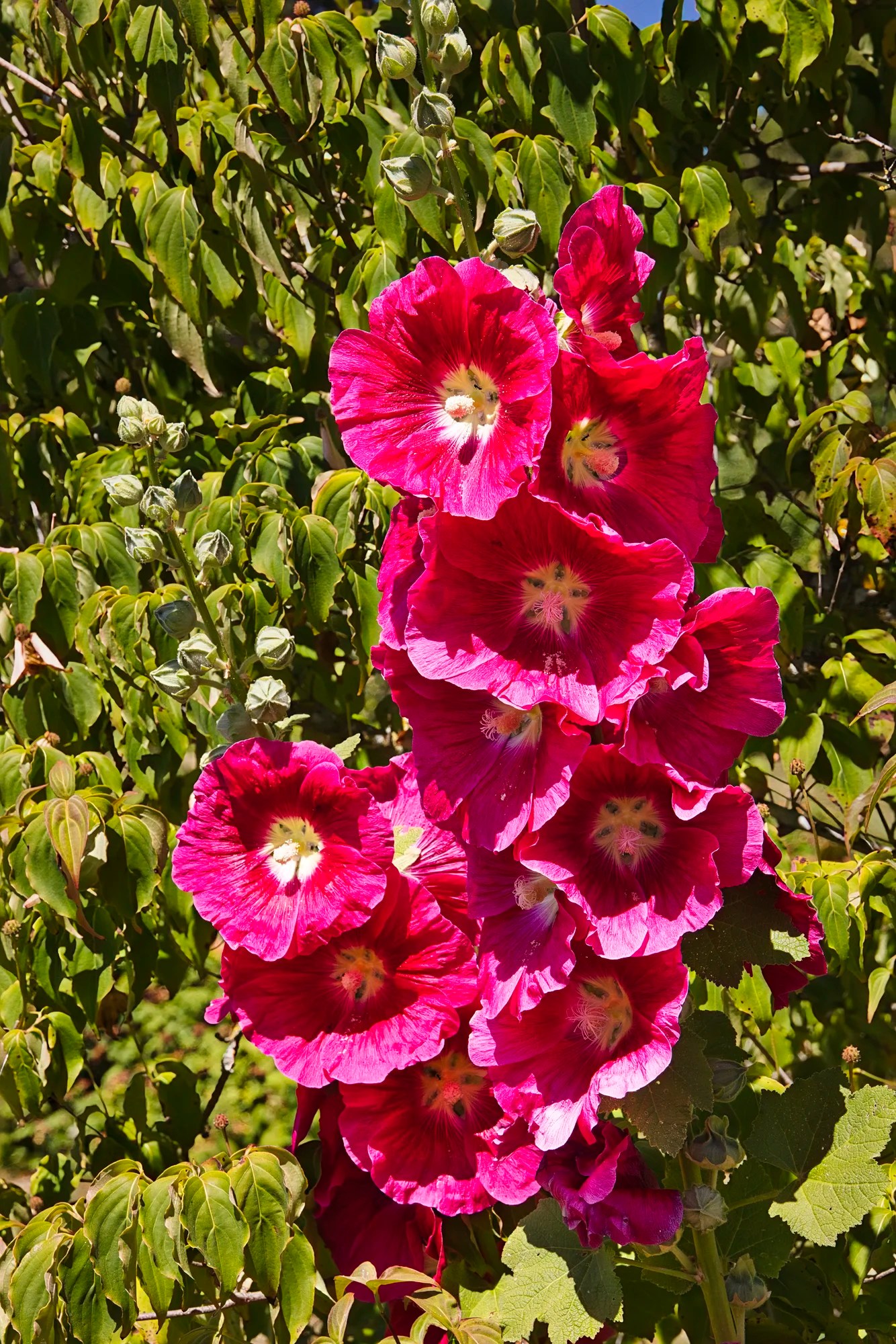
Common Hollyhock is native to Asia and Europe. The Rose Garden was completed in 1967 to commemorate Canada’s Centennial.
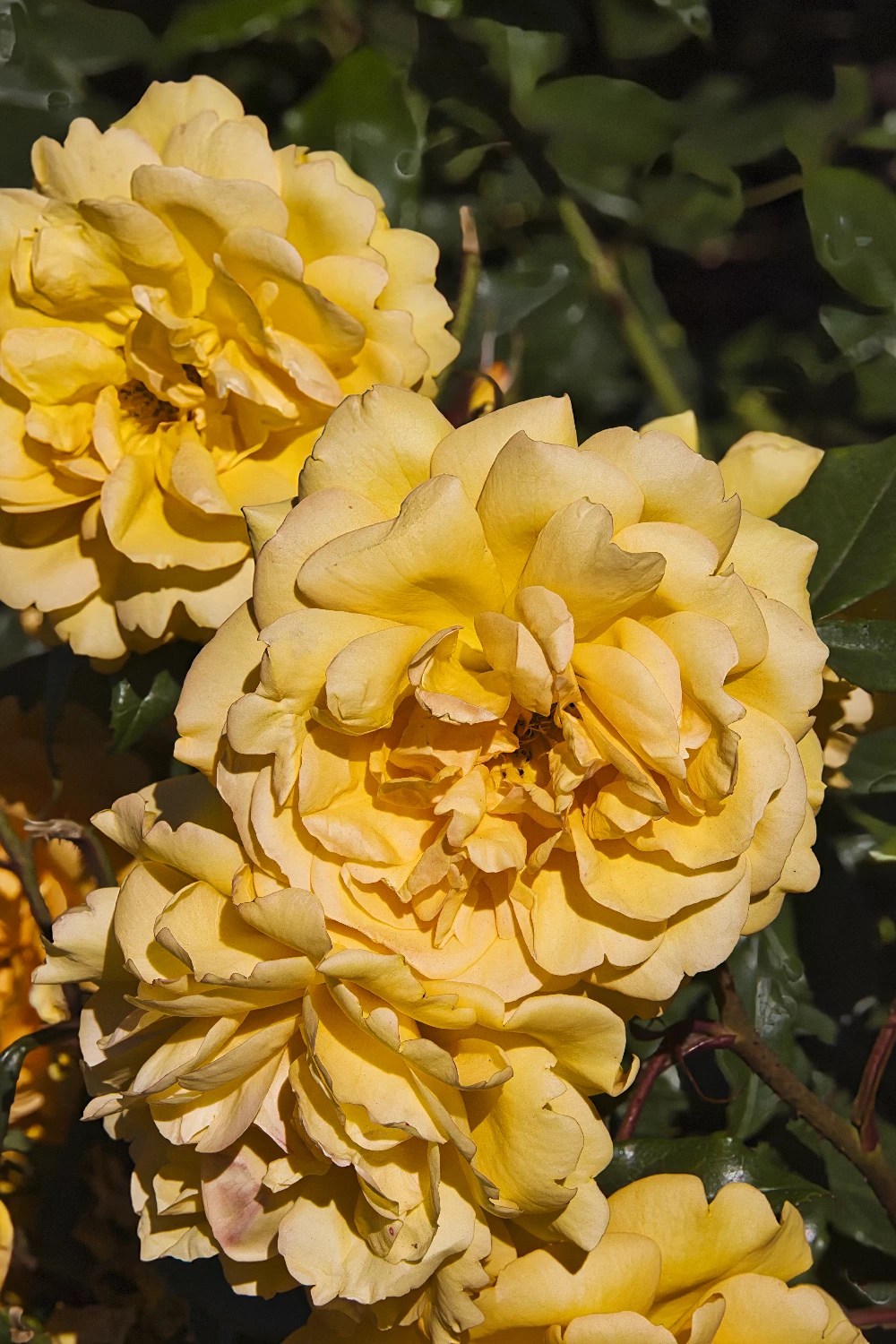
The first hybrid Tea Roses were created in France in the mid-1800s. The British and French popularized rose gardens, especially in the 19th century.
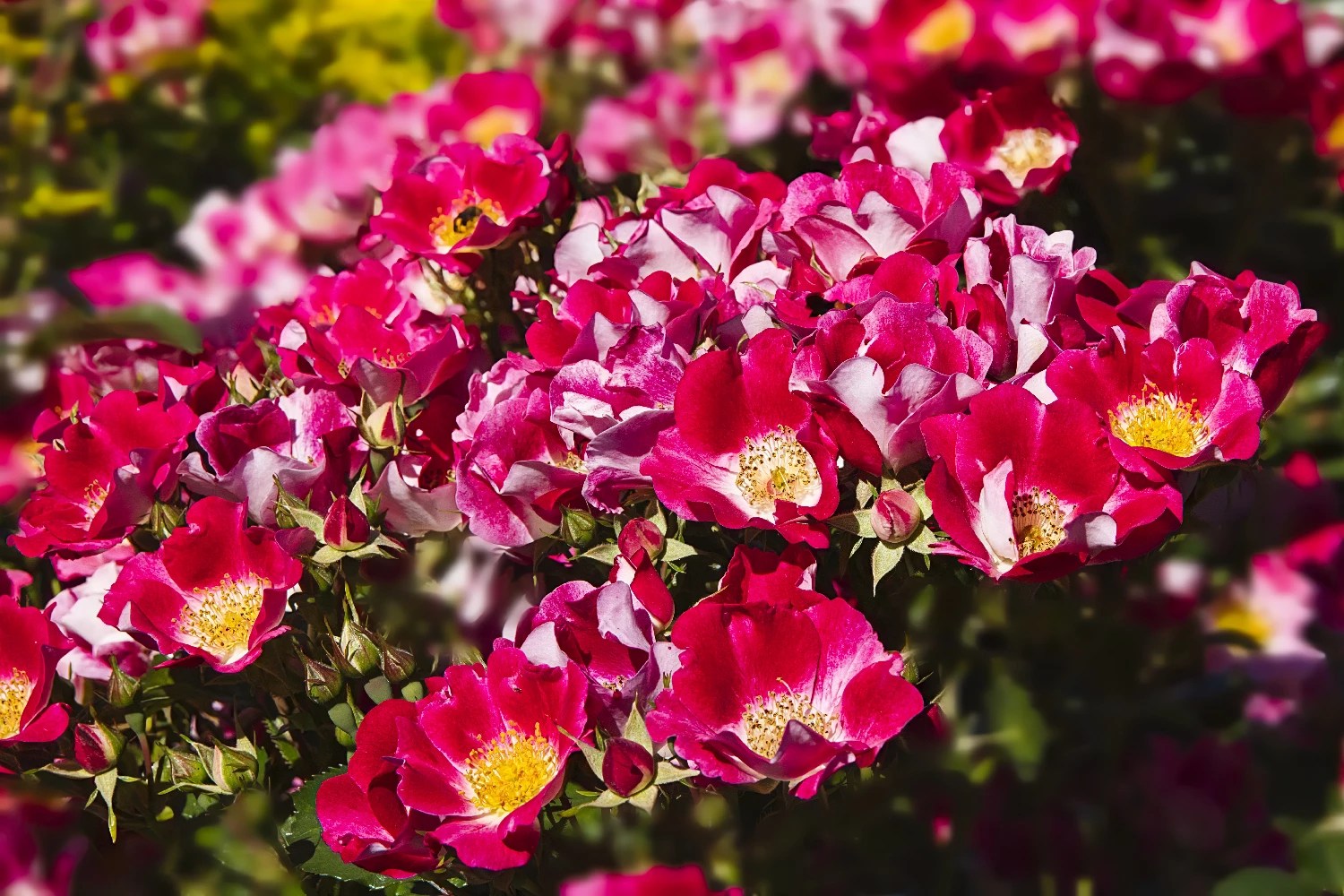
I particularly like the red and yellow Dog Rose (Rosa canina), which blooms from June to July. Roman naturalist Pliny attributed the name Dog Rose to a belief that the plant’s root could cure the bite of a mad dog.
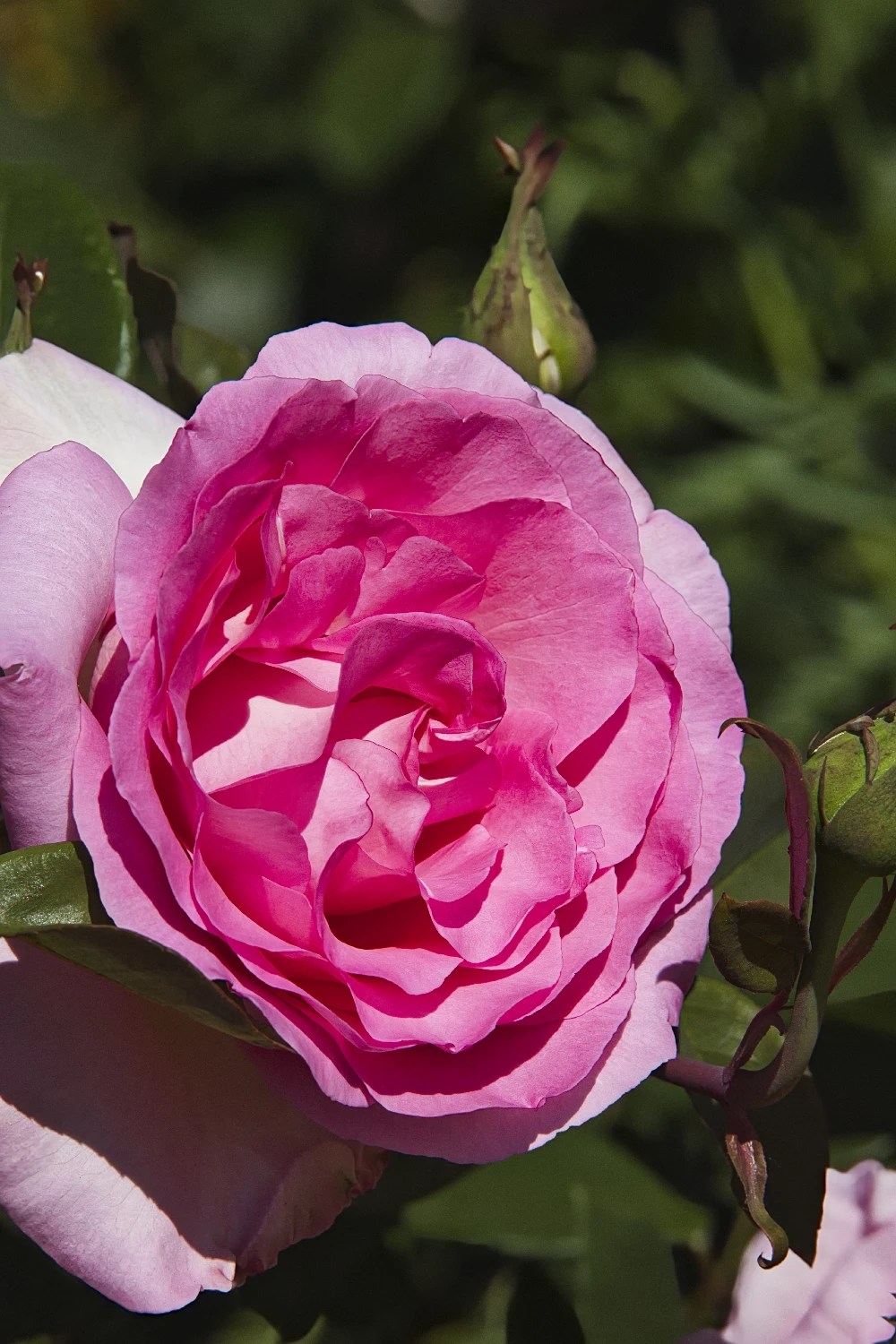
Wend your way north on the path beside the lawn bowling grounds. Cross the main parking lot, then head northeast towards the Season in the Park restaurant (G4.4).
Photo Session
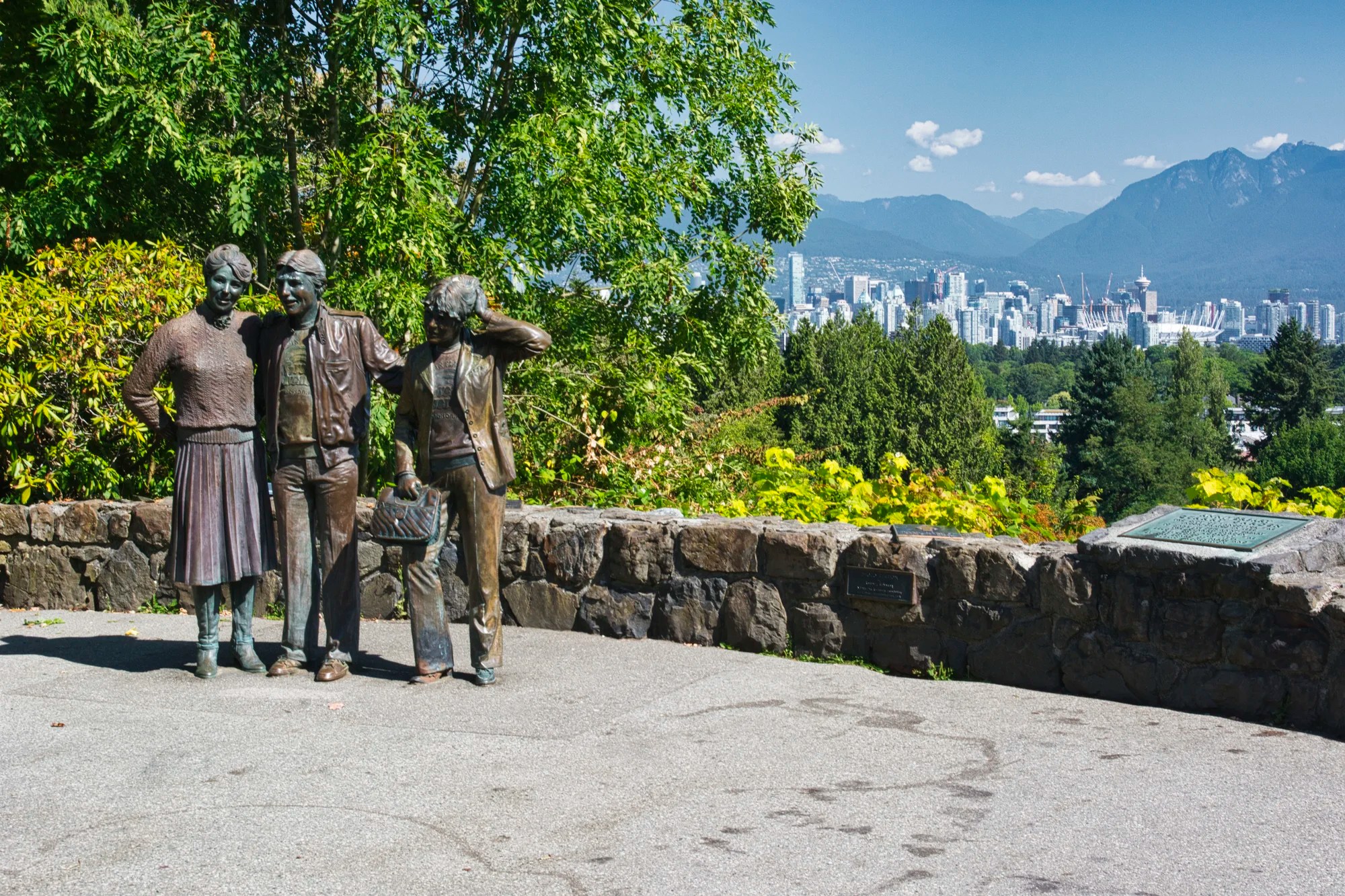
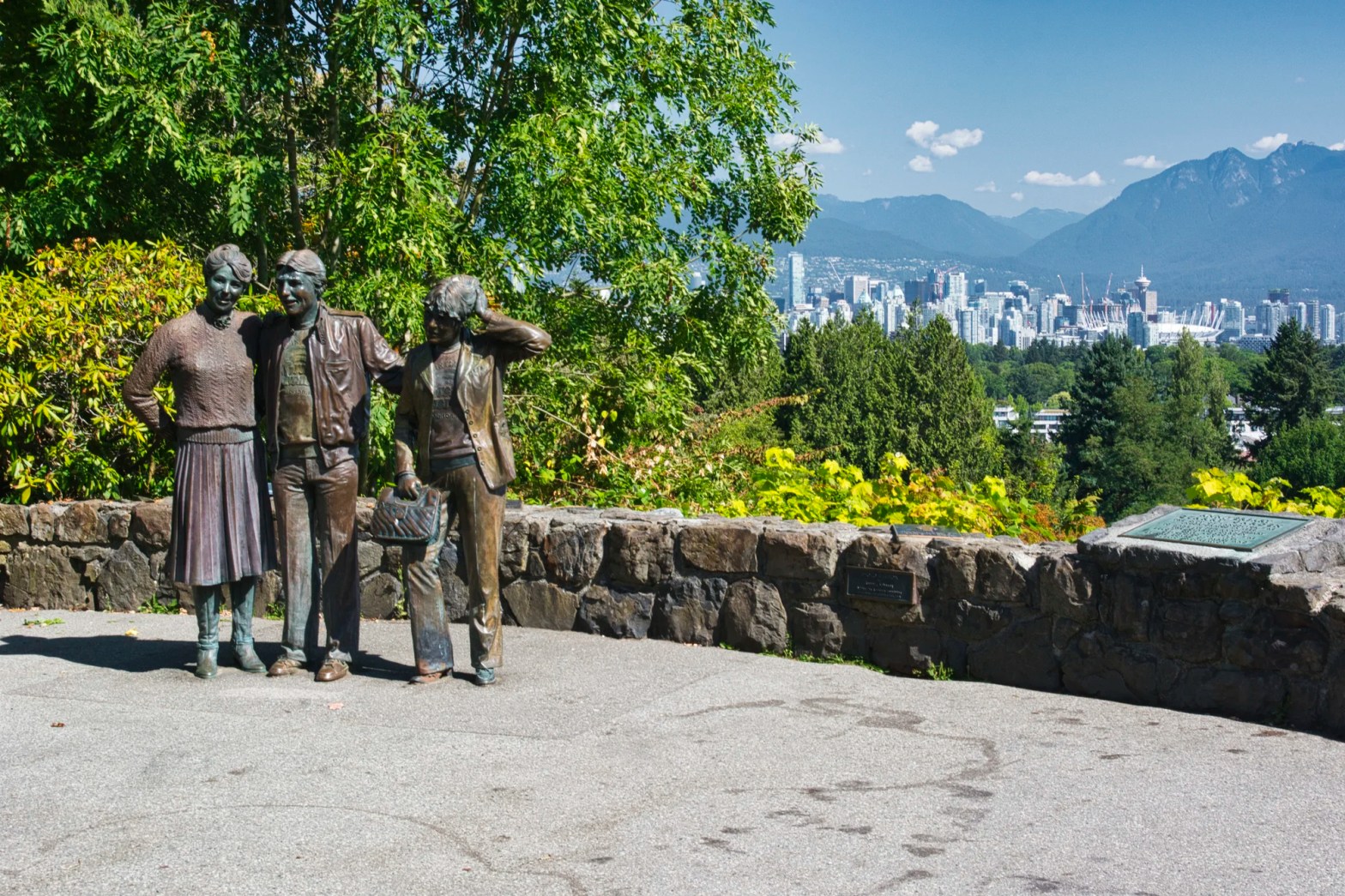
Nearby are some tourists being photographed. Except they cannot move. In 1984, American sculptor J. Seward Johnson gifted “Photo Session” to the park. It features three life-sized people posing for a photo, with the city as a backdrop. There is another bronze statue of the photographer, which was once stolen!
Bloedel Conservatory
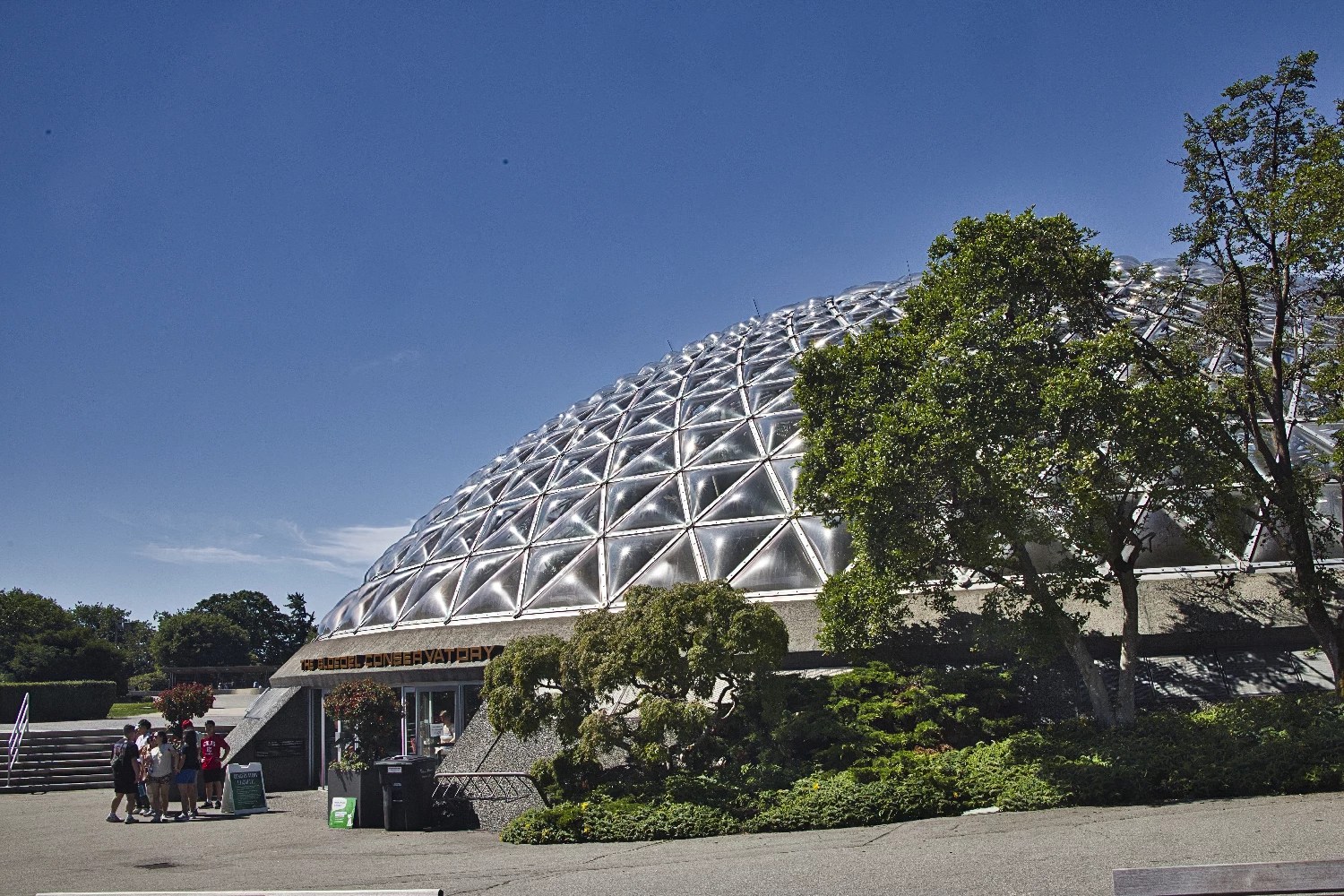
Continue northwest to a geodesic dome housing a tropical garden with 500 exotic plants and flowers and a hundred free-flying tropical birds.
To get project funding, they approached Prentice Bloedel of the former Macmillan Bloedel lumber company. The Bloedel Conservatory (G4.6) opened in 1969.
Grace McCarthy Plaza
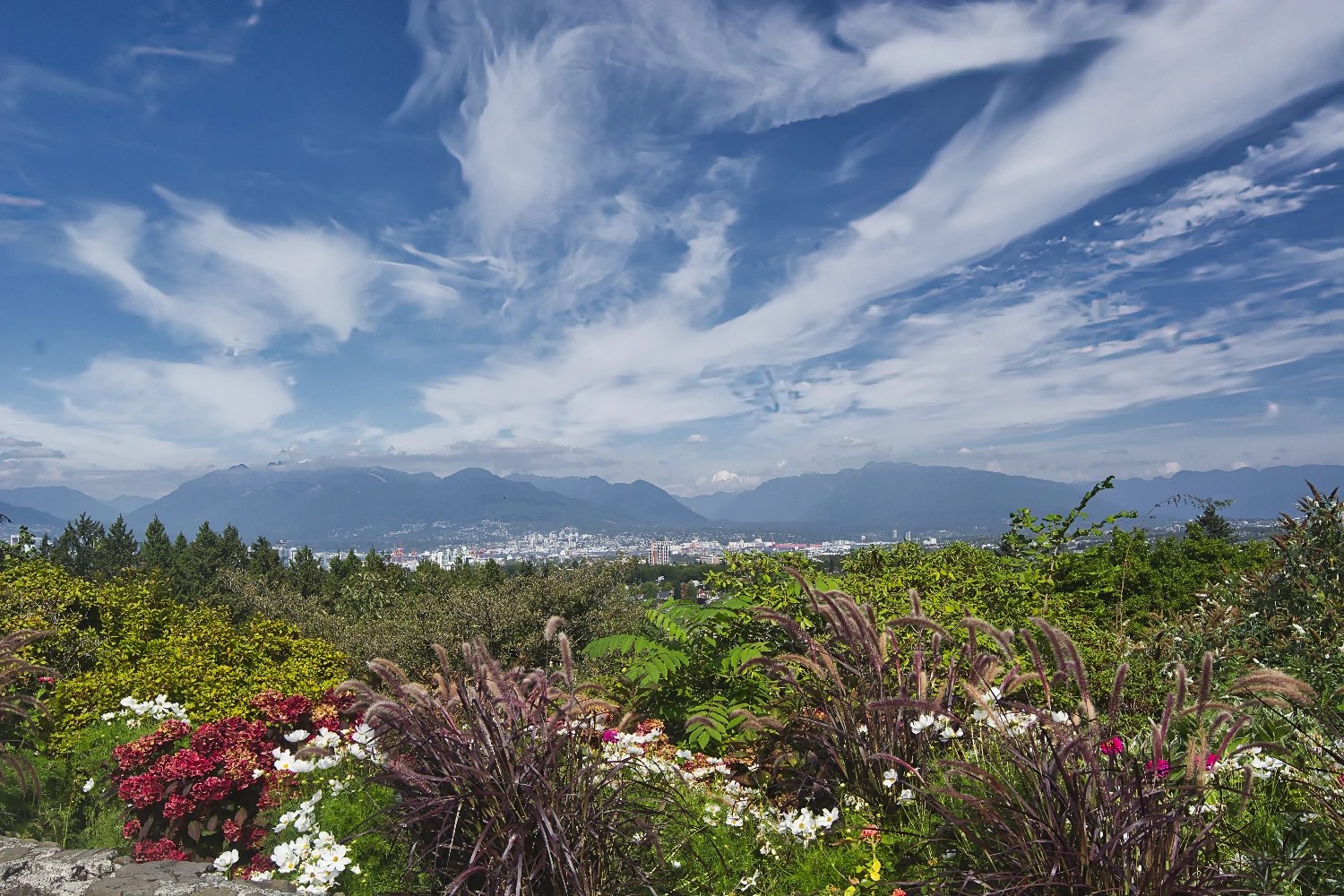
The piazza in front of the Conservatory provides a great view of Vancouver. At 125 m above sea level, Little Mountain is the highest point in Vancouver. One can see all the way to the mountains on the North Shore.
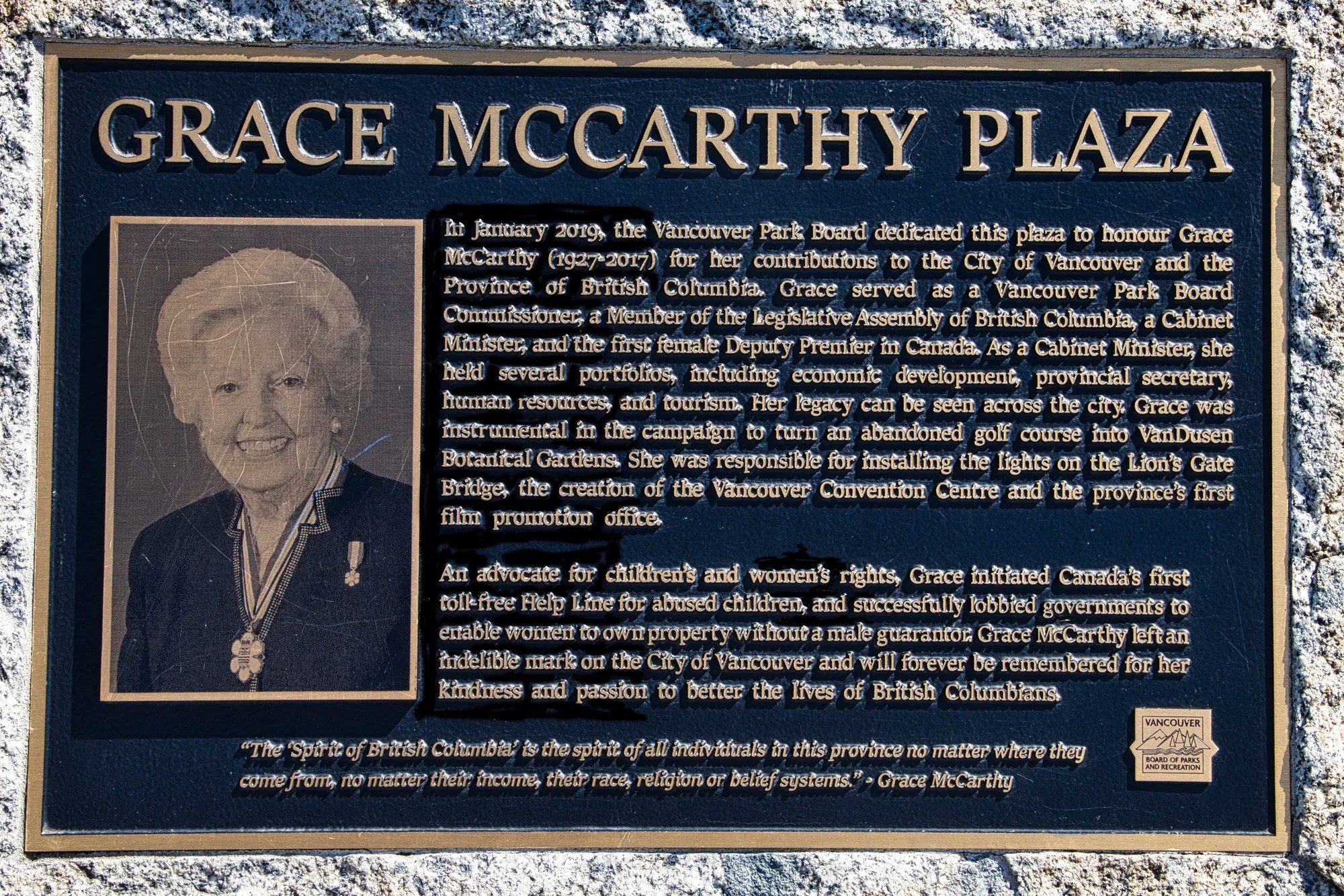
Grace McCarthy Plaza is dedicated to an exceptionally talented woman. Grace McCarthy (1927-2017) served as a cabinet minister in the BC government. She was the first female deputy premier in Canada. She backed the idea of creating the Van Dusen Gardens, another great garden worth visiting in Vancouver.
She set up the film promotion office. Today, Vancouver is one of the top three most prodigious TV and film production centres in North America. It is the filming location for many classic romance and sci-fi movies and TV shows. Some of the most well-known series include Hallmark, Deadpool, Battlestar Galactica, Star Trek, Twilight Saga, Planet of the Apes, Superman, Once Upon a Time and Continuum.
Quarry Viewpoint
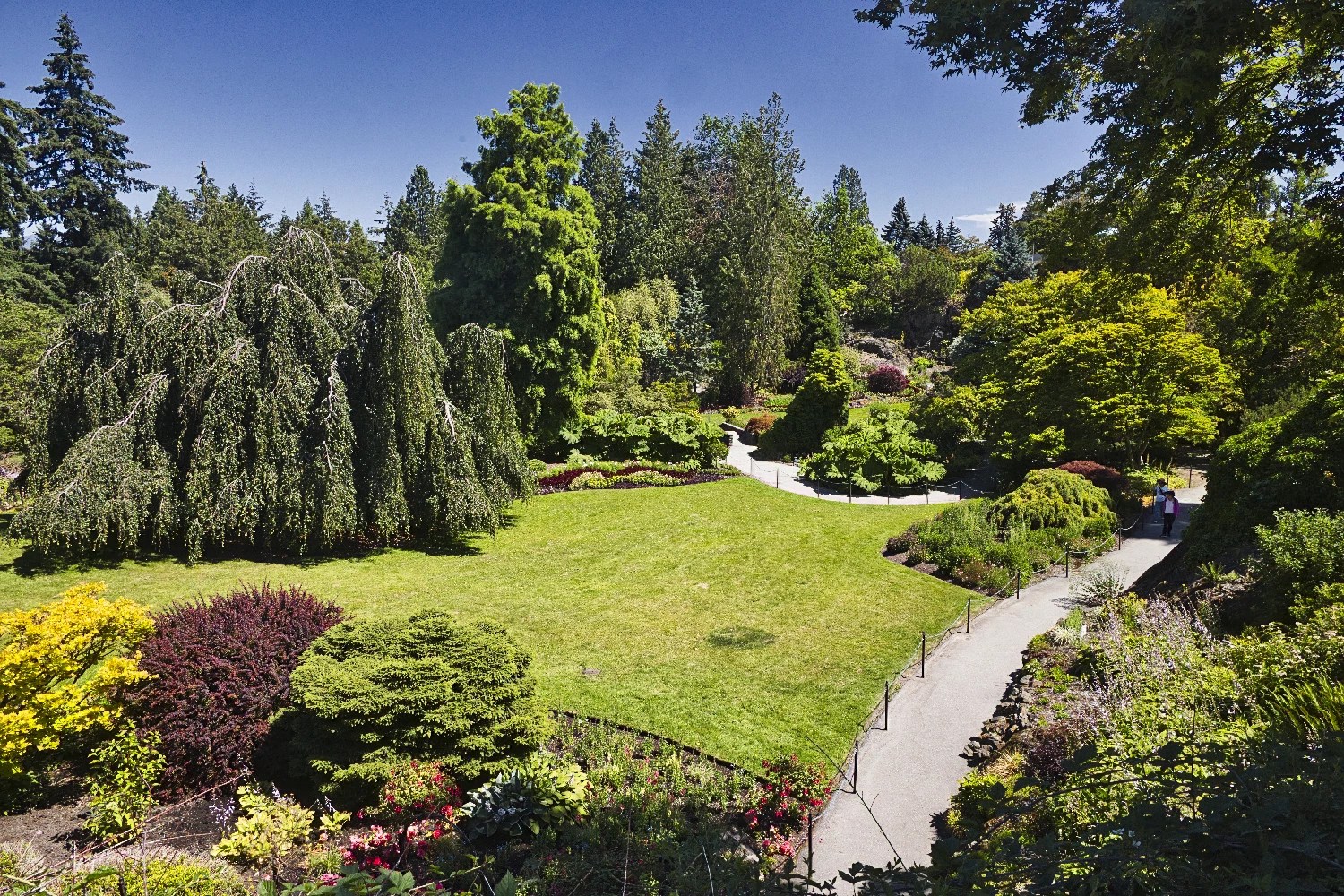
There is also an aerial view of quarry gardens from the plaza further northwest. Basalt was used in the 1920s to build roads in the Shaughnessy and Gastown districts of Vancouver. Basalt is quickly cooled lava. Little Mountain is a volcanic outcropping that was formed between 31 and 34 million years ago.
The quarry gardens were designed by Bill Livingstone. They were unveiled in 1961 for the 75th anniversary of Vancouver, which was incorporated in 1886.
Small Quarry Garden
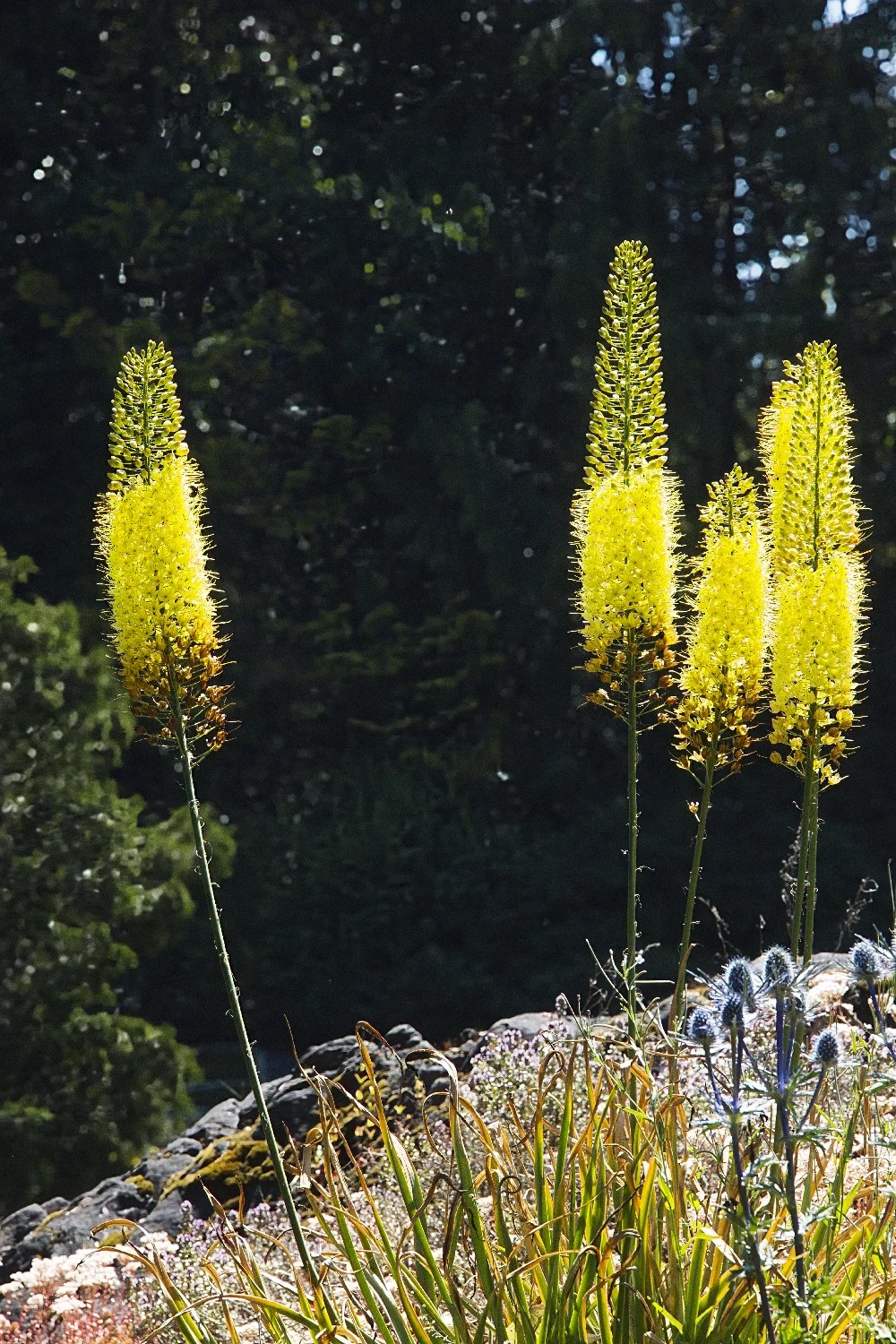
Retrace your path to the Grace McCarthy plaque. Descend the stairs and turn right (east) at the sign to the Small Quarry Garden.
Desert Prince’s Plume (Stanleya pinnata) occurs in open habitats, like deserts and rocky cliffs. It was used as an Indigenous medicinal plant. The plant absorbs selenium from the soil, making it toxic to animals.
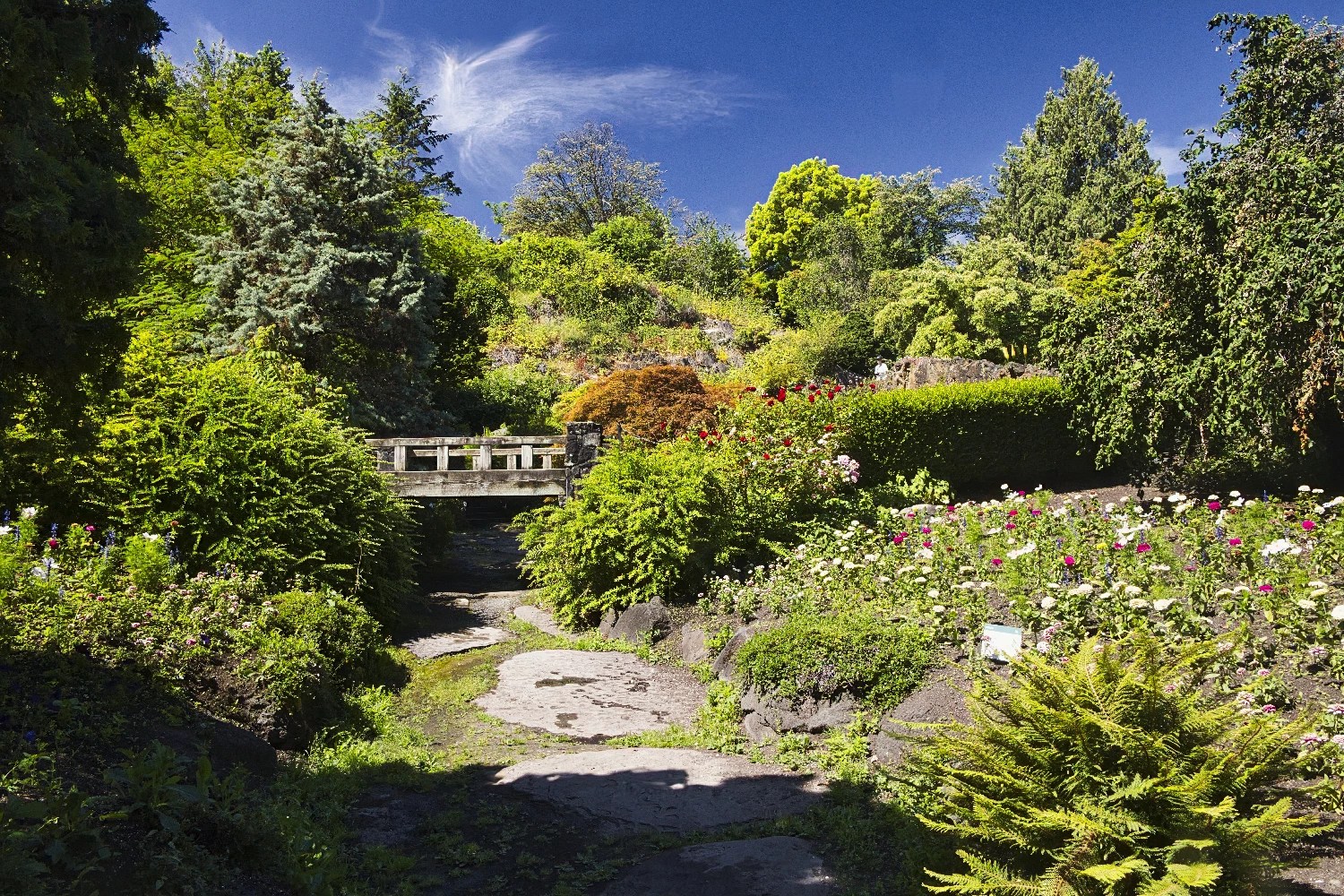
This is a “dry” garden, which supports the need to conserve water in a much drier climate change era. The Small Quarry Garden has many oriental horticultural influences, including a bridge over a stony stream bed.
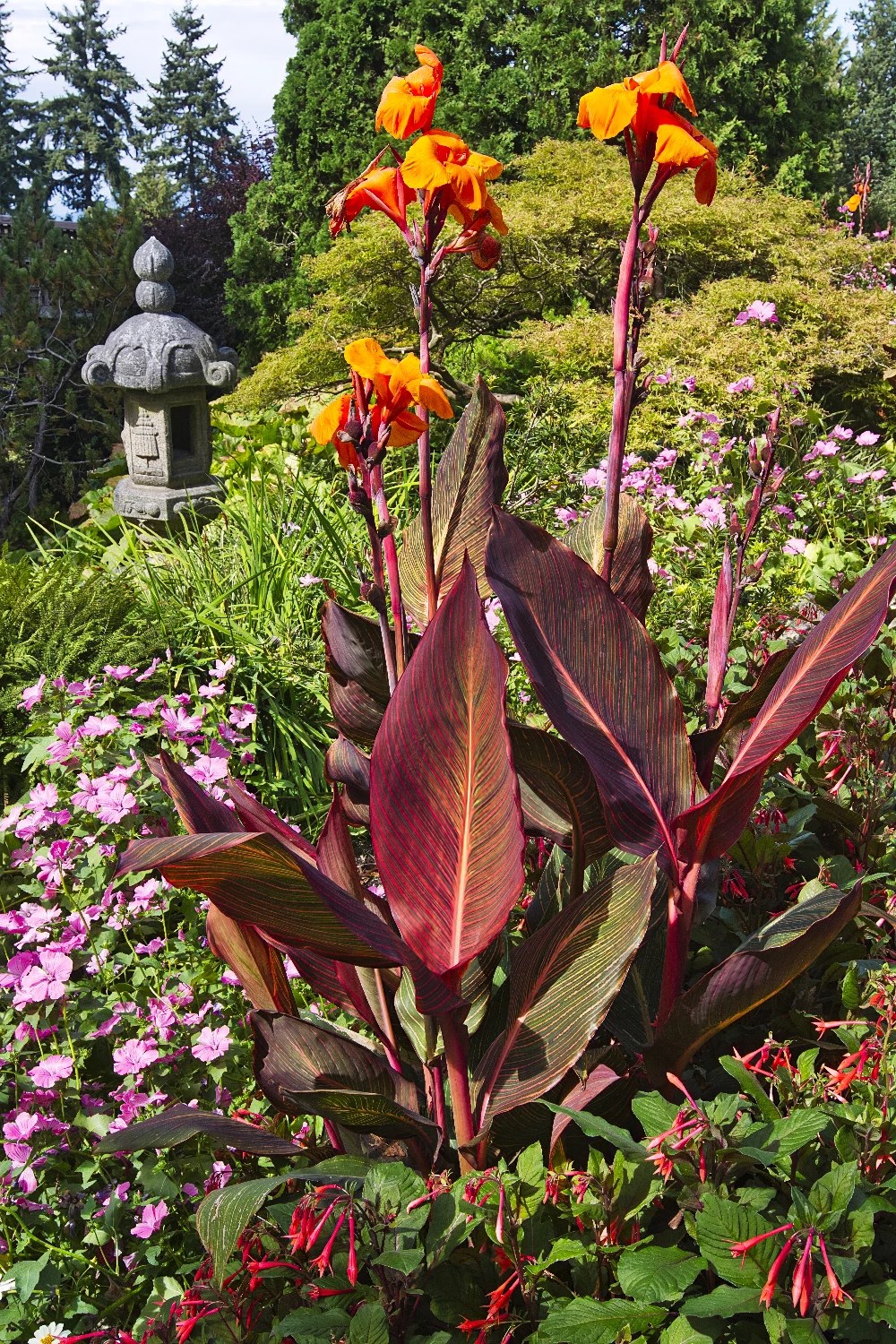
Another oriental influence is the stone lantern near the Canna Lily. Canna is native to tropical North America. Their starchy root was eaten by the Indigenous people. Cannas are often used for wedding decorations.
Large Quarry Garden
Turn back on the main path heading west to the Large Quarry Garden.
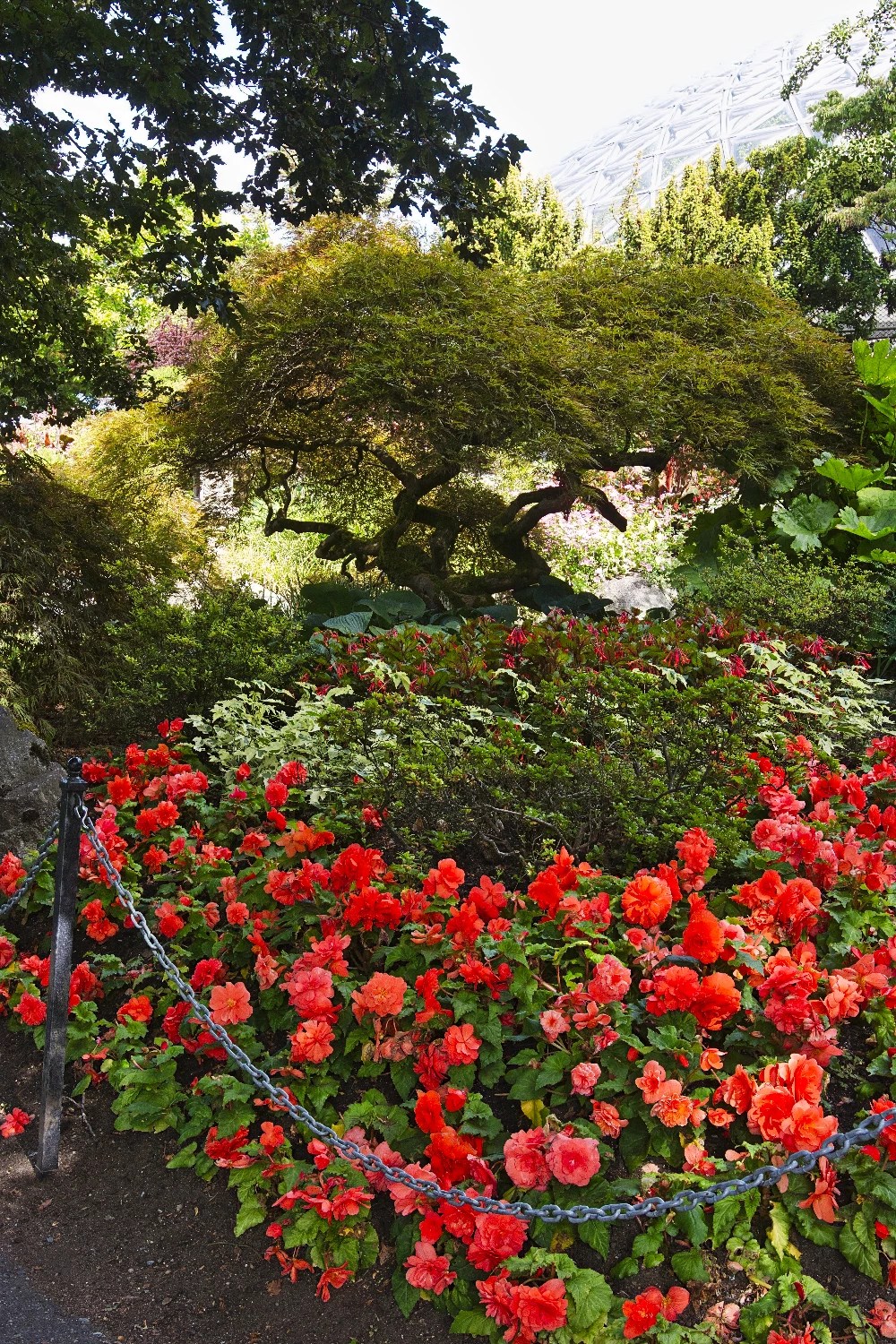
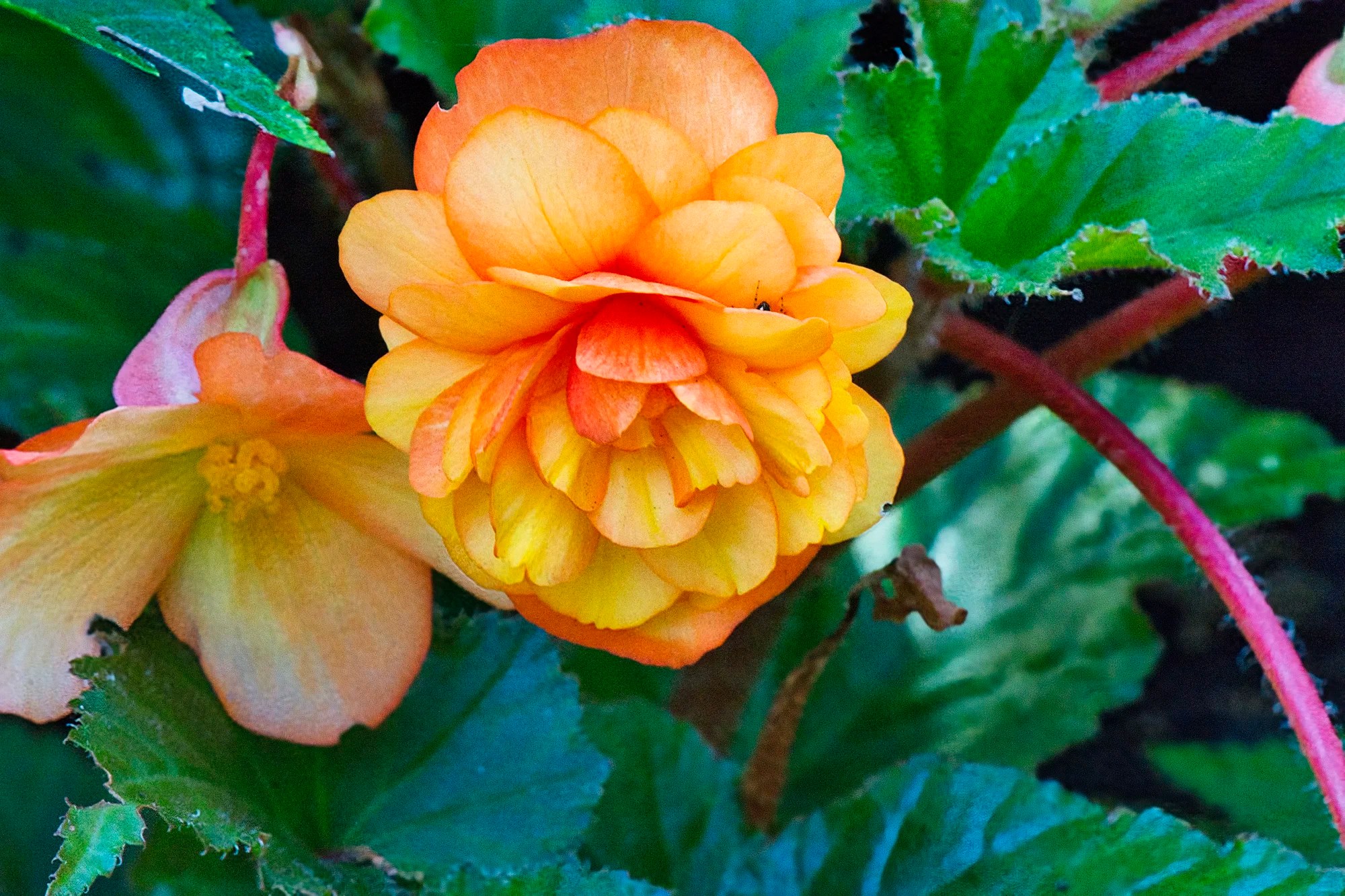
Wax Begonia is found in Latin America, Africa and southern Asia. Wax Begonia contain a large amount of oxalic acid. Oxalic acid is used in bleach and tooth whitening products. If you are prone to kidney stones, you should avoid vegetables that are high in oxalic acid. Some of these vegetables include spinach, almonds, beets, and soy products.
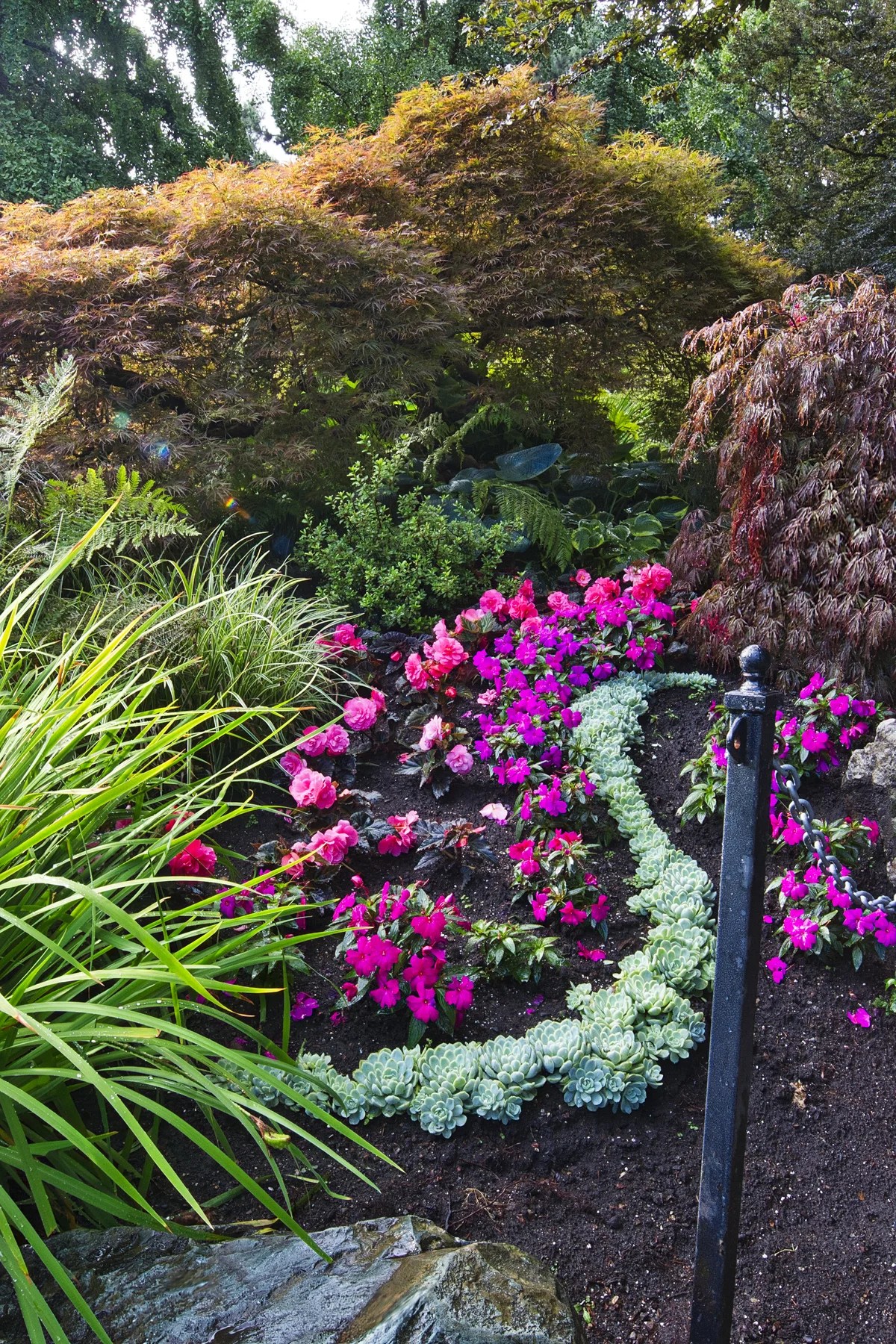
In this floral display, purple New Guinea Impatiens are lined with pale green Mexican Snow Ball. QEP often uses Mexican Snow Ball to form floral borders.
New Guinea Impatiens (Impatiens hawkeri) originated in Papua New Guinea (PNG) and the Solomon Islands.
Mexican Snowball (Echeveria elegans) is a succulent with a rosette form. They are also known as Hens & Chicks.
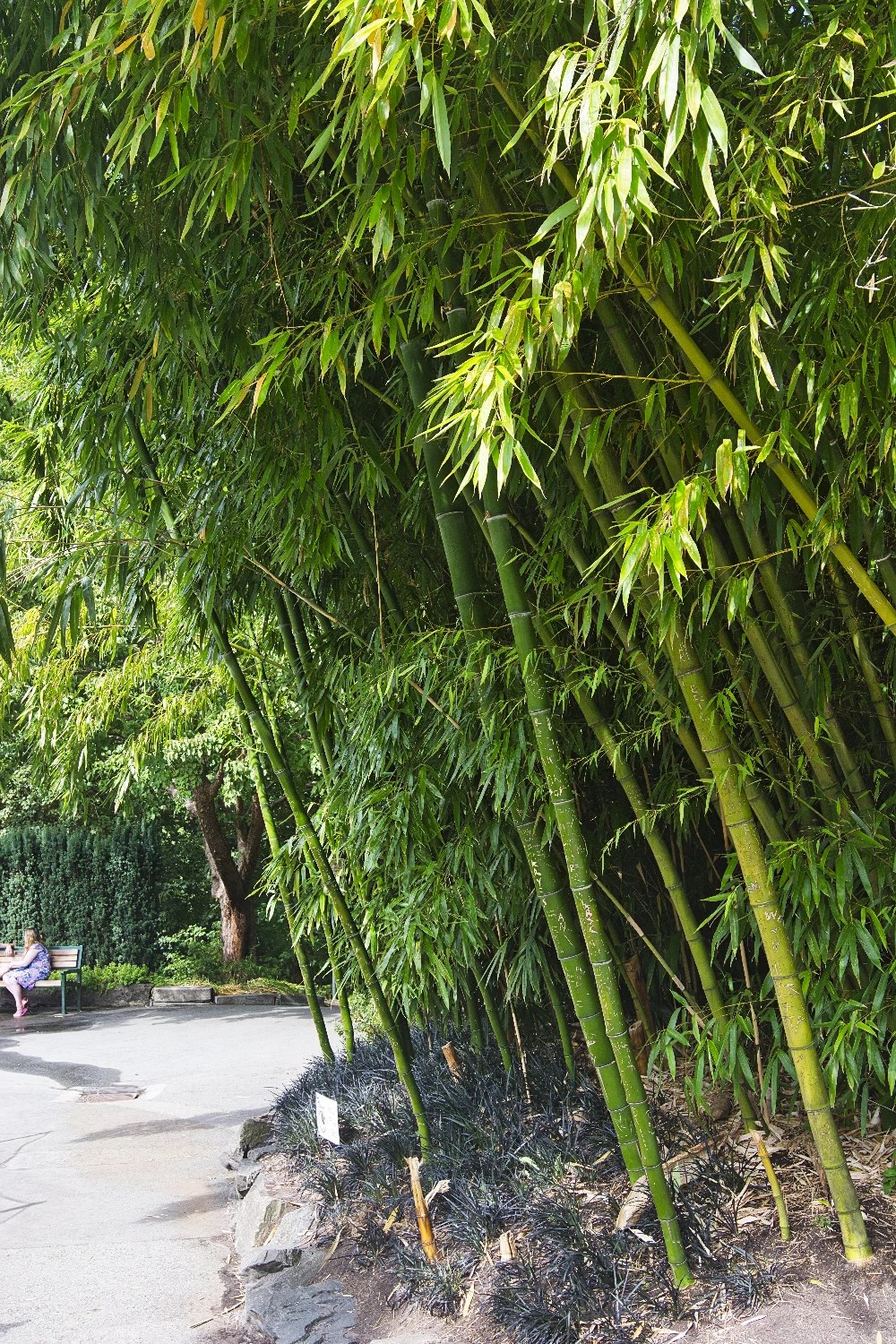
Bamboos are the largest members of the grass family, reaching a height of 46 m. They are also some of the fastest-growing plants in the world.
Bamboo is ancient and originated in the late Cretaceous period, the era of the meat-eating dinosaurs. Because it bends but does not break, bamboo symbolizes durability and longevity in Chinese art and culture.
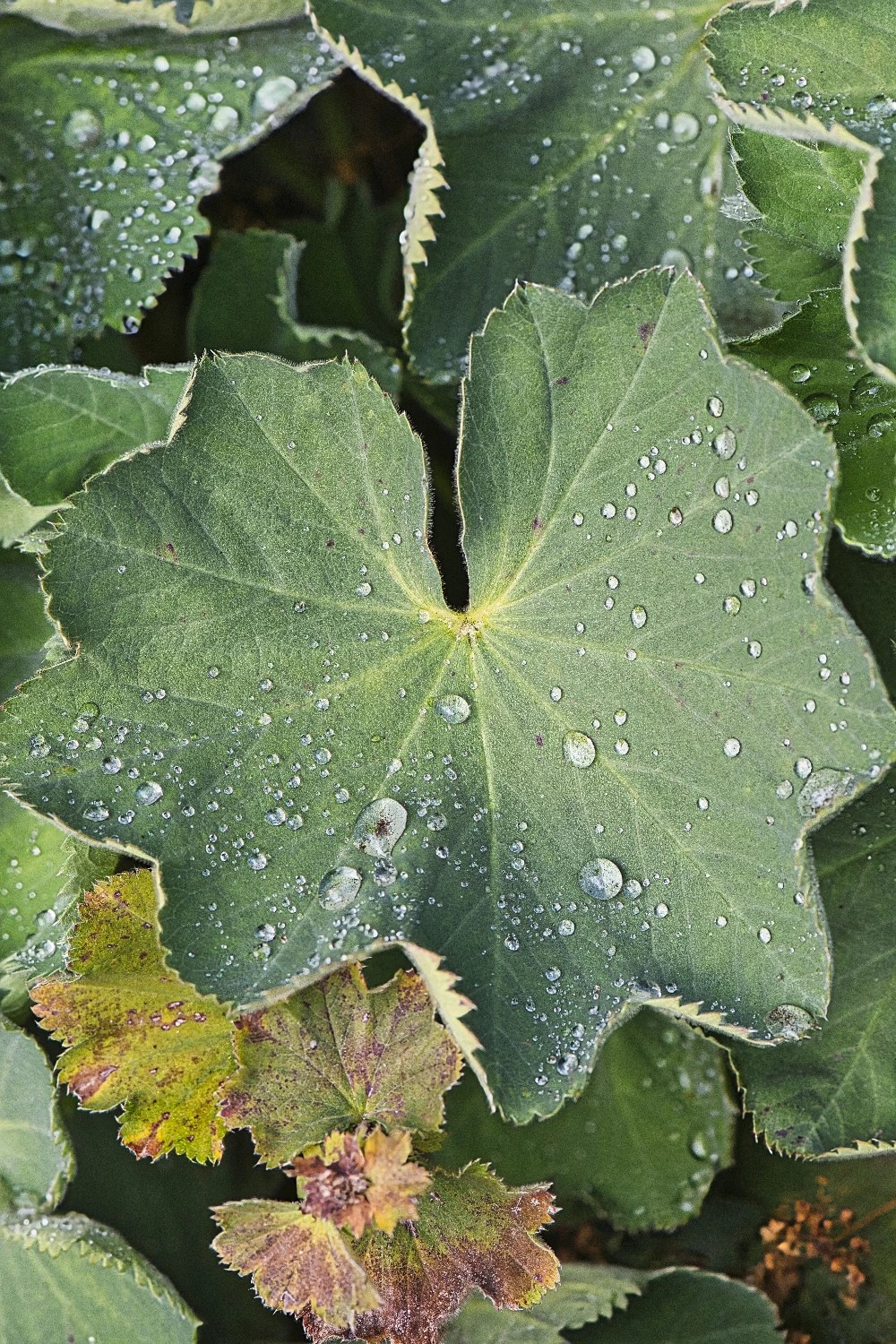
Lady’s Mantle is native to Turkey and the Carpathian Mountains. It is widely used in folk medicine for treating diabetes, anemia, ulcers, hernias, wounds, and inflammations.
Zinnia

The red-centred, white Mexican Zinnia (Haage zinnia) is native to the Americas. It was named for German botanist Johann Zinn.

The pale yellow Common Zinnia (Zinnia elegans) is native to Mexico

The root vegetable Taro (Elephant Ears) is believed to be one of the earliest cultivated plants. Our word taro originates from the Māori language via Captain Cook (1769).
Floral Art

Floral art is a theme in QEP. Golden Angel’s Trumpet (Brugmansia aurea) is endemic to Ecuador. One interesting fact is that it contains a high concentration of scopolamine, a hallucinogen.

Several flower beds use border plants in an artfully contrived landscape. This is an octopus painting in flora outlined in Hens and Chicks.

Bigleaf Hydrangea (Hydrangea macrophylla) is native to East Asia. It has become common in New Zealand and the Americas. Hydrangeic acid from the leaves is being investigated as a possible anti-diabetic drug. It significantly lowered blood glucose, triglyceride, and free fatty acid levels in laboratory animals.
Common Coleus

I love the textured feel of Common Coleus leaves. Coleus are native to tropical areas of Southeast Asia, India, Africa and Australia.

The other reason I love coleus is the two-tone leaves. Botanists call multicoloured leaves with striped, blotched, or bordered patterns variegated.

Japanese Maple (Acer palmatum) trees have palmate leaves. This means that their leaves resemble the shape of a hand with spread-out fingers.
Arboretum

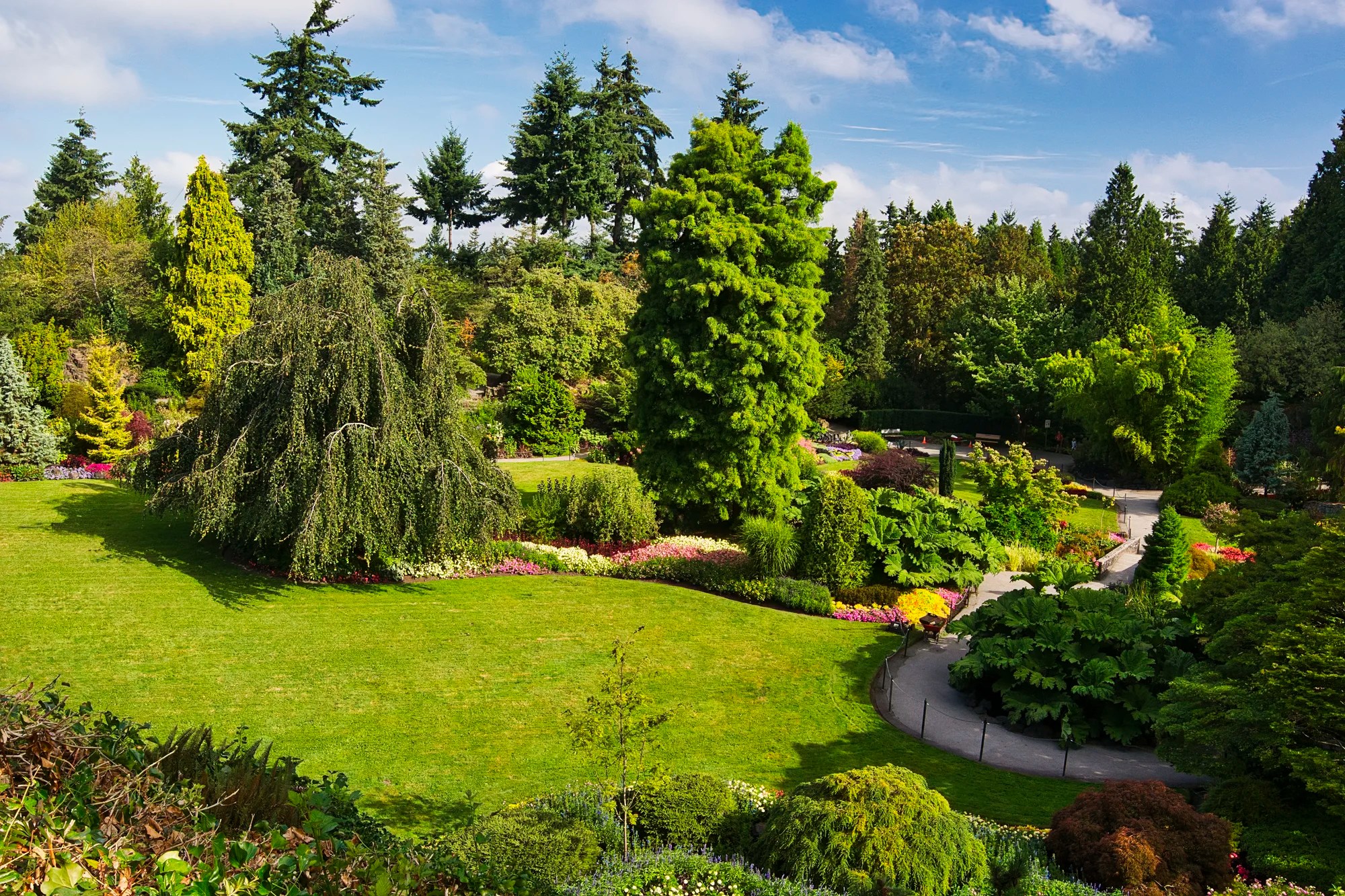
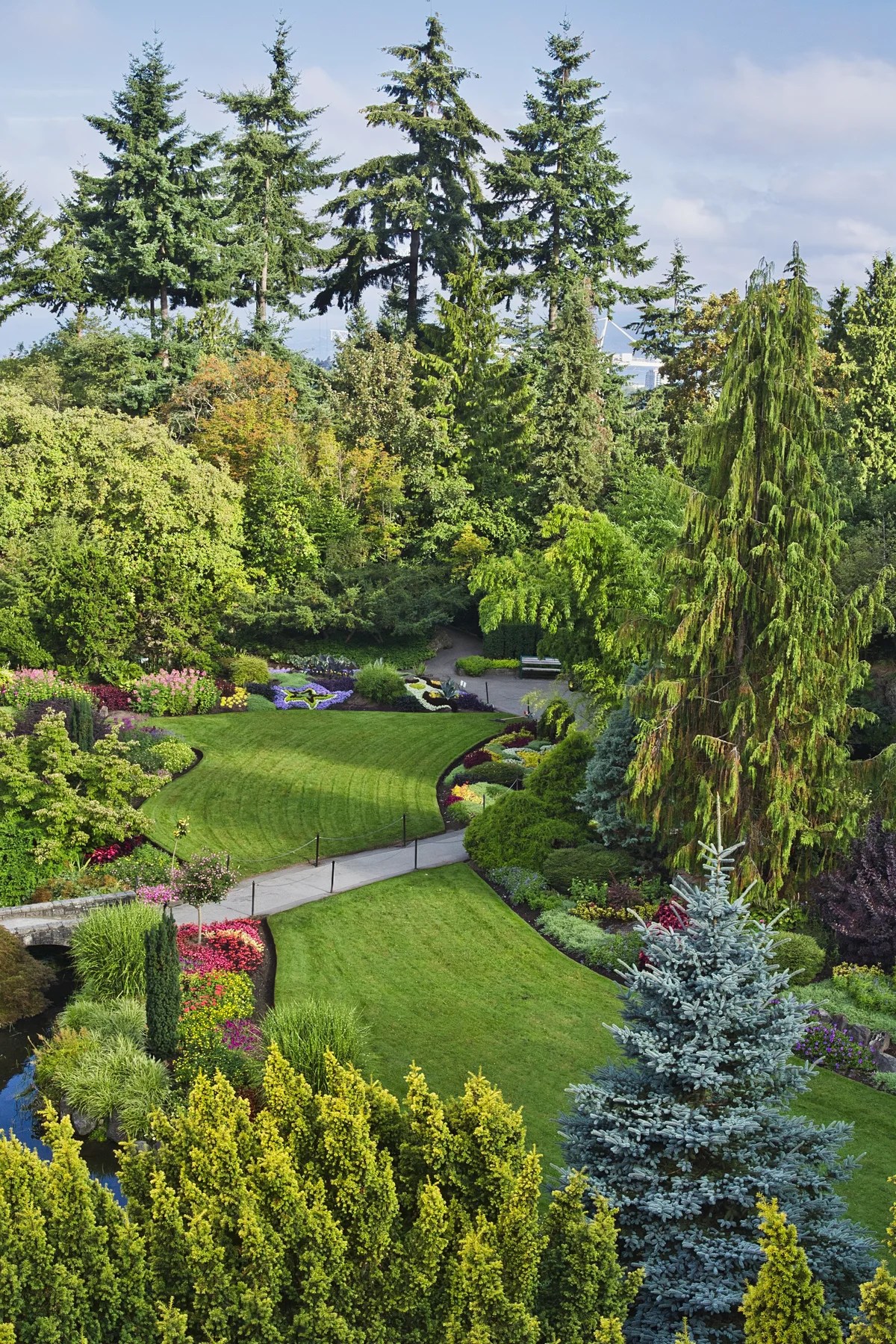
Canada’s first civic arboretum was created around a large lawn. The first plantings were made in 1949 by a group of junior forest wardens. Most of the larger trees are about 60 years old. There are now about 1500 trees from across Canada in this park.
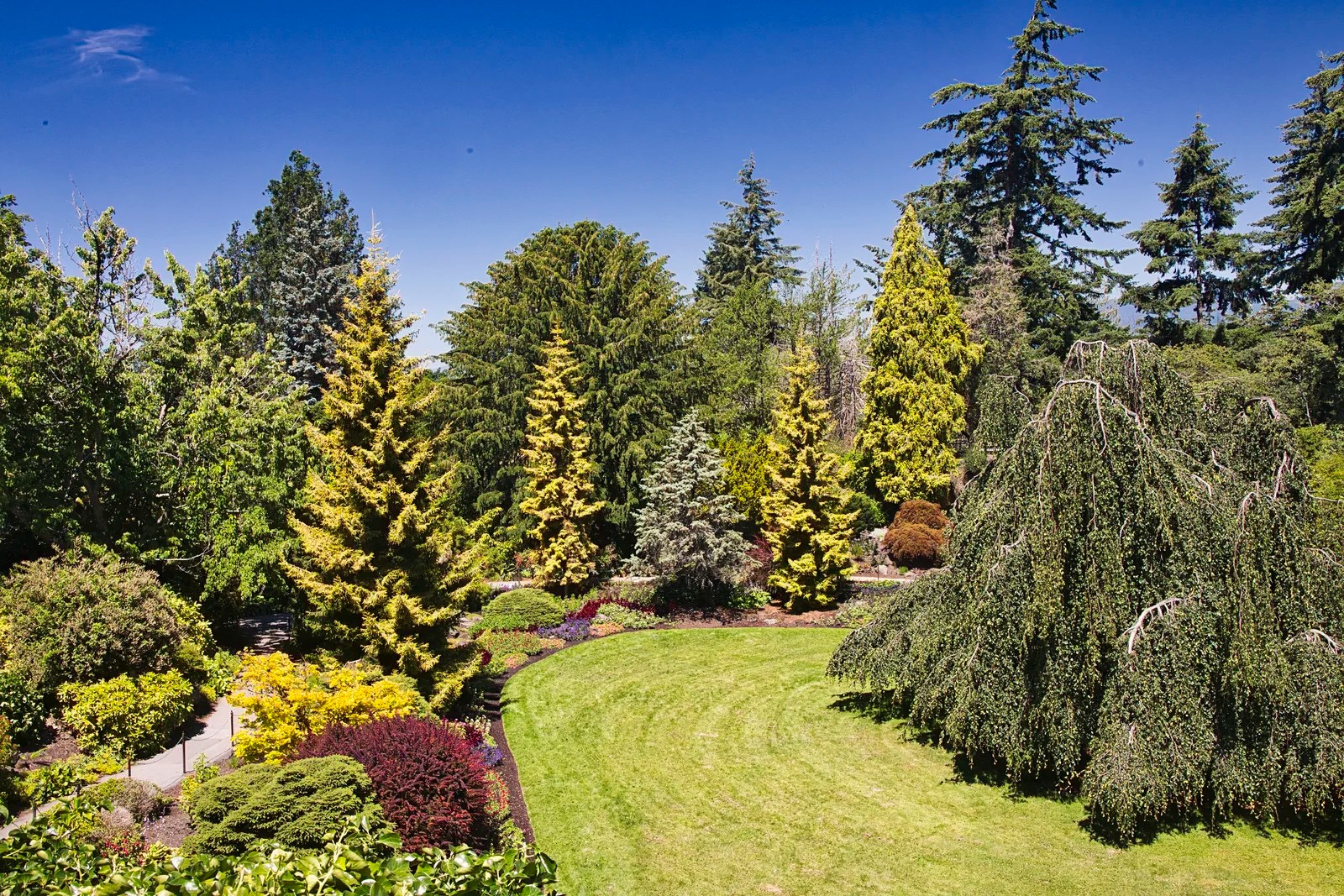
On the left-hand side of this image are the Norway Spruce (yellow-green), Hinoki Cypress, and Blue Spruce. In the back is a wide and tall dark green Nootka Cypress. On the right-hand side is the drooping European Beech.
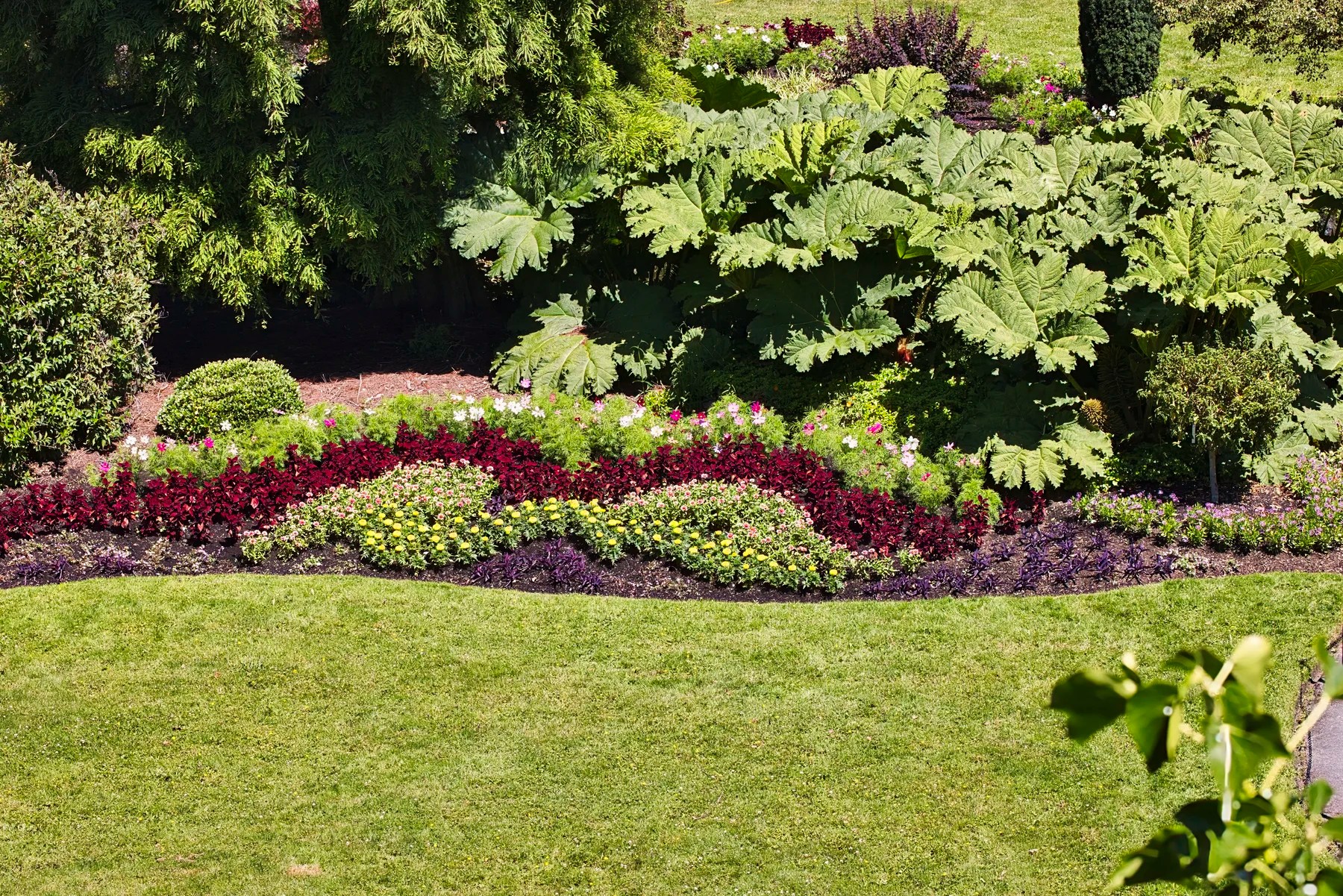
This image shows more of the floral art. The patterns are made by flowers: green, pink and white Common Zinnia; yellow African Marigold; and purple Common Coleus.
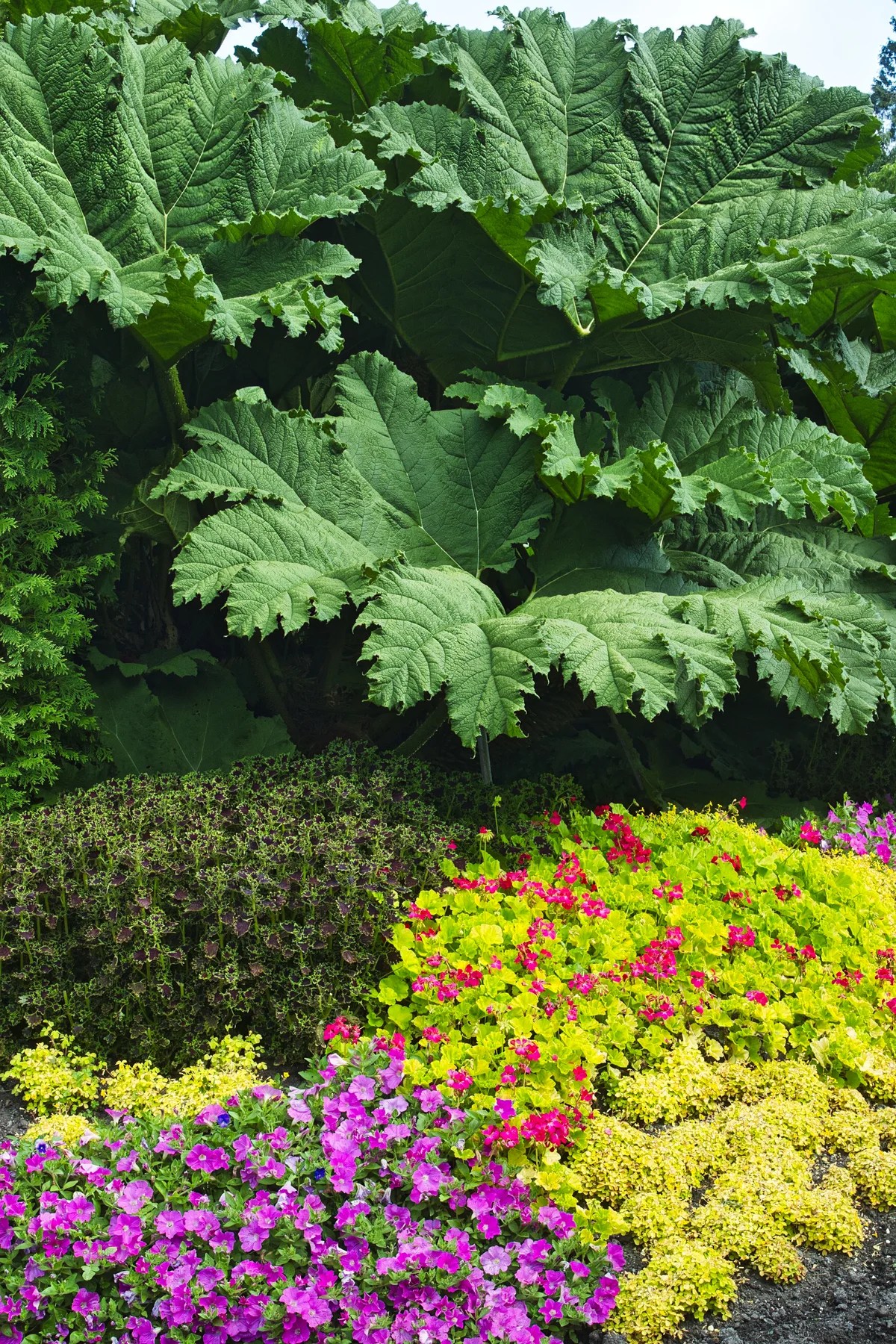
The huge leaves behind the floral art above are called Giant Rhubarb (Gunnera manicata). This is endemic to Brazil, where it is used in traditional medicine for sexually transmitted diseases.
Wedding Photoshoot
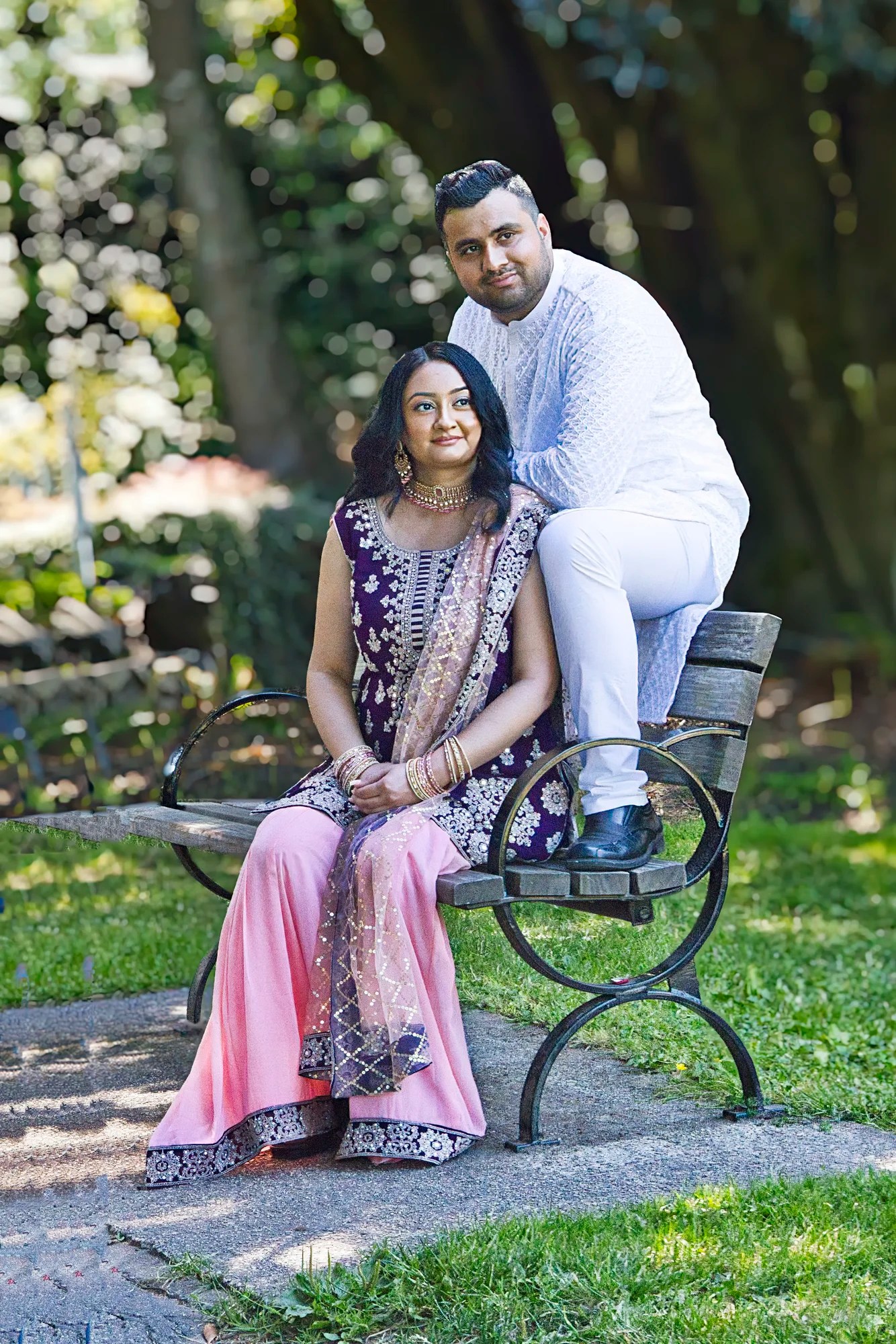
QE Park is a popular backdrop for wedding photos. If you are lucky, you can watch a photo shoot. Here, I took the same picture as the wedding photographer, directing this pensive newlywed look.
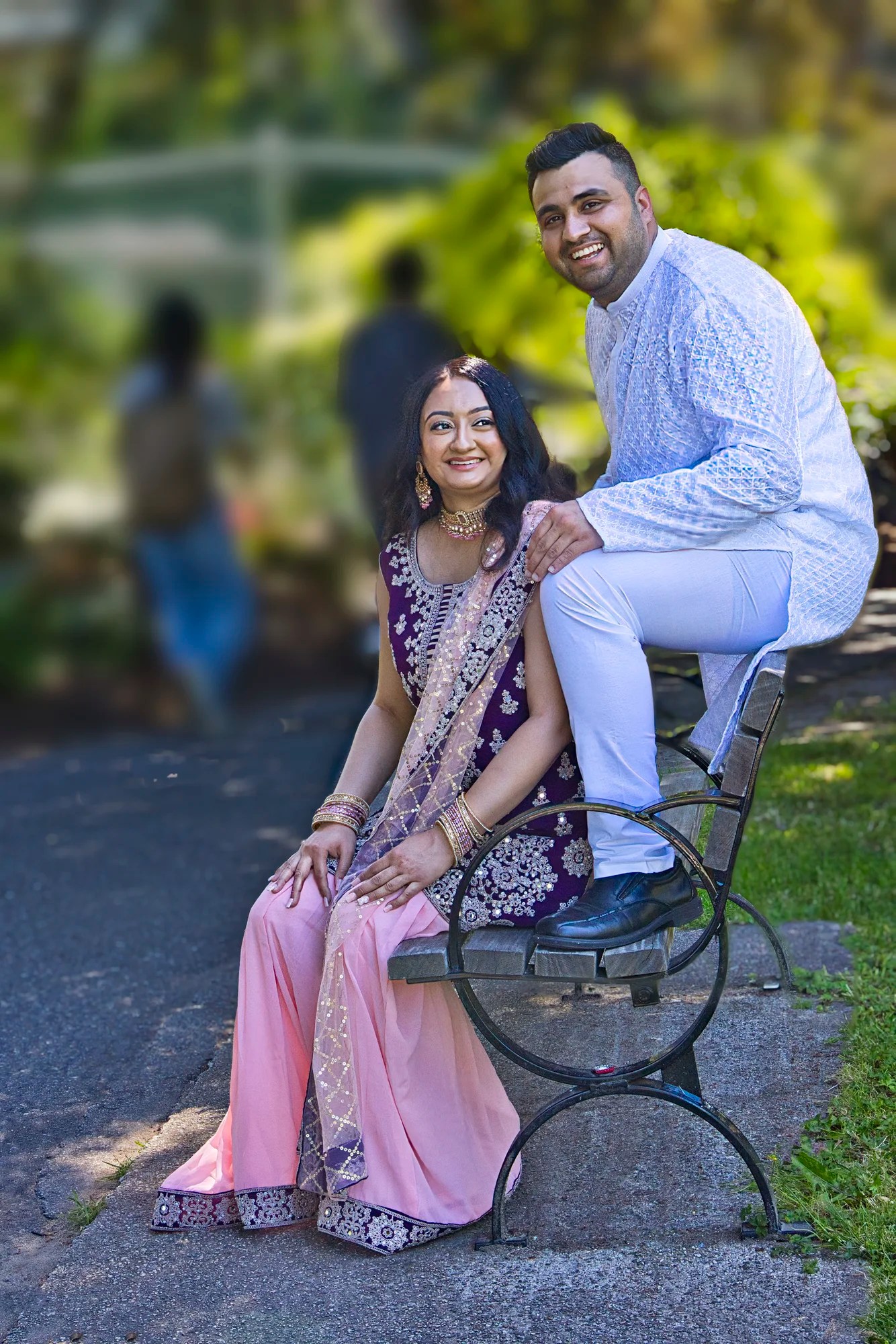
When he left, I continued shooting. Suddenly, the couple realized I was taking their photos and beamed into radiant smiles.
My Favourite Flowers
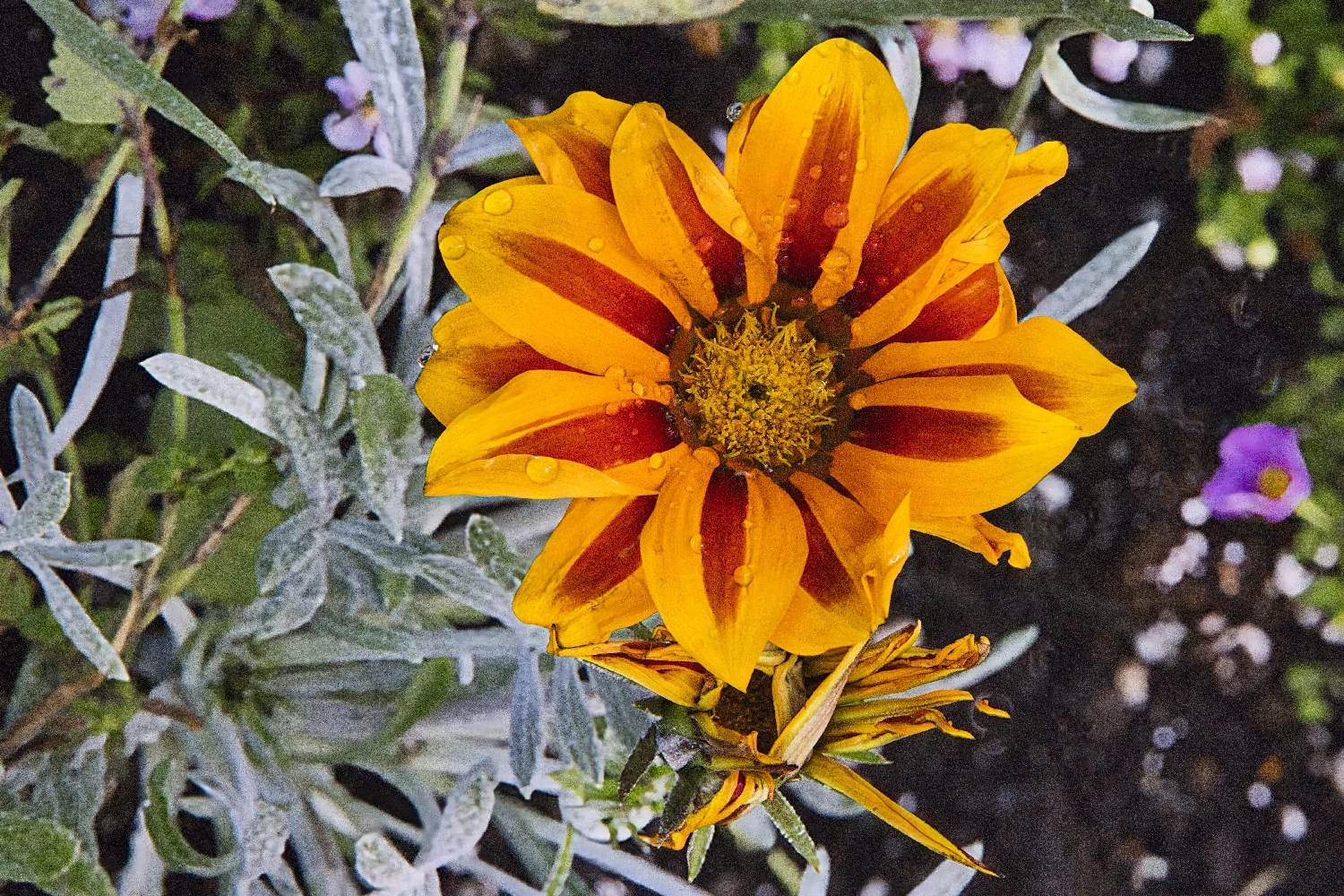
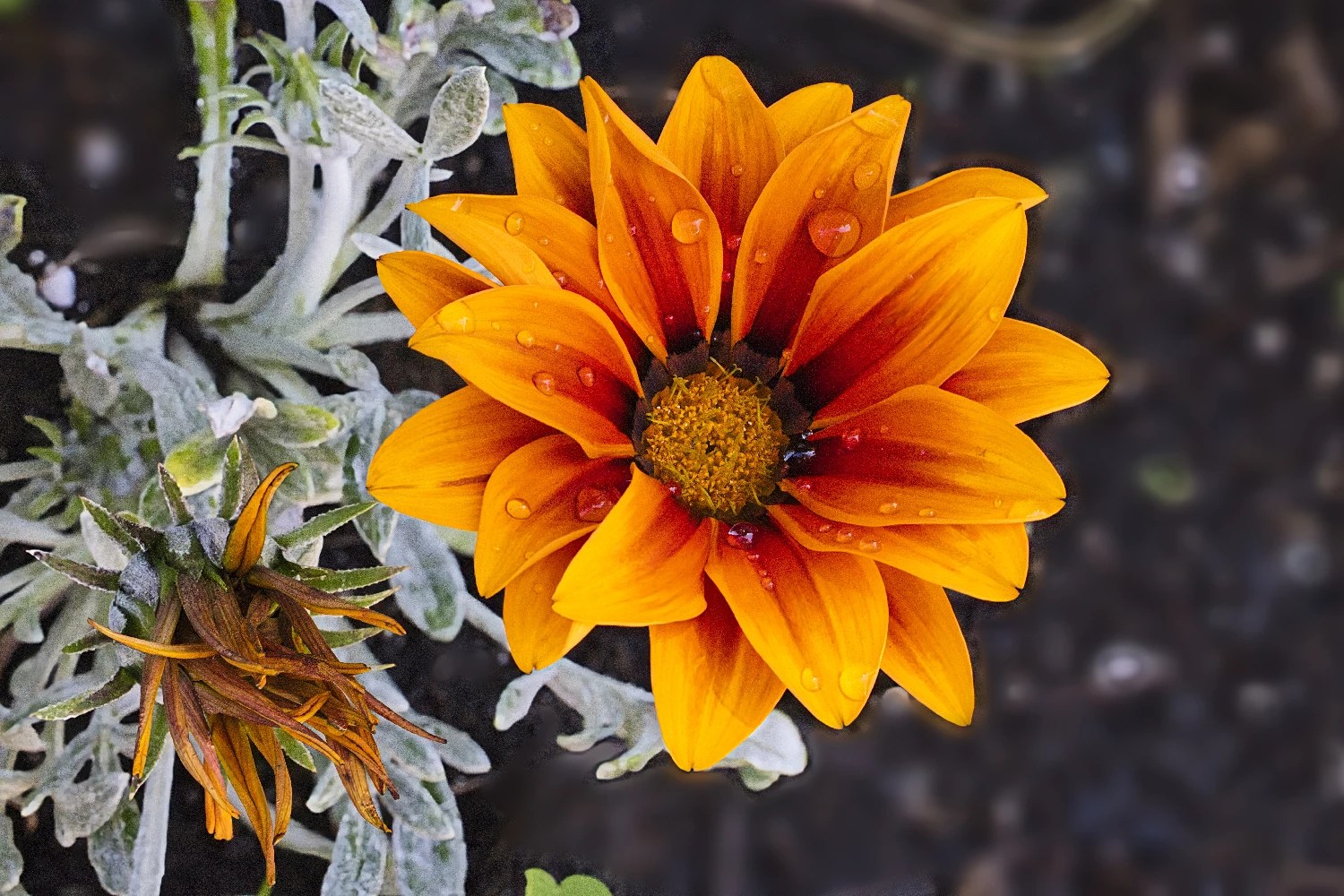
My favourite find on our last trip was the gorgeous reddish-orange Treasure Flower (Gazania rigens). It is native to the coastal areas of southern Africa. It flowers from March to October in the northern hemisphere,
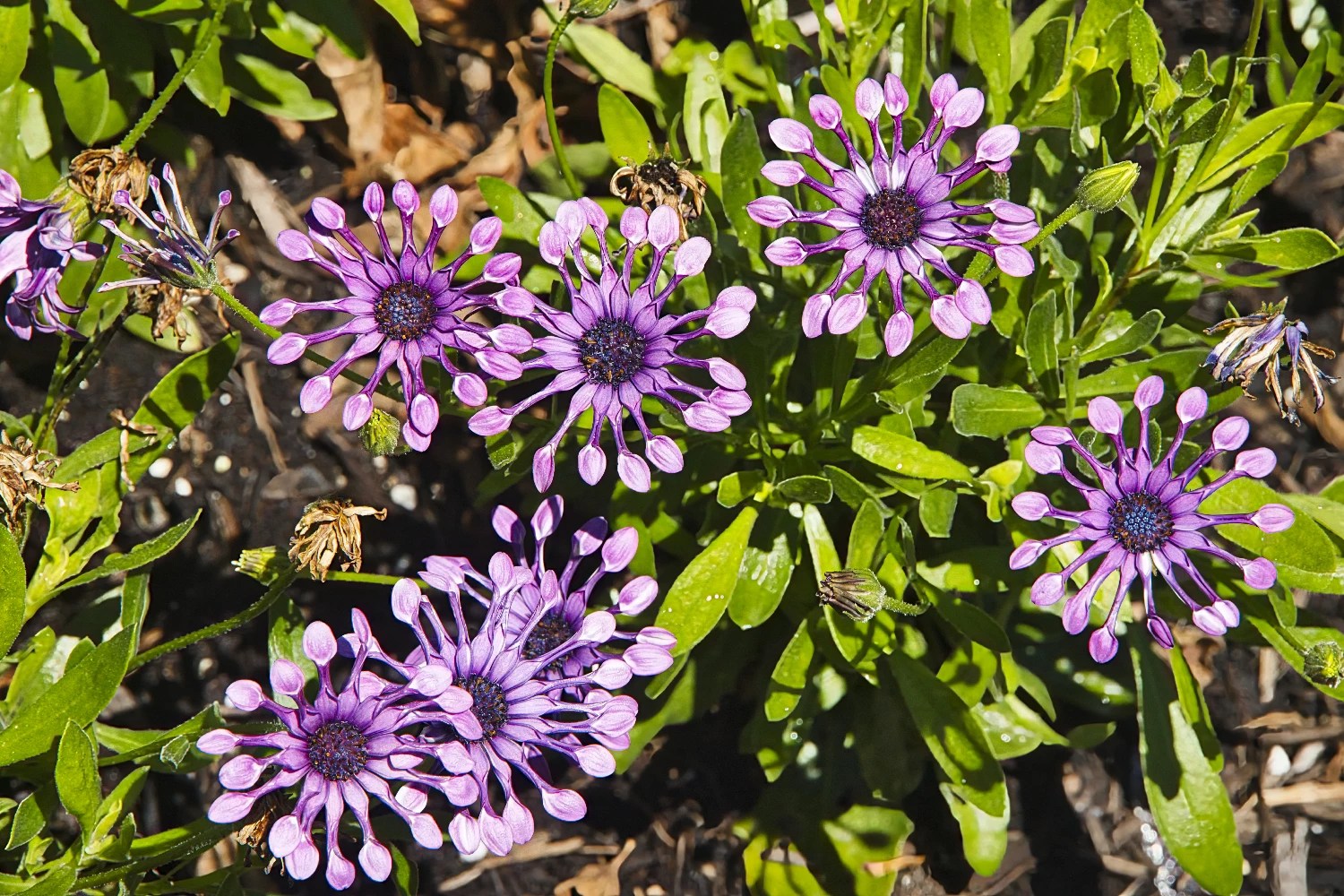
Another favourite is Cape Marguerite (Dimorphotheca ecklonis) with its unusual purple flowers. It is also native to South Africa.
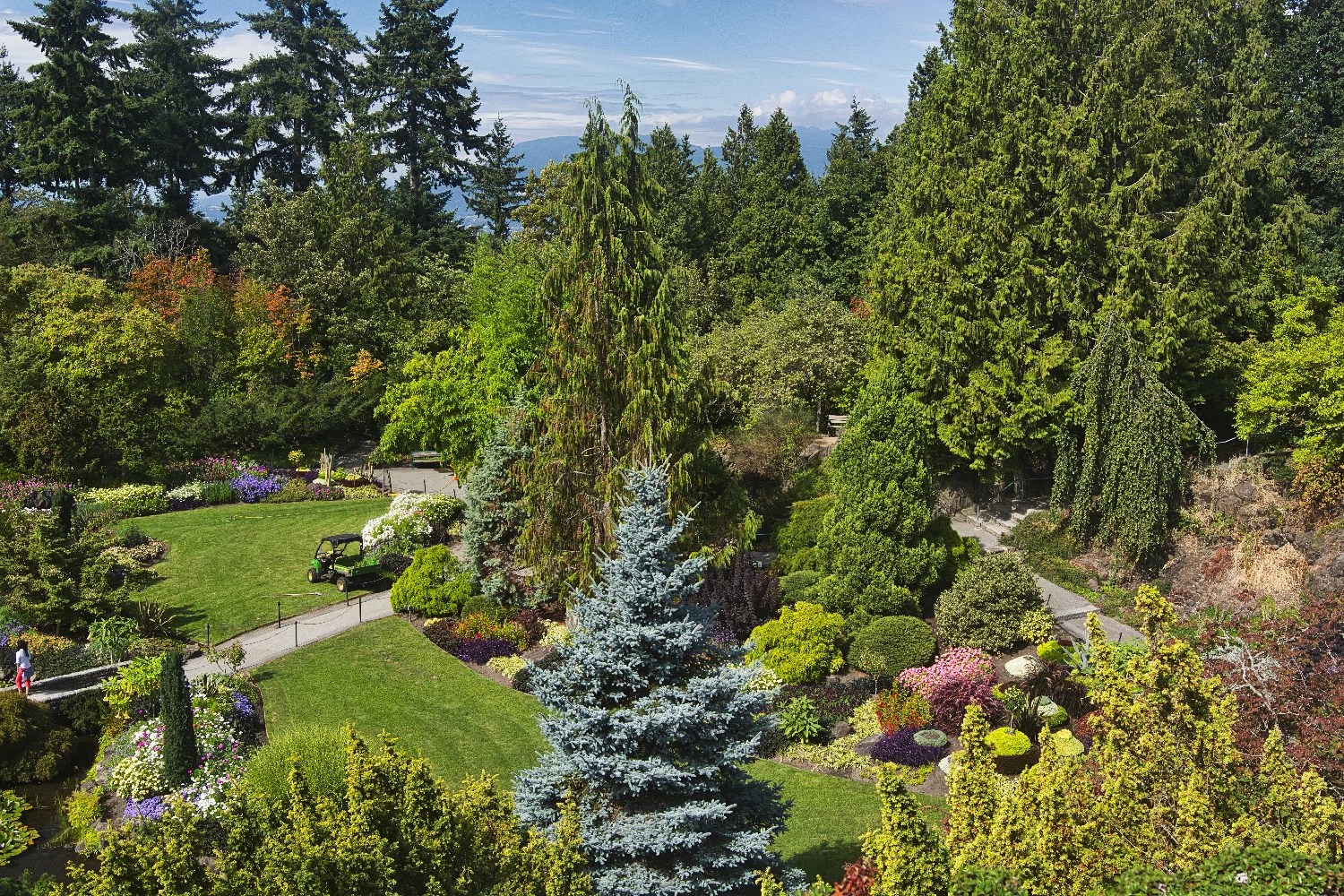
As you climb the stairs, you will find more viewpoints.
Queen Elizabeth Park Hours and Costs
Hours: 06:00 to 22:00
Garden Cost: free
Bloedel Conservatory Cost:
Adult $8.50 Senior & Youth $5.80 Child (5-12 yrs.) $4.15
Parking Cost: Lots inside the garden cost $3.65 per hour or $13.50 per day. Residential street parking is free, but with a two-hour limit.
Time Required: 2 hours for gardens; more time for the Conservatory.
Final Comments on this Itinerary
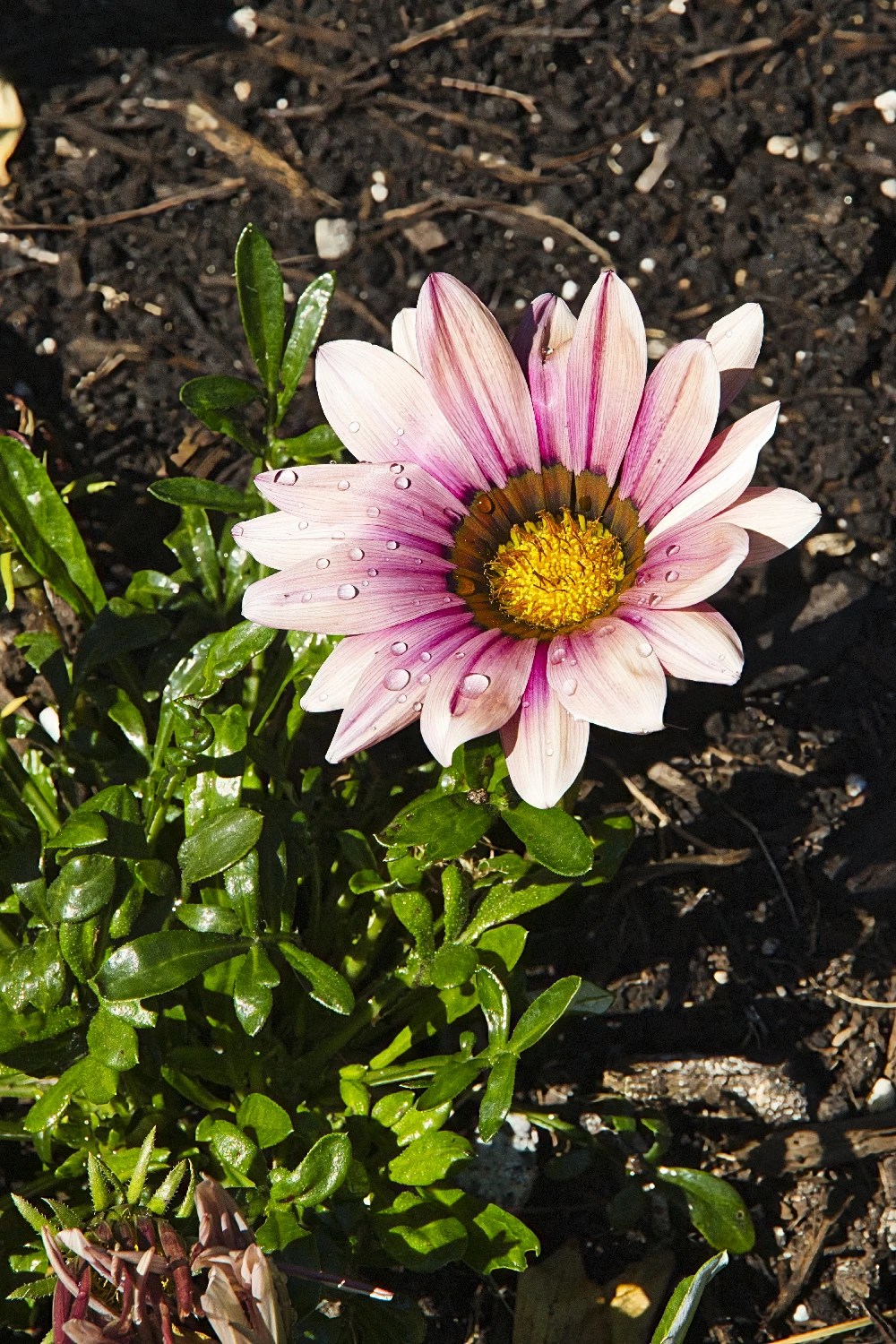
It was amazing to see how all these flowers originated from around the world. This was a relaxing half-day trip where you could get away from the crowds of tourists or any people. What a difference compared to Stanley Park or Lake Louise.
This place is one of the gems in Vancouver — and it’s free!
Get travel tips and advice delivered directly to your inbox. The best part is that it is free.
What things fascinate you? How long is your trip? What questions do you have?
Itinerary Map & Resources
CA Vancouver Mountains and Water Map
Google Maps Ratings
Google Maps provides a rating from 0 to 5 for all sights, hotels and restaurants (but not cities). All of our recommendations are appended with the rating (prefixed with a G) from Google Maps. As it is based on feedback from tourists and locals, it is much more reliable than travel booking websites. We consider a score of 4 to 4.39 to be Very Good; 4.4 to 5 to be Excellent.
Other Places to Add to Your Itinerary
Here are nearby places you might want to explore in or near Vancouver:
When is the Best Time to Visit Vancouver?
For flowers, the best time to visit is April to September.
Below are the average high temperatures and rain days in Vancouver by season. These are based on weather similarity rather than traditional calendar dates.
Winter (Nov-Feb) is both cold and rainy. Snow is very rare. Oct is cool but can be nice.
Summer (Jun-Sep) has always been warm and sunny when we have visited. But these historical averages do not reflect current global climate changes. This past summer, the average high was 25 to 29°C. This is not hot compared to the tropics, but hot compared to the usual weather. Vancouver apartments are neither well-insulated nor do they provide air conditioning.
| Season | Mean High Temp | Rain Days per Month |
|---|---|---|
| Nov-Feb | 8°C 46.4°F | 14.75 |
| Mar-May | 13.3°C 55.9°F | 11.7 |
| Jun-Sep | 20.8°C 69.4°F | 5.25 |
| Oct | 14.0°C 57.2°F | 12.0 |
Canada FAQ
Fun & Interesting Facts about Vancouver

The Exploring Canada post answers Frequently Asked Questions (FAQ) like:
- How do you plan a trip to Canada?
- How safe is Canada?
- What is the best season for travel?
- Can I see everything in 3 or 3 weeks?
- What are the best places to see in Canada?
 Terra Encounters
Leave a comment