
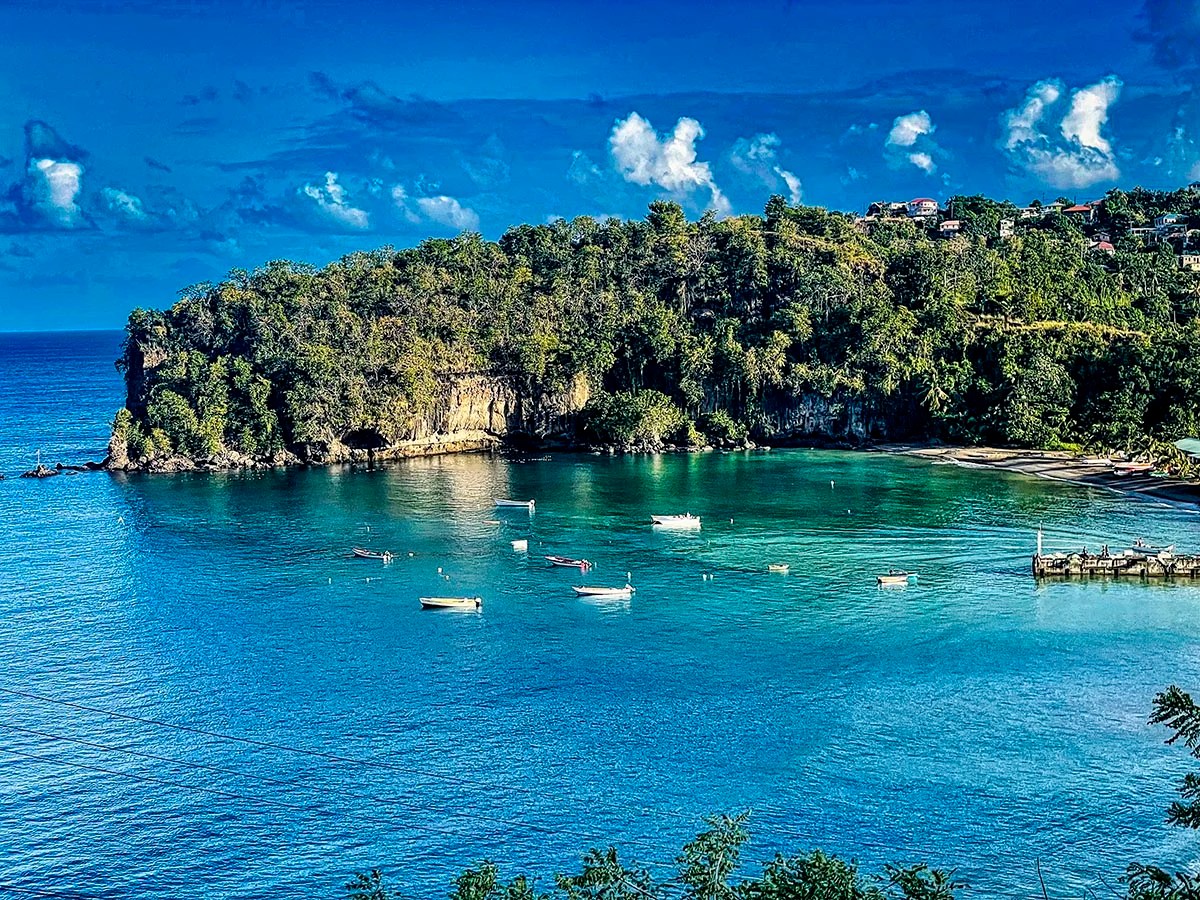
Winter Trip to Saint Lucia
It’s time to search for a warm getaway to escape the cold. But what Caribbean Island is the best choice? So many ads and blogs push the most visited islands. But we suggest a better alternative, Saint Lucia.
With 70% of the island covered in rain forest, Saint Lucia is an ideal destination if you like beaches, nature, hiking and birding — which is why our avid birder son chose it. Volcanic mountains like the Pitons add to the spectacular scenery.
This post will give you a taste of the beautiful Caribbean scenery that awaits you in southwest Saint Lucia. The previous post, One Caribbean Island You Must See #1, described historic and scenic Pigeon Island National Park (NP) and the beaches of northern St. Lucia (Castries).
Author & Photographer: George Mitchell
Our recommendations are not influenced by affiliate links – we have none. Our content and advice is derived from our personal expertise, experience, and knowledge based on travelling and living 23 years around the world. All the places recommended in this post are pinned on our Saint Lucia Map. The place names are appended with the Google Maps Rating (G0 to G5).
Soufrière
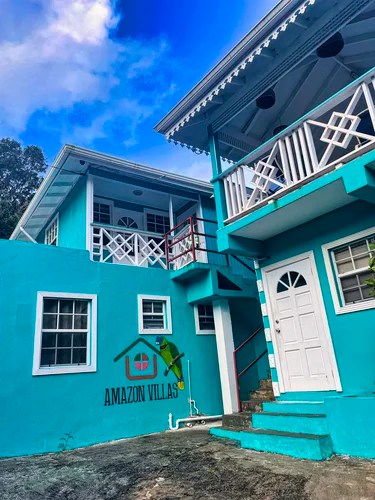
We opted for staying at a family-run pension, shopping at the local stores, and eating at local restaurants. This enabled us to meet the people and get to know the country. We chose Amazon Villas (Google rating 4.5) in the village of Fond St. Jacques, a short drive southeast of Soufrière. This provided a central location to the majority of the nature sights in Saint Lucia, as shown on the Saint Lucia Travel Map. We rented a car and explored the island.
We arrived late Sunday night and all local restaurants were closed in Fond St. Jacques. As a great example of the friendliness of the local people, our host, Conrad, called his friend, Chef Ali, who opened up her nearby restaurant Chef Ali’s Treats just for the three of us. We had a tasty chicken dish and a wide-ranging conversation about cuisine, health, and life in Saint Lucia.
Fedo’s Restaurant
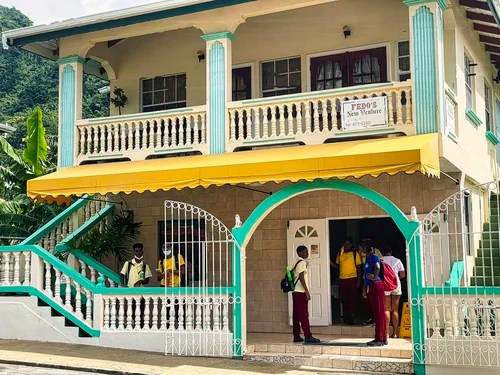
At lunch, we often headed to Fedo’s (Google rating 4.5) where we had a very filling fish meal (ECD 25) as the plate included vegetables, rice and fried plantains. Fried fish, chicken Creole, steak and curries are some of the dishes in their menu. The passionfruit juice (ECD 4) was delicious. They also had lighter snacks like chicken or beef roti that were very popular with students.
To economize, we only ate at restaurants at lunch time. We made breakfast and supper in our fully equipped kitchen. We shopped at Saint Lucia’s Massy supermarket chain, looking for local specialities and asking store employees for their suggestions. The store also had an ATM machine for ECD cash as most restaurants only took cash.
Volcanoes
St. Lucia is an island in the arc of the Leeward Islands stretching from Venezuela to Puerto Rico in the Caribbean Sea. Most of the islands in this arc are volcanic in origin. The last major Leeward eruption was in 1902, when a volcano was blown to pieces in Martinique, 40 km north of St. Lucia. Within minutes, a glowing cloud of hot gases spread over the town of St. Pierre killing 28,000 inhabitants.
About 2 million years ago, the volcanic activity around Mount Gimie, the tallest mountain, connected the previous eruptions and built up the island. The famous Pitons are volcanic cones.
Pitons
Where are the Best Views of the Pitons?
Travellers ask where they can find the best view of the Pitons. If you have a car there are several viewpoints with excellent though often distant views.
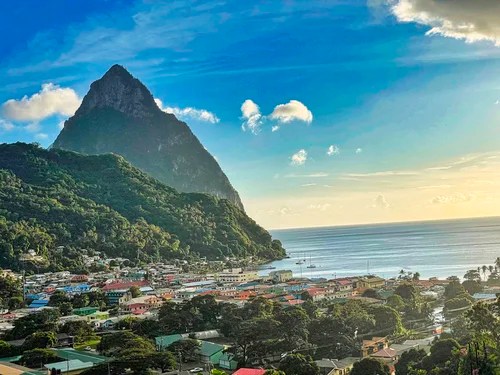
The main view is Mirador Piton, which is shown in the Best Sights from Soufrière to Marigot section below. Another good view is found by descending from the Mirador and turning left near Green Fig Resort, onto a small street heading downwards towards the stadium. The view is lower down but equally dramatic as shown above.
Finally there are wide angle views of the bay on the rugged road to Anse Chastanet, shown below. On the southwest road there are more sunlit views of Soufrière Bay and very close views of Petit Piton from Malgretoute Beach. Finally, you can see the bay and the Pitons from Soufrière Beach right in the town. But our favourite view is from a great hiking trail.
Hiking the Tet Paul Trail
Less than 1 million years ago, a series of volcanoes became active around Soufrière Bay forming the present-day Sulphur Springs and the Pitons. While Gros Piton is slightly higher (798 m or 2,619 ft), my personal favourite is Petit Piton with its steep conical shape.
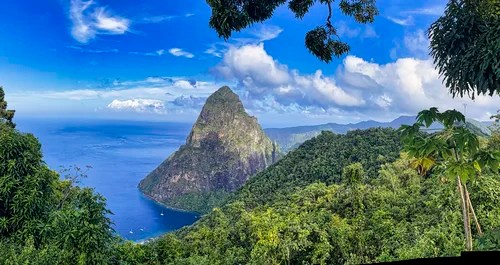
We arrived at the Tet Paul Trail (USD 10) early in the morning and saw tables being prepared for lunch. We had a long chat with the trail staff and found out they were expecting a cruise ship group.
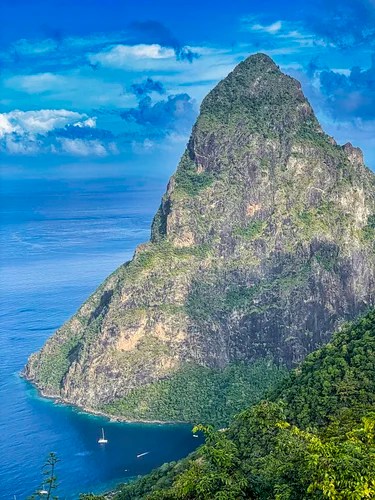
To ensure we got to the main views before the tour group, I reversed the order of the loop trail. Instead of turning left at the junction — I think there was a sign — and hiking up the gentle slope, we went straight ahead up a steep path to the viewing platform. We were blown away. There was Petit Piton in full sunlight from sea level to summit. Double wow.
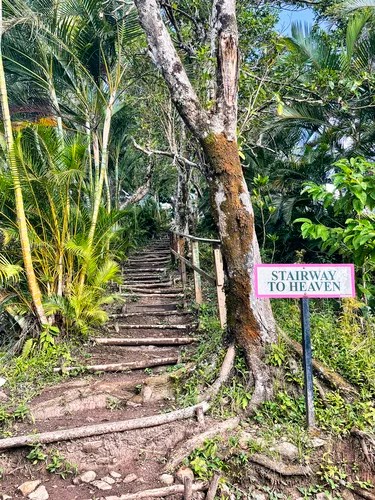
The sign Stairway to Heaven was truly justified. However, we saw the sign on our way down.
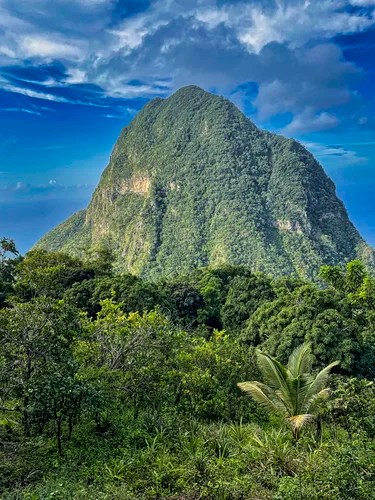
Further on we came to a view of Gros Piton, and it reminded us how volcanic this island is.
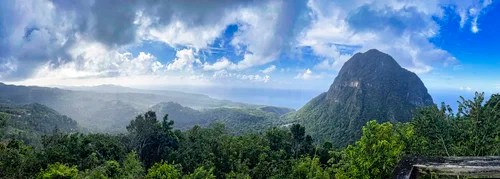
Then the rain clouds started to come in. We were so glad we reversed the direction. We used my iPhone panorama feature to capture the breadth of the view. My Nikon DLSR failed at the beginning of the trip so all the photos in this post were taken with my iPhone 12. Since mobile devices do not have filters, I used my Luminar Neo software to simulate a polarizing filter.
Beaches of Soufrière Area
Anse Chastanet
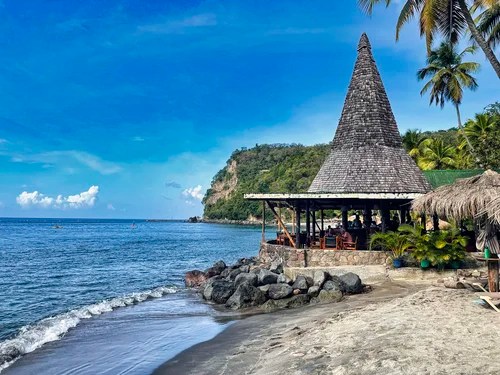
Wow, what a great selection of beaches! Anse is French for cove. There is a very rough road on the northwest coast of Soufrière Bay. It’s well worth the drive to our favourite beaches. We left our car at the parking lot for the first beach, Anse Chastanet. Chastanet beach is split in two parts by the dining pavilion above. The resort understandably does not want non-residents walking on “their side” of the beach, even though hotels do not own beach front. The public beach is tiny but fortunately there were not too many people. Of course, one can always swim over to the other side.
Anse Mamin
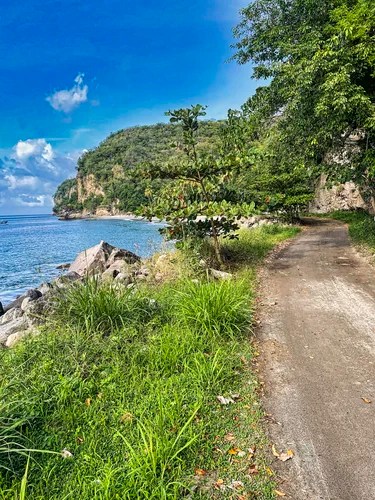
We asked to cross over the resort side to go to Anse Mamin beach, a short walk away. On the way, we met an American couple that married on this beach ten years ago and have returned to Saint Lucia ten times since then. They let their children stay out all night with the locals because they know they will come home safely. They said this could not happen in other Caribbean countries like Jamaica. See the Travel Safety post for a comparative Safety Index by country.
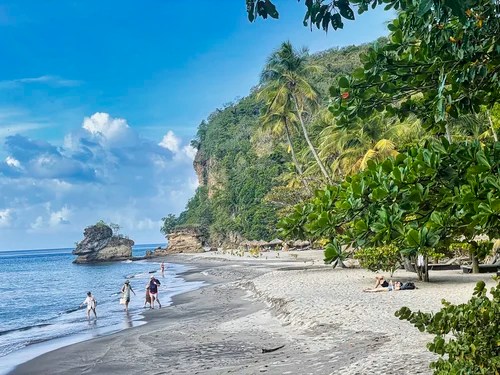
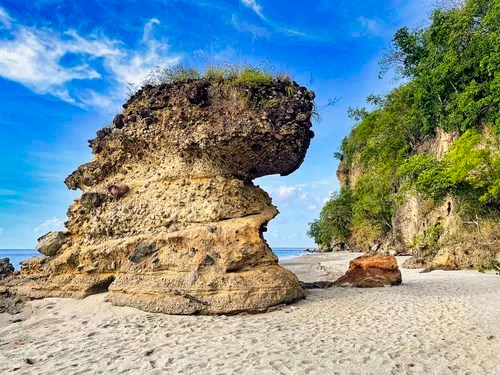
Anse Mamin is an even more beautiful beach with thatched shade recliners and eroded rock stacks. There really were not many people.
Malgretoute Beach
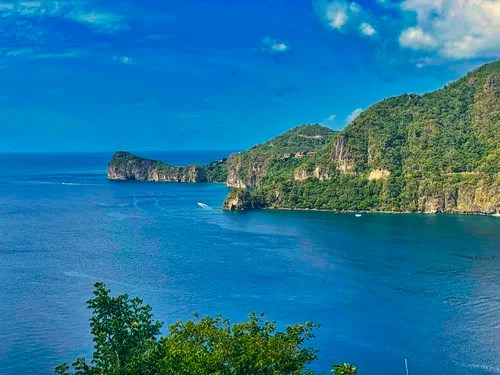
Another beach on the southwest coast of Soufrière Bay is Malgretoute. This “beach” is more a gravel than sand. Here we got our closest view of Petit Piton from sea level. Unfortunately, we never seem to get any sun on our favourite mountain. Note that there are plenty of nice beaches and views without having to pay excessive entry fees. You can get the best views of a sunlit Soufrière Bay from the south side as well.
Sulphur Springs
The highly rated Sulphur Springs (G4.6) has mud pools waiting for your facial. The temperatures of the hot springs range from 63ºC to 96ºC. The spring water is black due to a reaction of sulfur and iron. There used to be a Sulphur Mine or Soufrière here, hence the name of the town.
You can also visit the Drive-In Volcano, a caldera with steaming vents. Sulphur causes greenish-yellow deposits. Hydrogen sulphide in the steam gives the pungent smell of rotten gas. The gas is toxic. Most of the inhabitants of Pompeii died from the poisonous gases from Mt. Vesuvius not the lava flows.
Diamond Botanical Gardens
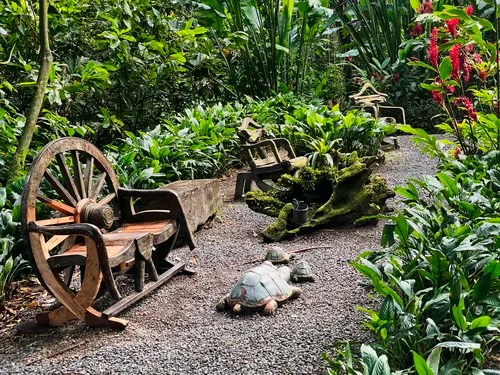
King Louis the XVI of France gave 2000 acres (8.1 km2) to the Devaux brothers for their services to the Crown. The Soufrière Estate included Soufrière town, Sulphur Springs and the therapeutic baths of Diamond Falls. In 1928 the Boulay family restored the scaled-down Diamond Estate, which was damaged by the French Revolution. It is now a six-acre botanical gardens with hot springs and bathing pools.
This was our favourite garden in Saint Lucia. Everywhere you look there is something to see. There were lots of colourful flowers and beautiful plants, with several interpretive signs.
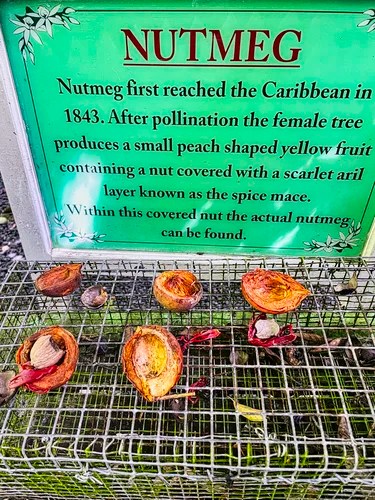
Imported to the Caribbean in 1843, nutmeg originated in the Moluccas (Spice Islands) of Indonesia. Nutmeg is grown commercially in Penang (Malaysia), Kerala (India) and Caribbean. It is used in traditional medicine, baking, Asian dishes, and — everyone’s Christmas favourite— eggnog.
Diamond Flowers
The following are some of my favourite flowers in this garden.
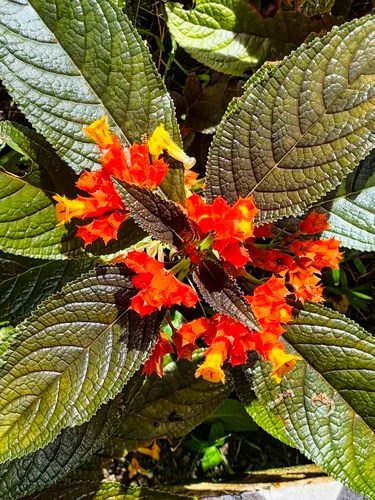
The colourful Sunset bells (Chrysothemis pulchella) is native to the tropical Americas.
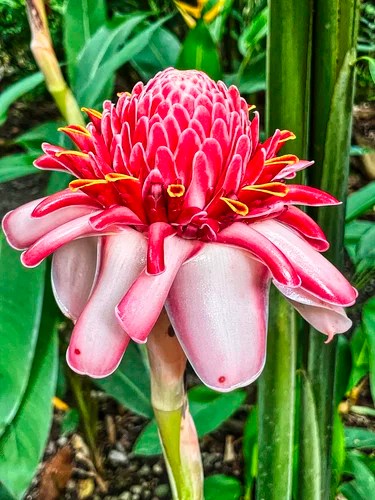
Torch ginger is often called Wax flower due to its shiny petals. In Malaysia, it is an ingredient in the famous spicy dish, laksa. In Bali, the flower is used to create sambals (chilli sauces).
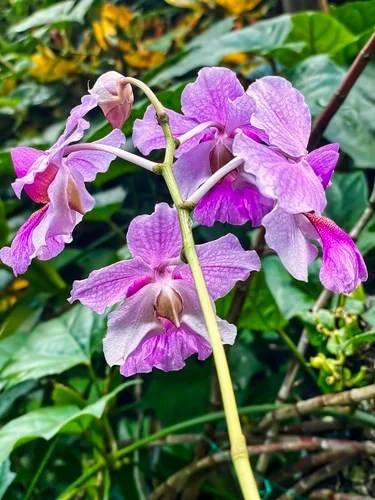
The pretty Moth orchid originated in southeastern Asia. It is known by the much nicer name Moon orchid in Indonesia, where it is the national flower.
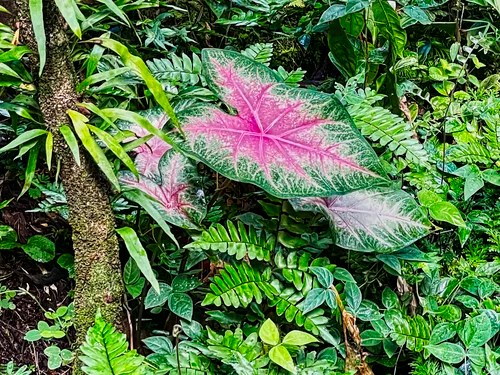
Often known by its common name Elephant ear, this plant is also called Caladium, its Latin genus name. This poisonous plant is native to the tropical Americas, but it has spread around the world,
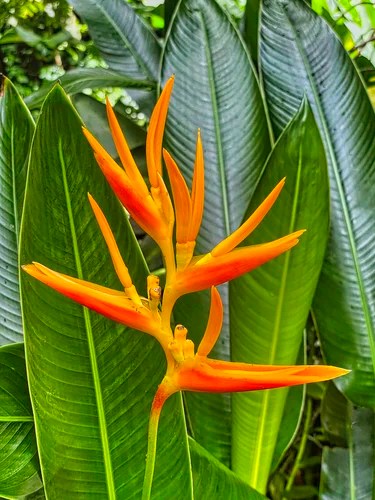
Shining bird of paradise originated in the Amazon. This flower resembles the head of the crested Bird of Paradise that we were lucky to see in Papua New Guinea.
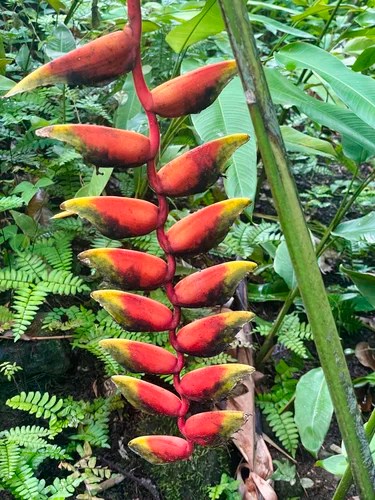
Heliconia is a genus of plants. native to tropical Americas. This species is Heliconia rostrata, common name Lobster claws. Rostrata is Latin for beaked.
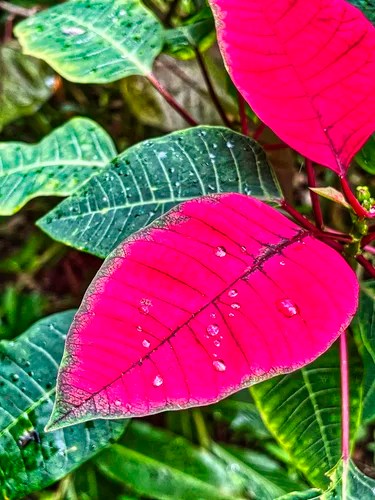
Poinsettia is a common house plant at home but originates in Mexico and Central America. Poinsettia is named after Joe Poinsett, the first American envoy to Mexico, who brought the plant to the U.S. in the 1820s. Its red and green leaves remind us that it’s a cold Christmas far to the north.
Diamond Falls
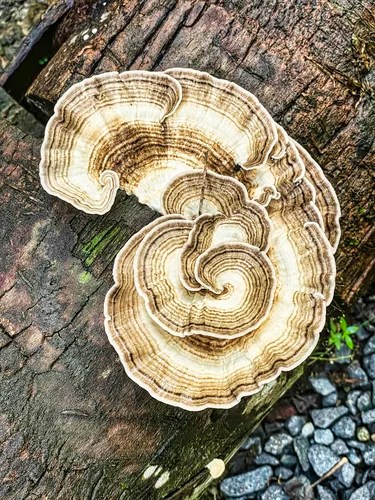
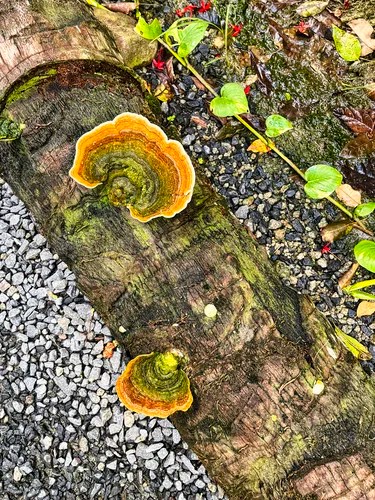
The final trail segment to the falls was bordered by logs decorated with beautifully patterned fungi, especially the Polyporaceae and Crusts.
One highlight of the gardens is Diamond Falls. This was not a torrential waterfall. It was more a gentle cascade dripping down a multicoloured cliff. What is unique is that this is a hot spring that comes from a geothermal area two km below the surface.
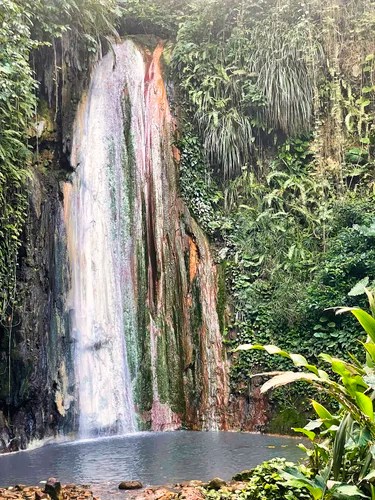
The colours are caused by the minerals that are in the water. Orange and reddish deposits are caused by iron oxides.
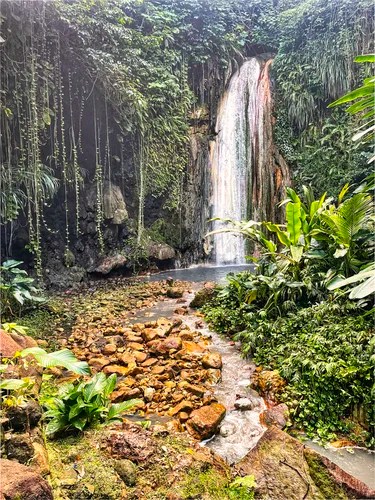
The water stream is hot and very photogenic. There are bathing pools that visitors can use. Empress Josephine Bonaparte bathed here as a child!
Marie Local Cuisine
After a “hard morning in the gardens”, we just walked next door for lunch at Marie Local Cuisine. We had a chicken, rice and plantain lunch plate (USD 10) and a long conversation with the waitress, who talked about her family and life in St. Lucia.
Best Sights from Soufrière to Marigot
This is a description of the first part of the itinerary to Pigeon Island shown on the Saint Lucia Travel Map. However, we visited the following points of interest several times as we travelled to our son’s birding hot spots.
Mirador Piton Viewpoint
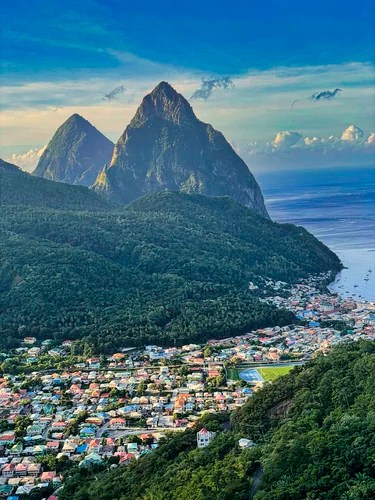
Drive ca. 4 km 7 minutes uphill from Soufrière to this spectacular vista on the right-hand side of the road. This viewpoint has ample parking and a formal wood viewing platform. The Pitons are actually quite distant, at least 5 km away on the other side of Soufrière Bay.
Birding on Belvedere Road
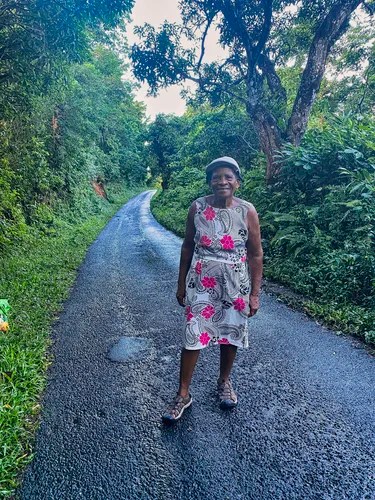
We came here many times because, one of our son’s favourite birding spots was going down Belvedere Road from the top of the hill. Yes, the road is narrow but there are very few cars on it. In addition to birds, this road had tropical forests and great views of the bay and the Pitons.
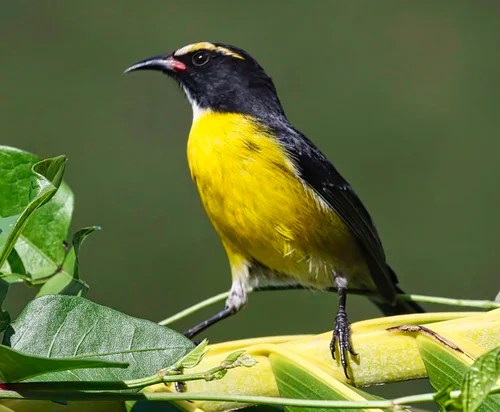
One reason to visit Saint Lucia is birding. There are 180 species of birds, of which six species are endemic to Saint Lucia. Our son, an avid birder, saw 70 species in one week. He is also a superb bird photographer and took this photo with his Canon EOS 7D camera.
Canaries
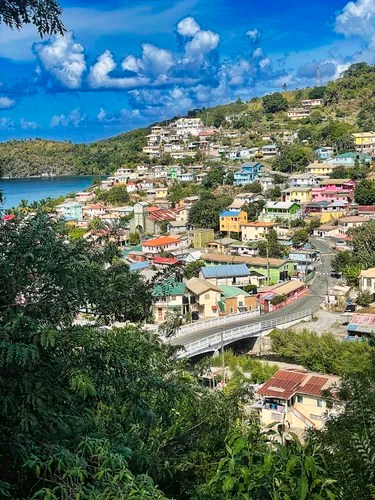
Canaries village has nothing to do with the bird. The name is derived from the French Creole word Kanawe, meaning the cooking pots used to process sugar cane. The town was built in 1763 to support a sugar plantation, which has since closed. Canaries was only accessible by boat until the western highway was built in the 1960s! Today it is a quiet fishing town located in a valley. Houses also stretch up the mountain as you exit the town towards the north.
Adeline’s Art Villa
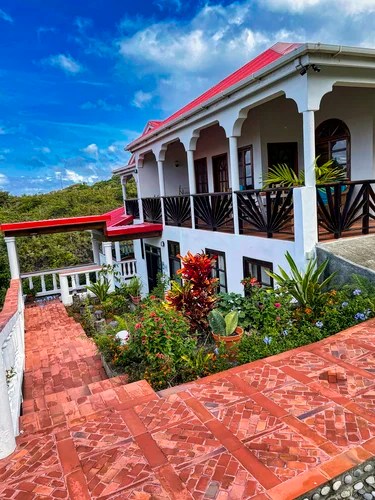
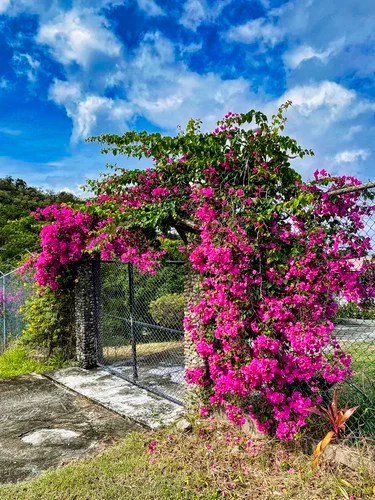
While sipping coffee or St. Lucian hot chocolate, you can admire has some interesting local and African wood sculptures for sale. Adeline has a beautiful house and a red-tiled garden decorated with bougainvillea and crotons.
Plas Kassav
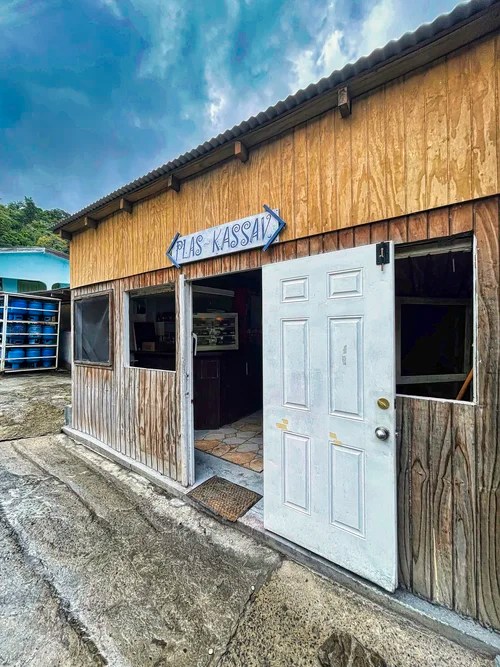
Several times we stopped at this non-descript place on the ocean side of the highway. I have included a photo so you know what to look for. Here we would pick up small round buns of very dense cassava bread (ECD 7). Some of our favourite flavours were chocolate, apricot, cherry-raison, cinnamon-apple, and coconut. We bought extra ones to take home and heat up for breakfast.
Cassava is a rich source of carbohydrates that comes from the underground part of the cassava shrub. It is also called manioc and yuca. It is used for bread, casava chips, tapioca, and yuca con mojo, a Cuban dish. Tapioca starch is gaining attention as a source of gluten-free flour to make bread.
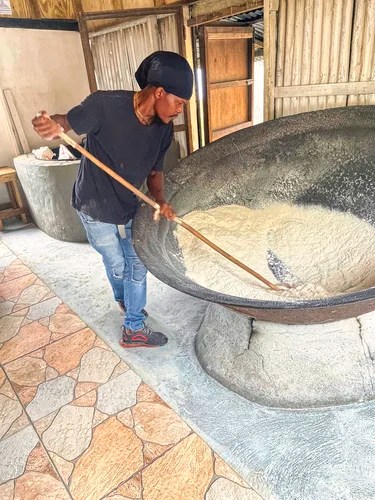
Cassava is grown in more than 80 tropical countries because it is a hardy, drought resistant plant that needs little fertilizer. Cassava is the third-largest source of food carbohydrates in the tropics. You can also watch them prepare the casava flour at Plas Kassav. Interesting fact: never eat raw casava. It contains dangerous levels of naturally occurring cyanide until it is cooked.
Anse la Raye
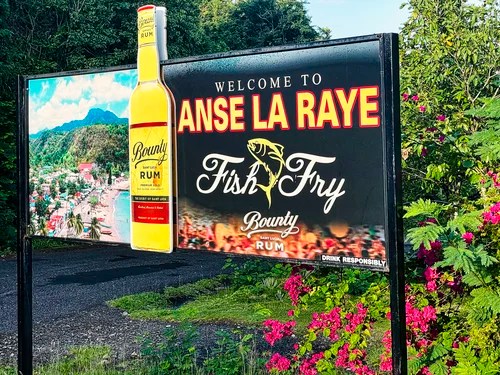
There are no signs for the unofficial viewpoint on a hill before descending to the town. Park your vehicle before the sign advertising the Friday-night Anse La Raye Fish Fry (and rum).
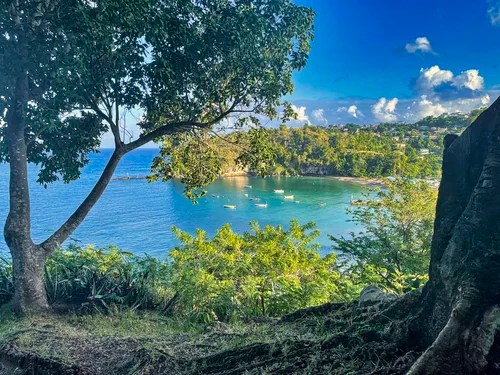
Anse la Raye means Cove of Rays. Rays (Batoidea) are flat-bodied. Like their shark relatives, they are cartilaginous. This means they have a boneless skeleton made of tough, elastic cartilage.
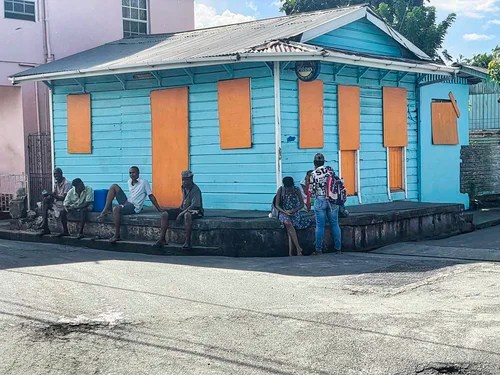
This fishing town is a great place for street and people photography. There is a French Catholic church dating from 1907.
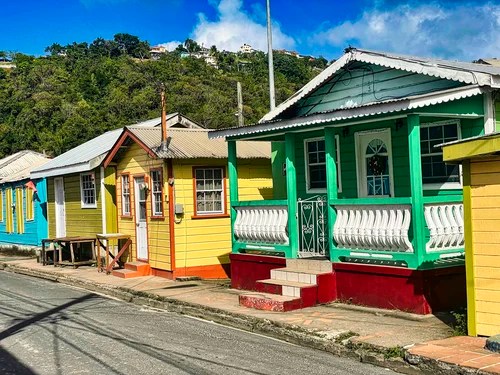
The small wood houses are all painted different colours.
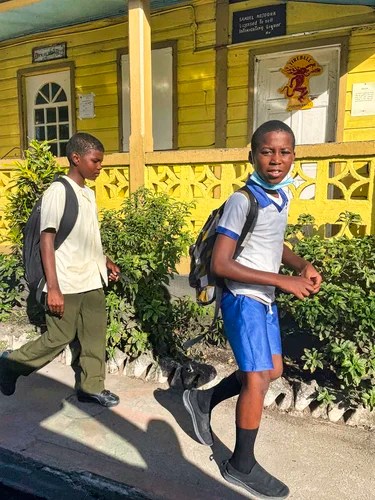
People are waiting on the side of the road for the “bus” — usually a van. Children are walking home from school.
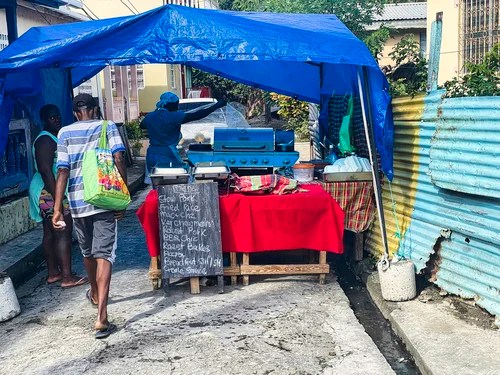
Stalls sell snacks and meals.
Marigot Bay
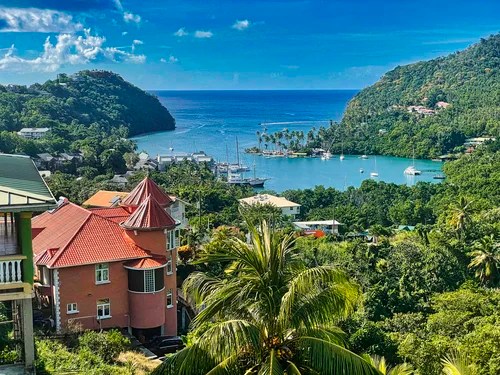
The best view of Marigot Beach was from high up. There was no formal viewpoint. I just found a spot on Waterfront street between the main highway and Julietta’s Restaurant. You need a zoom lens or binoculars to get a closer view from here.
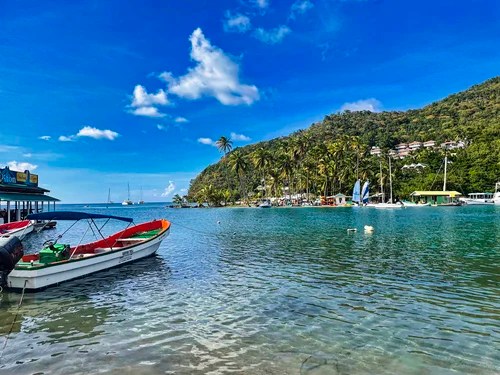
At the Waterfront there are additional views and a boat you can take across the bay to use Marigot Beach, which is on a palm-fringed peninsula.
From Marigot you can continue north on the itinerary described in the previous post, One Caribbean Island You Must See #1.
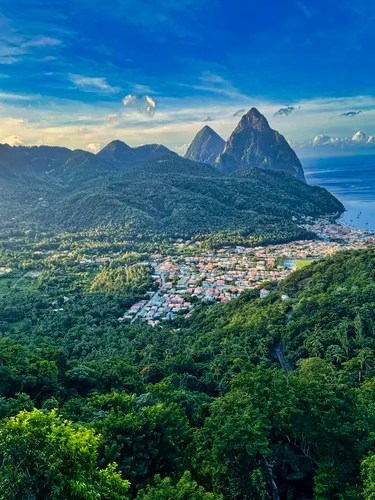
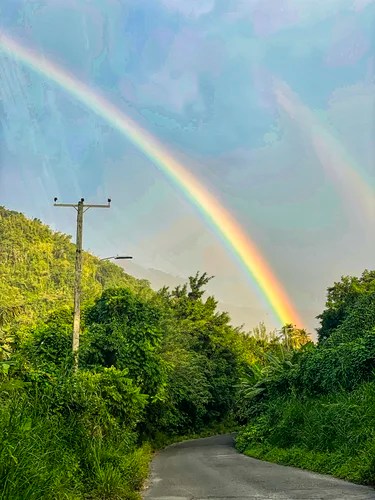
All good trips must come to an end. We took our final view from Mirador Piton. The drive home on our last evening was highlighted by a double rainbow.
Other Posts You May Like
One Caribbean Island You Must See #3 describes the southeast side of Saint Lucia.
 Terra Encounters
3 thoughts on “One Caribbean Island You Must See #2”