
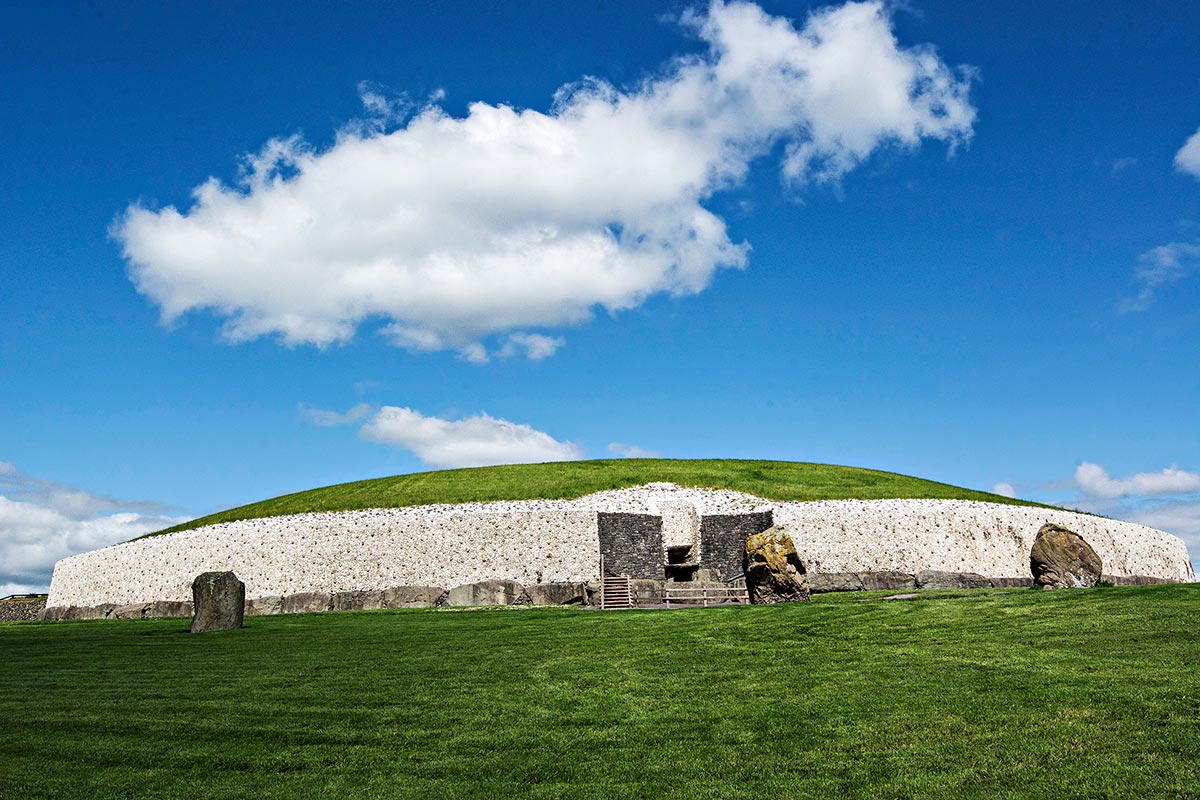
Why Visit Neolithic Brú na Bóinne?
Brú na Bóinne (Newgrange) is one of the oldest sites in Europe, built around 3200 BC — over 500 years older than the first pyramid at Saqqara, Egypt (2667 BC)! How did they build it? Why did they build it?
Read on to find out how to make the most of your time — see which photos fascinate you, read which places you should visit, as well as get links to our custom Google maps and itinerary planning information.
Author & Photographer: George Mitchell

Our content and advice are derived from our personal experience and knowledge, gained from living in Europe for seven years and studying its art and architecture. Our recommendations are not influenced by affiliate links – we do not have any. Ireland is one of our favourite destinations.
All of our recommendations are top-rated by Google Maps, which is based on the opinions of everyone, not just tourists. Each place recommended in our posts and our custom Ireland North Itinerary Map is appended with a Google Maps Rating (G0 to G5).
Brú na Bóinne
Day 28 takes us to Brú na Bóinne, one of the oldest sites in Europe. It is usually called Newgrange in English.
Do not look for the name Brú na Bóinne on road signs; instead, look for the label Newgrange. Ironically, the Newgrange sign actually points to the modern era visitor centre. You are not supposed to drive to the archaeological site. You must get tickets and travel by the park bus to either the Newgrange (Brú na Bóinne) or the Knowth site. The park was very efficient, and I was able to get on the 11:15 bus immediately. Because groups do not want to split up, there are often seats on a bus.
Battle of the Boyne
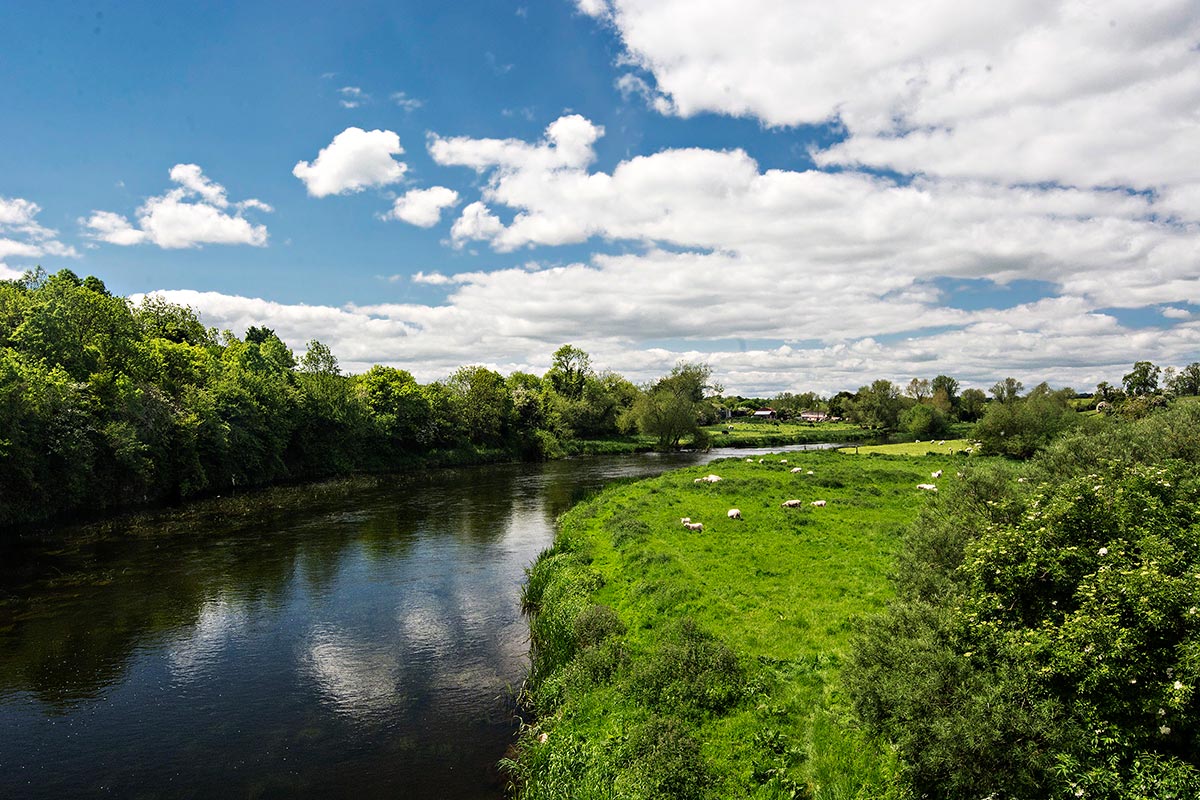
Brú na Bóinne translates into English as Bend of the Boyne (River). The first thing you do is take a pleasant pastoral walk across the bridge over the River Boyne to get the bus.
The name Boyne should sound familiar. It is the nearby site of the Battle of the Boyne (1690), which marks the defeat of the Catholic King James II, who was deposed the previous year by Protestant Prince William of Orange, a Dutch noble. This ensured control of Ireland by England. Orange is the national colour of the Netherlands. It became linked to the Orangemen of Northern Ireland.
What we did not know was that William was James’ son-in-law!! But there was a much more important political reason for the battle. James was supported by his cousin, Louis XIV! William organized a multinational coalition to oppose French aggression. The real purpose of the battle was to deny Louis XIV a strong ally in Britain.
Newgrange World Heritage Site
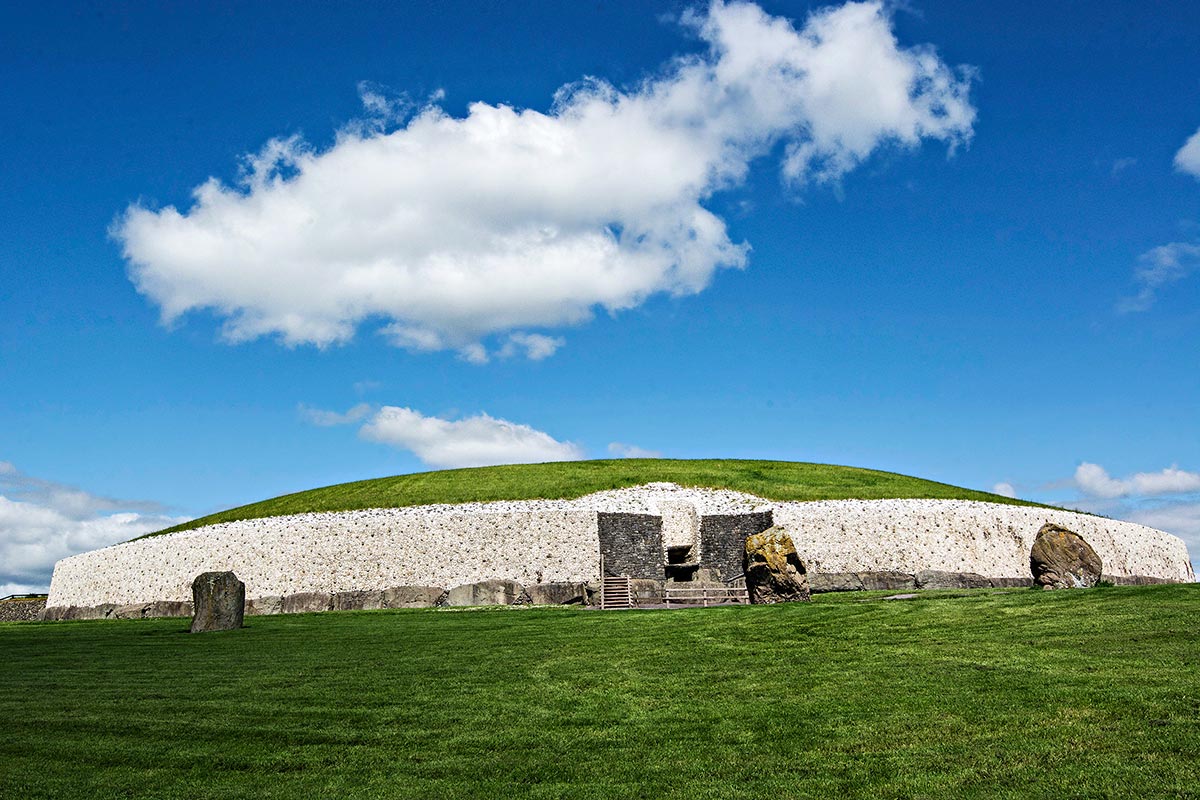
Newgrange is a central mound surrounded by many satellite burial sites. This UNESCO World Heritage Site is from the megalithic (Stone Age) era and is over 5000 years old. Newgrange was built around 3200 BC, so it is over 500 years older than the first pyramid at Saqqara, Egypt (2667 BC). These passage tombs are believed to be evidence of a cult of the dead.
Newgrange Symbolism
Very little is known about the megalithic people. So what do we know?
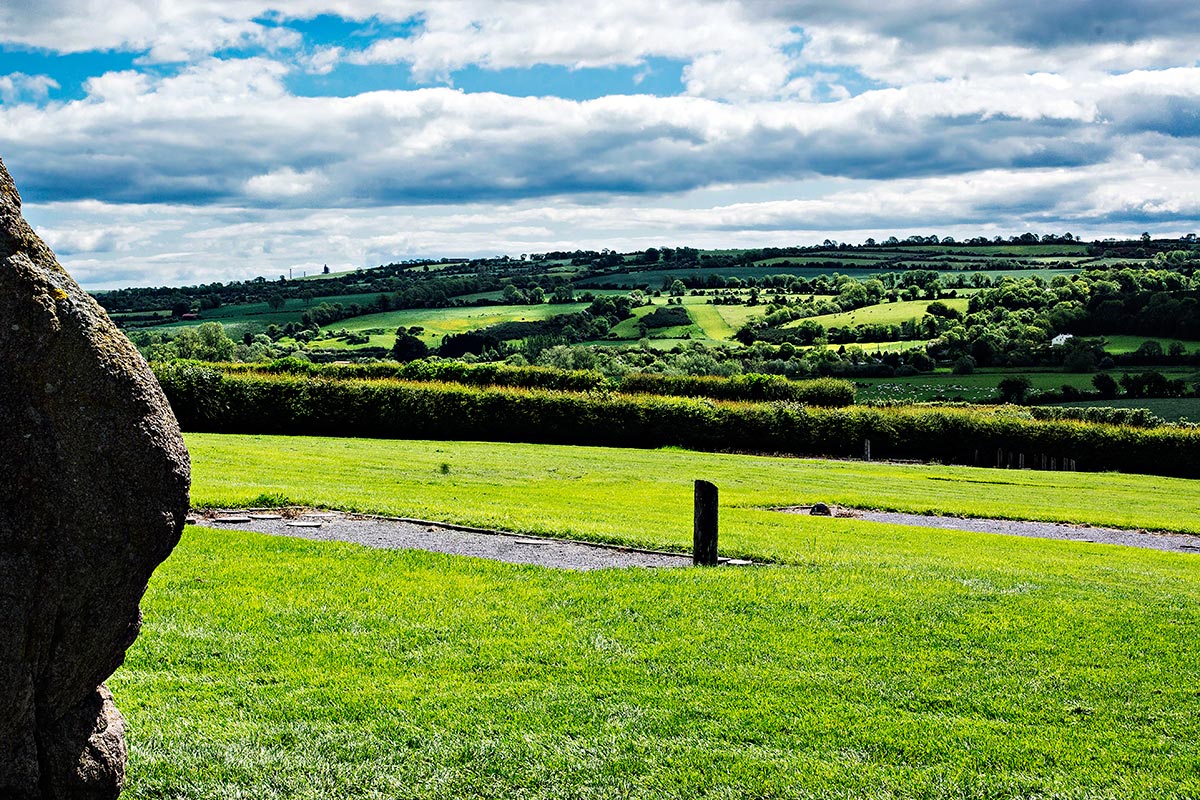
They liked to place these passage tombs in very prominent places on the top of hills. Even today, they are in a very scenic and pastoral setting.
Some archaeologists feel that the entrance passage and inner chamber of Newgrange represent female reproductive organs! In fact, the old Irish word Bru translates to womb. Another theory is that Newgrange was built where the mythical hero Cúchulainn was conceived!
Newgrange Building Techniques
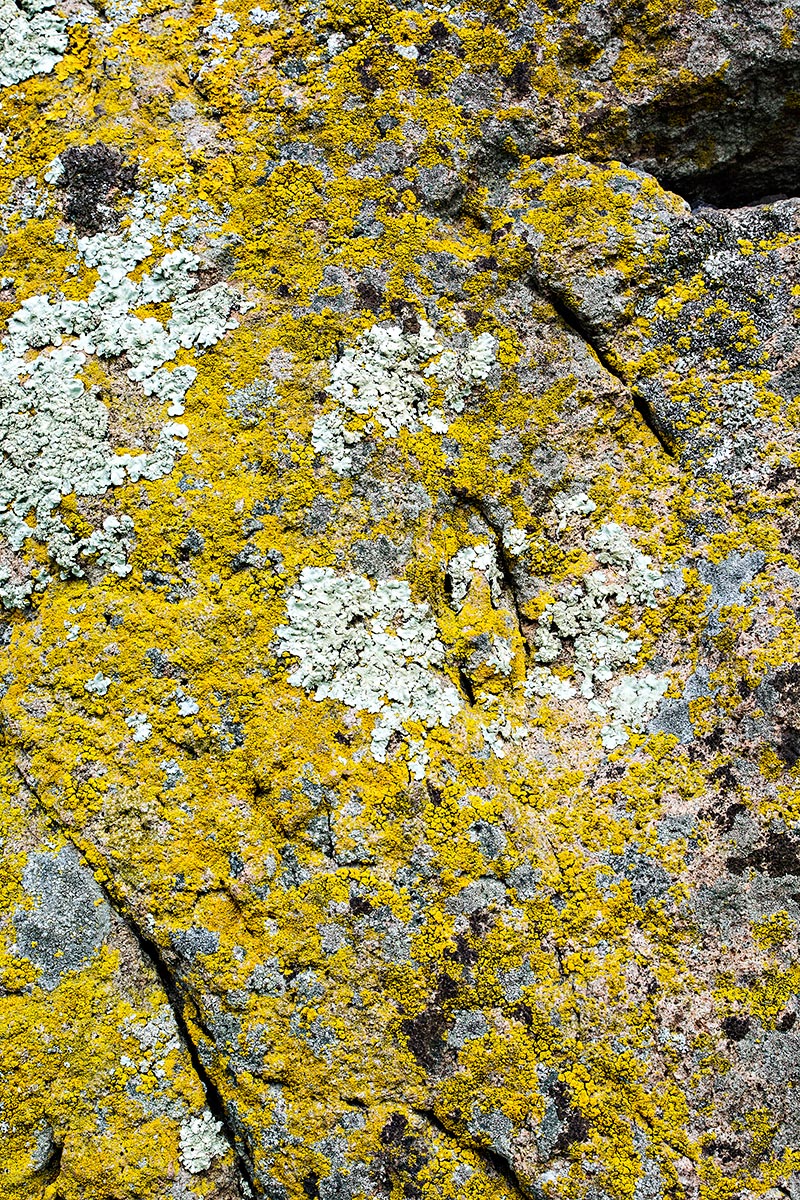
These people knew how to move and build using very large stones. In fact, Newgrange is composed of ca. 200,000 tonnes of rock. It is estimated that it would have taken 30 years to build with a workforce of 300 people. They placed the stones on top of each other, wedging small placer stones between the large ones. They did not use any mortar or cement material between the stones, yet the mound is waterproof and still standing.
Newgrange Purpose
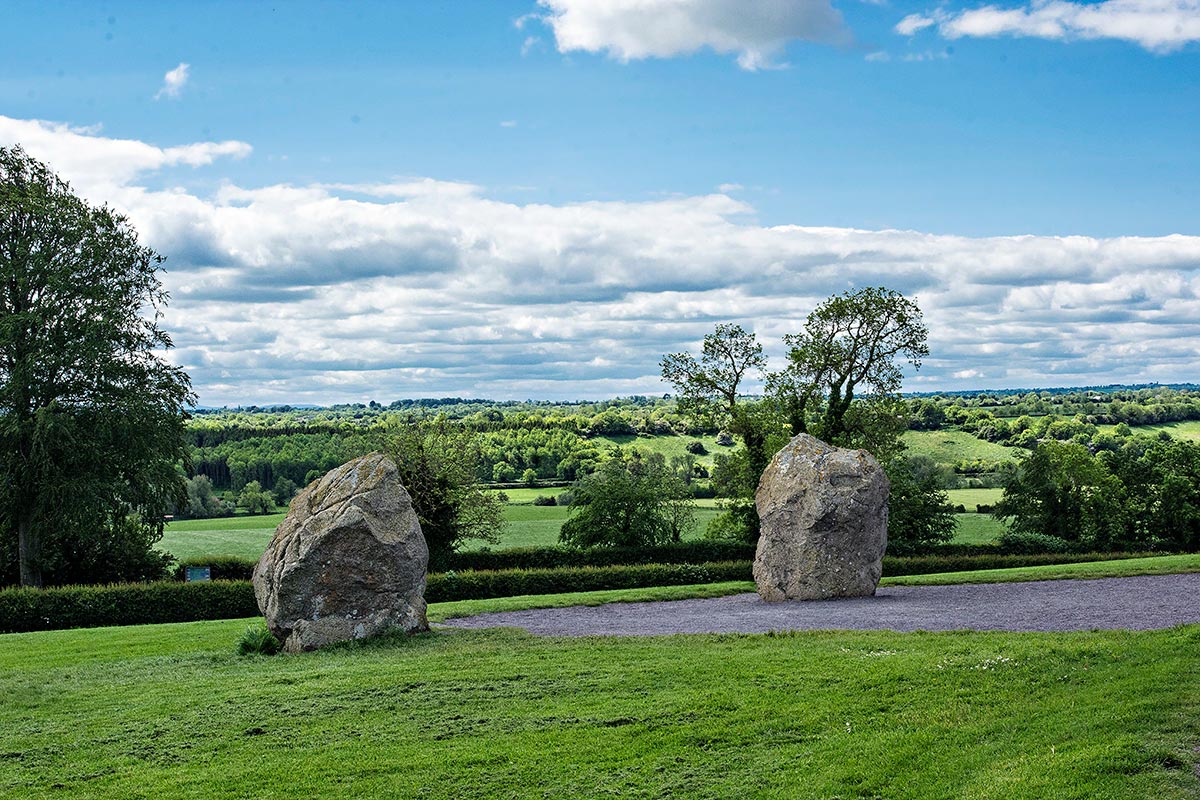
The existence of the Neolithic people was dependent on agriculture and thus on the sun and the seasons. They knew how to align the passage with the winter solstice. They placed a window above the entrance so that the rising sun would light up the passageway for 17 minutes at the winter solstice, beginning around 9 AM.
One of the most unique experiences was the walk into the centre of the tomb, where there are many examples of rock art. The guide turned all the lights off, and it was not only pitch black, but the tourists were totally silent. Then the guide used his flashlight to simulate sunlight streaming through the tunnel during the winter solstice. If you want to experience the real thing, you have to enter your name into a lottery. BTW, airfare is not included, and no guarantee of sunshine is made.
Some archaeologists believe these monuments were astronomical devices. The accuracy of Newgrange as a time-telling device is remarkable when one considers that it was built 500 years before the Great Pyramids and more than 1,000 years before Stonehenge.
Newgrange Stone Age Art
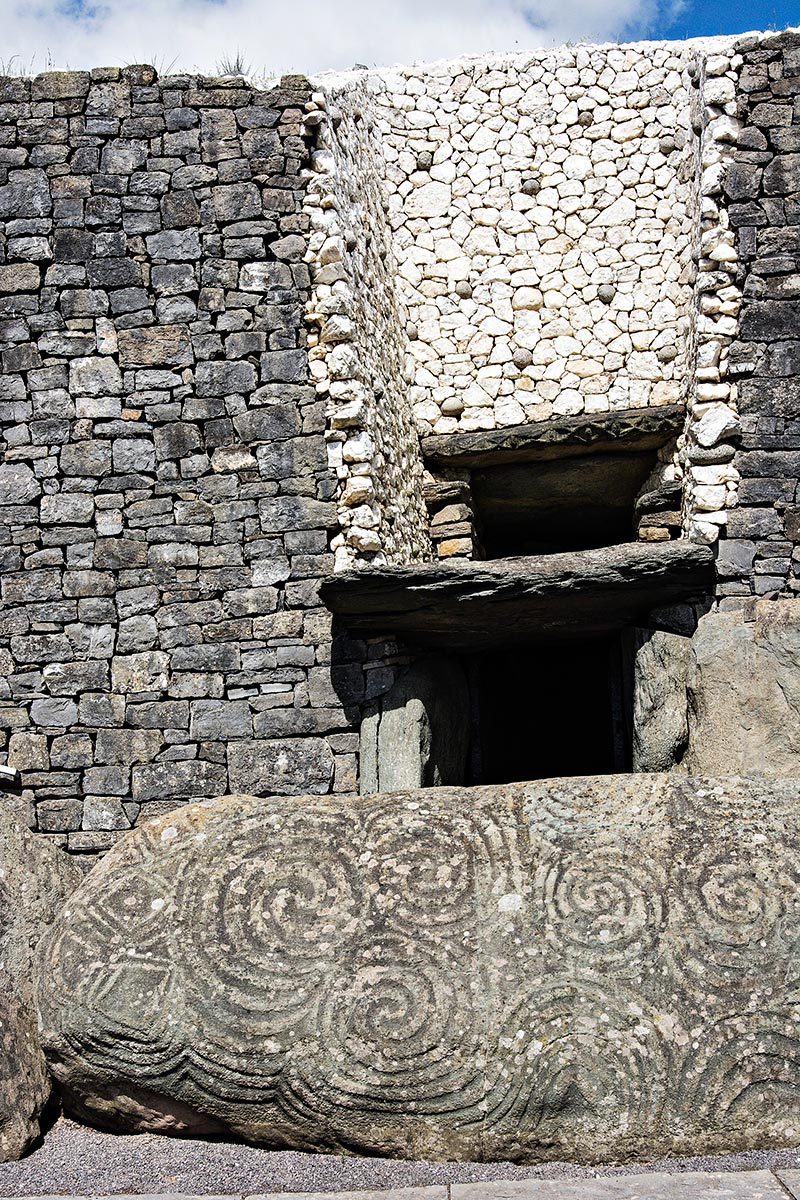
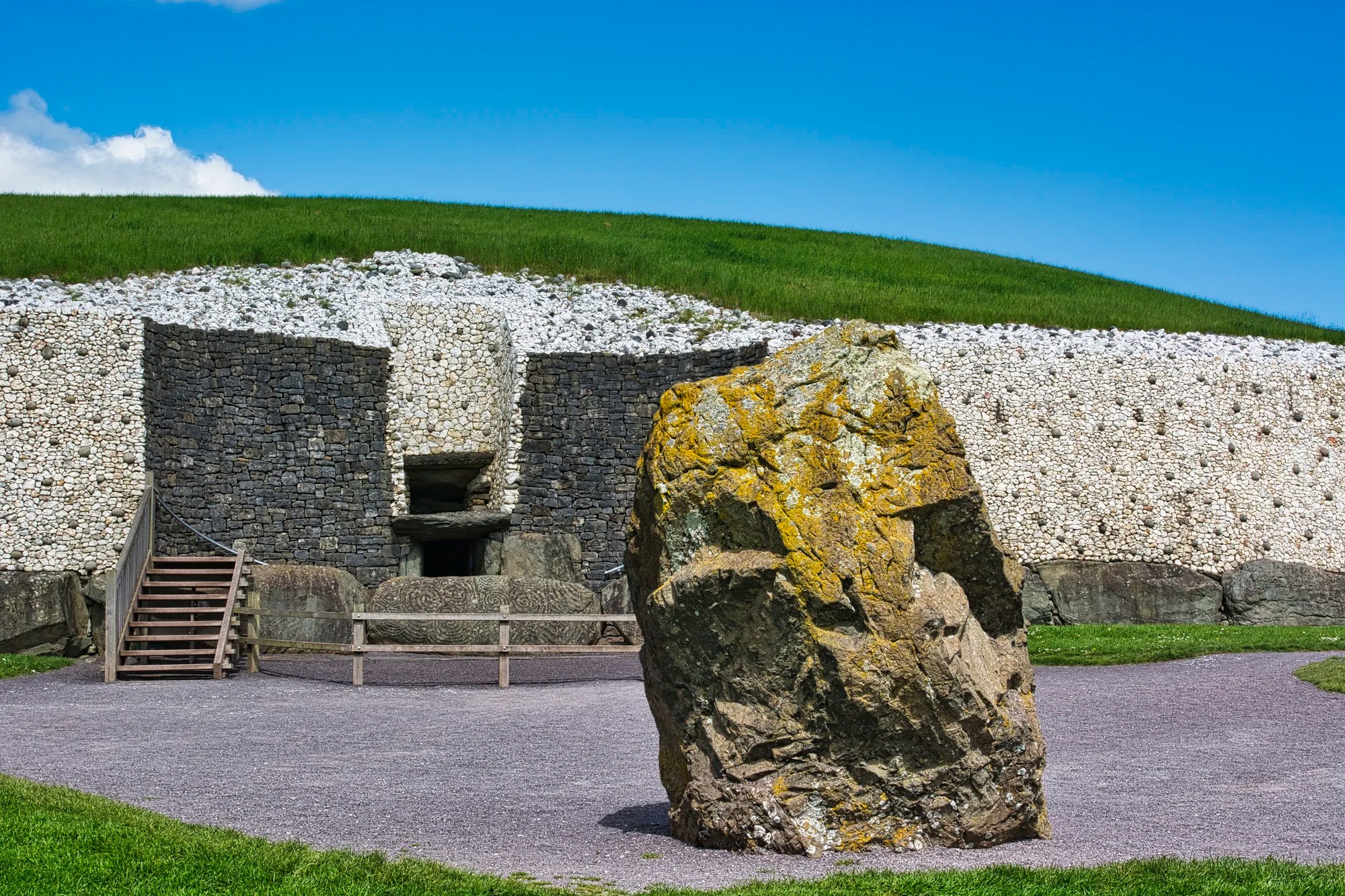
Newgrange is surrounded by 97 large dark grey kerbstones made of greywacke or slate. Some of these are engraved with megalithic art. The most striking is the entrance stone. The swirls may represent the river. Other theories are that they represent other circular passage tombs.
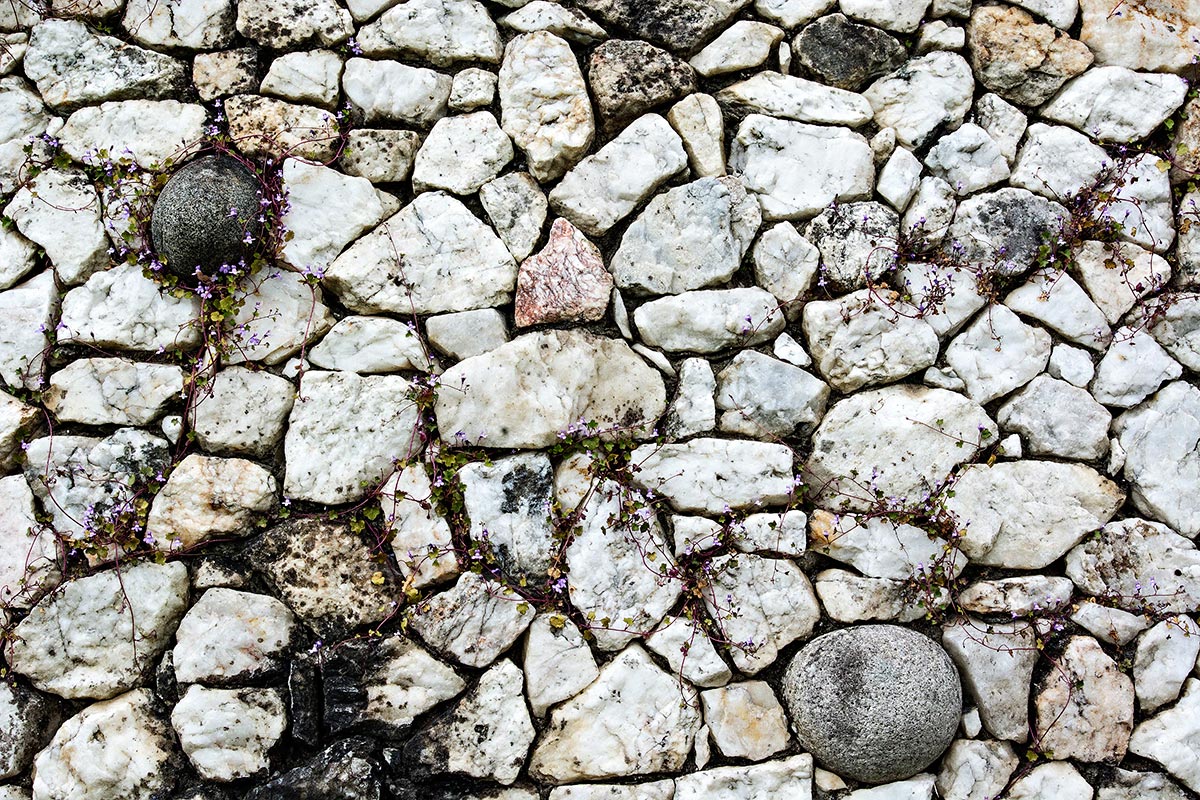
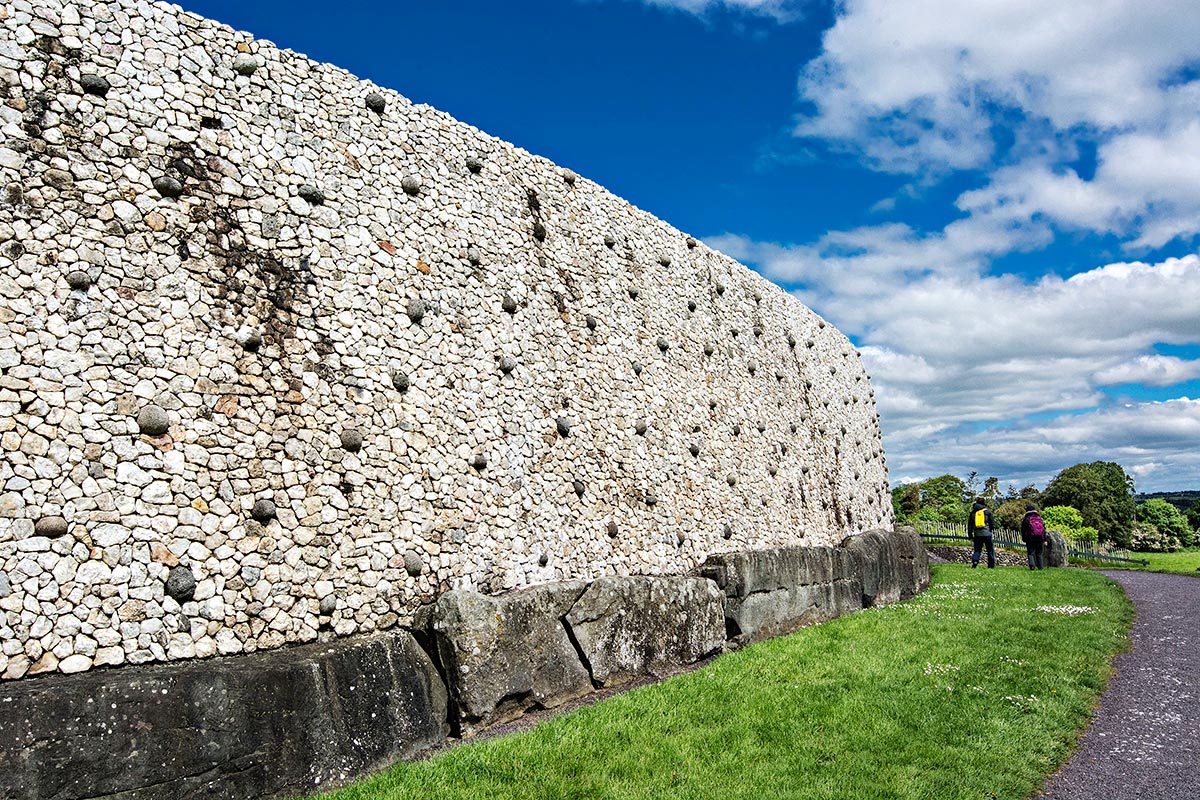
Then the guide told us that we were not looking at the original retaining wall. We were devastated. The unusual stone facing was only reconstructed by an archaeologist in 1970. But, he did use the original white quartz and black granodiorite cobblestones. The quartz came from the Wicklow Mountains, 50 km to the south. The granodiorite came from the Mourne Mountains, 50 km to the north. Somehow I feel that the similar distance is not a coincidence.
If you would like to see this Neolithic site, then you could day trip here from Dublin, especially if you do not rent a car. But, a much better location would be to stay in Trim, in a much quieter small town with Trim Castle as an extra attraction.
Final Comments on this Itinerary
This is an exciting itinerary where you can see Brú na Bóinne (Newgrange), built over 500 years before the first pyramid at Saqqara, Egypt (2667 BC)!
Subscribe
Get travel tips and advice delivered directly to your inbox. The best part is that it is free.
What things fascinate you? How long is your trip? What questions do you have?
Itinerary Maps & Guides
This day trip is part of our Best Places for 2 Weeks in the North of Ireland and Ireland North itineraries. It is very close to the town of Trim.
Ireland North Map – our custom Google map

Google Maps Ratings
Google Maps provides a rating from 0 to 5 for all sights, hotels and restaurants (but not cities). All of our recommendations are appended with the rating (prefixed with a G) from Google Maps. As it is based on feedback from tourists and locals, it is much more reliable than travel booking websites. We consider a score of 4 to 4.39 to be Very Good; 4.4 to 5 to be Excellent.
Ireland FAQ
The Ireland FAQ post answers Frequently Asked Questions (FAQ) like:
- Where should I go in Ireland?
- What is the best season for travel?
- What is the best clothing?
- Where should I go? What are the must-sees?
- How much time do I need for Ireland?
- Can I see everything in a week?
- How safe is Ireland?
- How much cash should you take to Ireland?
- Should I pay in Euros or my own currency?
- What apps are useful for travel?
- Should I rent a car? Take a Taxi?
 Terra Encounters
Leave a comment