
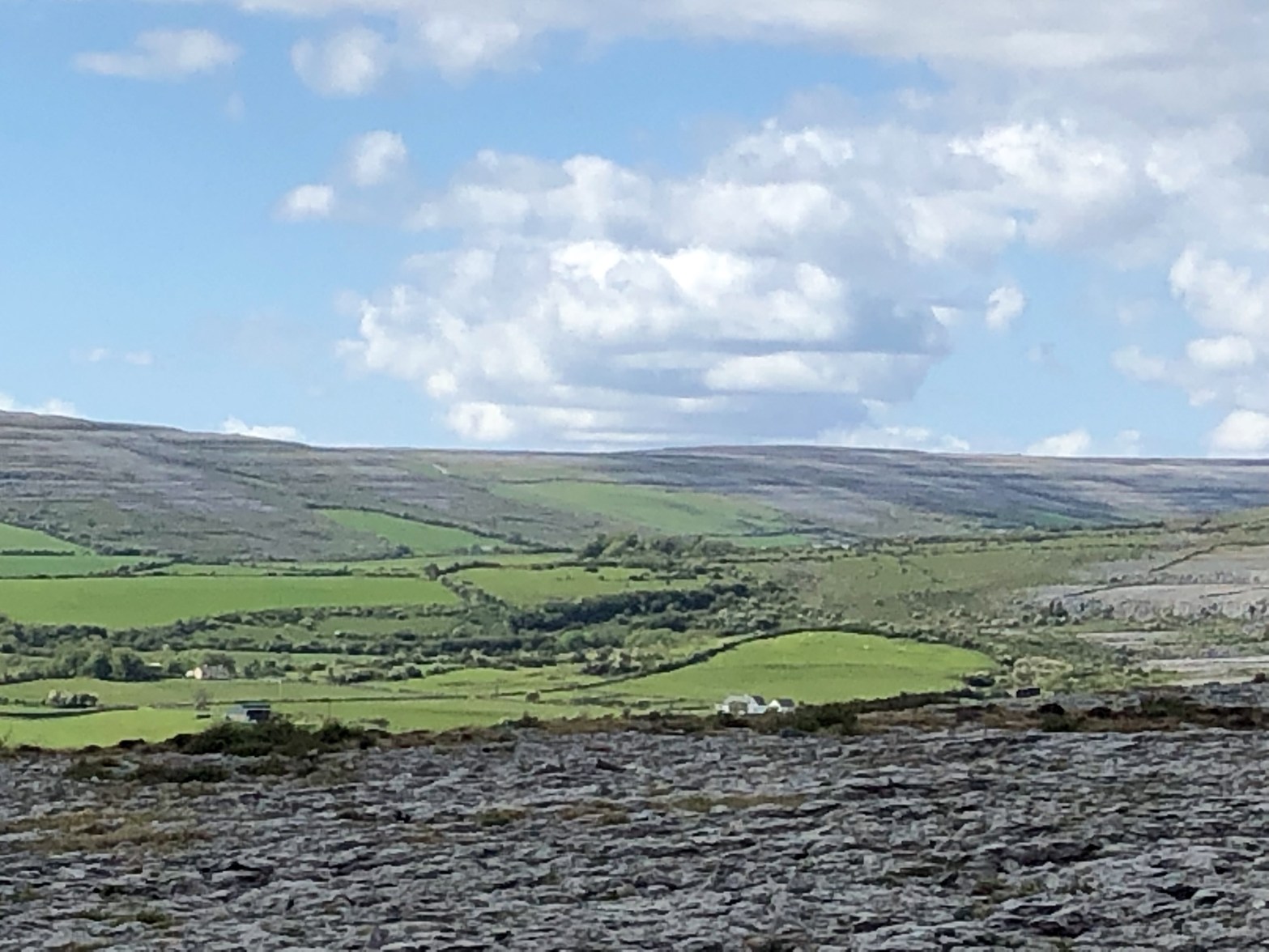
Moher–Burren National Park
There is more to see than the Cliffs of Moher (pronounced more). The “more” is an extensive area called the Burren, located just north of the Cliffs of Moher and part of a joint UNESCO World Heritage Park. You should definitely see it.
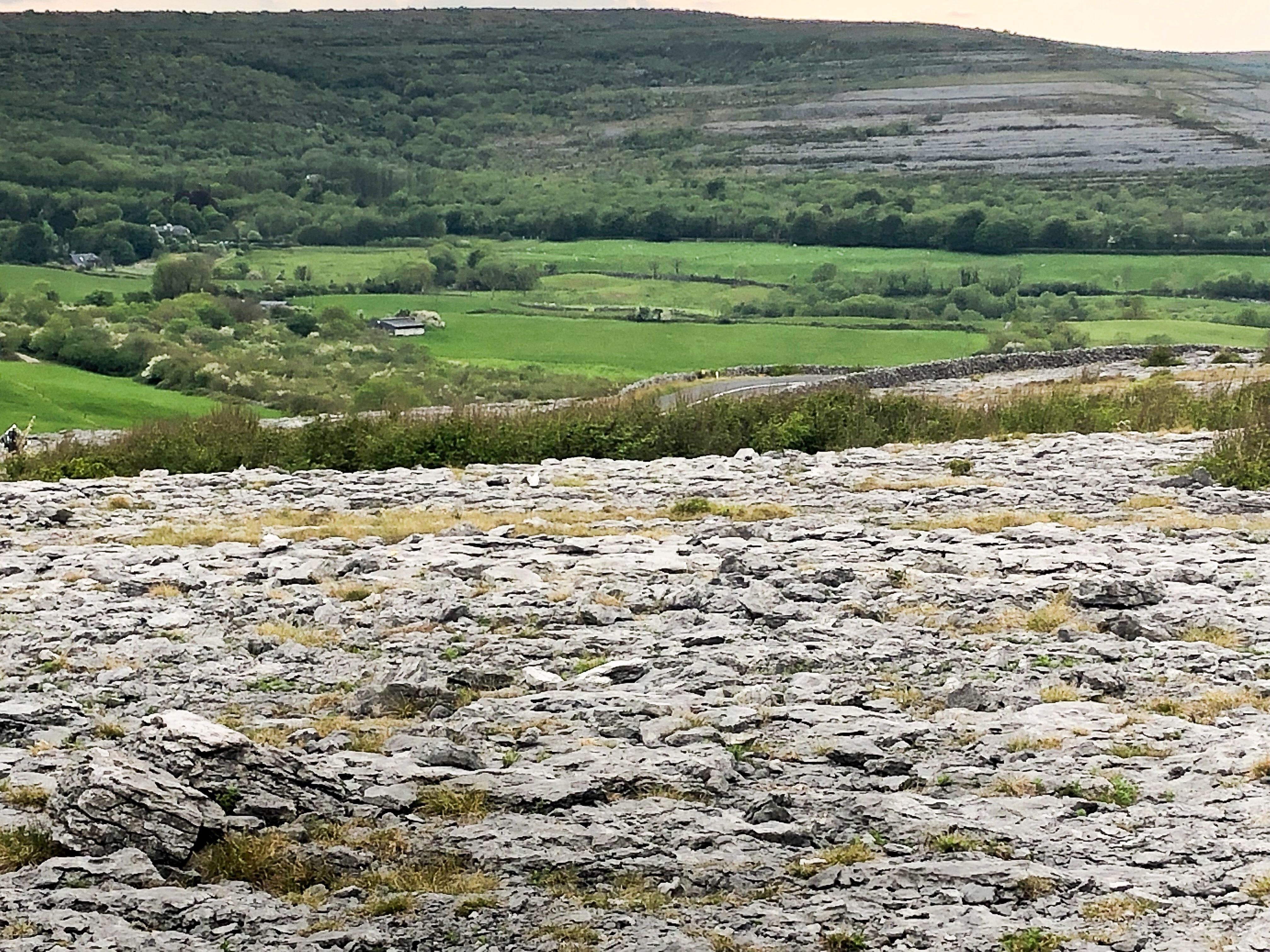
It’s a vast flattish limestone “pavement” backed by cliffs – the same formation that comprises the Cliffs of Moher. Now imagine you are standing here 325 million years ago. It is a lot warmer, and you are located in the tropics. That’s the good news. The bad news is you are now at the bottom of the sea! I hope you can swim!
Author & Photographer: George Mitchell
Our content and advice are derived from our personal experience and knowledge, gained from living in Europe for seven years and studying its art and architecture. Our recommendations are not influenced by affiliate links – we do not have any. Ireland is one of our favourite destinations.
All of our recommendations are top-rated by Google Maps, which is based on the opinions of everyone, not just tourists. Each place recommended in our posts and custom maps is appended with a Google Maps Rating (G0 to G5).
Karst
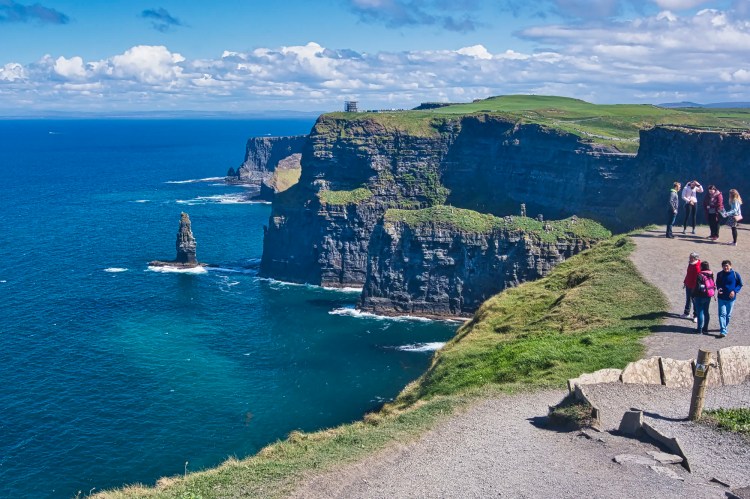
Limestone is formed from millions and millions of years of compressed coral, ammonites and other sea shells. At the Cliffs of Moher, you can view the millions of years of horizontal sediments that were raised out of the water! This occurred as part of the formation of Europe.
But before you dismiss the scenery as boringly uniform, walk around. Look at the fissures and potholes in the flat rocks. This is a karst landscape. Karst topography is formed in an area of soluble rocks like limestone, dolomite, and gypsum. These rocks are permeable to water, which creates underground rivers, sinkholes and caves.
Some of the most famous scenic areas in the world are karst landscapes. For instance, there are Guilin and the Stone Forest in China; the Dolomites (Alps) in Italy; Mammoth Cave in Kentucky, United States; and Hạ Long Bay in Vietnam.
The Burren Tour
There are two excellent pull-offs. At first, it seems barren and lifeless. But you need to walk into the Burren to start to appreciate it.
Burren Walk Parking
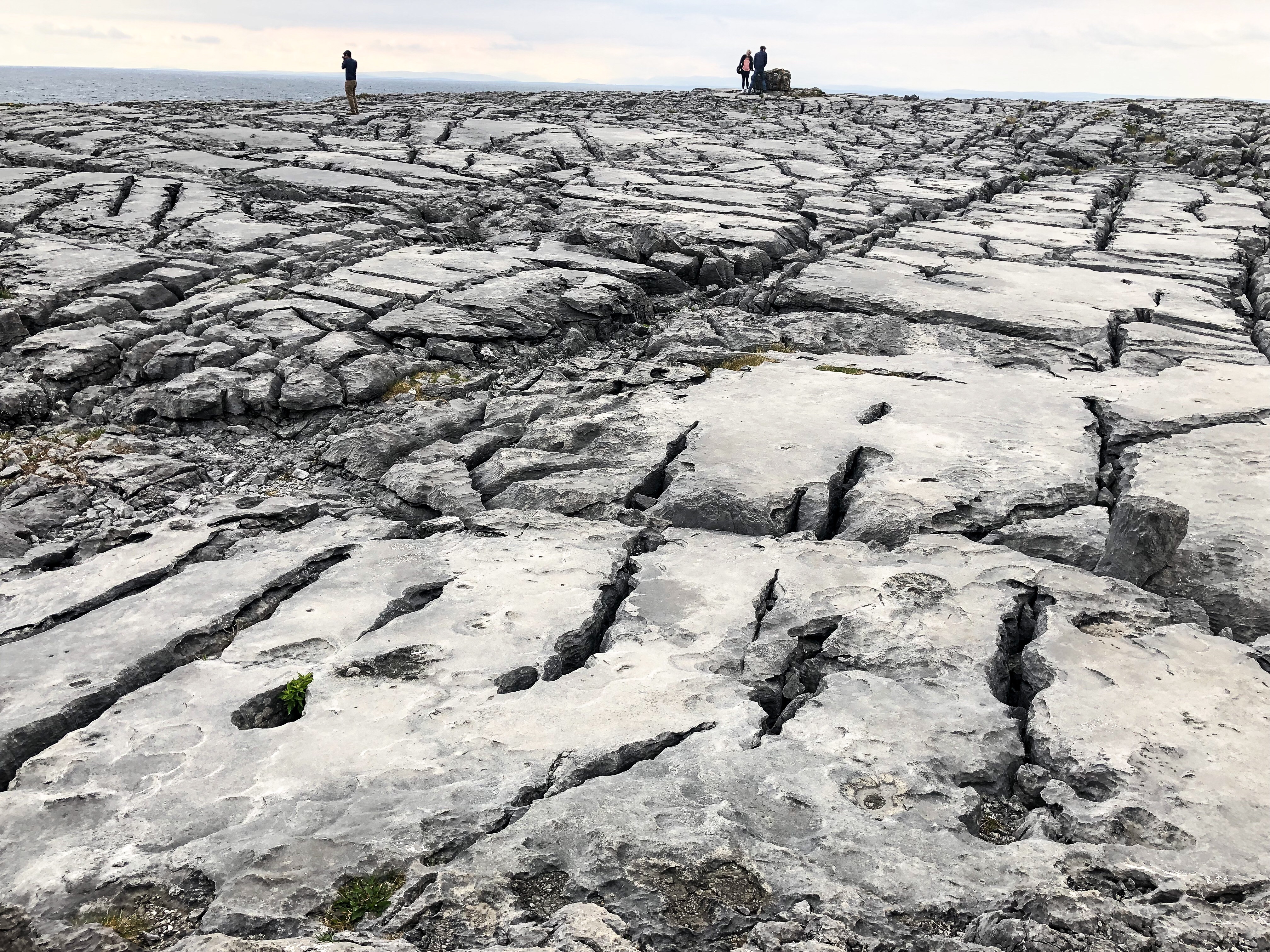
From the Cliffs of Moher, drive 13.3 km north on R479, then 2.7 km on R477. It is labelled Burren Walk Parking in Google Maps. There is no sign, but it will be obvious where to park. Tour buses stop here. People get out and head towards the sea. Here you can get photos of the fractured limestone rock with the ocean as a background and people in the foreground.
But if you want photos without the busloads of people, take a hike on the east side. There are large upright boulders that are interesting subjects or frames – one looked like a head with long flowing hair made of ivy.
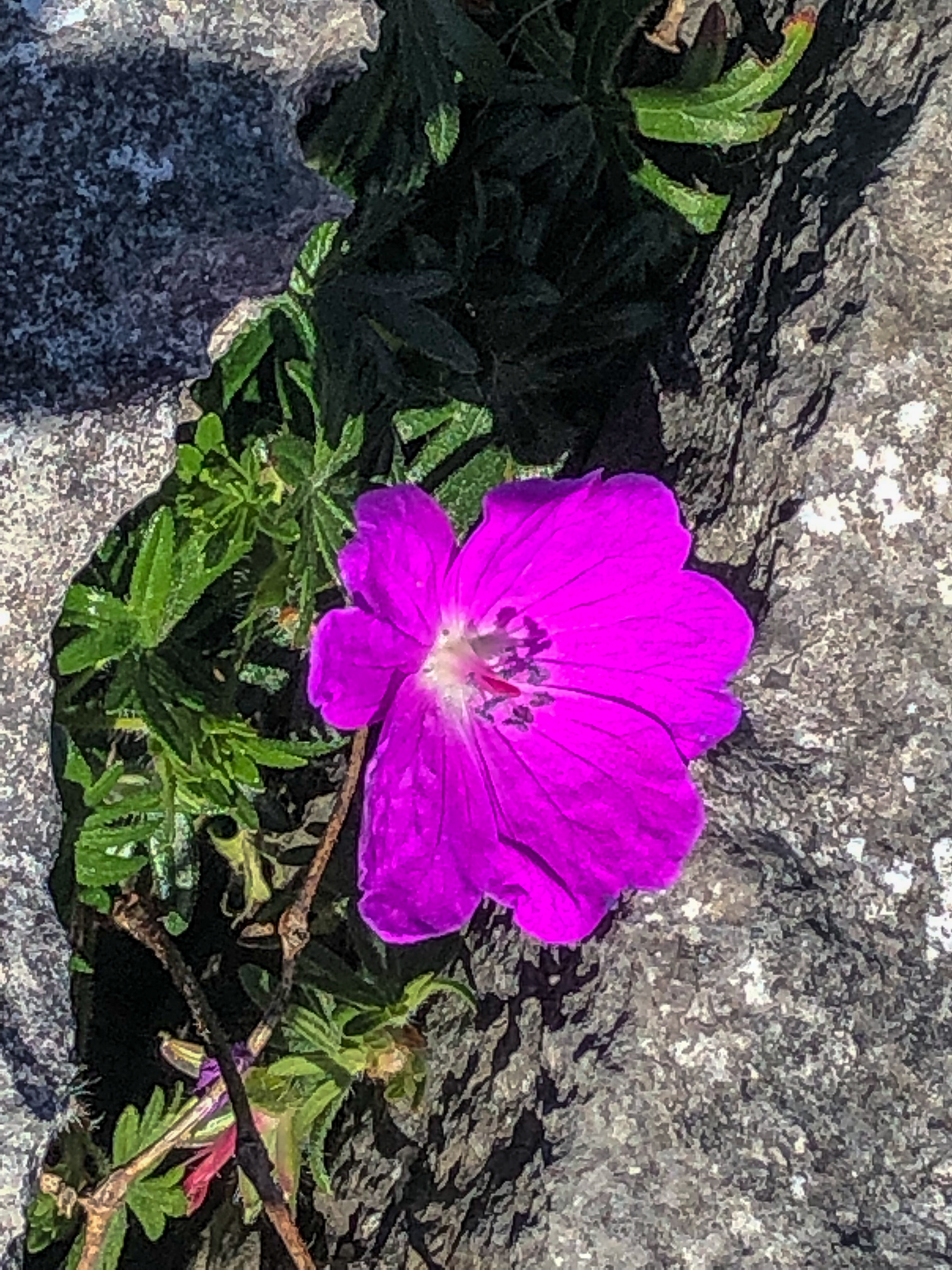
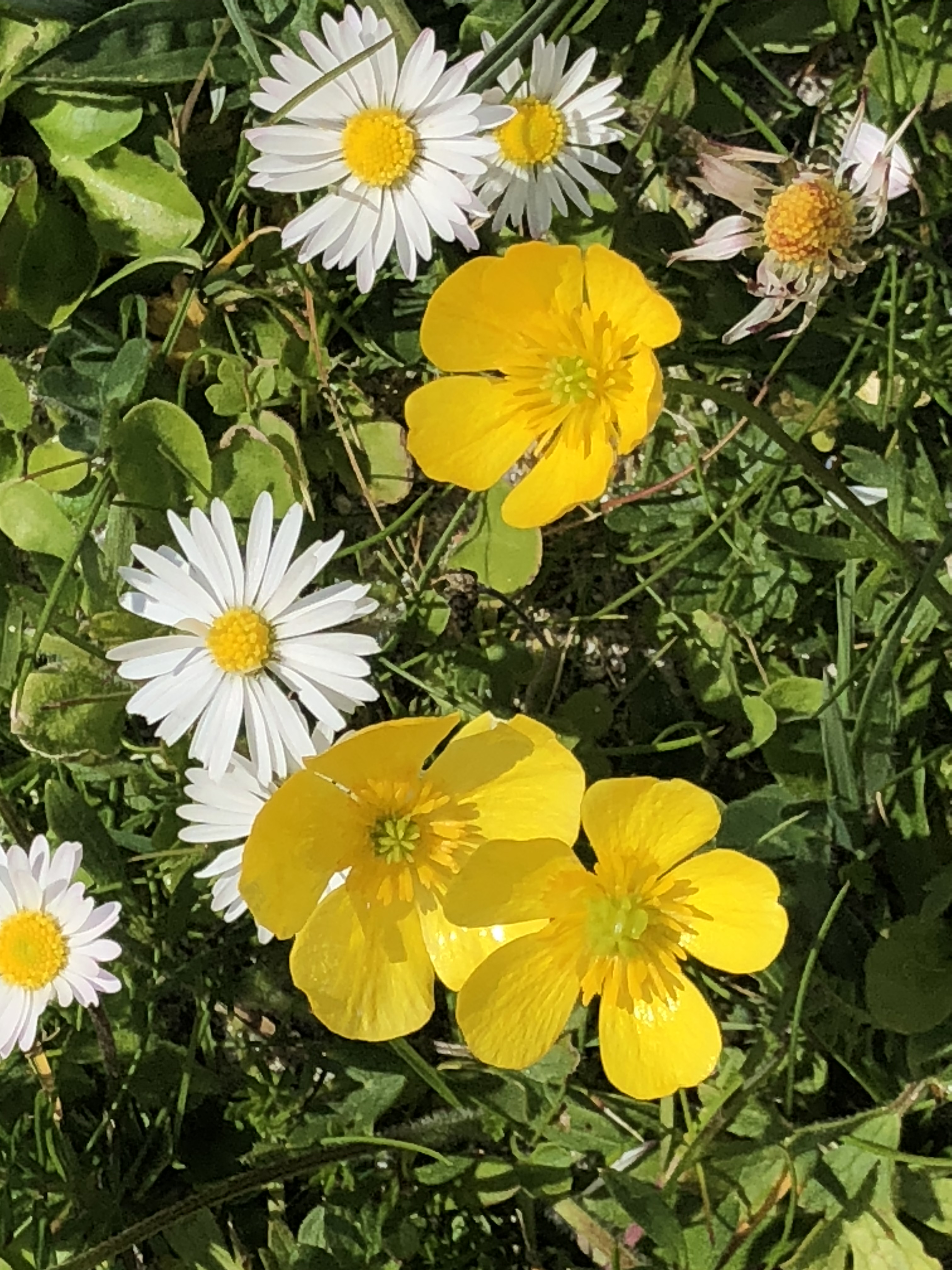
Walk to the large area of flat limestone. The rock is riven with fractures and potholes created by rainwater. In each of these crevices are plants sheltering from the wind while benefiting from the channelled rainwater. Now look even closer, and you will find fascinating flowers like the Bloody Cranesbill above. It is a type of geranium.
Ballyvaughn
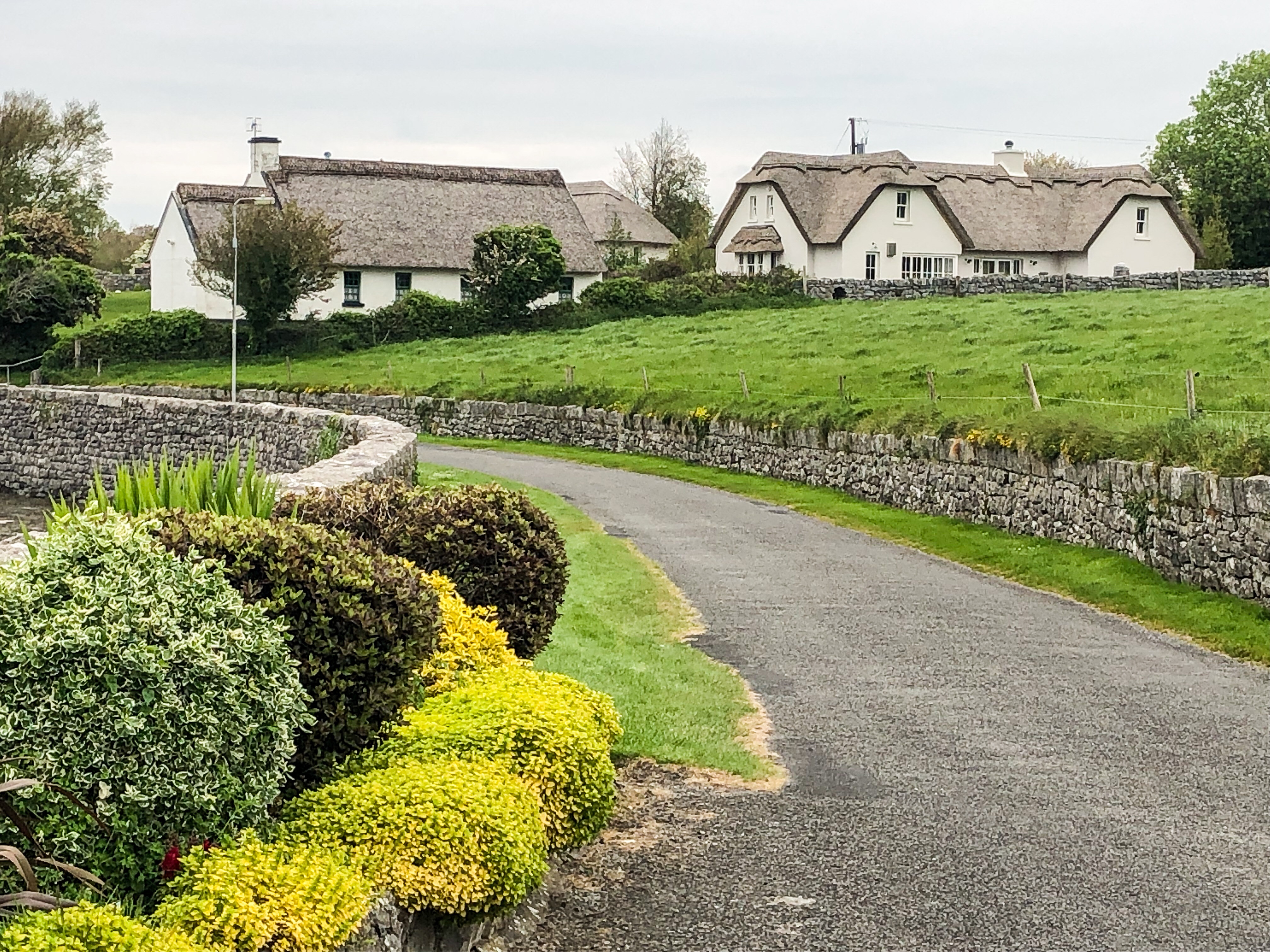
From the viewpoint above, you continue north on highway R477 around Black Head, though we did not find that drive interesting. But you need to get to Ballyvaughn. There are a few thatched-roof houses in this town.
Terrazzo del Burren
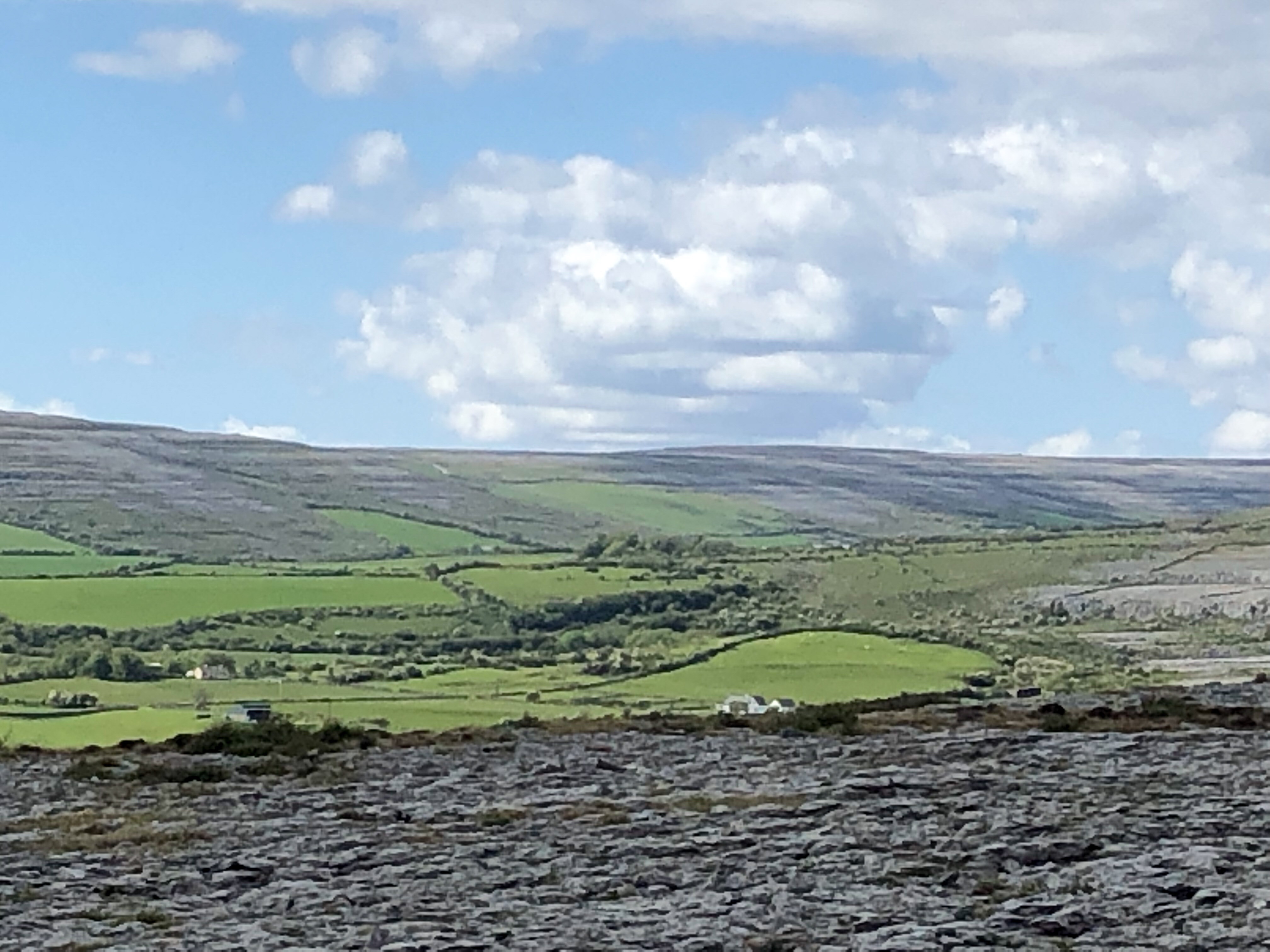
From here, climb 5.2 km on Route R480. The setting is spectacular with the grey-white limestone contrasting with the vibrant green fields of the nearby farmland. The limestone formation is still underneath the farmland; it’s just that the vegetation was not stripped away.
It is marked on the Maps.me app as Terrazzo del Burren (Italian) or Burren Terrace in English.
Poulnabrone Dolmen
Continue on the road to this well-signposted parking lot. Yes, it just looks like two huge vertical slabs joined together and topped by a horizontal capstone. Now imagine how Neolithic humans actually moved these stones! This was built ca. 3000 to 4000 BC and before the Pyramids.
Also, imagine how humans could live in such a desolate place. But note that there were forests and vegetation at that time. Human remains were excavated here.
Burren Parking
Unlike the Cliffs of Moher, there are many access points for the Burren – and the parking is free. In fact, all national parks in Ireland are free, sort of.
Final Comments on this Itinerary
This is an exciting trip to one of the most beautiful sights in Ireland.
Subscribe
Get travel tips and advice delivered directly to your inbox. The best part is that it is free.
What things fascinate you? How long is your trip? What questions do you have?
Itinerary Maps & Guides
The More than the Cliffs of Moher route is part of our Ireland West and our Best Places for 2 Weeks in Southwest Ireland itineraries.
If you have more than a week, then combine this tour with places in the Ireland East, Ireland South and the Best Places for 2 Weeks in Southwest (SW) Ireland itineraries below. Or just visit some of the nearby places listed below.
Google Maps Ratings
Google Maps provides a rating from 0 to 5 for all sights, hotels and restaurants (but not cities). All of our recommendations are appended with the rating (prefixed with a G) from Google Maps. As it is based on feedback from tourists and locals, it is much more reliable than travel booking websites. We consider a score of 4 to 4.39 to be Very Good; 4.4 to 5 to be Excellent.
Ireland FAQ
The Ireland FAQ post answers Frequently Asked Questions (FAQ) like:
- Where should I go in Ireland?
- What is the best season for travel?
- What is the best clothing?
- Where should I go? What are the must-sees?
- How much time do I need for Ireland?
- Can I see everything in a week?
- How safe is Ireland?
- How much cash should you take to Ireland?
- Should I pay in Euros or my own currency?
- What apps are useful for travel?
- Should I rent a car? Take a Taxi?
 Terra Encounters
Leave a comment