
Hidden Gems in Roma Centro
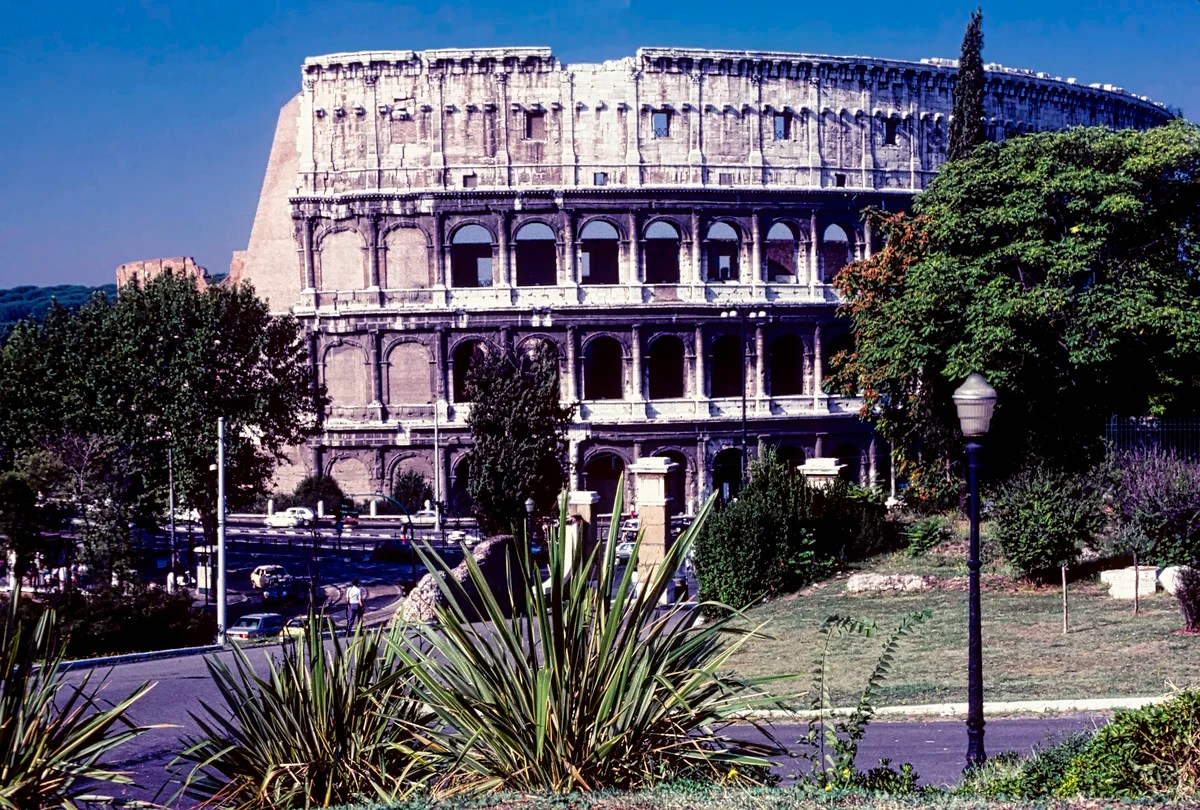
Do you want to get away from all the tourists while still seeing interesting sights in Rome? This classic walk promises golden mosaics, twisted columned cloisters, Mithraic mysteries, Ancient Roman columns and masterpieces by Michelangelo.
Author & Photographer: George Mitchell

Our recommendations are not influenced by affiliate links – we have none. Our advice is derived from our personal experience and knowledge based on living in Rome for four years and studying its art, architecture, and culture. All the places recommended in this post are pinned on our Roman Itineraries Map. The place names are appended with the Google Maps Rating (G0 to G5).
Porta Asinaria
A short walk west of the San Giovanni Metro stop is Porta Asinaria (Gate of the Donkeys, G4.7), an original gate of the Aurelian Wall from the 3rd century. In 546 CE, traitor mercenaries opened this gate so the Gothic army could loot Rome.
Basilica San Giovanni in Laterano
St John in Lateran (G4.8) is one of the four main basilicas of Rome. In the fourth century, the Laterani Family was disgraced and their estate was seized but their name lives on. San Giovanni was built over the barracks of the Imperial Guard. It is open all day until 18:00 hrs.
Before the Pope’s move to Avignon (France) in 1309, this was also the papal residence. After the church schism ended, the the Vatican became the papal residence.
San Giovanni has had a hard time. It was destroyed by the Vandals in the 4th century, damaged by an earthquake in the 8th century, and burned down twice in the 14th century.
After admiring the imposing Baroque era façade topped with 16 m high statues, note the central bronze doors that came from the Ancient Roman Senate (Curia) in the Foro Romano.
Due to fires the basilica had to be rebuilt several times. The last rebuild was by famous artist Borromini in 1646. The nave retained its fourth century floor plan but sports a 15th century mosaic floor. At the end of the nave is a Gothic baldacchino (canopy over the altar), which dates from the 14th century. Only the Pope can celebrate mass here. Supposedly, the altar contains a silvery reliquary with the heads of St. Peter and Paul.
Behind the altar, an apse is lined with sparkling mosaics, some dating to the 4th century but most to the 19th century. To the left of the altar, don’t miss the Vassalletto cloister built in 1220. Like San Paolo, the colonnade has inlaid marble mosaics built by the school of Cosmati, but this cloister has twisted twin columns.
Piazza di San Giovanni in Laterano
The Piazza di San Giovanni in Laterano contains the tallest of the obelisks in Rome. Dating from the 15th century BC, it was taken from the Temple of Ammon (aka Hercules) in Thebes (aka Luxor). The obelisk used to be located in the spina of Circo Massimo but was moved in 1587 to serve as a road ornament.
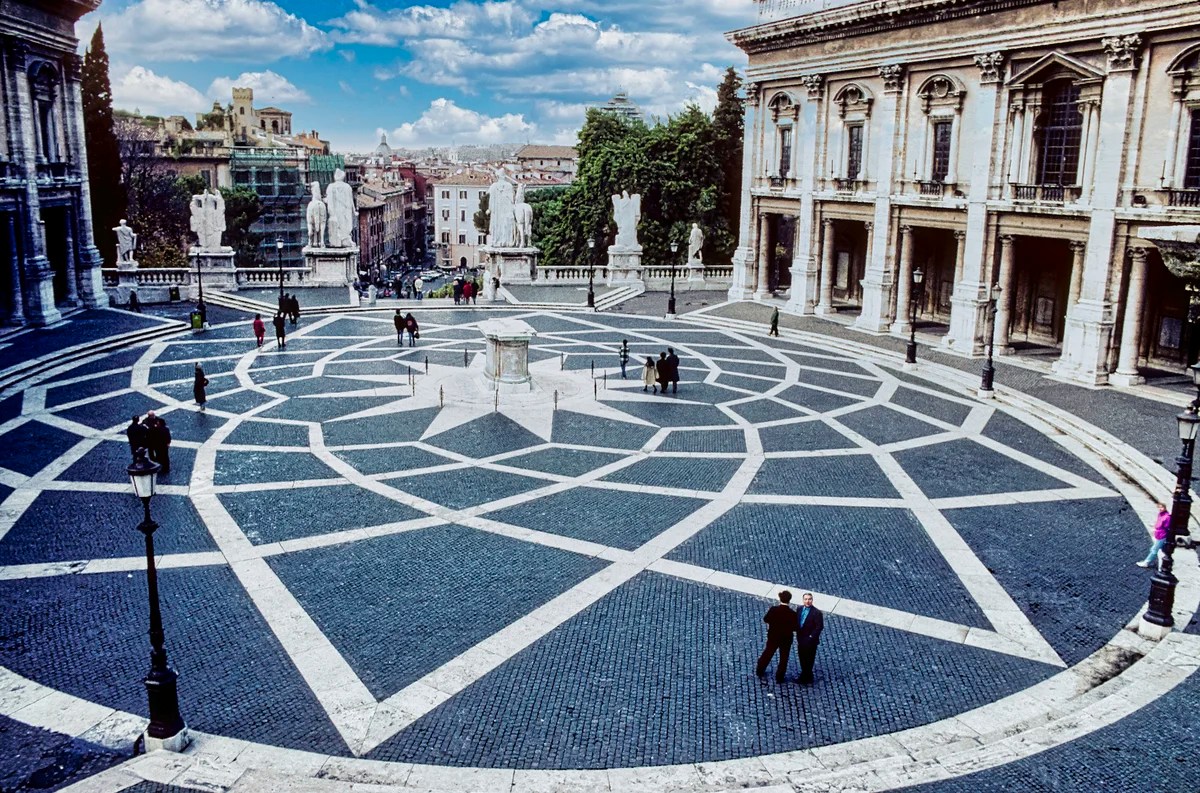
Piazza di San Giovanni is also where a famous equestrian statue use to trot. It was preserved because it was believed to be Constantine, the first Christian emperor. It was later identified as Marcus Aurelius and moved to Piazza Campidoglio shown above in the Discover the Secrets of Ancient Rome walk. Unfortunately it was moved again (for restoration) when we visited the piazza. The original is now in the Musei Capitolini, and a replica was placed outside.
Battistero Lateranense
The separate domed Battistero Lateranense (baptistery, G4.8) originates from Constantine’s time. The octagonal shape became the model for churches around the world.
It was built on the site of the baths of Domus Faustae, Constantine’s second wife. She trumped up attempted rape charges against Constantine’s son from his first marriage and had him executed. She did this to ensure her sons would be next in line to be emperor. Constantine had her suffocated in a caldarium, the hottest room in a bath and heated via the floor. This is the way embarrassments were quietly handled in Ancient Rome.
Basilica di Santa Prassede
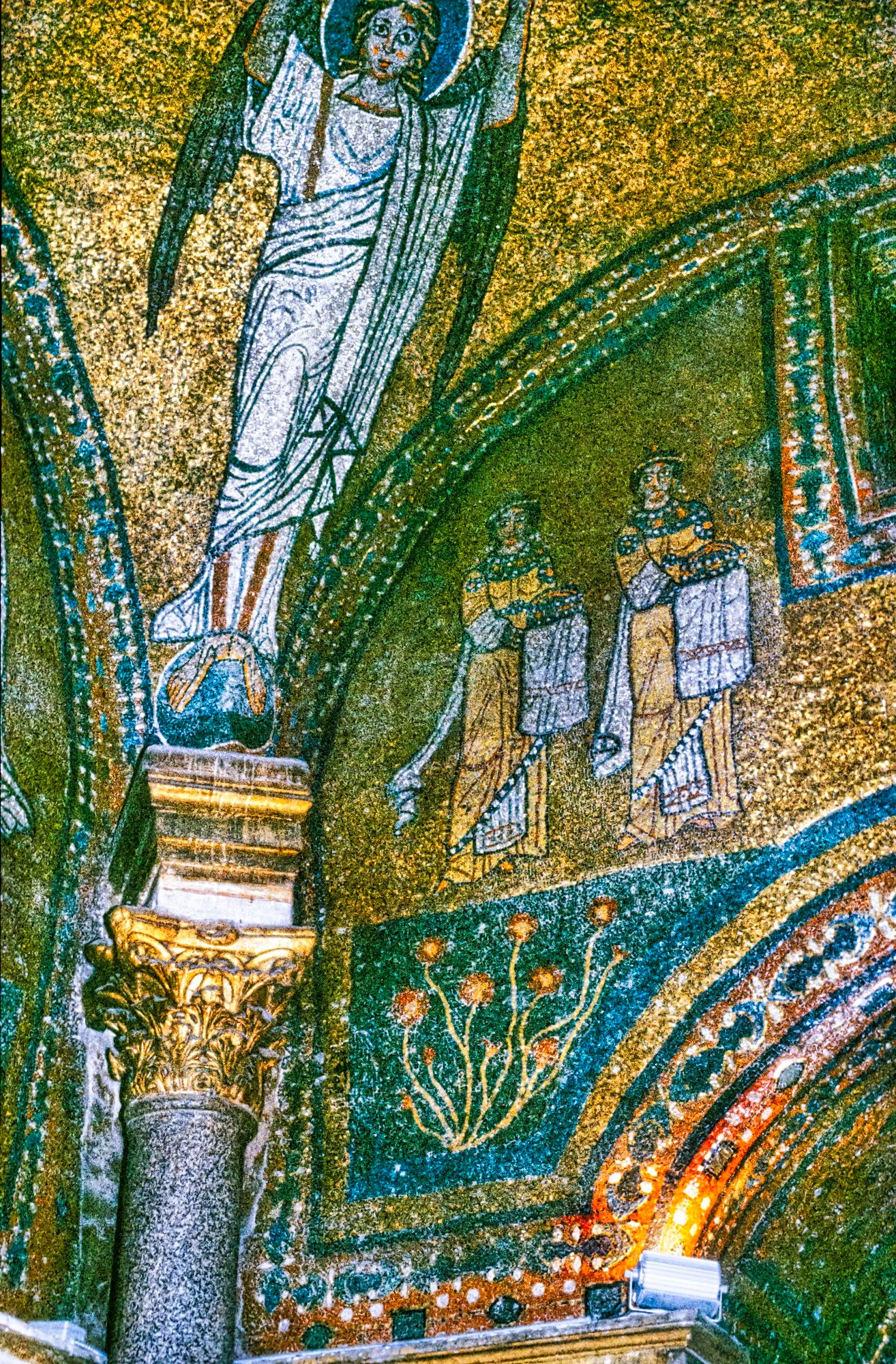
Santa Prassede (G4.8) is to the north near Santa Maria Maggiore. The great treasure in Prassede is the Capella di S. Zenone. All the walls and the vault are covered in blue, green and gold mosaics.
Byzantine Empire
As explained vociferously in a previous post, the Roman Empire did not fall in AD 476. Moreover, the term Byzantine Empire was only coined in the 16th century by a German historian – it never existed! However, we will use the term Byzantine to represent the eastern art style.
Byzantine Mosaics
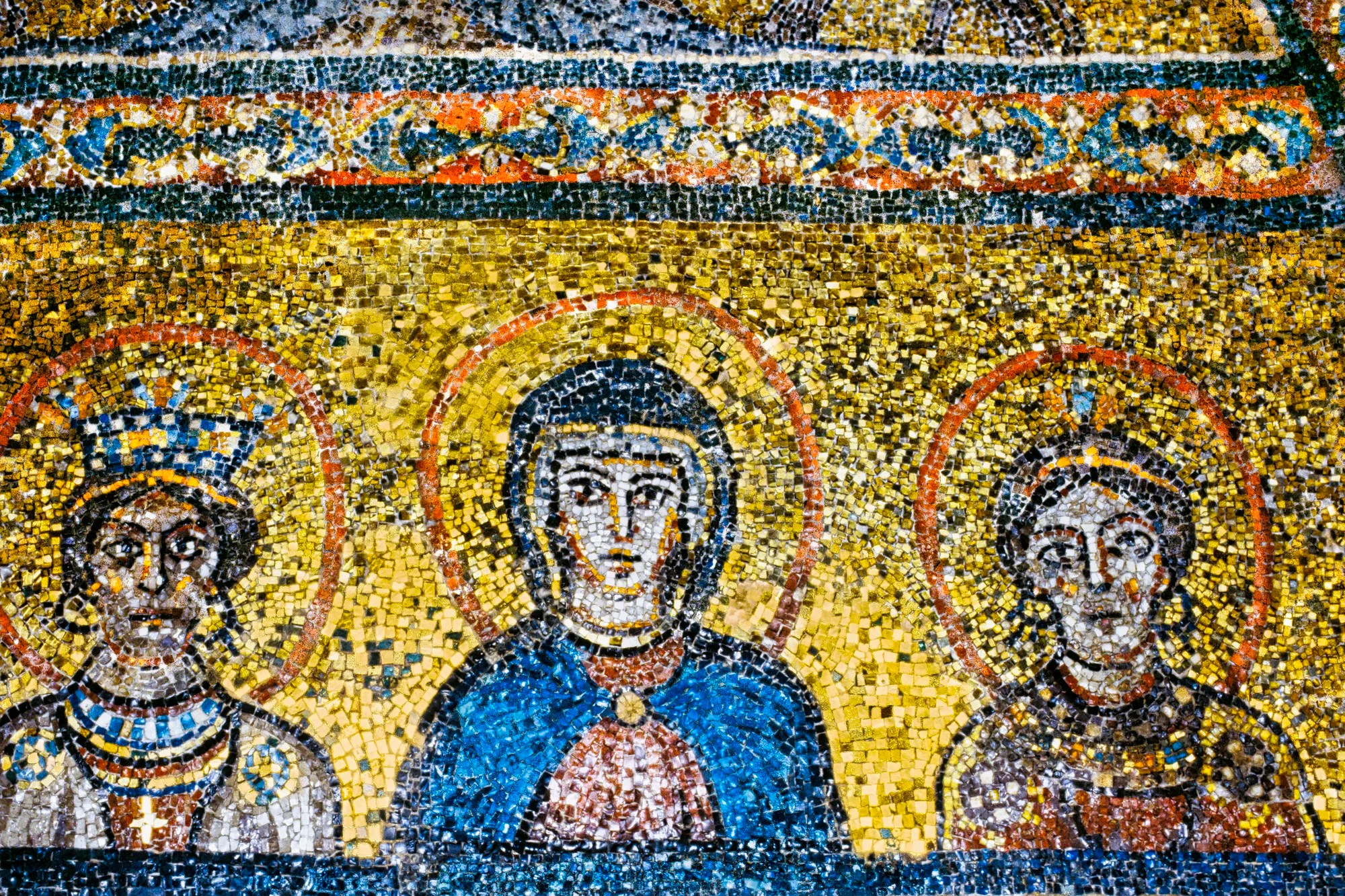
The earliest known examples of mosaics were found at temples in Mesopotamia, dating to the third millennium BC. The first glazed tiles were found in Persia dating from around 1500 BC. Most mosaics are made of small, flat, roughly square, pieces of stone or glass of different colours, known as tesserae (Latin for cube).
Mosaics is one of the most important aspects of Byzantine art and architecture with its emphasis on rich decoration and colour. The gold is gold leaf sandwiched between two layers of clear glass or tesserae. The extensive use of gold evoked the spiritual splendour of the Kingdom of God.
The use of gold had the additional benefit of increasing light refraction and illumination in an otherwise dark church. There is no grout between the tesserae. That would decrease the light reflection. Also, the tesserae were set at slight angles to the wall, so that they caught the light in different ways.
Basilica San Clemente
San Clemente (G4.7) is a multi-level 12th century church built on top of a 4th century church built on top of a Mithraic temple. The level of the land has risen 18 m (60 ft) since Roman times!
The nave is the epitome of medieval with a Cosmatesque pavement framed by antique columns. We know that the choir wall decorated with beautiful marble stones was taken from the fourth century church. That is because it was a gift of Pope John II in 555. Look for the symbols that early Christians used to advertise their religion — the fish, dove and vine.
Research has shown that St. Clement was a Jewish slave of Domitian’s cousin, whose last name was Clemens. The anchor relates to the story that St. Clement was sent by Trajan to the mines in Crimea. There he made so many converts that he was bound to an anchor and thrown into the sea.
The Crucifixion above the altar was done by Masaccio, the genius forerunner of the Renaissance. He died in 1428 at the early age of 26. Imagine if he had lived a long life.
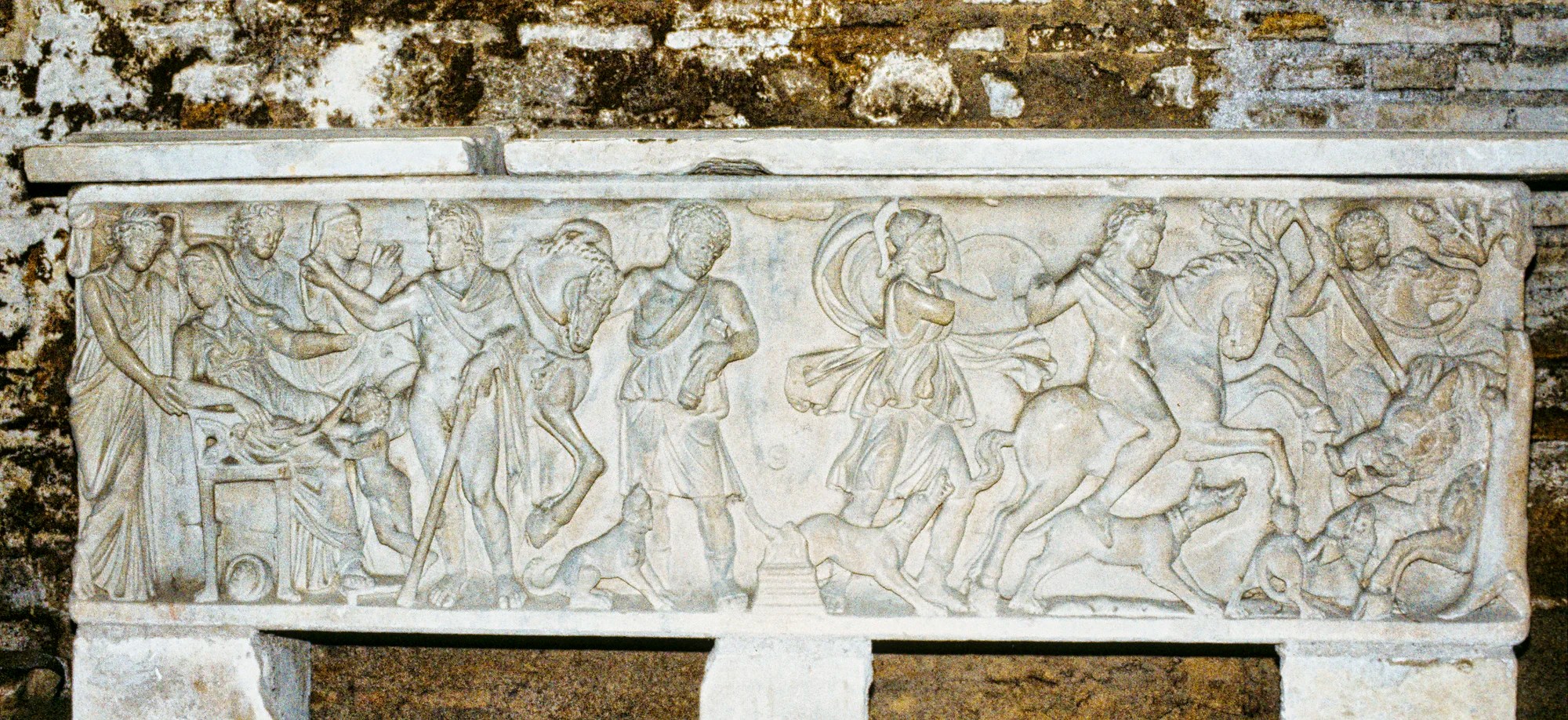
You can descend into the fourth century church, which was by and large filled in with earth. Here you can find an Ancient Roman sarcophagus from the 2nd to 3rd century, depicting the mythological story of Phaedra and Hippolytus. Phaedra was the daughter of King Minos and the wife of Theseus. Phaedra fell in love with her stepson Hippolytus. After he rejected her advances, she left a note accusing him of trying to rape her and killed herself. There are many versions of this story that is the basis for tragedies (plays), operas, music, films, and art works.
The last fresco has an inscription in vernacular rather than Latin and is one of the oldest texts written in Italian. This building runs right next to the Cloaca Maxima, and both are close to Colosseum.
Mithraism
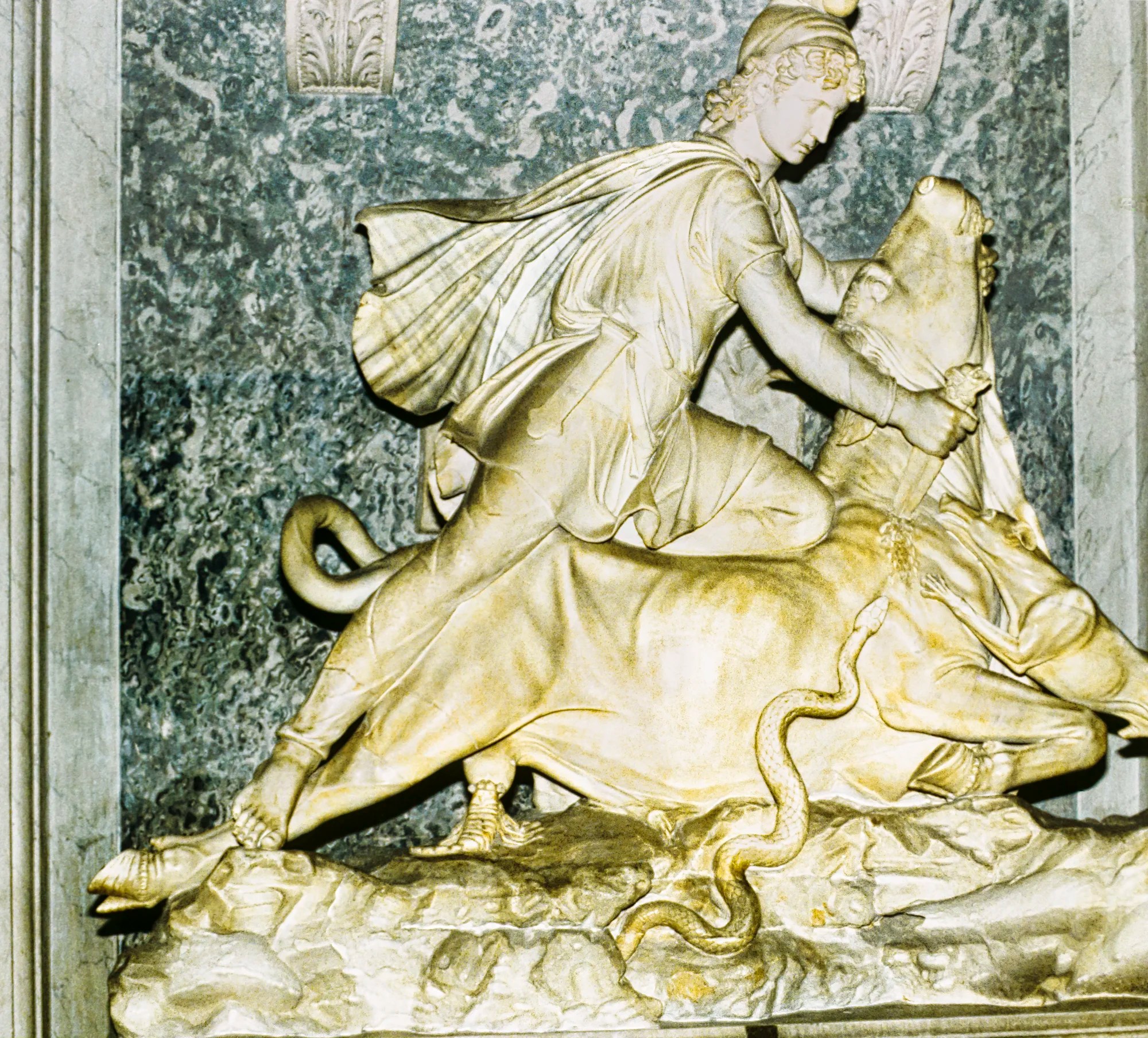
Below this level is a Mithraic temple and a vaulted imitation cave that served as the triclinium, where men ate together. This was a mystery cult and only men could join. A sculpture showing Mithras killing the bull is symbolic of Mithraism. It can be found on the back of the throne.
Mitra, the Vedic (Proto-Indo-European) god of light (sun) and contracts (oath), dates back to 1400 BC. He is the light against evil. His worship spread to Persia, where his name became Mithra. Alexander the Great conquered Persia in 334 BC. This led to Mithraism and the Silk Route spreading to the west. The Roman soldiers adopted it and later Emperors Commodus and Diocletian became initiates.
In Ancient Hidden Gems Walk 3 – Religious Heritage, we mentioned that there were many similarities between Mithraism and Christianity. Here are some more.
Mithras was considered to be the Truth and the Light since he was the god of justice and light. He also was the Saviour in conquering the forces of evil. His followers celebrated Sunday as he was associated with the Sun god and rode the Sun god’s chariot (another Proto-Indo-European link as discussed in Ancient Hidden Gems Walk 3 – Ethnic & Linguistic Heritage). Mithras celebrated supper with the Sun god after the creation of Earth. Mithras, by this description, sounds a lot like Jesus.
Is there a relationship of Mithraism to Christianity or vice-versa? We will never know who copied who. But clearly Mithraism is older and Christianity needed to win over the population, so it was in their interests to incorporate elements of pagan religions to win the hearts of the people. This is true throughout the world. Buddhism is really a philosophy yet they have all manner of spirits and demons that were incorporated from the animistic beliefs that preceded it. Now these spirits and demons are the protectors of Buddha. See photo of a scary demon king in Thailand — a Traveller’s Guide to Buddhism.
Colle Oppio

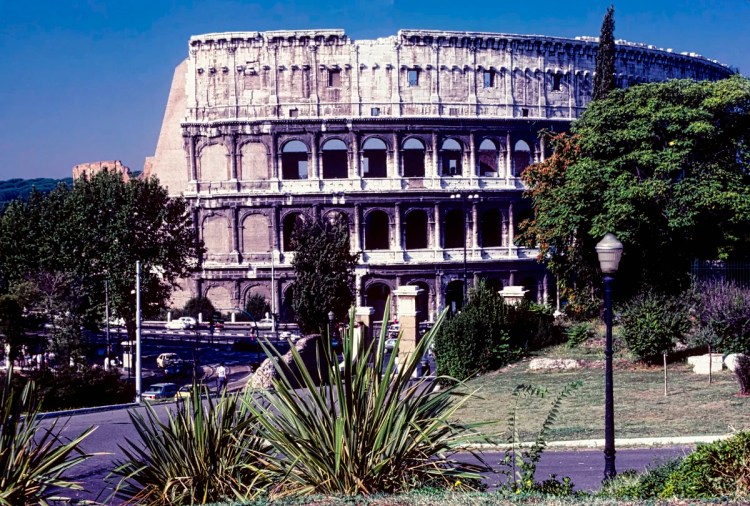
Colle Oppio is a park on a hill (colle) with great views of the Colosseum and Nero’s Domus Aurea (Golden House). One often overlooked aspect of Rome is how green it is. There lots of trees and parks. In fact much of Ancient Rome within the walls was not occupied. The Romans had significant green space. Even today, one is impressed by the number of tall trees in this old city.
Basilica San Pietro in Vincoli
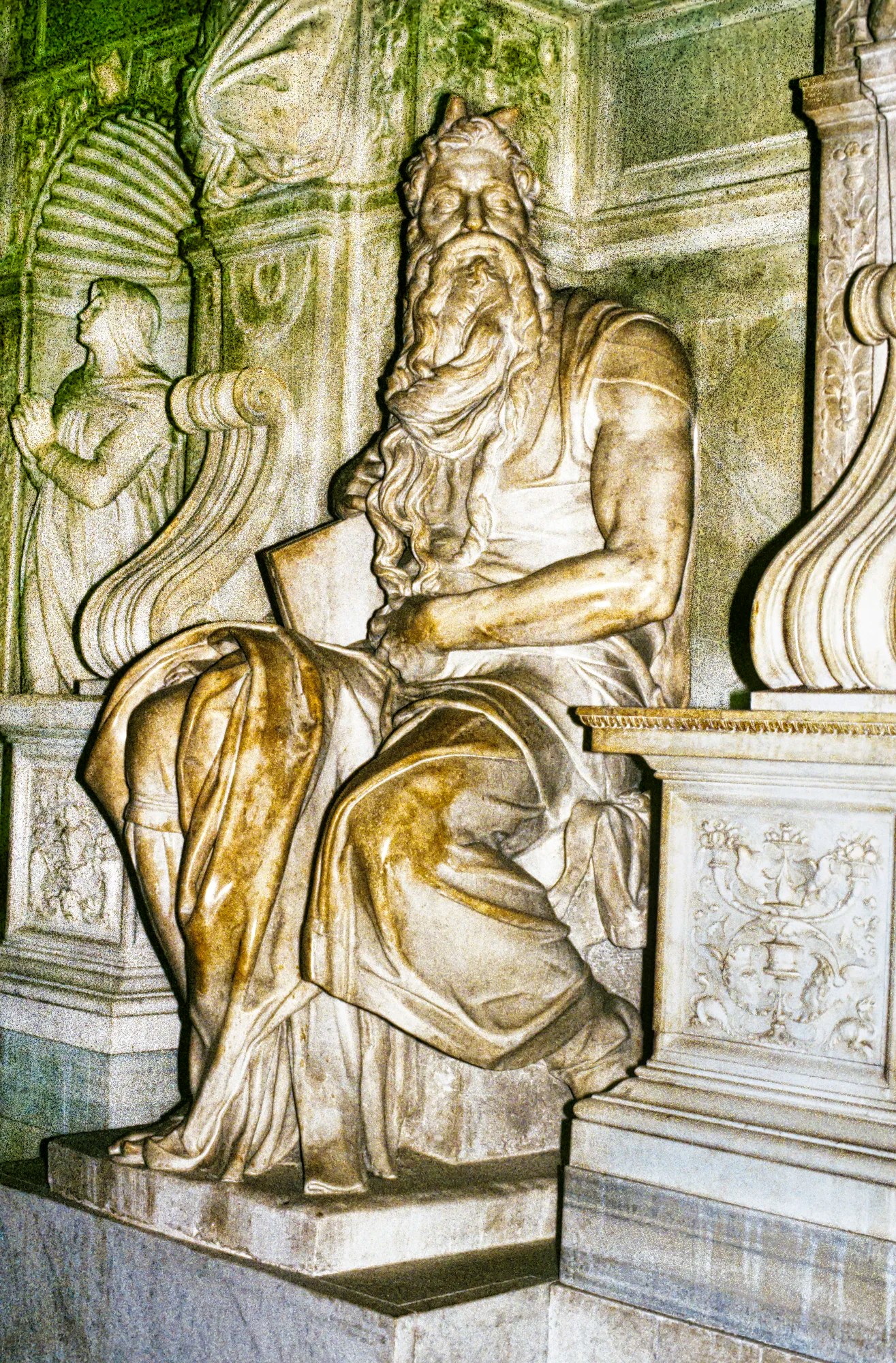
San Pietro in Vincoli (St. Peter in Chains) was built to house the two chains that were used on St. Peter in Mamertine Prison. They are displayed beneath the high altar. But the real reason to visit this basilica is the tomb of Pope Julius II by Michelangelo. BTW, the Pope was still alive when Michelangelo built it.
Michelangelo believed that sculpture was like divine creation. The sculpture already existed and his role was to free it from the marble block. The statue of Moses is so imposing you can feel the strands of hair and see the bulging veins. His posture suggests strong leadership or great wrath. Other artists described Moses as having an awesome force or terribilita.
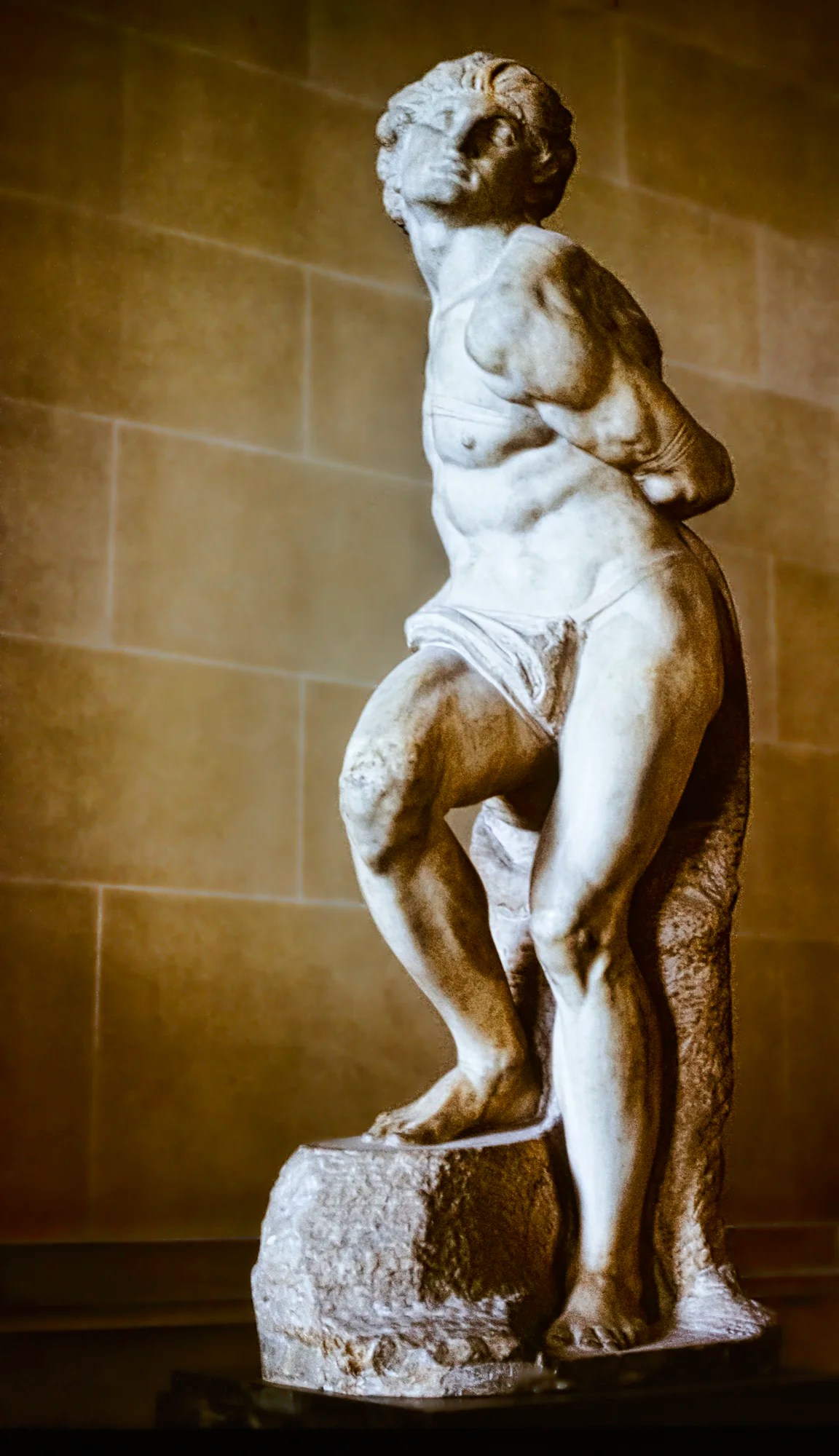
Michelangelo was also carving statues of slaves to place around the tomb. Two slaves like the one above are found in the Louvre, and four are in the Galleria dell’Accademia in Florence. They have parts that are completely carved and others that have not yet been released from the stone. It clearly shows Michelangelo’s technique and style. The meaning of the slaves is not clear. Were they men trying to free their souls from their bodies? Was he just interested in the expressive poses?
What you should focus on are two features that are the essence of Renaissance art. The first is contraposto, which means that the subject puts more weight on one foot so that its’ shoulders twist compared to the hips. Why is this significant? In medieval art, figures were displayed facing forward, perfectly straight and two dimensional. Contraposto implies future movement. This was a rebirth of classical art, which tried to portray the breadth of human emotion and activity.
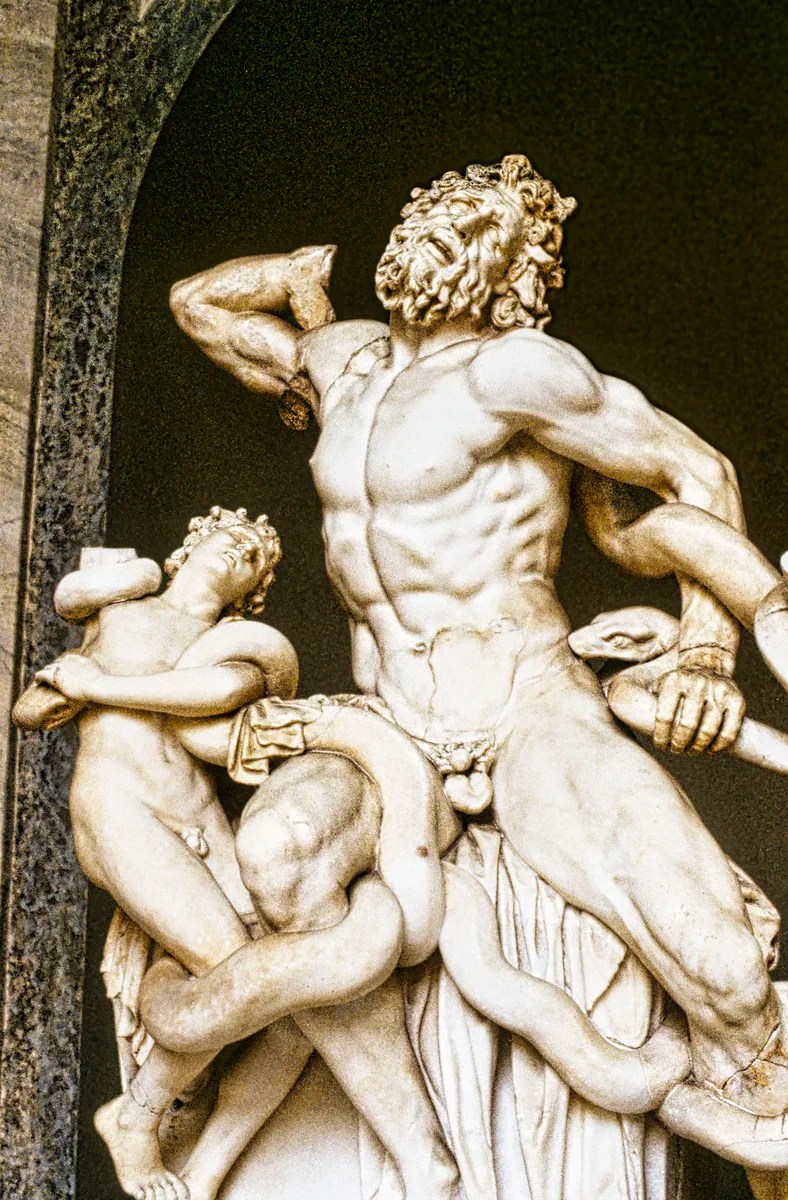
The second major aspect of Renaissance art was serpentinata, which is using an S-shaped or serpentine figure. Using serpentine shapes is equally important in landscape painting and photography. It provides dynamism and adds interest. The supreme example of serpentinata is the Laocoön, one of the most important sculptures to see in the Vatican Museums if not the world. Laocoön was a priest of Poseidon who was killed with both his sons after attempting to expose the ruse of the Trojan Horse in Troy. Only discovered in 1506, this Ancient Greek statue had a big impact on Renaissance artists and especially on Michelangelo.
As cardinal, Julius lived in the palace next door to San Pietro in Vincoli. When he became pope, he moved his large collection of classical statues to the Vatican and founded the Vatican Museums.
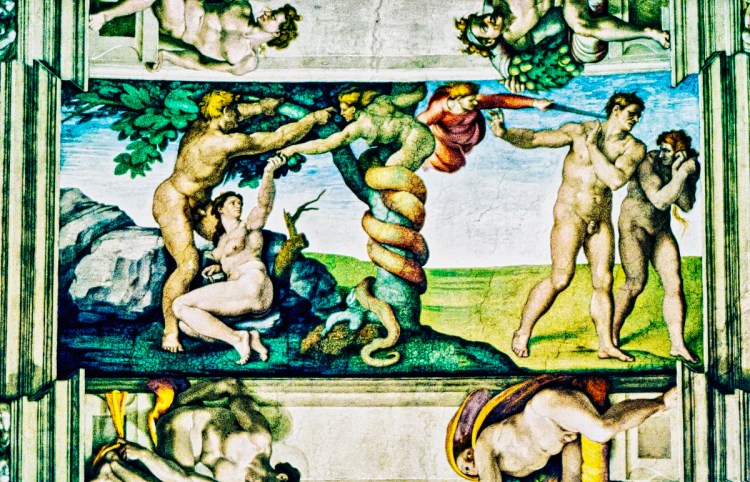
His tomb was never completed because in 1508, Pope Julius II pressured Michelangelo to paint the Sistine Chapel. Michelangelo was reticent as he considered himself a sculptor, not a painter, but he admired artists Giotto, Donatello, and Masaccio, who led painting into the Renaissance. Driven by his desire to finish what would have been his most incredible sculpture work, Michelangelo completed the Sistine Chapel in only four years.
Presepio Museum
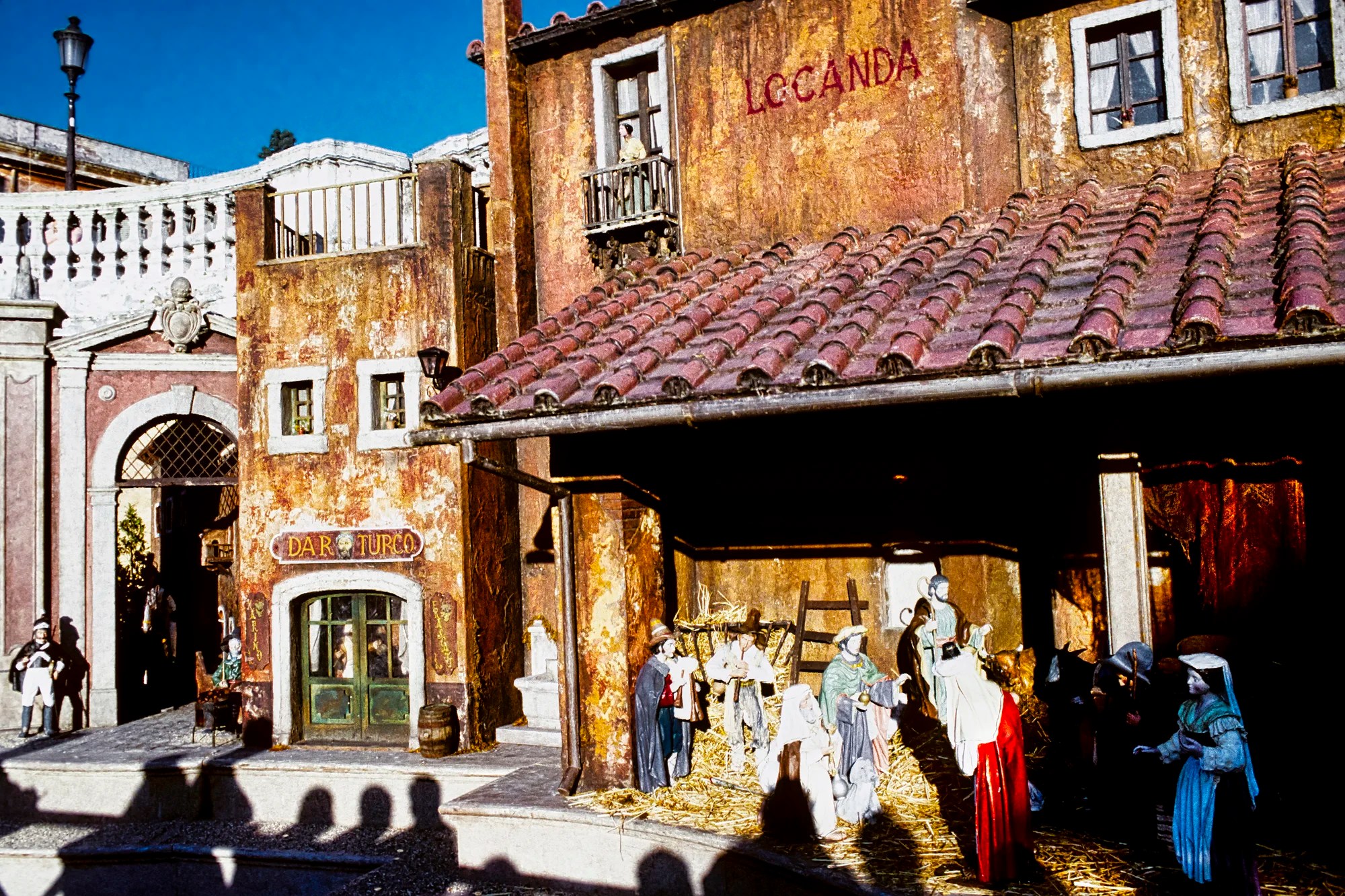
I do not have photos inside the museum. But over the four years we lived in Rome, we often visited the life-size presepio in Centro. First built in AD 574, Santa Maria d’Aracoeli was dedicated to the Madonna to replace the original Temple of Juno Moneta, dedicated to the Mother goddess. This is another example of Christian co-opting pagan beliefs. Moneta was the mint and hence is the origin of the English word money. The last chapel contains a famous presepio. At Christmas time, please add Aracoeli to the Discover the Secrets of Ancient Rome walk.
Trajan’s Market (Foro Traiana)
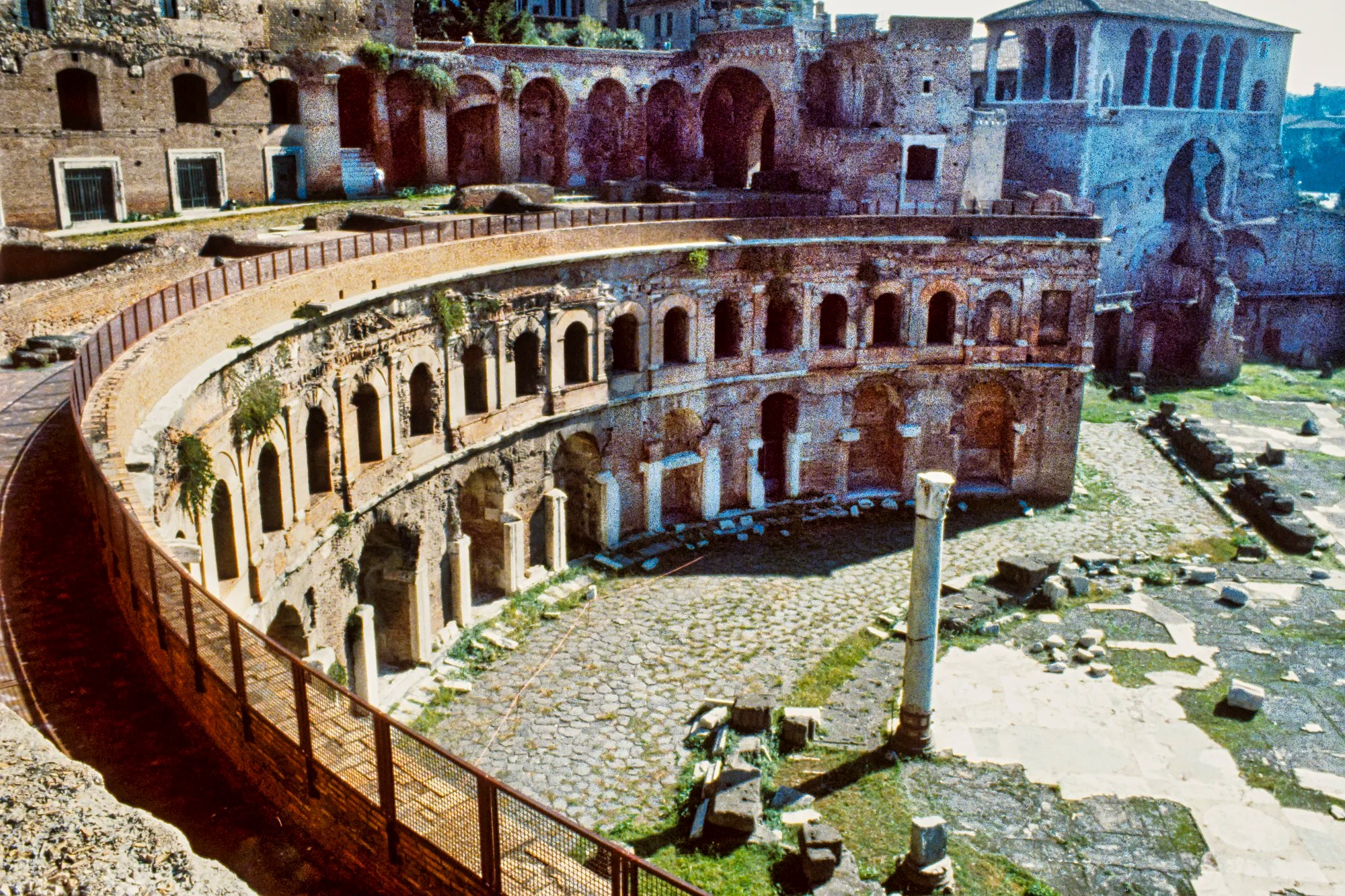
You might want to take a look at Trajan’s Market (open 0930-1930 hrs; cost €15.50). Believe it or not, this was considered one of the wonders of the ancient world in Roman times. It was the world’s first multi-storey shopping centre.
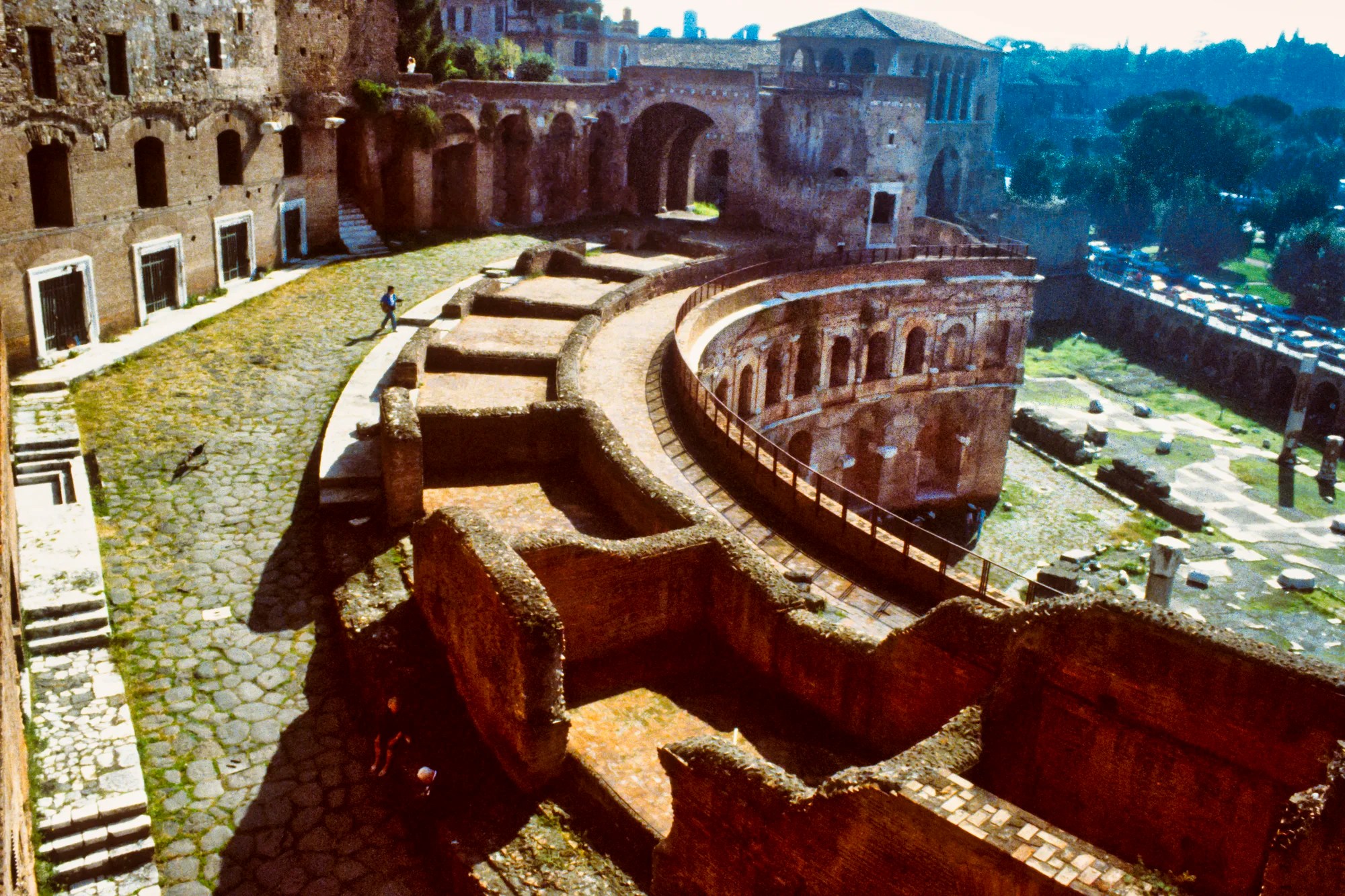
The building had a semi-circular shape consisting of four floors with a third storey outdoor terrace with more shops. Administered by the Prefect of Rome, the market specialized in exotic commodities and famous Rhaetian wines.
In fact, all of the grape varieties we drink today were already being grown and traded by the Germanic tribes to the Romans, the Franks and other tribes. Wine historian Hugh Johnson believes a fifth-century edict forbidding the sale of German wine outside of Roman settlements might have been an incentive for the invasions of Rome and other cities.
Nearby is the medieval Torre delle Milizie (Militia Tower 1241) of the Caetani Family (Pope Boniface VIII).
Trajan’s Column (Colonna Traiana)
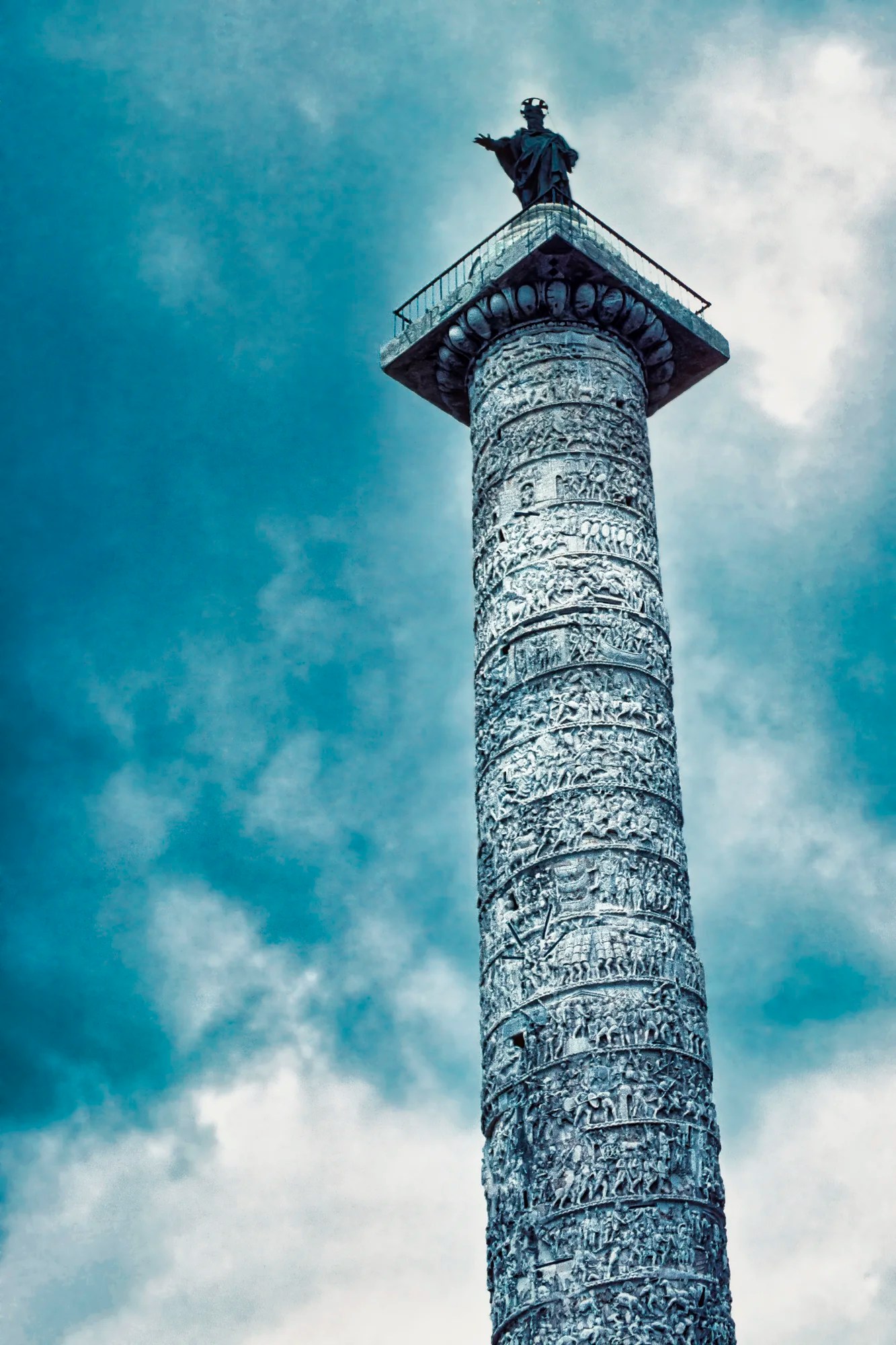
Trajan and his successor Hadrian represent the peak of the Roman Empire. In fact, they stopped waging wars to acquire more territory and instead focused on cultural monuments. Emperors built temples not just in Rome but in the eastern Roman Empire. We stood in awe at the Temple of Trajan on the Pergamon Acropolis in Turkey.
Like all commemorative columns, this one was built to immortalize Trajan’s victories in Dacia (Romania). Think of them as the obelisks of Ancient Rome. The diameter of the column is not uniform. About two-thirds of the way up, the diameter increases slightly to counter the illusion of concavity! Bring binoculars.
You cannot even tell that massive columns like this one are not one piece but actually a series of 20 colossal Carrara marble drums. What is remarkable is not only the quality of the sculpture but also how each scene fits so well with the next drum. Moreover, the frieze is a spiral.
This is probably the best sculpted column ever. We may love natural marble stone today. But in ancient times, all the statues were painted, even in Ancient Greece!! The sculptures on Trajan’s Column were also painted!!
The height of the column represents the height of the hill that was excavated to build Trajan’s Forum! The column was also used to house the ashes of Trajan. A bronze statue of Trajan at the top was replace by one of St. Peter in 1587.
Final Comments
Rome is over-touristed. But we hope you have learned that there are still hidden gems right within the city of Rome. We trust you now understand why the places are significant and how they have had such a great influence on the history and culture of the world.
Subscribe
Please subscribe to Terra Encounters because we offer valuable insights to improve your understanding and enhance your travels. We offer itinerary-based guides packed with the best sights and hidden gems. Let our knowledge help you fully appreciate every moment of your amazing journey.
Get travel tips and advice delivered directly to your inbox. The best part is that it is free.
This was only a taste of Rome. What questions do you have? If you have been to Rome, share your experiences with us. How long is/was your trip?
Itinerary Map & Resources
Roman Itineraries Map — our custom Google Map
What Should You Read about Rome?
Eyewitness Rome, Dorling-Kindersley – has brief information but often some gems about major sights. Their real crown jewels are their “Street by Street” pages where they detail the sights on their attractive 3-D map of a neighbourhood.
The Companion Guide to Rome, Georgina Masson, Collins – is too in-depth for tourists. But it is great for expats and budding archaeologists, and art historians living in Rome.
Google Maps Ratings
Google Maps provides a rating from 0 to 5 for all sights, hotels and restaurants (but not cities). All of our recommendations are appended with the rating (prefixed with a G) from Google Maps. As it is based on feedback from tourists and locals, it is much more reliable than travel booking websites. We consider a score of 4 to 4.39 to be Very Good; 4.4 to 5 to be Excellent.
Rome’s Top 8 Self-Guided Walks
Here are eight itineraries to explore Rome in more detail:
Understanding Italy
The Italy FAQ post answers questions such as:
- When should I go?
- What is the best season for travel?
- Where should I go?
- Can I see everything in a week?
- How much time do I need for Italy?
- How much cash should you take to Italy?
- Should I pay in Euros or my own currency?
- How safe is Italy?
- Should I rent a car? Take a Taxi?
 Terra Encounters
Leave a comment