
Travel Planning Process

Are you worried about planning your own trip? Are you tired of being rushed around like a brood of ducklings? Do you want to save money by travelling independently rather than on a tour? How do you book a vacation? How do you decide where to go? How do you plan the itinerary?
In response to these questions on social media, I thought about the steps that we follow:
Travel Research
- Read blogs and books — Lonely Planet, Moon Handbooks, Rough Guide…
- Discover what places are unique to that country or region — the quintessential places
- Determine your interests
- Identify which places best match your interests
Itinerary Planning
- Determine the length of the trip
- Find places on Google Maps and look up Google rating
- Use one of our custom Google MyMaps or create your own and pin the best points of interest
- Determine the best month to visit — research the weather
- Create an Excel spreadsheet to calculate the travel distance and number of nights at each place
- Ignore Google travel time based on ridiculous 100 kph speed limits on narrow two-lane roads
- Use 75 km per hour to calculate the driving duration — allow time for sightseeing and stops
- Allow at least two nights for every sleepover site/destination
Travel Booking
- Determine the best airfares — research Google Flights and Skyscanner
- Take into account the loss of a day when crossing the International Date Line westbound
- Determine dates and buy air tickets
- Choose the mode of transportation — train, bus, or car
- Book the rental car
- Decide on type of accommodation — palace, hotel, B&B, or hostel
- Use the spreadsheet to identify the best sleepover sites
- Search Agoda, Booking or other website for the best accommodation prices
- Use Google Map Rating for a more reliable and unbiased rating
- Book accommodation in order of itinerary.
Author & Photographer: George Mitchell
Our advice is not influenced by affiliate links – we have none. Our itineraries, photos, and advice are based on travelling three years around the world and living seven years in Europe. We are avid hikers, nature lovers and photographers. We are students of art and architecture, culture and cuisine. Acronyms can be found in the Abbreviation section.
Time Planning
Some itineraries submitted for review on social media tend towards micro-managing one’s time by planning every hour of every day. These plans turn your trip into a rigid, self-imposed tour on a tight schedule. Ironically, they do not allow ample time for each activity and ample travel time between locations.
You must forget about trying to see everything or cramming too much into one day. You should also allow for downtime by including a free day at important places to explore spontaneously or allow for bad weather.
Time Planning Tips
- You cannot just drive to a city or place and think you have seen it. You cannot appreciate a place by doing a drive-by. You need at least two nights to have one full sightseeing day no matter what place you go to.
- You cannot see everything so give that idea up.
- Calculate your travel time by dividing the distance by 75 kph. You need time to stop, walk, and experience.
Night and Day

Tourists get confused between night and day. Our rule of thumb is that important places need 3 sightseeing days. But that means you need to book 4 nights’ accommodation. You cannot include your travel day to a destination as a sightseeing day.
If you fly, bus or sail between cities that travel day is a write-off. Even if the flight is less than two hours you need two hours of check-in time, airport transfer time, and hotel check-in/check-out time. The ferry between North Island (NI) and South Island (SI) of New Zealand is more than just 3.5 hours of sailing time. So the more internal travel you do, the fewer sightseeing days you will have. However, if you are driving you see places along the way.
Trip Duration
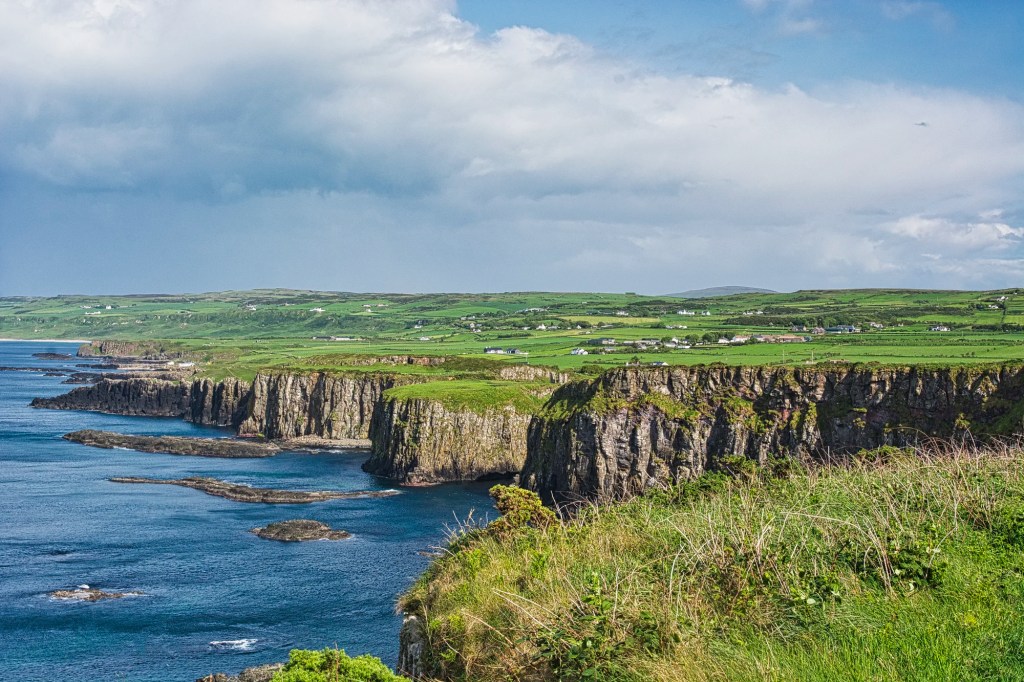
Finally, you need to know how long your trip will take. If you are spending a lot of money travelling around the world, then you want to take as much time as you can afford to visit there. This does not apply to people only 3 or 4 hours away. For everyone else, please spend at least a full two weeks (16 days) in Ireland or NZ. Anything less should be declared a crime.
If you are from Europe or Asia, you cannot expect to see all of Canada or all of the USA – even if you have four weeks. All of Western Europe fits inside Eastern Canada. You have to limit your itinerary to one region of a mega-country.
Accommodation Planning

The main reason to plan your itinerary is to determine how many nights you need to book at each place. That’s it. You only need to determine how many days each place deserves. You do not need to plan by hour.
Another common mistake is to book a new sleepover place every night. This is often used by our avid birder son who goes from one birding hot spot to another. North Americans frequently drive from one scenic spot to another. This is “drive-by tourism”. You get your Instagram photo shot and drive on.
You will not have time to get to know or experience the places you are seeing. You cannot enjoy activities such as hiking or visiting museums. You spend the day getting from A to B but then don’t have enough time to spend at B to enjoy it.
Can you see all of Italy or the UK in two weeks? Definitely not! In two weeks, you should not expect to see all of New Zealand, which is the same size as Italy or the UK. Even though Ireland is much smaller, you cannot see all of Ireland in two weeks.
Home Base
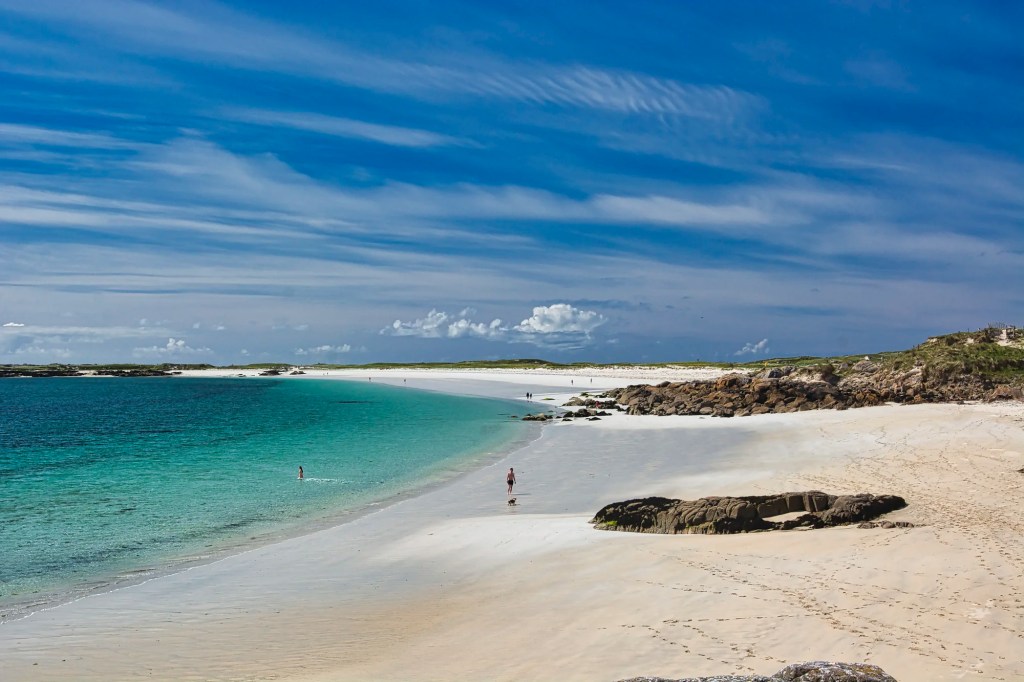
No, you cannot go to one town and commute to every part of the country. Can you see all of Italy from Rome? No! So you cannot expect to stay in one place and see all of the UK, NZ, Vietnam, Arizona, or Colorado — each is about the same size as Italy.
However, you can use some towns to commute to different sights that are very close by. This allows greater flexibility to adjust what you do according to the weather. Rotorua NZ and Galway Ireland are examples of an excellent base for day trips.
Destination Planning
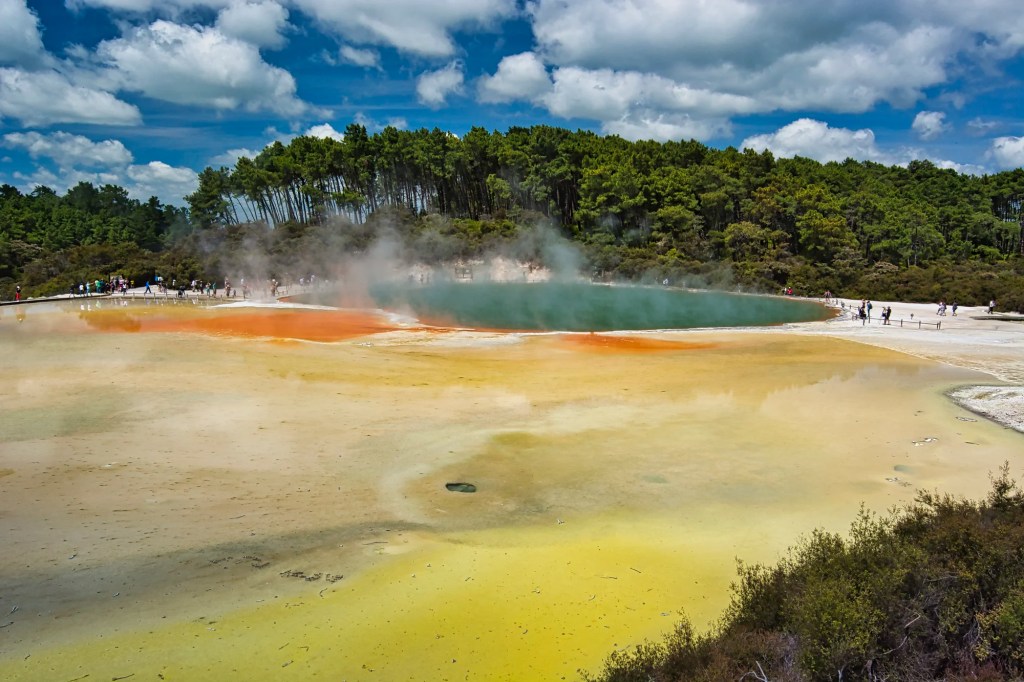
Where you choose to go depends on your interests, desired activities and mode of transportation. Give up on the idea of seeing everything. You will need to make choices and especially prioritize the places you most want to see. Your choices will be different from our choices. You may have never seen thermal areas and volcanoes.
All points of interest are shown on our custom Google maps. Their names are appended with their Google Maps Ratings from G0 to G5. Must-sees are places with the highest Google Map Rating >= 4.4 out of 5. Compare places, restaurants, and hotels using this rating to prioritize the places to visit.
In our philosophy, we do not travel to do the things we can do at home, or eat the things we can eat at home. We travel to see things that are unique to that country. For instance, thermal areas are unique to New Zealand. You need to research to find out what makes each country special. We have done that research for you and our itineraries travel to the places that make that country unique.
Mode of Transportation

For a city trip travelling by bus or train is more economical. Parking is expensive and difficult to find in Europe. But if you are visiting wilderness areas in Canada, the USA, or the South Island (New Zealand), then a car is essential.
What Tools Do We Use?
The following are the desktop tools that we use:
Excel Spreadsheet
We use an Excel spreadsheet to calculate the number of nights for each accommodation before we book individual places.
Google My Maps
The Google My Maps tool is a separate link (URL) from Google Maps. We use My Maps to create custom Google Maps. You are allowed only 10 layers — usually one layer is for sights and accommodation and the other nine layers are for road segments (for distance and time).
What do you do if you are planning a trip to multiple regions? Some examples are both North and South Islands in New Zealand or multiple provinces across Canada. We create separate maps for each region.
Mobile Apps for Travel
The free mobile apps that we use before and while travelling include:
Agoda or Booking for accommodation. BTW, they are both owned by the same parent company.
AllTrails for hiking trails
Compass for a cell phone compass
Google Flights to find cheap airfares
Skyscanner to find cheap airfares
Google My Maps to display your planned itinerary
Lonely Planet website
Moon Publications website
Photoshop Express to edit cell phone photos
PictureThis to identify trees and flowers
Rome2Rio to find local transportation options, costs, and travel times
Units Plus to convert Metric to English measurement system
XE App for currency conversion
Final Comments on Travel Planning
You should feel confident that you can plan and book your own trip. You do not have to use a travel agent or book a tour to have a great time. If you do then your travel costs will be higher and the trip will be based on the interests and experiences of other people. Tours are geared toward seeing the most touristy places, not necessarily the places that are unique to that country.
Do you want more information? Then subscribe for free.
If you have any planning tips, share your experiences with us. How long is your trip? What questions do you have?
Google Maps Ratings
Google Maps provides a rating from 0 to 5 for all sights, hotels, and restaurants (but not cities). Our recommendations are appended with the rating (prefixed with a G) from Google Maps. Google Ratings are based on feedback from locals as well as tourists. They are much more reliable than travel booking websites or tourist anecdotes. We consider a score of 4 to 4.39 to be Very Good and 4.4 to 5 to be Excellent.
Abbreviations
asl = above sea level
Max Elev = Maximum Elevation above sea level
NP = National Park
OW = One Way
RT = Round Trip
USD = United States Dollar
 Terra Encounters
Leave a comment