
Why You Should Visit the Vatican Museums
The Vintage Vatican walk takes you through one of the world’s most incredible museum collections, covering every vintage era. You could definitely spend a full day here. Be prepared for a very long walk.
Our self-guided walk does not just list the must-sees but also explains why you should see them and perhaps learn a bit about the art you are seeing.
Author & Photographer: George Mitchell

Our recommendations are not influenced by affiliate links – we have none. Our advice is derived from our personal experience and knowledge based on living in Rome for four years and studying its art, architecture, and culture. All the places recommended in this post are pinned on our Roman Itineraries Map. The place names are appended with the Google Maps Rating (G0 to G5).
Musei Vaticani – Vatican Museums
Hop a bus or the Metro to the Ottaviano (Octavian) stop. The Roma Pass does NOT include the Vatican Museums, which cost €17 without booking at the Vatican itself. Online booking services charge €27 or €50 for early access, one hour before the museum opens! The museums are free on the last Sunday of each month. The visiting hours are Mon-Sat 0900 to 1800 h and Sun 0900 to 1400 h. You must enter 2 hours before closure. Try to get in first thing in the morning.
Buy a Vatican Museums guidebook, especially if you want photos to remind you what you saw. The collection is so big do not expect to see it all. They do not use the plural on museums lightly. You will be successful just to see the vintage highlights in this itinerary.
Museo Pio-Clementino
Cortile Ottagono – Octagonal Court
The Octagonal Court is one of your top three destinations in the Vatican Museums. This is where Pope Julius II placed his collection from his cardinal’s palace at San Pietro in Vincoli in Hidden Gems Walk 5. The court contains four of the most magnificent statues in the collection.
Apollo Statue
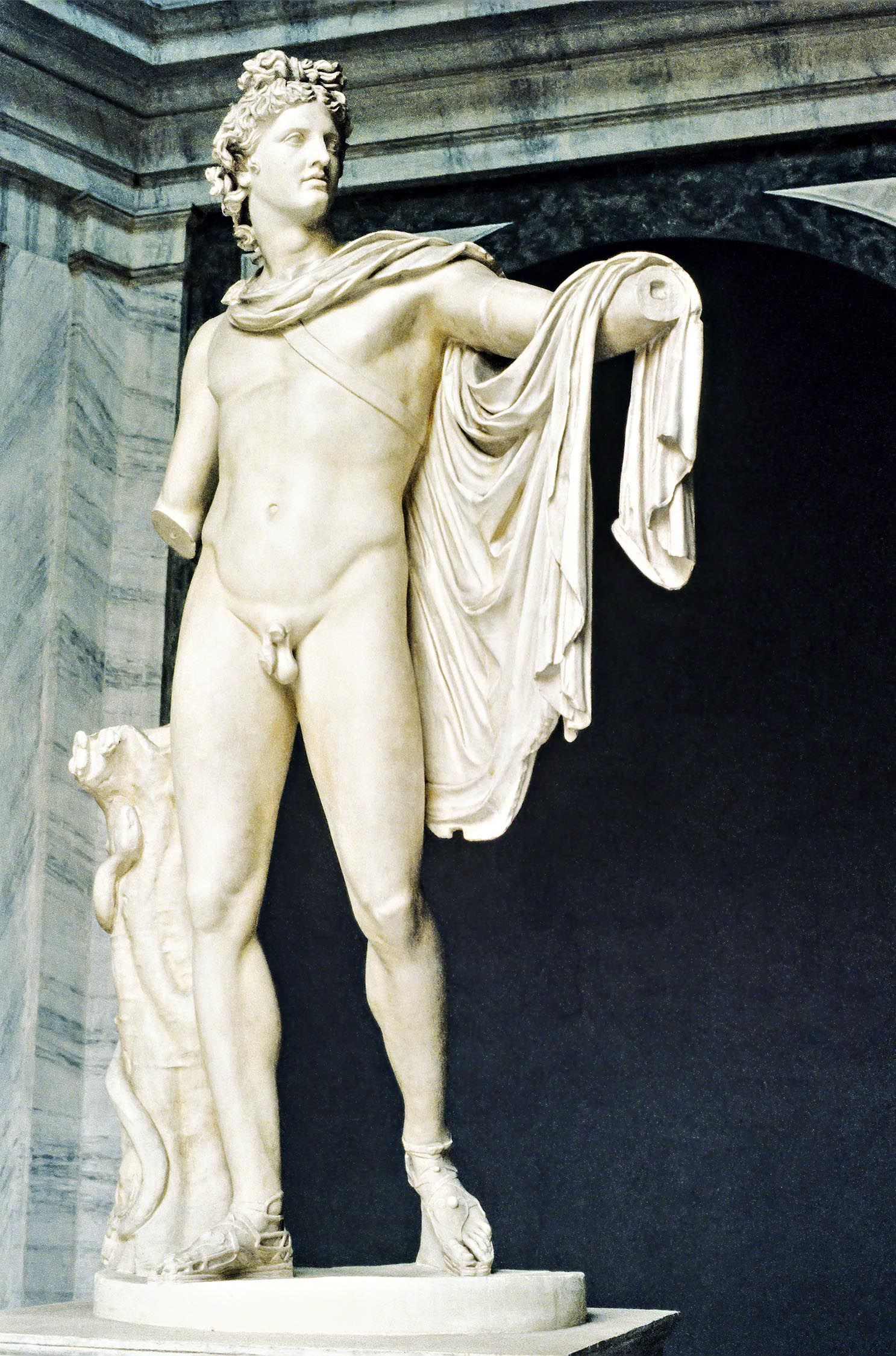
Apollo is the god of music, poetry, art, oracles, archery, plague, medicine, sun, light and knowledge. Wow, what does he not do! Well, he is the sun god and was one of the most revered gods in the Greek and Roman pantheons. In fact, this means the cult of Sol Invictus (invincible sun) is related to Apollo.
This cult celebrated the winter solstice as the rebirth of the sun on December 25th. The big week-long party is already familiar to all of us since the Festival of Saturnalia is now called Christmas. See the Discover the Secrets of Ancient Rome walk. The spikes on the Statue of Liberty are sun rays and are related to the crown worn by Apollo or Mithras in Proto-Indo-European religions.
In this Roman copy statue (140 AD), Apollo’s head sports a laurel wreath, a symbol of victory and honour. Apollo started this custom of awarding laurels to victorious generals and Olympic athletes because his love interest Daphne transformed into a laurel tree. Read the story under Bernini’s Apollo and Daphne statue in Amazing Rome — Best Baroque Blowout Walk 6.
Note the elaborate folds in the cape, the radiant, unblemished face, and the contrapposto pose. This is not the muscular image with visible veins of Michelangelo’s David or Moses. This is an idealized image of athletic youth. It was admired and sketched by many artists over the years. It dominated aesthetics and influenced art for centuries. This statue was the basis for Bernini’s Apollo in the Galleria Borghese and Michelangelo’s Christ in The Last Judgement below.
Taken from the Athens Agora (forum), this statue became part of the classical collection in San Pietro in Vincoli. Born into the wealthy della Rovere family, Cardinal Giuliano started this collection and later became Pope Julius II, famous for the Sistine Chapel and the Raphael Stanze. What you may not know is that he moved this collection to this very location and founded the Musei Vaticani. Thank you, Papa Giuliano, for this incredible gift.
Belvedere Torso
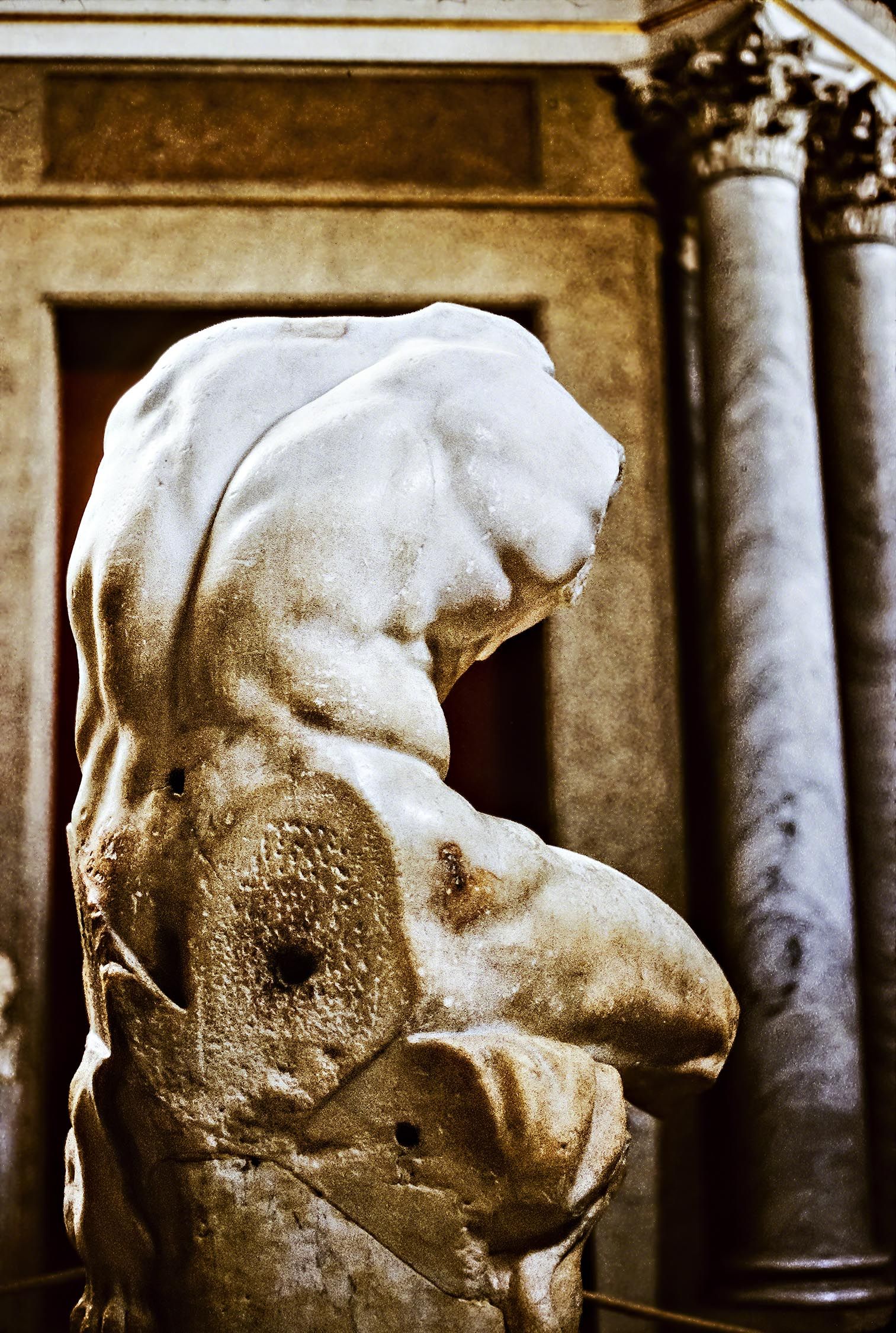
It’s just a fragment without any limbs. You would probably just bypass this torso, a Roman copy of a 1st-century BC original. But Michelangelo spent hours examining this statue and called it “his teacher”. The torso earned the sobriquet “the School of Michelangelo”. It is believed to be the Greek hero Ajax, whom you will meet in the Etruscan Museum below.
Be sure to look at the back. You can see this contorted pose in Michelangelo’s sculptures like the slaves in The Tomb of Julius II or his paintings of Sibyls and Prophets in the Sistine Chapel ceiling and in Christ in the Last Judgement below.
Laocoön Statue
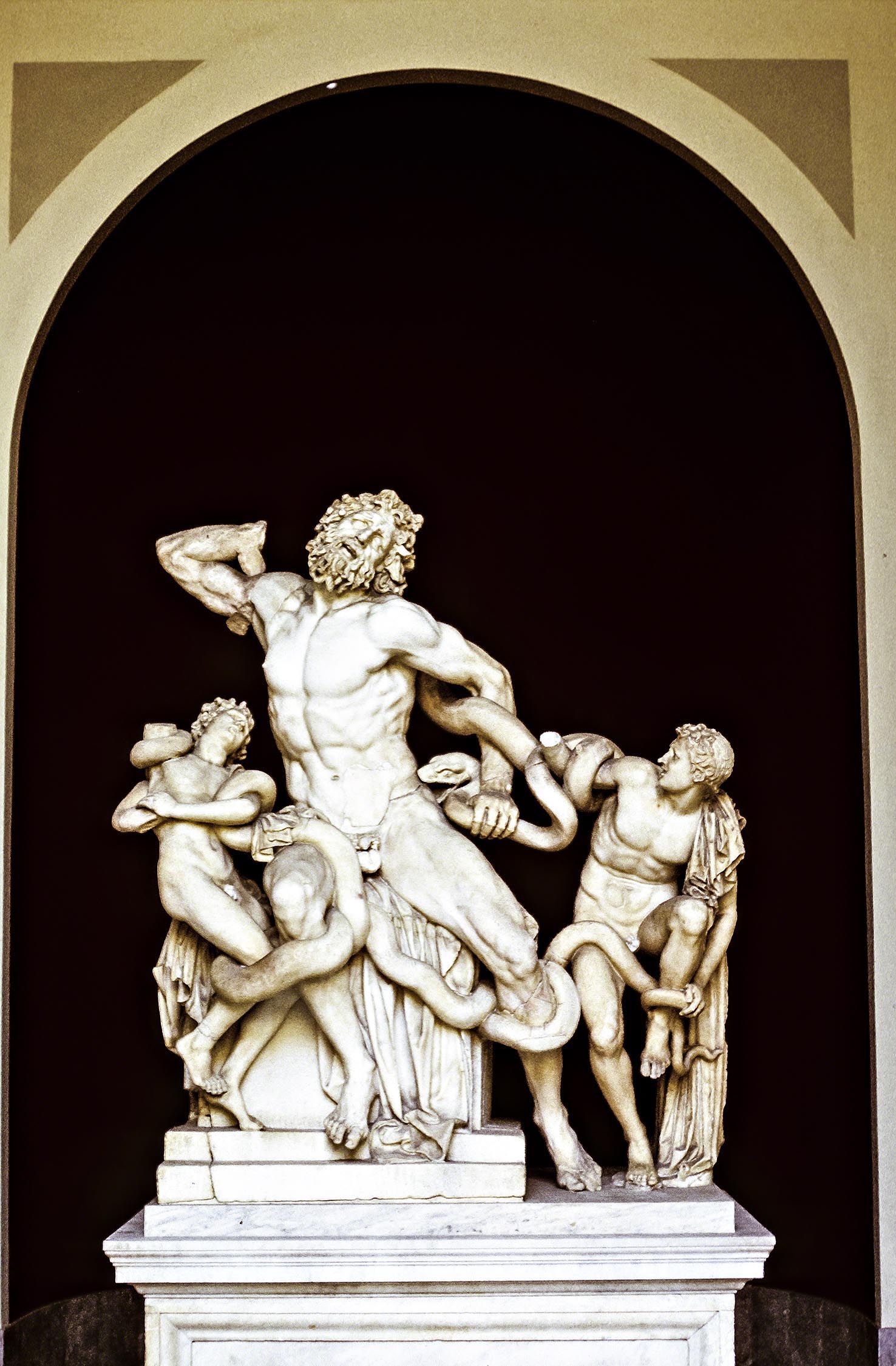
This might be the most famous sculpture in all of the museums. It was used by many artists as the model for depicting agony in various art works, especially in images of the crucifixion of Christ.
Found in 1506, Michelangelo and Sangallo were there just after this statue was unearthed and recognized it from the description of Pliny the Elder. BTW, Pliny died in a rescue attempt during the eruption of Vesuvius in 79 AD. The Ancient Romans had no experience with the dangers of volcanic eruptions. It was 100,000 times the energy of the Hiroshima and Nagasaki bombs. Pope Julius II was told what they had found, and he bought and added it to the Vatican Museums.
Hermes Statue
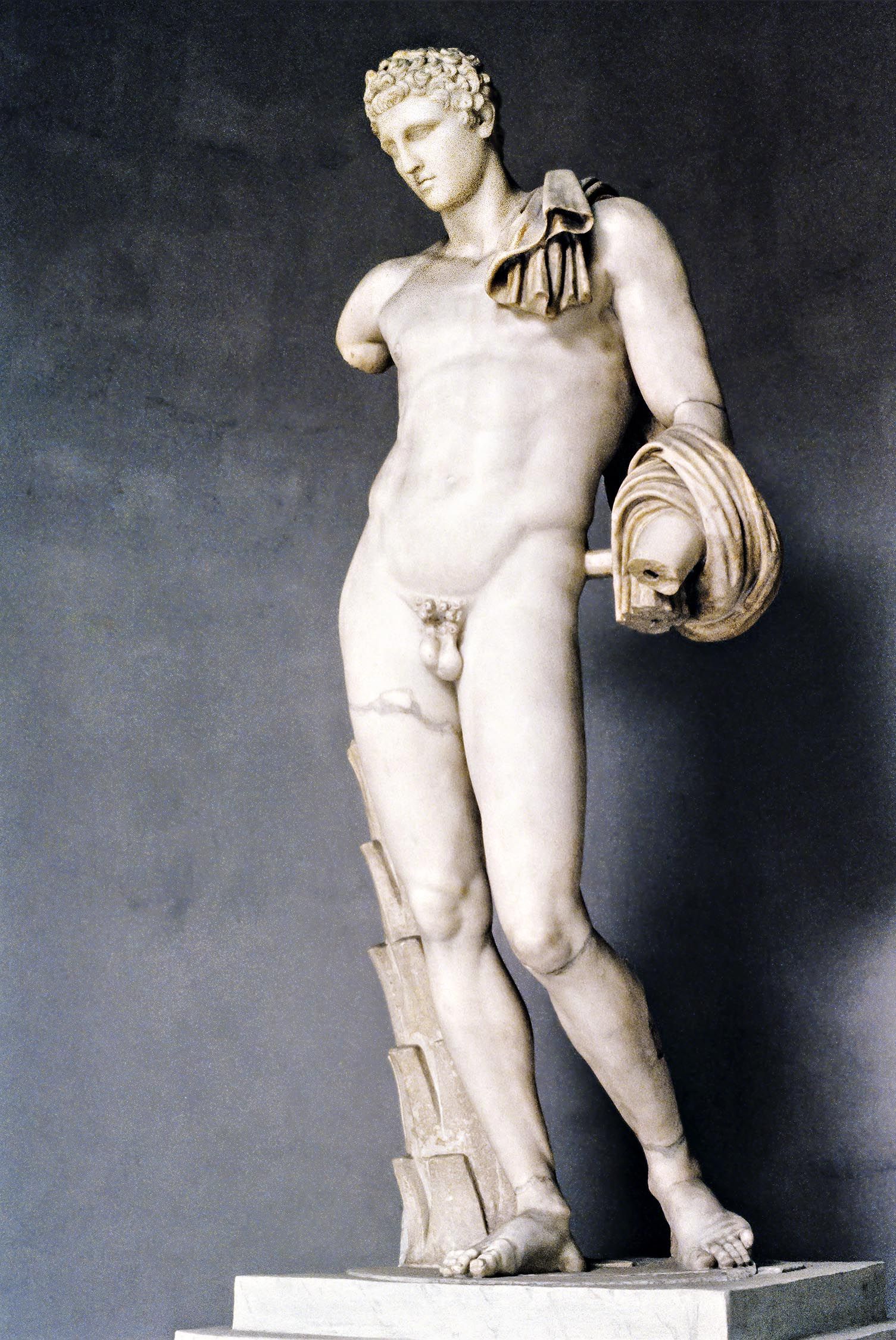
This statue was found in a garden near Castel Sant’Angelo in 1543. It was highly regarded for showing the ideal proportions of the human form. It’s believed to be a Hadrian-era Roman copy of a Greek bronze original. Talaria (winged sandals) and caduceus (herald’s staff with two entwined snakes) usually indicate that it is the messenger god Hermes (Greek) or Mercury (Roman). Both of these are missing in this statue. Hermes is the god of commerce and communications, borders and travellers. From the Latin word merx, we get the English words merchandise and merchant. The Proto-Indo-European root word merg meant border.
Cortile della Pigna
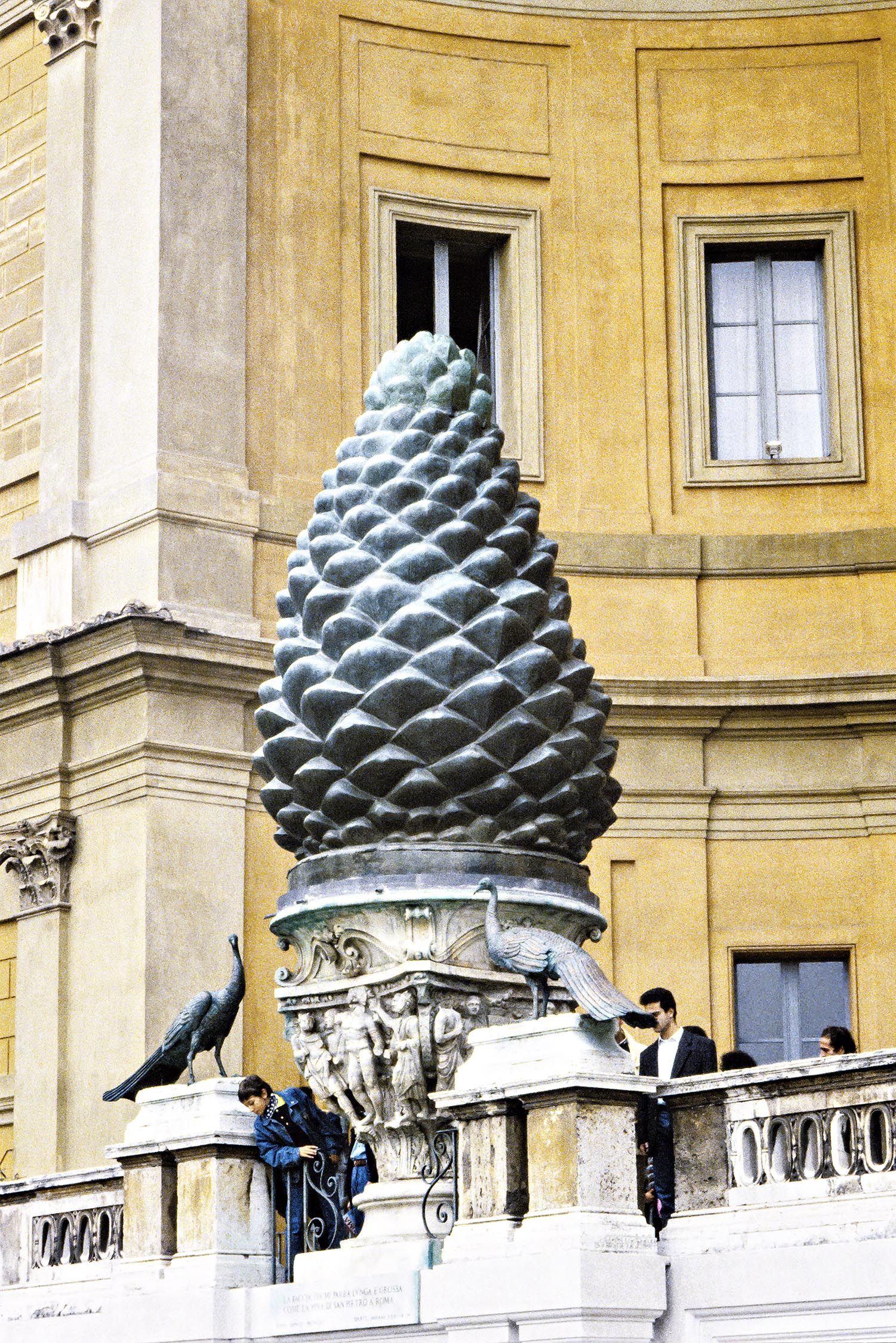
The Pine (Pigna) Cone Courtyard contains a 4 m (13 ft) high pine cone proudly standing like a statue on a pedestal. The bronze pine cone, dating to the 1st century BC, was found near the Pantheon around the Baths of Agrippa (the general, architect and son-in-law to Emperor Augustus). It is hard to believe that this pine cone was once a giant fountain with water dripping down its scales.
Sala Rotunda
Hercules Statue
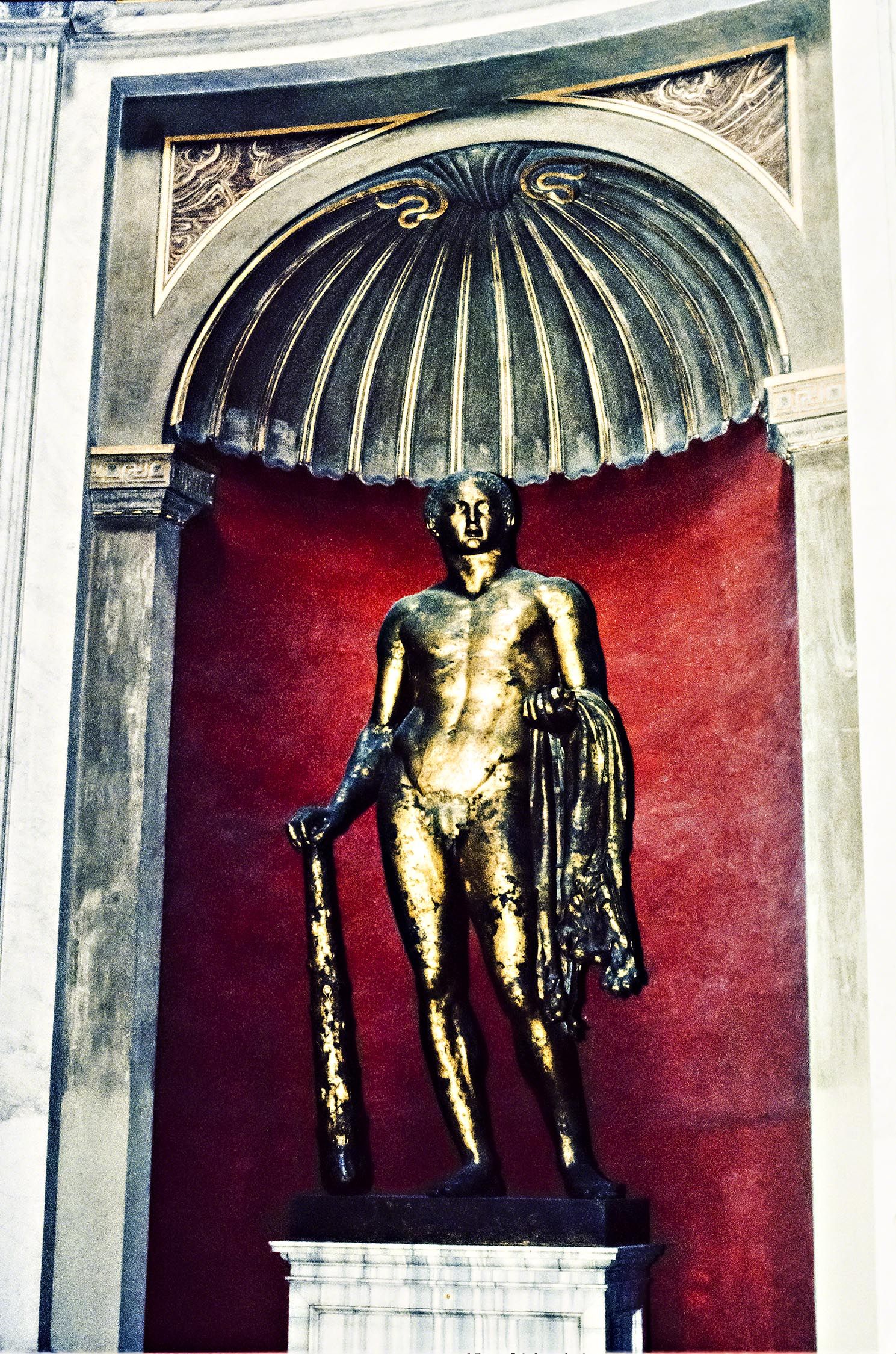
Be sure to enjoy the gilded bronze Hercules holding a club, the golden apples he “stole,” and the skin of the Nemean lion he killed. These are two of the 12 labours he had to perform for the king to atone for his sins.
Silenus and Dionysus Statue
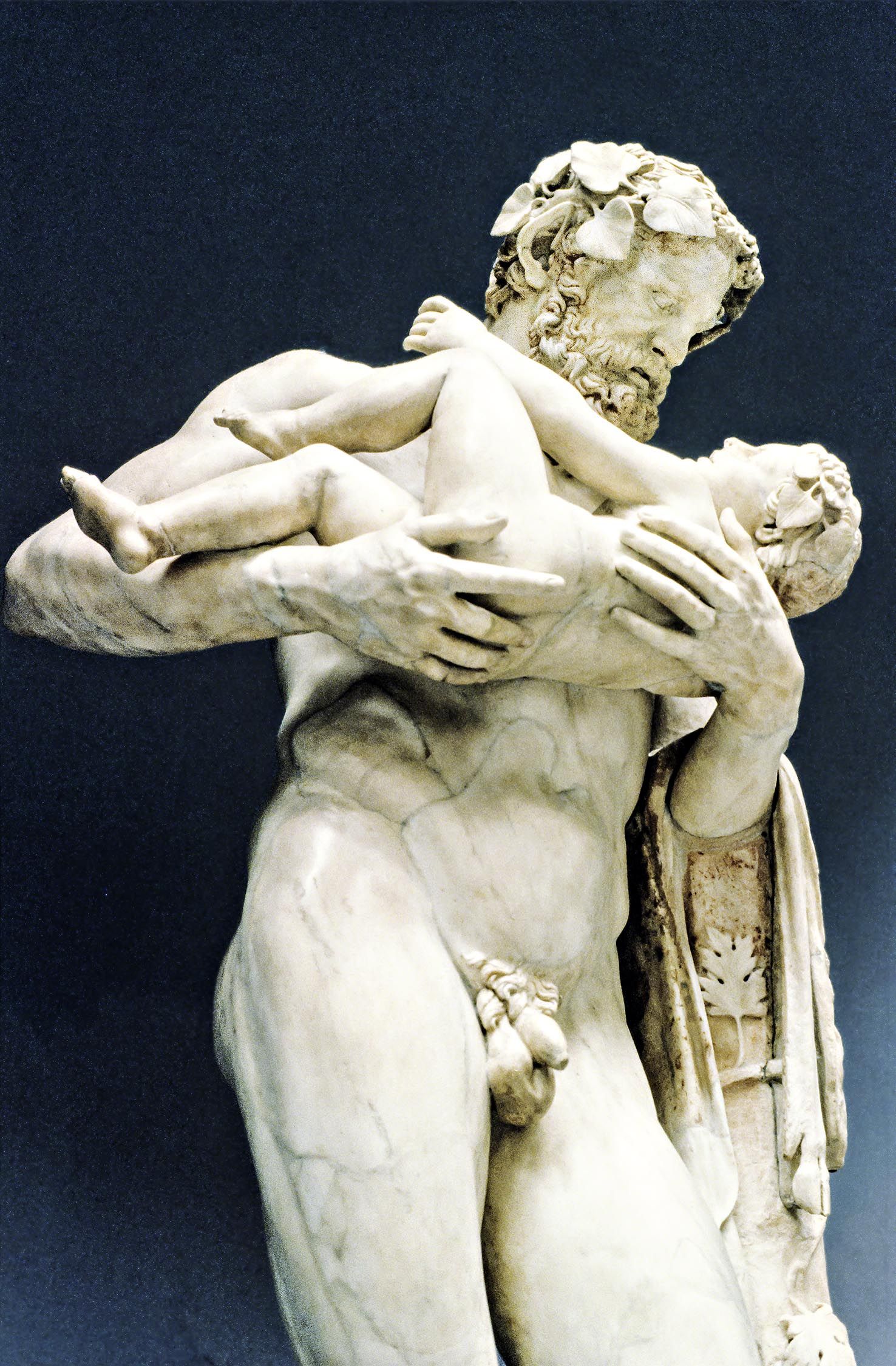
At first glance, the statue of an infant looks like a father and son. Wrong! Silenus was a companion and tutor of the infant Dionysus, the god of wine. Silenus is a minor god of wine making and drunkenness! The two of them definitely go together. This is a Roman copy of a famous Lysippus statue of 360 BC.
Museo Chiaramonti
Augustus of Prima Porta
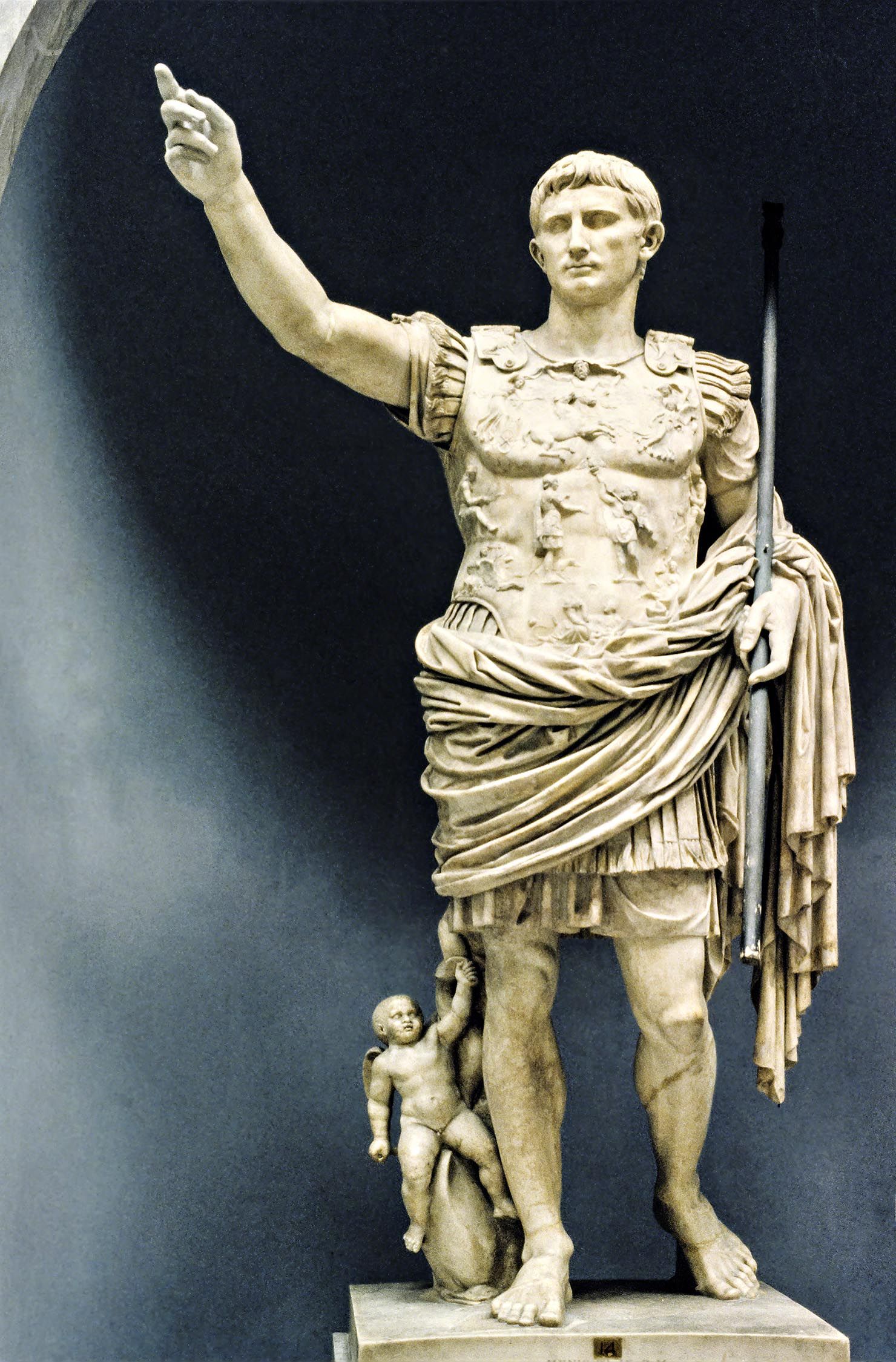
Discovered at Prima Porta (first gate) in 1863 in the ruins of Villa Livia, Augustus’ second wife. The perfectly preserved statue symbolizes power. His idealized body and face symbolize youth and strength. These traits were valued as signs of leadership and indeed, imply a divine leader.
The statue was adapted from Doryphoros (Spear-Bearer), with its contrast between tense and relaxed limbs. The contrapposto stance is a typical feature of classical sculpture.
The drapery looks so real that you can feel the folds. The whole statue was originally painted, predominantly in red! In fact, all classical sculptures were painted. The Greeks thought of their gods in colour. The paint provided their clothing. And here we thought the Ancients always sculpted nudes!!
But it is the breastplate that grabs your attention with its unique bas reliefs. The Parthian Empire (247 BC–224 AD) was the major Persian political power in ancient Iran and Iraq. The Parthians soundly defeated Marcus Crassus in 53 BC and captured the Levant in 39 BC. The Romans never defeated the Persians but had continual skirmishes.
Augustus had been deterred by Parthian military strength from a war that the Roman people had expected and had instead opted for diplomacy. The breastplate is Augustan propaganda showing the surrender of the standard lost to the Parthians in the Battle of Crassus. Augustus saw himself more as a prince of peace, who founded the concept of Pax Romana.
Etruscan Museum
Etruscan Fibula
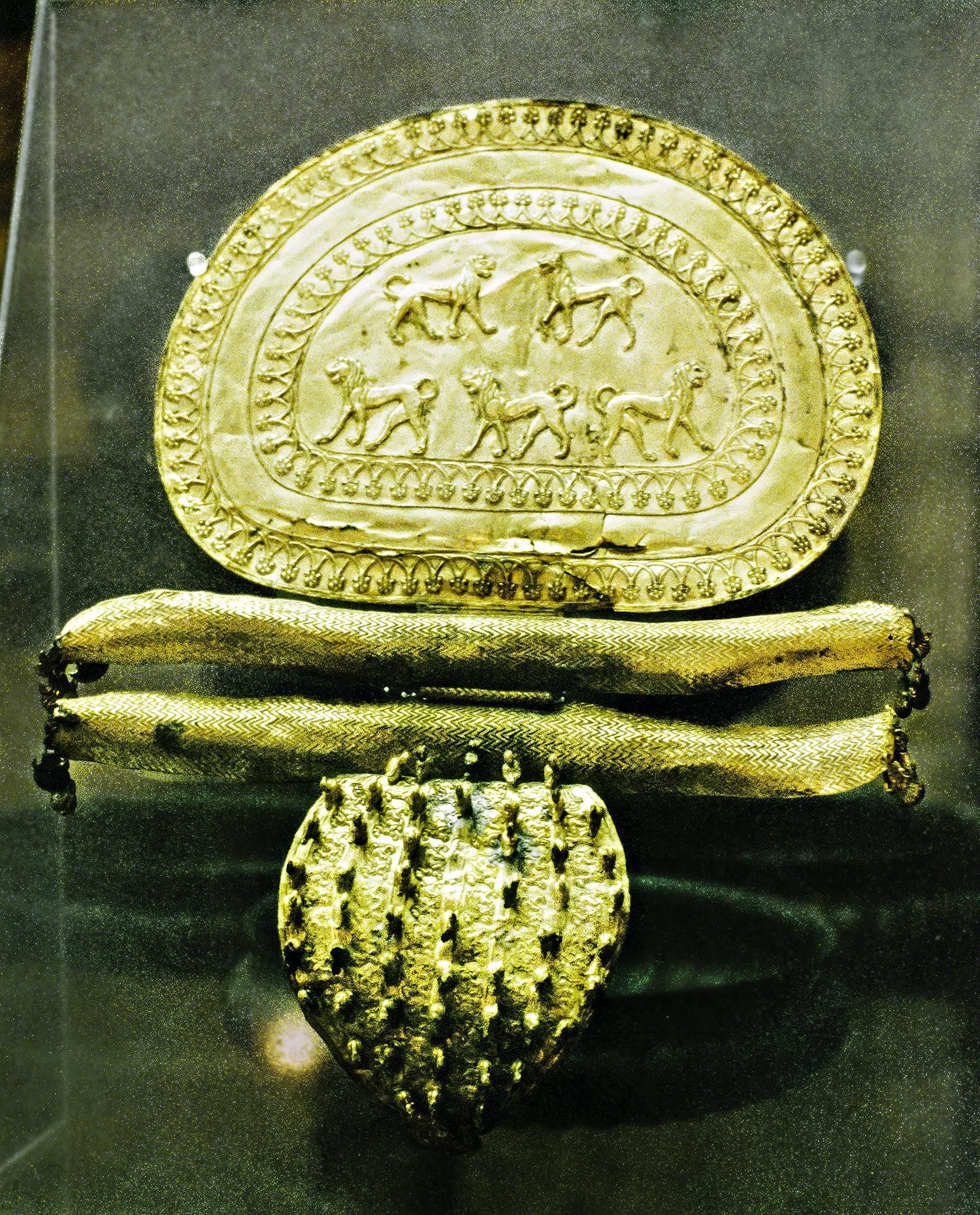
Room II has a gorgeous gold Etruscan fibula from the 7th century BC. A fibula is a brooch for fastening garments, similar to a safety-pin. The Etruscans had a major influence on Ancient Rome. Read more about them in Sweet 17 Best Places North of Rome. The province of Tuscany was named after them.
Black on Gold Greek Amphora
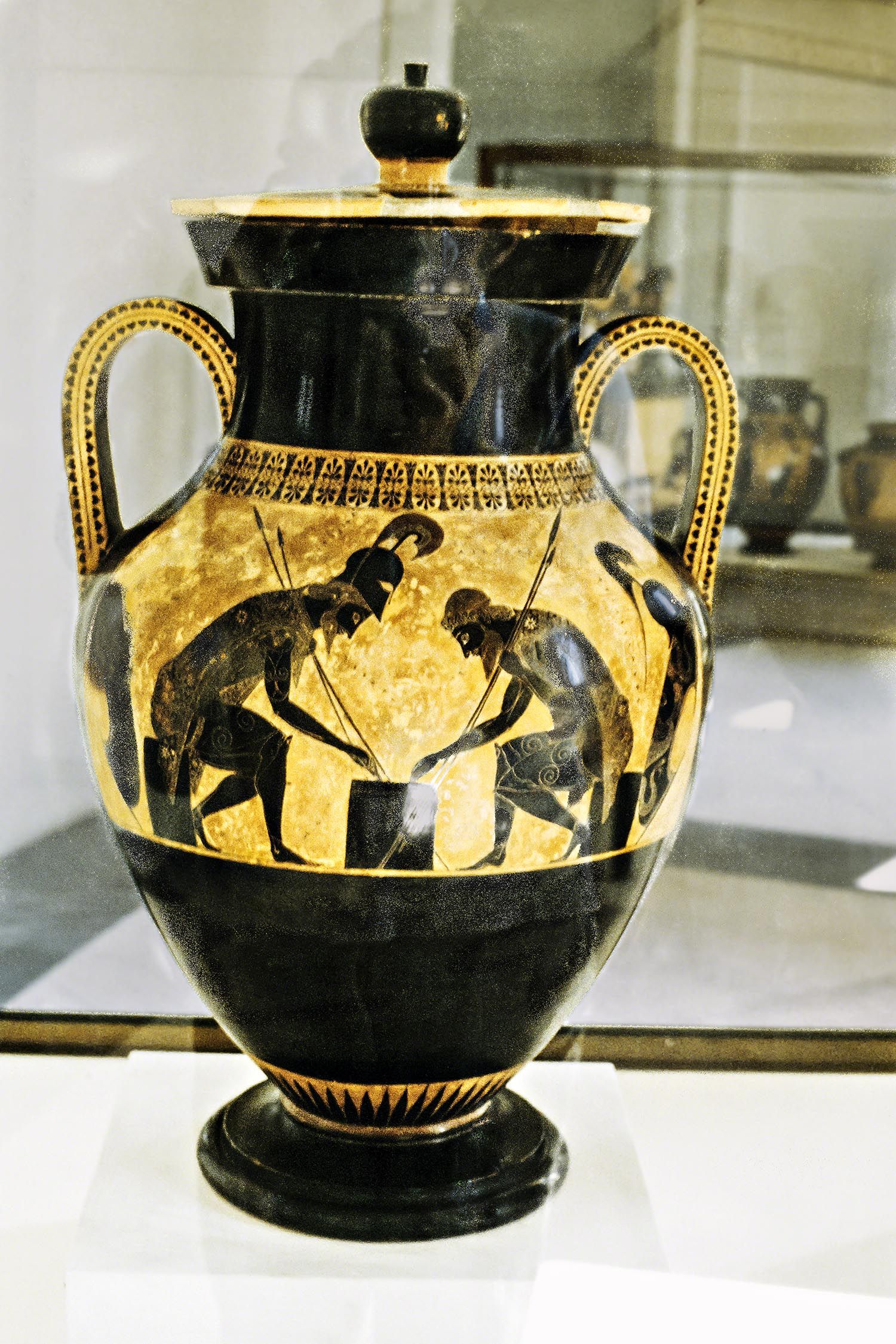
Room XIII has a gorgeous black on gold Greek amphora (vase) that was painted in 530 BC. Why are Greek vases in an Etruscan collection? These Greek vases were found in Etruscan necropolises.
This vase shows Achilles playing morra with Ajax. They were Greek heroes of the Trojan War and the central characters of Homer’s Iliad. Achilles, the greatest warrior, had only one weakness. He was killed by an arrow to his heel. Ever since then, the term Achilles’ heel has come to mean a point of weakness.
Room of the Biga
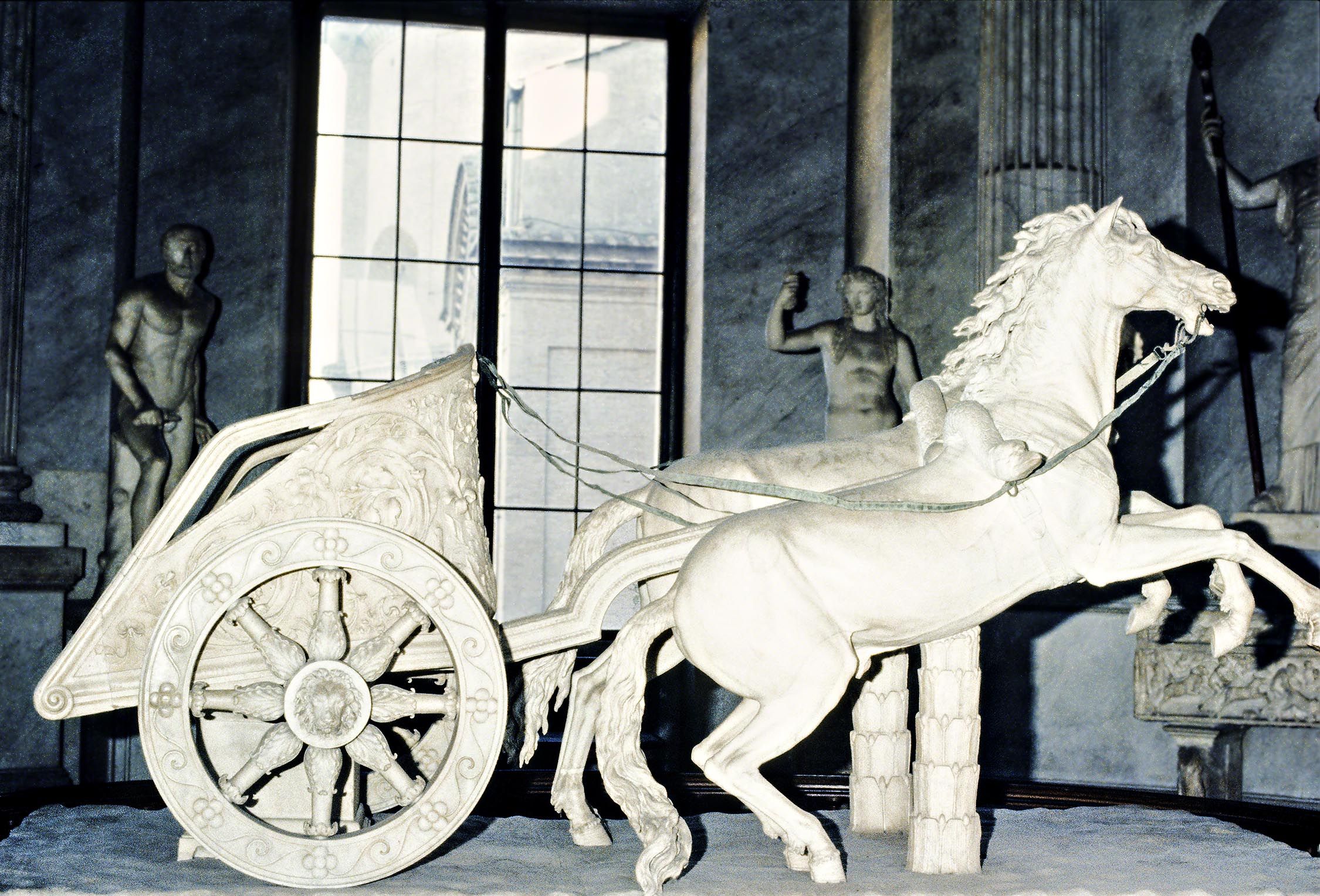
A massive chariot (biga) drawn by two horses is the centrepiece of this late 18th century room. It dates from the 1st century AD but was heavily restored in 1788. The significance of chariots originates with its use in warfare and racing by the Indo-European tribes that became the Greeks and Romans.
Stanze di Raffaello – Raphael Rooms
Raffaello is another of the top artists that is known by his first name alone. How many of you know that his last name is Sanzio? The Stanze di Raffaello contain what are considered Raphael’s greatest paintings. The rooms were built for Pope Julius II.
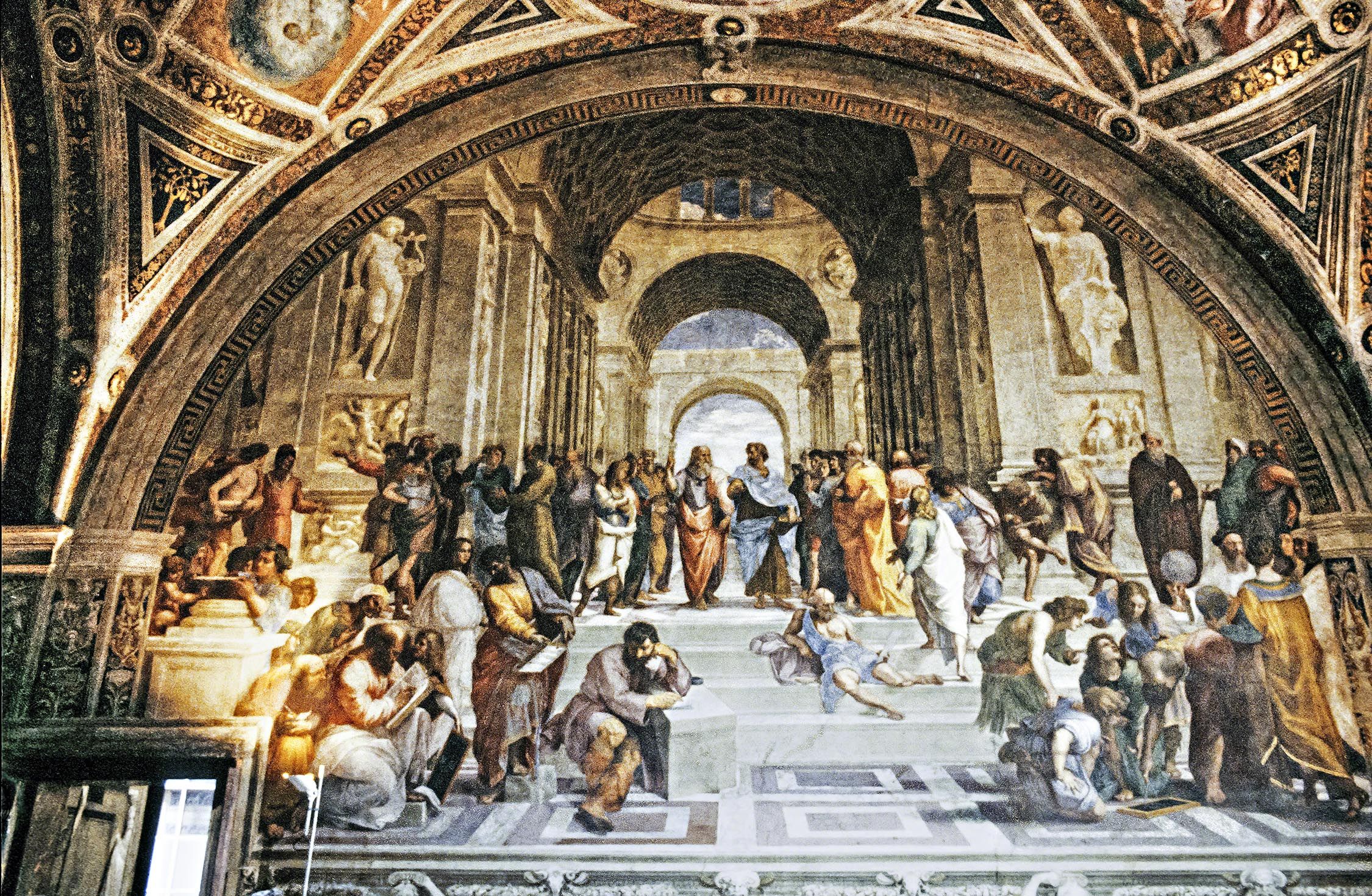
Scuola di Atene (School of Athens 1509-1511) is one of the most famous frescoes of the Renaissance. It illustrates the triumph of scientific truth.
What is evident is Raphael’s artistry in orchestrating a beautiful space, continuous with that of viewers in the Stanza. It is like a school reunion where the best philosophers and scientists from different places and times all gather together to talk, make dramatic non-verbal gestures or pensively focus on their thoughts. The blend of colour, architecture, people, and theme creates harmony and unity.
As neither the viewer nor Raphael knew what these people looked like, he had to include artifacts that would hint at who they are. So a man drawing on a board with a compass is Euclid, but his face is famous Renaissance architect and Raphael’s mentor, Bramante. The architecture of the building that dominates the painting was inspired by the work of Bramante.
In the center of the fresco, at its central vanishing point, are the two undisputed main subjects: on the left, Plato has Leonardo Da Vinci’s face and points upwards to the heavens. On the right is Aristotle holding his Ethics book and making a forceful gesture forward while interacting with Plato. The dramatic grouping of figures and gestures is a direct influence of Michelangelo. In the prominent foreground, sitting on the step,s resting his head on his arm, is the philosopher Heraclitus, who has Michelangelo’s face.
The main arch shows a meander (never ending pattern), which had a mystical meaning to ancient civilizations. This design was used on the edges of Ancient Greek pottery as well as the friezes of Ancient Greek temples. The barrel vault and spatial grandeur bring to a climax the dramatic innovation started by Masaccio that kicked off the Renaissance.
Sistine Chapel
This Chapel is named after Pope Sixtus IV della Rovere who had it built in 1480. This was part of the Apostolic Palace and was used for centuries as the conclave that elects the next Pope. You won’t see much of the inlaid marble Cosmati floor with all the tourists crowding inside. Everyone is craning their necks to see the ceiling. But the first impression is of the walls totally covered in frescoes by all the most famous Italian painters. The colour and busyness are overwhelming.
The subject matter may be ancient, but one thing you should notice is that artists paint the figures in costumes of their own period and often make allusions to current people and events. So the panel showing the pharaoh being drowned in the Red Sea actually alludes to the papal victory of Campomorto in 1482 and uses portraits of nobility for the figures. Another thing to notice is that the artists place famous Roman landmarks like the Arch of Constantine into the painting as if the biblical scene took place in Italy. This was probably done so that the people can relate to these biblical events.
Michelangelo 10 Bramante 0
Originally the ceiling was all gold stars on a blue background. Supposedly the famous architect Bramante was jealous of the success of Michelangelo. He recommended to the Pope to hire Michelangelo to redo the ceiling. Did Bramante think he would fail? Maybe he thought he would refuse.
Michelangelo had spent six months in Carrara selecting and buying marble for the Tomb of Julius II. He finished carving Moses and had started on some of the slaves. He was then commanded to stop and work on the Sistine Chapel instead. He came to the Vatican to get payment for the unused marble and was kicked out by a lackey. He fled in disgust to his home in Tuscany. He had to be basically forced to return to meet the Pope. I guess you cannot refuse the Pope, so he accepted the ceiling contract.
Michelangelo’s Frescoes
Michelangelo hired some assistants because he did not know how to paint frescoes. In just four years, one person painted an area larger than the wall frescoes. All the scenes are from Genesis. The nude figures and trompe l’oeil architecture unify and link all the scenes.
The Creation of Adam Fresco
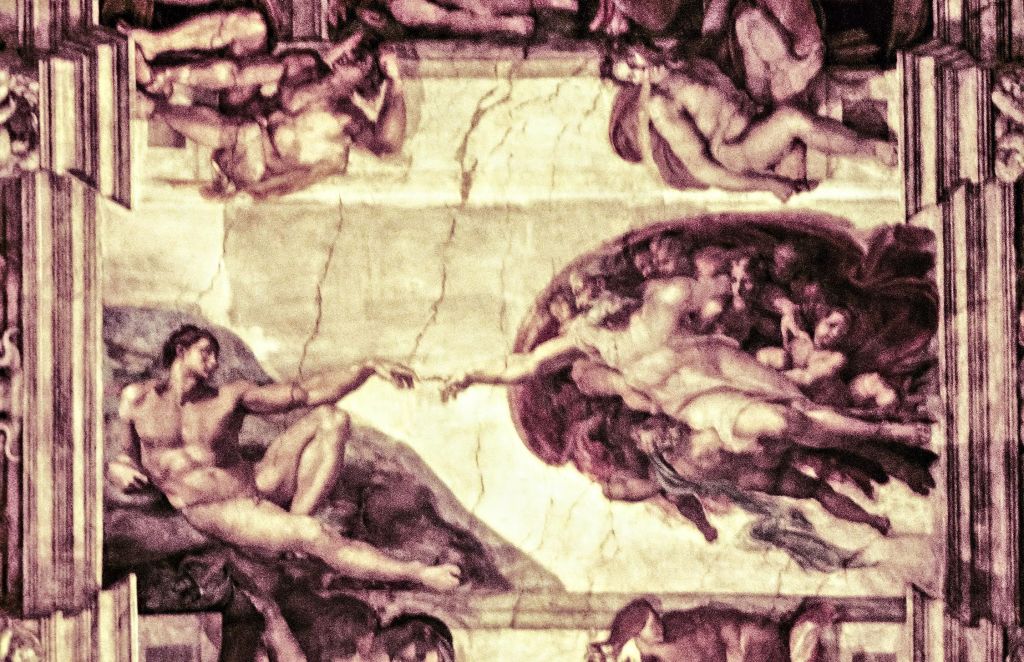
In The Creation of Adam, Adam looks like a sculpture in paint. He feels substantial and muscular. But the pièce de resistance of The Creation is the interaction and proximity with God, who is floating in the sky, a harbinger of Baroque motion through space. But most incredible is the famous gesture of God pointing a finger to bring the spark of life to Adam. This is a gesture that was often copied by other artists. BTW, this photo was taken before the centuries of smoke affected the colour of the frescoes. The one below shows the true colours after the restoration.
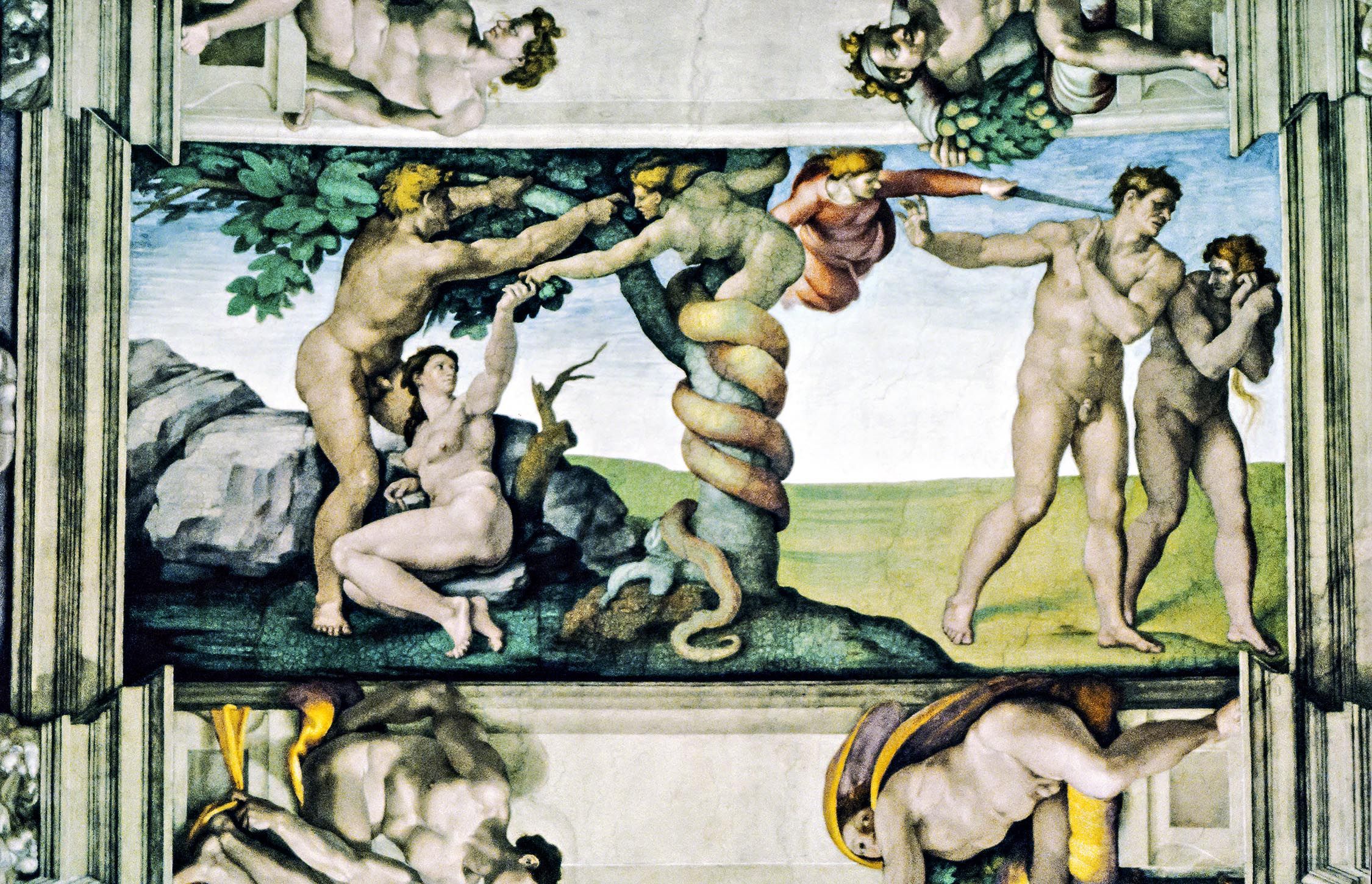
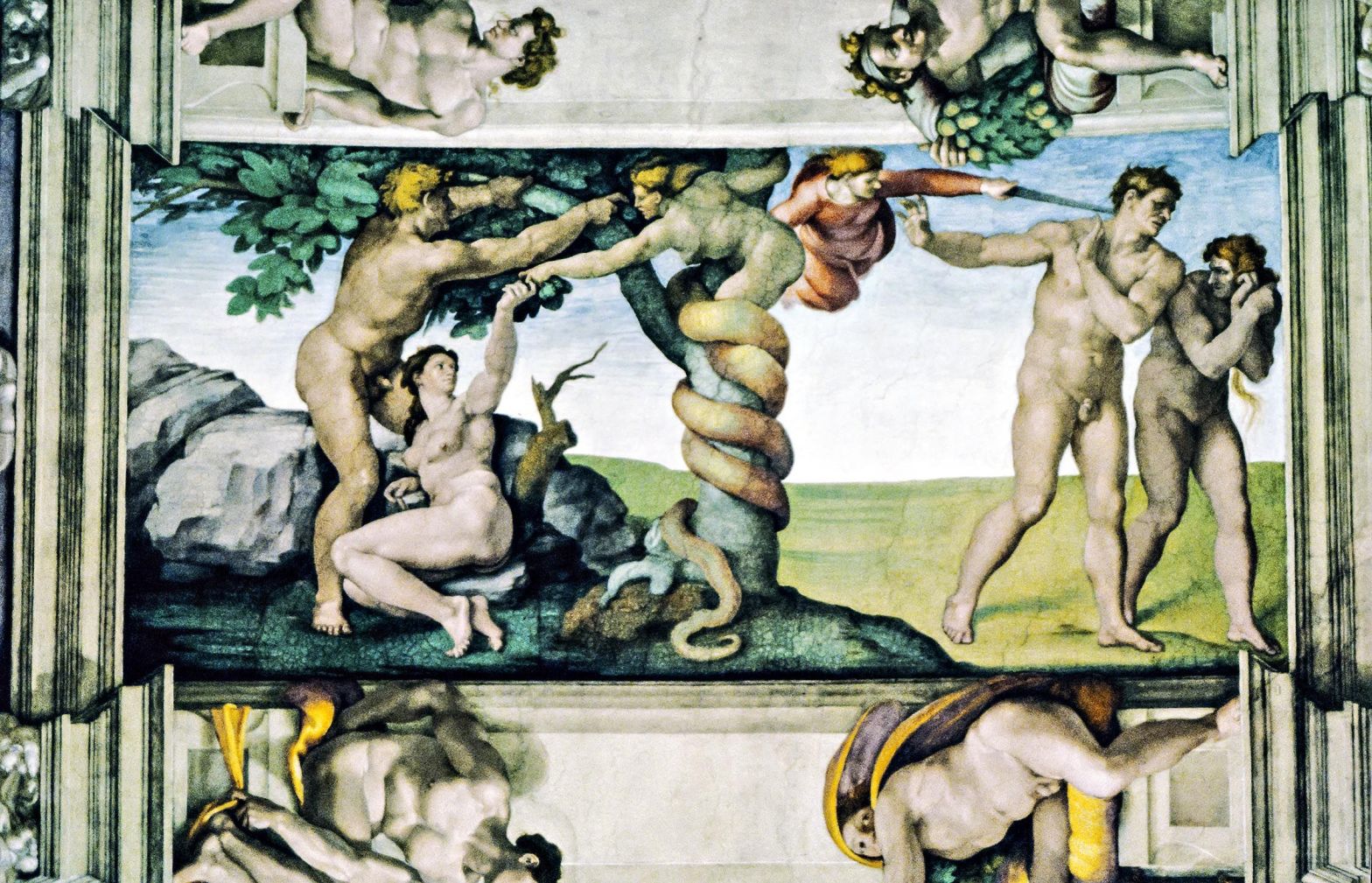
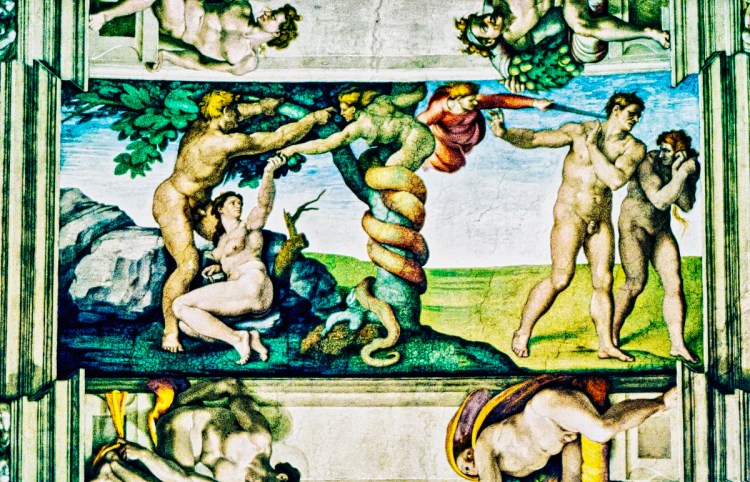
The Fall and the Expulsion from Eden show his figures attaining greater beauty and grandeur. Once again, he seems to be able to create sculpture using paint. In the Fall, Eve is depicted in a voluptuous pose, but Adam is shown as participating in the first sin, which was a novel approach.
Expulsion from Paradise Fresco
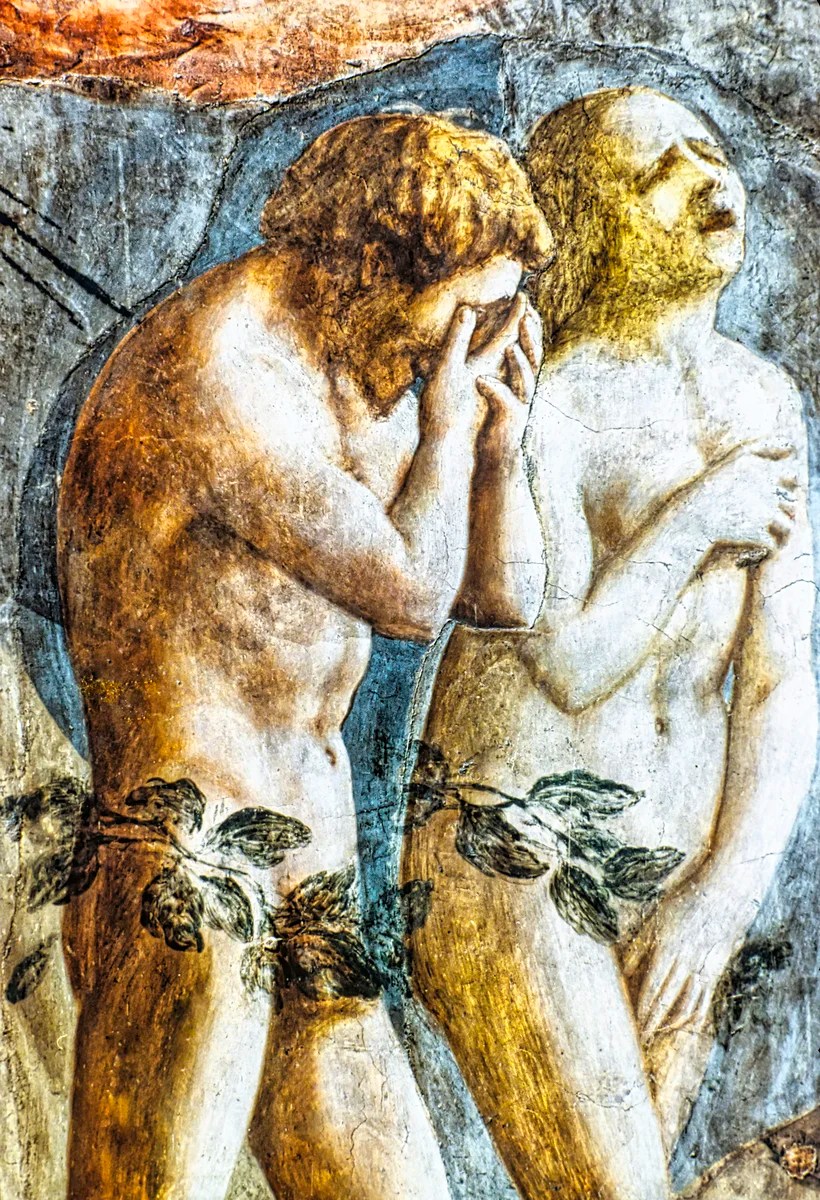
This scene is in direct contrast to the anguish shown in the Expulsion, just to the right of the female snake twisted around the tree. The Expulsion shows the influence of Masaccio’s art, shattering painting in Florence on the right, which kicked off the Renaissance
The Last Judgement Fresco
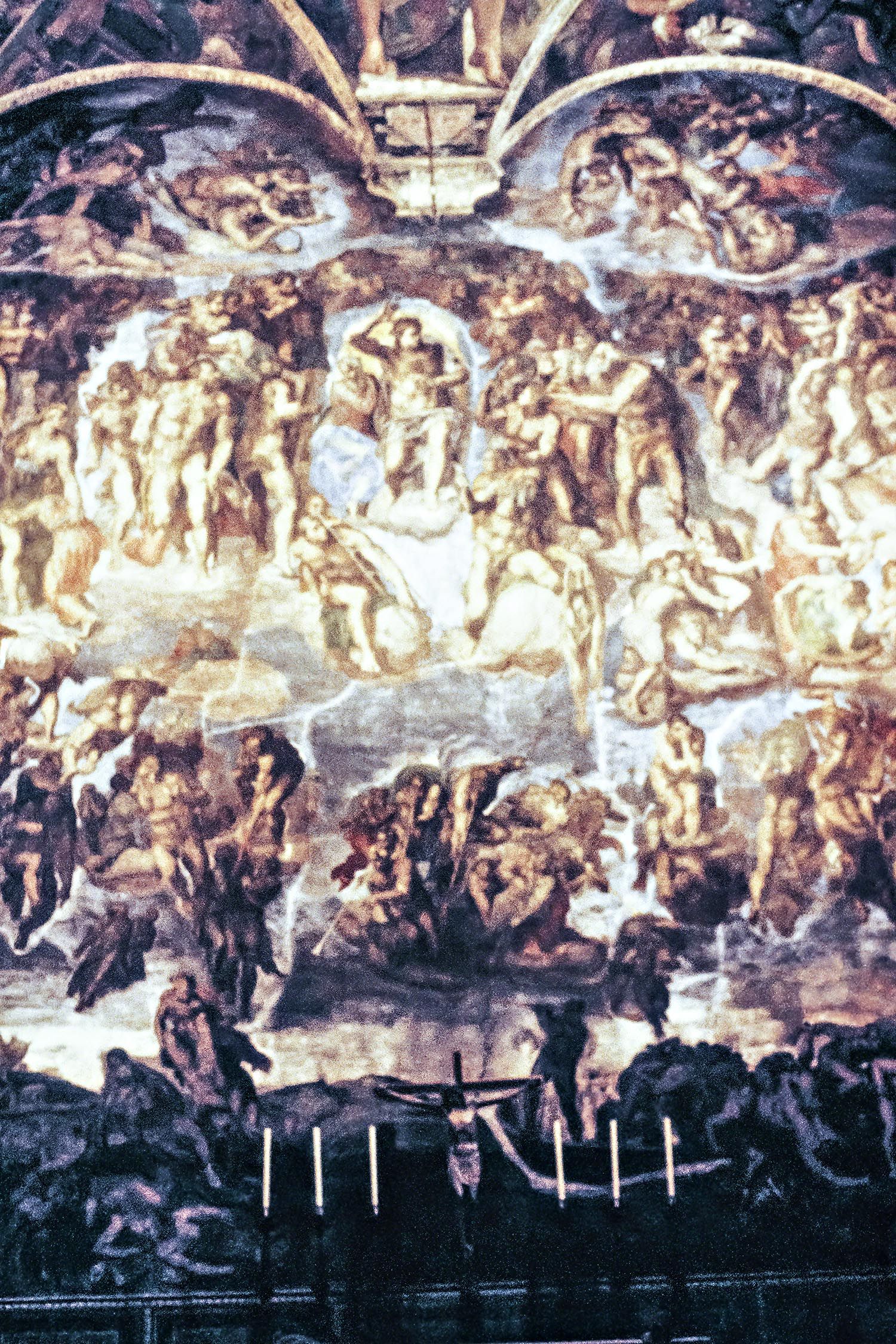
Michelangelo was in his sixties when he painted The Last Judgement on the end wall, 23 years after the ceiling. This is a very dark and sombre piece, especially before it was cleaned. The reformation of the Church was the main aim of Pope Paul III, who may have placed it over the altar as a reminder of the Sack of Rome in 1527. Many people interpreted the sack as divine retribution for the corruption of the Catholic Church that led to the Reformation. Christ the Judge is painted with the features of the Apollo Belvedere. St Bartholomew holds a human skin with the head of Michelangelo!
Michelangelo was very underpaid for this amazing work of art. But the Church was fighting to regain its territory and was short of funds. In fact, Pope Julius chose to fund the significant projects for the Church rather than finish his own tomb.
Pinacoteca Museum
The Picture Gallery was founded by Pope Pius VI after ca. 1785. There are enough paintings and art periods to overwhelm you. So we are highlighting just a couple of paintings that caught our attention.
Angel Musicians, Melozzo da Forli
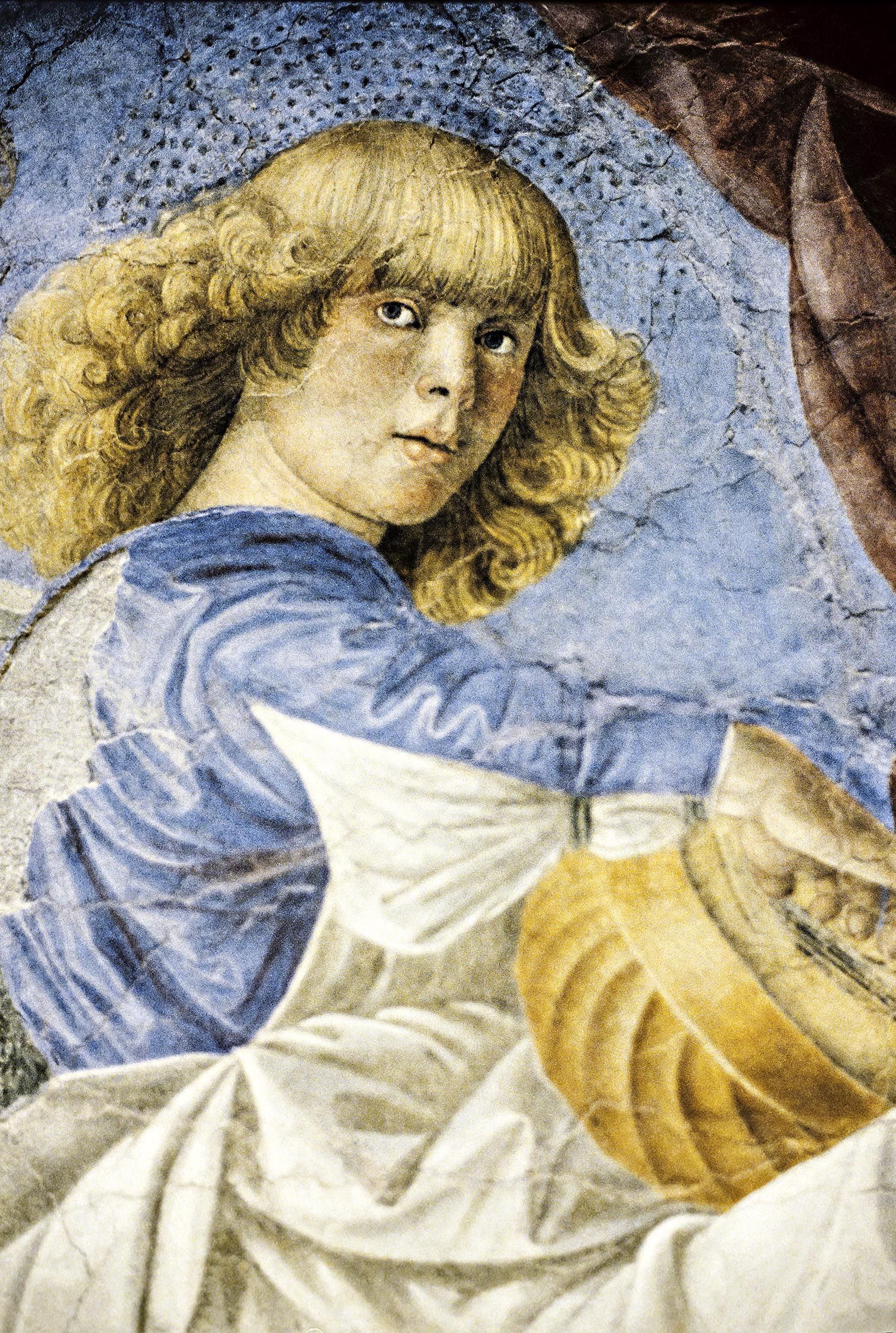
Hall IV displays paintings done between 1475 and 1480 by Melozzo da Forli, who was not the most famous painter of his times. But if you pay attention his images are used on tourist brochures and book covers all over the place. So we are not the only ones who find these paintings attractive.
The Angel Musicians are colourful and cute – heavenly? These paintings were actually frescoes in the Church of SS. Apostoli that were detached and transferred to canvas and eventually moved here. Amazing! Especially since the rest of the fresco was destroyed during renovation work in 1771.
Transfiguration, Raphael
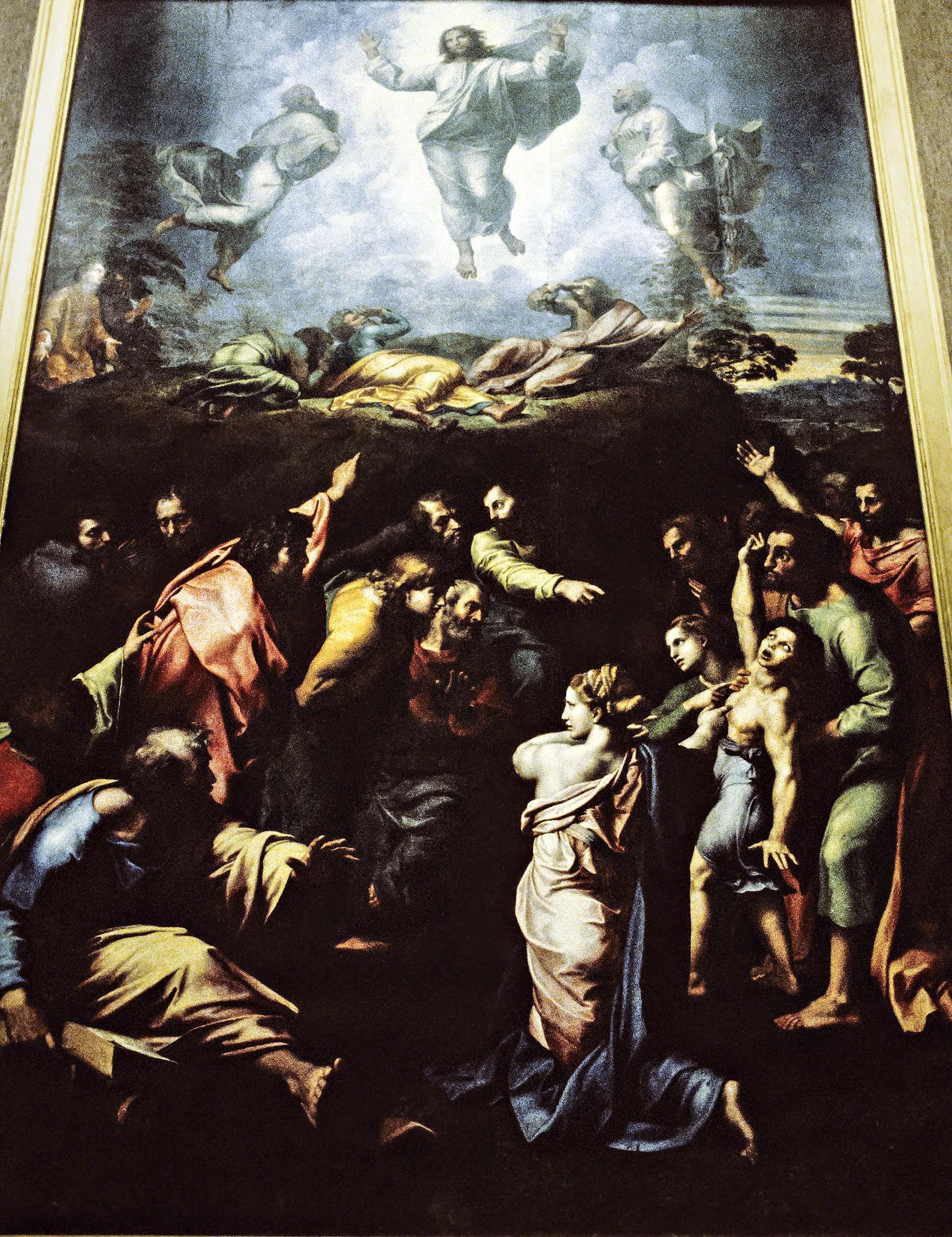
Another masterpiece is the Transfiguration, the last work of Raphael in 1516. The composition is based on a triangle (notice all the people pointing upwards) with Christ in bright light at the apex. Below are the apostles who are holding the possessed boy who was cured by Christ. Light is used sparingly to highlight the colourful clothing, faces and gestures of the people. The dramatic gestures and theatrical composition remind us of Michelangelo.
Double Helix Staircase
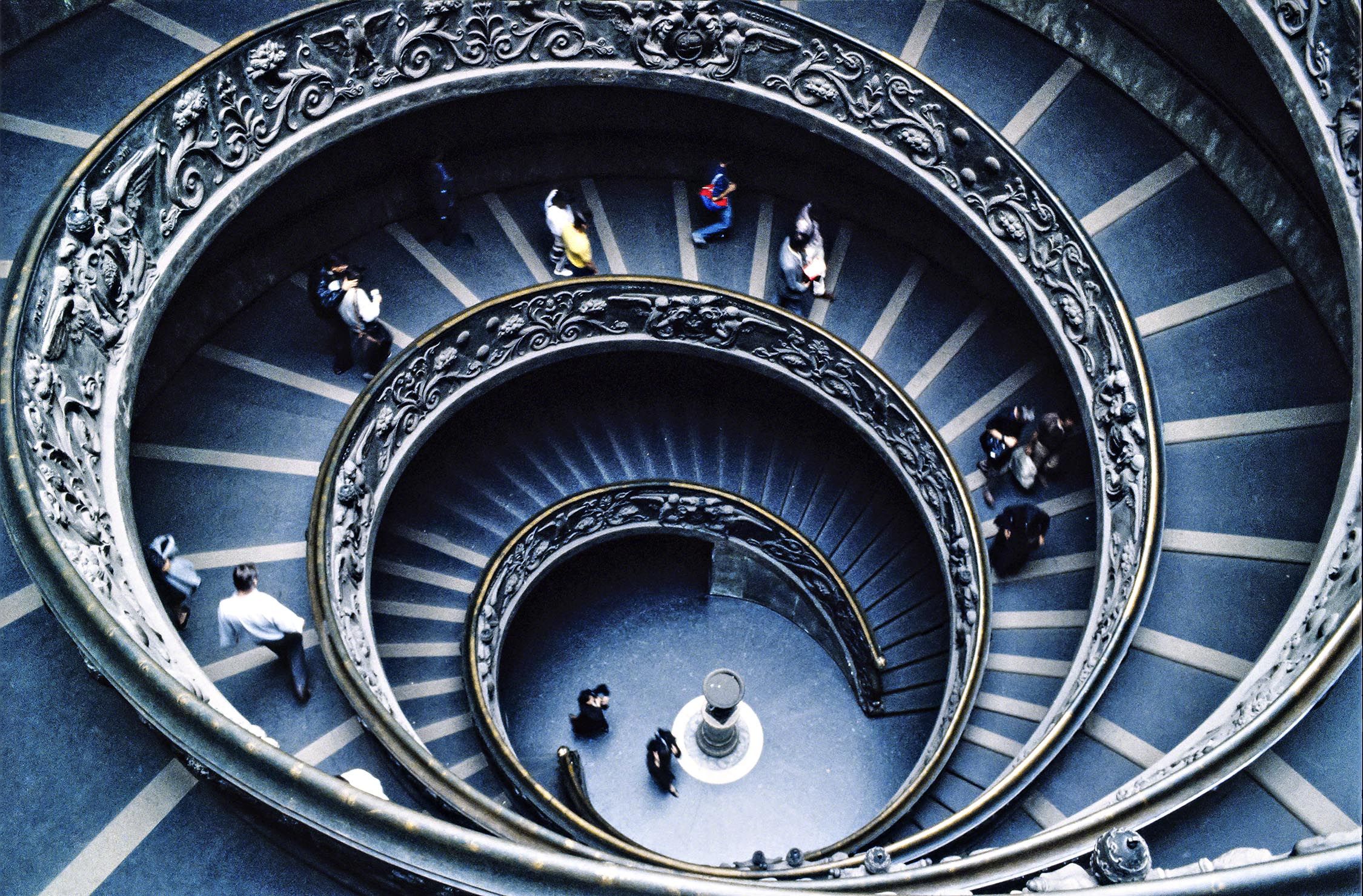
Inspired by the original Bramante Staircase, another one was built in 1932. The new staircase is a double helix (like DNA) with two staircases that do not cross each other. But both staircases are used to exit the Vatican Museums.
Final Comments
The Vatican Museums are over-touristed. But we hope you have learned that there are a few gems that most tourists probably miss altogether. These museums need at least a day, but try to catch the highlights I have triaged for you.
Subscribe
Please subscribe to Terra Encounters because we offer valuable insights to improve your understanding and enhance your travels. We offer itinerary-based guides packed with the best sights and hidden gems. Let our knowledge help you fully appreciate every moment of your amazing journey.
Get travel tips and advice delivered directly to your inbox. The best part is that it is free.
This was only a taste of Rome. What questions do you have? If you have been to Rome, share your experiences with us. How long is/was your trip?
Itinerary Map & Resources
Roman Itineraries Map — our custom Google Map
What Should You Read about Rome
Guide to the Vatican Museums, Monumenti, Musei e Gallerie Pontificie – provides detailed itineraries and many artifacts, but only a little text about them
Michelangelo, Linda Murray, Thames and Hudson
Renaissance and Mannerism, Thames and Hudson – this was our bible, the book that taught us how one artist influenced another, what were the key elements of painting, sculpture and architecture that were the essence of the Renaissance.
The Companion Guide to Rome, Georgina Masson is too in-depth for tourists. But it is great for expats, budding archaeologists and art historians living in Rome. We used it extensively.
The Sistine Chapel, Fabrizio Mancinelli, Monumenti, Musei e Gallerie Pontificie – beautiful photos with explanations
Google Maps Ratings
Google Maps provides a rating from 0 to 5 for all sights, hotels and restaurants (but not cities). All of our recommendations are appended with the rating (prefixed with a G) from Google Maps. As it is based on feedback from tourists and locals, it is much more reliable than travel booking websites. We consider a score of 4 to 4.39 to be Very Good; 4.4 to 5 to be Excellent.
Rome’s Top 8 Self-Guided Walks
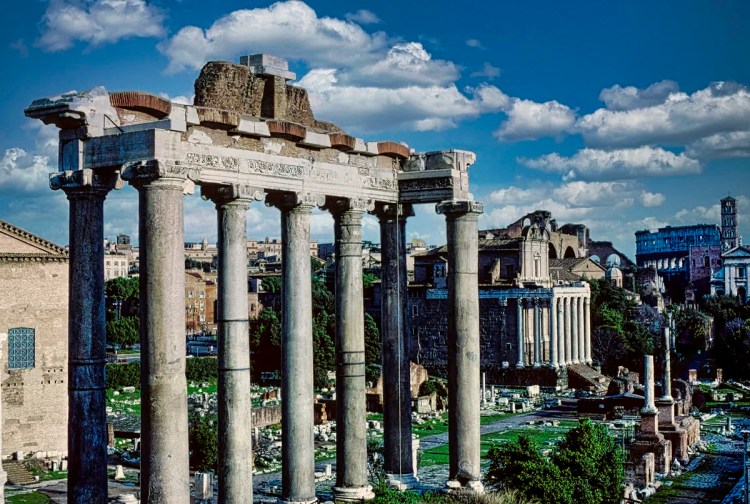
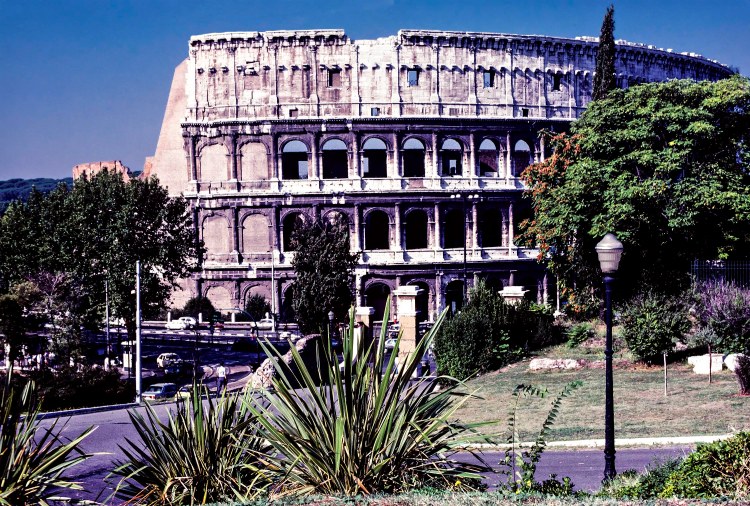
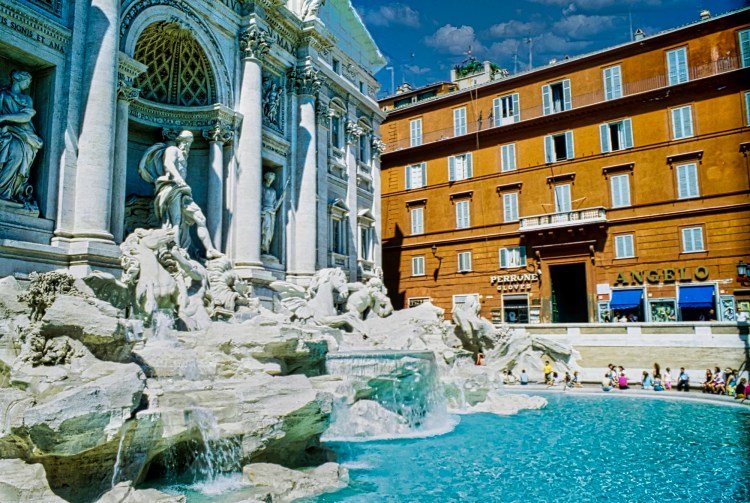
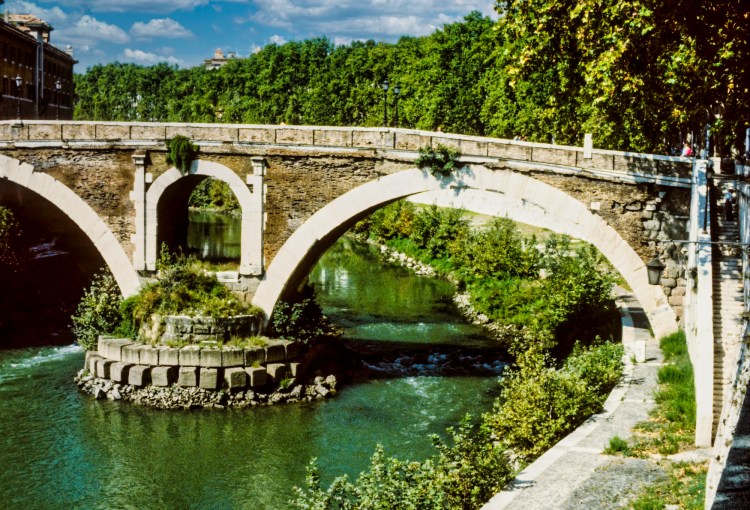
Here are eight itineraries to explore Rome in more detail:
Understanding Italy
The Italy FAQ post answers your questions, such as:
- When should I go?
- What is the best season for travel?
- Where should I go?
- Can I see everything in a week?
- How much time do I need for Italy?
- How much cash should you take to Italy?
- Should I pay in Euros or my own currency?
- How safe is Italy?
- Should I rent a car? Take a Taxi?
 Terra Encounters
Leave a comment