
Strolling From Sorrento to Sicily
Fall in Love with Southern Italy! If you want to see some of the best cities and scenery in Italy, then this is the itinerary for you. South of Amalfi, there are very few tourists. It’s a year-round destination. Spring starts in February in Sicily!
Southern Italy is anywhere south of Rome. If you have limited time, we would recommend that you focus on the main points of interest.

We like to explore what makes Italy (or any country) unique, what is quintessential Italy. For instance, love for children is a big part of Italian culture. Here, three local girls came to check out our son, who was born in Rome. There is nothing like children to break the ice when you travel in Italy.
There are so many more places that you could include, so we have added a few more suggestions at the very end. If you have limited time, then stick to the primary destinations.
Author & Photographer: George Mitchell

Our recommendations are not influenced by affiliate links – we have none. Our advice is derived from our personal experience and knowledge based on living in Rome for four years and studying its art, architecture, and culture. We also gave a course on Discovering Our Ancient Routes in the Mediterranean at the University of Alberta.
All of our recommendations are top-rated by Google Maps Ratings, which is based on everyone, not just tourists. Each place recommended in our custom Southern Italy Itinerary is appended with a Google Maps Rating (G0 to G5).
Campania Region
Travel Time: Rome to Naples 220 km, 2:20 hrs
Naples National Archaeological Museum
There is plenty to see and taste in Napoli (Naples). It is the birthplace of thick crust pizza. But here we are focusing on the one must-see place, the Naples National Archaeological Museum (G4.6). This is especially true if you are interested in Ancient Rome. In the museum, do not miss the following top three artifacts.
The Farnese Hercules shaped the way Hercules was portrayed in European art. It depicts a muscular, yet weary, Hercules leaning on his club, which has the skin of the Nemean lion draped over it. In myths about Heracles, killing the lion was his first task.
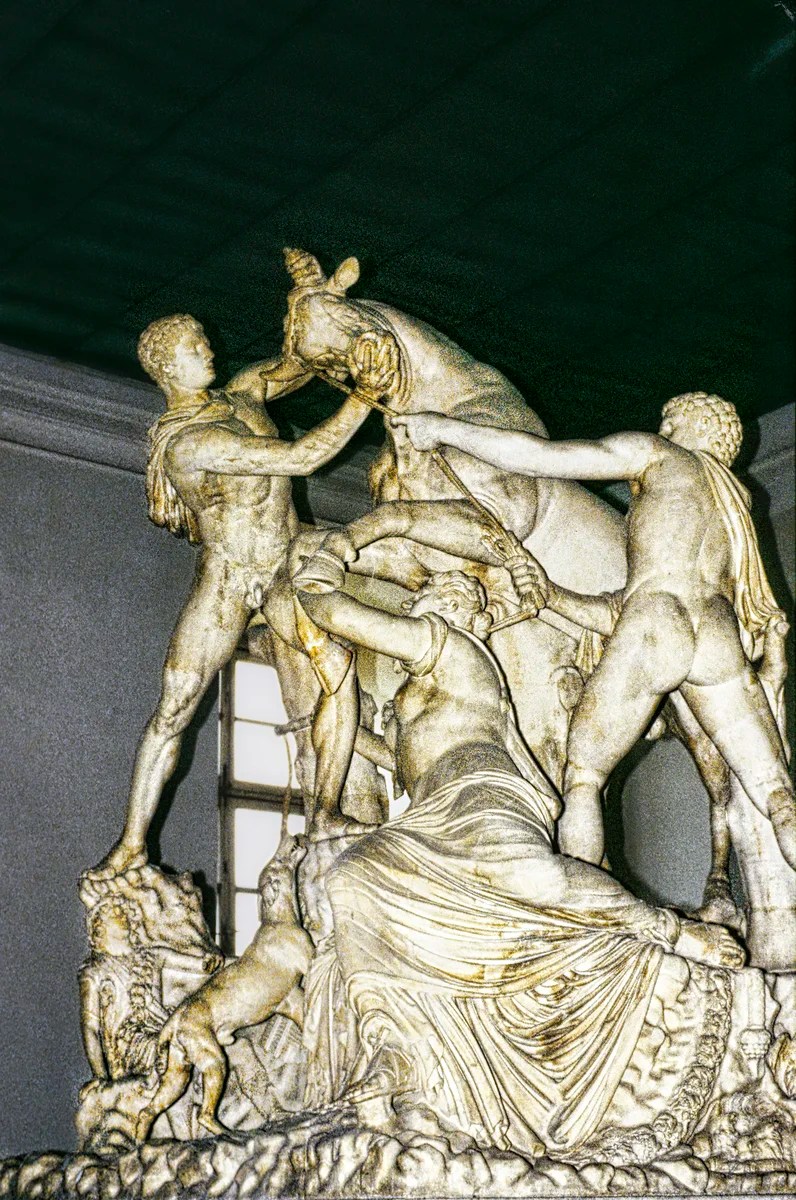
The Farnese Bull is widely considered the largest single sculpture ever recovered from antiquity. This statue depicts the myth of Dirce. She was tied to a wild bull by the sons of Antiope, who wanted to punish Dirce for her ill-treatment of their mother.
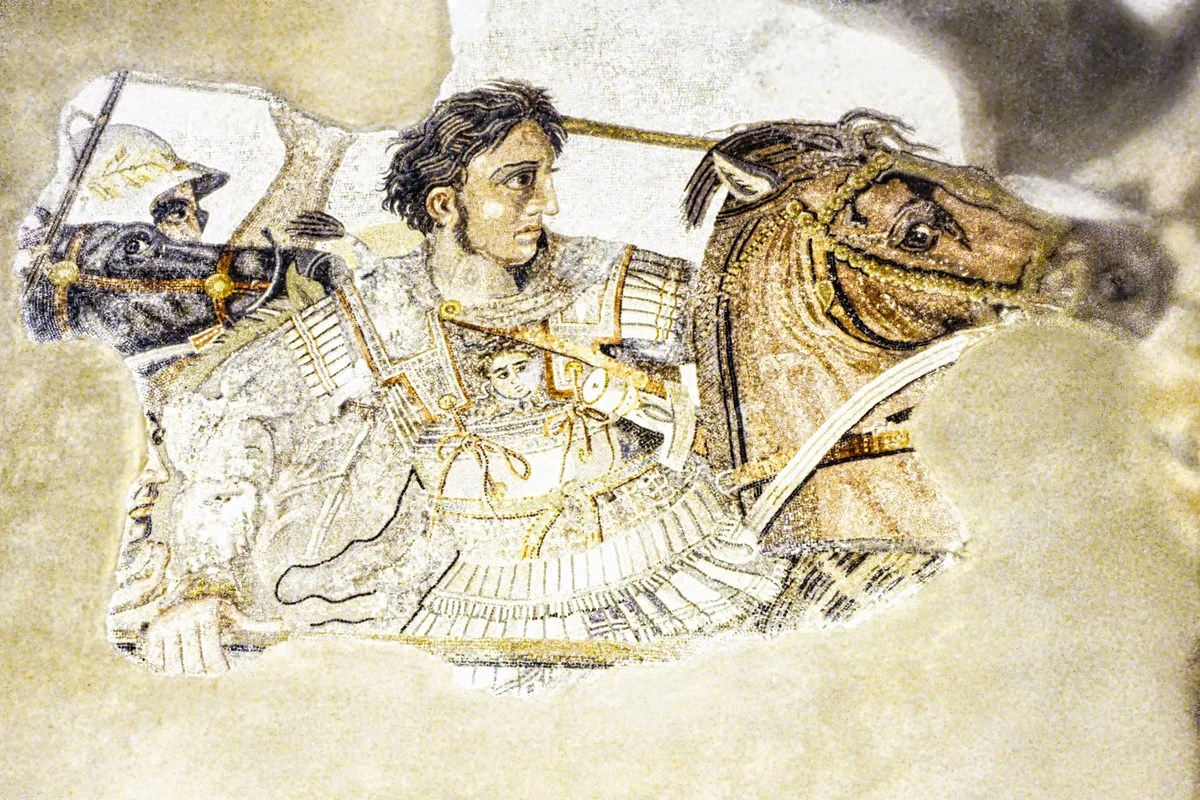
The third masterpiece above looks like a mural, but it is a floor mosaic! Dated to ca. 110 BC, this huge mosaic was found in the House of the Faun in Pompeii. A replica was recently installed at the House of the Faun.
This photo captures only the leftmost side of the Alexander Mosaic, showing Alexander the Great at the Battle of Issus in 333 BC. Alexander’s breastplate displays the head of Medusa from Greek mythology. Her hair was made of venomous snakes (Gorgon) that can turn people to stone. It was used to scare his enemies. See the Basilica Cistern Istanbul for more on Medusa.
The mosaic is unique in that the tesserae (tiles) were designed to incorporate shades of colours. The horse’s flank displays tonal gradation, transitioning from a lighter tones to a darker ones.
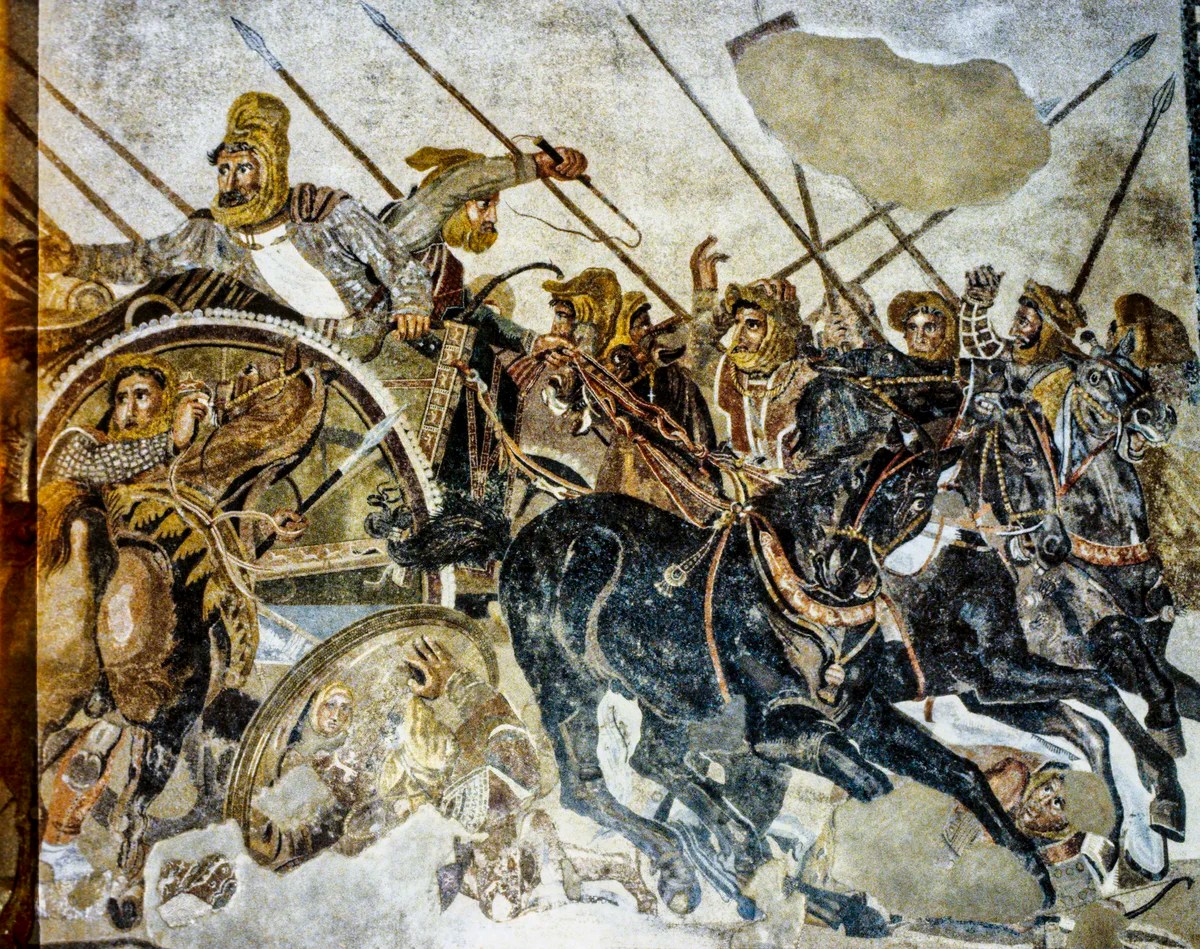
This is the right side of the mosaic, which was copied from an Ancient Greek painting. The Ancient Greeks understood how to display three-dimensionality and movement through space. This is most evident in the foreshortening of figures, like the horse in the center right of the mosaic. The level of detail and naturalism is amazing, even showing emotions on people’s faces. King Darius III of Persia on the left is afraid and turns his chariot to flee (the Persians lost the battle).
The Ancient Romans and Greeks are descendants of the Proto-Indo-European tribes (PIE, formerly called Aryans) who were a horse riding and chariot culture from the Caucasus. Persia is now called Iran, which means Land of the Aryans. The PIE invented the chariot and it was the primary war technology that enabled the PIE tribes to invade India, Iran, and Europe. Does this explain our fascination with horse racing today?
Pompei
Travel Time: Naples to Pompei 31 km, 32 min
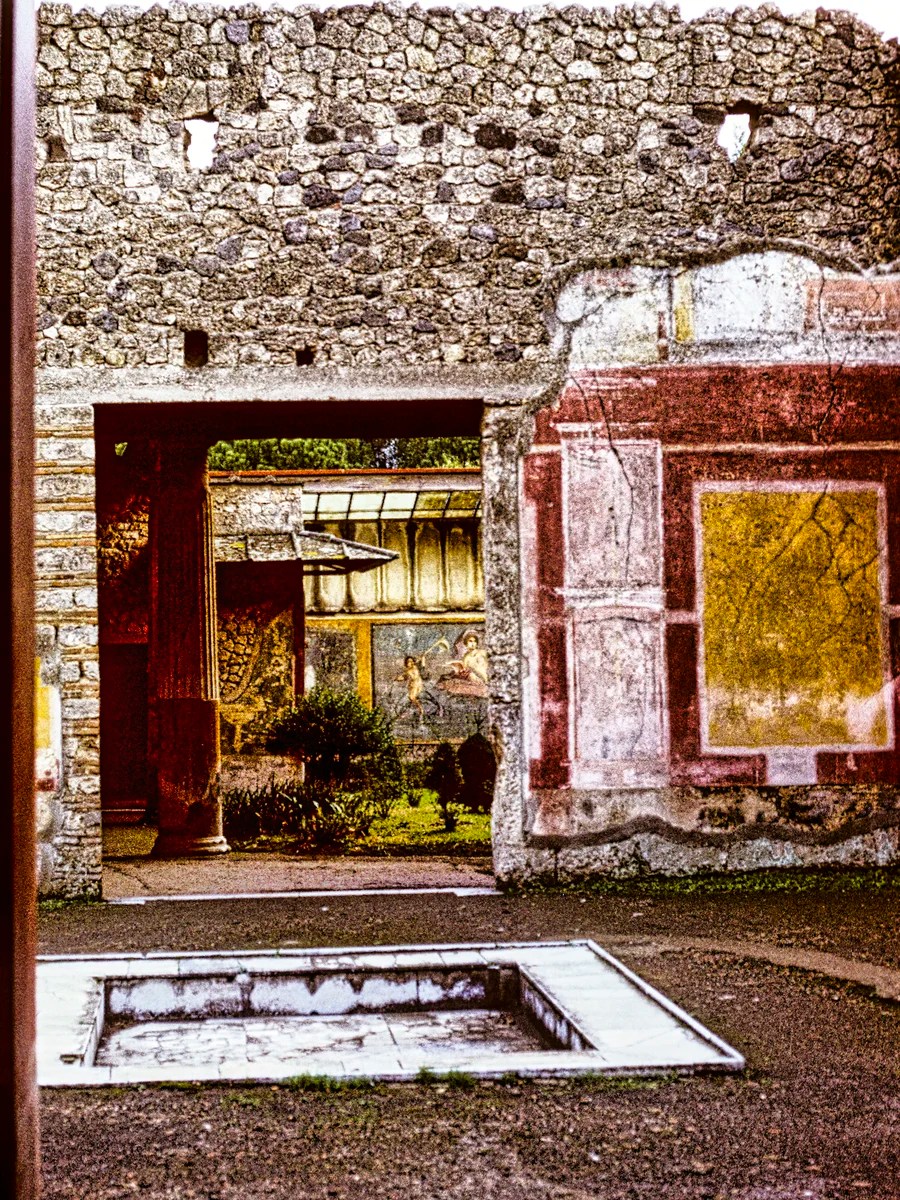
One of the best places to visit and experience is Pompeii Archaeological Park (G4.7). It is not true that Pompei citizens had no knowledge of the danger Vesuvius posed. While it is true that there was no Latin word for volcano, the residents knew Vesuvius was dangerous because there was a major earthquake in 62 CE, and ash fell on the city.
The 79 CE eruption lasted for two days. The first phase was of pumice rain (lapilli) lasting about 18 hours, allowing most inhabitants to escape. Of the 15,000 residents, only approximately 1,150 bodies have so far been found on site. Only the slaves, elderly, and the disabled were left in Pompei.
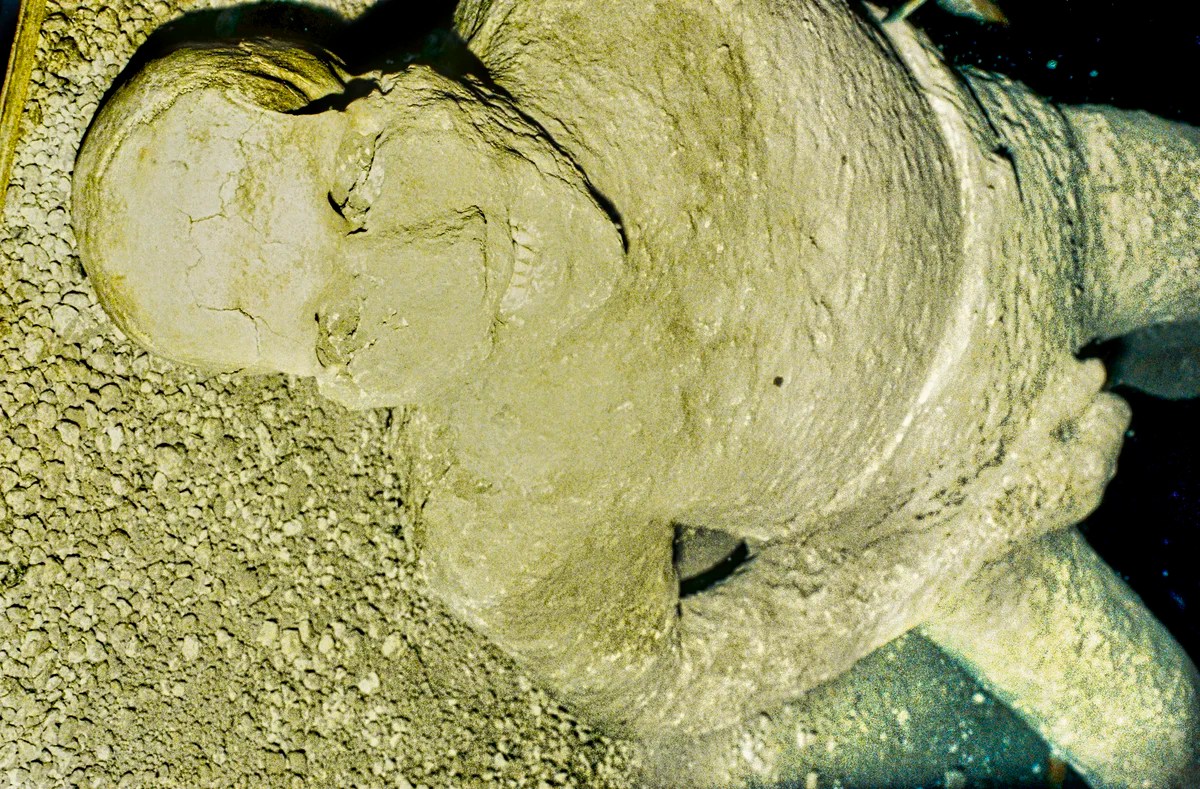
The most incredible sights of Pompei are the grimaces of the people who died and are preserved in the museum. These weren’t actually bodies, of course. Archaeologists found hollowed-out places in the ash where the actual bodies had rotted away, then recreated what they looked like by pouring plaster into the cavities.
People did not die from the lava flows. It was previously believed that the main causes of death from volcanic eruptions were ash suffocation and sulphuric gases.
People were completely ignorant to the extent of its destructive power. Mount Vesuvius released over 100,000 times the thermal energy of the two atomic bombs dropped on the Japanese cities of Hiroshima and Nagasaki during World War II. The surge raced at speeds over 160 kph (100 mph) travelling up to 10 km (6 miles) away. People died instantly of heat exposure, as temperatures within the surge soared to around 250°C, even if they sheltered within buildings.
Herculaneum and Pompeii were never rebuilt again. They lay buried under ash and lava, forever preserved like an underground time capsule.
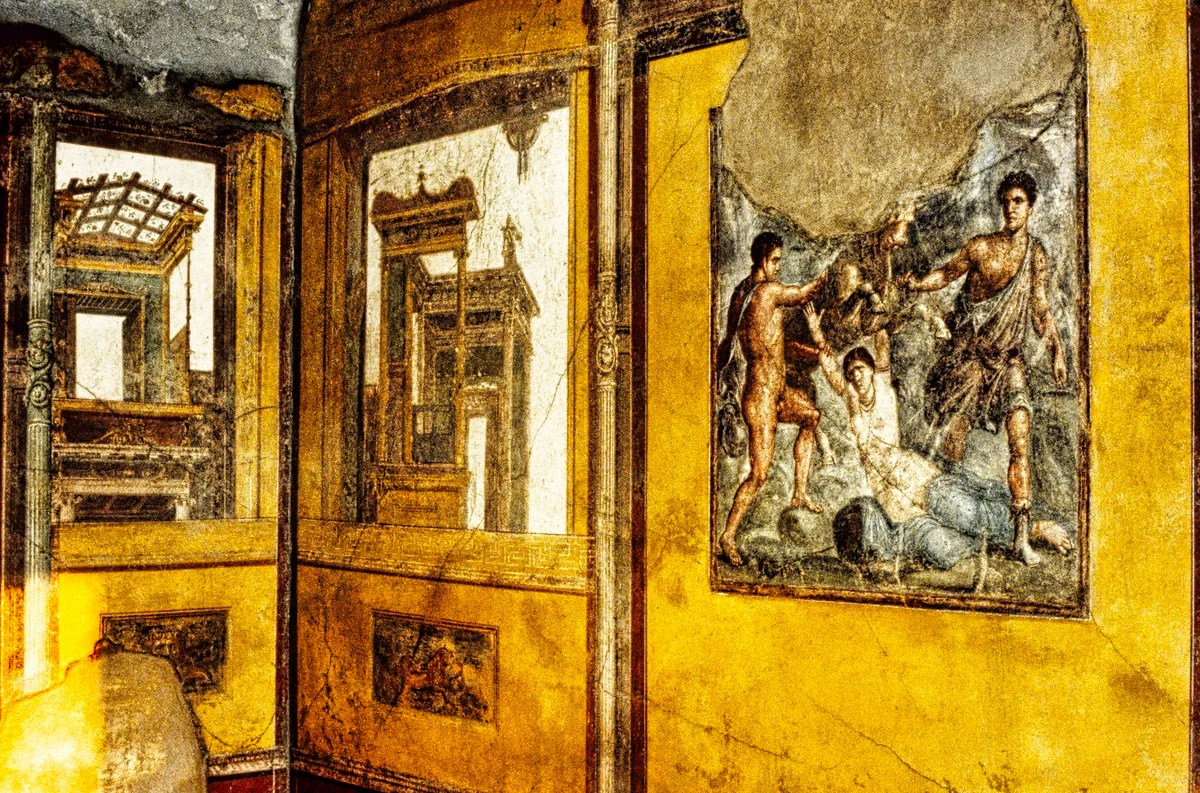
The fresco above seems to be a copy of the Farnese Bull described under Naples. The House of the Vettii (G4.8) had a fresco of the well-endowed Priapus, the god of fertility.
Throughout the excavation, archaeologists have discovered 25 brothels scattered all over the city. There are many preserved erotic frescoes within the brothels, which display the services in an illustrative menu.
Graffiti might be thought of as a modern-day phenomenon, but we were amazed by how much graffiti was written on the walls of buildings at Pompei. These were ancient bulletin boards! They described everything from love to politics. I guess people were not that different than now.
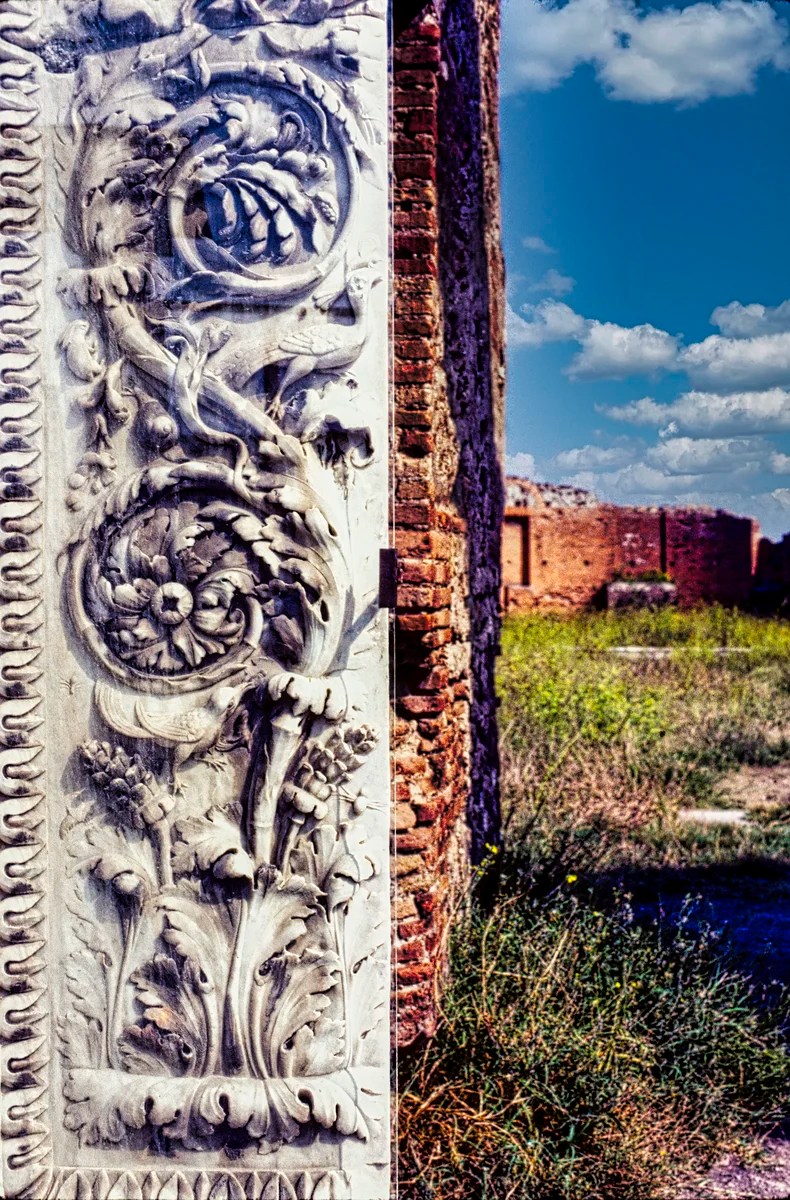
Unfortunately, most of the building decorations are gone. This freeze of acanthus leaves and birds on the Building of Eumachia (G4.9) was very beautiful. Why did the Ancient Romans and Greeks use acanthus leaves as an art motif? The acanthus was a symbol of immortality and resurrection.
The Roman architect Vitruvius – mentioned in the post on the Loggia del Consiglio, Verona – wrote in his ten books of De Architectura:
“A nursemaid of a recently deceased girl had placed a woven basket filled with her favourite things near her grave where acanthi grew. She placed a tile on top of the basket to prevent it from blowing over. Over time, acanthus shoots started sprouting and eventually gracefully bent back through the sides, stopping by the tile. The sight of this elegant form inspired the passing Callimachus to ‘invent’ the now famous capital for the pillars at Corinth”.
This was the origin of the Corinthian Capital.
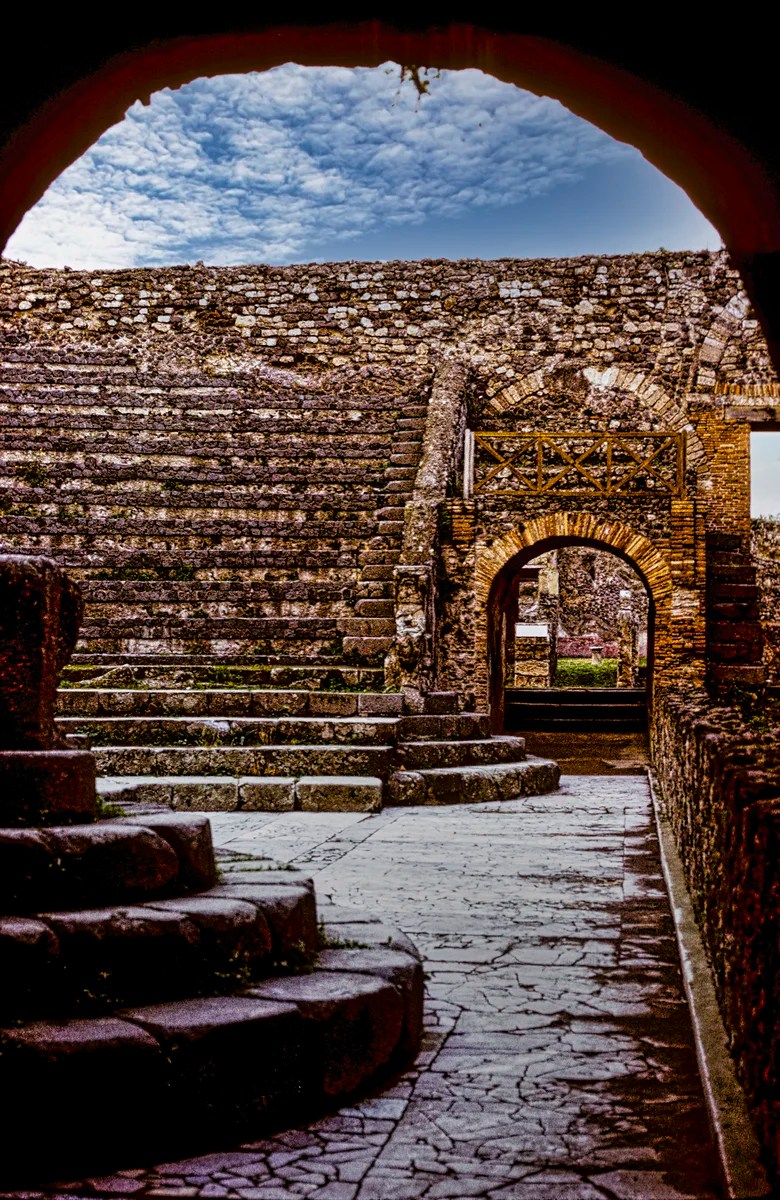
Teatro Piccolo (G4.8) was a small theatre, which was more suited for dramas than spectacles.
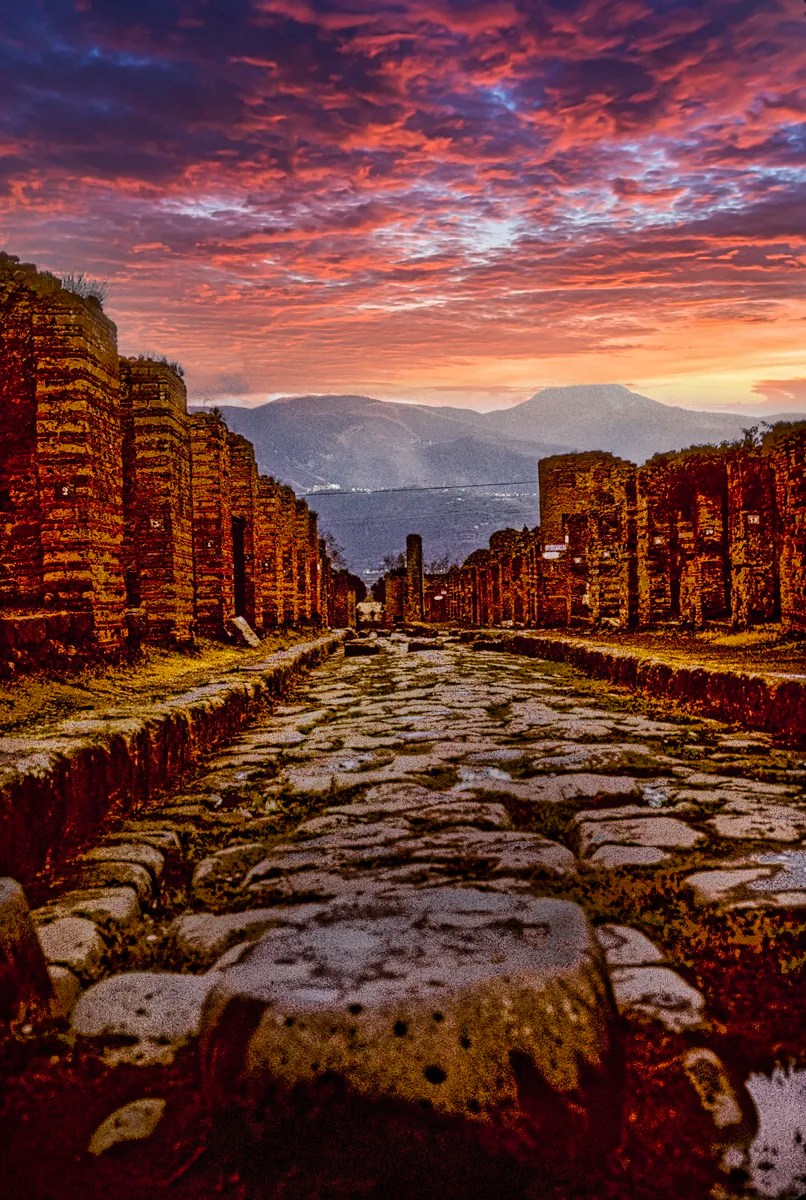
Actually, the sun was not setting but the image lighting was so poor it could not be brightened in a normal way. The scanned slide also had a heavy red tint, so it was perfect for a sunset picture.
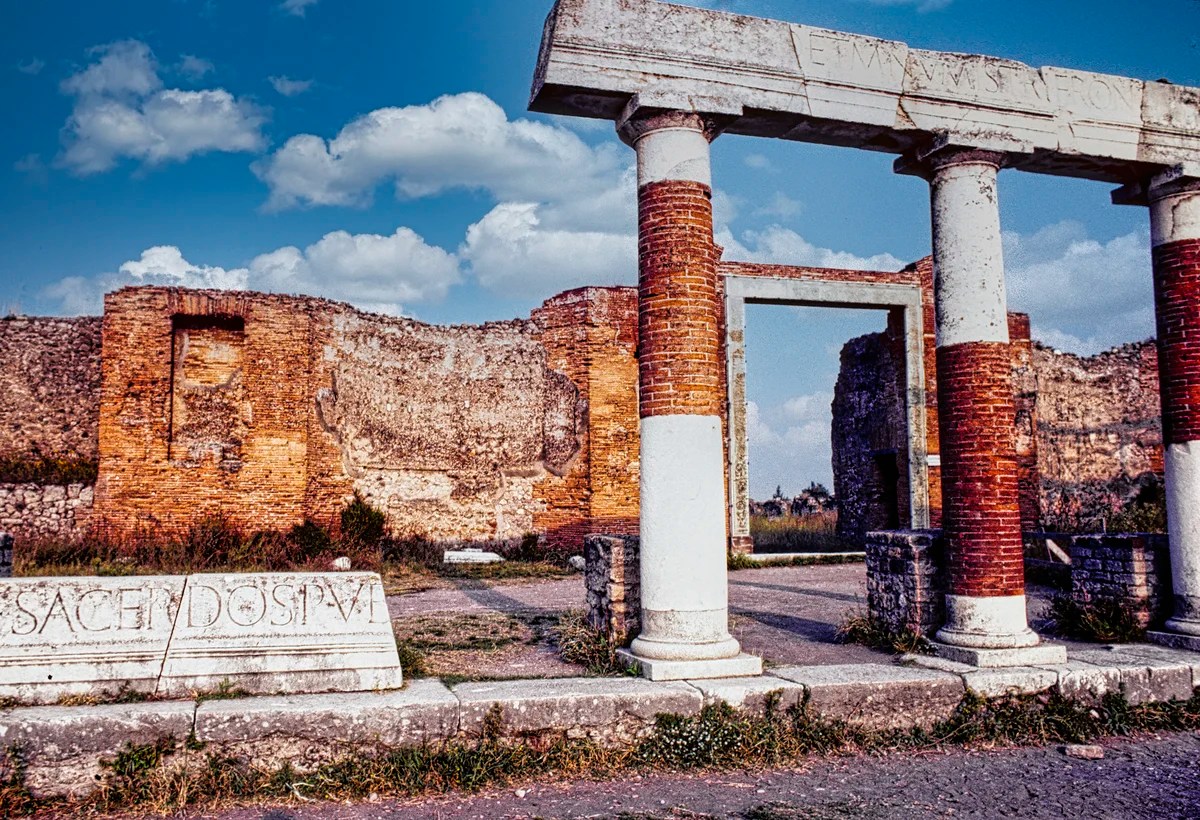
The streets are worn down by the wheels of carts, often making deep channels. To protect the Forum, carts were not allowed in that area. Also note the rather high sidewalks to protect citizens from the excrement on the streets. There are even large stepping stones to cross over the streets (as shown in the foreground).
Amalfi Coast
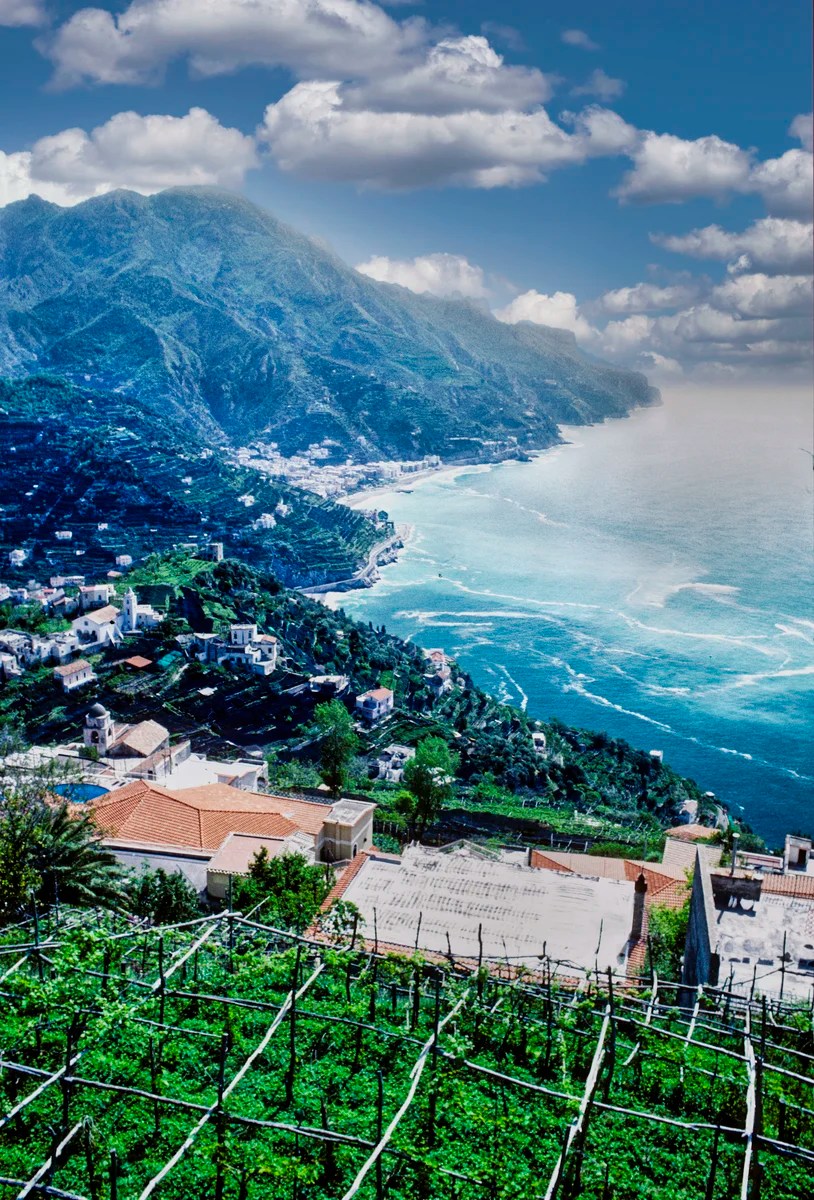
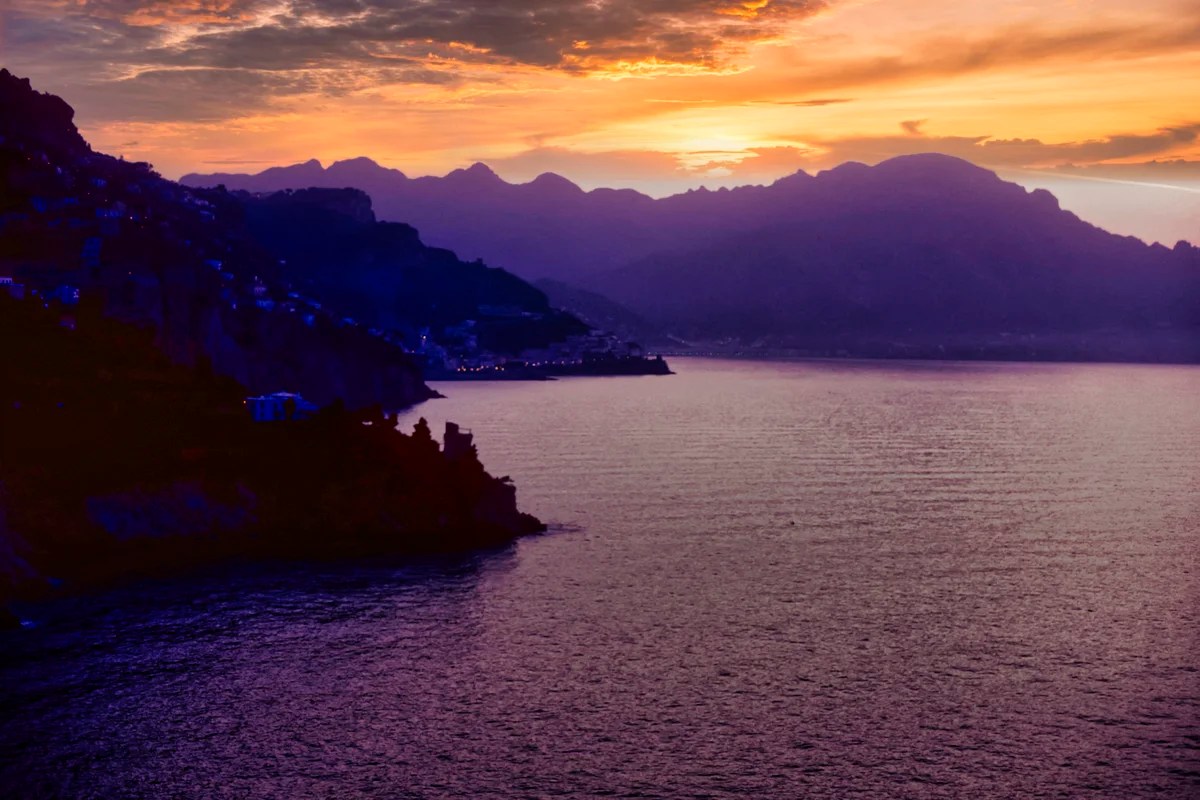
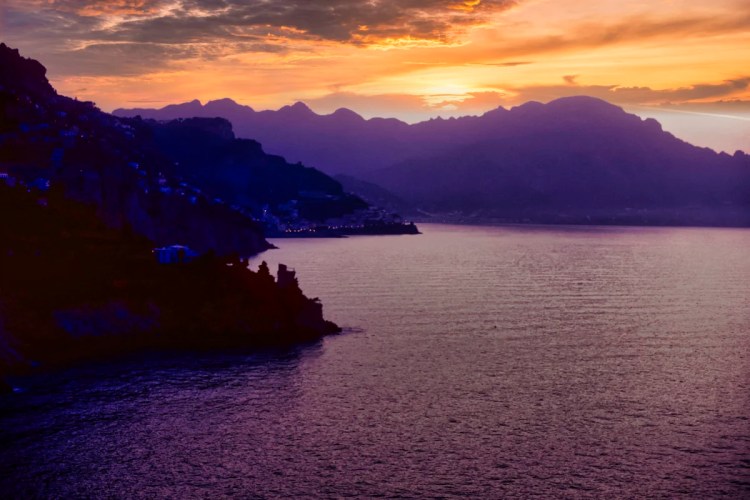
The Amalfi Coast is a wonderful, cliff hugging highway on everyone’s best place to visit list. For that reason do not go in the summer. The road is only two lanes and has no pull off viewpoints. If you are driving, you will be too busy watching the traffic to really enjoy the panorama. You need to stop at the villages or visit the villas to enjoy the views like the one above.
Sorrento
Travel Time: Pompei to Sorrento 27 km, 46 min
Sorrento is not on the famous part of the Amalfi Coast. Some people skip Sorrento to go immediately to Positano, but we liked it. The Sorrentine Peninsula has views of Naples, Vesuvius and the Isle of Capri.

After graduating from university, we made first one year trip to Europe. We will always remember Sorrento for our purchases of intaglio (multi-coloured wood veneer) “paintings”. We gave many of them as gifts to family. I hate to think what these cost today. A quick internet search showed prices in the $80 to $300 range.
Marquetry is a decorative technique where wood veneers are sawn into a pattern and then assembled like a jigsaw puzzle and glued to a backing. Our board looks like solid mahogany. Since the early 19th century highly skilled Sorrento practitioners have created a vast range of inlayed and marquetry work.
We spent a lot of time looking at different shops and searching for marquetry with the best fitting veneers, least white glue showing, and the best patterns.
Positano
Travel Time: Sorrento to Positano 16 km, 37 min

Positano has been a holiday resort since the time of the Roman Empire. The Church of Santa Maria Assunta (G4.5), at the bottom right hand side, has a colourful majolica-tiled dome — the town’s only real sight.
Majolica are red clay ceramic tiles with a tin underglaze and richly coloured glazes. Majolica originated in the Islamic world and was introduced to Spain during the occupation. The word majolica is derived from Majorca, the Spanish port through which the tiles were originally traded.

Positano was a relatively poor fishing village during the first half of the twentieth century. Today it is very busy. Avoid the crowds by avoiding the summer season. The beach, Positano Spiaggia (G4.2), is very overcrowded. What’s unique is that the town is built on a hillside. There are great views from many places. We loved the view from our pensione on our first New Year’s Eve in Italy.

On another trip, it was late and we hadn’t booked any accommodation. We stopped at the Hotel Le Terrazze but found that it was closed for renovations. We asked the owner for hotel recommendations. There were four of us plus our bambino. The owner let us stay the night in this beautiful hotel that is currently CAD 250 per night.

The best part of Hotel Le Terrazze (G4.8) was the great views of the coast and the “sand castle” below the Borgo Santandrea Hotel (G4.9). This is a luxury hotel in the $1000 to $3000 per night price range. We saw helicopters land guests here! It was a fairy tale visit!
Amalfi
Travel Time: Positano to Amalfi 19 km, 42 min

The town of Amalfi is worth a stop, at least for the Duomo di Amalfi (G4.8). The cathedral was begun in the 9th century in Italian Gothic style. There is a Paradise Cloister in Arab-Norman style.
The façade is Romanesque, Arab and Norman with Byzantine influences in the Triumph of Christ mosaic. It uses striped marble and stone façade. But, much of the façade was actually rebuilt in 1891 after it had partially collapsed in 1861. It takes a long time to build a church.
Ravello
Travel Time: Amalfi to Villa Cimbrone 3 km, 9 min
Villa Cimbrone (G4.8) dates back to the 11th century, but the villa and the gardens were extensively renovated by a British nobleman, Lord Grimthorpe, in the early 20th century.

The villa’s belvedere, Terrazza dell’Infinito (Terrace of Infinity), is lined by a series of white marble busts that contrast with the blue sky above and the azure waters below.
The villa is now a hotel and luxury wedding venue, but its gardens are open to the public.

Travel Time: Villa Cimbrone to Ravello 3 km, 8 min
Villa Rufolo (G4.6) is located in the historic center of Ravello. Sir Francis Neville Reid, a Scottish botanist, visited the villa in 1851. Age and neglect had taken a toll on the villa, and many of the rooms had fallen into ruin.

Reid fell in love with the Moorish towers and the expansive views. He purchased the villa and began an extensive renovation of the gardens

Paestum
Travel Time: Ravello to Paestum 84 km, 1:35 hr

Paestum is a great place to see three of the best-preserved early Greek temples. The Temple of Hera II (G4.8) was built in the Doric order around 460–450 BC, just north of the first Hera Temple (G4.9). It was erroneously called the Temple of Neptune or Poseidon.
Except for Alexander the Great, there was no Greek Empire. Instead, Greek colonists from the main cities in Greece founded colony city-states in Southern Italy. Italy got its tradition of city-states from the Greeks.

The Romans called the south Greater Greece, or Magna Graecia. As Rome expanded into the Italian peninsula, the Greeks saw Rome as a threat. In 215 BC, parts of Greece allied with Carthage against Rome. After Carthage was defeated, Rome invaded Greece in retribution. They completed their conquest of the Greek peninsula in 146 BC.
Morano Calabro
Travel Time: Paestum to Morano Calabro 183 km, 2 hr

The small village of Morano Calabro (G4.4) descends a steep hill, 694 meters above sea level. Morano Calabro is considered one of the most beautiful villages in Italy. This designation is described in the last section of this post. Its charm comes from its hillside panorama as well as the surrounding scenery of Pollino National Park.
Sicilia (Sicily)
Taormina
Travel Time: Morano Calabro to Taormina 314 km, 4 hr + ferry time

After Morano Calabro, one takes the ferry to Messina on the island of Sicilia, aka Sicily. Before the early 1970s, Giardini Naxos was a quiet fishing village. Now it is a tourist destination with beaches and panoramic views of the bay and Mt. Etna. It’s also the gateway to the must-see town of Taormina.
Teatro Antico

Taormina is a hilltop town built by the Ancient Greeks and is one of the best places to visit in Italy. The ancient theatre, Teatro Antico (G4.6), dates from the third century BC. It is the top tourist sight, probably due to its spectacular view of the coast and volcanic Mt. Etna (G4.6). Amazingly, around 10,000 spectators would watch dramas here.
Not all ancient theatres still have their skene, the structure at the back of a stage. The skene was used to hang stage scenery. The Greek word skene (Latin scena) means tent or hut and is the origin of our word scene.
During the Middle Ages, most of these columns were removed to build palaces and churches, including the Cathedral. More often than not, it was the Christians who dismantled the ancient temples.
Parco Duca di Cesaro
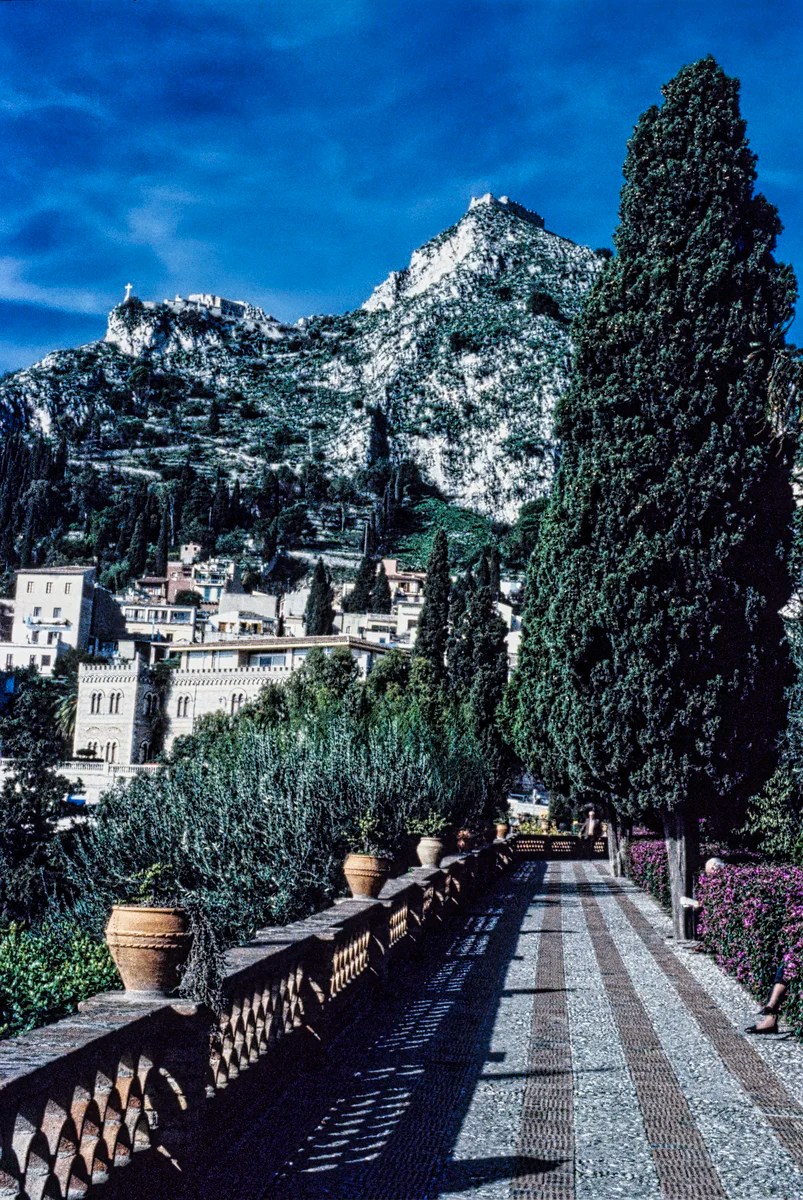
Lady Florence Trevelyan was a Scottish noblewoman and cousin of Queen Victoria. She was reportedly invited to leave England over an alleged affair with Crown Prince Edward VII. At the age of 37, she travelled to Taormina and decided to make her home there.
Using her expertise in botany, she created an English-style park at her residence, using various local plants as well as non-native species. The Duca di Cesarò (Duke of Caesar) acquired the park in 1923 for the benefit of the town. Today, we can all enjoy her public park.
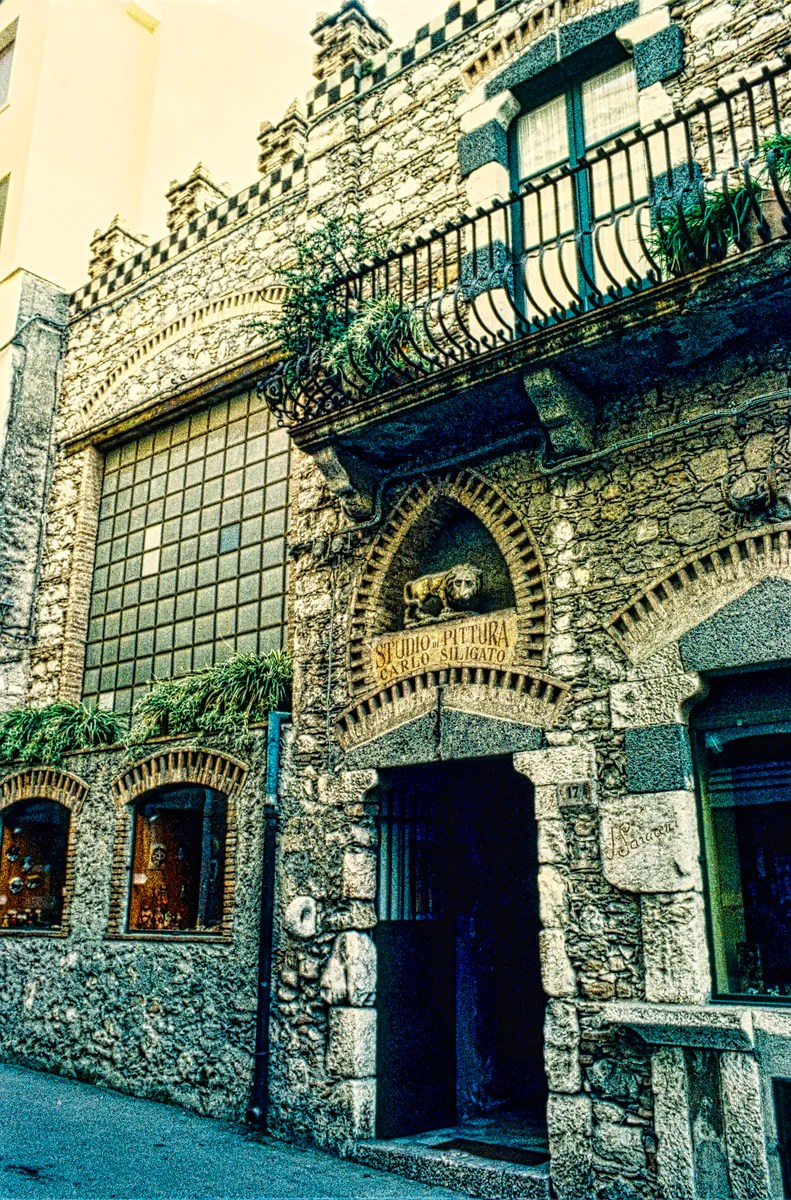
We enjoyed just walking around the town. I loved the architecture of this building owned by a painter. Note the use of green and grey stone. But the best part of staying in Taormina was having breakfast on our terrace with a view of the Teatro Antico and the sea. Priceless.
Centuripe
Travel Time: Taormina to Centuripe 92 km, 1:25 hr
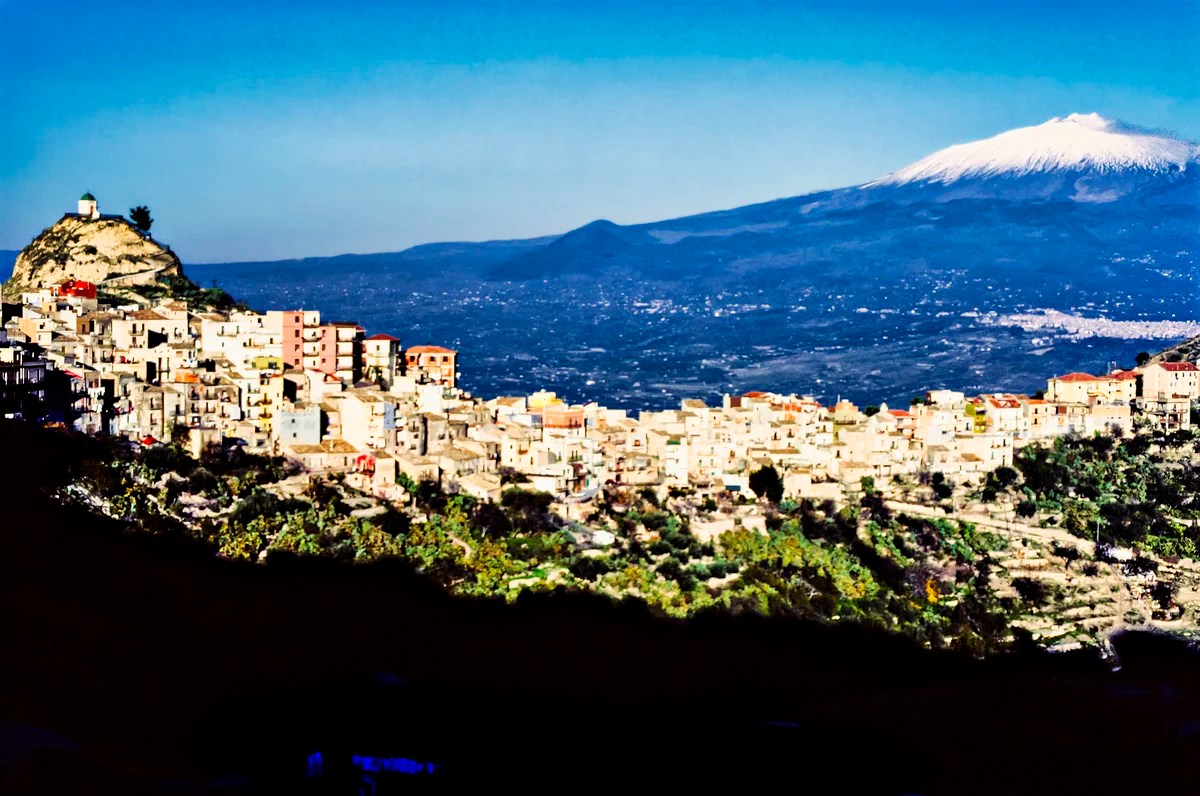
This is a small town with no major architectural draw. On the other hand, this piazza (G4.8) is more like a balcony on the side of the mountain with stunning views of Mt. Etna.
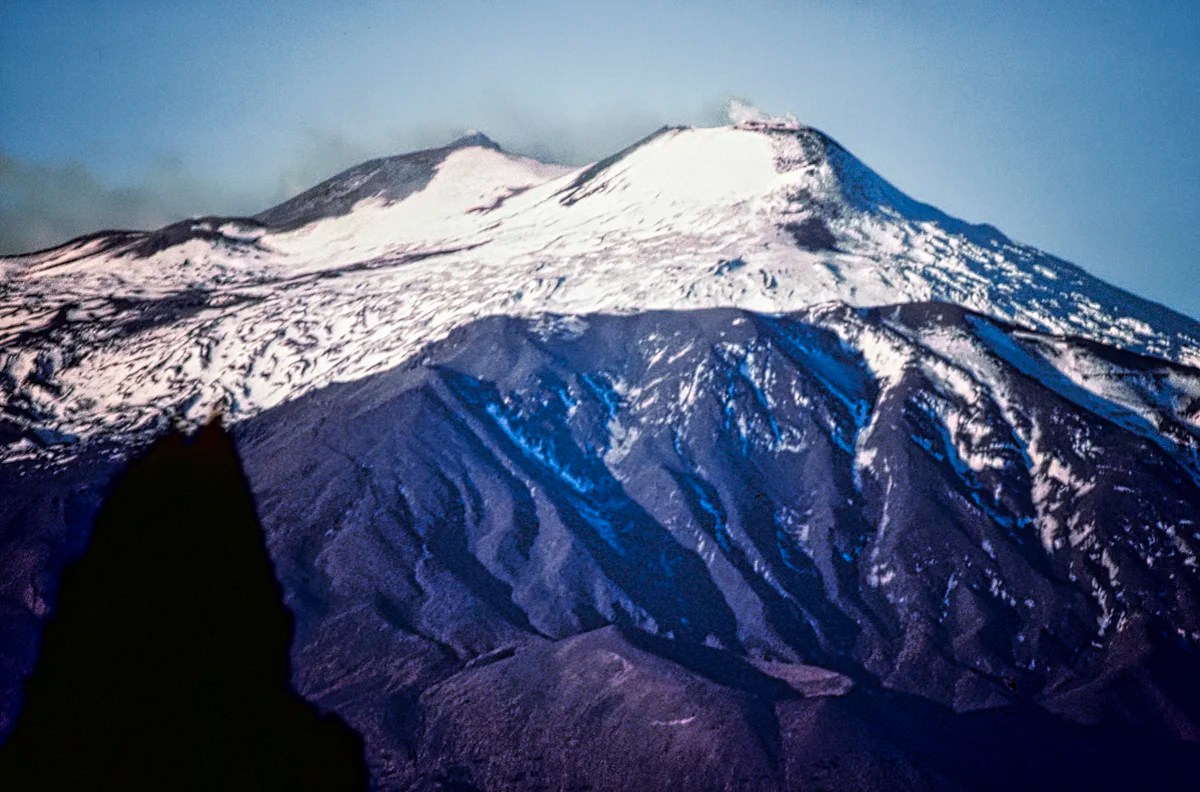
Etna is the most active volcano in Europe. There have been many volcanic events, but the 1669 eruption was the most destructive since 122 BC.
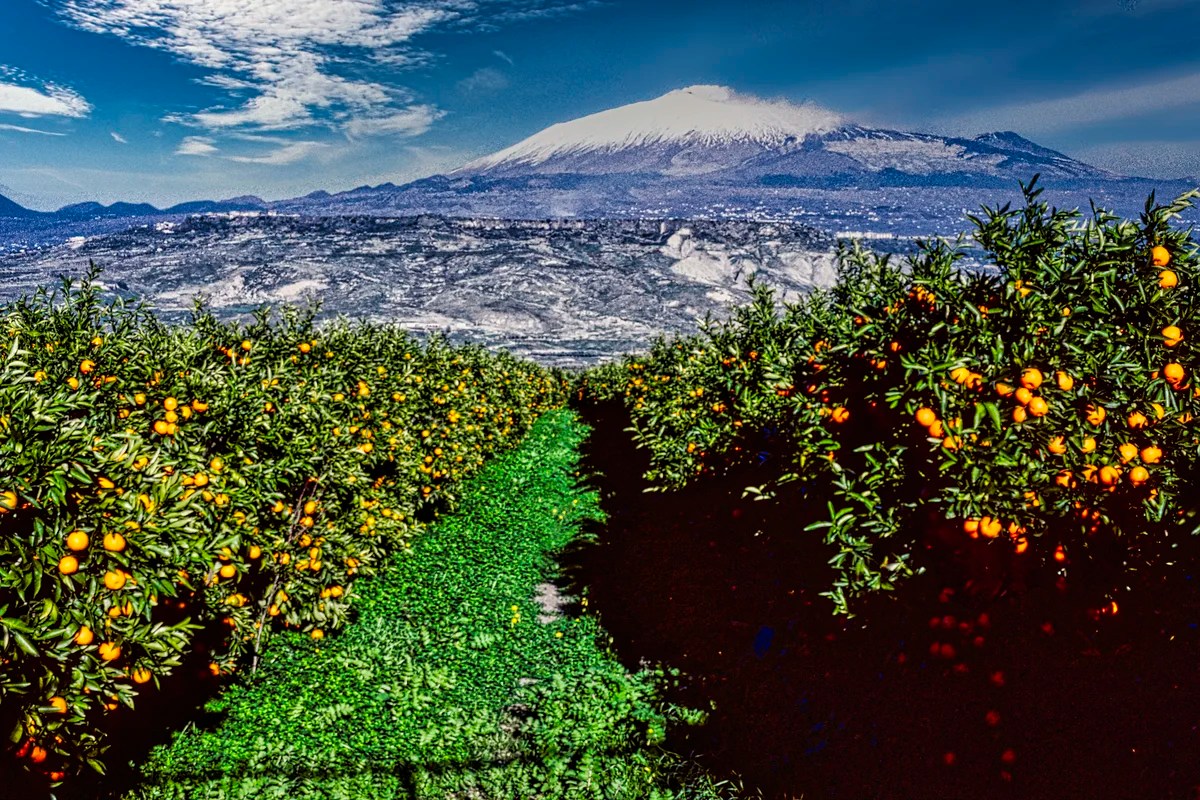
The Blood Orange was first grown in Europe along the southern Mediterranean coast of Italy in the 18th century. Blood oranges get their name from a distinctive red-coloured flesh made by anthocyanins in the fruit. We just like blood oranges for the taste and still buy them at home.
The National Institutes of Health (NIH) states that “Anthocyanins possess antidiabetic, anticancer, anti-inflammatory, antimicrobial, and anti-obesity effects, as well as prevention of cardiovascular diseases”. Time for another blood orange.
The unique microclimate of Etna produces high-quality blood oranges. In winter, the daytime temperature is ca. 15°C (59°F), but night temperatures can drop just below freezing for about an hour.
Siracusa (Syracuse)
Travel Time: Centuripe to Siracusa 102 km, 1:20 hr one way
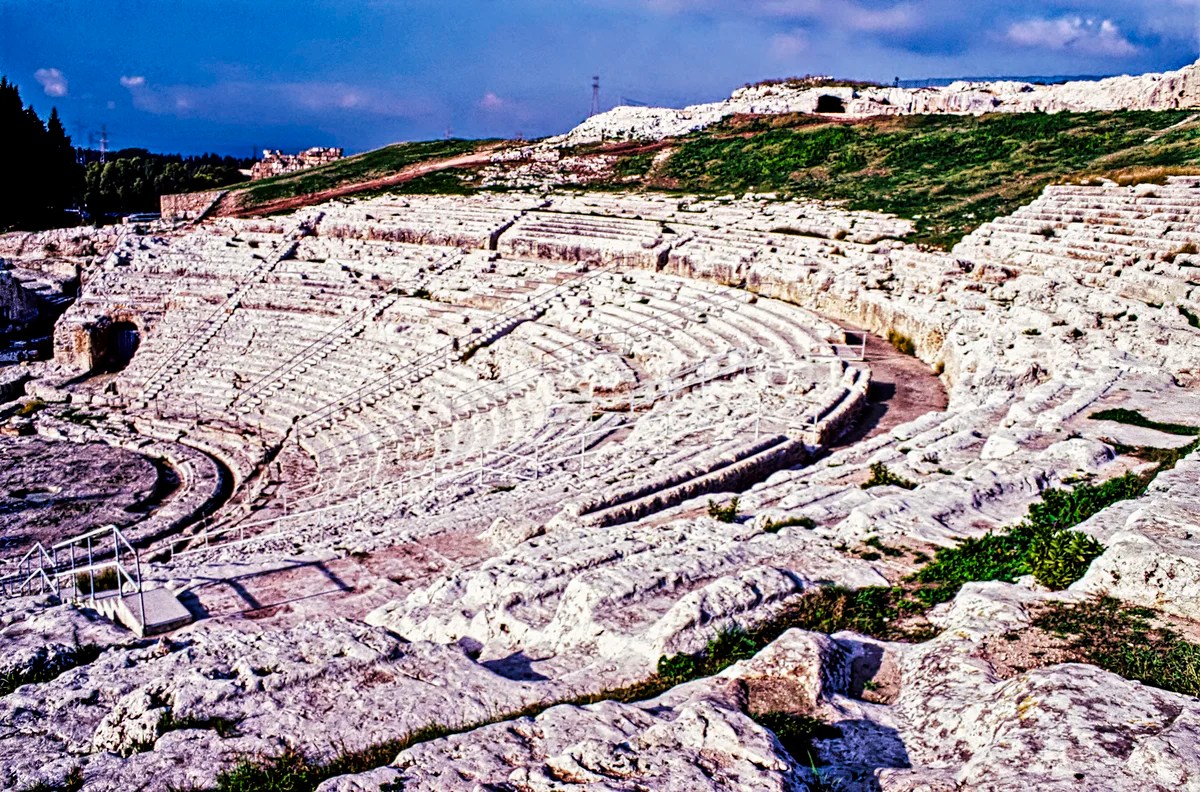
Syracuse is actually not on Southern Italy Itinerary. You have to decide if you want to make this extra side trip. Then head on to Piazza Amerina.
The Roman amphitheatre of Syracuse (G4.2) is one of the best preserved structures in the city of Syracuse. The amphitheatre is largely excavated out of the bedrock
Piazza Amerina
Travel Time: Centuripe to Piazza Amerina 81 km, 1:20 hr
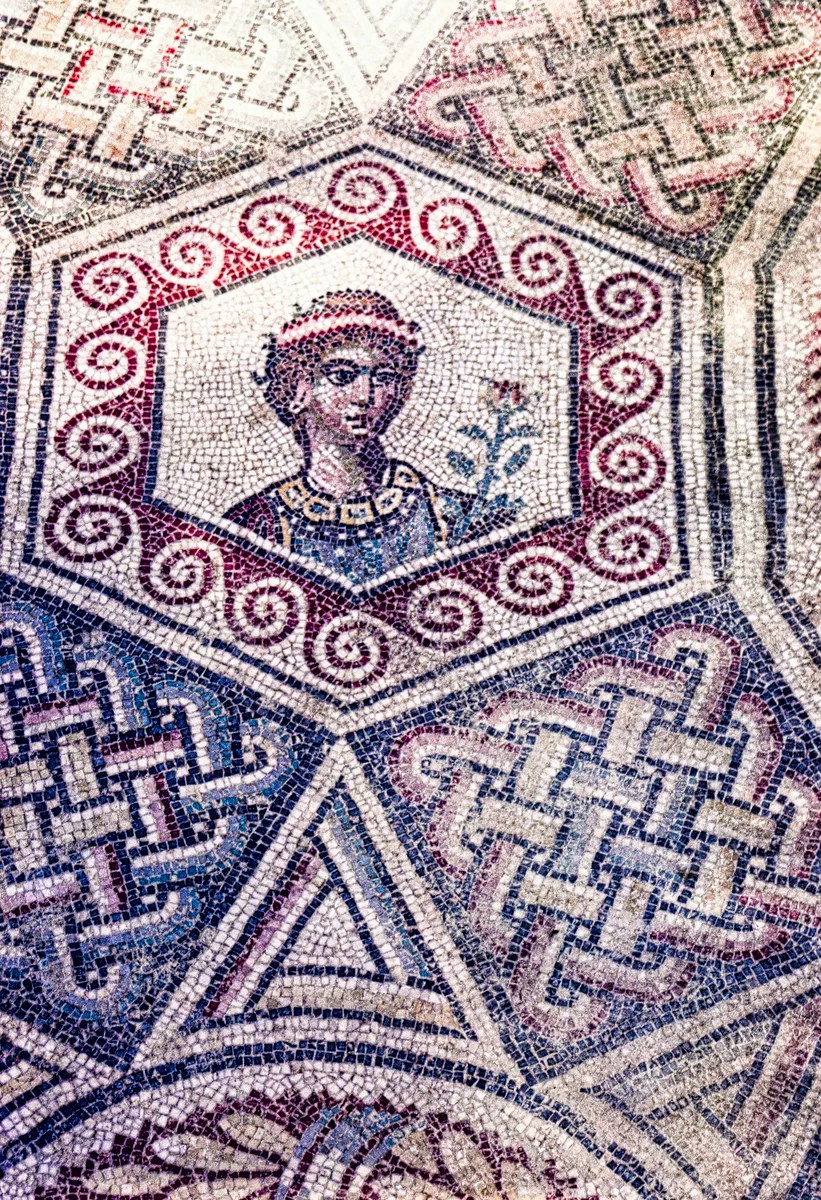
Piazza in Italian normally means a square, but in this case, Piazza Armerina is a town. It’s the location of the incredible and elaborate Villa Romana del Casale (G4.7), which dates to the early 4th century AD.
Villa is Latin for country house, but this was much more like a palace. With 40 rooms and 3,500 m2 (37,700 ft2) of floors covered with amazing mosaics, it should not be surprising that this villa is a UNESCO World Heritage Site.
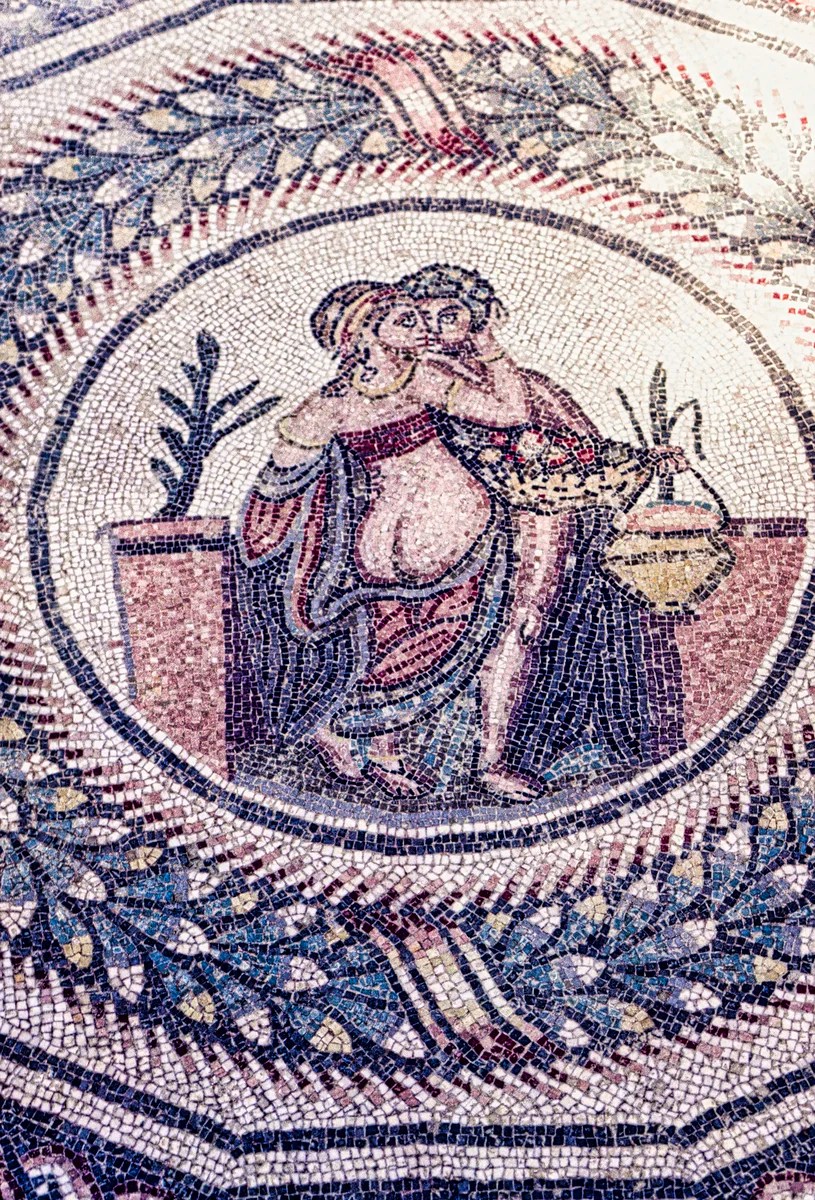
The floors are not only mosaic but also opus sectile, where stone, marble, mother of pearl, and glass are cut and inlaid into floors to make a picture or pattern.
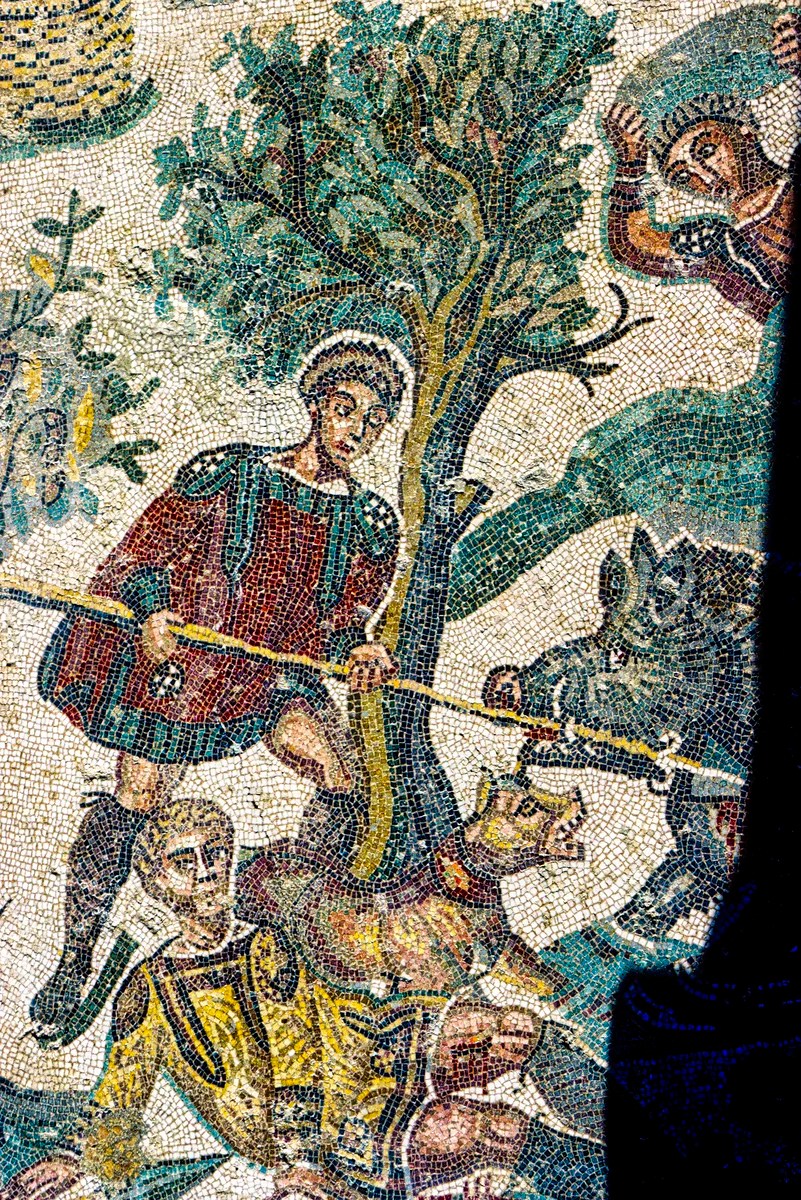
The floors are amazingly preserved. The villa was destroyed by a ca. 7.0 magnitude earthquake in 1169 and was buried under a landslide of mud. It remained buried until cultivation in the 19th century brought pieces of mosaic to the surface.
Agrigento
Travel Time: Piazza Amerina to Agrigento 102 km, 1:30 hr
We met a folk hero here known as the Avvocato (lawyer), a retired judge who helped average people with their legal problems. He took us under his wing and we got to know Sicilian culture very well. Agrigento is a hilltop city on Sicily’s southwest shore. As the avvocato would say, “che brutta”, how ugly. But it is the surrounding area that is spectacular.
Valley of the Temples (Valle dei Templi)
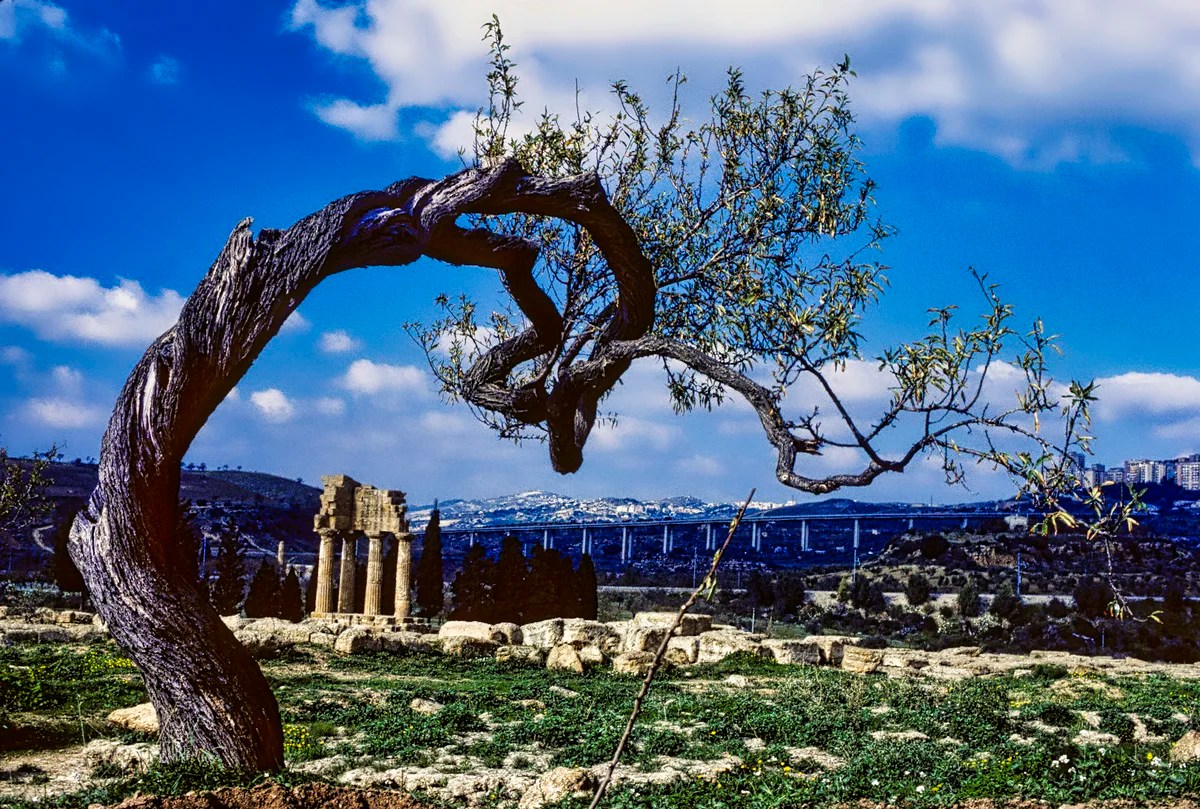
More a ridge than a valley, the Valley of the Temples (G4.7) was the site of an important Ancient Greek city-state of Akragas, founded in around 580 BC. It was one of the leading cities of Magna Graecia until it was conquered and destroyed by the Carthaginians in 406 BC.
The Valley of the Temples is a vast archaeological site with 9 well-preserved Greek temples. So what happened to all the other temples? They were destroyed by earthquakes and then used as a quarry by Christians.
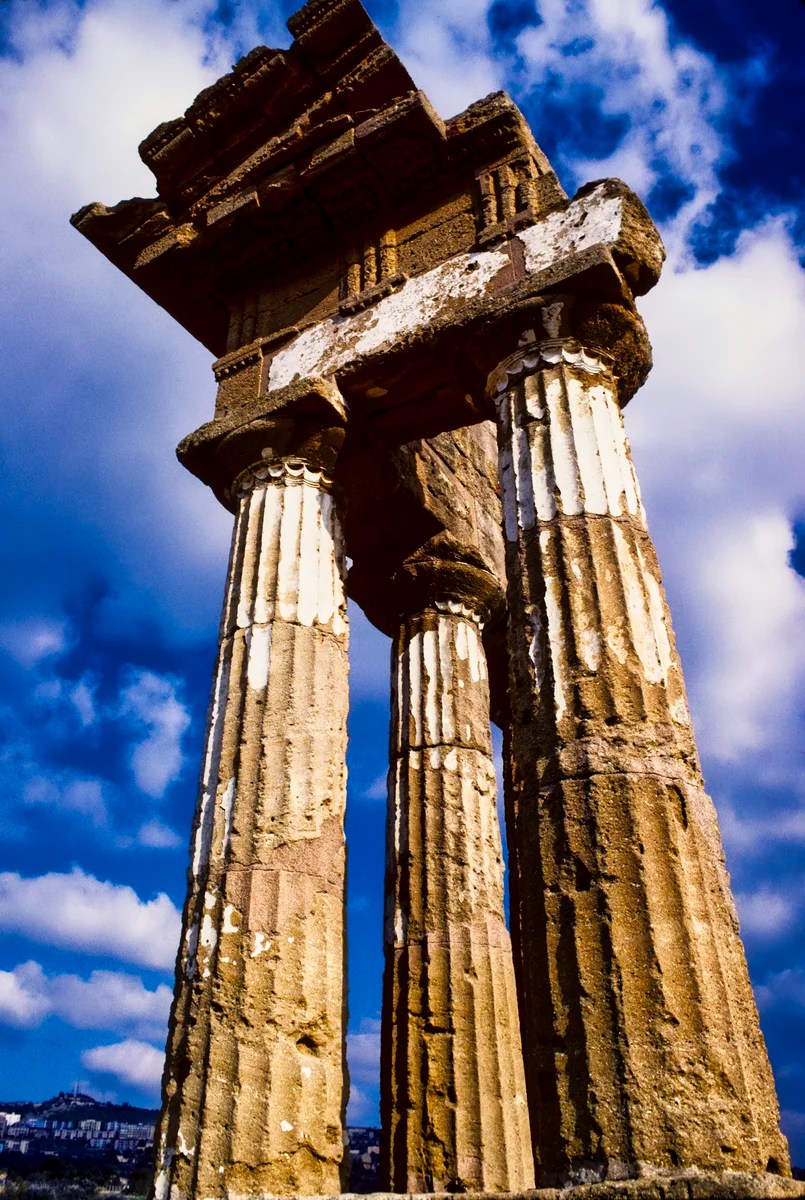
The Doric Temple of the Dioscuri (G4.7) was built between 480 and 460 BC. In 1836, the building was cleared of rubble.
Castor & Pollux are twin half-brothers (don’t ask how) of the same mother Leda, who became Queen of Sparta. She was the subject of many Leda and the Swan paintings in the Renaissance. Pollux was the son resulting from Zeus raping Leda in the guise of a swan.
The twins are protagonists in the story of Jason and the Argonauts. They were also associated with horsemanship, in keeping with their origin as the Proto-Indo-European (PIE) horse twins. In Greek the twins are known collectively as the Dioscuri; in Latin as the Gemini. Zeus transformed them into the constellation Gemini, now a part of the Zodiac.
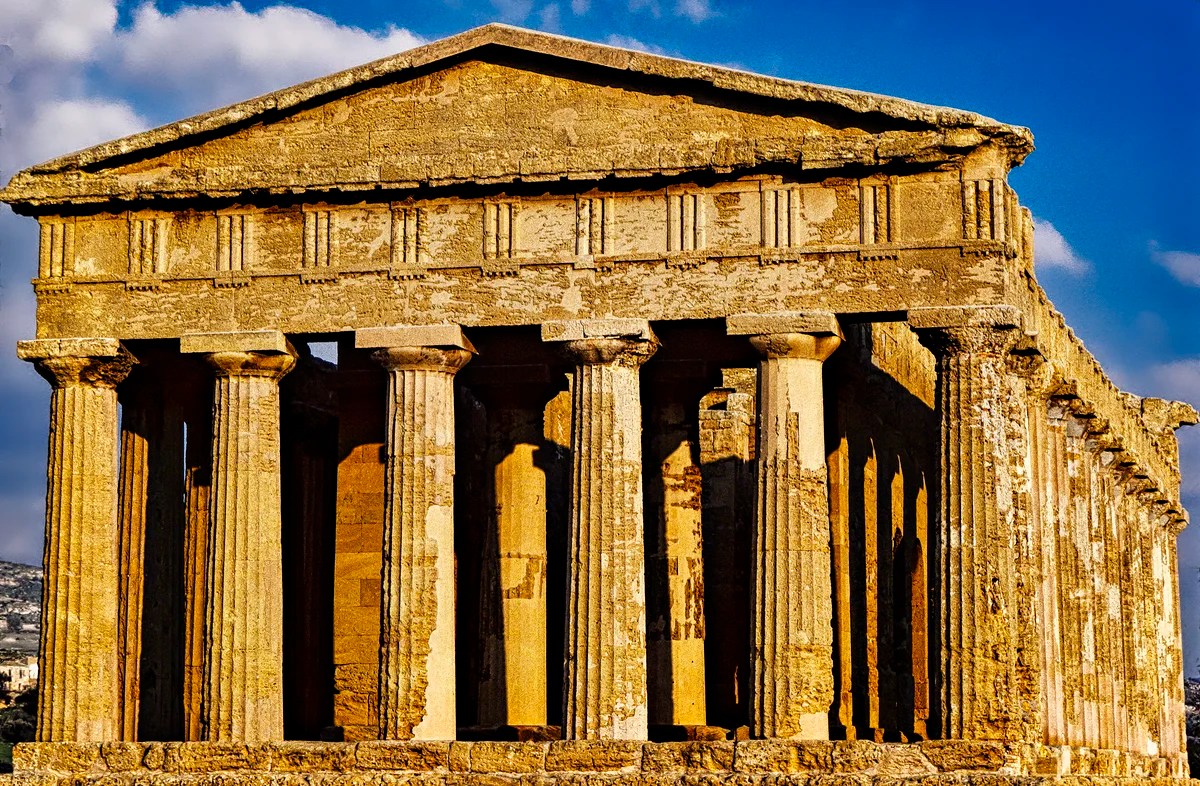
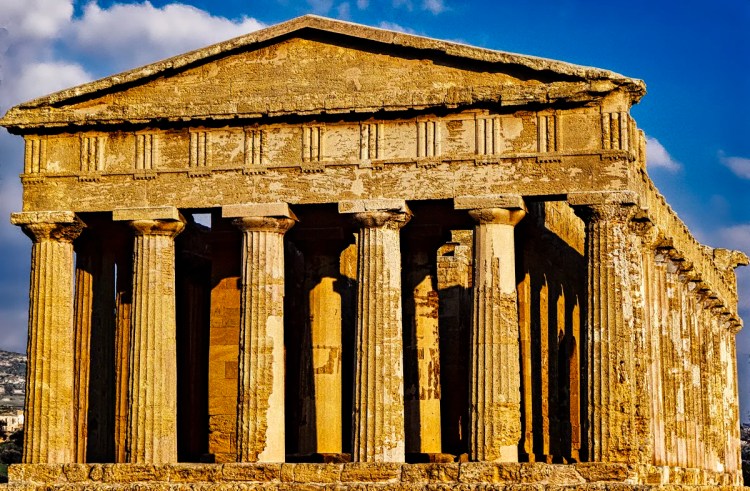
Apart from the Parthenon, the Temple of Concordia (G4.8) is the best preserved Doric temple in the world. Its preservation is due to its having been converted into a Christian church in 597 AD.
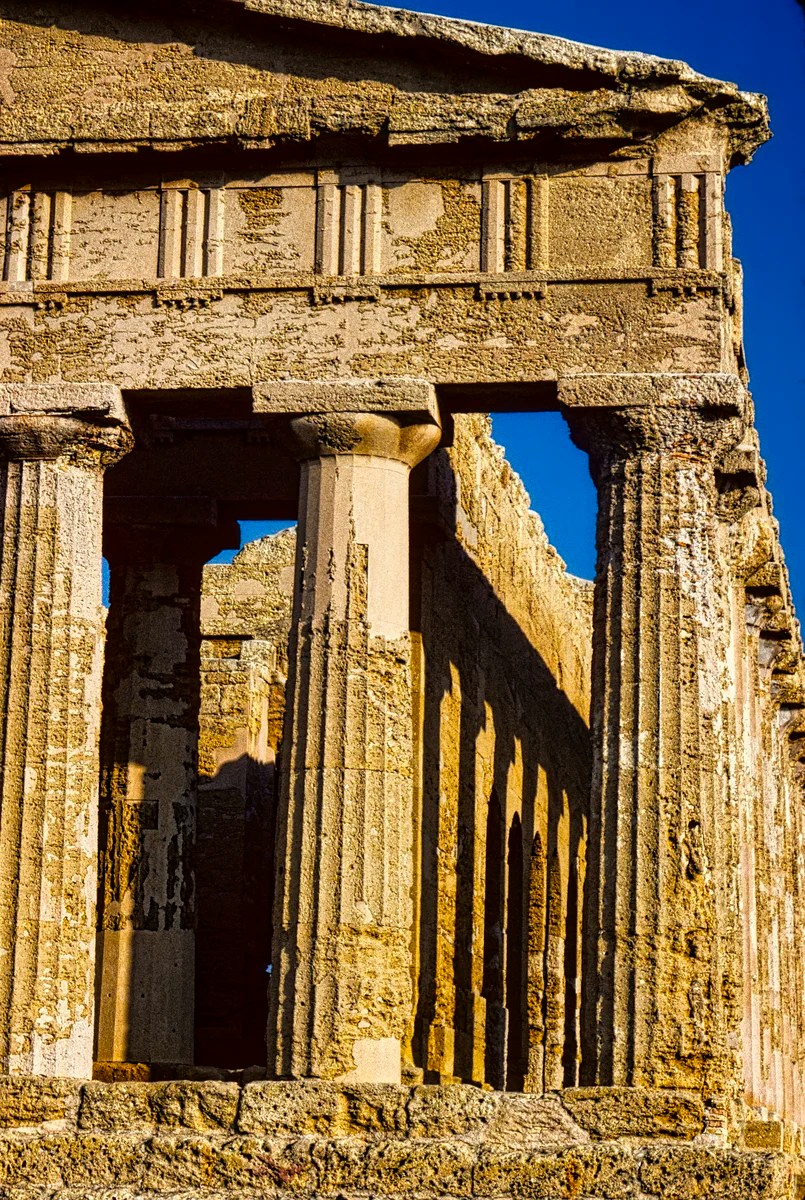
The temple was dedicated to Concordia, the Roman goddess of harmony. It was built around 430 BC using 78 Doric columns, each one measuring 6 metres high.
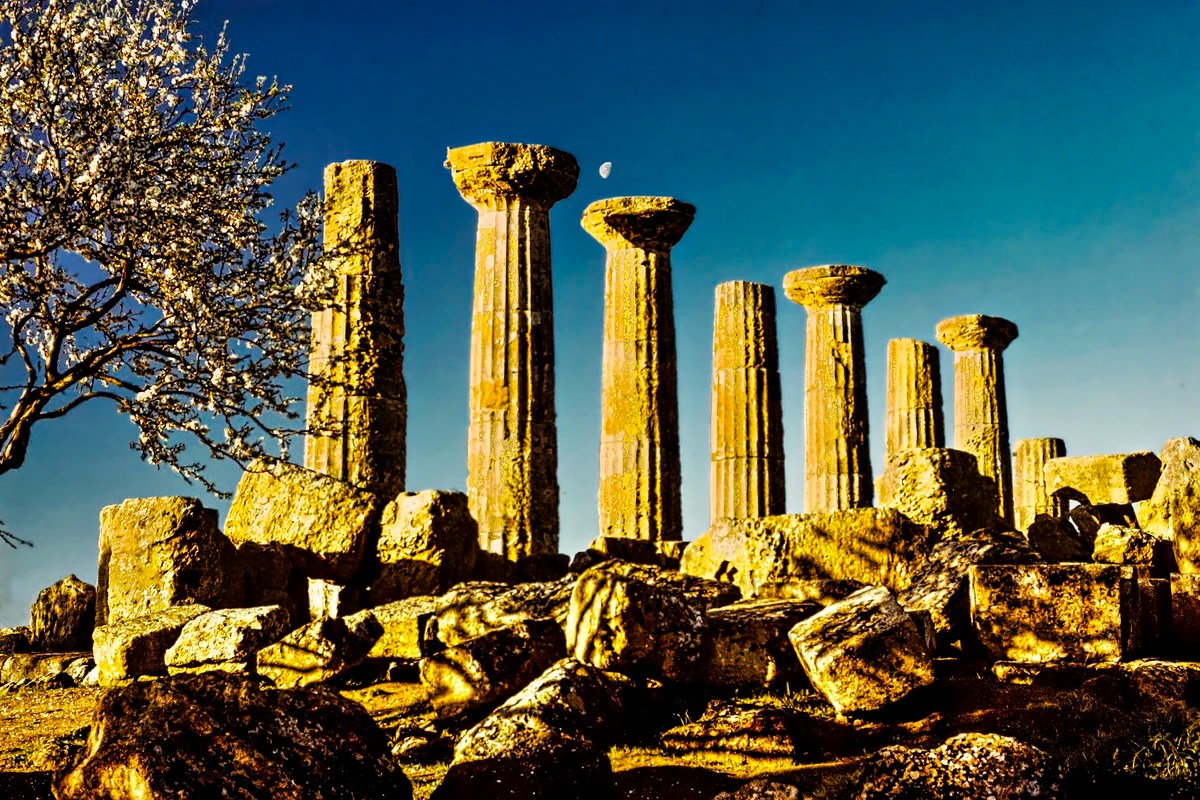
Tempio di Ercole (Temple of Hercules G4.7) dates to the 6th century BC. Do you see how a column with Herculean strength is supporting the moon?
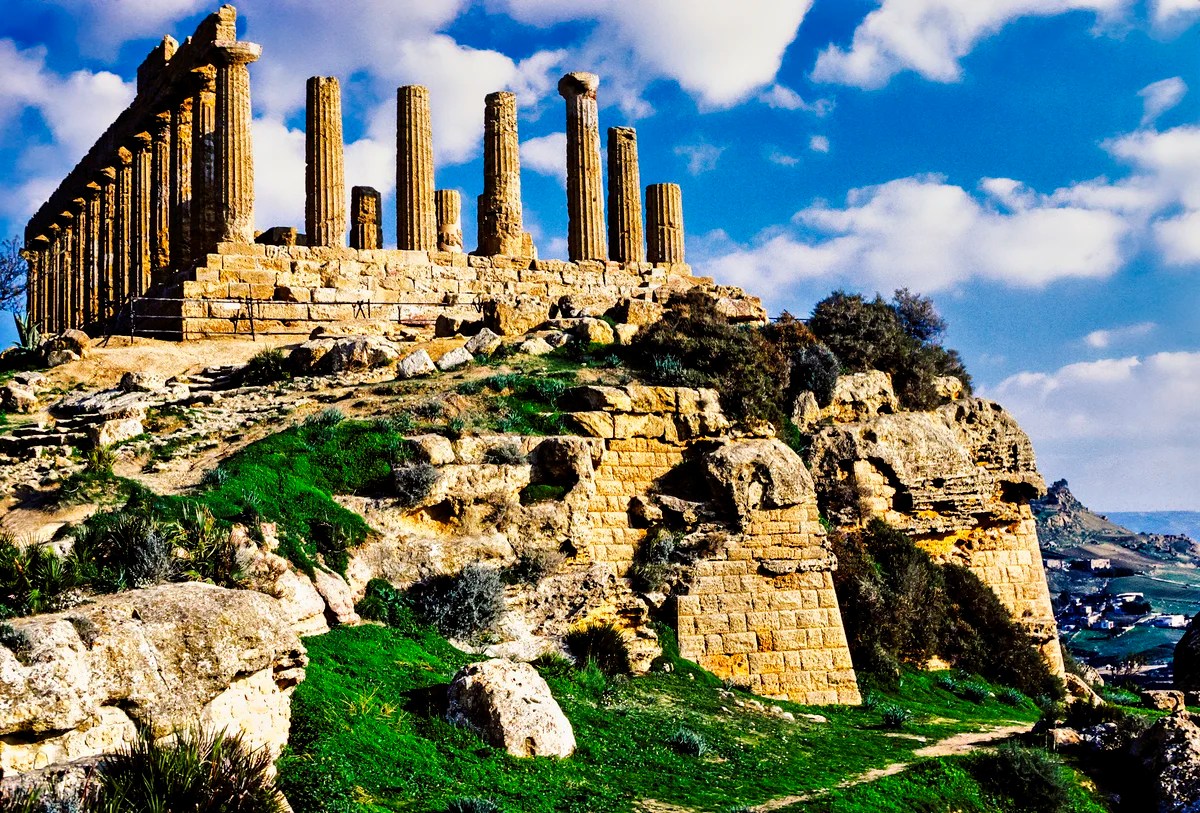
The Temple of Juno Lacinia (also known as the temple of Athena) was built around 450 BC. It consists of a peristyle of thirty-four Doric columns surrounding an inner courtyard. Each 6.4 metre-high column was formed from four stacked drums. In other words, they did not create one massive column and raise it vertically. The flutes were carved after the column was assembled.
Evidence was found of a fire that followed the Siege of Akragas (406 BC) by the Carthaginians. In fact, many Carthaginian soldiers died here from a plague, including an ancestor of the great Carthaginian general, Hannibal.
Festivals
Italy is a land of festivals. While there are many places to see, attending a festival is a unique experience.
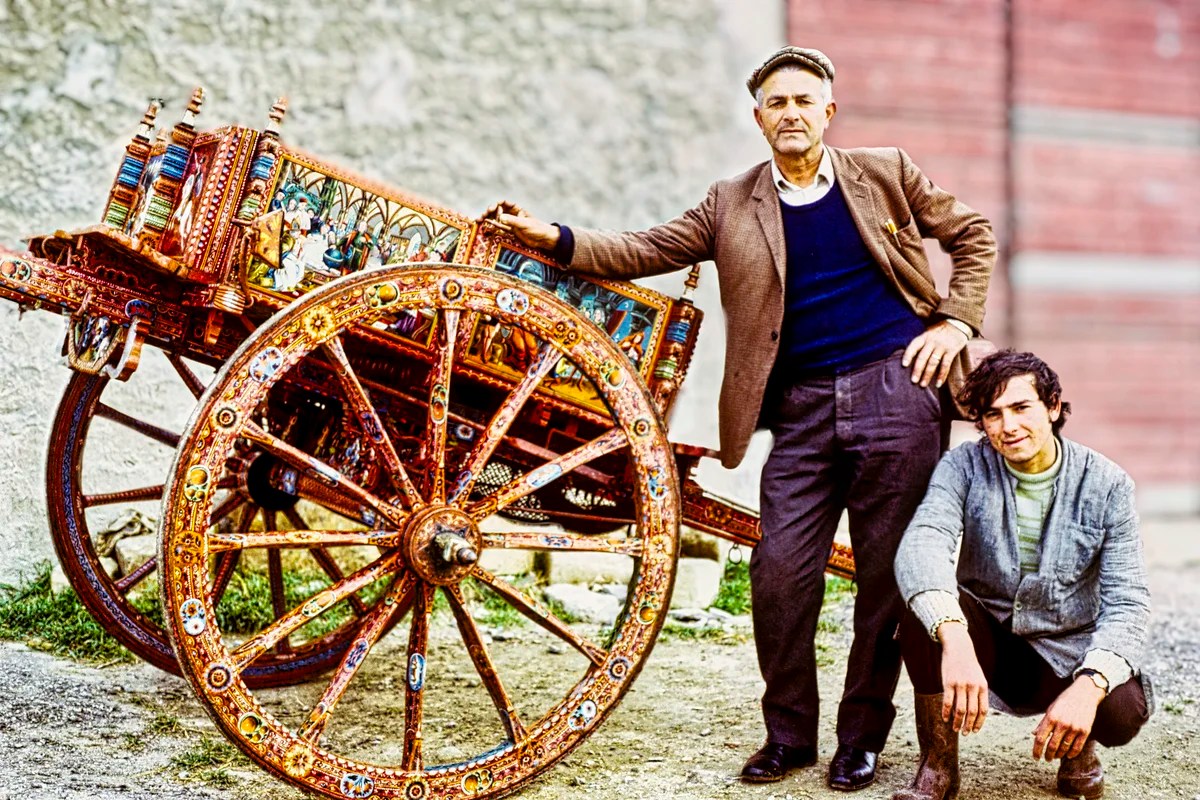
One advantage of connecting with the Avvocato is that we met lots of people. These two farmers were very proud to show us their Sicilian cart. These fancy carts were used to transport goods throughout the island from the 19th to the 20th century. Today, they are used in festivals and parades. This cart is brightly painted with scenes from Sicilian folklore.
Sagra del Mandorlo in Fiore
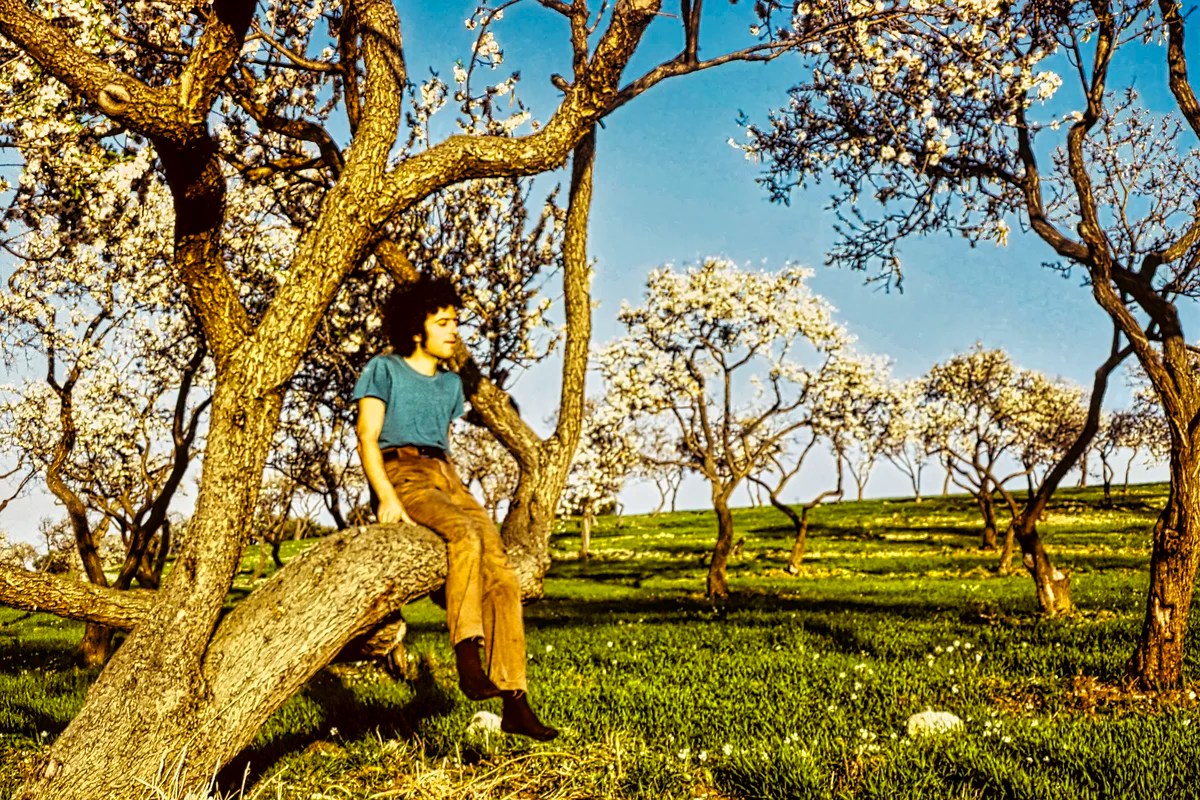
One of our most special experiences was attending the Sagra del Mandorlo in Fiore (the Almond Blossom Festival) in February-March. It was spring in Sicily, and the pink-tinged white almond blossoms covered the trees of the Valley of the Temples. It was a magical time to see the temples.
The event begins with a ride to the Valley of the Temples at sunset, and continues with the lighting of the friendship torch in front of the Temple of Concordia. The following days was a series of folk music performances and Sicilian food tasting. The last day of the festival includes the most important event, where the folk groups form a parade with Sicilian carts and musical bands, and travel from the city to the Valley of the Temples.
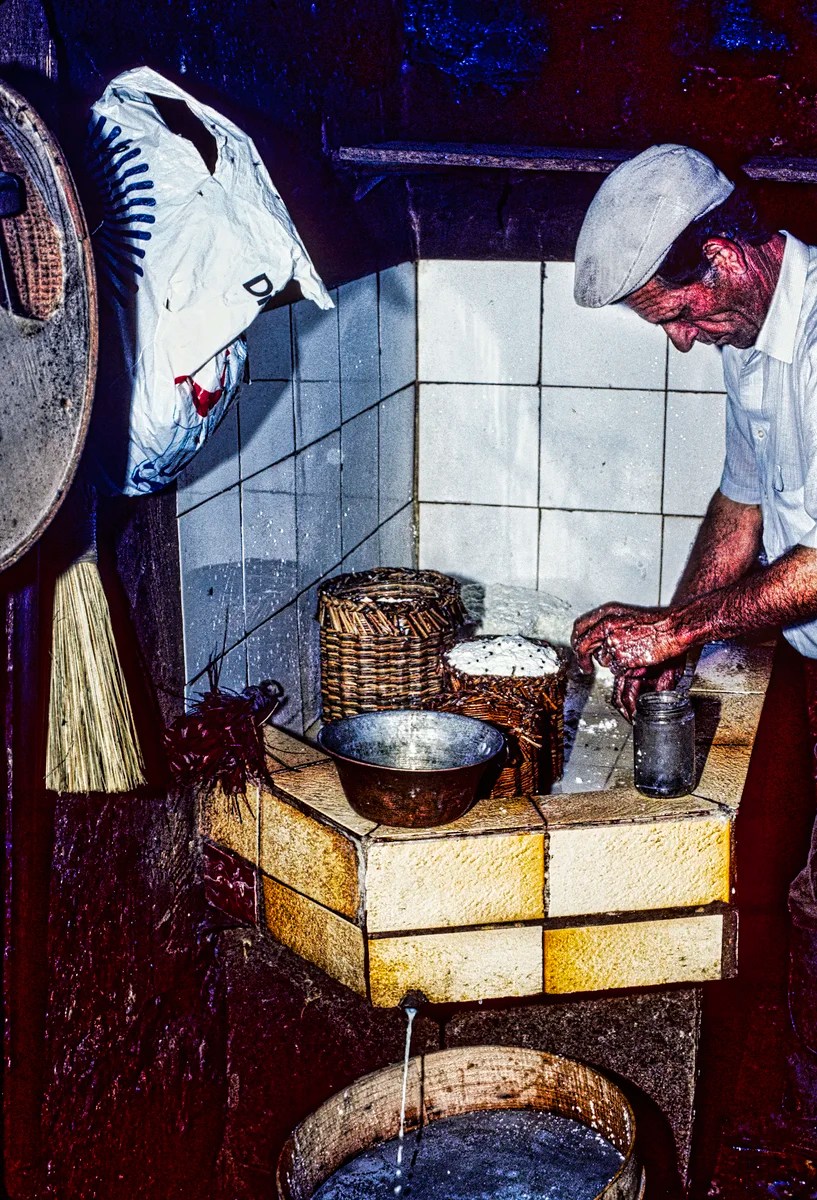
The avvocato brought us to a farmer to watch him make and taste real ricotta cheese while it was still warm! There was no comparison to the ricotta back in North America. Little did we realize that 14 years later we would live in Italy, where we could go to the local latticini to buy real mozzarella di bufala (buffalo), burrata, ricotta, and other delicacies. The ravioli was delicious.
Northwestern Sicily
At this point you have sampled the best places to see in Sicily. If you are short of time, you can head back 264 km, 3:15 hrs to Messina.
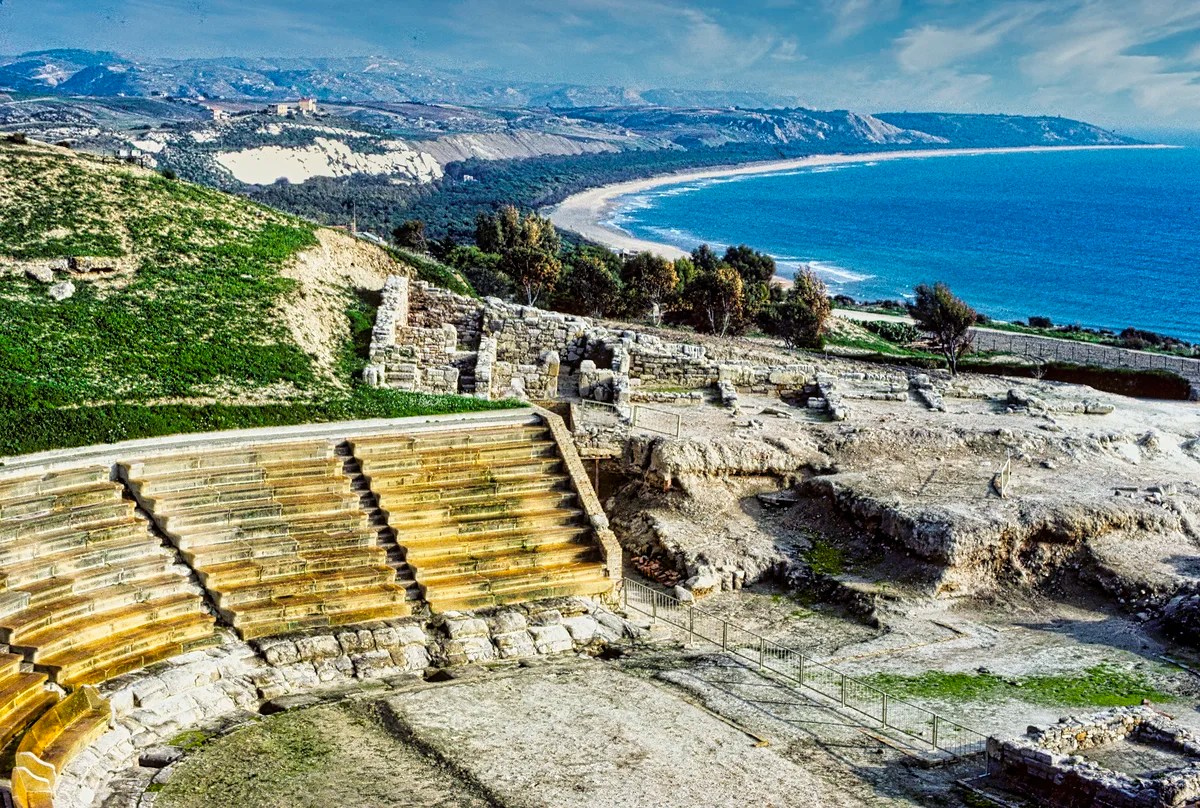
Travel Time: Agrigento to Erice 184 km, 2:25 h
If you have enough time left, you can continue the circumnavigation of the island of Sicily. The theatre at Eraclea Minoa is most notable for the view. Next, you could visit Erice, one of I Borghi più belli d’Italia, the most beautiful small towns of Italy. This classification is described in the last section of this post.
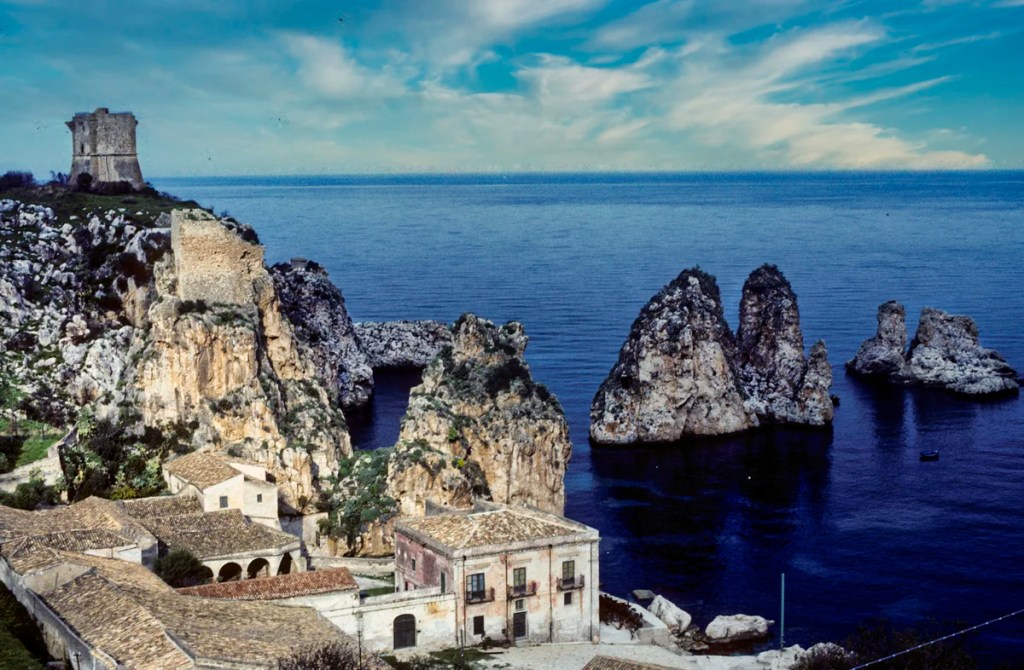
Travel Time: Erice to Cefalu 181 km, 2:40 h
Travel Time: Cefalu to Messina 173 km, 2:35 h
From here it’s a short distance to Tonnara di Scopello and then Cefalù, another I Borghi più belli d’Italia.
Calabria, Apulia & Basilicata Regions
Alberobello
Travel Time: Messina to Alberobello 413 km 5:15 hr + Ferry time
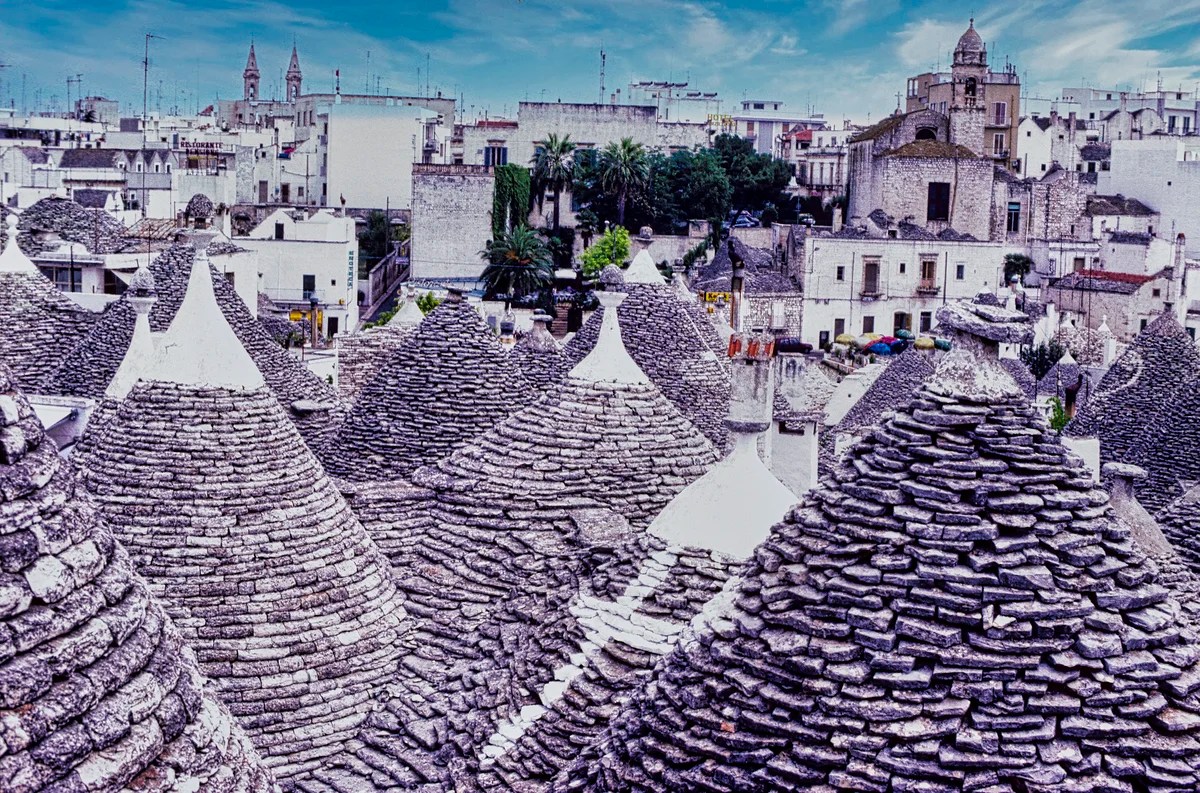
Alberobello is a town in Italy’s Apulia region. It’s known for its trulli, whitewashed stone huts with conical roofs. But why does this city have such unusual architecture?
For most of the period between 1282 and 1816, southern Italy was controlled by Aragon (Spain) as a separate Kingdom of Naples. In the 1500s, the Acquaviva family, the local rulers of Alberobello, wanted to expand their city but avoid paying more property taxes to Spain.
They ordered peasants to build their houses and dwellings without mortar so that, if there was a royal inspection, the structures could quickly and easily be taken down, and the tax bill would stay low.
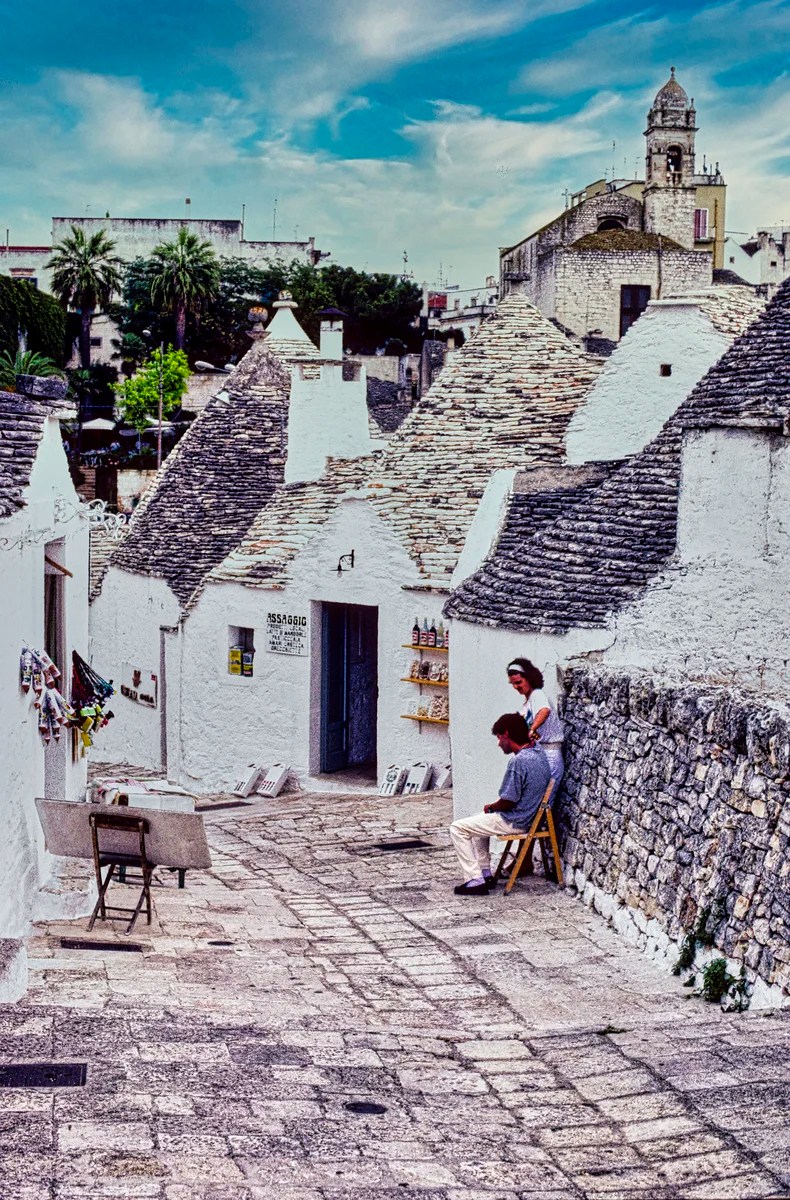
The expansion of the urban area was helped by the abundance of limestone and calcareous rocks, which would be the basis of trulli architecture.
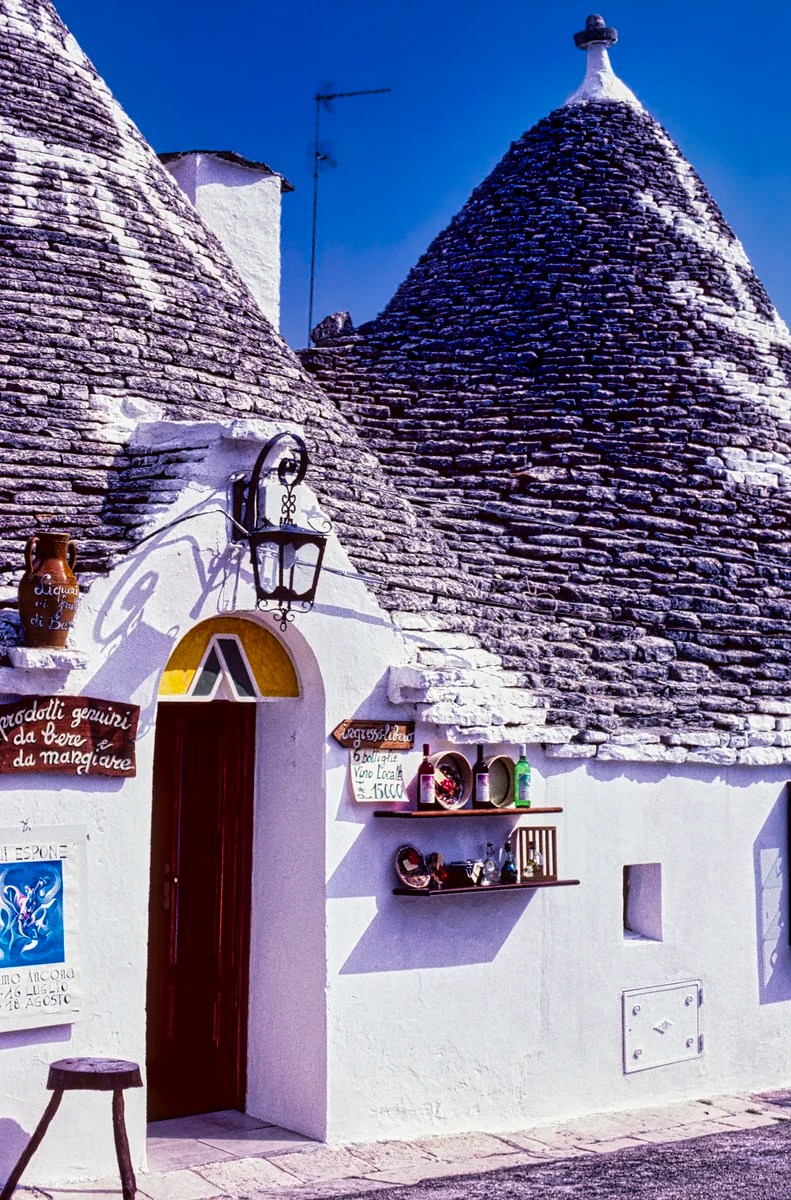
Since they could only use stones, the peasants found the easiest construction was a conical form with a self-supporting domed roof. The roofs were embellished with decorative pinnacles representing the signature of the architect (master trullaro).
In 1816, the French took over control of both peninsular Southern Italy and Sicily and renamed the Regno delle Due Sicilie (Kingdom of Two Sicilies). Today, that is the name of a delicious gelato flavour combining pistachio and nocciola (hazelnuts) sold in our city.
Matera
Travel Time: Alberobello to Matera 68 km 1:10 hr
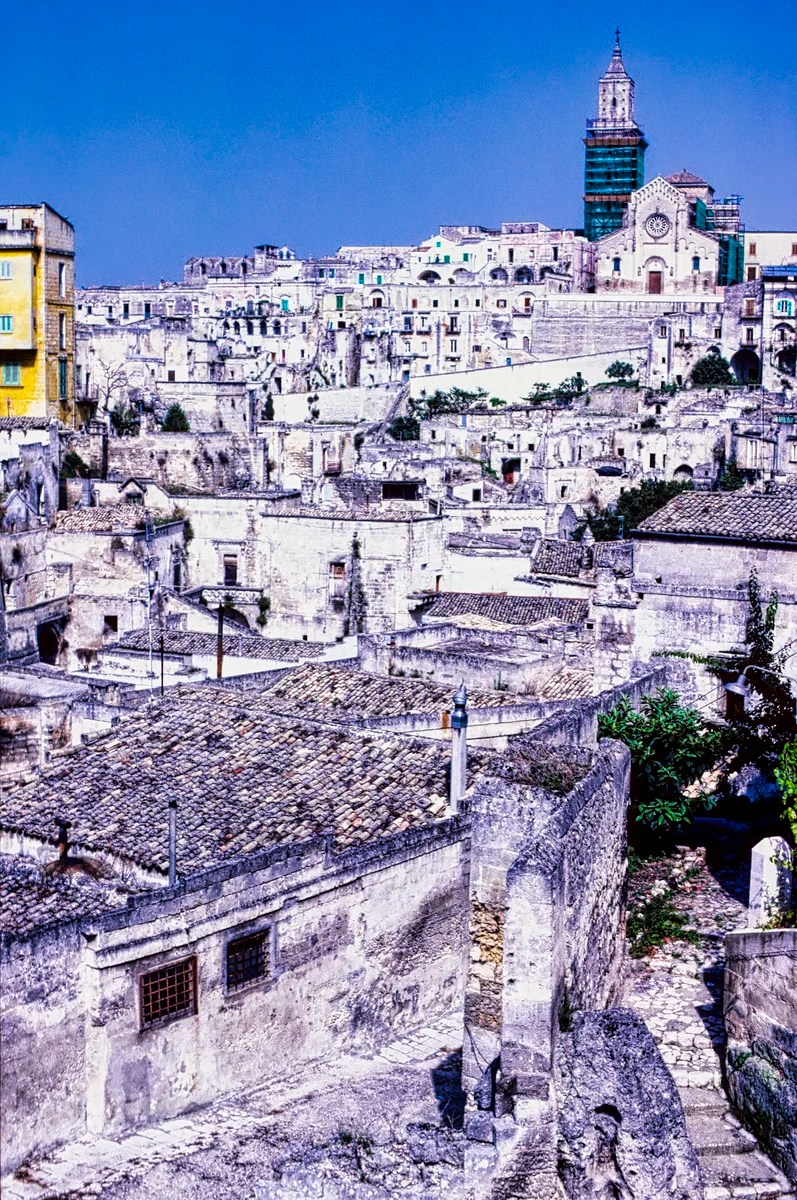
The city of Matera has narrow streets and lanes with a desert-like, white-washed look. Indeed, it is very hot in the summer. In the upper right of the photo is the Matera Cathedral and its campanile (bell tower) under repairs. It was built in 1270 in Apulian Romanesque style on the highest point of the city of Matera.
Sassi di Matera
The Sassi originate from a prehistoric troglodyte settlement and are suspected to be among the first human settlements in Italy. There is evidence that people were living here as early as the year 7000 BC.
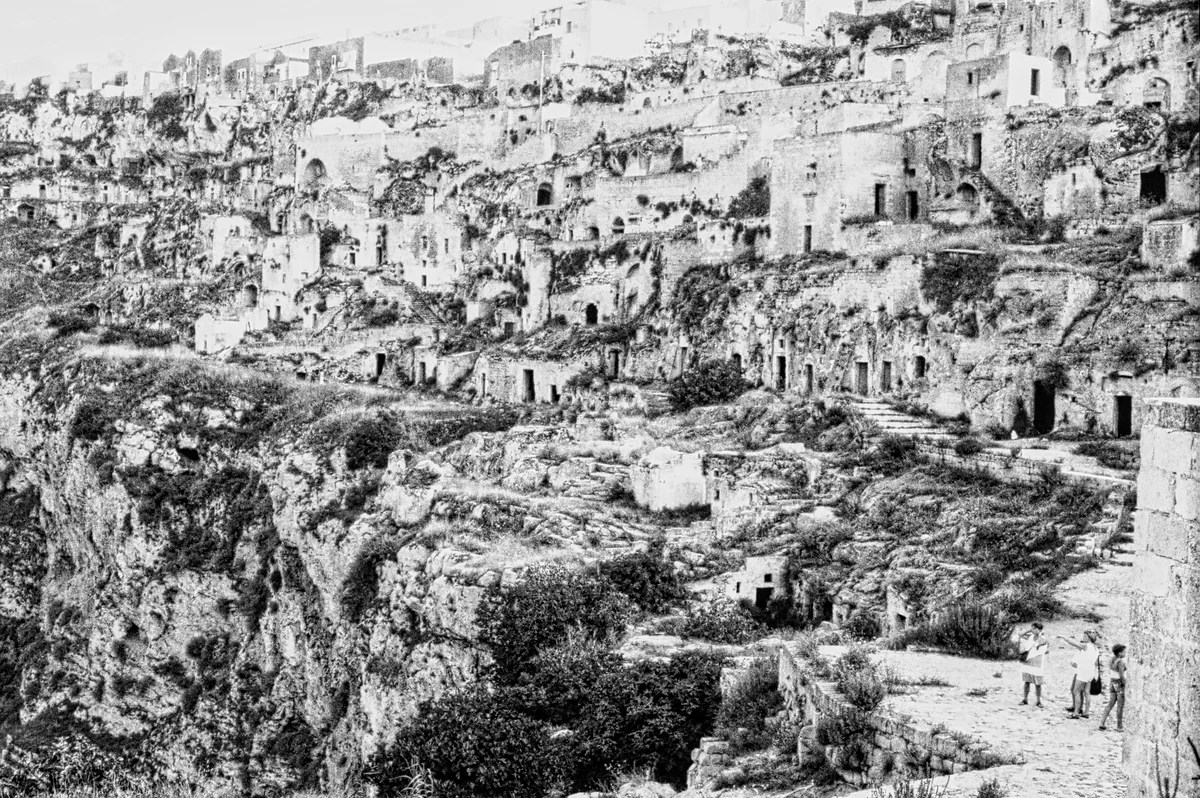
The term sasso derives from Latin saxum, meaning a hill, rock or great stone. The Sassi are houses dug into the calcarenitic rock, which is characteristic of Basilicata and Apulia. It is locally called “tufo” although it is not volcanic tufa. The streets in some parts of the Sassi often run on top of other houses. The ancient town grew up on one slope of the ravine created by the Gravina river. This used to be a place of terrible poverty.
Hill Towns
One of the quintessential aspects of Italy is the Hill Town. There are many stunning hill towns to explore, and plenty of them are in the south. These three hill towns are just south of Rome.
Arpino
Travel Time: Matera to Arpino 359 km, 4:05 hr
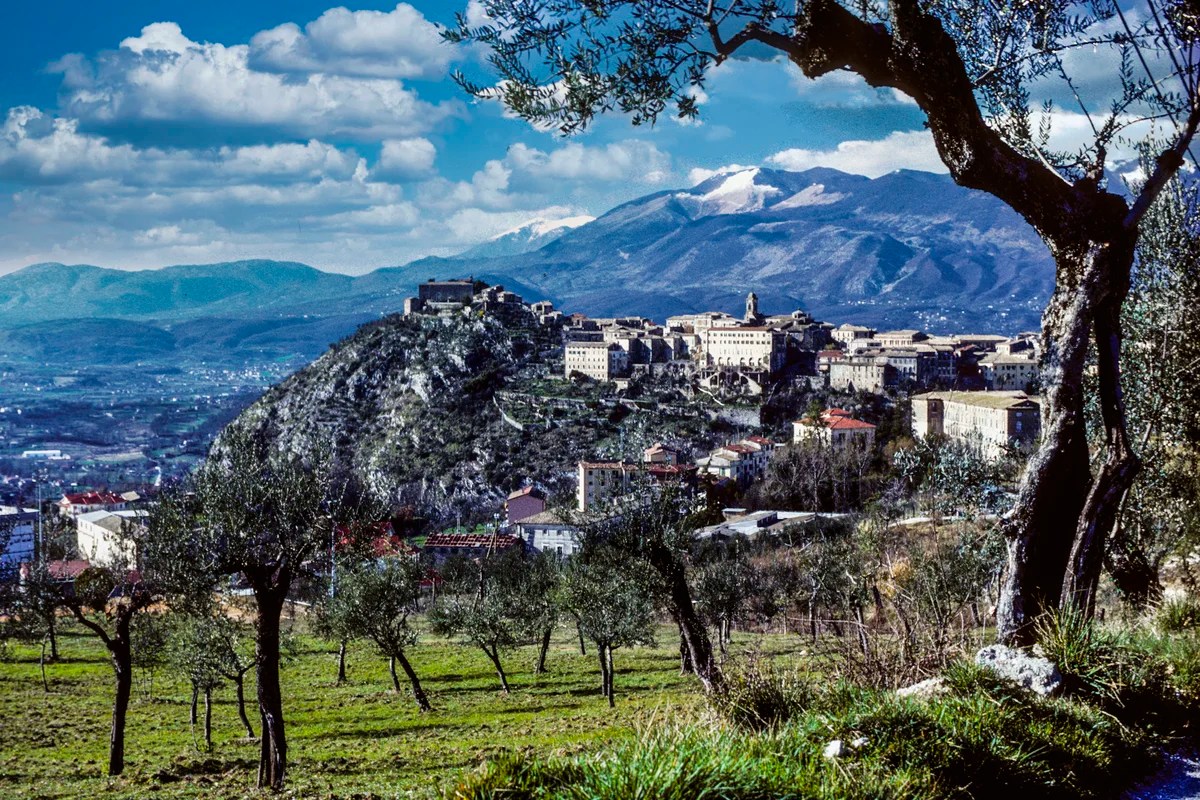
The ancient city of Arpinum dates back to at least the 7th century BC. Arpino was the birthplace of a very famous Roman philosopher and orator. Cicero referred often to the peace and quiet of his beloved Arpinum.
At the top of the hill is the Benedictine abbey of Montecassino, scene of a decisive World War II battle. Today, Arpino has a population of only 7000 people.
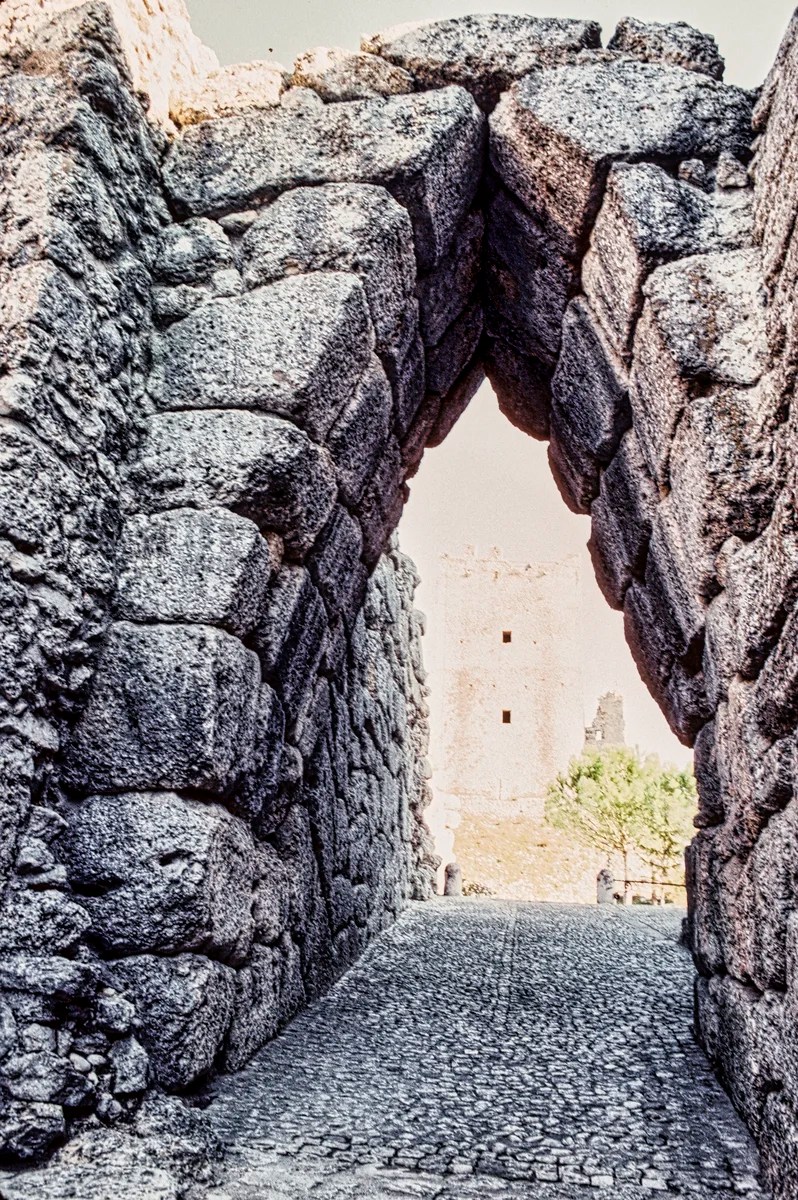
Arco a Sesto is a unique pointed archway that dates to the middle of the Iron Age in the 7th century BC. It was built by a Proto-Indo-European tribe that came before the Greeks or Romans.
Pico
Travel Time: Arpino to Pico 36 km, 41 min
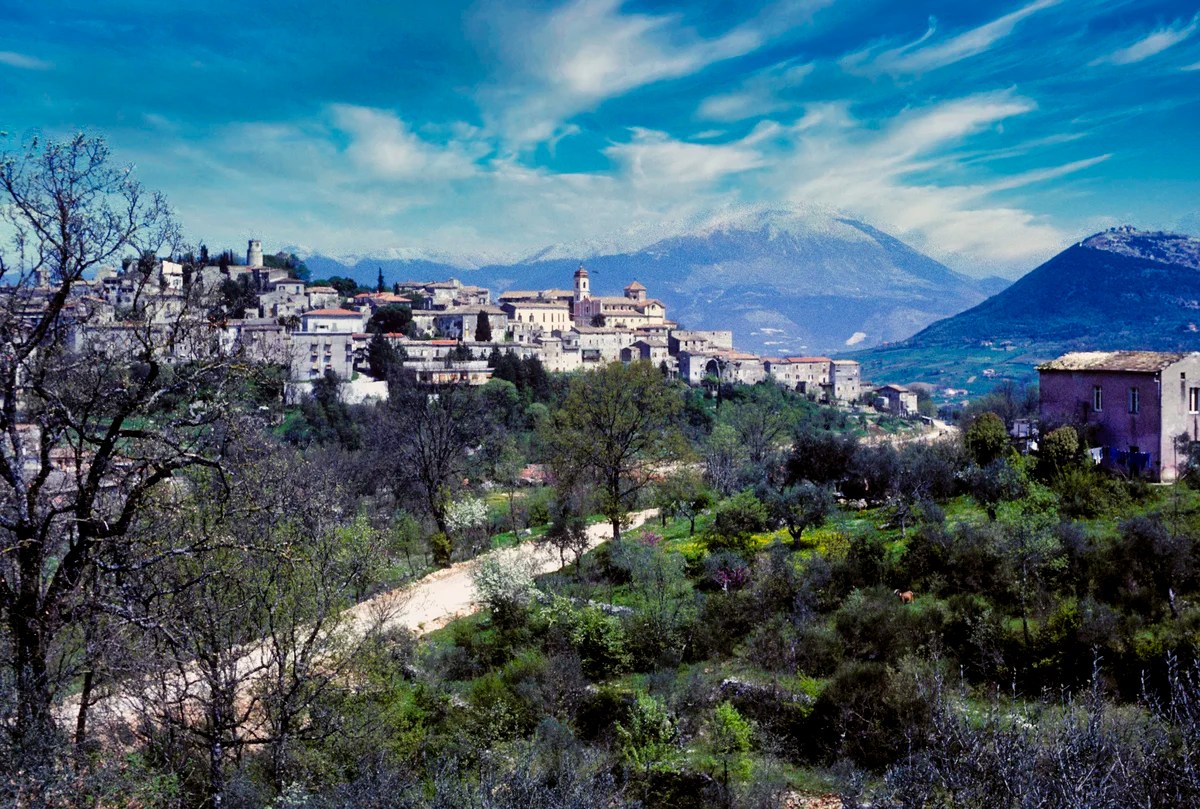
Pico means pointy peak, probably the site of the castle. It’s a quiet medieval village off the beaten track. Pico is on I Borghi più belli d’Italia list.
San Gregorio da Sassola
Travel Time: Pico to San Gregorio da Sassola 116 km, 1:30 hr
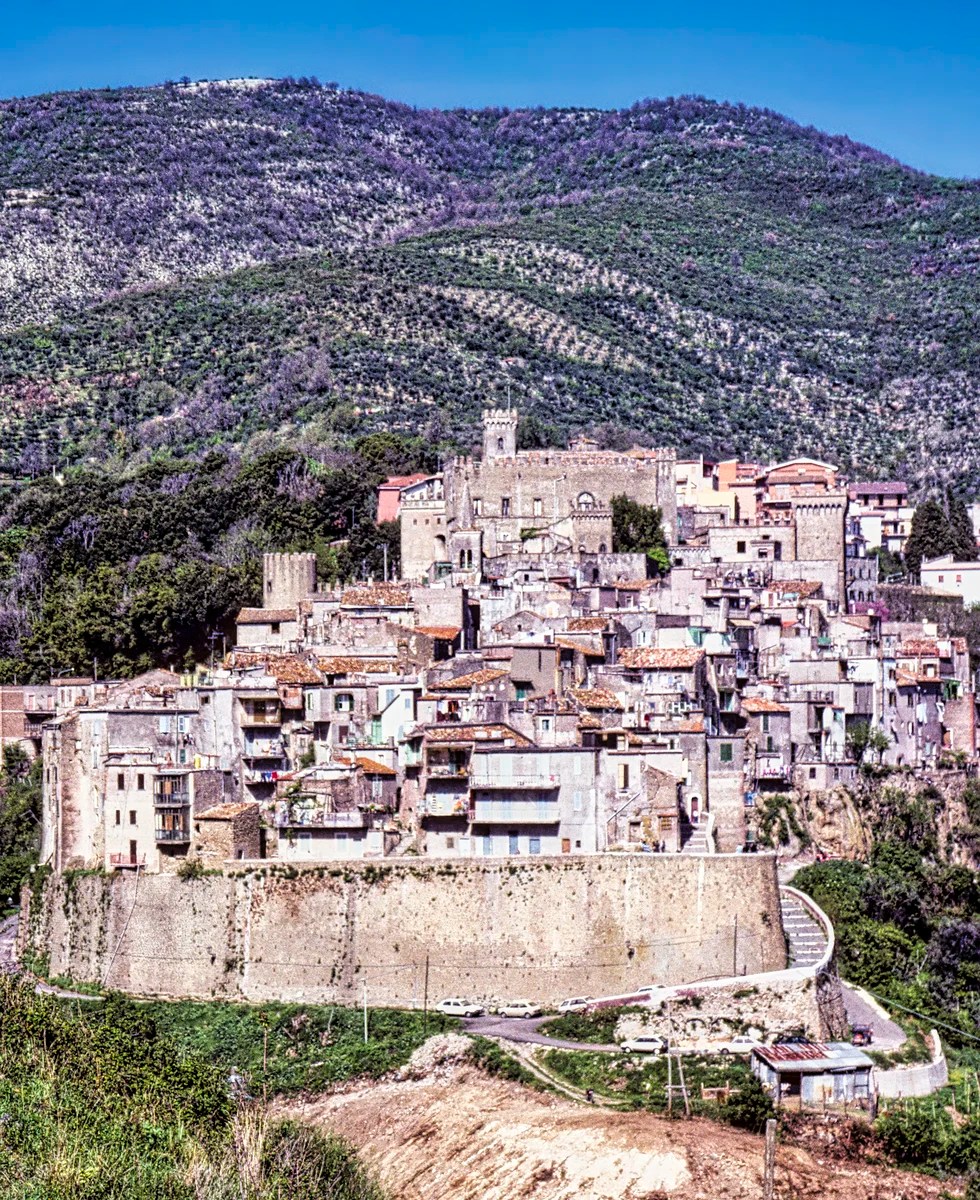
Only 1,589 people live in San Gregorio da Sassola, a mere 30 kilometres (19 mi) southeast of Rome. Here you can enjoy the medieval atmosphere.
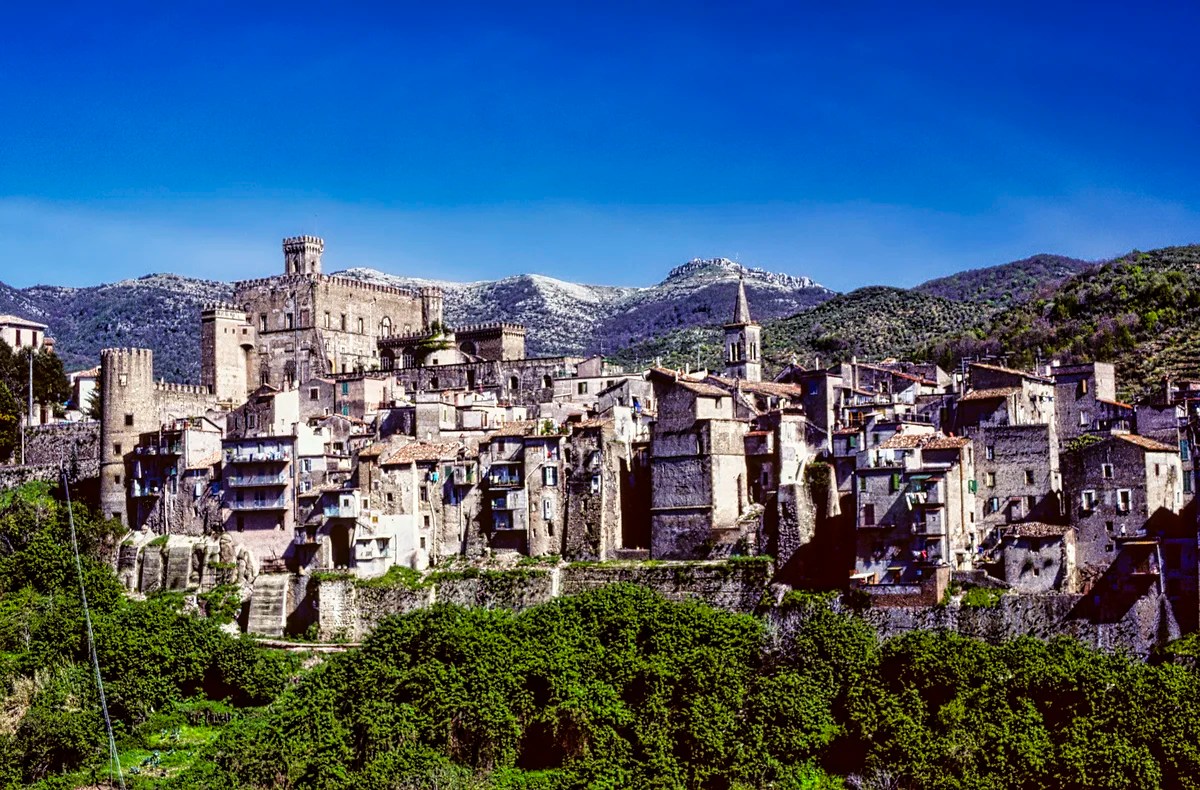
There are a few places to see, like the Castello Brancaccio (left) and the church of St. Gregory Magno (centre). But the main thing is the quaint views of the village in the mountains.
More Beautiful Small Towns
If you have more time, there are many other quaint villages you can visit. Inspired by its French predecessor, Les Plus Beaux Villages de France, each year new towns are added to the I Borghi più belli d’Italia, the most beautiful small towns of Italy. Many of the recommended places in our three posts are on this list. The following are 15 quaint and often less-visited places in Southern Italy. These places were added to the Southern Italy Itinerary Map using a special symbol.

| Region | Place |
| Campania | Albori, Atrani |
| Molise | Sepino |
| Basilicata | Castelmezzano, Pietrapertosa |
| Calabria | Tropea |
| Marche | Corinaldo, Treia |
| Apulia | Locorotondo, Specchia, Vico del Gargano |
| Sicily | Castelmola, Cefalù, Erice, Savoca |
Other Posts You May Like
There are many fantastic places to see in Italy. The following posts provide an introduction as well as the Three Cities Itinerary — Rome, Florence, and Venice — and a portal to seven amazing walks in Rome.
Final Comments
Rome, Florence and Venice are over-touristed. But we hope you have learned that these are the best places to experience quintessential Italy. We hope you now understand why the places in the Three Cities Itinerary are significant and how they have had such a great influence on the history and culture of the world.
Subscribe
Please subscribe to Terra Encounters because we offer valuable insights to improve your understanding and enhance your travels. We offer itinerary-based guides packed with the best sights and hidden gems. Let our knowledge help you fully appreciate every moment of your amazing journey.
Get travel tips and advice delivered directly to your inbox. The best part is that it is free.
This was only a taste of Rome. What questions do you have? If you have been to Rome, share your experiences with us. How long is/was your trip?
Itinerary Map & Resources
Southern Italy Itinerary. — our custom Google Map
Central to Northern Italy Itinerary — our custom Google Map
Google Maps Ratings
Google Maps provides a rating from 0 to 5 for all sights, hotels and restaurants (but not cities). All of our recommendations are appended with the rating (prefixed with a G) from Google Maps. As it is based on feedback from tourists and locals, it is much more reliable than travel booking websites. We consider a score of 4 to 4.39 to be Very Good; 4.4 to 5 to be Excellent.
Other Posts You May Like
Rome’s Top 8 Self-Guided Walks
Here are eight itineraries to explore Rome in more detail:
Itineraries Outside of Rome
Here are itineraries to explore the north from Tuscany to the Dolomites, and south from Pompeii to Sicily:

Understanding Italy
The Italy FAQ post answers questions such as:
- When should I go?
- What is the best season for travel?
- Where should I go?
- Can I see everything in a week?
- How much time do I need for Italy?
- How much cash should you take to Italy?
- Should I pay in Euros or my own currency?
- How safe is Italy?
- Should I rent a car? Take a Taxi?
 Terra Encounters
Leave a comment